Back to language school
6 tips how to conquer learning Danish
| | |
New season, fresh start. Maybe you are starting Danish classes this autumn, returning after the summer break, or finally deciding that this time you'll use Danish in real life. The start of the academic year, my “little New Year,” brings fresh motivation. But it also brings the quiet worry: What if I lose steam in a few weeks?
I have been there. I have tried learning many languages from Finnish to Dutch to Italian, spending months on apps only to forget almost everything. I can barely introduce myself in the second foreign language I studied for six years at school. Yet I went from zero to C1* in Danish in under three years, half of this time self-studying via apps. What made the difference? And how can you do it too?
In this enormous newsletter share my reflections on why Danish clicked for me, compared with me failing many other languages, and others who find Danish cumbersome to learn. My tips are only a small slice of the ways to learn Danish – some more abstract, others very practical. If my tips don't work for you, let this be a prompt to reflect and explore approaches no one has suggested to you yet. It is long, so read it over several sittings or jump to the sections that matter most.
*Not sure what C1 is? Read about the Common European Framework of Reference for Languages (CEFR) here.
| |
1. Find purpose and set a clear goal
The strongest performers I have met in anything from sports to baking to career have one thing in common. They know why they are putting in the effort. When you have a real reason, the long evenings of practice and the slow days of progress feel worth it. Without that reason, it is easy to drift away after the first burst of enthusiasm.
What is your reason for learning Danish?
Is it to support your kids' schoolwork, find new ways to socialize, attend events, such as stand-up or theatre plays, follow what’s happening in society or take a course that will boost your career? The stronger and more personal your reason, the easier it is to stay motivated.
For me, the reason was clear: I wanted to continue my education in Denmark, and that required Danish. It kept me going through the difficult days and not even once did I think about giving up.
Once you have your reason, turn it into a SMART goal.
SMART-goal
Specific
What exact result will mean you’ve succeeded in learning Danish for your reason? Maybe it’s when Danish is no longer an obstacle in helping with your child’s homework, hosting a meeting entirely in Danish, understanding a guided tour, or following a debate programme without losing the thread. My goal was to pass Studieprøven, as it's a requirement in order to study in Danish.
Measurable
You should be able to track your progress and know when you’ve achieved your goal. Language is tricky to measure, so pair outcome milestones with input targets. That way, you can see both the results you’re working toward and the actions that will get you there.
Pick a few outcome milestones
- Pass each module test on schedule.
- Make up to X amount of mistakes per 100 words in writing assignments.
- Hold a 10-minute conversation with a colleague without switching to English.
- Finish one Danish book or podcast series by Date Y.
Pair them with input targets
- Attend at least 90% of classes.
- Read 20 pages a week / 10 minutes a day.
- Complete 9 Duolingo lessons a week or review 50 Anki cards a day.
- Write one 200–300 word essay each week and submit it for feedback.
One-liner template you can use
I will know I am on track when I [hit outcome A] and I will keep pace by [doing inputs C and D each week].
How closely you measure your goal depends on your needs. For me, it was enough to see that I was doing well in class, and passed my tests on schedule. I tracked patterns in my writing mistakes, aimed at attending all classes, and kept a steady studying habit.
Pro tip: set some milestones that you can celebrate along the way. It will boost your motivation.
Attainable
Take a look at the previous section and evaluate if your goals are achievable with the time and energy you have right now. This applies to your overall goal too: it should be big enough to inspire you, but still possible within your chosen timeframe.
Relevant
Does your goal directly support the reason you’re learning Danish? If your priority is speaking with confidence, focus on conversation skills rather than perfect writing. Writing, however, can be a useful tool to expand your vocabulary for speaking, so anything works, as long as you see how it supports what you're working for.
Time-based
Give your goal a clear deadline. It could be tied to an exam date, a job application, the start of a course, or a personal milestone like hosting your first dinner in Danish. A set timeframe helps you plan your effort and keeps motivation from fading.
Once you have answered these questions and set a few milestones along the way, you will not just have a plan. You will have checkpoints to celebrate and a clear path that keeps you moving even when motivation dips, because you will know exactly what you are working toward and why it matters to you.
| |
2. Change your mindset
Let's address the myth that Danish is impossible. While it certainly is not a walk in the park, it's disheartening how both natives and internationals keep on reinforcing the belief that Danish is hard. This approach sets new learners up for a failure because it's easy to give up on Danish before you even start, and every challenge is filtered through “Danish is hard” and “I cannot do this” instead of breaking it into manageable steps and noticing what is going well.
Learning any new language, especially as an adult, is not easy. But is Danish really harder than other languages? Danish has mostly static word forms and relatively few tricky rules, although the pronunciation can take time to master. Spanish is easy to pronounce but full of irregular verbs and heavy conjugations; German reads cleanly but its four cases, three genders, and adjective endings punish mistakes; French piles irregular verbs on top of silent letters, liaison, and nasal vowels that complicate speech and spelling.
And are languages harder to learn than other skills? Does training for a marathon come easier than Danish? Is sewing a high-quality dress easier than Danish? I certainly learned Danish faster than it is taking me to knit my first sweater. None of these skills are perfect on the first try. You build them step by step, just like a language.
When mistakes happen, replace “Danish is just impossible” with “I need to look at this grammar rule again” or “I need to practise this sound a few more times.” All mistakes can be broken down into something fixable. Was it vocabulary, grammar, or pronunciation? Ask your teacher to help you identify patterns. They might share extra resources, re-explain a concept, or review it with the whole class. Solve one problem at a time, then move to the next. Small steps lead to real progress.
I had the time of my life learning Danish, and I still look back on that year with a lot of warmth. I focused on the opportunities Danish will open for me and how satisfying it will feel to reach each milestone, like my first conversation with a stranger or first podcast episode in Danish. I invite you to look at it the same way too.
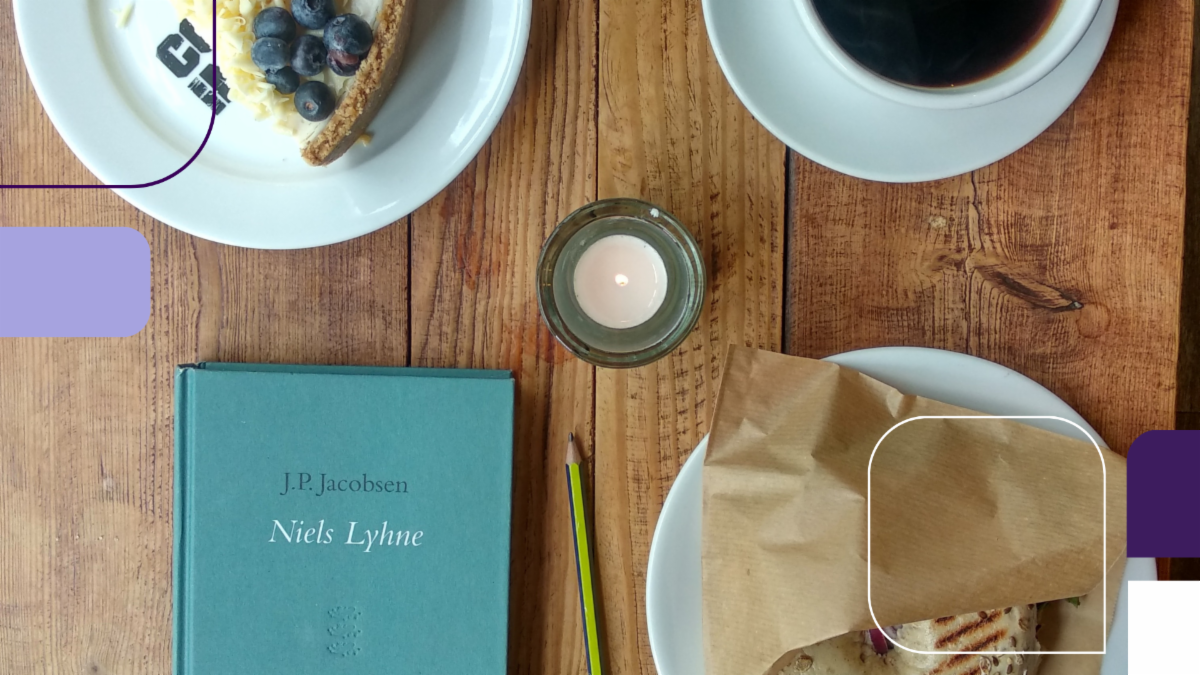
| 📸 When you start looking forward to learning Danish: each Sunday I'd treat myself to coffee, which I'd order in Danish, and then spend the morning reading a Danish book. | |
3. Do what you love but in Danish
Now that you have a SMART goal and are excited to master your new awesome hobby, think about this: what else are you passionate about in your life? And can you do it in Danish?
I made a conscious effort to take hobbies I already enjoyed and shift them into Danish, gradually. I read books, went to museum tours, and listened to podcasts about society, all in Danish. Sometimes I barely understood anything, but I kept going at it, and it kept getting better.
I began with short excerpts, single news items, or just a few minutes of audio and built up from there. These were topics I was already excited about, which made the learning feel natural. Every time I understood more, it gave me a boost. You get a real rush when you hit milestones like ordering your first coffee in Danish or finishing your first book. I squeaked inside each time I managed to complete "a new level". Let yourself enjoy these moments and let that excitement push you toward the next milestone.
So, what do you enjoy? Could you join a local football team or a knitting club? Read sports news in Danish? Journal once a week in Danish? Watch Danish movies?
You do not need to do all of it all the time. The goal isn't to burn yourself out or force Danish into every part of your life until you start resenting it. The goal is to make space for small, regular challenges in activities that already bring you joy.
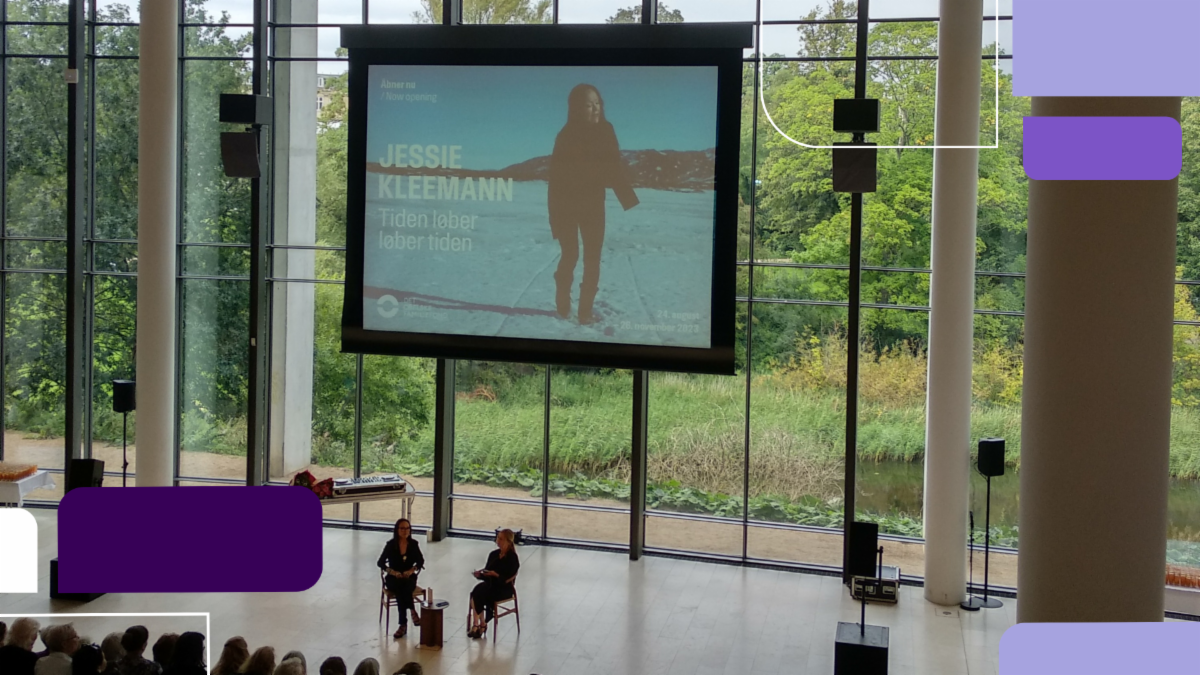
| 📸 Attending an exhibition opening at the National Gallery (Statens Museum for Kunst) in Danish. | |
4. Consistent practice
By now you must be so hyped to learn Danish – go you!
Next step is to practice it consistently, even if it’s the bare minimum. Ten minutes a day beats a weekend sprint twice a year. You don’t run a marathon in one go, and you don’t start speaking perfect Danish overnight. You train. You build your skills at a pace that fits your life. Some days will go well, others won’t. These days I use more Danish than English, yet I still blank out sometimes. On those days, I remind myself that there are also moments when my Danish flows effortlessly.
Start small. Read, write, or say just one sentence a day. Spend five minutes on an app. Read a short paragraph, a simple article, or a short book when you are ready.
| |
Do apps work?
Apps alone won't lead you to fluency, and the progress is slow, but they can give you the basics when other options are not available. Language learning enthusiasts might suggest many other methods over apps, but apps are ideal for low-effort learning (with low progress to match).
I spent 1.5 years learning Danish on apps, finishing the courses completely, which brought me to about an A2 level. It would have been faster through language school, but since that was out of reach, the apps meant that when I finally joined, I could start in module 4 rather than at the very beginning.
The takeaways are simple: apps have a low learning ceiling, progress is slower, but you do learn.
| | | |
Consistency applies to the language school too. When attendance is not mandatory, it’s easy to show up occasionally, instead of every time. This means you'll spend time doing homework. In class you'll learn some nuance to the rules, pick up new phrases, and practice speaking. Sometimes, I struggled thinking that I learned relatively little compared to how much time the classes were taking. Looking back, the small details add up over time, and it's the little details that make you fluent.
I'd like to specifically emphasize practicing speaking, as it's the part many struggle with the most. I've even met people who finished language school, and are pretty good at using Danish, but refuse to speak Danish ever again. The main reason is the disappointment when Danes switch to English, which feels discouraging and frustrating. Persistence and practice is the only way to break the vicious circle - both for the Danes and internationals. It's hard for natives to understand Danish in accents they've never heard before. Think about English: we hear it in many accents every day, while Danish is mostly spoken by natives, so there is less exposure. Keep answering in Danish, so Danes train their ears, and you train your pronunciation. Big results come through small steps.
If you don't have confidence to speak with the natives, find another international to break the barrier with, or even practise by speaking to yourself. I break it down more in this article: 5 tips to improve your speaking skills.
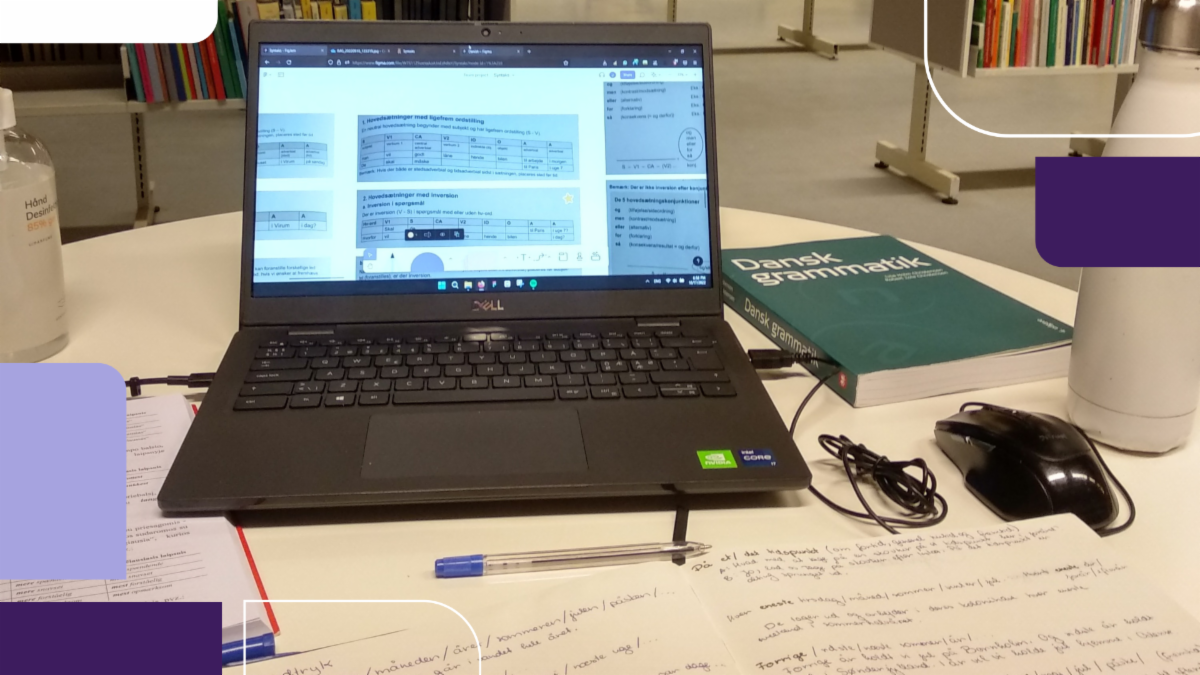
| 📸 Trying to crack the syntax rules. I'd head to my local library after work on the days I didn't have classes, and either do homework or revise grammar that I was struggling with the most. | |
5. Don’t leave the language in the language school
Language school is a fantastic resource. You get structure, a clear curriculum, professional feedback, and classmates to learn with. You are guided by a native speaker who brings nuance you cannot get from apps or grammar books. After all, language is what forms in contact with other people. The teacher can also be your door to the culture – from songs and traditions to historical context and news explained from a Danish perspective.
However, if you only practice Danish at school, you might hit a wall. Remember, you are learning Danish to use it in real life, so you should find a place to use it outside the school. If you shelve Danish to collect dust after being done with school, you risk losing your skill, and it will get harder to start using it.
Additionally, language school is a safe and controlled environment – like biking with training wheels. This certainly serves a function, especially in the beginning. However, using Danish in real life helps you build tolerance for speaking in more demanding settings. Even after passing module 5 or 6, social conversations can be far more challenging than classwork. The pace is faster, pronunciation is less clear, and dialects differ across the country. If you wait until after you're done with school to start practising, the sudden difficulty can feel like failure and be discouraging. If you start while still in school, you can return to a supportive environment, get feedback, and be reminded of what you can do.
Lastly, class material is not enough for passing PD3 or Studieprøven with a strong result (if it's important for you). The volume of Danish you consume matters. My seat partner Tom came to every class and did his homework, but stopped there. I, on the other hand, had read seven books in Danish and followed the news regularly by mid-module 5. In reading tests, Tom struggled to finish on time and made more mistakes than he expected to, while I finished in half the time with few mistakes. My writing, however, was average, since I only practiced it in class assignments. It's not about how smart you are, it's about how much time you spend practicing.
So how should you approach language school?
It depends on your time resources. On one hand, you can treat language school as a baseline: do the homework, show up to class, and you will still get a long way. Fluency comes from volume, and you will become more and more fluent after finishing the school if you keep using the language. Finishing school is just the beginning of your language journey.
I had plenty of time (I dedicated all my free from a full-time job time to learning), so I treated language school as a support tool. I never thought of Danish as something I “studied”. I just lived my life in it. I went to theatre plays, took guided museum tours, and read the news (tip no. 3). I did these things because I was interested in them, regardless of the language. But since most of these activities in Denmark happen in Danish, learning the language became a natural benefit.
Of course, I wasn’t going to learn grammar from a painting description. That was where the school came in. My free time was mostly filled with passive content like reading and listening, not much speaking or writing. In class, I could turn that passive knowledge into active use. I got to speak, try out new words and structures, and get corrections on pronunciation, prepositions, and when to use a phrase in context. I even gamified it: I made flashcards, learned the words, and tried to use as many as I could in class. It helped to make the words stick, boosted my confidence, and, I’ll admit, looked a little impressive.
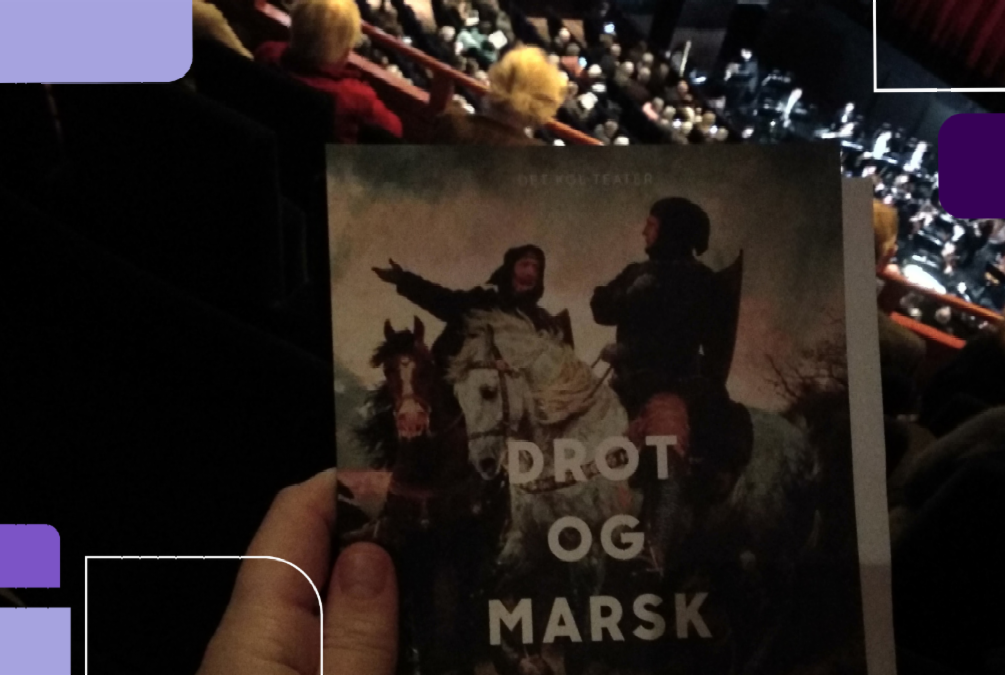
| 📸 Watching Denmark's national opera Drot og marsk (King and Marshal) |
6. Practical tools
Here are a few tools and habits that helped me and might help you too.
Vocabulary
Dictionaries
Ordbogen is such an easy way to get ahead with Danish, and I found it genuinely frustrating that many chose Google over it. I loved having the app at hand any time, and I still do. Every time I didn’t know the translation from either English or Danish, I’d check it right away and add it to my flashcards. You might have access for free via your language school or library login. Ordbogen gives a wide variety of translations, including idioms, so you can choose the translation that sounds most fitting given the rest of the context, while translators like Google or DeepL have multiple times given translations that made no sense in the context.
By module 5, I recommend shifting to ordnet.dk/ddo, which provides you with word definitions in Danish. This will both strengthen your language muscle and give you more nuance. Some synonyms end up being the same word in English, however, they can have different undertones in Danish. Knowing these details will boost your skills.
Flashcards
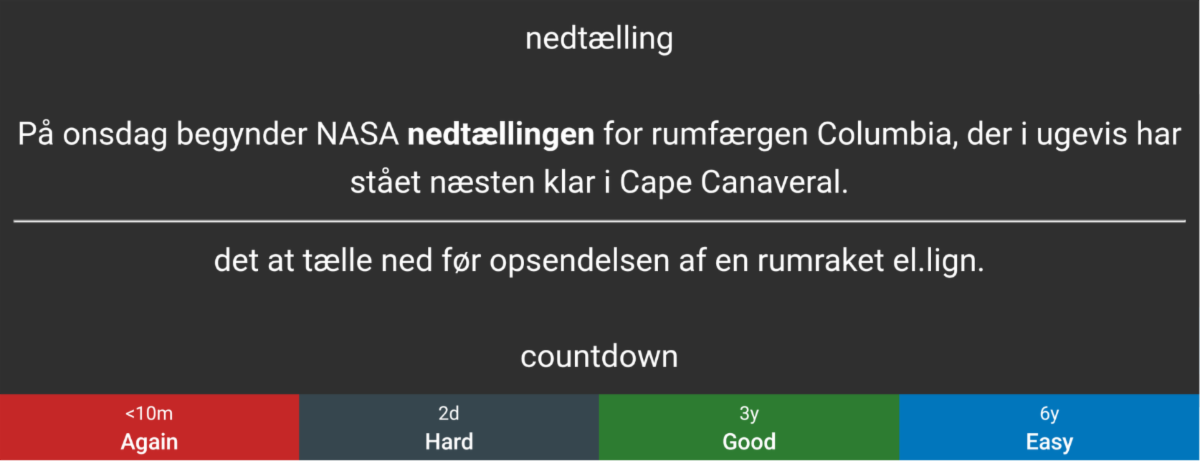
Whenever I came across a word I didn’t know while reading or writing, I’d add it to Anki Deck, an open-source free app available for both computer and phone, which uses spaced repetition system. At first, I added English translations using Ordbogen. When my Danish improved and I needed more nuanced understanding of words, I switched to writing Danish definitions from ordnet.dk.
Additionally, I recommend adding a sentence containing the word in your flashcard, which will help you understand how to use it in a sentence.
Anki became my go-to while waiting for the bus or standing in line instead of scrolling social media. Win-win, right?
| 📸 An example of my flashcards. Text under the line is the answer. |
Writing
If you’re attending language school, hand in every writing assignment. It’s one of the most valuable types of practice. If you're not in school or hand-ins are less frequent than every other week, set your own prompts.
In my classes, we wrote about anything you can think of – “What I would do if I were a multimillionaire” to “Who is responsible for action on the climate crisis.” The point is: write about things you can see yourself having a conversation about. That way, you’ll practice vocabulary that’s relevant to you.
Learn from your mistakes
Don’t just hand in assignments and move on. Read every comment your teacher leaves and see if there are patterns you should focus on. Ask for clarification when you do not understand a correction. If you do not have a Danish teacher, you can also post your writing in r/WriteStreakDanish or ask someone in your network to review it. AI can be helpful in the early stages, but be aware that it can produce robotic language. Human feedback is especially valuable once you start forming more complex thoughts.
Once you notice a recurring mistake, study that rule directly. Many can be found with a quick Google search, or you can borrow a grammar book from a library.
Translators, paraphrasers and AI
Online language tools are incredibly helpful, if you know how to use them to your advantage. Sure, AI can generate everything, but it will not help you learn.
My first tip is: don't overdo it. If you simply need a translation of a word or an expression, dictionary will serve you better than translator or AI.
I used translators when I wasn't sure how to say a whole phrase that is not in a dictionary. I used both Google and DeepL and compare the results, check meanings in dictionaries and pick the one that fits best. Sometimes I’d even Google the phrase to see if any articles use this phrasing. Even if the phrase didn't fit my current needs, I knew when I could use it.
I loved paraphrasers (paraphraser.io and occasionally Quillbot) during module 5 (B2) and 6 (C1), which I used as advanced synonym dictionaries. After writing my text, I’d paste in sentences that felt clunky and get suggestions for smoother phrasing. This way, I learned quite a few expressions or words that were more fitting for the situation. I prefer paraphraser tools over AI chatbots, because they clearly highlight changes and show original text next to suggested changes. That way, you can also spot the commas or syntax mistakes that were corrected.
The goal isn’t to have the tool write for you but to expand your vocabulary and improve your expression. There are a couple things to pay attention to:
- Your text may be misunderstood, so make sure a paraphrased sentence still means what it should. That can sometimes indicate that your language is not clear, so you might want to rethink your wording.
- It automatically fixes syntax, misspelling and punctuation without you realizing. This can lead you to miss critical grammar issues and hurt your performance in exams, where you are only allowed dictionaries. That’s what Danes call a bjørnetjeneste – “bear favour” that ends up doing more harm than good.
I don’t recommend using paraphrasers for modules 1-4, as building sophisticated vocabulary without knowing the simple words will not do you good.
AI can be helpful in moderation. It can to some degree correct your writing, explain grammar rules, translate or paraphrase. However, I find the previously mentioned tools more reliable, and straight-forward. AI was always my last resort.
Preparing for an exam
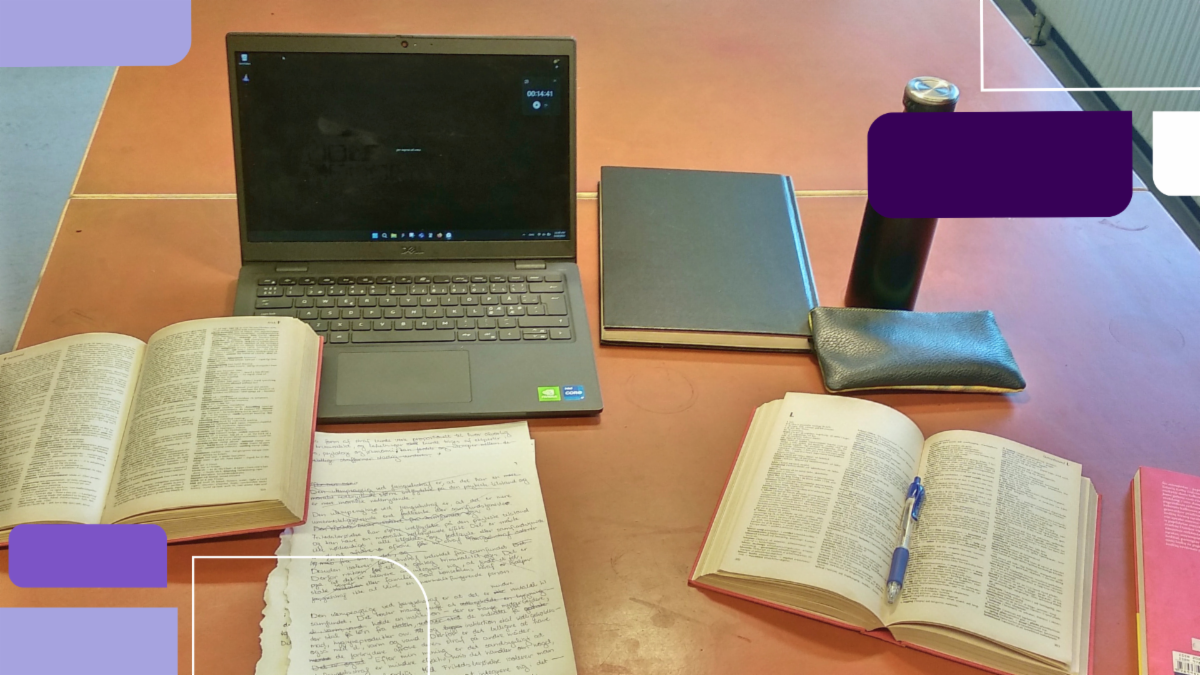
About a month before my PD3 (B2) and Studieprøven (C1) exams, I relied on physical dictionaries only, and gave myself as much time as I had during the exam. That way, I could fill my grammar knowledge gaps, have a realistic image of my writing skills, and nail exam-writing technique.
| 📸 Mock PD3 exam: physical dictionaries, pen on paper and a timer on my laptop's top right corner. |
Reading
Read while listening
My favourite reading tip is to read a text and listen to it at the same time. Anything with written and audio formats will work: news outlets, books (you can get free audio books from eReolen) or exercises on Lingua. Choose based on your interests and your current level, but avoid digitally generated audio.
This method trains three skills at once: reading, listening, and pronunciation. Audio helps you understand the meaning of the text through intonation. As a beginner, it is easy to miss punctuation or misread words, but listening as you read fills some of those gaps. The gap between pronunciation and spelling can be frustrating, if you like "pronouncing" words in your head – and audio fills that gap. At the same time, the written text works like subtitles for your listening practice. You train your ear to recognise word. Your brain also starts to register how letter combinations are supposed to sound. This helps you pronounce them more accurately and improves your ability to guess the pronunciation of words you have never heard before. Speaking practice is still essential to master pronunciation, but this technique gives you a strong base.
If this technique is not for you, my best tip is to simply read whatever you enjoy. Enjoying what you do is more beneficial than forcing yourself through something you don't like.
How much should you translate?
That depends on you. Translating is a distracting inconvenience for me, so I only translated what felt most crucial – based on a gut feeling. I was surprised by how many words I could understand without translating, even as early as module 4. Not translating seemed to push my brain to notice and remember more. I also spotted many words that were similar to ones I know in other languages, even when the languages are otherwise unrelated to Danish.
If you like translating but find the process inconvenient, Readlang is a tool for you. It offers a collection of texts at different difficulty levels where you can click on any word for an instant translation. The words you look up are saved as flashcards you can review later.
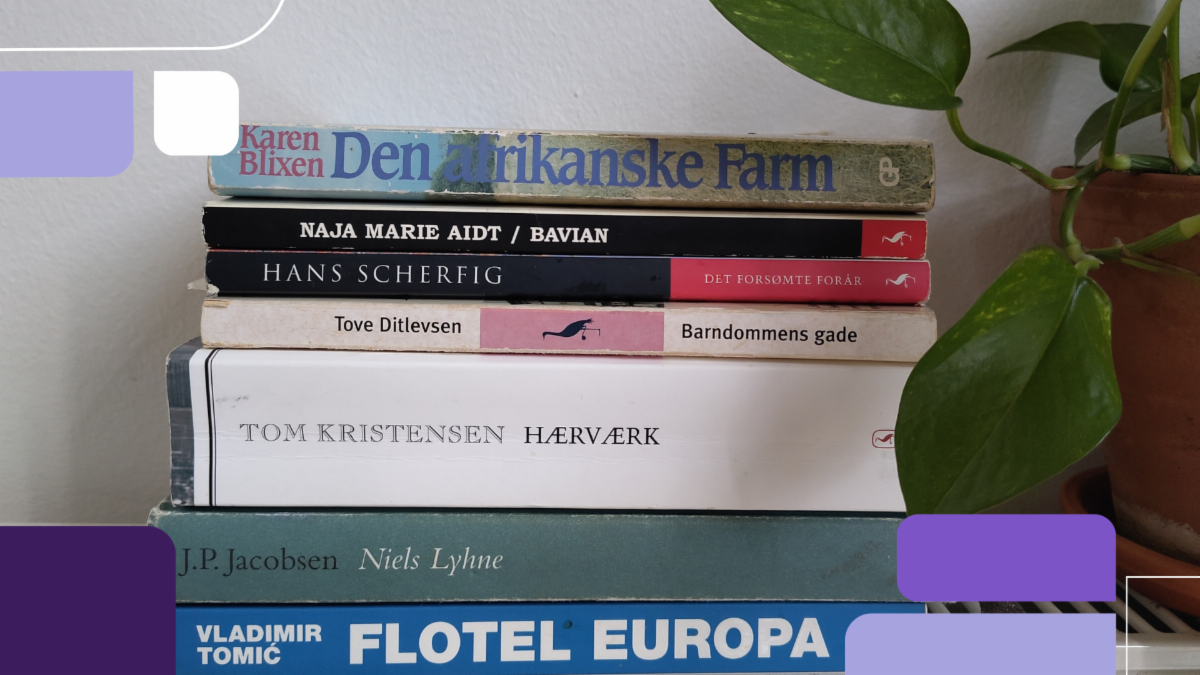
| 📸 Some of the books I read while learning Danish. I only read books originally written in Danish to get acquainted with the Danish culture, history and society. |
Listening
Exactly as in my previous tips. Listen to what you generally like, it can be movies, music, or podcasts.
Podcasts
Dansk i ørerne is every beginner's beloved podcast – it's short, spoken slowly, the topics revolve around Denmark, and you can find transcriptions online. Once you feel ready, explore podcasts for fluent speakers. Check out the large podcast and radio programmes library on DR. Learning Danish, I loved Third Ear (Danish true crime, how cool is that?), now I often listen to P1 Debat, Akkurat, and of course, the popular Genstart. Don't be put off if you don't understand much at first. Do it in reasonable chunks, and soon you'll start to improve.
Listening to songs
Much like when watching movies, pull up lyrics when you listen to songs. This work exactly like the audio-reading method mentioned above, just less dense.
Pro tip: Sing along to improve your pronunciation.
Speaking
The biggest leap in speaking comes from practicing. You need to train your mouth to pronounce the sounds. Start small and make it part of your daily life. Narrate what you are doing out loud, describe what you see on your way to work, or retell a story you just heard in Danish.
Start with other internationals
Speaking with fellow learners lowers the pressure and builds confidence. You share the same slips and pauses, so the stakes feel lower and you stay in Danish longer. Pair up with a classmate for a weekly coffee in Danish. Keep it simple and regular.
Use language cafés
Language cafés are gold. You get easy, real conversations in a friendly setting, often with volunteers who are patient and clear. Treat them as low‑risk practice for everyday topics. Note the words you miss, then bring those questions back to class or your study list.
Record yourself
Recording yourself is another underrated tool. Play it back, listen for recurring mistakes, and note what you want to improve. This could be a tricky sound, a missing preposition, or simply speaking more smoothly. Over time, these small corrections build up to big changes in confidence and clarity.
Commit to speaking Danish
At some point, the only way forward is to put yourself in situations where Danish is your only option: an evening course, a club, even a new job. It will feel scary and frustrating, but that’s how you get better. And remember, that course or job is likely the reason you started learning in the first place.
Memes
Since I didn’t have Danish friends, I often longed for small insights into what Danes think about current events or the way they see life in Denmark. I did not learn much Danish this way, but I did learn some slang, and it is fun to get some humorous cultural or political insights.
Here are my top 3 (in no particular order):
|
Conclusion
Learning Danish does not have a fixed formula. Try methods, keep what works, drop what doesn't, and stay curious enough to invent your own. Learning strategies shift according with the time, energy and interests you have, and what stage of learning you are in.
Remember that consistency beats perfection – simply showing up for class or doing 2 minutes of Duolingo will always beat doing nothing. And you can always build on top..
Don't compare yourself to others. Some people have advantages like having more time, knowing a related language, or a partner who can help. Celebrate your milestones, be patient with the hard parts, and back yourself. You will get there in your own way.
| P.S. Do you have a Danish learning tip that should be shared with others? I'd love to hear it at jusr@di.dk. | | |
Held og lykke,
Justina from Expat in Denmark
P.S. Do you have a fun story, a cool tip or questions about life in Denmark? We'd love to hear from you! Drop us a line at jusr@di.dk.
| | | | |