|
|
60 Posts in 10 Hours: How Trump’s Social Media Reflects His Version of Reality
With an assist from A.I., President Trump offers a window into how he wants to be seen — and, critics say, a barometer of his mental state.
By Peter Baker
New York Times, September 14, 2026
| |
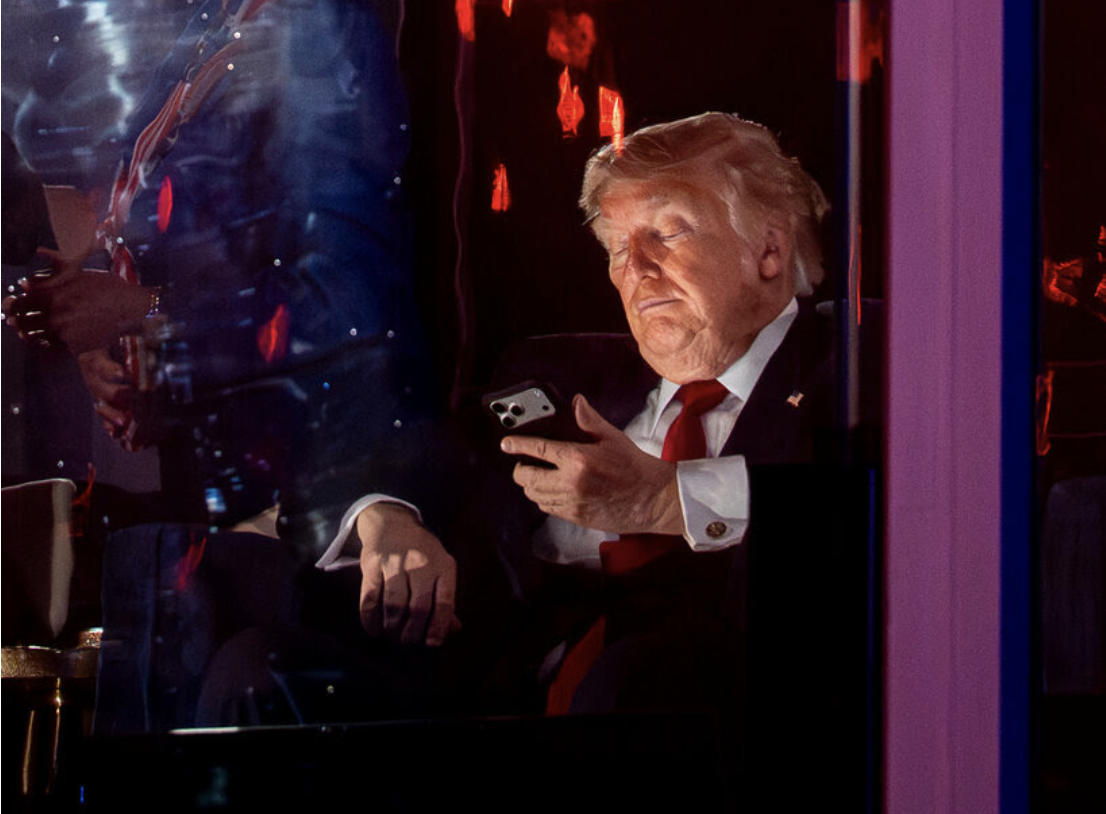
Just before noon on a holiday weekend, while many Americans were at the beach, President Trump’s social media account roared to life. In what has increasingly become his weekend habit, he unleashed a daylong barrage of posts that put the bully in the modern bully pulpit.
There were images of Mr. Trump intimidating Canada’s prime minister with a hockey stick, personally bombing enemy targets and patrolling dark streets with killer robots. There were maps showing the United States taking over other countries, and maps renaming a state. There were attacks on the “Dumocratic Party” and tributes to himself as “the Greatest President of All Time!”
The 60 messages posted online over 10 hours and 41 minutes offered a window into Mr. Trump’s own unique reality, one anchored not in fact but in an expression of ego. For years, his social media feed was said to be a mirror of his id. But with A.I., it has become the manifestation of how he wants to be seen in a more visual, visceral way than ever before — as a warrior, as a conqueror, as a historical figure, as a younger and thinner and more muscular version of himself.
In Mr. Trump’s digitally enhanced version of the world, he is a giant in every way, a man who defeats every adversary, overcomes every obstacle and sinks every putt. He not only redraws the map of the world but vanquishes the heavens themselves. “The Moon Is Ours,” declared one post last weekend with an image of the earth’s only satellite. Another posted a few weeks ago showed him leading an extraterrestrial alien in shackles.
The rat-a-tat of ever wilder, ever more outrageous posts each weekend has become a fixture of the president’s second term, seen more and more as a barometer of his mental state. Mr. Trump’s critics, who never considered him a model of stability in the first place, now point to these frenetic bursts of fantasy and vanity as proof that the 80-year-old president is deteriorating further with age.
It is a measure of how much Mr. Trump has changed the nature of the presidency that any of this has become routine. Past presidents believed they had a duty to carry themselves with a certain dignity befitting the office. Mr. Trump sees politics like the cage match he sponsored this summer at the White House.
Indeed, the images he posted over the Labor Day weekend included one with his face on Hulk Hogan’s rippling body. Another posted a day later imagined a grinning Mr. Trump easily winning an arm wrestling match against Mr. Hogan, the flamboyant wrestling star who died last year.
“He floods the zone with so much of it that we’ve become numb to just how bizarre it is,” said Sarah Matthews, Mr. Trump’s former deputy White House press secretary. “An 80-year-old president is spending a ridiculous amount of time consuming and reposting endless A.I. fan fiction portraying him as the biggest, strongest and most important person alive. It feels like we’re genuinely watching his brain rot in real time.”
|
|
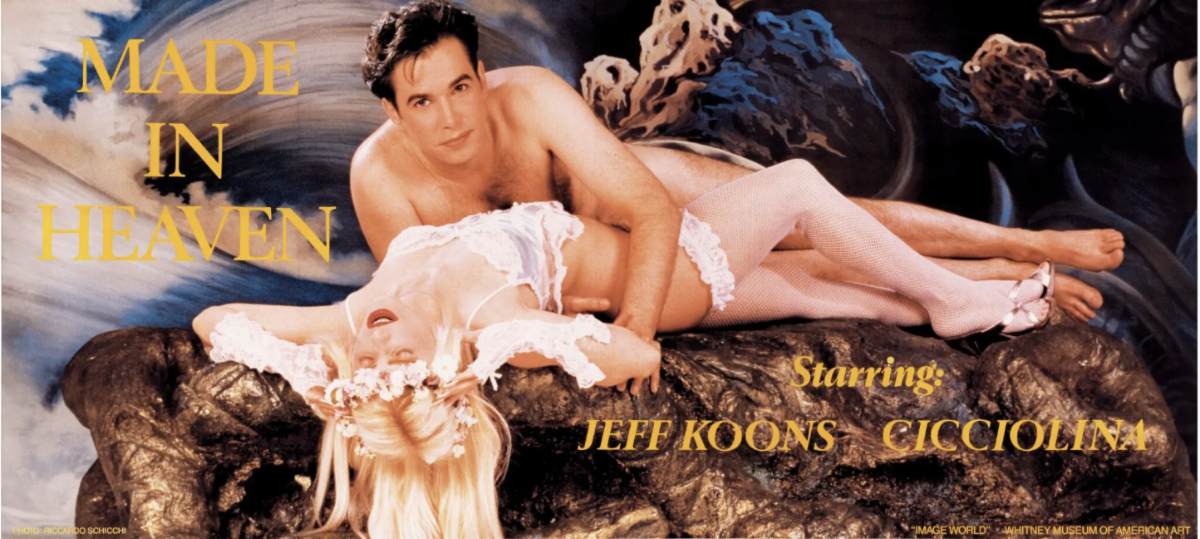
There were two works at the Venice Biennale. One of them was with Jeff and Cicciolina more or less making love with butterflies in the background. A group of Italian Catholic kids decided it was blasphemous and destroyed it, my picture. I was distraught, but Ileana Sonnabend said oh don’t worry Asher that’s just a large photograph that you bought and we will have it reproduced for you shortly. The wonder of Jeff Koons.
-AE
The Incredible Art of Being Jeff Koons
For five decades, the artist has made sculptures that are larger-than-life — and also singularly reflective of his own.
By Nick Haramis
New York Times, September 11, 2026
| |
ON THE FIRST page of the French writer Michel Houellebecq’s 2010 novel, “The Map and the Territory,” a fictional midcareer artist named Jed Martin is having trouble completing his new painting, “Damien Hirst and Jeff Koons Dividing Up the Art Market,” an imagined encounter between two of art’s wealthiest and most polarizing figures. Although Martin is satisfied with his portrayal of Hirst, the English artist known for his diamond-encrusted human skulls and vitrines of taxidermied animals — you could make him “a rebel artist (but rich all the same) pursuing an anguished work on death,” Houellebecq writes — he can’t quite capture the other man’s essence. Koons, the American who still holds the record for the most expensive piece ever sold at auction by a living artist, appears, according to Martin, “to have a duality, an insurmountable contradiction between the basic cunning of the technical sales rep and the exaltation of the ascetic.”
Koons the pop culture figure is often at odds with Koons the artist, causing some deep ambivalence among the art establishment. He’s at once an esoteric conceptualist and a marketing genius rivaled only by Andy Warhol and Salvador Dalí, and he’s been a recurring target for the ire of critics, who categorize his work as neo-Pop or kitsch, depending on whom you ask. Nearly a half-century after “The New,” his 1980 debut at the New Museum of Contemporary Art in downtown Manhattan, which featured unused vacuum cleaners and floor polishers displayed like plastic-wrapped sarcophagi in illuminated acrylic cases, he’s shown at practically every major museum, not to mention at Versailles, at a former slaughterhouse on the Greek island of Hydra and on the moon. In a Times review of his 2014 retrospective at the Whitney Museum of American Art in New York, Roberta Smith wrote that it “reek[ed] of Gilded Age excess, art star hubris and the ever-widening inequality gap that threatens this country.” (In his own review, New York Magazine’s Jerry Saltz, Smith’s husband, called the sculptures “huge, shiny baubles for billionaires,” and those were the ones he liked.)
Koons is also arguably more a part of mainstream culture than any other fine artist since Pablo Picasso. He’s been mentioned in the multiplatinum Lady Gaga song “Applause” (“One second I’m a Koons, then suddenly the Koons is me”) and on “The Simpsons.” During a battle sequence in “Spider-Man: Across the Spider-Verse” (2023), an animated version of his mirror-polished stainless-steel “Balloon Dog” sculpture is beheaded; miniature replicas of that piece are sold at Walmart. He’s participated in as many brand deals and corporate sponsorships as a rising influencer, collaborating, at one point or another, with BMW, Burton Snowboards, Dom Pérignon, Evian, Google, H&M, Illy, Kiehl’s, Louis Vuitton, Snapchat, Squarespace and Supreme.
On a hot afternoon this summer, Koons, 71, invites me to his studio in an office building in Hell’s Kitchen. In person, he’s disarmingly earnest, never breaking eye contact while describing his practice the way a cleric might talk about a higher calling. He’s not smirking when he compares “Ilona’s Asshole” — a 1991 silk-screen of him and his ex-wife, Ilona Staller, midcoitus — to the 19th-century French painter Gustave Courbet’s “The Origin of the World” (1866). He tells me he wants to encourage others to “realize the sense of the oneness of the information of a universal vocabulary.” The American artist Richard Prince, 77, his friend and contemporary, sums him up like this: “He’s either from another planet or he’s on another planet.”
NEXT TO KOONS’S desk, there’s a store-bought aluminum stepladder with a colorful mirrored-glass orb taped to every rung — a model for a “stairway-to-heaven-type thing,” he says. The work belongs to a new series that expands on his “Gazing Ball” project, which debuted in 2013 and includes blue spheres attached to white plaster casts of everyday items and classical figures (he later integrated reproductions of famous paintings by the likes of Gustav Klimt and Vincent van Gogh). Koons has said the spheres represent “the vastness of the universe and at the same time the intimacy of right here, right now.” (The new pieces will have handfuls of gazing balls in a variety of colors and, instead of just one hovering in front of a painting, anywhere from five to 10 will form clusters on the canvas or jut out in a straight line.)
|
|
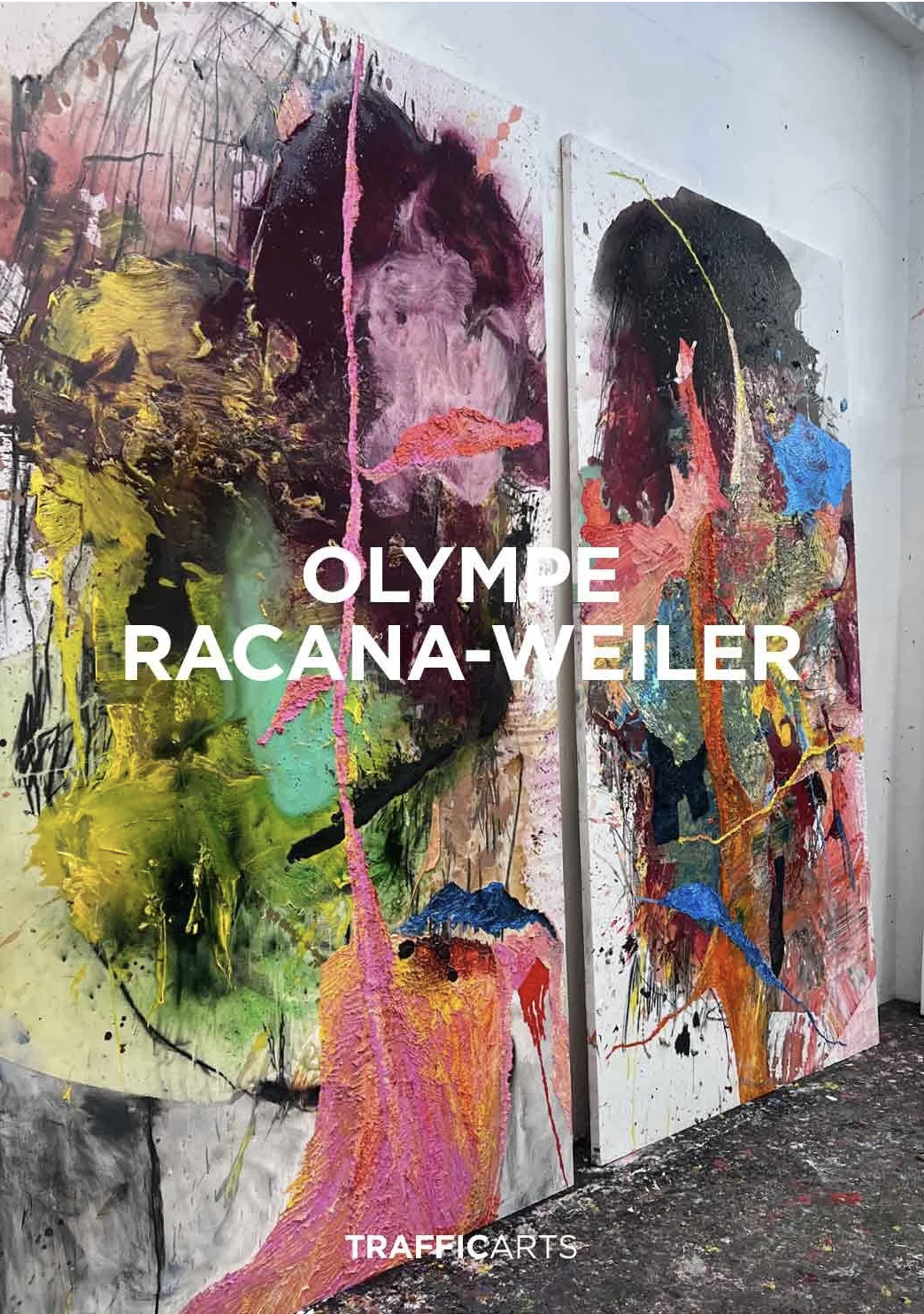
TRAFFICARTS ANNOUNCES WORLDWIDE REPRESENTATION OF
OLYMPE RACANA-WEILER
| |
September 2026 — TRAFFICARTS is pleased to announce the worldwide representation of French-Argentine artist Olympe Racana-Weiler.
Born in 1990 and based in Paris, Racana-Weiler has developed a multidisciplinary practice encompassing oil painting, printmaking and sculpture. Her paintings move fluidly between abstraction and figuration, bringing together color, gesture and richly worked surfaces. Forms emerge, dissolve and reappear, creating compositions that feel simultaneously physical, psychological and alive.
Movement is central to Racana-Weiler’s work. Influenced by dance, she approaches the canvas as an active space in which rhythm, balance and bodily gesture shape the composition. This physical sensitivity extends throughout her practice—from her large-scale oil paintings to her lithographs, woodcuts and sculptural works.
“In an art world flooded with artists and images, it is rare to encounter work that breaks through with such immediate force,” says Michelle Edelman, Founder of TRAFFICARTS. “Olympe’s paintings claim their place. I believe she has the vision, courage and depth to become one of the great artists of her generation, and I am excited to help her reach the recognition her work deserves.”
At a moment when painting is once again questioning the boundaries between abstraction and figuration—and when women artists are being more fully recognized within the history and continuing evolution of gestural painting—Racana-Weiler’s work feels particularly relevant. Her practice is materially rigorous yet instinctive, grounded in the traditions of painting while remaining unmistakably contemporary.
Racana-Weiler studied Visual Art and Art Theory at the Université Paris 1 Panthéon-Sorbonne, graduating in 2014. Her extensive training in printmaking has been equally formative. She trained in lithography at Michael Woolworth’s studio, worked alongside American artist Jim Dine, and further developed her woodcut practice at Steindruck in Austria with master printers Christoph Chavanne and Gabi Pechmann.
Rather than treating printmaking as separate from painting, Racana-Weiler pushes the medium toward what might be understood as a form of “printed painting,” building images through layered impressions, color and, at times, direct painted intervention.
In 2026, Racana-Weiler presented a solo exhibition at La Fabrique, Montrueil, France curated by Evelyne Artaud and Bruno Bernard, and participated in the Brooklyn Fine Art Print Fair at Powerhouse Arts in New York.
“I HAVE A TRADITIONAL VIEW ON HOW I WORK WITH GALLERIES, SO WORKING WITH MICHELLE EDELMAN AND HER TEAM AT TRAFFIC IS NEW TERRITORY FOR ME. I’M EXCITED FOR THIS NEXT CHAPTER AND WORKING WITH A TEAM WHO WILL SUPPORT MY ARTISTIC VISION.”
—Olympe Racana-Weiler
Through this new representation, TRAFFICARTS will support the continued development of Racana-Weiler’s practice and introduce her work to a growing international audience of collectors, galleries and institutions.
ABOUT OLYMPE RACANA-WEILER
Olympe Racana-Weiler is a French-Argentine artist born in 1990. Based in Paris, she works across painting, printmaking and sculpture. Her practice explores the shifting territory between abstraction and figuration through color, gesture, texture and movement.
ABOUT TRAFFICARTS
TRAFFICARTS is an international artist management and creative strategy company founded by Michelle Edelman. Working closely with artists, galleries, collectors and institutions, TRAFFICARTS develops opportunities that support artists’ practices and expand their visibility within the international art world.
GALLERY, INSTITUTIONAL AND SALES INQUIRIES
Michelle Edelman
Founder and CEO, TRAFFICARTS
michelleve@traffic-nyc.com
C.+1 917 806 6978 (whatsapp)
PRESS INQUIRIES
Shereka Evans | shereka@traffic-nyc.com | C. +1 917 405 5435 O. +1 212 734 0041
|
|
M+A ARTS has, for the past two years, focused much of its attention on emerging and re-emerging artists. First and always foremost we have chosen to sponsor artists who we are certain have a strong likelihood of making a difference — artists whose originality and practice are recognizable and at a level of the great names that were emerging when some of the team started looking — from the 1960’s forward. Creators identified early, are the most rewarding experiences for the collector.
On that note, we have begun to present for acquisition the artists we sponsor, one each week. I hope you enjoy and are challenged by our choices.
Asher Edelman
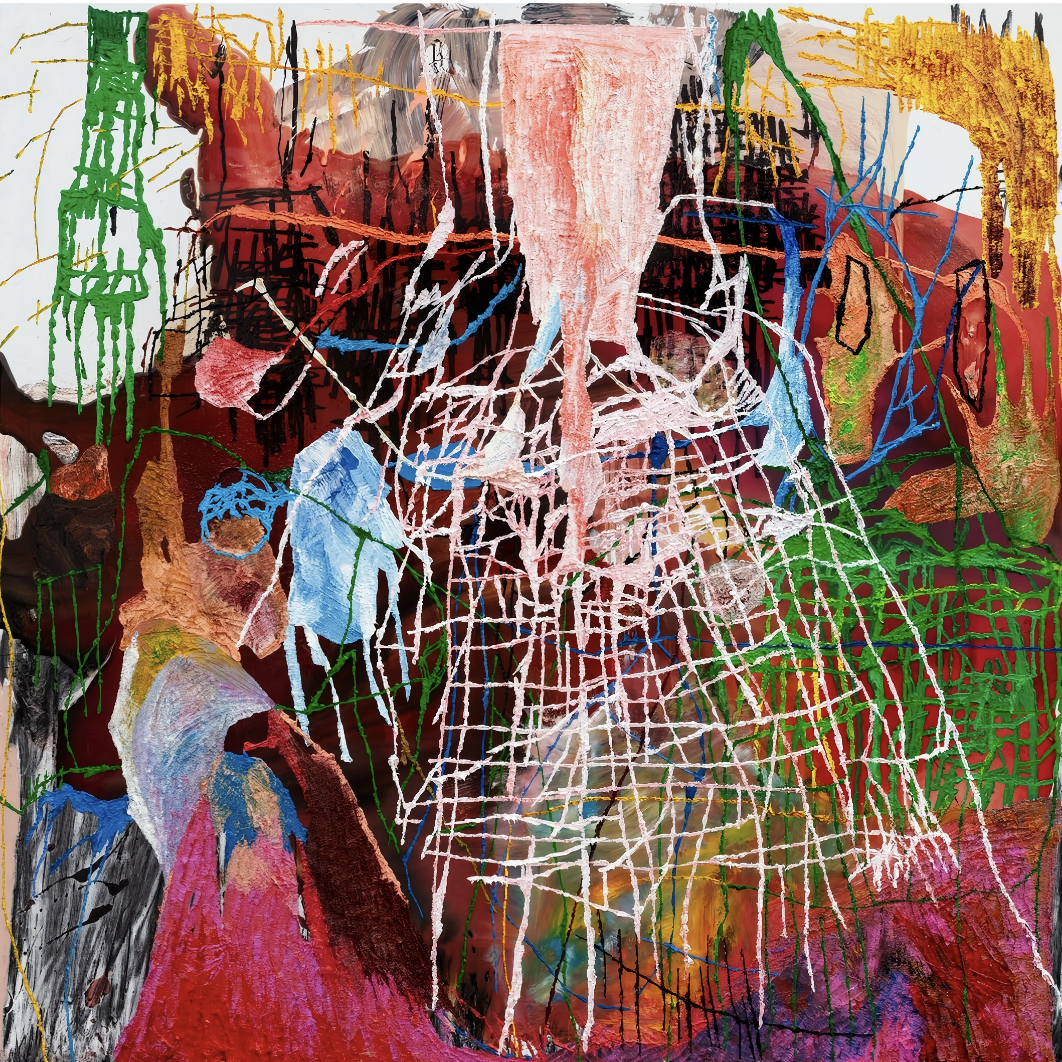
Offering of a painting by Olympe Racana-Weiler
| |
Olympe Racana-Weiler
White Hand, 2024
Mixed media on prepared linen canvas
200 x 200 cm (79 x 79 in)
Price: 26,000 EUR
Olympe Racana-Weiler (b. 1990) is a French-Argentine artist who lives in Paris and works in Montreuil. She graduated in 2014 from Université Paris 1 Panthéon-Sorbonne with a degree in Visual Arts and Art Theory.
Racana-Weiler’s practice is rooted in an intensely physical approach to painting. Her richly layered compositions move between abstraction and figuration, bringing together color, gesture, texture, and recurring forms in works that develop through a process of accumulation and transformation. Her background in dance has been an important influence, giving her a heightened sensitivity to space, light, and movement. The gesture of the body becomes integral to the act of painting, lending her work a sense of rhythm, spontaneity, and continual motion.
Her approach to painting is also deeply informed by her engagement with traditional printmaking and artisanal techniques. Racana-Weiler first trained in lithography at Michael Woolworth’s studio, specializing in etching. After training alongside American artist Jim Dine, she spent several years developing her woodcut technique at the Steindruck Printing Studio in Austria, where she was mentored by master printers Christoph Chavanne and Gabi Pechmann. She also worked in ceramics at the Manufacture Nationale de Sèvres and in bronze at the Blue Mountain Fine Art Foundry in the United States.
This commitment to craftsmanship has continued throughout her career. She has produced monumental woodcuts at Steindruck; engravings combining woodcut, silkscreen monotype, and carborundum at Gate 44 in Milan; and bronze sculpture at Kunstgiesserei St. Gallen in Switzerland. Her first artist’s book, L’Amour, was featured in CHAGALL, MATISSE, MIRÓ – Made in Paris, an exhibition devoted to the tradition of the artist’s book at Museum Folkwang in Essen, Germany.
Since 2013, Racana-Weiler has exhibited internationally. In 2018, she received both the Antoine Marin Prize and the Pierre Cardin Prize for Painting from the Académie des Beaux-Arts. Solo exhibitions have included I Came Back from Paradise and I’m Frankly Hungry at Galerie Jérôme Pauchant; NEON DRIVING and Something About Silence at Galerie Éric Dupont in Paris; Behind the Eyes, her first solo exhibition in Asia, at Cuturi Gallery in Singapore; and Romance with a Bird at 21 Contemporary in Nice.
In 2021, art critic and curator Numa Hambursin invited Racana-Weiler to create her first permanent installation, Le Chant de la Sibylle, for the Hôtel Richer de Belleval, home of the GGL Helenis Foundation in Montpellier. Extending her painting into the surrounding architecture, color and gesture unfold across the walls and ceiling of the first-floor boudoir. In 2023, art critic and curator Richard Leydier presented Journal, a solo exhibition at the GGL Foundation bringing together her paintings, engravings, and drawings.
Her recent activity includes a 2026 solo exhibition, curated by Evelyne Artaud and Bruno Bernard, at La Fabrique, Centre d’Art in Montreuil, as well as participation in the 2026 Brooklyn Fine Art Print Fair at Powerhouse Arts in New York.
Racana-Weiler’s work is held in collections, foundations, museums, and universities across Europe, Asia, and the United States. Her work has been reviewed in ArtPress, Télérama, Artforum, Numéro, and Le Journal du Dimanche.
Recent Market and Exhibition Development - Olympe Racana-Weiler is entering a particularly active period, with several significant developments across 2025–26. Most notably, in September 2026, TRAFFICARTS announced the worldwide representation of the artist, marking a significant step in the international development of her practice.
This announcement follows an increasingly active exhibition profile. In 2026, Racana-Weiler presented a solo exhibition at La Fabrique, Centre d’Art in Montreuil, curated by Evelyne Artaud and Bruno Bernard, and participated in the Brooklyn Fine Art Print Fair at Powerhouse Arts in New York. Her recent international activity also includes the 2025 edition of the Brooklyn Fine Art Print Fair and *Book Art* at the University of Texas at Dallas.
The combination of a new worldwide gallery representation, recent solo exhibition activity and continued international exposure points to a clear acceleration in Racana-Weiler’s career and market visibility. With her practice continuing to expand across painting and printmaking, these developments position the artist at an important stage of international growth.
Solo Exhibitions:
Upcoming London exhibition at Varvara Roza Gallery, in association with Michelle and Asher Edelman
“Olympe Racana-Weiler”, La Fabrique, Centre d’Art, Montreuil, France (2026)
“Journal”, curated by Richard Leydier, GGL Foundation, Hôtel Richer de Belleval, Montpellier, France (2023)
“On Air”, curated by Glen Lasio, Gate 44, Milan, Italy (2023)
“Romance with a Bird”, Galerie 21 Contemporary, Nice, France (2022)
“Behind the Eyes”, Cuturi Gallery, Singapore (2021)
“Something About Silence”, Galerie Éric Dupont, Paris, France (2021)
“Neon Driving”, Galerie Éric Dupont, Paris, France (2019)
“I Came Back from Paradise and I’m Frankly Hungry”, Galerie Jérôme Pauchant, Paris, France (2018)
Group Exhibitions:
“Brooklyn Fine Art Print Fair”, Line Press Limited stand, Powerhouse Arts, Brooklyn, USA (2026)
“Paris Danube”, Print Salon, Gate 44 stand, Hôtel du Danube, Paris, France (2025)
“Book Art: Contemporary & Historic Artist Books”, curated by Ruth Lingen and Marilyn Waligore, SP/N Gallery, University of Texas at Dallas, USA (2025)
“Brooklyn Fine Art Print Fair”, Line Press Limited stand, Powerhouse Arts, Brooklyn, USA (2025)
“Chagall, Matisse, Miró – Made in Paris”, curated by Tobias Burg, Museum Folkwang, Essen, Germany (2023)
“Reflections”, curated by Paulo Iverno, Galerie MR23-MARAIS, Paris, France (2023)
Prenez Garde à la Peinture”, Galerie Éric Dupont, Paris, France (2022)
“Veines d’Opale”, curated by Paulo Iverno, Anaïs Madani and Alicia Mineaud, Espace Voltaire, Paris, France (2022)
“Osez Montreuil”, curated by Evelyne Artaud and Bruno Bernard, La Fabrique Centre d’Art, Montreuil, France (2022)
“Matière de la Pensée, Domaine de l’Imaginaire”, curated by Isabelle Suret, Le 7.5, Paris, France (2022)
“Aleph”, Galerie Éric Dupont, Paris, France (2021)
“Art Paris”, Galerie Éric Dupont stand, Grand Palais Éphémère, Paris, France (2021)
“Dans la Tête c’est Mexico”, Galerie Éric Dupont, Paris, France (2020)
“In Full Bloom”, Cuturi Gallery, Singapore (2020)
“Art Paris”, Galerie Éric Dupont stand, Grand Palais, Paris, France (2020)
“Galeristes”, Galerie Éric Dupont stand, Le Carreau du Temple, Paris, France (2019)
“Accrochage d’Été”, Galerie Éric Dupont, Paris, France (2019)
“Art Brussels”, Galerie Éric Dupont stand, Brussels, Belgium (2019)
|
|
On September 25th, we will release an offering of a painting by Giovanni Leonardo Bassan.
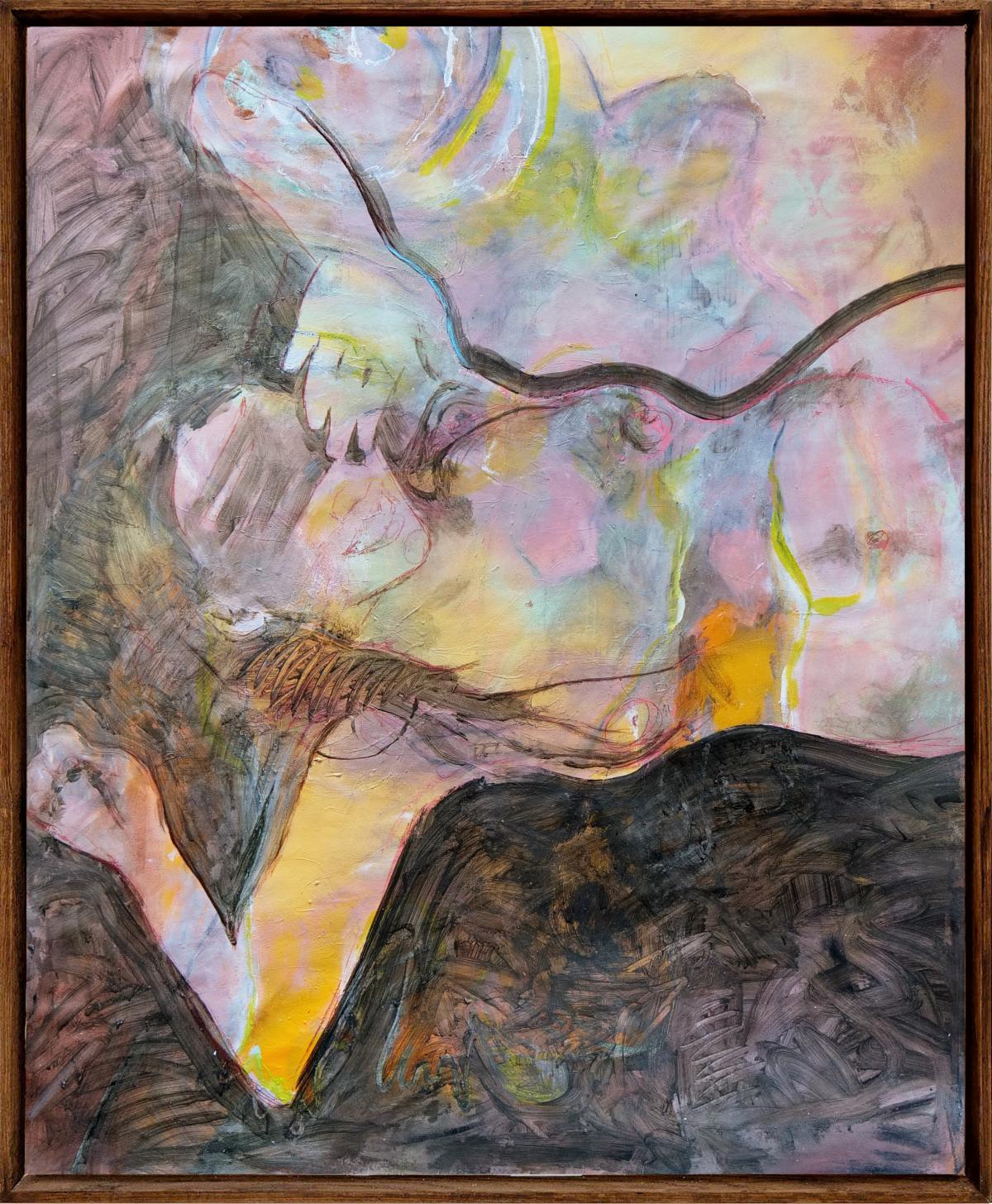
Giovanni Leonardo Bassan
| |
Giovanni Leonardo Bassan
Giada and George, 2025
Oil, acrylic, and spray paint on canvas
170 x 135 cm
Giovanni Leonardo Bassan (b. 1989, Marostica, Vicenza, Italy) is a multidisciplinary Italian artist. He began his artistic education at the Art School A. Martini in Schio before graduating in Industrial Design from the Politecnico di Milano in 2011. A committed world traveler, Bassan has participated in numerous international and humanitarian projects that have shaped both his perspective and practice.
Drawing on close observation of everyday life, Bassan depicts the heterotopias of Paris — spaces that exist outside conventional norms. Immersed in the city's shifting alternative festive scene, he operates simultaneously as a voyeur, a portraitist, and a participant. His compositions evoke fragmented history paintings — tilted, cut, or structurally disrupted — challenging linear interpretation and stable meaning.
His work has been exhibited internationally in both solo and group exhibitions.
More details to come
|
|
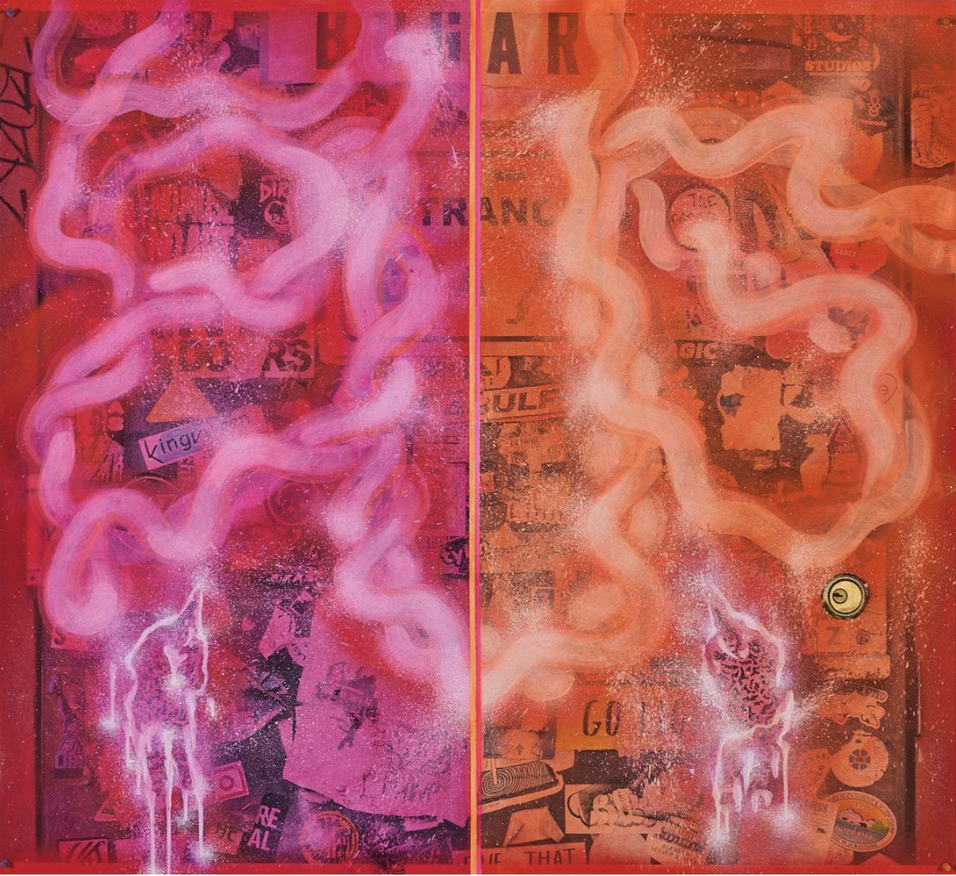
A painting by Gregory de la Haba was featured in the September 16th auction at Tate Ward.
Gregory de la Haba
| |
Gregory de la Haba
Transurfing Vibrations, 2026
Oil on printed canvas
101.60 x 111.76 cm
Gregory de la Haba is an American interdisciplinary artist, writer, curator, and cultural producer.
Born and raised in New York City, he seamlessly integrates fine art and street culture with a foundation in traditional artistic research. A skilled painter with a pedagogical lineage that stretches back to Jacques-Louis David, de la Haba is an exemplary practitioner of fine art whose conceptual practice resists categorization. His work explores themes of addiction, masculinity, and ‘Duende’, a heightened state of emotion, expression, and authenticity derived from pure artistic expression. Through this lens, he unlocks his true self in art and life.
A cum laude graduate of Harvard University, de la Haba has written on a number of artists including Billy the Artist, Richie Culver, Marcus Jansen, Cristina BanBan, Oscar Murillo, Al Diaz, California Locos (Dave Tourjé, Chaz Bojórquez, John Van Hamersveld, Norton Wisdom and Gary Wong), Miya Ando, Andy Moses, Timothy Warren Williams, Lance De Los Reyes, Mel Bochner and many others. De la Haba's writings and artworks have been featured in many publications including The New York Times, Southampton Review, Rizzoli’s Irish America, New York Arts
De la Haba’s work has been exhibited internationally in numerous galleries and art shows.
Click here to view the auction page
|
|
OVER THE PAST COUPLE OF YEARS, WE HAVE FRACTIONALIZED CLOSE TO 200 PAINTINGS. ATTACHED IS THE PERFORMANCE HISTORY OF THESE OFFERINGS. PERFORMANCE IS COMPUTED BASED ON GALLERY PRICES, OTHER THAN IN CERTAIN CIRCUMSTANCES WHERE AUCTION PRICES OR SECONDARY MARKET PRICES OF CONSEQUENCE, INDICATE A REASON TO AMEND.
|
| |
|
Go Rogue! Kenny Schachter Has Advice for Artists—and as Usual, Scoops!
Who’s purchased Vito Acconci entire studio? Are NFTs back? And did Lucas Samaras rip off Yayoi Kusama? Read on.
Kenny Schachter
Artnet, Sep 11, 2026
| |
With a new art season upon us, I’ll briefly (fear not) parse the glut of ink already spilt on high-profile gallery closures and restructurings of last season, predict what might lie ahead, and propose a few mitigating measures.
First, despite all the hoo-ha, a significant number of existing galleries opened new spaces, counterbalanced by a smaller percentage of closures, according to the 2026 Art Basel and UBS Global Art Market Report.
Price pressures in the ultra-contemporary sector (for lack of a better term) have been pervasive and persistent and show no signs of abating. The joy of being an old emerging artist nowadays. Rest assured, nearly 70,000 years after the onset of cave paintings, art remains as coveted as the moment it was extricated from those walls. Nevertheless, plagued by centuries of sameness, the stale market model is overdue for change.
Because of the onslaught of suffocating, hyper-inflated rents and staggering increases in logistical expenses—try renting an apartment in New York, where even the smallest, viewless warren can spark a bidding war above the asking price—more dealers are operating without permanent spaces; 14 percent in total, according to the Basel/UBS report, up six percentage points from the previous report. This manifests itself in a retrenchment to appointment-only offices, domestic contexts, digital strategies, and art agencies (a hybrid breed of artist representation). But don’t get me wrong: Art fairs, auctions, and galleries—mega, medium, and minuscule—aren’t going anywhere anytime soon.
A lot has been written about art’s diminishing audience and prospects for consumption, even as the greatest wealth transfer in history unfolds. (But then again, when have people not died and bequeathed art, money, and homes in which to stash it?) I dismiss a chunk of this as part and parcel of the endlessly expanding demand for near hysterical, attention-grabbing clickbait. Oh, and about those boomers off-loading all that cash and art: May I ask why none of it has been sent my way?
Much can be gleaned from the paradigm shifts in defense strategies that employ small-scale technologies on the tragic frontlines in Ukraine and throughout the Middle East, where low-cost drones and mines continue to enervate superpowers. Precision surgical incursions, as opposed to the legacy of behemoth armaments that criminally consumed billions in resources—and continue to do so unabated—have delivered sobering slaps in the faces of Trump, Putin, Netanyahu, and Xi (not to mention others).
Regarding parallels to the art world, what better place to look than back to the history of do-it-yourself ventures, social-media initiatives, and a second coming of NFTs. (There, I said it—you can wipe the scorn and derision from your mouths.) Let’s begin at the beginning. Between the late 15th century and the early 16th, Albrecht Dürer’s mother, Barbara; his wife, Agnes; and his sister were deployed by the artist to sell prints from his hometown of Nuremberg as well as in regional markets and fairs (yes, even then) on a commission basis.
William Hogarth, whose moralizing series of prints I consider a precursor of conceptualism, organized his own auctions beginning in 1745, displeased with the fact the prints were his most noted and valued works. Hogarth even designed a registration ticket for prospective bidders featuring a satirical image, The Battle of the Pictures, where his art was under assault by more staid fare—a takedown of critics, collectors and auctioneers alike. Mistrustful of commercial auctions, Hogarth launched another auction event, bypassing the houses altogether. Sadly, neither was remunerative for the artist, and they ultimately harmed the market for his oils.
Hogarth’s auctions were an inspiration for my ongoing Hoarder series of no-reserve sales; stay tuned, the seventh iteration is coming soon. More often than not, my auctions don’t perform any better than Hogarth’s, but what choice have I? Plainly and simply, I need these liquidity events. The conservatism of the art market is as tired as I am from thinking about all this—and writing about it—instead of celebrating Labor Day weekend.
|
| |
|
Transcript: Will US debt burst the AI bubble? With Ruchir Sharma
Chris Giles speaks to Ruchir Sharma
Financial Times, September 11, 2026
| |
Chris Giles
Everyone’s looking for the pin that could pop the AI bubble. And if you think this is just a spectator sport for Silicon Valley insiders, well, think again. The tech giants driving this AI boom dominate global stock markets, and if they stumble, the shockwaves will rip straight through your pension, your savings and your investments.
But what if the pin that brings this all crashing down has nothing to do with AI at all? What if that pin is actually America’s enormous ballooning national debt? The AI boom needs vast amounts of borrowed money. The problem? Well, so does the US government, and increasingly they’re competing for the same pool of cash. So could America’s debt problem be the thing that finally pops the AI bubble?
Hello and welcome to The Economics Show. I’m Chris Giles, the FT’s economics commentator standing in for Soumaya Keynes. And to talk us through how the AI boom and US debt are perhaps fatally connected, my guest is Ruchir Sharma, chair of Rockefeller International. His latest book is What Went Wrong with Capitalism. Welcome to the show, Ruchir.
Ruchir Sharma
Thanks, Chris. Great to be back with you again.
Chris Giles
So we always start The Economics Show with a question asking you to rate something on a scale of one to 10. On that scale, how close do you think we are to the bursting of the AI bubble, where one is not at all, and 10 is it’s a highly pressing near-term threat?
Ruchir Sharma
Well, I’d say on that scale we’re pretty much at seven to eight, I would say, Chris. The first thing, of course, is that we have to first agree that this is a bubble or not, right? Because when it comes to bubbles, there is no scientific definition. By some accounts, a bubble is seen to be something which crashes by 40 per cent at least.
But how we know that we’re the top of that summit before that crash comes, there’s no scientific definition of this. So what I had done in the past and also written about is to identify that what are the major signs that you need to first watch for to identify a bubble. And in that regard, I came up with something called the four O’s: the first being overvaluation, the second being over-ownership, the third being over-investment and the fourth being overleverage.
Those are the four O’s I said. If you look at the history of bubbles going back hundreds of years that you typically find that these are the four characteristics which are present when we do see a bubble.
Chris Giles
OK, let’s go to the four O’s in your AI bubble. Which of them are present?
Ruchir Sharma
Right. So first, if you look at overvaluation, that you look at the valuation of AI stocks, or you just look at the broad valuation of the US stock market, what you find is that the US stock market in general, but the AI stocks in particular, are about as expensive as they have ever been in history, right? From a valuation perspective, we are somewhere in what would be defined as the 90th to 100th percentile.
|
| | | |