Weekly News & Updates
Caring for Older Adults Since 1907
|
|
 |
EDWARD I. & FREDA FLEISCHMAN RESIDENCE/LOUIS C. & EDITH B. BLUMBERG PLAZA |
Reserve your suite today! |
Contact Jill Bengle
248-661-2999 jbengle@jslmi.org
|
It’s a privilege to live in our community, reside in secure homes surrounded by the beauty of nature, homes filled with lovely things. When we consider what we truly need to put in our carry-on bags, we are limited only by space. What do we really need? The love of our family and friends. Enough food in our bellies. A spot to relax, study, sleep and safely exist without fear. We are privileged to live where we do. Many of us do not share the same possibilities or own anything near what we have come to depend on, as “necessities.”
With privilege comes responsibility to our families and to the planet. Janis Joplin’s voice singing, “Freedom's just another word for nothing left to lose.” I grew up surrounded by very pretty things - art, antiques, and special curiosities my father collected from his relatives and on his travels. These treasures start to overwhelm the space I share with my husband, who brought his own family heirlooms to the marriage in November of 2019. Selecting a location on the shrinking wall space to display our mutual loot becomes a challenge when we have too much stuff.
The stuff relegated to storage in the basement took a hit in the flood last week. As the river of water headed up the stairway, a voice in my head said, “this is your chance… unburden yourself.” Sadly, all the floating games and toys, books, watercolors, my lifelong collection of New Yorkers, endless cookbooks, and hundreds of Martha Stewart Living periodicals now reside in a dump somewhere along with old artwork that didn’t make it.
Like the process of emptying out a flooded basement, aging well takes planning. I tell myself to pay attention to what has value and meaning as I transition to a less cluttered space. Maybe the items we choose to accompany us through this time in our lives, would be better used in the homes of family, friends or strangers. Stuff and things don’t matter. I don’t sweat the small stuff. So I can dump it and move on with life. Travel light with carry-on only, keeping room only for the people you love… it makes the journey so much better.
Imagine a group of friends, now older adults, who help each other by cleaning out basements, bedrooms, dens, and garages, setting up sales and splitting proceeds to donate to charities. Less to dust, to pack and to schlepp. Freedom comes in many ways. We should make the choice to unload our stuff while we still can. Think about what you really need. Sell and give away what could make a difference in the lives of others.
People think old age is a time of sadness and decline but from the inside it can be a time of discovery, healing, and wholeness. We are privileged to live as we do. Just ask our residents at JSL!
|
DIVERSITY, EQUITY & INCLUSION |
Privilege refers to certain social advantages, benefits or prestige and respect that an individual has by virtue of belonging to certain social identity groups. Within American societies these privileged social identities include being white, male, heterosexual, Christian and wealthy among others.
To learn more about privilege:
Read:
The Smithsonian National Museum of African History and Culture publishes articles and resources that explore race and racism. This article explores whiteness.
|
This thought-provoking essay (with some spicy language) explores white privilege. |
Watch:
What is privilege? This short video seeks to explain.
|
A thought-provoking insight at being white. |
Whitewashed: Unmasking the World of Whiteness. This compelling video shares the history and the contemporary stories shared by white people (on becoming white). |
Think:
When (if applicable) did you first realize you had certain privileges that other racial, ethnic or gender groups didn’t have? What were those privileges?
If non-white, what privileges have you seen that whites had that you didn’t? How did it make you feel?
|
82 YEAR OLD WOMAN COMPETES IN TOUGH MUDDER |
By Cailtin O'kane
Tough Mudder races are just that – tough and muddy. And while the obstacle course requires endurance and muscle strength, one 82-year-old woman is proving youth has nothing to do with it.
Mildred Wilson competed in a Tough Mudder in Missouri this year, with someone motivating her along the way: her late husband, Farrell.
The Sikeston, Missouri resident had done a Tough Mudder in her home state in 2019, when Farrell was still alive. But in 2020, Farrell caught COVID-19 and died from a heart attack while battling the virus.
Instead of staying inside and mourning, Wilson decided getting out and being active would help her through the difficult year.
|
Try this 15 minute resistance band workout to get stronger! |
|
|
|
DOROTHY & PETER D. BROWN MEMORY CARE PAVILION |
Contact us to learn about our private suite rates! |
Contact Jill Bengle
248-661-2999 jbengle@jslmi.org
|
By Tova Schreiber
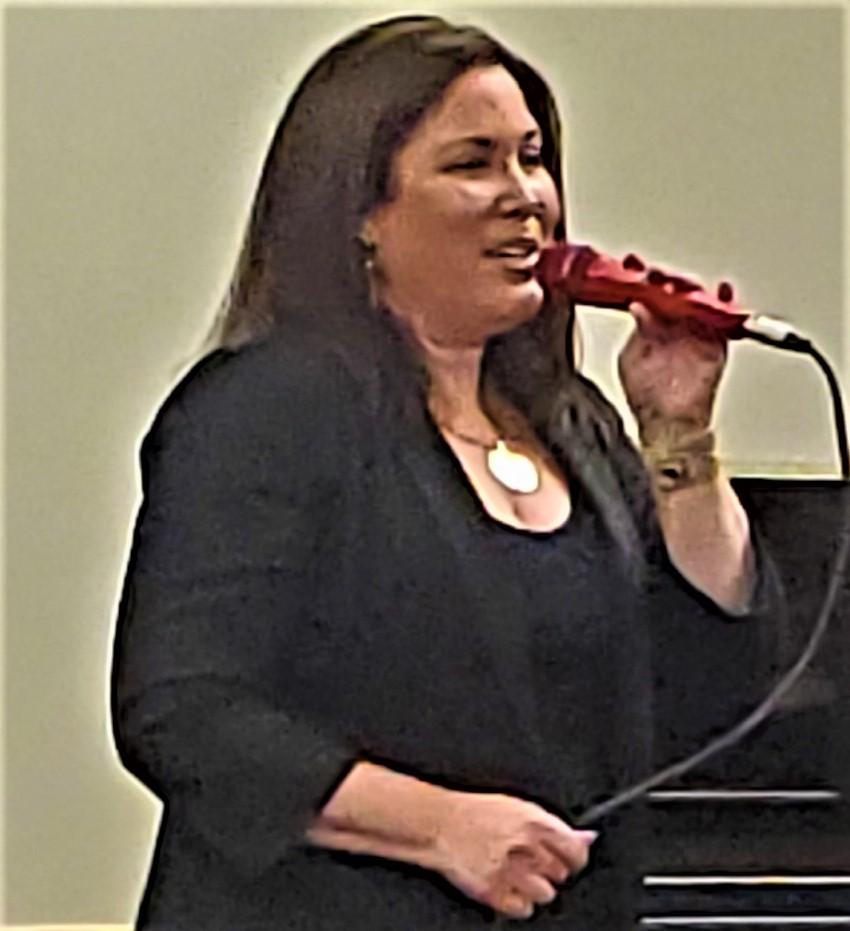
Entertainers have returned to Hechtman Apartments! Dana Stern performed recently and was very well-received with her repertoire of classic songs. She had an audience of close to 40 residents, many of whom sang along!
|
By Marie King
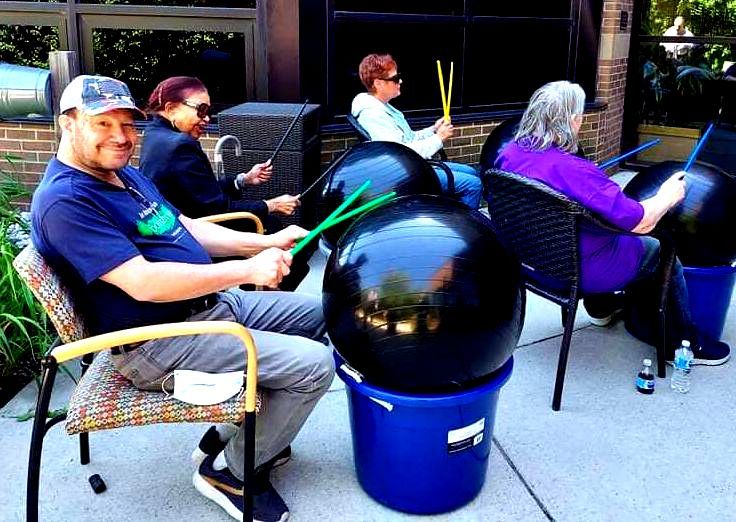
On the Prentis and Teitel campuses in Oak Park, the music is loud; a little too loud. The drumming isn't perfect. Who cares? Our voices singing together express pure joy. Sometimes we are so overcome with the excitement of a song we have to stand and dance.
If you come to cardio drumming, you probably love it. We have a lot of fun together! Laughing, dancing, drumming, reliving the memories that music bring up. It is usually about 45 minutes long and in that time we work out our frustrations, bring up our heartrate, exercise, sing, laugh, and just feel better.
Our group cheers each other on. We laugh at ourselves and each other in a good-natured and supportive way. We often wait for group members to arrive because it wouldn't be the same without them. It is a time to act like a kid again. To have fun no matter what and without a care in the world.
|
HOW TO BECOME MORE FLEXIBLE |
By K. Aleisha Fetters
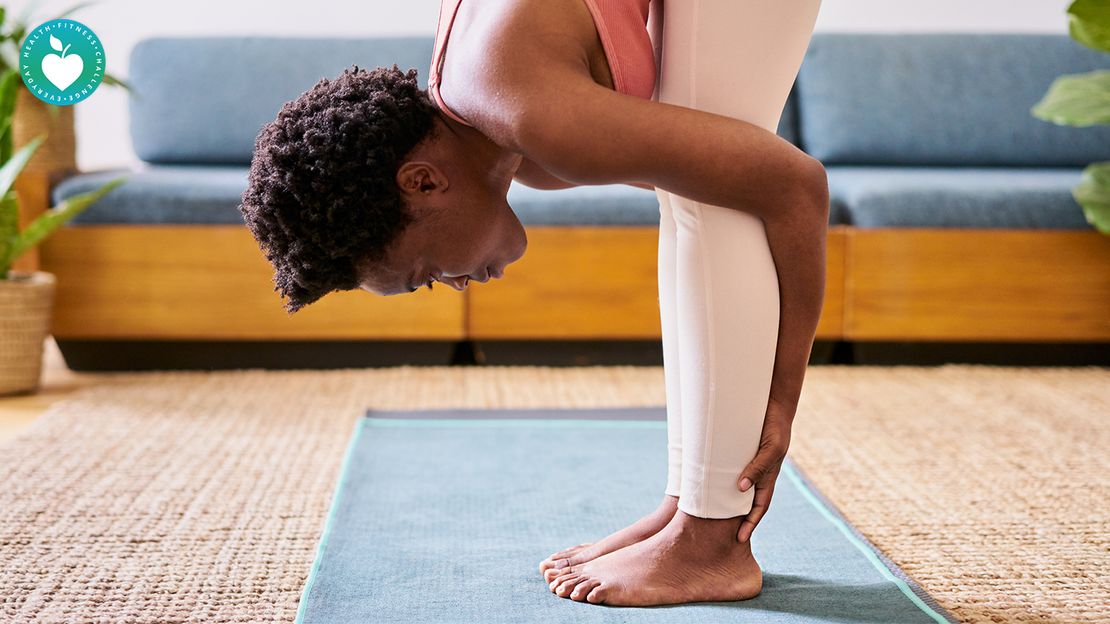
Bend down and touch your toes. Touching your toes, like all other bend-and-hold moves, requires our muscles to stretch.
“Flexibility is the amount of stretch that a given muscle allows,” explains Bryant Walrod, MD, a family and sports medicine physician at the Ohio State University Wexner Medical Center in Columbus.
Every muscle in our bodies is made up of long strands of muscle fibers, or cells, bunched together into progressively larger groups and ultimately wrapped in connective tissue called fascia. Our muscles, by design, contract (which allows you to do things like move or carry an object or push open a door) and also stretch, he explains. And the opposing stretch is just as important as the contraction.
|
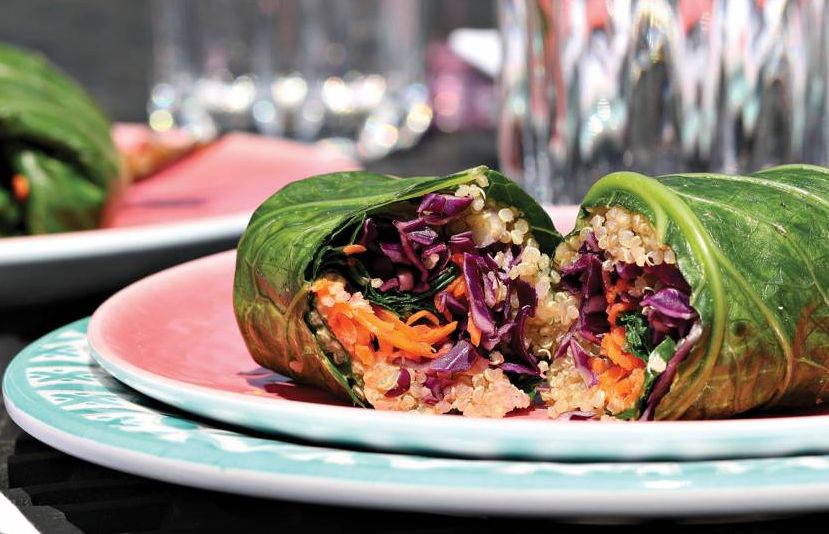
Collard Green Wrap with Sesame and Soy Quinoa Filling
Collard Greens
ice, for ice bath
1 pound collard greens, cleaned and dried
Sesame and Soy Quinoa
2 cups quinoa
1/4 cup reduced-sodium soy sauce, such as Haddar Low Sodium Soy Sauce
1 clove garlic, minced or 1 cube Gefen Frozen Garlic
1 tablespoon fresh lemon or lime juice, such as Heaven & Earth
2 tablespoons toasted sesame oil
1/4 cup rice wine vinegar
1/2 cup oil
For Serving
Vegetables of your choice (e.g., shredded carrots, sliced cucumbers, shredded purple cabbage)
Directions
Prepare the Collard Greens
1) In a large pot, bring six cups of water to a boil. Meanwhile, in a bowl, combine ice and water to make an ice bath and set aside. Once the water in the pot comes to a boil, add a collard green leaf and boil for 30 seconds. Remove from water and immediately place in ice bath. Remove the collard green from the ice bath and place on a cookie sheet lined with paper towels. Continue this process until all the collards are boiled and ready.
Prepare the Quinoa
1) Meanwhile, in a saucepan add two and a half cups of water and bring to a boil. Add the quinoa and reduce heat to simmer. Cover and cook for 15 minutes and set aside.
2) To make your quinoa dressing, add soy sauce, garlic, lemon/lime juice, sesame oil, rice wine vinegar, and oil in a jar. Cover and shake all the ingredients together. Once mixed, add to the cooked quinoa.
Assembly
1) To assemble, take your collard green leaf and lay it flat on counter. Add about a tablespoon of hummus and spread it around the leaf. Then add a third of a cup of dressed quinoa topped with your vegetables. To close, bring in both sides of the leaf over the filling, then take the bottom of the leaf and pull over the filling, tucking it in tightly, and roll. Slice in half and enjoy.
|
|
|
|
Rabbi Dovid S. Polter, Community Chaplain
Our Sabbatical Year
Webster’s dictionary definition of a Sabbatical year is “… a year, usually every seventh, of release from normal teaching duties granted to a professor, as for study or travel.”
What an appropriate dictionary definition for what the world has been through this past year. We experienced a release from our normal task of teaching and associating with others. This COVID Sabbatical year allows us time for self-reflection so that we can recharge and begin once again to be more seasoned teachers and living examples.
“Granted to a professor as for study or travel.” We are all professors and teachers of many topics and subjects. We paused for an entire year to deeply reexamine our approach and to sharpen and hone our interactive skills.
Thanks to this Sabbatical year, we hopefully enhanced our vision of life, our role, and our responsibilities toward society. Healing comes when we begin to ascribe meaning and purpose.
Some four thousand years ago, Noah experienced the same one-year Sabbatical. He and his family were spared from the deluge by being confined to the three-story-ark for a bit over a year (same as us).
Their confinement in the ark had a twofold purpose: One, to be saved and the other to spend the year in self-reflection so that when they would emerge, they would see the world in a new light.
Let us strive to meet the “Noah Standards.” Upon our return to our mainstream world, let us see a more refined world.
Shabbat Shalom by Phone - Enjoy some inspiration.
Dial Toll free: 605-313-4107 Access code: 270368#
(Reference number not needed)
Dial # to hear the most recent recorded message.
Rabbi Dovid S. Polter Jewish Community Chaplaincy Program Jewish Senior Life
248-592-5039 • dpolter@jslmi.org
|
|
This newsletter was created by Jo Rosen and Amanda Martlock
We’re human, prone to mistakes, so if we erred in our newsletter, please forgive us!
|
|
L’Chaim!
We are so grateful for your financial contributions.
Please continue your engAGEment with JSL.
Your support enhances the lives of our residents.
|
|
Nancy Heinrich, Chief Executive Officer
Jennie Klepinger, Chief Financial Officer
Barbra Giles, Executive Director, Strategic Initiatives
Jo Strausz Rosen, Executive Director, Development
Dianne Azzopardi, Executive Director, Human Resources
Ron Colasanti, Executive Director, Dining Services
|
|
|
|
|
People of all faiths and beliefs are welcome. |
|
|
|
|
|
|