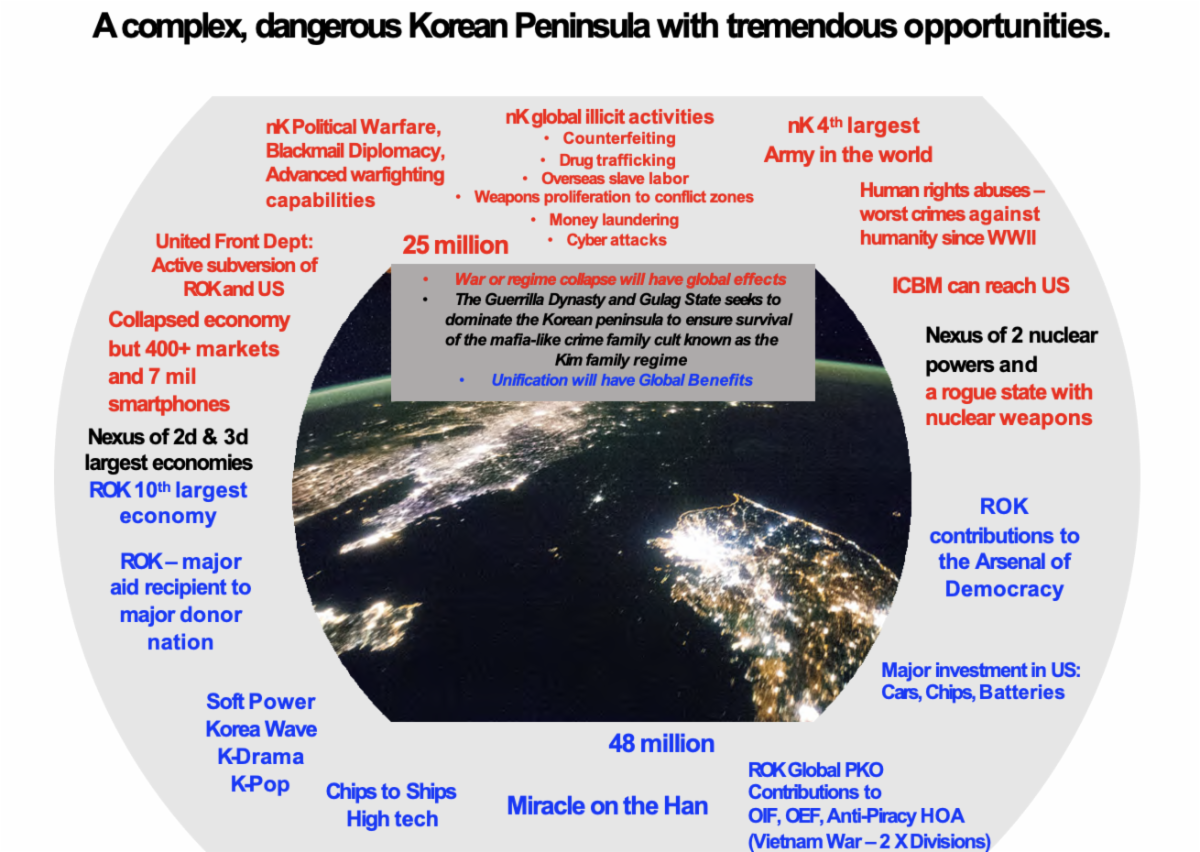
|
Quotes of the Day:
“This constant lying is not aimed at making the people believe a lie, but at ensuring that no one believes anything anymore.
A people that can no longer distinguish between truth and lies cannot distinguish between right and wrong. And such a people, deprived of the power to think and judge, is, without knowing and willing it, completely subjected to the rule of lies.
With such a people, you can do whatever you want.”
—Hannah Arendt, German historian and philosopher (1906–1975)
"To every man, there comes in his lifetime, that special moment when he is figuratively tapped on the shoulder and offered a chance to do a very special thing, unique to him and fitted to his talents; What a tragedy if that moment should find him unprepared or unqualified for the work which would be his finest hour."
– Sir Winston Churchill
"There can be no political morality without prudence; that is, without consideration of the political consequences of seemingly moral action."
– Hans Morgenthau
1. Young North Korean defectors issue vision statement for dignity, hope, freedom
2. Kim may try to reignite 'bromance' with Trump if he returns to White House: ex-Trump official
3. U.S. will do 'everything possible' to disrupt Russia's support for N. Korea: official
4. N. Korea holds crisis meeting to discuss minimizing agricultural damage from natural disasters
5. S. Korea, U.S. begin joint air drills featuring F/A-18, F-35B
6. Unification minister discusses NK defectors' forced repatriation in talks with Campbell
7. Defector or refugee? Does it matter? (Korea)
8. Biden steps down, Harris steps up: What's next for alliance, beyond?
9. British NGO exposes 'gender violence' in North Korean detention centers through 3D documentary
10. Ryanggang: Inside the North Korean Prison State
11. 70 Years After the Geneva Conference: Why is the Korean Peninsula No Closer to Peace?
12. (Yonhap Interview) Scores of N. Koreans staying overseas make attempt to defect: ex-N. Korean diplomat
13. NATO’s New Mission: Keep America in, Russia Down, and China Out
14. N. Korea says it does not care about Trump's boasting of friendship with Kim
15. Unification minister, Campbell vow to address N.K. rights abuses, ensure 'unfettered' info access
16. North Korea brushes off any hope of better U.S. ties under Trump
17. N. Koreans use fallen propaganda balloons to patch roofs
1. Young North Korean defectors issue vision statement for dignity, hope, freedom
This was an excellent event today. It was truly inspiring to hear the stories from these escapees/defectors.
Here is the entire vision statement crafted completely and presented by the escapees/defectors referenced in the Yonhap article below:
Dedication for Dignity, Hope, and Freedom
Dignity matters. Freedom matters. Hope matters.
As people who have recently attained freedom, we are the voice for the voiceless and commit to advanced North Korean human rights. This commitment enables us to mobilize and be the hope for North Korean human rights.
As people who have directly experienced totalitarian oppression, we firmly reject all forms of suppression of individual freedom and human rights. We strongly condemn North Korea's continuous crimes against humanity and systematic brainwashing of its people to justify its actions.
We acknowledge and pay tribute to all those who have tirelessly worked to promote and advance North Korean human rights. Through these efforts, the world has become aware of the human rights atrocities being committed by the regime. We must sustain this movement by continuing to raise global awareness in strengthening international solidarity on North Korean human rights.
This commitment is a call to action of the following:
1. We will work in our respective professions to advance North Korean human rights.
2. We will work to ensure North Korean human rights issues are widely supported irrespective of political agendas.
3. We will build a community that will work to advance the North Korean human rights movement using innovative approaches that are sustainable and effective.
4. We will cultivate and support human rights activists within the defector community.
5. We commit to delivering and implementing various measures to empower the people in North Korea.
6. We will be The Voice for North Koreans, including North Korean refugees and through international solidarity continue to pressure China and North Korea.
7. We will strengthen global networks with activists around the world.
We hope these small ripples that are our commitments lead to a tidal wave of change, bringing human rights and freedoms to our brothers and sisters in North Korea.
To all freedom fighters across the world, we call for continuous solidarity and action until the day our brothers and sisters in North Korea can also enjoy freedom and human rights.
To commitment, courage, hope, action!
Young North Korean defectors issue vision statement for dignity, hope, freedom | Yonhap News Agency
en.yna.co.kr · by Song Sang-ho · July 23, 2024
By Song Sang-ho
WASHINGTON, July 22 (Yonhap) -- A group of young North Korean defectors unveiled a declaration Monday to promote "dignity," "hope," "freedom" for those living in the reclusive country as it stressed their steadfast commitment to enhancing North Korean human rights as the "voice for the voiceless."
The group announced their vision statement as the National Endowment for Democracy, South Korea's unification ministry and Human Asia jointly held an international event designed to shine a light on North Korean human rights situations.
"Dignity matters. Freedom matters. Hope matters," the group said in a statement read out by Lee Sung-ju, a group member, during the event, titled "Preparing for a democratic future of North Korea: Next generation leadership."
"As people who have recently attained freedom, we are the voice for the voiceless and commit to advance North Korean human rights. This commitment enables us to mobilize and be the hope for North Korean human rights," it added.
The three keywords -- dignity, hope and freedom -- were key reasons why the young defectors left the North, a country known for its social oppression and chronic economic hardships that have shown no signs of easing amid Pyongyang's dogged pursuit of nuclear and missile programs.
Lee Sung-ju, a North Korean defector, speaks during an event on North Korean human rights in Washington on July 22, 2024 in this photo captured from the YouTube account of the National Endowment for Democracy. (PHOTO NOT FOR SALE) (Yonhap)
Comprised of people in various fields, including business, journalism and music, the defectors' group itself appears to serve as a message of hope for the young generations in the North and a warning for the North Korean regime.
The declaration called for a series of concrete actions, including ensuring North Korean rights issues are supported "irrespective of political agendas," cultivating human rights activists and devising measures to empower people in North Korea.
Pointing to the group members' dreams, Lee stressed that having such dreams in North Korea is "impossible."
"What is the essence (difference) between dictatorship and a free country? You can have your own dream in a free country," he said.
"We were taught that the U.S. was our sworn enemy. But we are standing in the U.S. now and announcing our vision statement in the heart of our sworn enemy. Can you imagine that?"
Also attending the event were South Korea's Unification Minister Kim Yung-ho, U.S. Special Envoy for North Korean human rights Julie Turner as well as You Ji-tae, a South Korean actor who serves as the unification ministry's ambassador for North Korean human rights.
U.S. Special Envoy for North Korean human rights Julie Turner speaks during an event on North Korean human rights in Washington on July 22, 2024. (Yonhap)
Turner expressed her expectations for the young defectors' role to promote North Korean human rights, portraying them as "Generation 3.0."
"I am glad to be here today talking about Generation 3.0, which is better, brighter and armed with new technology, with new ideas to help carry forward the North Korean human rights movement into the future," she said.
The minister likened North Korean defectors to what he called "pioneers" who landed in North America hundreds of years ago in their quest for freedom.
"The American people who live in freedom and enjoy human rights are the historical proof. Approximately 400 years ago, pioneers crossed the Atlantic Ocean to this unknown land in search of religious, political and economic freedom," he said.
"These courageous pioneers fled from oppression and persecution in the old world to realize a future where the dream of freedom and opportunity exists."
South Korea's Unification Minister Kim Yung-ho speaks during an event on North Korean human rights in Washington on July 22, 2024. (Yonhap)
Yoo cautioned against "indifference" about North Koreans' travails, calling for people to "not close your eyes."
"It is not injustice that nurtures injustice, but our indifference," he said. "If there is any injustice anywhere in this world, do not close your eyes."
He went on to call for action to help North Korean residents "who are neglected by their own country."
"I urge you to extend your hands to the darkest of places," he said.
You Ji-tae, a South Korean actor, speaks during an event on North Korean human rights in Washington on July 22, 2024. (Yonhap)
sshluck@yna.co.kr
(END)
en.yna.co.kr · by Song Sang-ho · July 23, 2024
2. Kim may try to reignite 'bromance' with Trump if he returns to White House: ex-Trump official
(LEAD) Kim may try to reignite 'bromance' with Trump if he returns to White House: ex-Trump official | Yonhap News Agency
en.yna.co.kr · by Song Sang-ho · July 23, 2024
(ATTN: RECASTS lead)
By Song Sang-ho
WASHINGTON, July 22 (Yonhap) -- North Korean leader Kim Jong-un may try to rekindle his "bromance" with former President Donald Trump if he returns to the White House, a former U.S. official said Monday, predicting Kim could propose a deal to limit his regime's nuclear program in return for American troops' pullout from South Korea.
H.R. McMaster, who served as national security advisor for Trump from 2017-2018, made the remarks amid speculation that the GOP presidential nominee, if reelected, could seek direct diplomacy with Kim in pursuit of a peace deal.
During his nomination acceptance speech last week, Trump boasted about his personal ties with Kim and signaled his apparent desire to reengage with the North Korean leader.
"I think if Donald Trump is elected president, what you're going to see right away is Kim Jong-un trying to rekindle their bromance," McMaster said during an online chat hosted by the Washington-based Hudson Institute.
"Then what he's going to do right after that is he's going to say, 'Hey, I've got a deal for you. I'm going to satisfy your impulse toward retrenchment, and in exchange for U.S. forces leaving the peninsula and just letting me have only just a few nukes, I will stop my long-range ballistic missile program, and I'll limit my nuclear program,'" he added.
The former White House official stressed that Kim may angle for an agreement like the Iranian nuclear deal that Washington withdrew from during Trump's presidency in 2018.
"He's going to hope to get something like an Iran nuclear deal -- a terrible deal for the United States. He won't get that from a Trump administration, but he's posturing himself for that," he said.
This AFP photo shows then U.S. President Donald Trump (R) shaking hands with North Korean leader Kim Jong-un after signing a joint statement at the Capella Hotel on Sentosa Island in Singapore on June 12, 2018. (Yonhap)
Though Trump, if reelected, could seek to complete the unfinished business of addressing the North Korean quandary, uncertainty remains over whether Pyongyang would accede to any U.S. outreach at a time when it is deepening cooperation with Moscow in the midst of Russia's war in Ukraine.
Touching on a deepening military alignment between Moscow and Pyongyang, McMaster said that what Kim wants is to "break out of isolation."
"Russia has helped him do that with providing the energy needs for North Korea. This let up a lot of pressure on North Korea," he said.
He claimed that North Korea, Russia and China want to push the U.S. "out of critical regions."
"What you hear over and over again is this mantra of getting the U.S. out of these regions so China can establish an exclusionary area of primacy across the Indo-Pacific, North Korea can get the U.S. off the peninsula as the first step in unifying the Korean peninsula," he said.
"What Iran wants to do is again to extend his hegemonic influence, and Russia wants to reestablish itself as a great power and reestablish the Russian Empire."
On the issue of defense cost-sharing with allies, he stressed Trump's argument against "free riding."
"This is where President Trump has had a very strong argument: Americans don't want people free-riding on their largesse," he said.
He pointed to South Korea and Japan as burden-sharing examples.
"South Korea, for example, has a very robust defense capability as (it is) increasing their defense spending," he said. "Both of those countries defray the cost of U.S. forces such that if you were to move those U.S. forces to the United States, you would pay three or four times more as taxpayers to sustain those forces and their facilities."
sshluck@yna.co.kr
(END)
en.yna.co.kr · by Song Sang-ho · July 23, 2024
3. U.S. will do 'everything possible' to disrupt Russia's support for N. Korea: official
U.S. will do 'everything possible' to disrupt Russia's support for N. Korea: official | Yonhap News Agency
en.yna.co.kr · by Song Sang-ho · July 23, 2024
By Song Sang-ho
WASHINGTON, July 22 (Yonhap) -- The United States will do "everything possible" to disrupt Russia's military assistance to North Korea, a senior U.S. diplomat said Monday, reaffirming America's security commitment to its allies in the Indo-Pacific.
Assistant Secretary of State for East Asian and Pacific affairs Daniel Kritenbrink made the remarks a day after President Joe Biden ended his reelection bid amid concerns that should former President Donald Trump return to office, his approach to alliances could lead to a weakening of Washington's defense commitments to allies.
Kritenbrink held a virtual press briefing on Secretary of State Antony Blinken's upcoming trip to Laos, Japan, the Philippines, Singapore and Mongolia. He said the trip is designed to underscore that the U.S. is "all in" on the Indo-Pacific, which he cast as an "essential driver of America's future security and prosperity."
This file photo, released by the Associated Press, shows Secretary of State Antony Blinken speaking to the press in Washington on July 17, 2024. (Yonhap)
"We've seen ... the recent support provided by Russia to the DPRK," Kritenbrink said, referring to the North by its official name, the Democratic People's Republic of Korea.
"I don't have anything to say on details. What I will say is that we will continue, as we've done in recent weeks, to take a series of measures, including sanctions measures, to do everything possible to disrupt that support," he added.
He reiterated Washington's apprehension over a deepening military alignment between Moscow and Pyongyang.
"We are deeply concerned by the cooperation that we see taking place between Moscow and Pyongyang -- this nexus that has developed, which we think is destabilizing both for Europe and for Asia," he said.
"We've seen North Korea providing weapons and other material to Russia that's been used on the battlefield, that's been used to kill Ukrainians."
The briefing came after Biden dropped out -- an exit that raised anew questions whether his policy drive to strengthen a network of regional allies and reinforce America's deterrence commitment to them will continue beyond the Nov. 5 presidential election.
Trump's America-first credo and calls for allies to contribute more towards defense have also cast doubts over whether the U.S. would fully support its allies should they confront a security crisis.
Responding to a question about such doubts, Kritenbrink pointed to "enduring" elements of America's engagement in the Indo-Pacific as well as "strong" bipartisan support for that.
"As far as reassuring allies, I would just say again (that) we are going to continue to do everything possible to demonstrate that commitment in coming months," he said.
He also underlined "fundamentals" that undergird America's engagement in the region.
"We do try to reassure our allies and partners that there are certain fundamentals -- I think about America's engagement -- that are not going to change, that have been consistent, such as US$2 trillion in trade between the U.S. and the region annually, a trillion dollars of American investment in the region and nearly a trillion dollars of regional investment in the U.S.," he said.
"There's strong bipartisan support on Capitol Hill for our allies and partners in our approach to the region. So I think both (are) underscoring the tremendous successes of the last four years, while also pointing out (that) some of those constants and enduring elements of America's engagement to the region will form the basis of most of our conversations in the week ahead."
During his trip to Laos, Blinken is set to attend a set of ministerial meetings, involving the Association of Southeast Asian Nations (ASEAN), including an ASEAN Regional Forum (ARF) -- a rare multilateral gathering where Pyongyang's representative has been present.
Kritenbrink said that Blinken is not expecting to have a meeting with a North Korean representative at the ARF meeting. He anticipated a North Korean official would join the ARF.
"But I will reiterate that despite provocative and escalatory steps that North Korea has taken, we continue to reiterate that the door to dialogue remains open," he said. "Unfortunately of course, North Korea has never taken advantage of that. They have simply continued to take a number of escalatory steps."
In response to the North's rejection of dialogue, he said that the U.S. has had no choice but to double down on deterrence measures.
In Japan, Blinken will join Defense Secretary Lloyd Austin for a "two-plus-two" foreign and defense ministerial meeting with Japanese counterparts. They will discuss the bilateral alliance and trilateral cooperation with South Korea among other issues, according to Kritenbrink. The officials will also discuss extended deterrence at the ministerial level for the first time.
In addition, Blinken plans to join his Japanese, Australian and Indian counterparts for a Quad foreign ministerial meeting.
sshluck@yna.co.kr
(END)
en.yna.co.kr · by Song Sang-ho · July 23, 2024
4. N. Korea holds crisis meeting to discuss minimizing agricultural damage from natural disasters
Remember that any problem can be made insoluble if enough meetings are held to discuss it. This is probably a contributing factor to why Kim's policies fail (Note sarcasm).
N. Korea holds crisis meeting to discuss minimizing agricultural damage from natural disasters | Yonhap News Agency
en.yna.co.kr · by Kim Han-joo · July 23, 2024
SEOUL, July 23 (Yonhap) -- North Korea has held a crisis response meeting to discuss measures to minimize damage that natural disasters could cause to crops and other agricultural products, state media reported Tuesday.
The meeting, which took place virtually Monday, also discussed progress in natural disaster prevention projects for the first half of the year, such as recovery efforts from heavy downpours and droughts to prevent damage to farming, according to the Korean Central News Agency.
The session was chaired by Premier Kim Tok-hun, it said.
In October 2022, the North adopted a crisis response law that outlined the establishment of the national crisis response committee in the wake of heavy flooding and the outbreak of the COVID-19 pandemic.
The North, which has long struggled with food shortages, designated the scope of the "crisis" as the inflow and spread of malicious diseases, and the occurrence of natural disasters, such as floods, typhoons and earthquakes.
North Korean Premier Kim Tok-hun (R, front) inspects a farm in South Hwanghae Province, in this undated file photo released by the North's official Korean Central News Agency on April 9, 2024. (For Use Only in the Republic of Korea. No Redistribution) (Yonhap)
khj@yna.co.kr
(END)
en.yna.co.kr · by Kim Han-joo · July 23, 2024
5. S. Korea, U.S. begin joint air drills featuring F/A-18, F-35B
We are doing a very good job of ensuring interoperability and sustaining our combined combat skills. This is part of the foundation of deterrence.
S. Korea, U.S. begin joint air drills featuring F/A-18, F-35B | Yonhap News Agency
en.yna.co.kr · by Lee Minji · July 23, 2024
SEOUL, July 23 (Yonhap) -- South Korea and the United States began a combined air exercise Tuesday, the Air Force said, in efforts to strengthen joint combat capabilities against North Korea's evolving threats.
The exercise will run through Aug. 8 at an air base in Suwon, south of Seoul, and feature the U.S. Marine Corps' F/A-18C/D and F-35B fighters as well as South Korea's F-16, FA-50, KA-1 and F-15K aircraft, according to the Air Force.
The joint air drills will include training on base fighter maneuvers, close air support, air interdiction and defense counter air, meant to enhance the allies' interoperability of different types of aircraft, it added.
Earlier this month, the U.S. Indo-Pacific Command said that the F/A-18 Hornet aircraft and the Marine All-Weather Fighter Attack Squadron, dubbed the Fighting Bengals, arrived at Suwon Air Base to "enhance their standard of readiness and lethality with our South Korean allies and joint forces."
This undated file photo shows the U.S. F/A-18F Super Hornet fighter. (Yonhap)
mlee@yna.co.kr
(END)
en.yna.co.kr · by Lee Minji · July 23, 2024
6. Unification minister discusses NK defectors' forced repatriation in talks with Campbell
The international community must pressure China and north Korea over forced repatriation. This is a terrible human rights abuse, We listened to one escapee/defector tell his story of being caught by the Chinese and forcibly repatriated. Fortunately on his second escape attempt he made it to South Korea.
Unification minister discusses NK defectors' forced repatriation in talks with Campbell
The Korea Times · July 23, 2024
South Korea's Unification Minister Kim Yung-ho speaks to the press in front of the State Department in Washington, D.C., July 23. Yonhap
South Korea's Unification Minister Kim Yung-ho said Monday he discussed North Korean defectors' forced repatriation, security on the Korean Peninsula and other issues during his talks with a senior U.S. diplomat in Washington.
Kim met with U.S. Deputy Secretary of State Kurt Campbell at the State Department as he is in the U.S. capital for talks with U.S. officials, lawmakers and experts to discuss North Korea and other related issues. His trip is set to run through Friday.
"I brought up the issue (of defectors' repatriation) and discussed the importance of cooperation between U.S. and South Korean governments on that matter," Kim told reporters after his meeting with Campbell.
Two North Korean defectors joined the meeting to explain the domestic situation in North Korea, Kim said.
Seoul and Washington have been coordinating to ensure North Korean defectors, particularly those in China, will not be sent back to the North against their will. They have been calling for China and other countries to abide by the international principle of non-refoulement.
In the meeting with Campbell, Kim also called for Washington's cooperation with Seoul's ongoing efforts to craft a new discourse for national reunification that focuses on freedom and other values.
"I told the U.S. side that we are preparing to announce a new discourse on unification," he said. "Though we have not yet made decisions in terms of when and what to announce and in what format, we asked for the U.S. side's interest and cooperation."
Pointing to President Yoon Suk Yeol's speech marking the 1919 independence movement against Japanese colonial rule, Kim stressed that "unification should materialize in a way that ensures all individuals in the two Koreas can enjoy freedom and affluence."
Kim's visit to Washington comes at a time of heightened uncertainty in U.S. politics after President Joe Biden dropped out of the presidential race on Sunday while former President Donald Trump is cranking up his reelection campaign. (Yonhap)
The Korea Times · July 23, 2024
7. Defector or refugee? Does it matter? (Korea)
They are Koreans from the north.
I use that somewhat awkward phraseology to emphasize there is one Korean people and one Korea. I try not to use defector because it implies being a traitor to one's country (although I have to use defector because it is the mcome commonly used term).
Defector or refugee? Does it matter?
The Korea Times · July 23, 2024
North Korean defectors or refugees?
By Casey Lartigue Jr.
Shakespeare didn’t have former North Koreans in mind but his words are appropriate: “That which we call a rose, by any other name would smell as sweet." On July 14th, I volunteered on behalf of my organization at the first North Korean Refugee Day. But wait. Some news articles and reports called it the first North Korean Defector Day.
During the day, as we informed visitors to the Freedom Speakers International (FSI) booth about our work with North Korean refugees, some reporters and attendees asked about the terms “defector” and “refugee.” I have heard this question discussed and debated many times over the past 12 years.
The terminology for North Koreans escaping their country has evolved. Initially, they were called "defectors," a Cold War term with political connotations implying escape for political reasons. Over time, "refugees" became more common, focusing on the humanitarian aspect of seeking asylum from persecution and human rights violations. In South Korea, the term Saeteomin, meaning "new settlers" or "newly settled people," avoids the stigma associated with defection and emphasizes integration. Other terms, such as "North Korean escapees," "expatriates," "exiles," and “former North Koreans” are also used.
The confusion about terminology to use about a group is not unique to North Korean refugees as groups struggle with social integration and self-identification. For example, the terminology for Black Americans has changed several times. In the late 19th and early 20th centuries, "colored" was a common term (along with various racial slurs). The term “Negro” replaced that. During the 1960s, "Afro American" and "Black" emerged during the Black Power Movement. In 1989, long-time Civil Rights leader Rev. Jesse L. Jackson wrote a commentary in the New York Times arguing that "African American" has more cultural integrity. One argument he and others have made is that there is no “Black” continent, unlike other groups that can point to a place where their nationalities are on world maps.
If “African American” is replaced, I would vote for “Negroid.” My parents were identified as “Negroid” on my birth certificate issued by the state of Texas.
Other groups have also experienced changes in terminology. Terms like "handicapped" and "crippled" have been replaced by "physically challenged," "disabled," "person with disabilities" and “differently abled.” The LGBTQ+ community has seen a variety of terms over time. "Homosexual," "gay," and "lesbian" were prominent during the gay rights movement starting in the late 1960s. Recently, some people have embraced "queer" and "fag," terms that were previously offensive. The various versions of "LGBTQ+" now include numerous related identities.
In the 1960s and 1970s, "Women's Lib" or "Women's Liberation" were accepted, but over time, "feminist" and "women's rights activist" became more common. Among indigenous peoples, terms have shifted from "Indians" or "Eskimo" to "Native American," "First Nation," and "Inuit."
Regarding mental health, terms have shifted from "insane" or "lunatic" to "mentally ill," and now to "person with mental health issues" or "neurodivergent."
Throughout history, based on an Internet search, Koreans have been labeled or identified with different terms, ranging from “Joseon People,” “Han People,” “Gaoli” and “Eastern Barbarians” (in ancient Chinese books), and the country is still sometimes referred to as the Hermit Kingdom.
The evolution of terminology reflects changing societal attitudes and a deeper understanding of identity. I write this column at the risk of one of the members or activist leaders of the various groups getting upset with me. The only reason I am thankful for being mortal is that if I lived forever, then I might use the wrong pronoun or group identification from centuries ago. I recently learned about she/her or he/him and non-binary ways of identification.
Given the global and historical trend of evolving terminology, it shouldn't be surprising that North Korean escapees adopt different terms and that others try to label them for political, legal, and humanitarian reasons. It also shouldn’t be surprising that not everyone in the group agrees with the terms. More than 34,000 North Koreans have escaped to South Korea since the late 1990s. Those former North Koreans who have been here for two decades or more might be surprised to be labeled as "newly settled people." Some people have asked North Korean refugees and defectors directly, but former North Koreans often lack the nuance of the various terms in English and or hesitate to speak on behalf of others.
As Shakespeare said, "That which we call a rose, by any other name would smell as sweet." When attendees at the first North Korean Refugee Day asked me which term was most appropriate for former North Koreans, I explained some of what I wrote above. That’s because it doesn’t matter to me, and I expect the term to continue evolving. I have heard about this issue over terminology and semantics for 12 years and have noticed this question is rarely asked by those of us doing the work.
Casey Lartigue Jr. (CJL@alumni.harvard.edu) is the co-founder of Freedom Speakers International with Lee Eun-koo and co-author with Han Song-mi of her memoir "Greenlight to Freedom: A North Korean Daughter’s Search for Her Mother and Herself.”
The Korea Times · July 23, 2024
8. Biden steps down, Harris steps up: What's next for alliance, beyond?
Biden steps down, Harris steps up: What's next for alliance, beyond?
koreaherald.com · by Ji Da-gyum · July 22, 2024
Experts view Harris likely to uphold Biden's foreign policy objectives if she becomes Democratic nominee
By Ji Da-gyum
Published : July 22, 2024 - 17:31
President Joe Biden (left) and Vice President Kamala Harris stand on stage at the Democratic National Committee winter meeting, on Feb. 3, 2023, in Philadelphia. (AP)
US President Joe Biden's seismic decision to drop out of the presidential race and endorse Vice President Kamala Harris as the Democratic nominee on Sunday has rattled South Korea.
The tectonic political shift raises critical questions about whether the steadfast South Korea-US alliance, exemplified by the Washington Declaration and the crucial trilateral cooperation with Japan highlighted at the Camp David summit, will endure despite Biden’s withdrawal.
Hours after Biden withdrew from the presidential race, the South Korean presidential office struck a cautious tone on his decision.
"We refrain from commenting on the internal political situations of other countries," a presidential official said on Monday on condition of anonymity.
"The support for the Korea-US alliance within the US is bipartisan, and our government will continue to work closely with the US to further develop the Korea-US Global Comprehensive Strategic Alliance."
Experts in Seoul explained on Monday that Biden's decision to drop out of the presidential race does not significantly impact US foreign policy concerning the US-Korea alliance now or in the future, despite potential minimal differences in approach.
They emphasized that if Harris secures the Democratic nomination, she is likely to uphold Biden's foreign policy objectives regarding the Korea-US alliance -- centered on the US extended deterrence commitment against North Korea -- and the trilateral cooperation among South Korea, the US and Japan.
"Although President Biden spearheaded these policies, their implementation was ultimately a collective effort by the entire Biden administration. Key figures who were instrumental in driving these initiatives remain in place," Cho Byung-jae, former chancellor of the Korea National Diplomatic Academy, told The Korea Herald.
"Vice President Harris was also part of this team, and so far, there has been no indication from the Biden administration that there will be any changes to these policies."
Kim Jin-a, a professor in the Language and Diplomacy Division at Hankuk University of Foreign Studies, noted that the "Washington Declaration has been followed by various institutional and procedural measures. The subsequent actions have made significant changes to it unlikely."
Kim also pointed out that the impact on foreign policy will be "minimal" compared to other domestic issues such as gender equality and abortion, areas where Harris has taken a more vocal stance, if she becomes the Democratic nominee.
Sen. Kamala Harris, D-Calif., speaks before the Senate Select Committee on Intelligence on Capitol Hill, June 13, 2017, in Washington. (AP)
More principled approach
However, Harris's comparatively lesser experience in foreign affairs, when juxtaposed with Biden's extensive background, may have implications for her administration's foreign policy approach.
During her tenure with Biden, Harris's influence on foreign policy has been relatively limited. She has consistently supported and aligned with Biden's established foreign policy positions.
Before entering the political arena as California's junior US senator in 2017, her career was primarily focused on law enforcement, serving as the district attorney of San Francisco and the attorney general of California.
Cha Du-hyeogn, director of the Center for Foreign Policy and National Security at the Asan Institute for Policy Studies in Seoul, predicted that Harris and her team might "seek to adhere more strictly to the principles and framework of the NPT" during discussions on US extended deterrence with South Korean partners.
The NPT stands for the Treaty on the Non-Proliferation of Nuclear Weapons.
As Harris has not yet articulated her own distinct foreign and security policies, she is expected to follow the overall direction established by Biden while aligning with the broader Democratic Party's stance.
"The Democratic Party places a stronger emphasis on non-proliferation principles than Biden's individual approach," Cha told The Korea Herald.
"While Biden has shown some flexibility in decisions affecting global nuclear deployment, Harris is expected to adhere more faithfully to the party's non-proliferation principles."
This suggests that Harris and her team would be less accommodating of nuclear policy discussions, which have been resonating within South Korean society. Instead, they would likely emphasize South Korea's commitment to its obligations under the NPT, as outlined in the Washington Declaration.
Cha also explained that Harris's more progressive stance on domestic issues, such as gender equality, compared to Biden, might extend to her foreign and security policies.
Progressive policies often emphasize stringent regulatory frameworks.
"As a result, Harris's approach will likely be more rigid and principle-based, ensuring that policies remain firmly within the boundaries of the non-proliferation treaty," Cha said.
US Vice President Kamala Harris is given a tour near the demarcation line at the demilitarized zone (DMZ) separating North and South Korea, in Panmunjom on September 29, 2022. (Pool via AFP)
Vocal on rules-based order
Harris was vocal about North Korea's illicit nuclear and missile programs that violate UN Security Council resolutions and its human rights abuses during her visit to the demilitarized zone separating the two Koreas in September 2022.
Harris publicly labeled North Korea as a "brutal dictatorship," denouncing its "rampant human rights violations, and an unlawful weapons program that threatens peace and stability."
Harris also eloquently championed the significance of the Biden administration's commitment to the international rules-based order on the global stage, including at the Munich Security Conference and the East Asia Summit in Jakarta in 2023, highlighting its crucial role in maintaining peace and prosperity in the Indo-Pacific.
In 2022, aboard the USS Howard at Yokosuka Naval Base, she accused China of "undermining key elements of the international rules-based order" and criticized its "disturbing behavior" in the East and South China Seas and "provocations across the Taiwan Strait."
Similarly, as a senator, Harris also worked on legislation promoting human rights in Hong Kong and Myanmar as well as addressing the Chinese government's abuses in the Xinjiang Uyghur Autonomous Region.
Nonetheless, Cho assessed that shifts away from established foreign policies are inevitable in the current presidential race, with less than four months remaining until the election.
"As the Democratic Party immerses itself in the election process and Biden passes the torch to the next Democratic presidential candidate, it is inevitable that not only foreign policy but all policies will lose momentum. This decline is unavoidable. In this broader context, it is reasonable to expect that policies will weaken," Cho said.
"Even if Biden had not withdrawn, the high likelihood of Trump returning means that Biden's policies would already be losing momentum."
koreaherald.com · by Ji Da-gyum · July 22, 2024
9. British NGO exposes 'gender violence' in North Korean detention centers through 3D documentary
This is a google translation of a VOA article.
British NGO exposes 'gender violence' in North Korean detention centers through 3D documentary
https://www.voakorea.com/a/7708496.html
2024.7.23
A British civic group has released a mini-documentary in 3D that shows the reality of sexual and gender-based violence in North Korea's Ryanggang Province concentration camps. The group says gender-based violence is widespread and systematic in North Korea's penal system, and calls for an urgent response from the international community, including accountability. Reporter Kim Young-kwon reports.
On the 22nd, Korea Future, a British private organization, released a documentary video produced in 3D that shows the reality of gender violence in the Hyesan Provincial Security Agency detention center in Ryanggang Province, North Korea.
This 12-minute 3D documentary vividly shows the various sexual and gender-based violence (SGBV) inflicted by Ministry of State Security agents on North Korean women who were forcibly repatriated from China, through the testimonies of North Korean defectors.
A North Korean defector woman is being interviewed in a documentary video produced in 3D that shows the reality of gender violence in the Hyesan Provincial Security Agency detention center in Yanggang Province, North Korea, released by Korea Future on the 22nd. Photo = Korea Future YouTube screenshot
One North Korean defector in the video testified that the so-called "pump," in which North Korean defectors are stripped naked to check if they have hidden Chinese money in their wombs, causes great humiliation and shame to the women.
[Recording: North Korean defector woman] “They stood men and women together and told us to take off our clothes. They examined our bodies. So I was really embarrassed. The guard was a man and the people who were arrested with me were also men, so I felt really humiliated when they told me to take off all my clothes. I tried not to take them off, but the guard kept swearing at me and telling me that I had to take them off no matter what. So I did. But it was more humiliating than just embarrassing.”
The testimony that a woman six months pregnant was forced to have an abortion and was not even given proper treatment, saying that she did not want to have a child with a Chinese man, was also recreated in 3D video.
[Recording: North Korean female defector] “The security service leader told me that I should have an abortion because it was a Chinese child. So I said I wouldn’t drop it. But I had to drop it. I couldn’t give birth because it was a Chinese child… So the security service took me to the hospital and had an abortion. I didn’t receive any special treatment after having the abortion.”
Defectors said they only realized this was a serious violation of human rights after coming to South Korea, and that the concept of human rights protection is virtually nonexistent in North Korea.
[Recording: North Korean defector] “When I came to South Korea, I knew what human rights were. In North Korea, I didn’t know what human rights were. All North Koreans live without knowing what human rights are. What are my human rights? The North Korean people’s level of thinking is that I should be treated that way. When I came to South Korea, I knew that human rights were guaranteed and that my human rights were being violated, but in North Korea, I didn’t know.”
Korea Future said in a press release that the mini-documentary “illuminates the widespread and systematic perpetration of sexual and gender-based violence (SGBV) within the North Korean penal system.”
[Korea Future] “This mini-documentary highlights the widespread and systematic commission of sexual and gender-based violence (SGBV) within the DPRK penal system. Through innovative visual investigations that combine advanced digital techniques such as 3D modeling and satellite imagery with survivor testimonies and investigative documentation, we aim to shed light on these critical issues.”
He added that through innovative visual investigations that combine cutting-edge digital technologies such as 3D modelling and satellite imagery with survivor testimonies and investigative documents, we aim to shed light on these important issues.
He also called for an urgent international response to the brutal reality faced by North Korean prisoners, saying the international community must strengthen its support for justice and accountability for victims and survivors.
Excerpt from Korea Future Annual Report
The group said in its annual report released last month that it had so far “identified 1,070 perpetrators of human rights abuses and documented 8,718 cases of human rights abuse through 571 survivor and witness interviews.”
The group's accountability team leader, Lee Hyun-sim, told VOA on Monday that the goal of the new video project is to use creative methods to hold North Korean human rights abusers accountable.
[Recording: Team Leader Lee Hyun-shim] “I think it’s meaningful that we can implement justice in a more creative way through these new techniques. It also seems like it could be an opportunity to provide contextual information for the ICC (International Criminal Court) or criminal prosecutions in the distant future. I think it could be an area where we can provide information to others through a new perspective and help enrich the documentation work we’ve been investigating so far.”
The team leader said that both governments and North Korean defector victims are showing great interest in these 3D images and responding positively.
In fact, Jihyun Park, a British human rights activist who has experience being forcibly repatriated from China in the past, told VOA on the 22nd that videos are more influential than written records or voice testimonies, and she hopes there will be more such efforts.
[Recording: Park Ji-hyun] “I am very positive. For example, there are Holocaust memorials here, so there are photos and videos showing the concentration camps. So you can see with your own eyes the cruel and horrific scenes that the Jews suffered. But in our case, North Korea has not yet collapsed, and its doors are not open, so not everyone can go and see it. When you read it in text, sometimes people don’t understand. But even though it is still virtual, I am very positive about it because the pain that we North Korean defectors experienced is vividly recreated and conveyed to many people through videos.”
Park also said she was even more grateful that the group was making an effort to spread the word, which she saw as a show of respect for the victims and survivors.
VOA inquired about the North Korean mission in Geneva's position on this report on the 22nd and is awaiting a response.
This is Kim Young-kwon from VOA News.
10. Ryanggang: Inside the North Korean Prison State
A very powerful 12 minute documentary
https://www.youtube.com/watch?v=AZn_ZzyaSXw
Ryanggang: Inside the North Korean Prison State
1
2
3
4
5
6
7
8
9
0
1
2
3
4
5
6
7
8
9
0
1
2
3
4
5
6
7
8
9
1
2
3
4
5
6
7
8
9
0
1
2
3
4
5
6
7
8
9
0
1
2
3
4
5
6
7
8
9
views
Jul 22, 2024
This groundbreaking short documentary by Korea Future exposes systematic sexual and gender-based violence in a North Korean prison. Using advanced 3D modeling, satellite imagery, and powerful survivor testimonies, our visual investigation reveals the harrowing realities faced by women, men, and children in North Korea.
Key Features:
• Survivor Testimonies: Hear from those who bravely share their experiences of prison in North Korea.
• 3D Models: Detailed digital reconstructions of the penal facility, bringing unseen environments to life.
• Expert Analysis: Insights into the patterns of human rights violations in the DPRK penal system.
Acknowledgments:
• This project was made possible by the generous support of the Netherlands Embassy in Seoul.
• Our thanks to Orion Intel for high-level 3D modeling and Moktan Productions for their exceptional filmmaking.
• A heartfelt thank you to the interviewees for courageously sharing their stories.
Learn More and Support:
Visit Korea Future for more information about our mission and how you can support our work in documenting human rights violations in North Korea.
Stay Connected:
• www.koreafuture.org
• X: @KFuturexhr
• LinkedIn: Korea Future
Contact:
For media inquiries, please contact: media@koreafuture.org
11. 70 Years After the Geneva Conference: Why is the Korean Peninsula No Closer to Peace?
One additional point. After the failed talks in Geneva in 1954, the UNGA passed resolution 811 which called for a free and democratic Korea.
Note this:
XI. RESOLUTIONS ADOPTED ON THE REPORTS OF THE FIRST COMMITTEE
1010. The Korean question
A REPORT OF THE UNITED NATIONS COMMISSION FOR THE UNIFICATION AND REHABILITATION OF KOREA
The General Assembly, Having noted the report of the United Nations Commission for the Unification and Rehabilitation of Korea,[1] Recalling its resolutions 811 (IX) of 11 December 1954 and 910 (X) of 29 November 1955, Noting that the Armistice Agreement of 27 July 1953[2] remains in effect,
1. Reaffirms that the objectives of the United Nations are to bring about by peaceful means the establishment of a unified, independent and democratic Korea under a representative form of government, and the full restoration of international peace and security in the area;
2. Urges that continuing efforts be made to achieve these objectives in accordance with the fundamental principles for unification set forth by the nations participating in the Korean Political Conference, held at Geneva in 1954, on behalf of the United Nations and reaffirmed by the General Assembly in resolutions 811 (IX) of 11 December 1954 and 910 (X) of 29 November 1955;
3. Calls upon the United Nations Commission for the Unification and Rehabilitation of Korea to continue its work in accordance with relevant resolutions of the General Assembly and to observe and report on elections throughout Korea, and calls upon all States and authorities to facilitate this activity on the part of the Commission;
4. Requests the Secretary-General to place the Korean question on the provisional agenda of the twelfth session of the General Assembly.
637th plenary meeting,
11 January 1957.
https://www.refworld.org/legal/resolution/unga/1957/en/9980
70 Years After the Geneva Conference: Why is the Korean Peninsula No Closer to Peace?
usip.org
Monday, July 22, 2024
/ READ TIME: 7 minutes
By: Frank Aum
Share This
July marks the anniversary of the 1953 armistice agreement that ended the Korean War and the 1954 Geneva Conference, convened to resolve the issues that the war could not. In the seven decades since, efforts to achieve peace on the Korean Peninsula have been limited and flawed. Today, the security situation in the region is arguably more precarious than ever, with a nuclear armed-North Korea and dysfunctional great power relations. Recent foreign policy shifts in North Korea do not augur well for peace in the near term. Thus, even moving the needle toward peace will likely require Washington to undertake bold initiatives.
South Korean soldiers stand facing North Korea at the Joint Security Area at Panmunjom, in the Demilitarized Zone between North and South Korea, on Feb. 7, 2023. (Chang W. Lee/The New York Times)
USIP’s Frank Aum discusses the failure of diplomacy over the last seven decades, recent shifts in Pyongyang’s foreign policy and why the U.S. should ramp up its engagement with North Korea.
Why have there been no serious diplomatic efforts to achieve peace in Korea since the 1954 Geneva Conference?
There are many complicated reasons. Initially, the bitter enmity between North Korea and the United States and South Korea following the Korean War meant that neither side was interested in talking. Inter-Korean competition for legitimacy over the Korean Peninsula also meant that Washington acknowledged Seoul while ignoring Pyongyang.
Since the 1970s, however, there have been a handful of efforts to reduce tensions on the Korean Peninsula, but they all had flaws. The two Koreas reached important agreements on inter-Korean reconciliation in 1972, 1991, 2000 and 2018, but without the United States directly involved, these agreements could not address critical issues like U.S. force presence, nuclear weapons or multilateral sanctions.
The United States began senior-level policy talks with North Korea in 1992, the first time in 38 years, after North Korea showed signs of developing a nuclear weapons program. These talks culminated with an agreement in 1994 that mothballed North Korea’s nuclear program in exchange for energy assistance. However, it was only an interim agreement that didn’t address fundamental issues outstanding from the armistice agreement, like U.S. troop withdrawal.
In April 1996, President Bill Clinton and South Korean President Kim Young-sam jointly proposed peace talks with North Korea. But North Korea, reeling from the collapse of the Soviet Union and mired in a devastating famine, took over a year to respond. When it finally did, it demanded that U.S. troop presence be on the agenda. The United States balked, and the peace talks quickly floundered.
All the major interim accords involving the United States and North Korea fell apart due to grievances about unkept commitments by one or more parties.
All the major interim accords involving the United States and North Korea — the 1994 Agreed Framework, the 2007 Six Party Talks agreement, the 2012 Leap Day Deal and the 2018 Singapore Statement — fell apart due to grievances about unkept commitments by one or more parties before negotiations could extend into the later stages where matters like a peace treaty could be addressed.
Cynical and fear-based thinking also pervaded bilateral engagement, which may have caused a constant drag. For example, there was apprehension on both sides that peace talks could undermine important aspects of their respective national security. For the United States, it was concern about the removal of U.S. forces from the Korean Peninsula, which would weaken not only deterrence against North Korea but the U.S.’s overall defense posture in the region. For North Korea, it was the potential for peace to weaken the rationale for military primacy or usher in greater Western presence in the country, which would endanger the regime’s control over its people.
There was also a strain of thinking, spanning many U.S. administrations, that North Korea was close to collapse so Washington should not deal with Pyongyang as a long-term partner but rather just wait it out. In recent years, a bipartisan “North Korea fatigue” has emerged in Washington, premised on the idea that because the Kim regime is unredeemable and unreliable, there is no point in negotiating, and containment, pressure and deterrence are the only options. Likeminded conservative South Korean administrations have reinforced this thinking, constraining the United States even further.
How has North Korea’s approach to foreign policy shifted in recent years and what impact has that had on peace and security in the Korean Peninsula?
There have been three major shifts in North Korea’s approach to foreign policy in recent years.
The first shift is in North Korea’s approach to the United States. Fifty years ago in 1974, the chairman of the North Korean Supreme People’s Assembly Hwang Jang-yop wrote a letter to the U.S. Congress, asking for talks to reach a peace agreement. For most of the next 50 years, North Korea was typically the one that wanted talks with the United States, and Washington had the leverage to say yes or no.
Today, the tables have turned. The United States is now the one seeking unconditional talks with North Korea, but Pyongyang no longer believes that peace is possible with the United States. It is also refusing to engage in any talks with the United States as long as denuclearization is on the agenda.
The second shift is North Korea’s approach to South Korea. In the early 1970s, the two Koreas signed a joint communique that supported peaceful unification, at least in principle. North Korea violated that principle many times over the next 50 years, but at least it provided, structurally, the foundation for conciliatory efforts between the two Koreas.
Today, that foundation no longer exists. In January, North Korean leader Kim Jong Un abandoned the country’s longstanding policy of peaceful unification and called South Korea the principal enemy and just another country, rather than related family. And South Korea, despite its constitution, in many ways also sees North Korea similarly, especially the younger generation.
The support that Russia is providing North Korea shields Pyongyang from any urgency to change its behavior.
Lastly, North Korea is focusing on solidifying ties with countries like Russia and China. The support that Russia is providing North Korea — including satellite technology, nutritional and energy assistance, veto power at the U.N. Security Council (UNSC) and dismantling the U.N. Panel of Experts — shields Pyongyang from any urgency to change its behavior. The new comprehensive strategic partnership agreed to by Russia and North Korea represents an unequivocal statement by two nuclear countries and one U.N. Security Council permanent member that they are developing a coalition to challenge the U.S.-led international order. With China, that’s three nuclear countries and two of the five permanent members of the UNSC.
All this means that the United States is facing perhaps the worst security crisis on the Korean Peninsula since the Korean War, with little constraints on North Korea’s behavior. There have been other crises in the past, but in those instances, North Korea didn’t have a developed nuclear weapons program or the explicit backing of Russia and China at the Security Council.
What can the U.S. do to adapt to the new security situation on the Korean Peninsula?
The United States needs to enhance engagement with North Korea aggressively. Such an approach includes the United States taking the first step, offering unilateral conciliatory gestures to encourage North Korea to respond in a reciprocal fashion, and making peaceful coexistence and risk reduction the primary initial focus of engagement rather than denuclearization. Strong and unconventional political leadership is necessary to implement such an approach.
This type of “maximum engagement” approach could help reduce risk and tensions, as it did in 2018 and in the 1990s. It may even complicate North Korean cooperation with Russia and China.
For more on peace on the Korean Peninsula, check out USIP’s essay series, which offers creative perspectives on how the pursuit of peaceful coexistence with North Korea can help the United States and South Korea advance peace and security and reduce the risk of conflict in a tangible and realistic way.
PHOTO: South Korean soldiers stand facing North Korea at the Joint Security Area at Panmunjom, in the Demilitarized Zone between North and South Korea, on Feb. 7, 2023. (Chang W. Lee/The New York Times)
The views expressed in this publication are those of the author(s).
PUBLICATION TYPE: Question and Answer
About the Author
Senior Expert, Northeast Asia
Countries
North KoreaSouth Korea
Stay Informed
USIP has a variety of newsletters and announcements with the latest analysis, publications and events.
Sign up!
usip.org
12. (Yonhap Interview) Scores of N. Koreans staying overseas make attempt to defect: ex-N. Korean diplomat
Excerpts:
In regard to the North's ties with China, Ri said it seems to be "obvious" that Pyongyang-Beijing relations have become somewhat "estranged" since late 2022, in contrast to Pyongyang's deepening military and other cooperation with Russia.
"For North Korea, it is not a top priority to recover its ties with China. The North's primary goal is to elicit the maximum benefit from Russia and map out its strategies to brace for Trump's possible return," he said.
Ri saw a low possibility of North Korea's sudden collapse as its system, based on tight surveillance, has put its people into living under a reign of terror.
"But dictatorship has never been maintained forever and it will collapse someday. We should not just wait for it, but it would be our mission to accelerate such a process," he added.
(Yonhap Interview) Scores of N. Koreans staying overseas make attempt to defect: ex-N. Korean diplomat | Yonhap News Agency
en.yna.co.kr · by Kim Soo-yeon · July 23, 2024
By Kim Soo-yeon
SEOUL, July 23 (Yonhap) -- Scores of North Koreans staying abroad, such as diplomats and overseas workers, have attempted to defect to South Korea since North Korea began undoing its COVID-19 border closure last year, a former North Korean diplomat said Tuesday.
Ri Il-gyu, a former counselor of political affairs at the North Korean embassy in Cuba, said there have been more successful defections, but many people were also brutally brought back to North Korea, citing the example of a North Korean woman and her son who were caught during their botched attempt to flee Russia.
"As signs of North Korea's border reopening were detected from March and April last year, many thought it was time to decide whether to return (to the North) or flee it," Ri said in an interview with Yonhap News Agency, eight months after defecting to South Korea with his family.
Ri Il-gyu, former counselor of political affairs at the North Korean embassy in Cuba, speaks about his life as a North Korean diplomat in an interview with Yonhap News Agency on July 23, 2024. (Yonhap)
South Korea's unification ministry said the number of North Korean defectors coming to South Korea reached 196 in 2023, and among them, the number of people with so-called elite backgrounds, such as diplomatic and trade officials, came to around 10, the highest since 2017.
Ri's defection has come under the spotlight as the move came amid intense efforts by South Korea to establish diplomatic relationship with Cuba. In February, the two countries forged formal ties in a surprise decision widely seen as a setback for North Korea, which has long boasted of its brotherly relations with Havana.
Ri is believed to be a veteran diplomat whose total stint in Cuba reached around nine years after joining the North's foreign ministry in 1999. Since he returned to Cuba as counselor in 2019, his main mission was reportedly to stop Havana from establishing diplomatic ties with Seoul.
"Since 2022, I had informed North Korea's foreign ministry that there is the possibility of South Korea and Cuba forging formal ties," he said.
Ri said North Korea decided to permit Cuba's new ambassador to North Korea to begin his diplomatic duties after the COVID-19 pandemic outbreak as part of its desperate efforts to deter Havana from setting up ties with Seoul.
Ri said in the months before a party meeting in late 2023, North Korea's foreign ministry ordered its diplomatic missions to sound out reactions from other nations over the regime's move to seek a state-to-state relationship with South Korea.
At the year-end party meeting, North Korean leader Kim Jong-un declared inter-Korean ties as being those between "two states hostile to each other," and said there is no point seeking reconciliation and unification with South Korea.
Ri struck a skeptical view about North Korea's resumption of dialogue with South Korea, saying that it may take "at least 10 years" for the North to do so as Kim Jong-un's pursuit of a state-to-state relationship with the South apparently came out of a "strategic" decision.
Ri Il-gyu, former counselor of political affairs at the North Korean embassy in Cuba, speaks about his life as a North Korean diplomat in an interview with Yonhap News Agency on July 23, 2024. (Yonhap)
Touching on the United States, Ri said North Korea appears to be "eagerly" looking forward to former U.S. President Donald Trump's reelection in the November presidential election.
At a speech to accept the official Republican nomination last week, Trump boasted of his personal ties with Kim Jong-un and signaled his apparent desire to resume dialogue with Pyongyang, if he returns to office.
During his first term, Trump held talks with the North's leader three times, but denuclearization talks between Washington and Pyongyang have been stalled since their no-deal summit in Hanoi in February 2019.
In regard to the North's ties with China, Ri said it seems to be "obvious" that Pyongyang-Beijing relations have become somewhat "estranged" since late 2022, in contrast to Pyongyang's deepening military and other cooperation with Russia.
"For North Korea, it is not a top priority to recover its ties with China. The North's primary goal is to elicit the maximum benefit from Russia and map out its strategies to brace for Trump's possible return," he said.
Ri saw a low possibility of North Korea's sudden collapse as its system, based on tight surveillance, has put its people into living under a reign of terror.
"But dictatorship has never been maintained forever and it will collapse someday. We should not just wait for it, but it would be our mission to accelerate such a process," he added.
sooyeon@yna.co.kr
(END)
en.yna.co.kr · by Kim Soo-yeon · July 23, 2024
13. NATO’s New Mission: Keep America in, Russia Down, and China Out
Excerpts;
Expanding NATO’s cooperation with the IP4, especially South Korea, is not just about keeping China at bay. The repercussions of European security challenges, such as the war in Ukraine, extend to the Korean Peninsula, where North Korea’s cooperation with Russia poses direct threats. The newfound friendship between Kim Jong Un and Vladimir Putin illustrates the interconnected nature of these regional threats and the necessity for a coordinated response.
Europe has always been within the range of North Korean ballistic missiles, and the United States could have always invoked Article 5 of the NATO treaty if it had been attacked by North Korea. In the past, these were more or less theoretical options. Now, the situation with North Korea is more urgent due to its alleged supplies of munitions to Russia and potentially other support, including sending men to assist Russia in its war in Ukraine. This new reality underscores the critical need for closer cooperation between NATO and South Korea to address these evolving threats effectively.
As NATO concluded its 75th anniversary summit, the strategic importance of deepening ties with the IP4 and particularly with South Korea cannot be overstated. This cooperation is crucial for addressing the multifaceted threats posed by hybrid warfare, cybersecurity challenges, and geopolitical instability. NATO’s like-minded alignments – between the alliance and its partners – are the cornerstone of maintaining a rules-based international order. By solidifying these partnerships, NATO can enhance its strategic reach and resilience, ensuring a stable and secure global environment.
The evolving NATO-South Korea relationship exemplifies this approach, demonstrating how such like-minded alignments can drive global security and stability in the face of common threats.
NATO’s New Mission: Keep America in, Russia Down, and China Out
thediplomat.com
NATO has been taking its lessons from the Euro-Atlantic area to prepare for contingencies in the Indo-Pacific.
By Tereza Novotna, Youngjun Kim, and Silvia Menegazzi
July 22, 2024
Meeting of the North Atlantic Council at the level of Heads of State and Government, Indo-Pacific Partners and the European Union, in Washington, D.C., Jul 11, 2024
Credit: NATO
Subscribe for ads-free reading
As NATO commemorated its 75th anniversary at the summit in Washington D.C., the organization found itself at a critical juncture: expanding cooperation with the Indo-Pacific Four (IP4) countries, among them South Korea. NATO’s strategic pivot to the Indo-Pacific has become crucial not only for maintaining global stability but also for addressing the interconnected challenges posed by actors like Russia and North Korea on the one hand and China on the other.
In the words of NATO’s first Secretary General, Lord Hastings Lionel Ismay, the alliance was created to “keep the Soviet Union out, the Americans in, and the Germans down.” Nowadays, particularly should Donald Trump be re-elected as the U.S. president, the mission has evolved: to keep the Americans (still) engaged, to hold Russia’s aggressive actions in Europe down, and to prevent China’s influence from expanding in the Indo-Pacific region. In other words, NATO has been taking its lessons from the Euro-Atlantic area to prepare for contingencies in the Indo-Pacific.
In fact, the Washington Summit Declaration in its Article 30 says as much: “The Indo-Pacific is important for NATO, given that developments in that region directly affect Euro-Atlantic security.” The declarations emphasized the need to discuss, together with the EU, “common security challenges and areas of cooperation.” For that, fostering like-minded alignments with partners in the Indo-Pacific, especially South Korea, is decisive.
NATO’s Strategic Pivot to the Indo-Pacific
The 75th anniversary summit in Washington D.C. served as a pivotal moment for NATO to solidify its commitments and strategies in the Indo-Pacific region. Echoing this, U.S. President Joe Biden in his post-summit press briefing emphasized the role of the Indo-Pacific for NATO several times and the Korean Peninsula no less than nine times.
Similarly, South Korean President Yoon Suk-yeol, who attended his third NATO summit in a row, underscored the importance of this engagement. This continuity at high-level meetings reflects a growing recognition within NATO of the need to deepen partnerships in the Indo-Pacific, an area increasingly seen as central to global security.
European pundits often argue that the world’s future will be shaped by events in Europe, such as the ongoing war in Ukraine, or the Middle East, where conflicts like the one in Gaza continue to simmer. However, the real battleground for global influence and stability may well be in the Indo-Pacific. The dynamics in the region, particularly involving China and but also the Korean Peninsula, have direct and significant implications for both regional and global security.
Concrete deliverables are essential for these high-level summits to translate into actionable policies and joint initiatives. As hinted at in the Washington Declaration, cybersecurity and hybrid threats are two areas where NATO and South Korea can make substantial progress. For instance, the establishment of joint cyber operations and intelligence sharing mechanisms would be a significant step forward. The importance of cyber cooperation, including the potential for joint exercises and coordinated responses to cyber threats and disinformation campaigns, could bring NATO and South Korea into an even closer alignment.
Another practical area of cooperation lies in hybrid warfare strategies. There is ongoing work within NATO on countering China’s hybrid threats. By leveraging South Korea’s firsthand experience with North Korean cyber activities, NATO could enhance its own capabilities and resilience against such threats. This includes integrating South Korean experts into NATO’s Centers of Excellence in Tallinn and Helsinki, which focus on hybrid threats and cybersecurity.
NATO’s Institutional and Cultural Challenges
However, the path to deeper cooperation is not without challenges. There are institutional and cultural hesitancies within NATO regarding a more pronounced role in the Indo-Pacific. Several European countries often exhibit caution, fearing that expanding NATO’s mandate too far beyond its traditional Euro-Atlantic focus could overextend the alliance and complicate its core mission. These internal dynamics need careful navigation to build consensus and maintain the momentum for cooperation.
Moreover, the geopolitical landscape adds another layer of complexity. The different relationships between China and various NATO members, often driven by economic interests, create a divergence in threat perception and strategic priorities. While economic considerations influence national policies, there is a unanimous recognition within classified NATO settings of the strategic challenges posed by China.
One of the more symbolic yet impactful steps NATO could take is to establish a regional office in Tokyo (or perhaps Seoul). French President Emmanuel Macron, who initially blocked the opening of a NATO office in Japan, should now seize the momentum before a new government with potentially anti-American sentiments takes power in Paris. Allowing the office to be opened would not only facilitate closer coordination and engagement with Indo-Pacific partners but also signal NATO’s long-term commitment to the region – and cement France’s leadership role within NATO.
South Korea already maintains a dedicated representative attached to NATO, albeit out of its embassy to Belgium rather than within NATO premises. Formalizing NATO’s presence in the region with a dedicated NATO office in Tokyo (or Seoul) would enhance operational efficiency and strategic alignment. It would also provide a physical space for regular interactions, joint planning, and crisis management exercises, thereby institutionalizing the partnership.
The Broader Implications
Expanding NATO’s cooperation with the IP4, especially South Korea, is not just about keeping China at bay. The repercussions of European security challenges, such as the war in Ukraine, extend to the Korean Peninsula, where North Korea’s cooperation with Russia poses direct threats. The newfound friendship between Kim Jong Un and Vladimir Putin illustrates the interconnected nature of these regional threats and the necessity for a coordinated response.
Europe has always been within the range of North Korean ballistic missiles, and the United States could have always invoked Article 5 of the NATO treaty if it had been attacked by North Korea. In the past, these were more or less theoretical options. Now, the situation with North Korea is more urgent due to its alleged supplies of munitions to Russia and potentially other support, including sending men to assist Russia in its war in Ukraine. This new reality underscores the critical need for closer cooperation between NATO and South Korea to address these evolving threats effectively.
As NATO concluded its 75th anniversary summit, the strategic importance of deepening ties with the IP4 and particularly with South Korea cannot be overstated. This cooperation is crucial for addressing the multifaceted threats posed by hybrid warfare, cybersecurity challenges, and geopolitical instability. NATO’s like-minded alignments – between the alliance and its partners – are the cornerstone of maintaining a rules-based international order. By solidifying these partnerships, NATO can enhance its strategic reach and resilience, ensuring a stable and secure global environment.
The evolving NATO-South Korea relationship exemplifies this approach, demonstrating how such like-minded alignments can drive global security and stability in the face of common threats.
Authors
Guest Author
Tereza Novotna
Dr. Tereza Novotna is an affiliated researcher at Free University Berlin, a senior associate research fellow at EUROPEUM Prague (a Europe-focused think tank), and Korea associate at 9DashLine. She has been working on Europe-Asia and Europe-Indo-Pacific relations with a special focus on North and South Korea. She holds a Ph.D. from Boston University and other degrees from Charles University Prague.
Guest Author
Youngjun Kim
Dr. Youngjun Kim is a professor and a dean at the Korea National Defense University, an advisor to the Republic of Korea’s Ministry of National Defense and a former visiting fellow (2023/24) at the Elliott School of International Affairs, the George Washington University. His work and publications focus primarily on North East Asia security dynamics. He holds a Ph.D. from the University of Kansas.
Guest Author
Silvia Menegazzi
Dr. Silvia Menegazzi is assistant professor at LUISS University Rome where she teaches International Relations and Asian Studies. Between 2021 and 2023 she was EAVI Fellow at the Elliott School of International Affairs (GWU). Her research interests focus primarily on comparative regionalism and global governance, EU-Asia relations, foreign policy, think tanks and non-governmental actors of contemporary Asia (China, Japan, Korean Peninsula).
Subscribe for ads-free reading
thediplomat.com
14. N. Korea says it does not care about Trump's boasting of friendship with Kim
We could end up playing right into the regime's political warfare strategy due to our lack of understanding of the nature, objectives, and strategy of the Kim family regime..
(LEAD) N. Korea says it does not care about Trump's boasting of friendship with Kim | Yonhap News Agency
en.yna.co.kr · by Kim Han-joo · July 23, 2024
(ATTN: UPDATES with response from South Korea's unification ministry in last 2 paras)
SEOUL, July 23 (Yonhap) -- North Korea said Tuesday that it does not care about former President Donald Trump's remarks about getting along with the regime, marking its first response to the U.S. presidential candidate's frequent boasting of his friendship with leader Kim Jong-un.
Trump said during his recent acceptance speech as the Republican nominee for the presidential election that he "got along very well with him" as he signaled his apparent desire to reengage with Kim.
"It's nice to get along with somebody that has a lot of nuclear weapons or otherwise," Trump said. "When we get back, I get along with him. He'd like to see me back too. I think he misses me."
North Korea's Korean Central News Agency (KCNA) said that Trump's remarks buoyed "a lingering desire" for the prospects of North Korea-U.S. relations, but it called on the U.S. to make a proper choice in the matter of how to deal with North Korea, no matter who wins the White House.
"Even if any administration takes office in the U.S., the political climate, which is confused by the infighting of the two parties, does not change and, accordingly, we do not care about this," the KCNA said in a commentary.
It said the foreign policy of a state and personal feelings must be strictly distinguished, claiming the U.S. has pursued the most vicious and persistent hostile policy toward it.
The commentary pointed out that Trump did not bring about any substantial positive change, though he tried to reflect special personal relations with Kim in the bilateral relations when he was president.
Trump held three face-to-face meetings with Kim, but serious negotiations stalled following their no-deal summit in Hanoi in 2019. North Korea has since been focusing on advancing its nuclear and missile programs, including the launches of intercontinental ballistic missiles.
South Korea's unification ministry noted that the commentary, rather than a statement from a top North Korean official, shows Pyongyang's "cautious response."
"Considering the content, it acknowledges the friendship between Trump and Kim Jong-un, while suggesting that the future of U.S.-North Korea relations depends entirely on U.S. actions," a ministry official told reporters on condition of anonymity, adding the North appears to emphasize the need for a change in U.S. policy toward North Korea.
In this file photo, U.S. President Donald Trump (L) talks with North Korean leader Kim Jong-un after crossing the Military Demarcation Line onto the North's side at the truce village of Panmunjom in the Demilitarized Zone, which separates the two Koreas, on June 30, 2019. Trump became the first sitting U.S. president to step onto North Korean soil. (Yonhap)
khj@yna.co.kr
(END)
en.yna.co.kr · by Kim Han-joo · July 23, 2024
15. Unification minister, Campbell vow to address N.K. rights abuses, ensure 'unfettered' info access
I hope to hear more about this soon:
"I told the U.S. side that we are preparing to announce a new discourse on unification," he said. "Though we have not yet made decisions in terms of when and what to announce and in what format, we asked for the U.S. side's interest and cooperation."
Pointing to President Yoon Suk Yeol's speech marking the 1919 independence movement against Japanese colonial rule, Kim stressed that "unification should materialize in a way that ensures all individuals in the two Koreas can enjoy freedom and affluence."
Dr. Campbell is the only US government official who takes unification seriously and genuinely supports it (despite President Biden's words with President Yoon and Prime Minister Kishida at Camp David last August.
Too many Americans, especially among government officials, suffer from a unique disease. They are infected with what might be called “U.S. unification dismissiveness.” They are often myopically concerned with only denuclearization, or they believe surveys that say the Korean people no longer desire unification. They also think unification is only a Korean problem. This leads them to dismiss all discussions as well as policy and strategy recommendations about unification which means they do not understand the Korea problem and do not know how or even care to solve the “Korea question.” This is a strategic weakness for the U.S., and the alliance, especially as the ROK pursues its unification policy. And this plays right into the regime's political warfare strategy to subvert the South and the ROK/US alliance.
(LEAD) Unification minister, Campbell vow to address N.K. rights abuses, ensure 'unfettered' info access | Yonhap News Agency
en.yna.co.kr · by Song Sang-ho · July 23, 2024
(ATTN: UPDATES with State Department's readout in paras 1-7; ADDS photo)
By Song Sang-ho
WASHINGTON, July 22 (Yonhap) -- South Korea's Unification Minister Kim Yung-ho and U.S. Deputy Secretary of State Kurt Campbell vowed Monday to work together to promote accountability for North Korea's human rights abuses and "unfettered" access to information for people in the reclusive state, the State Department said.
They held a meeting at the department as Kim is in Washington for talks with administration officials, lawmakers and think tank scholars to discuss North Korea and other related issues. His trip is set to run through Friday.
"Both sides reaffirmed their commitment to U.S.-ROK collaboration, promoting accountability for DPRK human rights abuses, and supporting unfettered access to information for North Koreans," Matthew Miller, the department's spokesperson, said in a readout.
ROK and DPRK stand for the official names of South Korea and North Korea, the Republic of Korea and the Democratic People's Republic of Korea, respectively.
South Korea's Unification Minister Kim Yung-ho (L) shakes hands with U.S. Deputy Secretary of State Kurt Campbell as they meet at the State Department in Washington, D.C., on July 22, 2024, in this photo released by the South Korean government. (PHOTO NOT FOR SALE) (Yonhap)
Campbell reiterated Washington's support for the reunification of separated families, including Korean Americans with family members in the North, and South Korean detainees, abductees and unrepatriated prisoners of war, according to Miller.
The two sides also emphasized the importance of deterring North Korean aggression and addressing the "destabilizing" impacts of deepening cooperation between the North and Russia on international peace and the global nonproliferation regime, Miller said.
Their meeting was followed by a roundtable discussion with two North Korean escapees.
In a meeting with reporters, Kim said he discussed North Korean defectors' forced repatriation and security on the Korean Peninsula, among other issues.
"I brought up the issue (of defectors' repatriation) and discussed the importance of cooperation between U.S. and South Korean governments on that matter," Kim told reporters.
Seoul and Washington have been coordinating to ensure North Korean defectors, particularly those in China, will not be sent back to the North against their will. They have been calling for China and other countries to abide by the international principle of non-refoulement.
During the talks, Kim also called for Washington's cooperation with Seoul's ongoing efforts to craft a new discourse for national reunification that focuses on freedom and other values.
"I told the U.S. side that we are preparing to announce a new discourse on unification," he said. "Though we have not yet made decisions in terms of when and what to announce and in what format, we asked for the U.S. side's interest and cooperation."
Pointing to President Yoon Suk Yeol's speech marking the 1919 independence movement against Japanese colonial rule, Kim stressed that "unification should materialize in a way that ensures all individuals in the two Koreas can enjoy freedom and affluence."
Kim's visit to Washington comes at a time of heightened uncertainty in U.S. politics after President Joe Biden dropped out of the presidential race on Sunday while former President Donald Trump is cranking up his reelection campaign.
South Korea's Unification Minister Kim Yung-ho speaks to the press in front of the State Department in Washington on July 22, 2024, (Yonhap)
sshluck@yna.co.kr
(END)
en.yna.co.kr · by Song Sang-ho · July 23, 2024
16. North Korea brushes off any hope of better U.S. ties under Trump
No surprise to those who understand the nature, objectives, and strategy of the Kim family regime. And those who do not understand those make the US vulnerable to the regime's political warfare strategy.
North Korea brushes off any hope of better U.S. ties under Trump
The former president’s series of meetings with the North’s Kim brought no concrete improvement: state media.
https://www.rfa.org/english/news/korea/north-korea-trump-07232024033039.html
By RFA Staff
2024.07.23
Leah Millis/Reuters
North Korea dismissed on Tuesday a suggestion by former U.S. President Donald Trump that he could improve relations if he were to win November’s election, saying it did not expect any change in U.S. hostility and it was ready for confrontation.
Trump spearheaded an unprecedented diplomatic push on North Korea when he was president in an effort to get it to abandon its nuclear and missile programs. He met North Korean leader Kim Jong Un three times, including once at the Joint Security Area in the Demilitarized Zone between the two Koreas.
But the effort brought no tangible progress and North Korea has been relentlessly building up its nuclear arsenal and developing the missiles with which to carry the bombs.
As Trump prepares for his bid to win the presidency for a second term, he has referred to his efforts on North Korea, implying he could make progress if he returned to the White House.
He said in a speech at the Republican National Convention in Milwaukee last week: “It’s nice to get along with somebody who has a lot of nuclear weapons.”
RELATED STORIES
Surprise Trump-Kim DMZ Meeting Wins Applause, But Raises Doubts About Real Progress
Rumors of Breakdown in US-North Korea Summit Spread in North Korea
Abrupt End to US-North Korean Summit Disappoints Experts, But Some See Prospect of Future Negotiations
But the state Korean Central News Agency, or KCNA, appeared to rule out in a commentary any hope for warming ties, even if Trump becomes president again.
“No matter what administration takes office in the U.S., the political climate, which is confused by the infighting of the two parties, does not change and, accordingly, we do not care about this,” said the news agency, which reflects official thinking.
“It is true that Trump, when he was president, tried to reflect the special personal relations between the heads of state but he did not bring about any substantial positive change,” it said.
The KCNA said the U.S. had pursued “the most vicious and persistent hostile policy” towards it for decades and it was prepared to defend itself.
“The DPRK has bolstered its self-defensive capabilities to safeguard its ideology, social system, dignity and life and is fully ready for all-out confrontation with the U.S.,” it said, referring to North Korea by the initials of its official name, the Democratic People’s Republic of Korea.
The U.S. has long argued that North Korea’s nuclear program is illegal and subject to U.N. sanctions aimed at pressing it into disarmament talks, while backing staunch U.S. ally South Korea.
Edited by Taejun Kang.
17. N. Koreans use fallen propaganda balloons to patch roofs
Everything the escapees send north has value and practical application.
One of my friends from the north told me that when South Korea was providing rice to the north (and to its military) the quality of the rice sacks was so good they used them to make clothes. And it was the quality of the rice sacks that told the soldiers of the nKPA that the rice was coming from South Korea.
N. Koreans use fallen propaganda balloons to patch roofs - Daily NK English
Many of the propaganda balloons launched by South Korean civilian groups have recently fallen along coastal counties in South Hwanghae Province
By Seon Hwa - July 23, 2024
dailynk.com · by Seon Hwa · July 23, 2024
A picture released by North Korea's state-run Korean Central News Agency (KCNA) on July 14, 2024, showing the burning of an object believed to be a leaflet. (KCNA)
North Korean authorities sharply criticized South Korean civilian groups for launching balloons carrying propaganda leaflets across the border. However, many North Koreans see the balloons as an effective way to patch roofs during the monsoon season.
Speaking on condition of anonymity, a source in South Hwanghae Province told Daily NK on Thursday that a family living in Taetan County recently used a scythe to cut down a balloon they had found caught in a tree near their house.
The balloon did not contain any hard currency or memory sticks but was full of propaganda leaflets criticizing the North Korean authorities.
After scanning the leaflets, the family promptly burned them but retained the vinyl balloon to use as waterproofing material during the rainy season.
“When people here [in North Korea] come across a balloon, they throw away most of the contents and then use the balloon to patch leaks in the roof or as vinyl covering on the farm. People secretly use the balloons because they’re robust enough to last for two or three years,” the source said.
Since there is a shortage of vinyl in North Korea, balloons are worth putting to other uses.
The North Korean authorities ban citizens from reading the propaganda leaflets and expect anyone who finds a balloon to immediately inform their organizational superiors without touching the balloon. But many North Koreans are unwilling to report the balloons at all because that means being questioned about what they saw.
“There are plenty of guard posts that try to monitor flying objects, but they can’t catch everything. Occasionally propaganda balloons are found by civilians in the woods near town. Their best bet is to burn the contents themselves to avoid being questioned after filing a report,” the source said.
The North Korean authorities have spread rumors that the propaganda leaflets and balloons sent by South Korean civilian groups are smeared with deadly viruses or germs in the hope of keeping people from touching them. But many North Koreans place little credit in such propaganda.
“Dollar bills are quickly pocketed, while memory sticks containing South Korean movies and dramas are usually incinerated along with the leaflets because of the risks associated with their possession. But any balloons that are found are considered a windfall given how useful they are.
According to the source, many of the propaganda balloons launched by South Korean civilian groups have recently fallen along coastal counties in South Hwanghae Province, including Ongjin, Taetan, Kangryong, Yongyon, Yonan and Paechon.
“Today I was informed that dirty leaflets and things of the ROK scum have been found again in the border area and some deep areas of the Democratic People’s Republic of Korea,” said Kim Yo Jong, sister of North Korean leader Kim Jong Un, in a statement released by the Korean Central News Agency on July 14.
“According to the information, the [rubbish was] found in 17 places in Jangphung County of North Hwanghae Province and the area adjacent to it.”
“Despite the repeated warnings of the DPRK, the ROK scum are not stopping this crude and dirty [game],” Kim said, adding that South Koreans can look forward to “bitter embarrassment” and needs to “be ready [to pay] a very high price for their dirty [game].”
Daily NK works with a network of sources living in North Korea, China, and elsewhere. Their identities remain anonymous for security reasons.
Please send any comments or questions about this article to dailynkenglish@uni-media.net.
Read in Korean
dailynk.com · by Seon Hwa · July 23, 2024
De Oppresso Liber,
David Maxwell
Vice President, Center for Asia Pacific Strategy
Senior Fellow, Global Peace Foundation
Editor, Small Wars Journal
Twitter: @davidmaxwell161
Phone: 202-573-8647
email: david.maxwell161@gmail.com
|