March 5, 2026

Time to Read: 6 Minutes


-Hot Take-

Manufacturing isn't about what you know; it's how fast you adapt and who's willing to teach you.

Joke of the Week

Q: What’s the most expensive sound in manufacturing?

A: “Hey… come look at this.”

Ask a CAM Pro

Q: How do I automate repetitive operations inside CAM?

Every shop has those jobs that feel like déjà vu. Same pocket, same holes, same cleanup paths, just on a slightly different part. Reprogramming from scratch every time wastes hours. The best way to get ahead is to build automation right into your CAM workflow so repetitive work becomes a few clicks instead of a full project.


Start with templates.

Most CAM systems let you save operations or full setups as templates. Capture your proven feeds, speeds, tool selections, clearances, and strategies. Then, when a similar part comes in, you can drop that template on new geometry and go straight to verify. Think of templates as playbooks for your best work.


Use feature recognition where it fits.

Hole managers and feature-based machining tools can automatically identify standard holes, pockets, and bosses, then apply preset operations. It works especially well for parts with repeated features like manifolds, plates, or molds. Review tool choices before posting. Automation is fast, but you are still the boss.


Parameterize your toolpaths.

When parts vary by size or spacing, set toolpath parameters as variables instead of hard numbers. If a hole moves or a pocket grows, you can adjust a dimension once and the entire operation updates automatically. It is a small setup change that saves a ton of editing later.


Create custom operation libraries.

Save your go-to strategies, like chamfering, deburring, or rough-and-rest milling, as reusable operation groups. Give them clear names so anyone on your team can drop them into new parts. A library of proven ops turns CAM from manual programming into modular assembly.


Automate posting and setup documentation.

Set your CAM system to post all operations for a setup and generate setup sheets automatically with one click. This keeps every file, tool list, and offset sheet consistent from job to job. The less typing involved, the fewer mistakes slip through.


Use scripting or macros for extra speed.

Some CAM platforms allow scripting, like Python or VB-based macros. You can automate repetitive clicks such as renaming operations, creating stock models, or exporting G-code. If you do the same five-button sequence every day, write a small script and reclaim that time.


Standardize tool libraries and holders.

Automation works best when your tools are predictable. A consistent tool library with predefined holders and stickouts lets templates and macros run without surprises. You spend less time fixing mismatched geometry or clearance issues.


Keep refining as you go.

Every time you run a job that repeats, capture what worked best and add it to your library. Over time, your CAM system becomes a collection of proven strategies instead of one-off files.


Bottom line:

Automation in CAM is not about replacing the programmer. It is about giving you more time to think instead of click. Build once, reuse often, and you will spend your days solving problems, not repeating them.


Have a programming question?


Send it in for the next edition of Ask a CAM Pro!

Weekly Poll

Choose from the answers below.

What causes more scrapped parts in real life?

View the results of last week's poll HERE.

From the Floor

Fireworks at the EDM


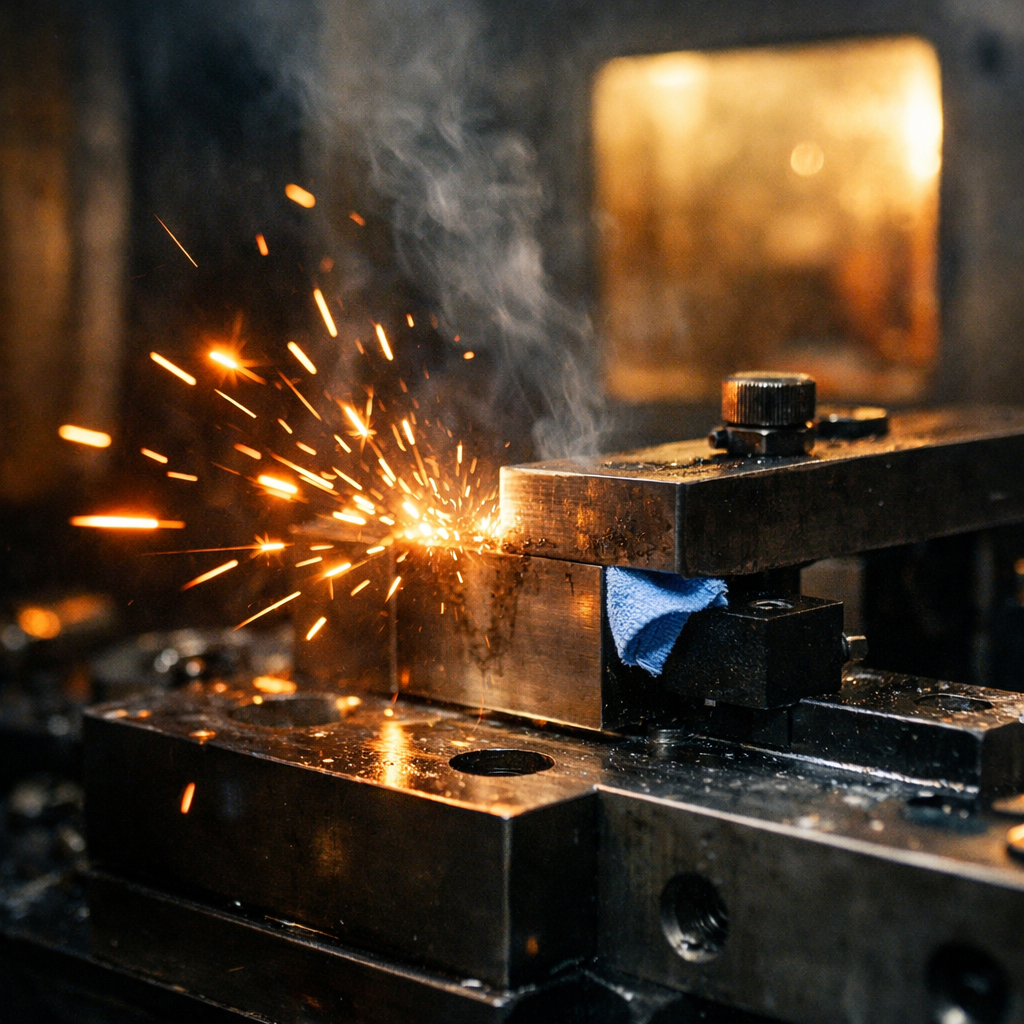
"Early in my EDM days, I kept getting clamp marks during finishing. I did not want to scratch the part, so I tried to get clever.


I folded a piece of a shop towel and tucked it between the clamp and the part.


Everything looked fine, so I hit Cycle Start and walked away to grab a cup of coffee. A minute later, I heard a bang like a firework. Sparks, smoke, and that towel lit up like it was the Fourth of July.


The part actually passed inspection. The clamp did not."


-Applications Engineer

CNC Underground: Afterhours

Jon Ely, President of Industrial Tool Solutions, joined CNC Underground: Afterhours to share his remarkable journey from machine operator to business owner. This episode dives deep into hands-on career progression, practical leadership insights, and how staying connected with the shop floor drives real results. It’s a must-listen for anyone seeking actionable advice on manufacturing culture, team management, and thriving in a rapidly evolving industry.


Key Takeaways:

  • Understand why shop-floor experience is essential for effective leadership and decision-making.
  • Explore how collaboration, communication, and breaking down tribal culture can elevate manufacturing for everyone.
  • Gain practical advice on motivating diverse personalities, building trust, and fostering long-term employee growth.

Tech Tip (Powered by GibbsCAM)

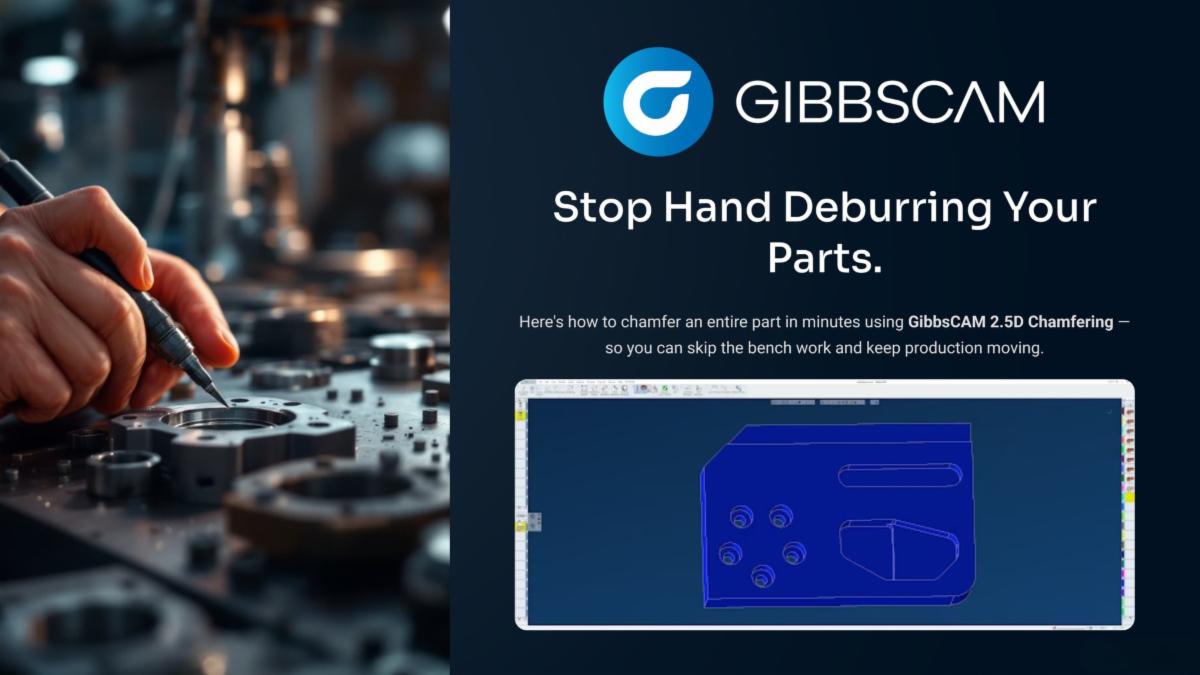
In this Tech Tip, we explain how GibbsCAM 2.5D chamfering can eliminate manual cleanup by programming clean, consistent chamfers directly into your toolpath.

You’ll see:

  • One-click face selection that automatically captures holes and perimeters
  • Edge selection for precise control around fixtures
  • Built-in linking strategies to reduce air cutting
  • Multi-sided chamfering without workarounds


It’s a simple feature that can quietly save hours across a production run.

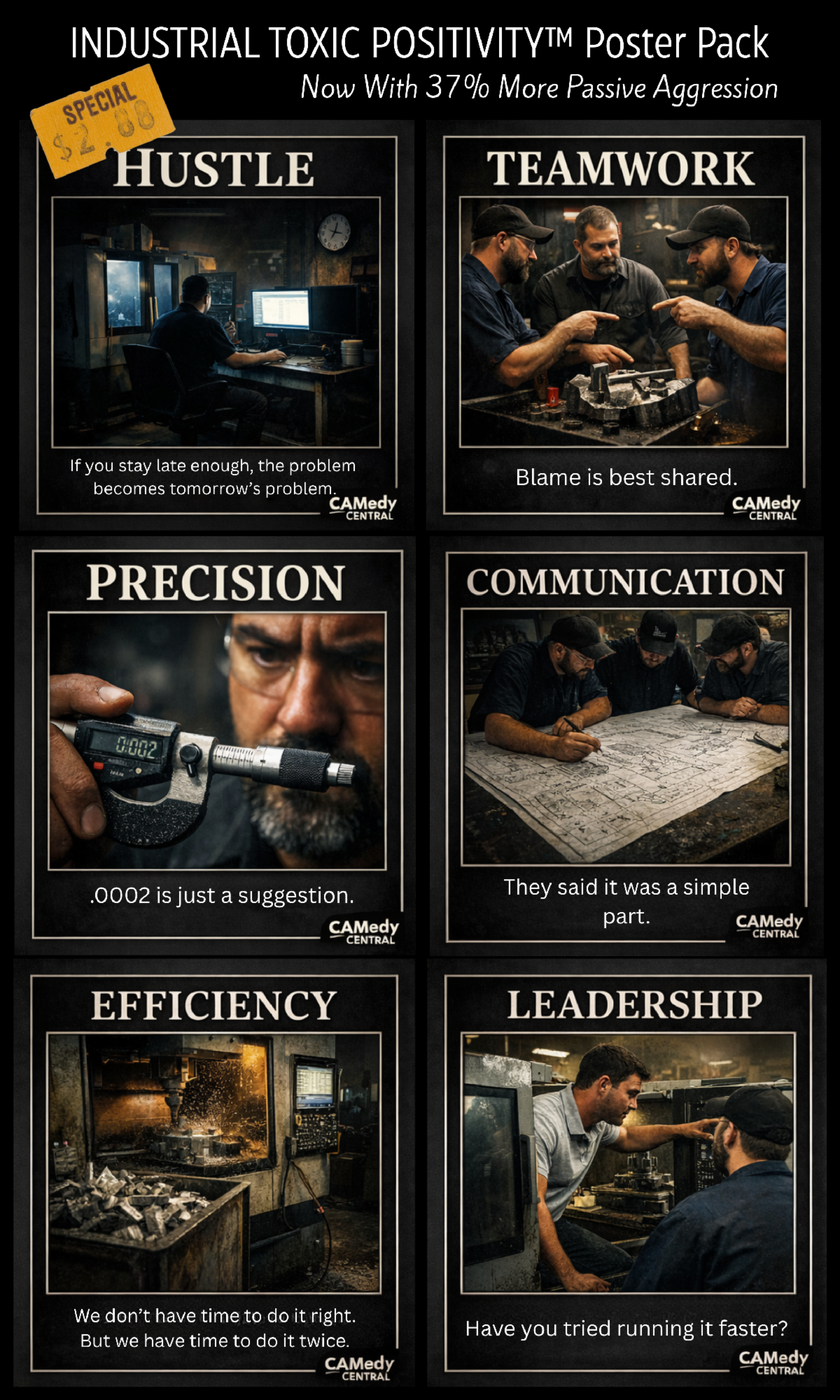
CAMedy Central

Industry Intel

Positive Signals Coming Out of Manufacturing Sector but Job Growth Isn't One of Them - U.S. manufacturing showed improved momentum in February, with ISM reporting a second straight month of expansion driven by new orders and production, but factory employment stayed in contraction as companies continued cutting headcount amid demand uncertainty.


Manufacturers' Biggest Challenge in Adopting AI is Preparing Their Systems For It - Manufacturers are eager to deploy AI, but an expert says the biggest hurdle is getting plants and warehouses physically and operationally ready, with many companies held back by poor data quality, fragmented systems, and skills gaps.


Simulating the Seas to Make Additive Manufacturing Fleet-Ready - Johns Hopkins APL and GKN Aerospace built a motion-simulation platform that replicates ship movement so the U.S. Navy can make onboard metal 3D printing more reliable for producing mission-critical parts at sea.

Industry Growth (Open Jobs)

A few hot openings across the industry this week:


CNC Sr. Machinist/Programmer - KDI Manufacturing - Rogers, MN


CNC Senior Machinist - Dairy Conveyor Corp - Inver Grove Heights, MN


Machine Build & Design Tech - Pella Corporation - Sioux Center, IA


CNC Machinist - Dynamic Engineering - Big Stone City, SD


CNC Operator - Freedom Manufacturing Group - Valley City, ND


CNC Machinist III - Collins Aerospace - York, NE


CNC Machinist 3-Axis & 5-Axis - G.H. Tool & Mold - Washington, MO


CNC Machinist - Mid Kansas Machine, Inc. - McPherson, KS

Trade Show & Event Radar

Date

Show

Location

April 8-9

2MTEC

Albert Lea, MN

April 13-16

Machining Summit on the Summit

Mammoth Lakes, CA

April 13-16

Modex26

Atlanta, GA

April 22-23, 2026

MD&M South

Charlotte, NC

June 22-25

Automate

Chicago, IL

July 29-30

Advanced Manufacturing Expo

Grand Rapids, MI

Sept 14-19, 2026

IMTS

Chicago, IL

Did someone forward you this newsletter?

Subscribe to get your own copy every week.