View as Webpage


SciStarter Newsletter − April 9, 2026

Citizen Science Month is off to a strong start with support from America250, Australia, Europe, NASA, and many others.


As of today, April 9, 791,655 Acts of Science have been logged! Thank you!

This is the spirit of Citizen Science Month in action.


We’re working toward 2.50 million Acts of Science in celebration of America’s 250th birthday, because small actions add up to big impact.


Ready to take part?


Join an Acts of Science: Connected event! These live sessions pair you with project scientists, who will guide you step-by-step, so you can contribute to real research in real time. No prior experience needed.


Our first event increased participation by 10×. Let’s keep it going.


Join these Acts of Science: Connected events from anywhere (stay as long as you like, up to 2 hours):

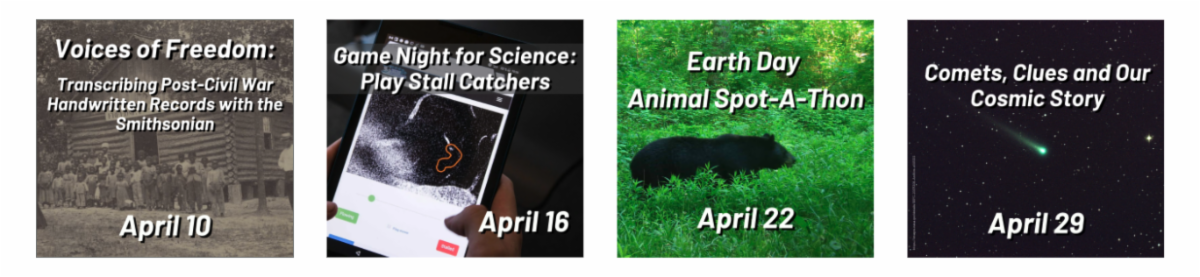
  • TOMORROW! April 10 (2 PM & 6 PM ET): Transcribe Smithsonian records
  • April 16 (2 PM & 6 PM ET): Play games to advance Alzheimer’s research
  • April 22 (11 AM & 6 PM ET): Earth Day! Identify wildlife in camera trap images
  • April 29 (6 PM & 9 PM ET): Help NASA classify comet images


👉 Register on Zoom and join us


Prefer to participate anytime? Find any project or event on CitizenScienceMonth.org, then report your Acts of Science to win prizes, including a free, digital subscription to New Scientist. Participation in SciStarter-affiliated projects are automatically counted and featured on the site's popular Wall of Fame.


Anyone can participate. Every act counts.


Cheers!

The SciStarter Team

Darwin's Ark

Celebrate Pet Day (April 11) by turning your pet into a research partner. Share what you know about your dog or cat to help scientists better understand pet health and genetics.


Location: Global

WeDigBio

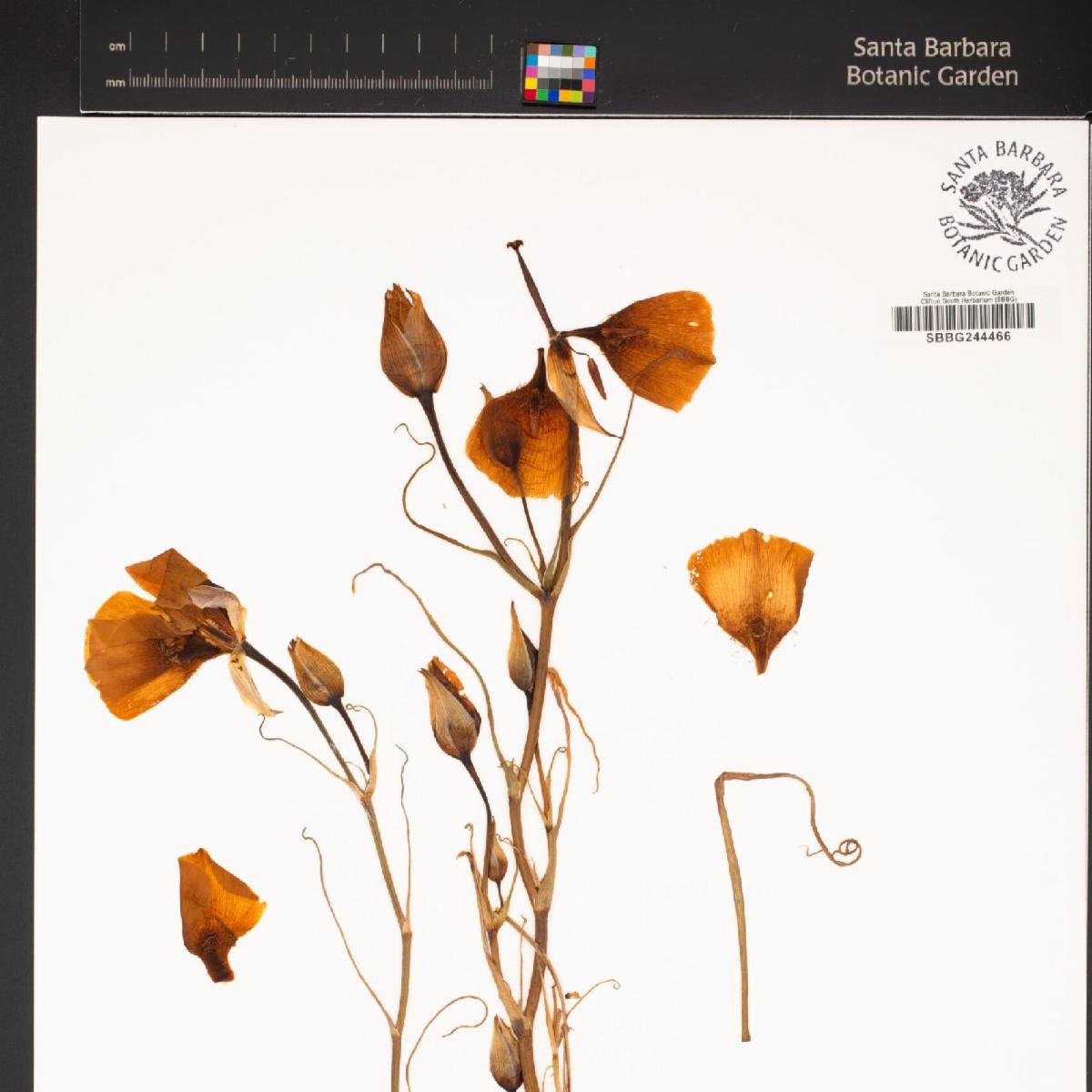
Through April 12, you can help unlock the stories hidden in natural history collections. Join Worldwide Engagement for Digitizing Biocollections (WeDigBio) to view collections online and identify what you see: everything from fish in jars and plants on sheets, to insects on pins and fossils in drawers! Digitizing this information makes it more accessible.


Location: Global

Dark Sky, Safer Fly

Celebrate International Dark Sky Week (April 13–20) by turning night sky observations into real data. Learn how to identify constellations, measure sky brightness, identify birds by sight or sound, and record wildlife observations to help protect ecosystems—including our feathered friends.


Location: Global

CoCoRaHS

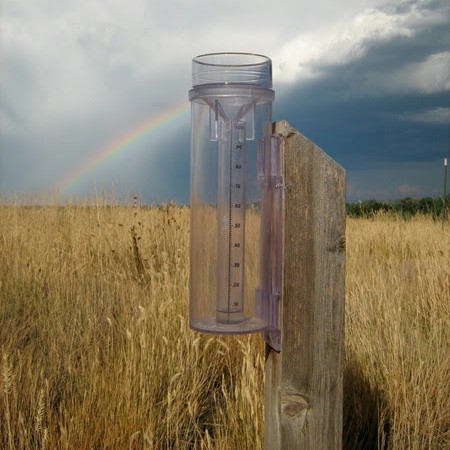
Turn rainy days into real data with the Community Collaborative Rain, Hail, and Snow Network (more popularly known as CoCoRaHS). All you need is a rain gauge, and then your daily observations—yes, even zero rainfall—help meteorologists, farmers, and emergency managers better understand weather patterns and prepare communities.


Location: United States & Canada

Citizen Science at Your Library

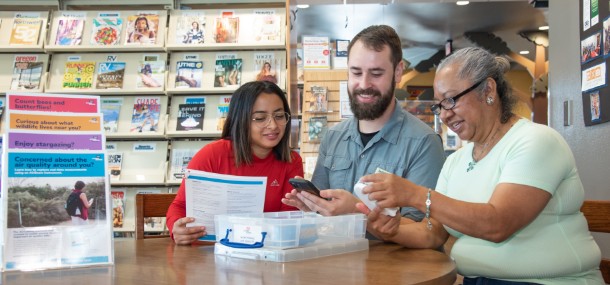
National Library Week (April 19-25) is a great excuse to check if your local library is part of SciStarter's network (libraries—join the free network!). Participating libraries may provide citizen science kits, host events, or otherwise support citizen science. If your library isn't listed, don't be shy—tell them about SciStarter's free resources, including ones to help libraries celebrate the 250th anniversary of the United States!

Facilitators: There's Still Time To Host an Event

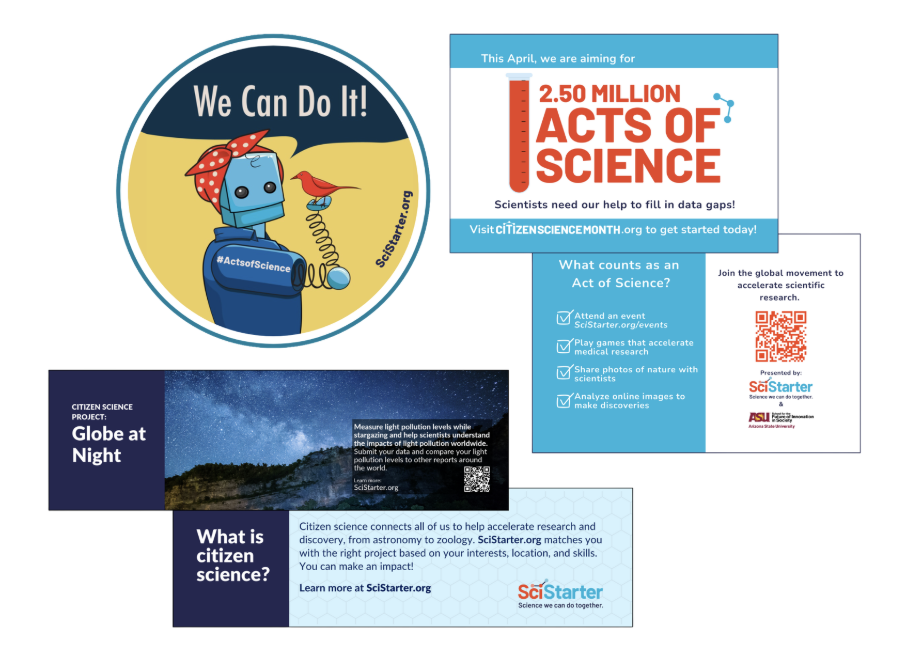
It can be simple: Invite people into your space, and participate together with a livestream of an Acts of Science: Connected event. SciStarter provides the scientist, the project, the guidance, and free materials. Even a small gathering creates real scientific impact.


Planning guides, posters, flyers, and activity ideas are ready to use. And don't forget to add your event to SciStarter so it appears on CitizenScienceMonth.org.

April is packed with events and programs!

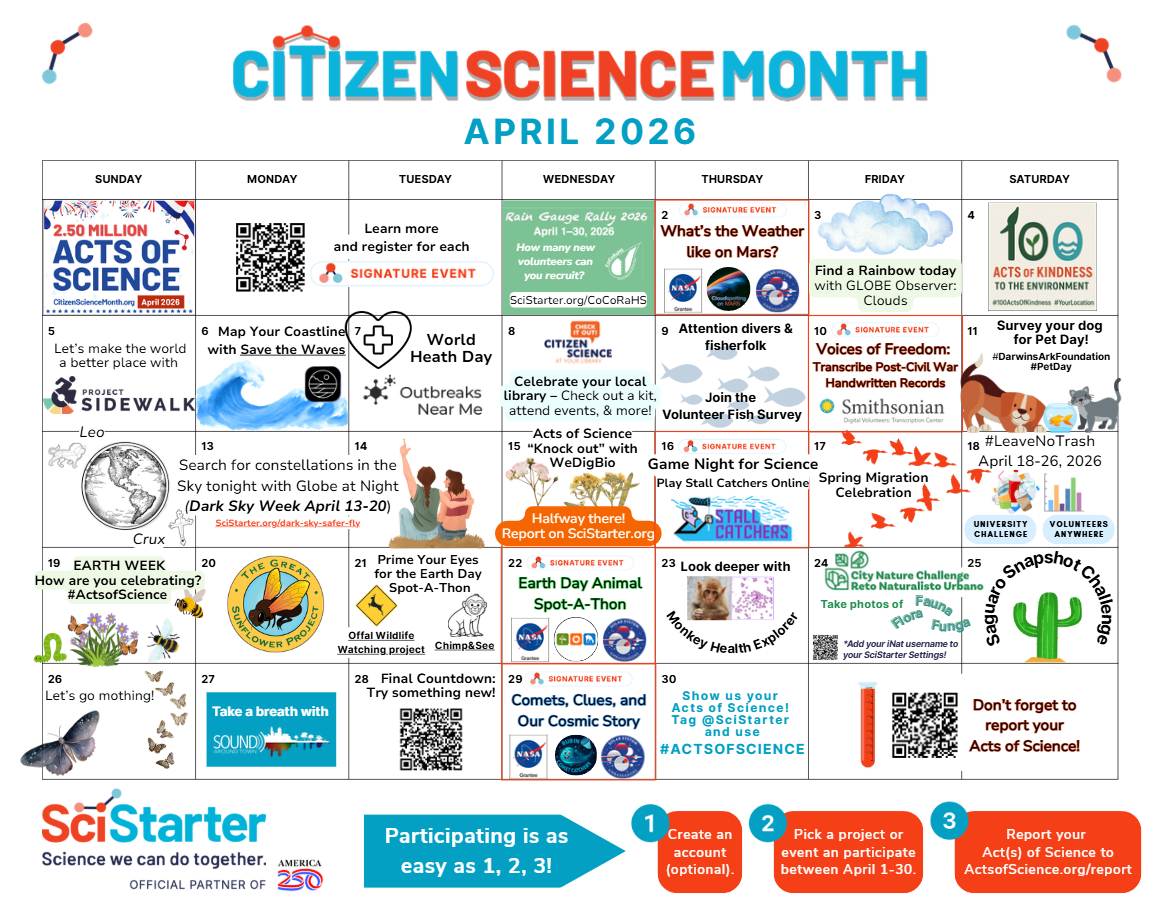
Click here to explore and print the calendar.

New events featured on SciStarter


...and hundreds more featured on the event finder! Find an online or local event near you.

X Share
LinkedIn Share