Dear Reader,


I'm sending my spring newsletter as summer nears since I've been deep in writing.


For all the titles you evaluated and offered (thank you!), my publisher suggested a word that I've hesitated to name—but underlies much of my work and others' that inspires me:


Decision.


Notice what "decision" + "compass" brings up for you, tell me, then read on.


You'll also find guest posts at this academic year's-end about creating assessments that are human-centered—and uncheatable.


And, as always, more at innovatorscompass.org


Curiously,

Ela, founder of innovatorscompass.org.

A Big Decision

Most people find "decision" hardly inviting to consider: dry, final, sterile, hard, and scary. That's a daunting word choice in a title—I mean, we do judge books by their cover, right?


However, the thousands of conscious and unconscious decisions we make daily define everything we do:


How to spend an hour or a lifetime. What to say to our boss or child. Whether to change a job or situation, or let them be. When to spring a proposal or product.


Our decisions shape what others can or can't do, too—certainly in the field of design—and the course of our lives, work, and world. 


So, perhaps, that's the world-changing opportunity, from cover to conclusion: to change how we feel about decisions, so that we'll readily consider when and how we're making them.


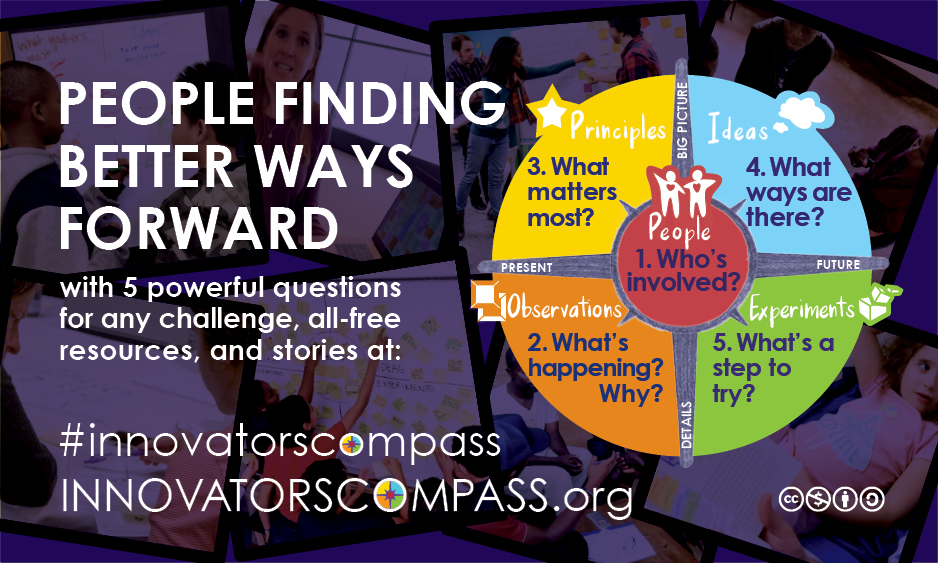
Maybe it's time to name how individuals and groups use the five Compass questions to:


  • Start big or complex decisions on the right foot, grounded in an understanding of Who's involved? and What's happening, why? 
    
  • Guide snap decisions, with even one or two thoughts about What matters most? or What ways forward are there? 
    
  • Unstick stuck or swirling decisions, and break down scary ones, getting to What's a step to try?—a small action to learn from and build on. 
    
  • Align all the capacities within us, each and together, to find better ways forward.


Personally, as I've begun to name this more for myself, I've become more conscious of my decisions—and the opportunity to navigate them more simply and powerfully.


Writing this newsletter was my small step to play with this big, scary decision (ha!) about whether to name "decision" in my title.


And, whether it's time to rename the tool, since Innovators' is easily seen as only "tech bros" (even by a renowned cancer researcher) and written as the singular Innovator's—failing to fulfill my hope of conveying "all people, anytime they make anything better."


Please click here to drop me a line! I'd love to hear what you'd call situations when you ask Compass questions or similar ones, and how "decision compass" feels to you.

Let's Compass together!

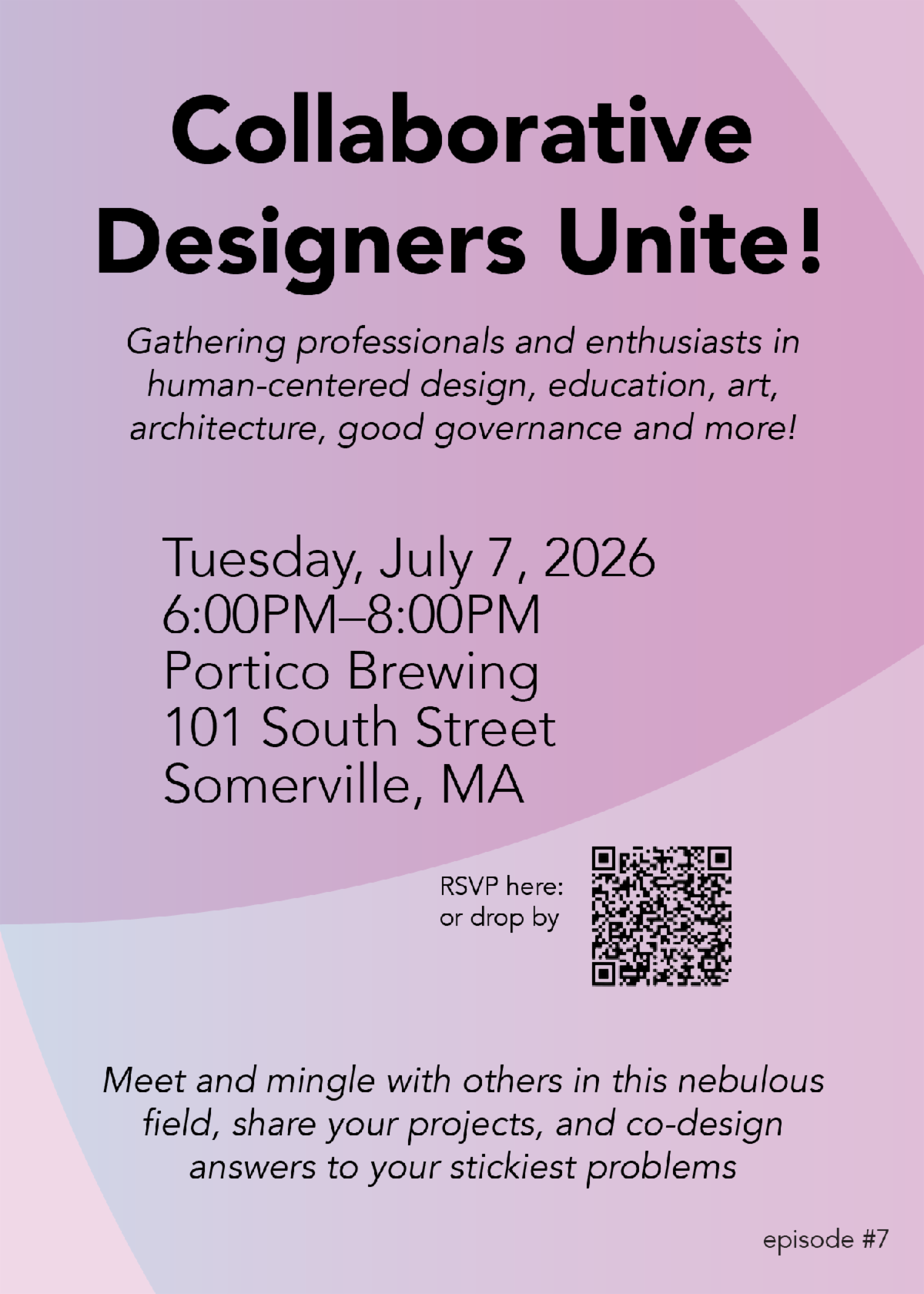
Will you be in Boston on 7/7/26? 

Join the next Collaborative Designers Unite gathering!

Sip a New Story

For educators at year's end, how to assess learning tops the list of dreaded decisions—just as students dread the assessments themselves. Here are two guests' writings about compassing toward human-centered—and uncheatable—assessments.

Compassing Assessment I: Creating Uncheatable Assessments

Guest post by Michael Hernandez


When I was teaching high school, it seemed like every month I’d be in the copy room or hanging with my teacher colleagues and learning about the latest cheating scandal. Students seemed to be spending their energy and creative capacity trying to skirt the system that clearly wasn’t working for them, rather than actually learning.


Exasperated teachers, too, used their energy to devise byzantine gimmicks and answer keys, threaten grades, suspensions, and even college recommendation letters, all with the purpose of preventing students from cheating. 


So one day I asked a colleague: “Why don’t you just design an uncheatable assessment?”


Seems like a crazy idea, right? But in this culture of surveillance, where AI has turned teachers into police who try to catch students getting away with something instead of actually teaching, and where students see school as a series of boxes to be checked and hoops to be jumped through, I knew there had to be a better way. 

Compassing Assessment II: Creating Human-Centered Assessments

This is an excerpt from a conference paper by Courtney Castle of the University of Kansas.


Why Use a Human-Centered Approach?

Ask any group of people how they feel about taking tests and you will receive a range of responses.


Some will report that they relish the challenge, while others are filled with dread. There are many reasons that a person might have bad feelings about assessment such as test anxiety, lack of preparation, or feeling crunched for time.


Whatever the reason, many people feel that traditional assessments don’t accurately reflect their skills and abilities.

YOUR stories move this work forward—please share them by email or tweet!

UNSTICKers and Pocket Compasses

As always, pay cost (10¢ + shipping) or what you can.

Check out this 2-minute intro video (or a picture book/video for kids):
Facebook  Linkedin  Twitter  Youtube