What You'll Find in this Newsletter | |
Advocacy: A Big Win in Rice County
Conservation: The Mosquito Bucket Challenge
Education: Prairie Returns to Johnson County
Upcoming Events:
Featured: Achterberg Open House (5/16)
Philanthropy Corner: Double your Impact
Chapter Spotlight: Burroughs Audubon Society of Greater Kansas City
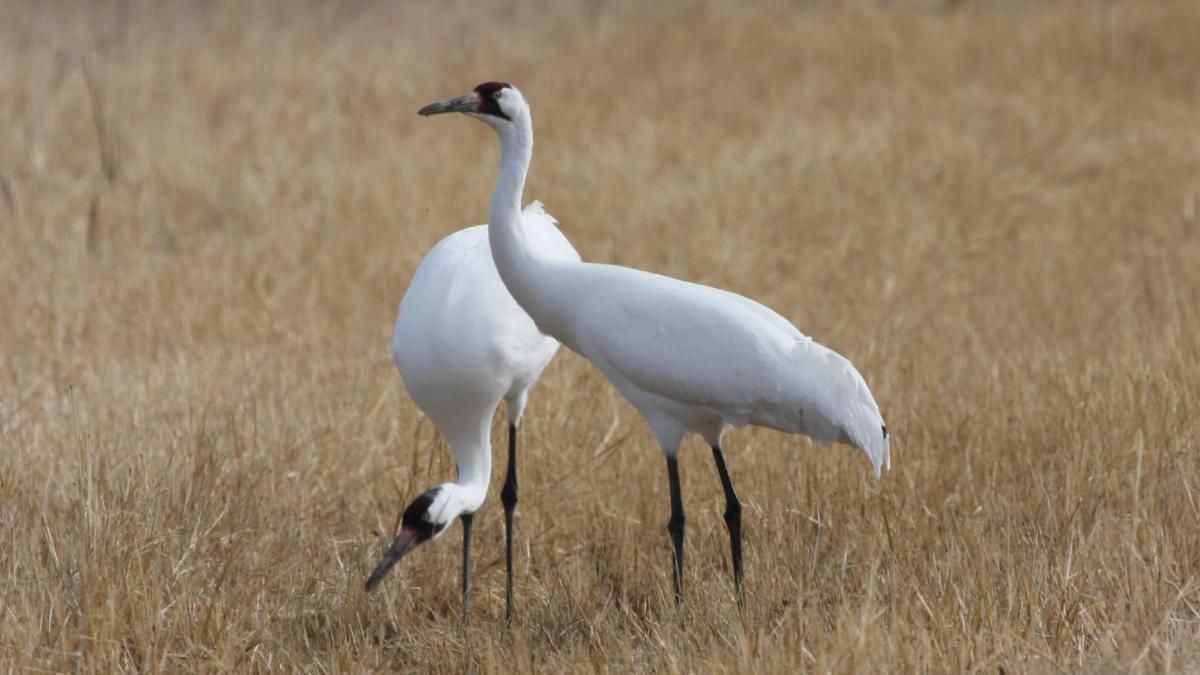
| | Whooping Crane by Barry Jones | |
A Big Win in Rice County
Renewable energy is critically needed to counteract the dependence on fossil fuels. However, many proposed industrial-scale solar and wind projects are located in areas that threaten native prairie and wetland habitats in Kansas. One such industrial wind energy proposal was located less than 10 miles from Quivira National Wildlife Refuge and threatened endangered Whooping Cranes and other wetland species.
Local opposition was fierce and organized. They garnered over 600 signers on a petition to stop the development (see Protect Rice County) citing concerns about property values, quality of life, visual impact on the landscape, threats to wildlife, rural character, and risks to the local water aquifer. Hundreds of people attended public hearings.
On April 14, the opposition was boosted when John Rich, a country music singer in the bands Lonestar and Big & Rich, posted a tweet opposing the industrial wind proposal in Rice County and requested, “To the folks at NextEra: Feel free to reach out to me through the White House.” He also encouraged the folks in Rice County, Kansas, “Stay tough. Don’t make a deal you don’t want to make.”
On April 16, NextEra was supposed to host an informational meeting on the project for the public. The project was cancelled minutes before it was supposed to start. The following day, NextEra confirmed with media outlets that the project was cancelled entirely.
The cancellation of this development is a huge win for Whooping Cranes. These cranes may spend days at Quivira National Wildlife Refuge during migration before continuing on, spending their nights on the refuge and their days traveling up to 12.5 miles to feed in agricultural and range lands. Collision with power lines is the greatest source of mortality for fledged Whooping Cranes in the population that migrates through Kansas and Nebraska, with 80% of the annual mortality occurring during migration. These young cranes have poorer eyesight than their parents, fail to see the power lines, and lack the coordination to maneuver around them when they do see them. Given that these cranes cannot see and maneuver around stationary power lines, we have little reason to believe that they would fare better with industrial wind turbines whose blade tips can rotate at speeds of over 150 miles per hour.
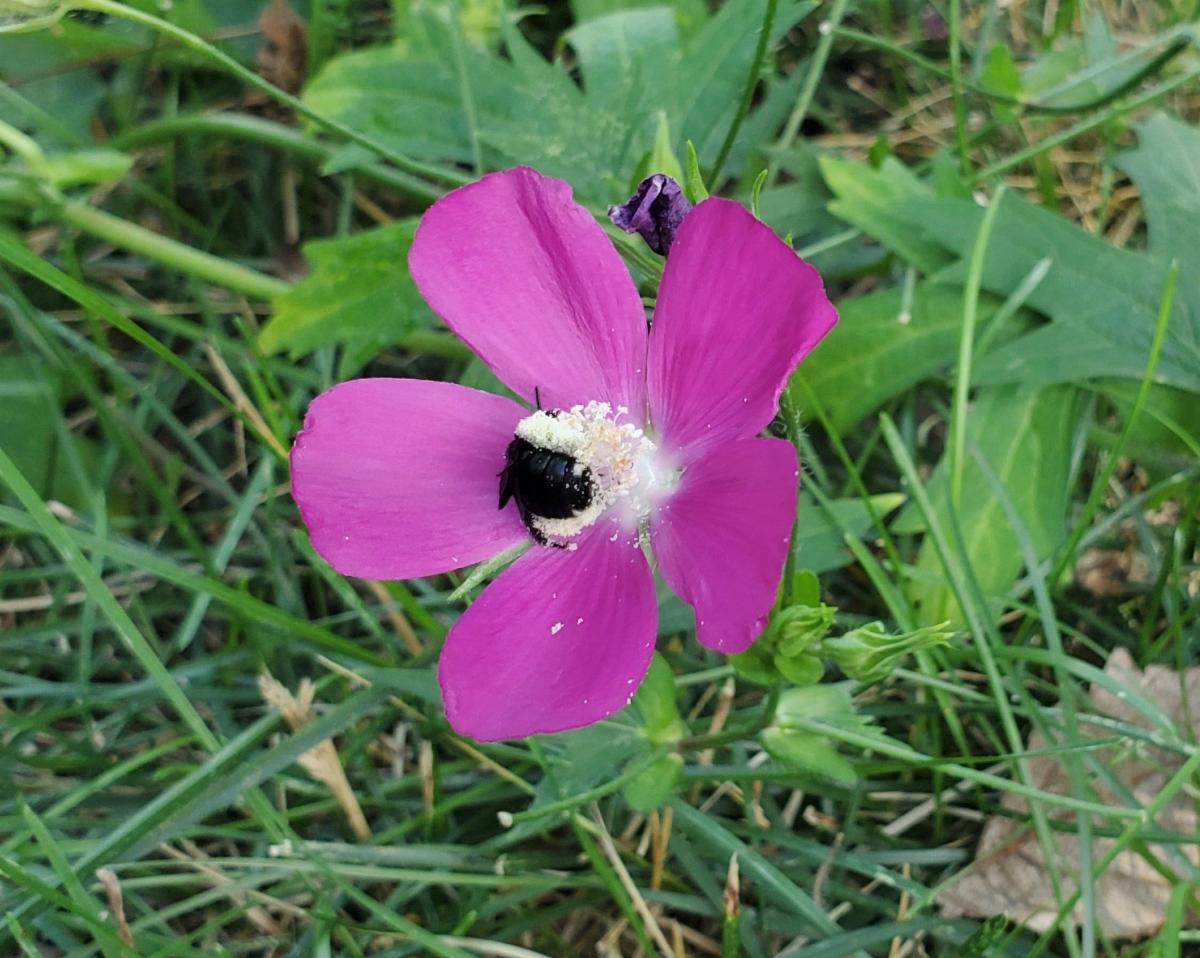
| | Photo by Kathy R. Denning: Two-spotted longhorn bee (Melissodes bimaculatus) collecting pollen from purple poppymallow (Callirhoe involucrata) in the pollinator-friendly garden in Lenexa, KS | | Conservation at Home: The Mosquito Bucket Challenge | | |
Looking for a simple way to support wildlife while enjoying your yard this summer? The Homegrown National Park launched the Mosquito Bucket Challenge, a citizen-driven approach to reducing mosquitoes without harming birds, pollinators, or other beneficial species.
Instead of using broad pesticide fogging, which can kill far more than mosquitoes, this method targets the problem at its source. A small bucket filled with water, organic material, and a natural bacterium (Bti) attracts mosquitoes to lay eggs, then safely stops the larvae from developing into biting adults.
The result is a low-cost, effective, and wildlife-friendly alternative that protects backyard biodiversity while helping control mosquito populations. Unlike fogging, which primarily affects adult insects and can harm birds and pollinators, this approach focuses on prevention without disrupting the broader ecosystem.
It’s a great example of how small actions can make a meaningful difference and individuals can contribute to a growing movement that promotes healthier habitats—right at home.
| | Prairie Returns to Johnson County | | Feature by Matt Garrett, Natural Resource Manager, Johnson County Park & Recreation District | | |
Over 250,000 acres of prairie stretched across Johnson County up to the 1850s. The KU Biological Survey determined that only 0.006% of those original high-quality prairies remained as of 2005. The Johnson County Park and Recreation District’s (JCPRD) Kill Creek Prairie was the last fully functioning remnant prairie in the county. Things have changed! The JCPRD natural resource team and a coalition of partners pushed the total prairie managed by JCPRD to 1,000 acres by 2018, and it leapt to over 1,800 acres by 2024. Most of this important work is being done at Big Bull Creek Park in Edgerton, KS.
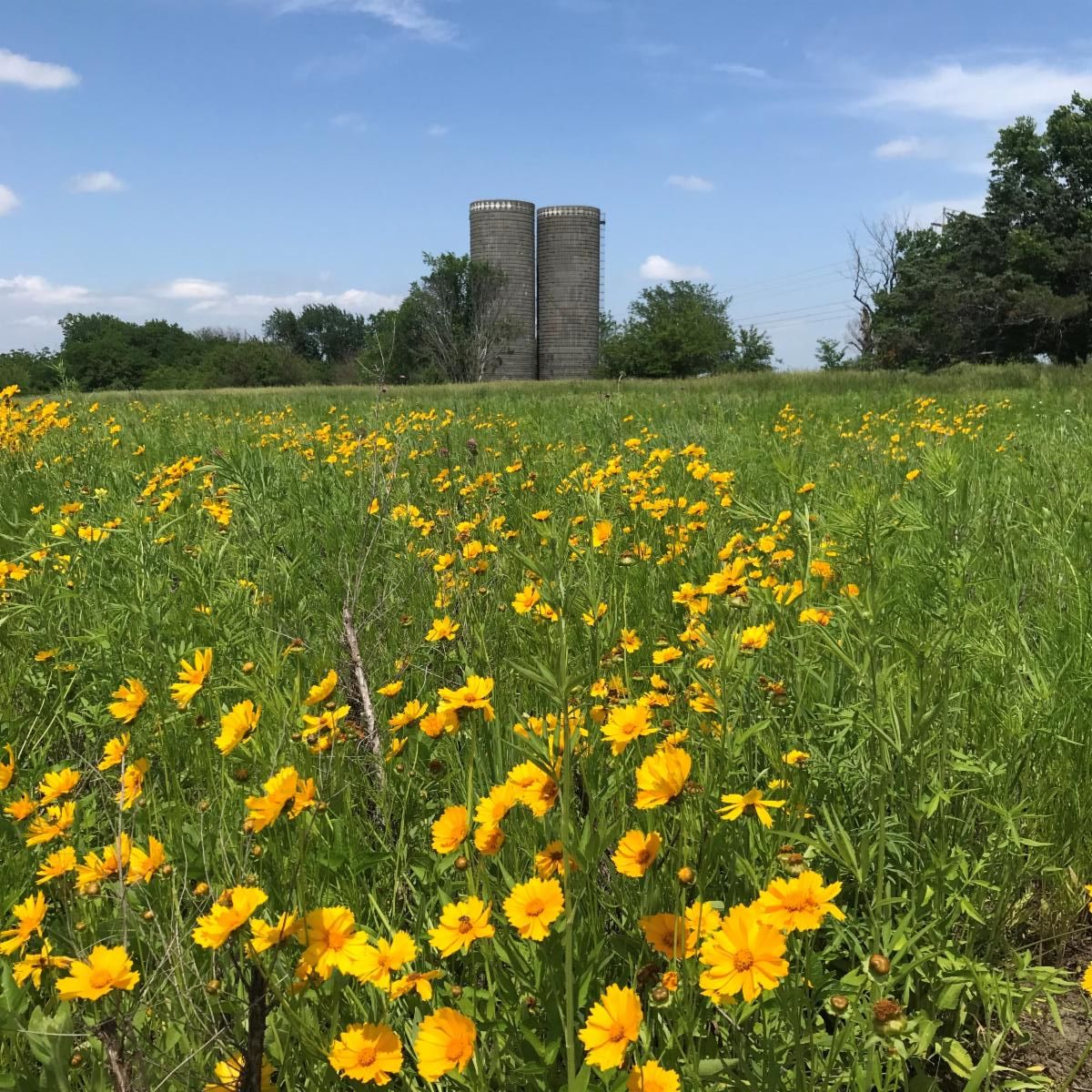
During the development of the park, Burroughs Audubon Society members and JCPRD staff envisioned a core prairie large enough to sustain grassland birds in a rapidly developing county. The vision is now a reality, with over 700 acres of new prairie across the 2,000-acre park.
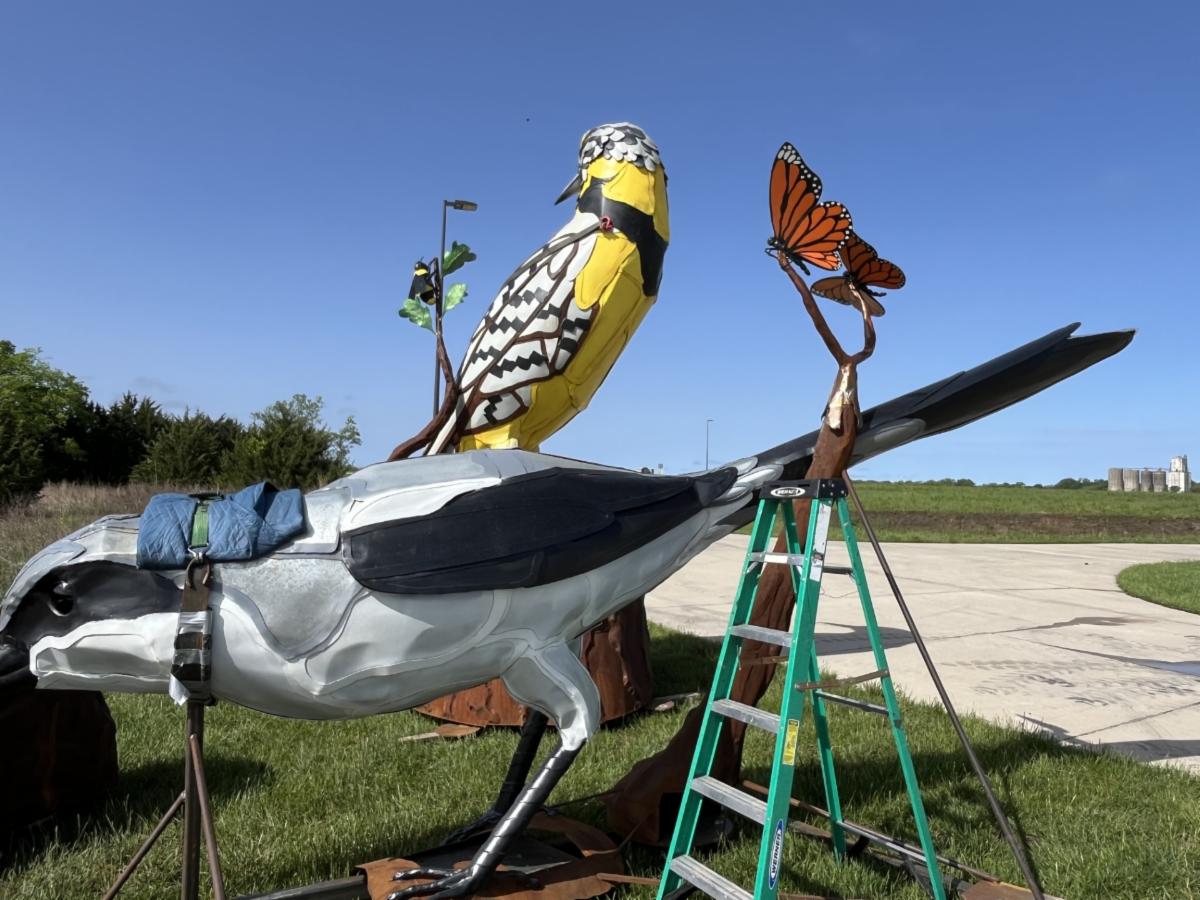
JCPRD is now building on this vision with a new permanent public art installation connecting park visitors to the critically threatened birds that call the park home. “Picnic” by DKLA Design is the 15th permanent piece of public art in the JCPRD collection and features a stunning Loggerhead Shrike and Eastern Meadowlark. The larger-than-life sculptures draw park visitors into a deeper personal understanding of the threats facing grassland birds.
Celebrate with JCPRD during a picnic and unveiling on May 9!
| | Photos: (left) sculpture installation and (right) habitat at Big Bull Creek Park | |
May 1-2: Big Kansas Road Trip
Neosho River Park
901-1199 1000th St
Humboldt, KS 66748
Friday @ 7:00 PM
Saturday @ 8:00 AM
Join Samuel Richards, AOK's Kansas Protected Areas Manager, for guided nature walks along the Neosho River Park.
Learn More
May 9: Picnic & Ribbon Cutting
Big Bull Creek Park
20425 Sunflower Rd
Edgerton, KS 66021
11:00 AM
Join the Johnson County Park and Recreation District (JCPRD) for a ribbon cutting of “Picnic,” their newest public art sculpture. AOK will offer guided bird walks following the program. Guests are encouraged to bring your own picnic.
Learn More
|
May 16: Open House: Discover the Story, Walk the Land
Begins at the Lincoln County Historical Museum
216 W Lincoln Ave
Lincoln, KS 67455
10:00 AM
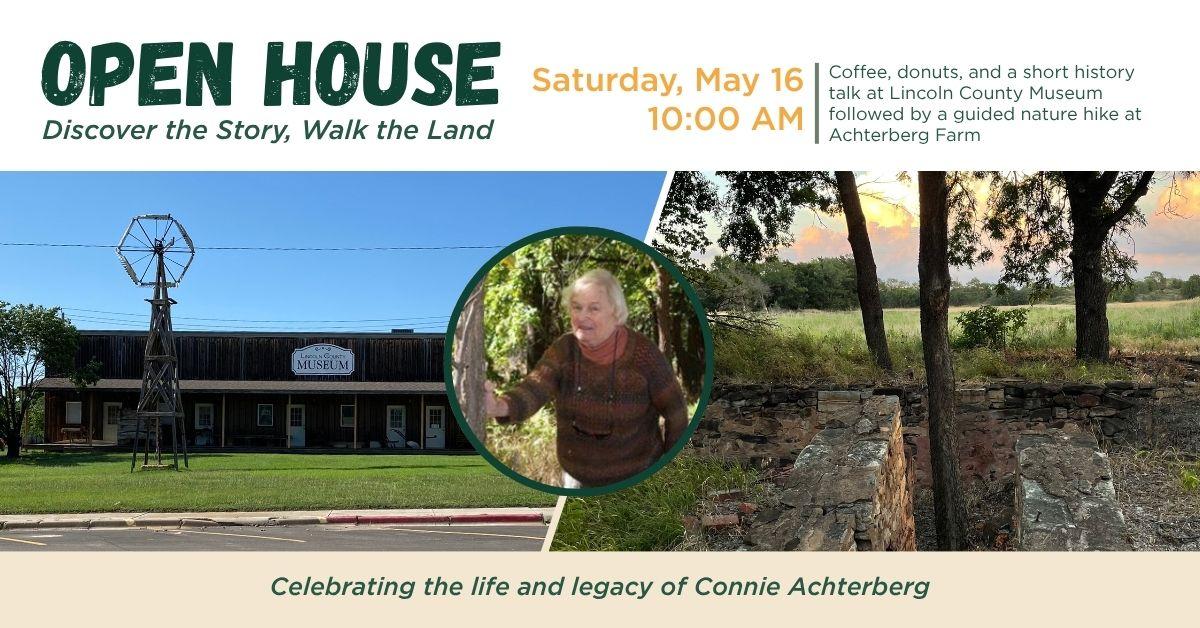
Join AOK and the Lincoln County Museum for a special open house honoring the life and legacy of Connie Achterberg.
The morning begins at 10:00 AM at the Lincoln County Museum with coffee and donuts, followed by a short talk on early settlement in the area and the Achterberg Homestead. From there, the program continues at the Achterberg Wildlife-Friendly Demonstration Farm for a guided nature hike along Bullfoot Creek.
Experience how wildlife and working lands coexist while exploring prairie views, birdlife, and the remnants of the historic Achterberg Homestead.
Come walk the land, hear the story, and celebrate a legacy rooted in community and conservation.
|
May events continued...
May 19: America's National Parks (Public Talk)
Great Plains Nature Center
6232 E 29th St N
Wichita, KS 67220
7:00 PM
Hosted by Wichita Audubon Society
Dr. Jackie Augustine, AOK Executive Director, has traveled to 25 of the 63 National Parks in the United States. She will tell stories of her adventures, and show wonderful photos. You will be inspired to start your own National Park quest!
Learn More
May 28: America's National Parks (Public Talk)
Homer Cole Community Center
3003 N Joplin St
Pittsburg, KS 66762
6:00 PM
Annual Picnic hosted by Sperry-Galligar Audubon Society
See above description.
Learn More
| |
Double Your Impact
This spring, don’t miss the chance to double your impact for wildlife and their habitats!
Thanks to a generous group of supporters, every gift to Audubon of Kansas will be matched dollar-for-dollar up to $35,000! That means your support will go twice as far in protecting the prairie, forest, and wetland habitats that sustain wildlife across Kansas and the central Great Plains.
Originally launched as an Earth Day campaign, this matching opportunity continues because the need for conservation does not end with a single day. Every season brings new challenges (and new opportunities) to restore habitat, advocate for science-based solutions, and connect communities to the natural world.
A matched gift is more than a donation; it is a direct investment in healthier ecosystems, strong conservation efforts, and a future where wildlife and their habitats can thrive.
There is still time to take advantage of this opportunity and make your gift go twice as far.
| | Gifts postmarked by May 15, 2026 will count toward this special matching campaign. | | |
Burroughs Audubon Society of Greater Kansas City, with more than 2,000 members, has been a force for natural history education and conservation in Kansas and Missouri for over 100 years.
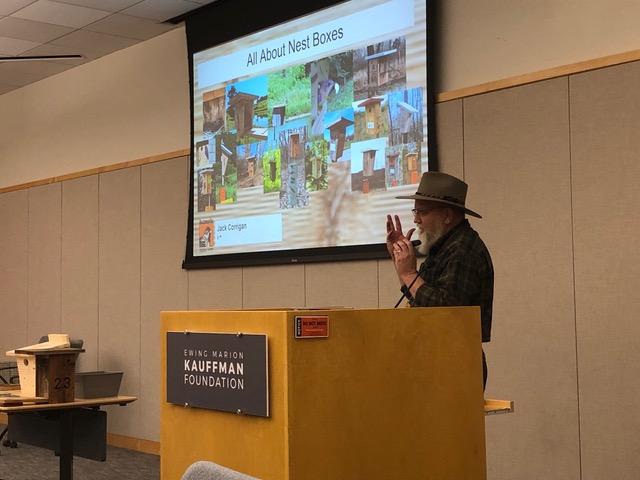
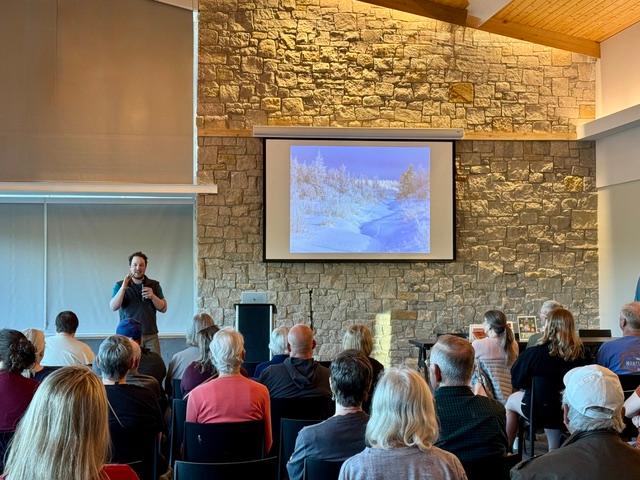
Burroughs provides community education with three speaker meetings in the spring and three speaker meetings in the fall each year. In 2026, spring meetings included an in-person presentation in March by Jack Corrigan, Burroughs Board Member and Missouri Master Naturalist, entitled “All About Nest Boxes.” The April presentation was also in-person and described the Four Seasons of Birding at the Sax-Zim Bog region of Minnesota by Clinton Dexter-Nienhaus, Head Naturalist.
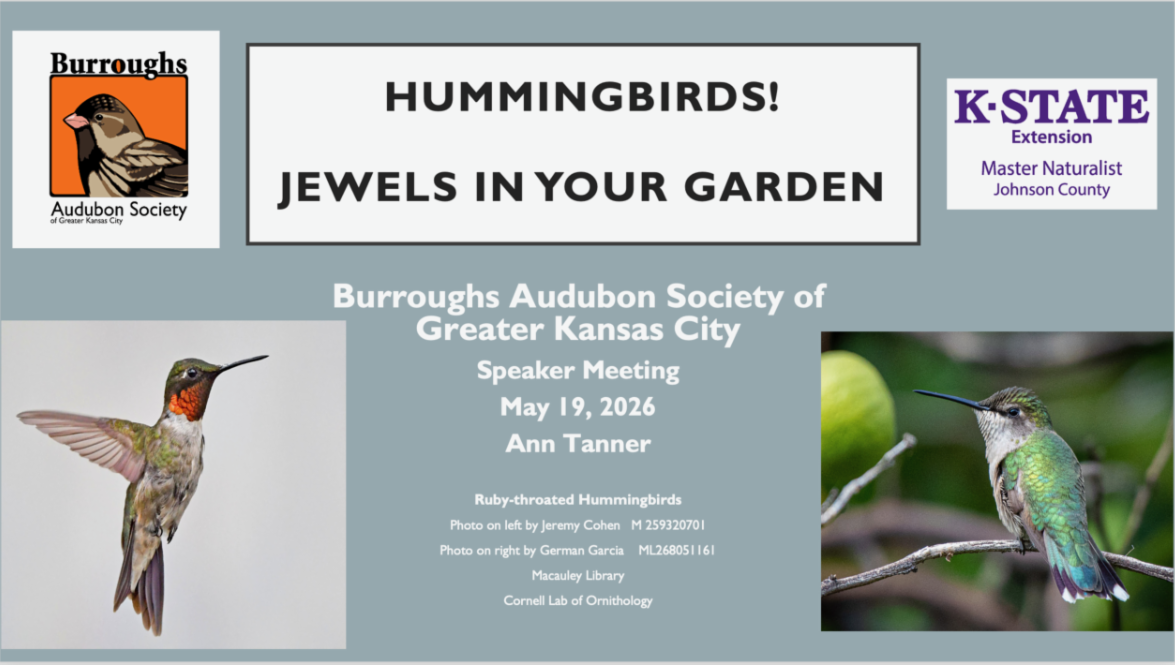
The May 19 presentation at 6:30 PM will be “Hummingbirds – Jewels in Your Garden,” presented via Zoom by Ann Tanner, President of Burroughs.
All speaker meetings are free and open to the public. If you would like to join the May Zoom meeting, register online.
| | Photos: (left) Jack Corrigan presents “All About Nest Boxes" and (right) Clinton Dexter-Nienhaus discusses the Four Seasons of Birding at the Sax-Zim Bog region | | | | |