Labor Arts News & Updates

LHF website

Calendar

LHF Shop

THIS WEEK'S LABOR HERITAGE POWER HOUR RADIO SHOW


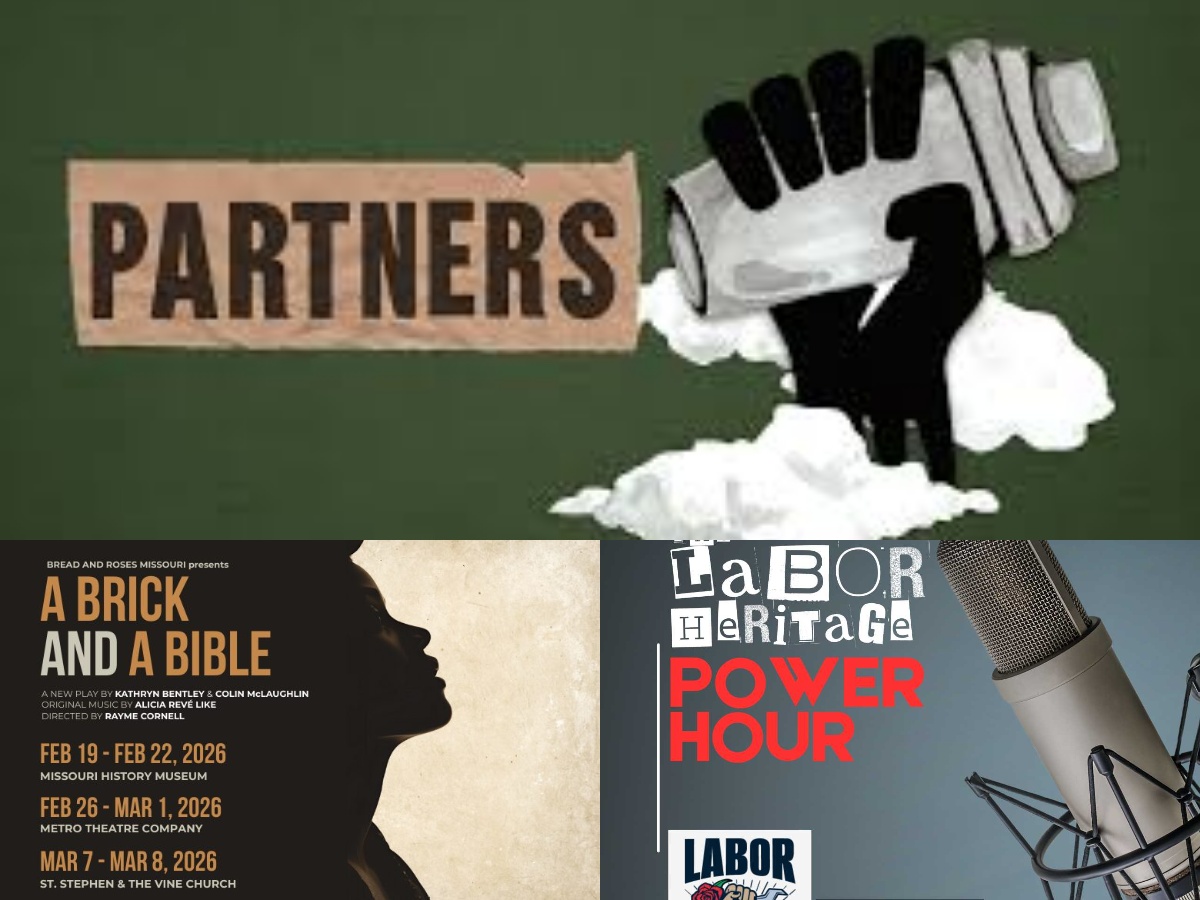
A Brick and a Bible Playwrights Kathryn Bentley and Colin McLaughlin share the story behind A Brick and a Bible, about the 1933 Funsten Nut Strike led by Black women in St. Louis.

Plus, from Labor Notes, a look at the documentary Partners on the Starbucks barista union movement — and the latest labor arts and history news.

WEEKEND LABOR ARTS CALENDAR

FRI: Hubby Jenkins: “Mighty Fine Hammer: African Americans, Work and the Power of Song” (MI)

Ongoing Events:

Made in America: The Industrial Photography of Christopher Payne (NYC)

The Hidden Shift (PA)

Deadly Deception: The Asbestos Tragedy in McLean County (IL)

LABOR ARTS NEWS BRIEFS


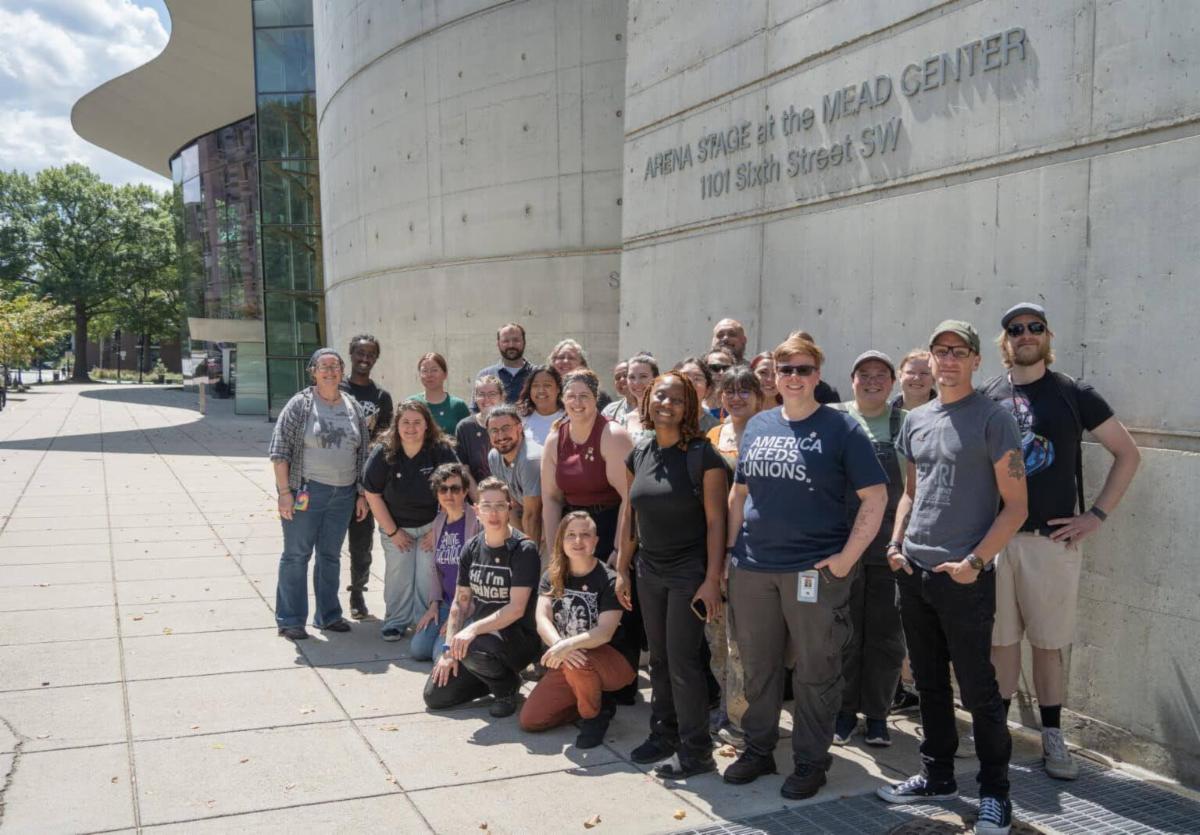
Production Workers at Arena Stage Vote to Join IATSE: Backstage production workers at Washington, D.C.’s Arena Stage have overwhelmingly voted to join the Theatrical Stage Employees (IATSE).

Cleveland Institute of Music Faculty Approve First Collective Bargaining Agreement: Faculty at the Cleveland Institute of Music—who are members of the American Federation of Musicians (AFM) Local 4—have ratified their first union contract.

Register Now: Great Labor Arts Exchange at Labor Notes 2026: Registration is open for the 2026 Great Labor Arts Exchange, returning June 12–14 in Chicago as part of the Labor Notes Conference.

Vote Now: Labor Grammys Celebrate Songs of Solidarity and Struggle: Voting is now open for the Labor Grammys, honoring music that lifts up worker power, unions, collective action, and solidarity.

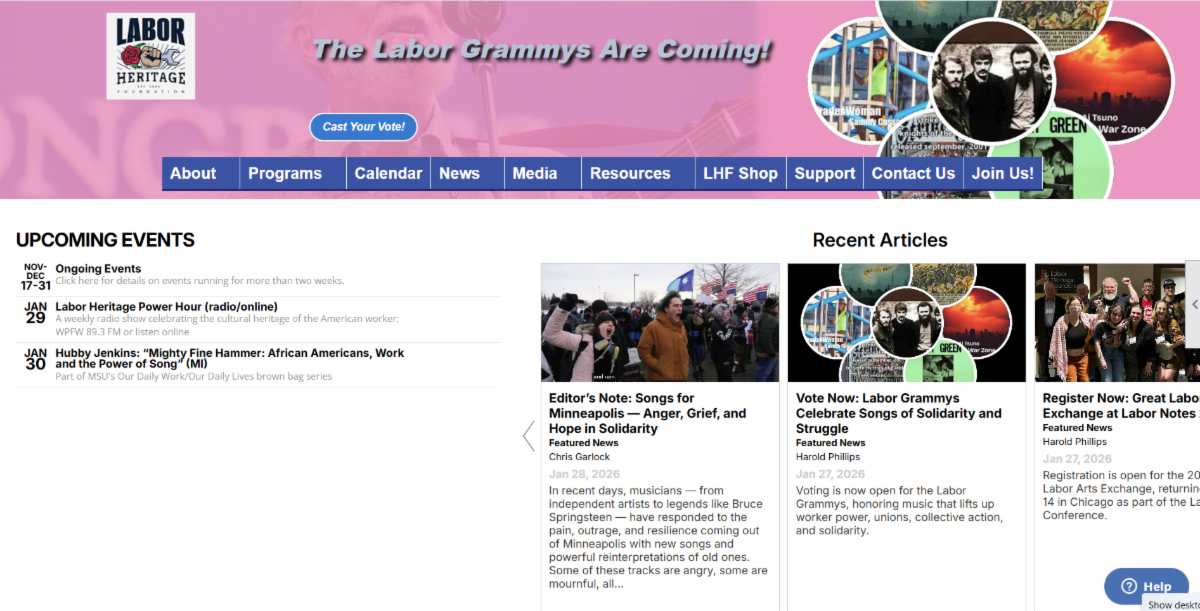
If it's been a while since you visited our web site at LaborHeritage.org, pop on by and take a look at the changes we've been making! We've revamped the home page and the menus to make the things you're looking for easier to find - and you'll see updated information on our online events calendar, too. Before you worry, we haven't gotten rid of our weekly "Labor __ Of The Week" features - we know how much you love them!

Take a look at LaborHeritage.org's new look, and let us know what you think at info@laborheritage.org.
Harold Phillips

READER VOICE

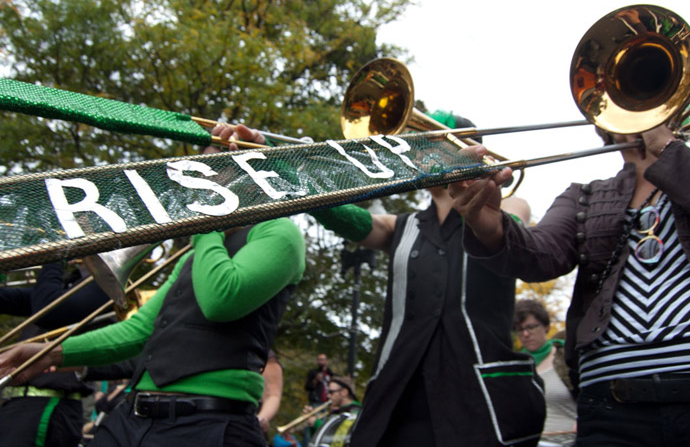
More movement brass! “Yes! On brass bands, shouting out RMO (The Rude Mechanical Orchestra), beloved comrades in struggle,” writes Annabelle Heckler.

RMO is a New York City-based radical marching band that serves the efforts of progressive and radical groups and causes, “paying tribute to the world’s cultures and the revolutionary role music has played throughout history.”

Ben Shahn murals under threat: “I'd like to suggest that LHF make some mention of the Cohen Bldg. issue in the attached article in HyperAllergic,” writes Paul Gottlieb. “It's also most unfortunate that the public doesn't have any way to view the murals without having a government ID--few and far between these days!”

Thanks, Paul; we've covered this story a couple times (a tour of these murals was a regular feature of the annual DC LaborFest for a few years), most recently in last Friday's edition. Keep those tips and suggestions coming!

 Fan mail or critiques, we always love to hear from you; email us at info@laborheritage.org

American Sweatshop, one of the films being considered for the 2026 DC Labor FilmFest; check out our 2026 DCLFF Possibles Playlist and vote; we could wind up screening your favorite in May at the AFL Silver!

Got labor video? email us at
info@laborheritage.org

Facebook  Twitter

Forward the LHF newsletter to friends, family, colleagues and help us reach our goal of 10,000 readers! 👉 Subscribe free

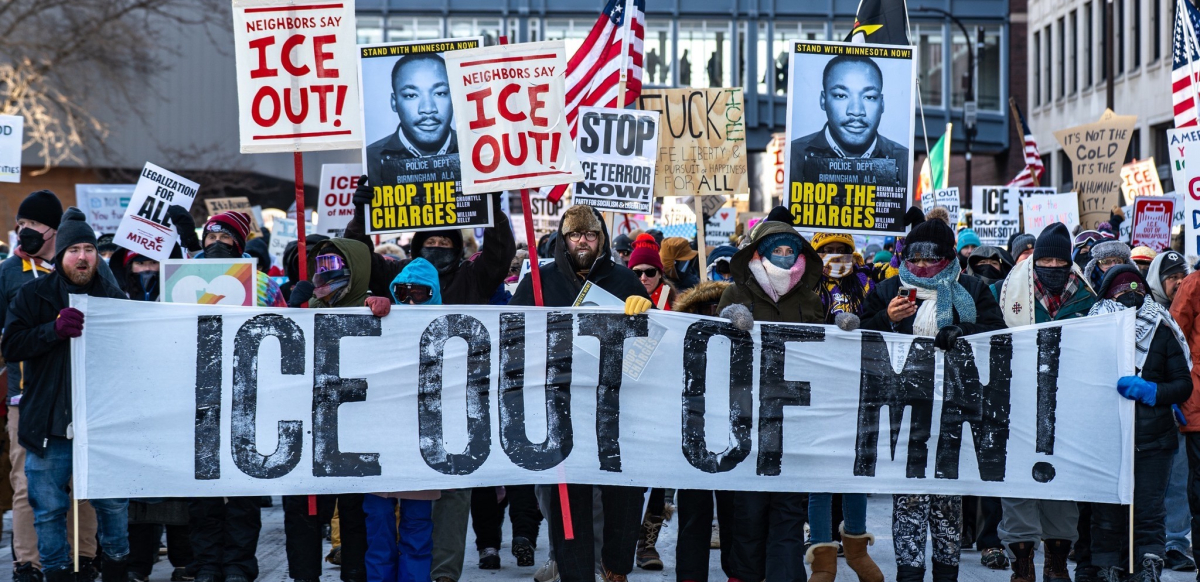
PICKET SIGN OF THE WEEK
Union workers led the enormous protests of ICE on January 23 in Minnesota. Dozens of unions and the Minnesota Federation of Labor signed on.
Read more in Labor Notes; photo by Brad Sigal.

Got picket sign? email us at info@laborheritage.org

LABOR SONG Of The Week
“THE KING'S THUGS tells the story of migrants who were once welcomed to this country to work our fields and who are now persecuted without compassion or human decency,” writes reader Alan Cohen from Seattle, WA. Alan was responding to our special edition on Wednesday featuring
Songs for Minneapolis — Anger, Grief, and Hope in Solidarity. Some of these tracks are angry, some are mournful, all are deeply moving, and together they form a chorus of solidarity. Check out our updated playlist here and send your suggestions for additions to us: info@laborheritage.org

LABOR ART OF THE WEEK

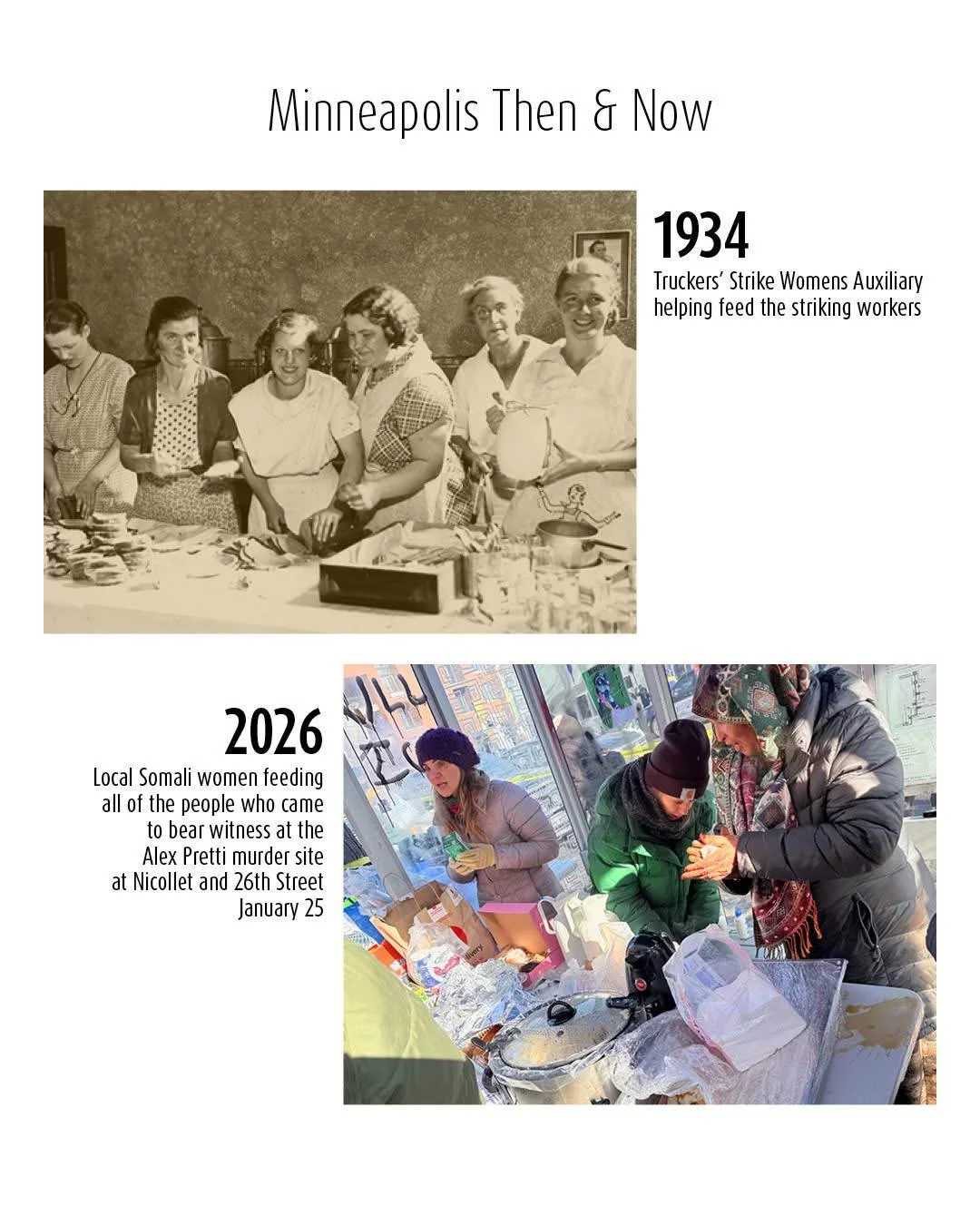
Minneapolis Then & Now (sent in by Peter Rachleff)

Go to Minneapolis r/Minneapolis SeamusPM1

Got labor art? Send your suggestions to us: info@laborheritage.org

LABOR QUOTE OF THE WEEK
"Girls, we can't lose!"

Carrie Smith, one of the leaders of the 1933 Funsten Nut strike in St Louis, the subject of the new play “A Brick and a Bible”, which will be performed in February and March; details here. Smith became well-known for picketing with a Bible and a brick in her hands.

Like this newsletter? Help us spread labor art by passing it along!

CLICK HERE for our complete labor arts calendar; look for our Labor Arts Calendar edition on Monday

TODAY’S LABOR HISTORY

January 29, 1912

The Bread and Roses Strike of 1912, in Lawrence, Mass. involved more than 20,000 workers who faced relentless violence by the police, state militia and mill owners. One of the strikers, Anna LoPizzo was killed by police on Jan. 29, 1912.

The R.J. Phillips Band’s song 'Bread and Roses 'recalls the events of the strike.

January 30, 1919: The Paris Peace Conference establishes the Commission on International Labour Legislation to draft the constitution of a permanent international labor organization, founding the International Labour Organization (ILO). Today, as part of the United Nations, the ILO is charged with drafting and overseeing international labor standards.

January 31, 1938: 12,000 pecan shellers in San Antonio, Tex. – mostly Latino women – walk off their jobs at 400 factories in what was to become a three-month strike against wage cuts. Strike leader Emma Tenayuca was eventually hounded out of the state.

February 1, 1864: Led by 23-year-old Kate Mullaney, the Collar Laundry Union forms in Troy, N.Y, raises earnings for female laundry workers from two dollars to 14 dollars a week.

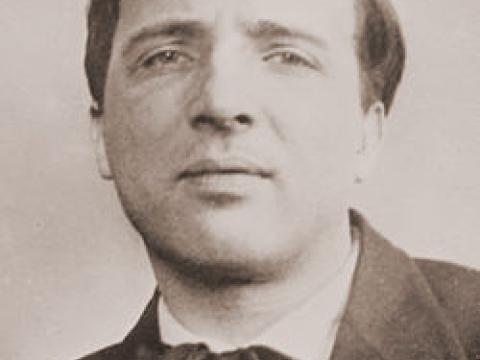
The Poet of the Lawrence Strike

On this week’s Labor History Today: Historian Marcella Bencivenni explores the life of Arturo Giovannitti—poet, socialist, and leader in the 1912 Lawrence strike—whose words turned repression into a lasting voice for labor. Plus: “Joe Hill’s Ashes” by Otis Gibbs, from Heartland Labor Forum on KKFI.

Which statement about John J. Sweeney’s family background is true?

LAST WEEK’S QUIZ: A “Yellow Dog” contract, in early U.S. labor history, was an employment contract that forbade workers from joining a labor union. In that era, “yellow” meant cowardly or traitorous (as in “yellow-bellied”), and a “yellow dog” was someone seen as so submissive they would betray their fellow workers to keep a job.

SUPPORT LABOR ARTS!

Please CLICK HERE NOW to pledge your financial support to our 2026 program, which includes our annual Solidarity Forever Award, the Great Labor Arts Exchange, the DC Labor FilmFest and much more (check out our website for details!).

Donations are tax-deductible to the extent allowed by law. 

RECENT NEWSLETTERS

Minneapolis Solidarity Edition! Bruce, Billy & Friends sing out (1/28)

Murderous billionaires, labor’s racial divide, DC Labor Chorus (1/23)

Elmore Leonard’s Lost Picket Line (1/16)

Labor Grammy Nominations Are Open! (1/9)

The People’s Party returns! (12/27)

Whose Kennedy Center? Not Trump's! (12/19)

X Share This Email
LinkedIn Share This Email