Volume 3, Issue 2 | Sept. 26, 2024 | |
MIVASERET MERCAZ
מבשרת מרכז
| |
Mercaz Academy focused on prayer and observed the world around us, hopped our way to literacy and remembered our history. We saw signs in our garden, gathered its leaves, and printed its portrait. Oh, and we exploded some apples! Scroll down for a glimpse of the last week at Mercaz Academy... | |
|
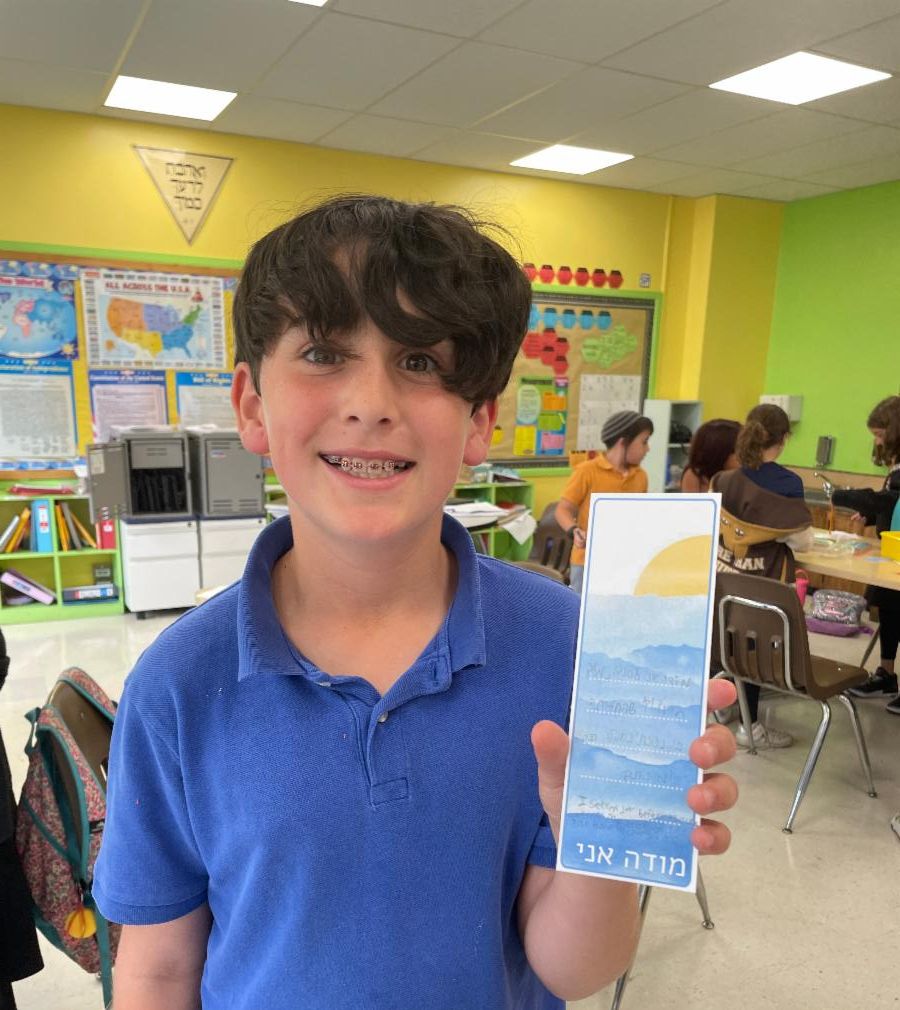
The first Mercaz Academy Tefillah Day saw students from toddlers through sixth grade thinking about Modeh Ani. Not only is this the first prayer recited each morning, but it also succinctly expresses our need to give thanks to Hashem throughout our day. Every student in the school explored the tefillah in an age-appropriate way.
For example, in Kitah Hay, students discussed the importance of keeping tefillah personally meaningful; they analyzed Modeh Ani, selecting words that were uniquely significant to them from a list of synonyms provided by Rabbi Kramer. Their personalized translations were then transferred to bookmarks for their siddurim. Kitah Bet studied the phrase "rabbah emunatecha (great is Your belief)" that ends Modeh Ani, and completed the sentence, "I can be...because I believe that Hashem believes in me." Younger students read books like Thank You, Hashem, by Yaffa Rosenthal, and decorated door hangers with the words to Modeh Ani printed on them.
In addition, every student decorated a blue circle with a picture or a thought about Modeh Ani. These have been collected as the first step of a large, collaborative bulletin board mural, with each succeeding Tefillah Day contributing another color to the art project. By the end of the year, the mural will represent not only the inherent beauty and depth of meaningful prayer, but what can be accomplished by everyone contributing their own vision to create a greater whole.
| |
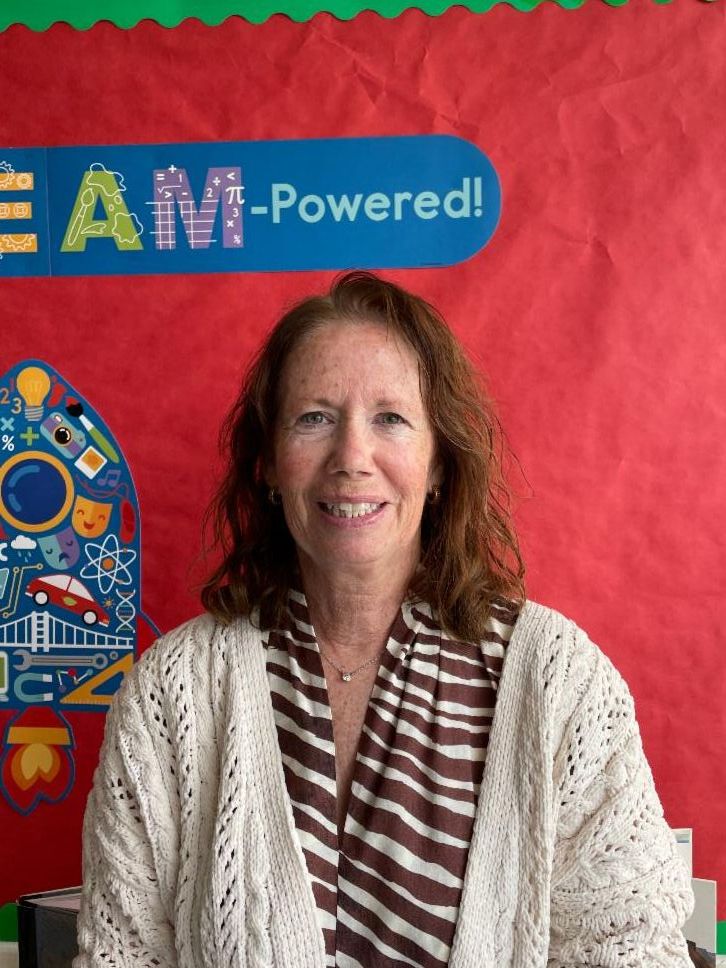
Meet Mrs. Maliner!
Mrs. Maliner, our new science teacher, is a native of Nassau County and lives in Rockville Center with her husband and three cats (her two children are away at college and graduate school). She holds an MS in elementary education and has taught science in the public school system for 30 years. Mrs. Maliner prefers teaching science over any other subject because she feels that an understanding of the world around us is vital to all learning.
In her spare time, Mrs. Maliner enjoys cooking for her family. She fondly remembers an early inspiration for her love of all things culinary: picking pumpkins for pie as a child in her grandfather’s garden in Oceanside.
Mrs. Maliner says that one of the things that makes Mercaz Academy special is the way we begin our day. “I love the way the school gathers together each morning at line up,” she explains, “and I’ve been enjoying the shofar-blowing this month. I find the sound of the shofar very calming.” We think Mrs. Maliner is special, too, and welcome her into our Mercaz family.
| | | |
Sixth Grade Scientists Explore Sensory Perception as Observation Tool
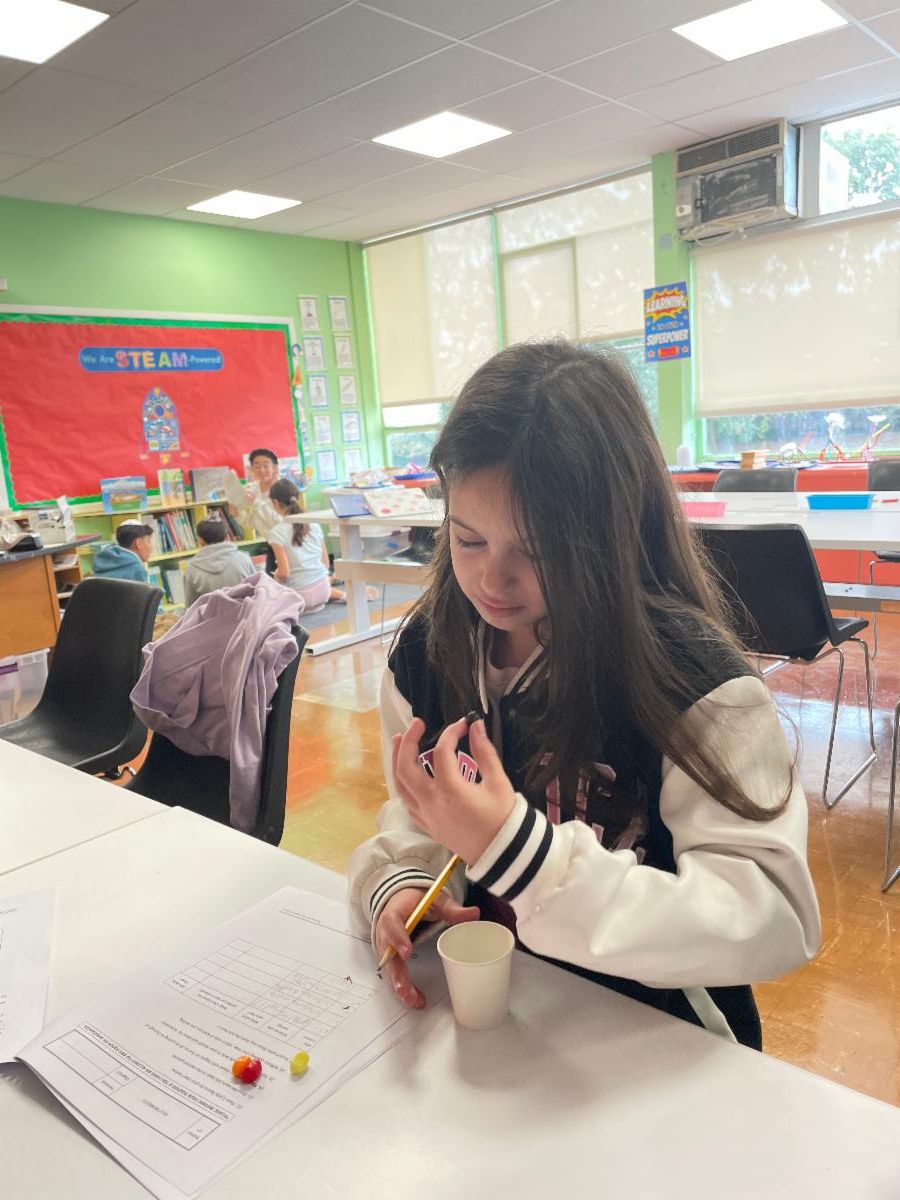
Rotating through three different laboratory stations, sixth graders used measurement, vision, smell, and taste to explore the essential scientific tool of observation. Mrs. Maliner explained that the first step in any serious scientific endeavor is carefully watching and noting characteristics in their natural setting and recording the resulting data accurately–and then the students began their investigations.
The young scientists split into groups to use their senses for science. At one station, students took turns administering and taking a vision test, recording the distance at which each could read an eye chart. At another, they experimented and recorded the results of a test designed to detect color blindness. A third station brought their senses of smell and sight into play to form a hypothesis about jelly bean flavors based on their aroma and appearance, before confirming their guesses through taste. This hands-on (and nose-on?) lab adventure reinforced the importance of observation to arrive at a correct conclusion, and also demonstrated how multiple senses can work together to gather and verify data.
The tabulated data proved conclusively that some sixth graders see better than others, that no one in the class is colorblind, and that jelly beans are delicious, no matter the flavor.
|
Kitah Aleph Hops Their Way to Letter Recognition
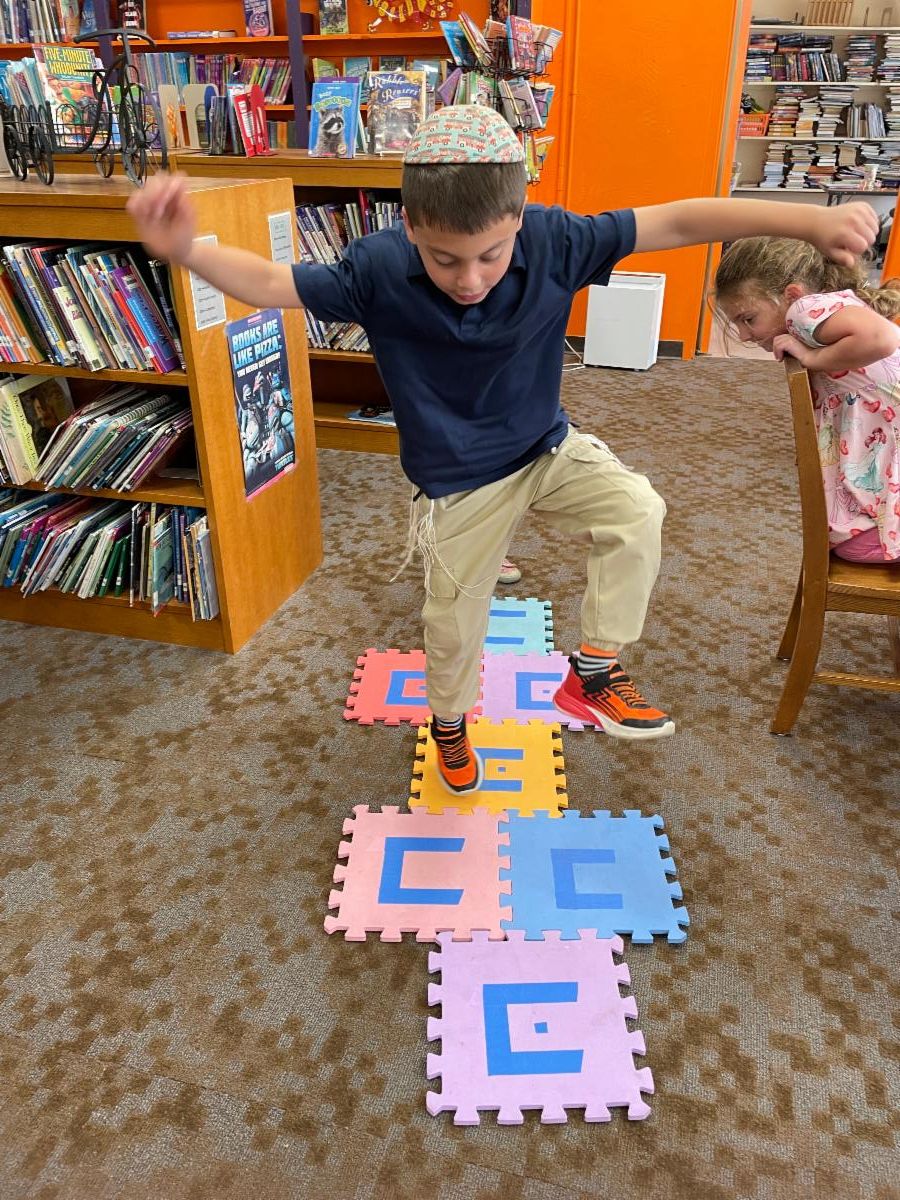
Students in Kitah Aleph have been enjoying a creative technique to reinforce their recognition of the difference between the letters kaf and chaf: a game of hopscotch.
Kitah Aleph students adore jumping through the grid of interlocking, colorful foam tiles with כּ or כ printed on them, calling out the name of the letter as they jump. But, unbeknownst to them, it’s not all fun and games. This multisensory approach engages a variety of cognitive pathways, making the experience more memorable and enjoyable for first graders. Additionally, the physical movement of jumping while identifying the letters creates a kinesthetic connection to the shapes, reinforcing students’ visual memory of the letters.
Kitah Aleph students know the difference between kaf and chaf–and they had a wonderful time jumping their way to success.
| |
Second Grade Studies Fall Foliage Through Science and Art
The second grade class recently completed their first science unit on plants under the guidance of Mrs. Kirschenbaum. Students explored various aspects of plant life, including the essential parts of plants, trees and their valuable products like fruits and seeds, as well as the interesting ways seeds disperse in nature.
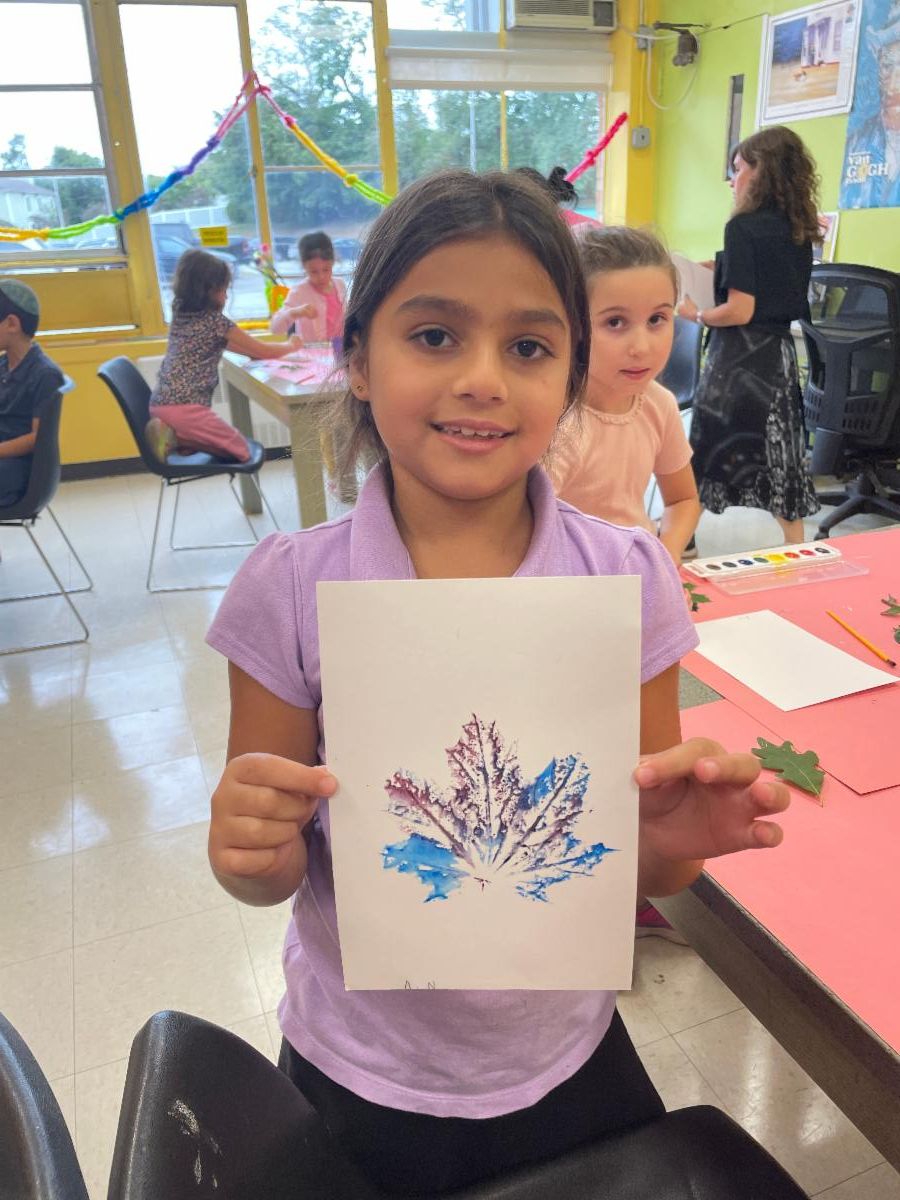
As an exciting culmination to this unit, the class added creativity and imagination to the mix with a leaf-based art project. Working with leaves collected from the GrowTorah garden and the playground, and under the tutelage of art teacher Mrs. Danziger, students painted the leaves with vibrant watercolors and carefully pressed them onto paper. After peeling off the leaves, they found delicate, complex prints created through this natural stamping process, revealing the intricate shapes and venation of the leaves. These prints reinforced their understanding of leaf structures, and highlighted the natural beauty that is so often taken for granted.
| |
A Volcanic Eruption in Nursery Aleph
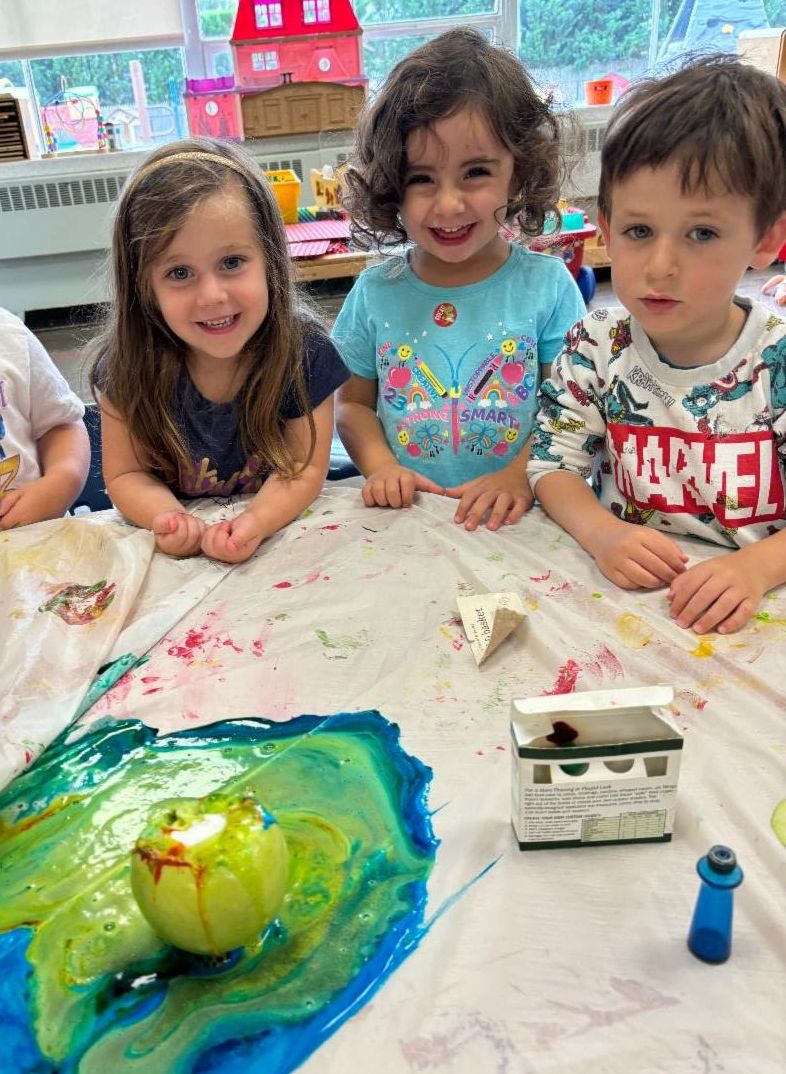
Students in both Nursery Aleph classes capped off a study of apples for Rosh Hashanah by the natural last step of any scientific analysis: exploding one.
Morah Esther and Morah Alyssa hollowed out apples for the experiment, creating wells inside them to contain the chemical reaction. Students were eager to see how ingredients that were inert individually could combine to create something new, and carefully followed instructions to add the ingredients. First, dish soap was dripped into the apple, followed by baking soda and food coloring, but the contents of the apple remained separate and did not react. However, when the vinegar was added to the mixture, Nursery Aleph students were fascinated to see a foamy, colorful “lava” erupting and flowing down the sides of the apple!
Students in Nursery Aleph enjoyed all their previous phases of study–collecting data about apple preferences, drawing apples, dipping them in honey and taste-testing the result for appropriate New Year sweetness–but the apple eruption, they agreed, made for an exciting conclusion to their apple analysis.
| |
Kitah Daled Knows the Timeline of Jewish History--All 5,785 Years of It
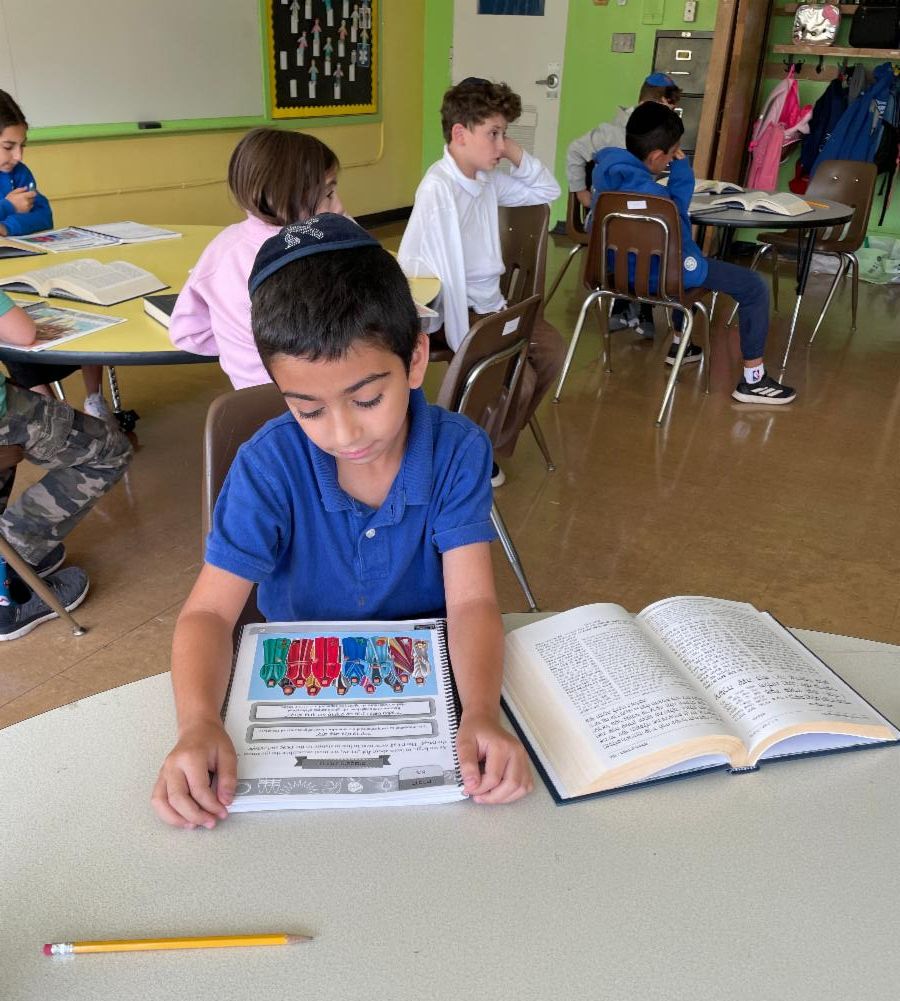
Many students in Kitah Daled have already successfully committed the major events of Jewish history to memory, from creation to the construction of the Third Beit Hamikdash (of course, this latter event hasn’t happened yet). With the aid of a series of 40-plus drawings and self-directed reviews, several students in the class no longer need the visual cue of the pictures on the timeline to successfully reconstruct the sequence of the major events of Jewish history.
Morah Tessler explains that there is more to this technique than simple fact acquisition or brain training. Much like memorizing the multiplication tables, Kitah Daled’s acquisition of this timeline can build a foundation for higher-order thinking and help them to recognize “the big picture” in their Torah studies. However, it also allows students to place themselves in the context of Jewish history, in all its richness and beauty. In studying the timeline, students recognize themselves as links in the chain of Torah transmission that stretches–and continues to stretch–across thousands of years.
| |
Rosh Hashanah Simanim in the GrowTorah Garden
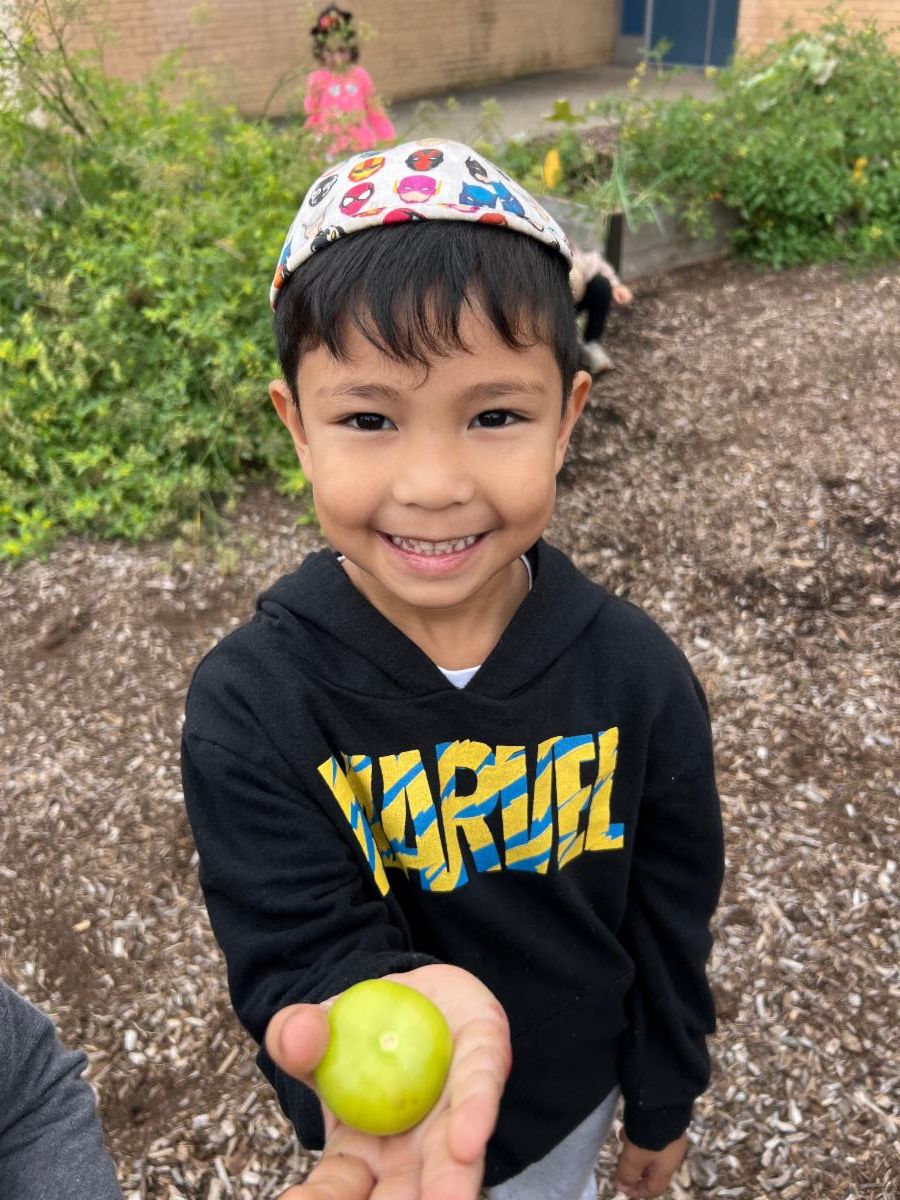
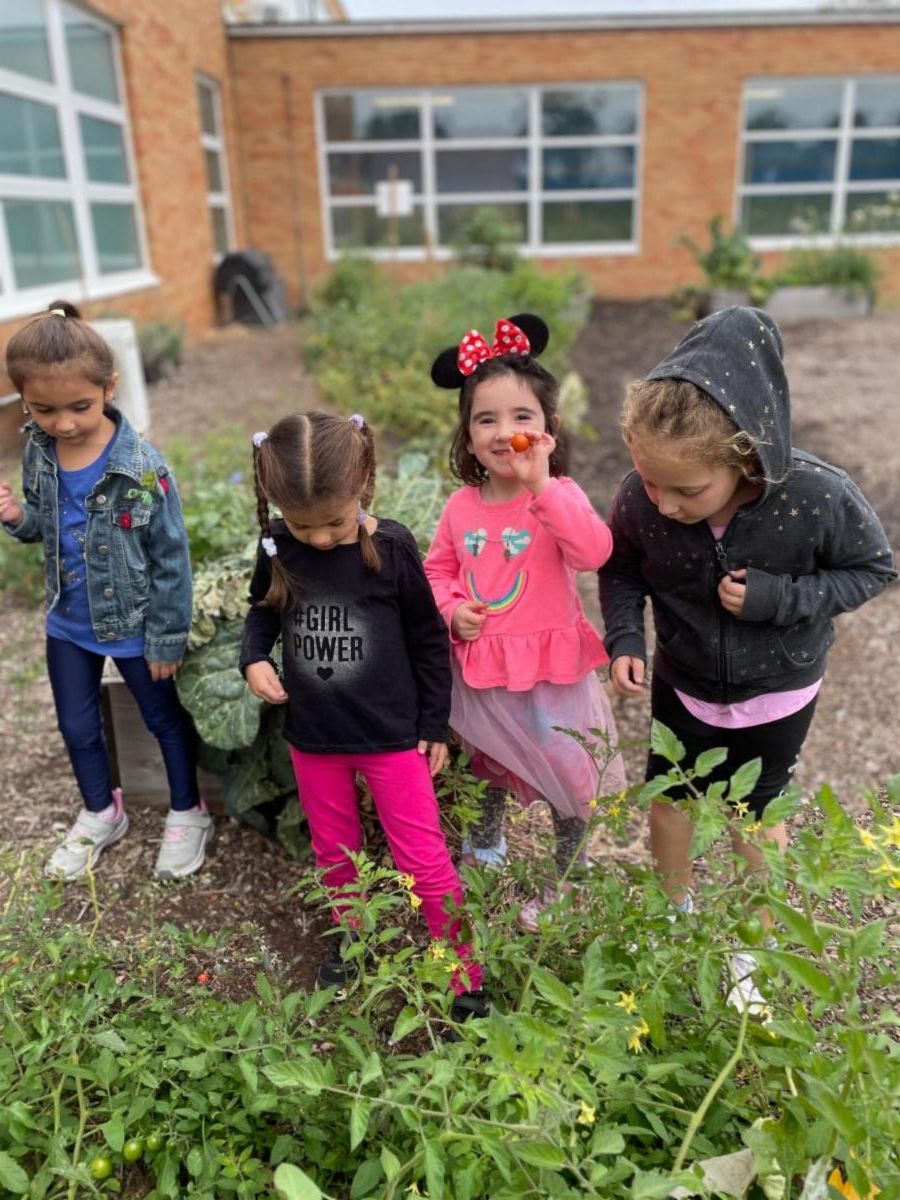
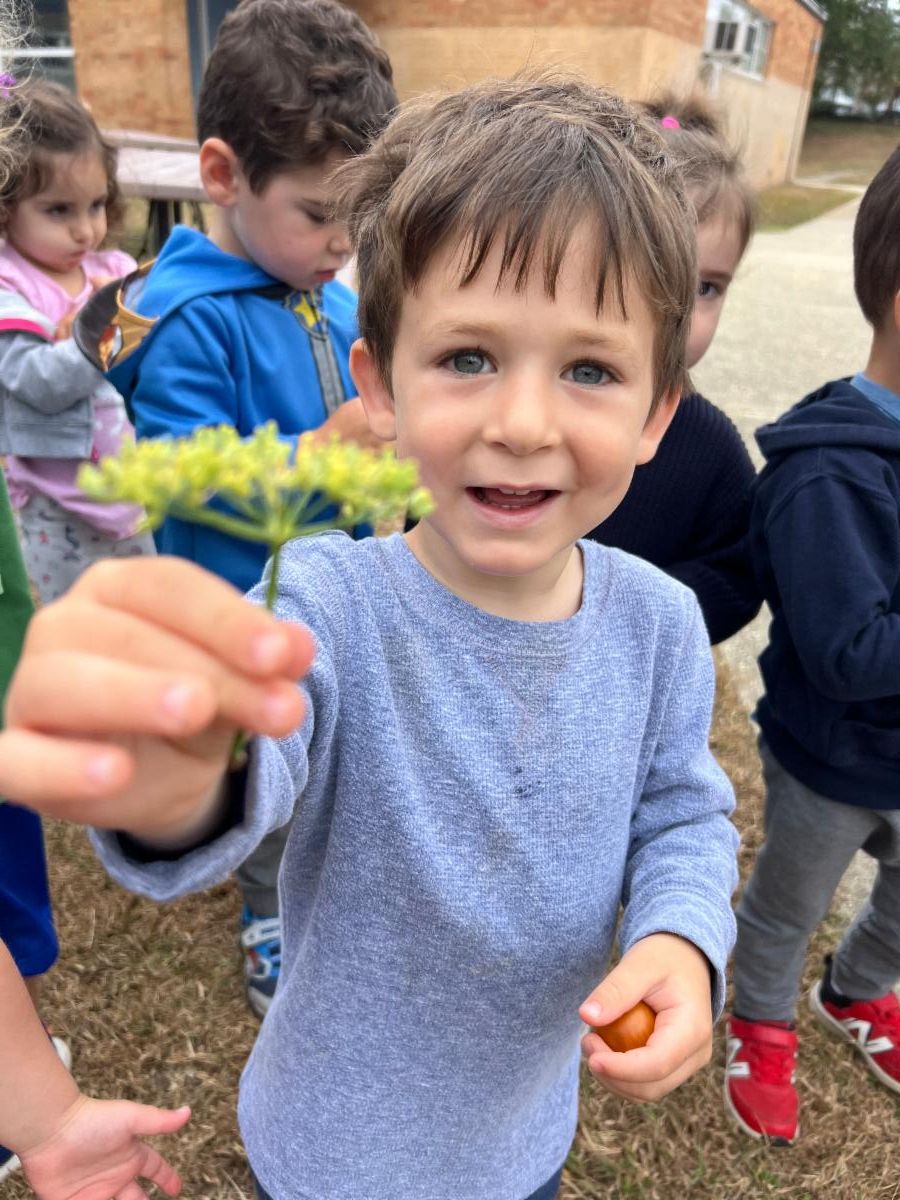
This week in the Mercaz GrowTorah garden, students explored the symbolism of the Rosh Hashanah simanim, the traditional edible signs or omens that symbolize our wishes for the new year.
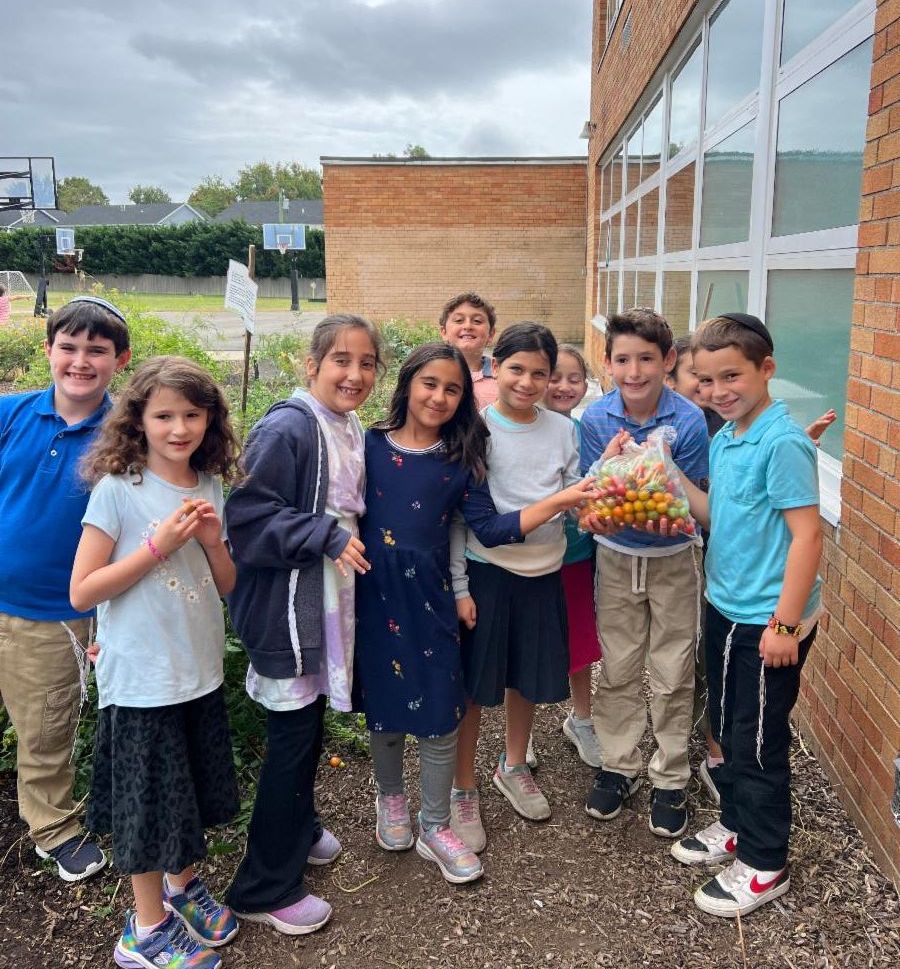
After discussing the traditional simanim that are eaten on Rosh Hashanah (such as honey for a sweet new year), the students ventured into our garden to craft personal simanim. Using plants growing in the garden–like tomatoes, squash, cucumbers, ground cherries, and dill flowers–students connected various plants to their hopes for the new year. As they explored, touched, tasted, and smelled the vegetables and plants in the garden, they learned more about the nature, usage, and history of the plants, as well.
As our student gardeners’ last act before the new year, they harvested produce for tzedakah, ensuring that those in need can share in these simanim at their Rosh Hashanah meals. May Hashem bless us all with a sweet and meaningful New Year!
| |
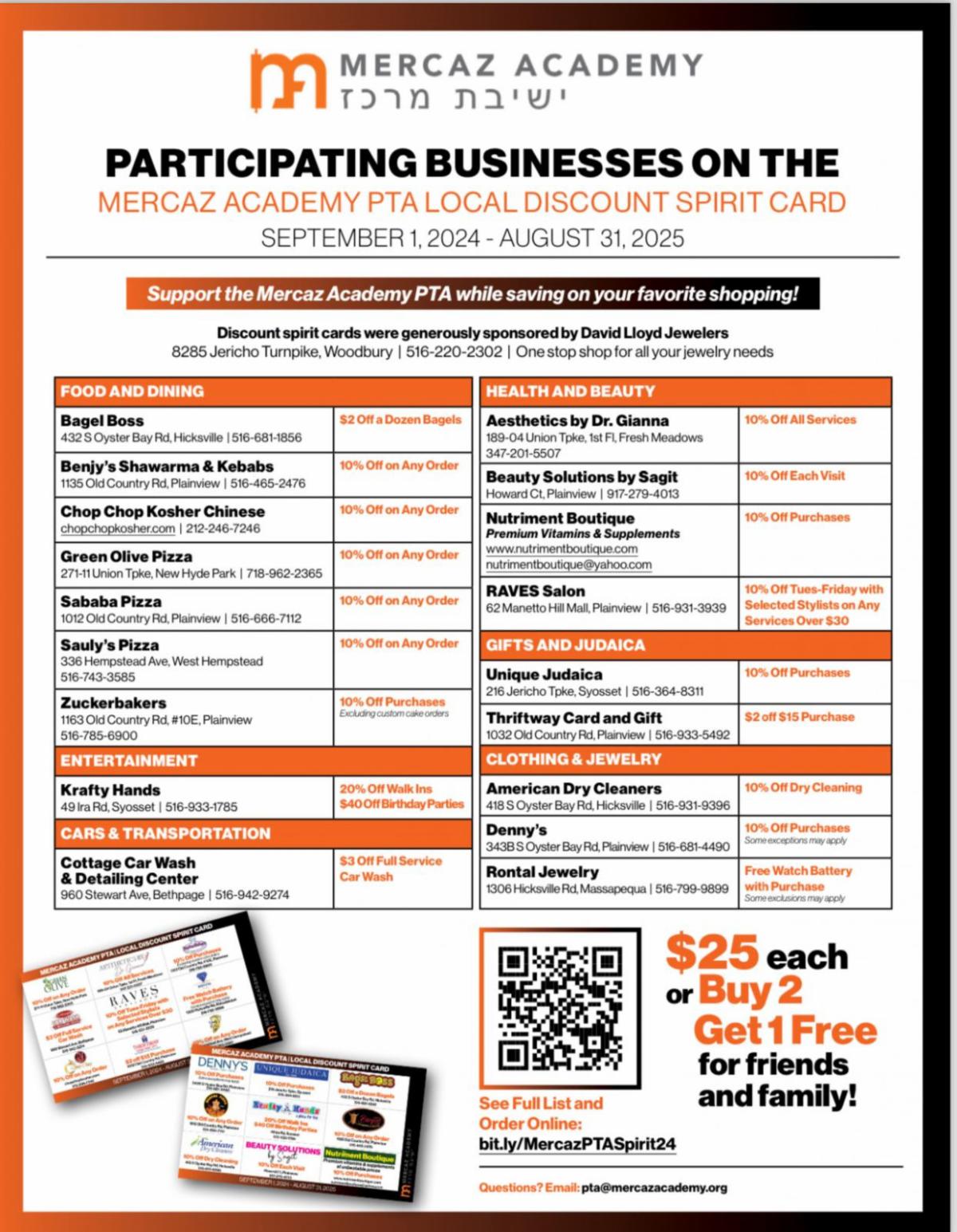
Do you have a Spirit Card yet?
| | |
|
Friday, Sep. 27:
ECC-Grade 3 Challah baking
Monday, Sep. 30-Tuesday, Oct. 1:
NO PTA CLUBS: After-school enrichment will not take place this week
Wednesday, Oct. 2:
NO SCHOOL: Erev Rosh Hashanah
Thursday, Oct. 3-Friday, Oct. 4:
NO SCHOOL: Rosh Hashanah
Monday, Oct. 7:
Israel Solidarity Day: Please wear blue and white clothing
Tuesday, Oct. 8:
Grades 1-6 Tashlich trip, Belmont State Park, 10:30-2:00
ECC-K Tashlich “trip”
Monday, Oct. 14:
NO BUSING: Columbus Day
Monday, Oct. 14-Tuesday, Oct. 15:
NO PTA CLUBS: After-school enrichment will not take place this week
Wednesday, Oct. 16:
NO SCHOOL: Erev Sukkot
Thursday, Oct. 17-Friday, Oct. 25:
NO SCHOOL: Sukkot Recess
Thursday, Oct. 31:
Picture Day
Monday, Nov. 11:
NO SCHOOL: Veteran’s Day, staff professional development
Wednesday, Nov. 13:
Makeup date for PTA Gymnastics Club
Friday, Nov. 15:
Grandparent/Special Someone Shabbat Program, grades 1-6
Tuesday, Nov. 19:
In-person Parent-Teacher Conferences
Tuesday, Nov. 19-Thursday, Nov. 21:
PTA Book Fair
Wednesday, Nov. 27:
Thanksgiving programs
Thursday, Nov. 28-Friday, Nov. 29:
NO SCHOOL: Thanksgiving Recess
Monday, Dec. 2:
Remote Parent-Teacher Conferences
Friday, Dec. 6:
ECC-K Grandparent/Special Someone Shabbat Program
| | | | |