The Power Of Emergence Changed How I See Leadership | | |
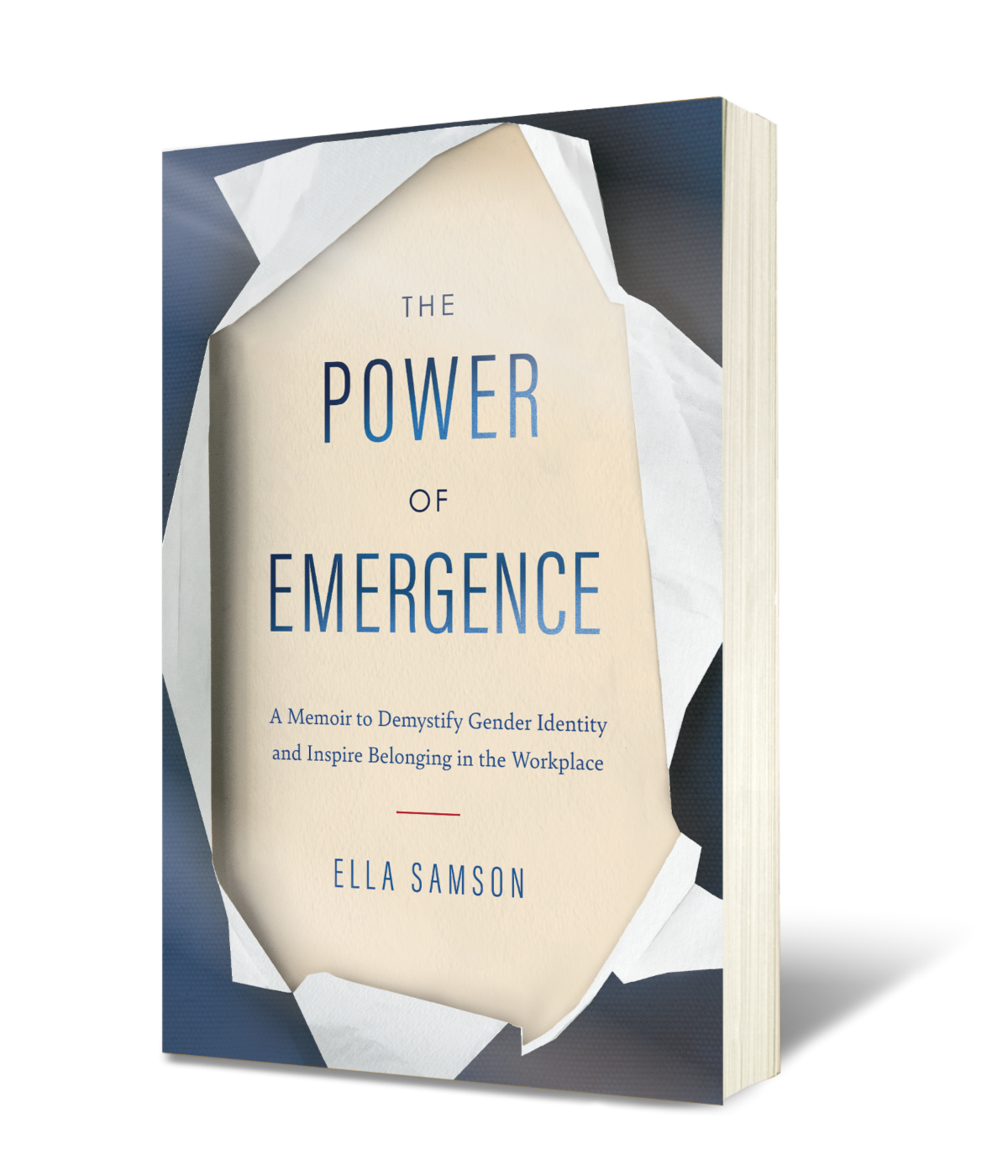
As part of our ongoing work to support inclusive, thriving business communities and entrepreneurs, we’re proud to highlight a new book from a member of our Chamber network: The Power of Emergence: A Memoir to Demystify Gender Identity and Inspire Belonging in the Workplace.
In the piece below, our Executive Director, Alexandria Eberhardt, shares why this leadership memoir stands out—and why it’s especially relevant for today’s business leaders.
| | |
Why This Leadership Memoir Belongs on Your Desk
As Executive Director of the Massachusetts LGBT Chamber of Commerce, I spend most days talking with leaders who genuinely want to “get it right” when it comes to LGBTQ+ inclusion. You care about culture. You care about belonging. But there’s a gap between intention and impact that policy updates and one-off trainings rarely fix.
That’s why I want to put one specific book on your radar: The Power of Emergence: A Memoir to Demystify Gender Identity and Inspire Belonging in the Workplace by author and workplace belonging expert Ella Samson.
This is not “just” a personal story, and it’s not an advocacy manifesto. The author herself frames it as a leadership memoir, a workplace belonging book grounded in lived experience and operational expertise. It’s written for people who don’t fully “get” gender identity yet but want to understand enough to lead thoughtfully and well. In my experience, that describes a large portion of our business community.
| |
A Story Built for Leaders Who Haven’t Had to Think About Gender
One reason this book is so effective is that Ella writes as someone who spent 30 years in corporate America, including 14 years in senior roles at Deloitte Consulting. She knows the world many of us operate in: matrixed organizations, high expectations, complex stakeholder landscapes, and very little time.
She also shares candidly that, for much of her life, she herself did not truly believe transgender identity was real. That starting point, skepticism born of lack of exposure and understanding, not malice, is exactly where many otherwise well-intentioned leaders find themselves. It’s why she’s able to speak to doubt without shaming it, and move people from confusion to comprehension.
The memoir uses her own emergence story as the vehicle: childhood, therapy, relationships, corporate leadership, and the lived reality of aligning her inner truth with how the world sees her. The goal isn’t voyeurism; it’s empathy, competence, and belonging at scale.
| |
Why Language and Story Matter for Business
A core concept in the book is the word emergence. Ella resists the more familiar language of “transition” because, for her, the truth is not that she became someone different; it’s that she became visible as who she had always been. That might sound subtle, but for leaders, it’s the kind of shift that changes how you view every employee who comes forward with a new name, new pronouns, or a new way of showing up.
As she points out, language shapes understanding, and understanding shapes empathy. If your mental model is “this person changed,” your leadership response will look very different than if your mental model is “this person is finally able to be seen as themselves.” In our conversation with Ella, she drew a critical distinction that many organizations miss: the difference between compliance, inclusion, and belonging.
- Compliance is policy, training, and reporting.
- Inclusion is whether structures and practices exist to support diverse people.
- Belonging is how those people actually feel day to day.
You can have compliance and even structural inclusion and still have employees, especially gender-diverse and transgender employees, who do not feel they belong. Ella has seen organizations implement all the “right” policies and still have two-thirds of gender-diverse employees reporting they don’t feel like they can be themselves.
That gap is exactly where story becomes a critical leadership tool. Traditional training delivers information. A memoir like this delivers understanding, which is what actually changes behavior.
| |
Why This Matters Now
In the next decade, a growing share of people in the U.S. workforce will be gender-diverse or have transgender medical history. Leaders who can’t navigate gender identity with basic competence and empathy will lose talent, credibility, and the trust of their teams.
In Massachusetts, a state that prides itself on innovation and leadership, we have an opportunity to do more than keep up. We can set the standard for what genuine, informed allyship looks like in boardrooms, on shop floors, in startups, and in family-owned small businesses across the Commonwealth.
For our Chamber members and partners, The Power of Emergence is a practical way to start or deepen that work. It lets you:
- Learn privately, at your own pace, without asking gender-diverse employees to carry the burden of educating you.
- Move beyond “I don’t want to say the wrong thing” to “I want to understand enough to say the right thing.”
- Ground your DEIB efforts in real human experience, not just abstract concepts.
|
A Concrete Next Step
If you are a CEO, a senior leader, a manager, a small business owner, or a community partner who wants to create real cultures of belonging, I invite you to read this book and, most importantly, talk about it with your teams.
You can learn more and order The Power of Emergence: A Memoir to Demystify Gender Identity and Inspire Belonging in the Workplace here.
Our Chamber will be lifting up this conversation in the months ahead. I hope you’ll join us, not just in supporting this memoir, but in using it as a catalyst to examine how your organization can better understand gender identity and, in doing so, strengthen your culture, your talent, and your impact.
| | | | |