Chris Stirewalt on America’s 250th Anniversary | | |
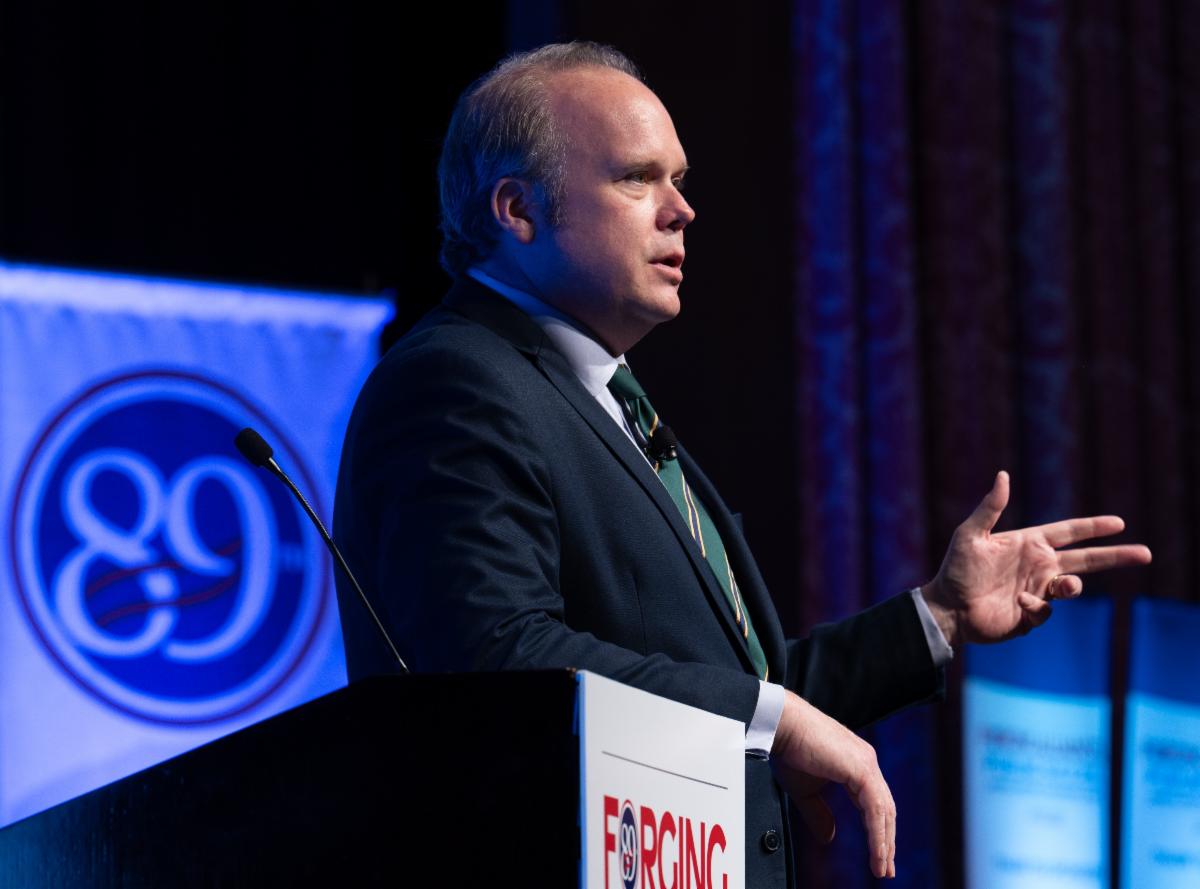
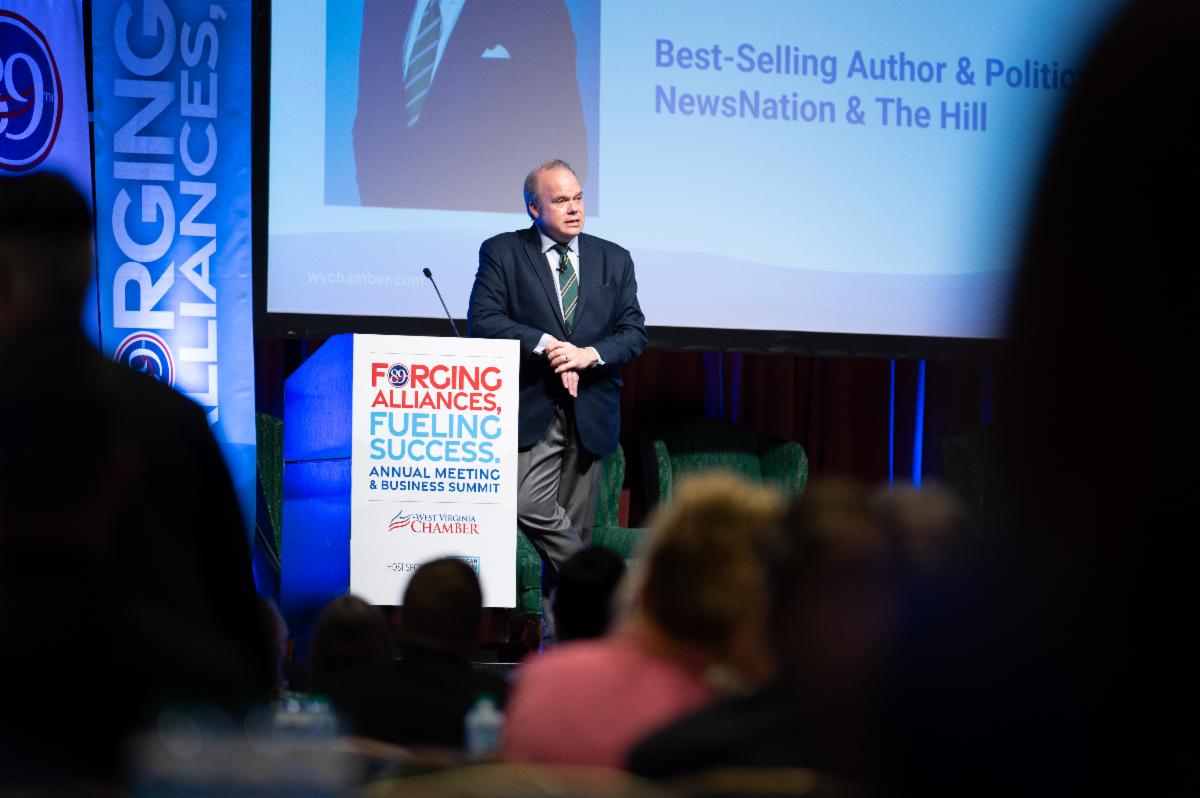
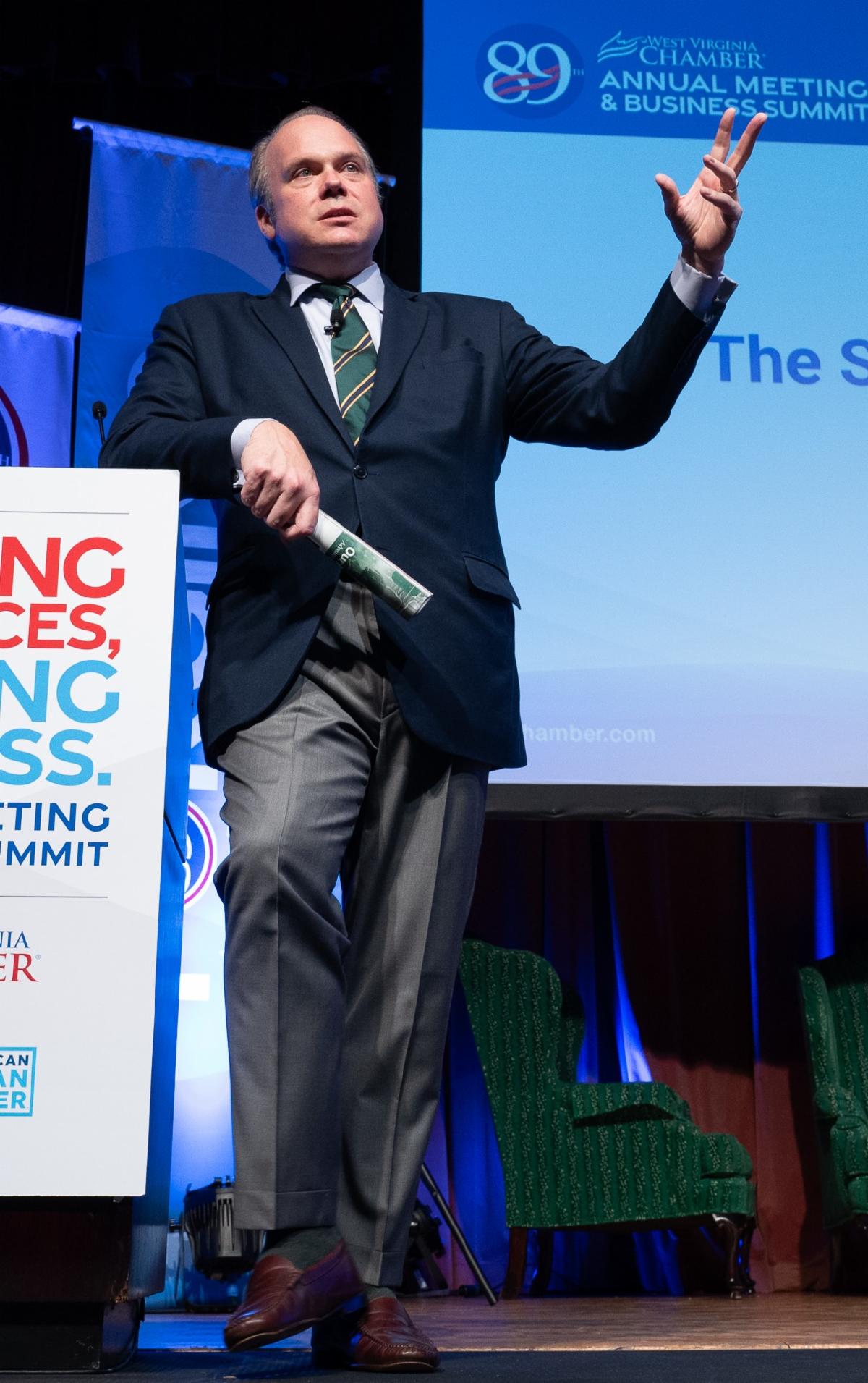
As he graced the stage in Colonial Hall at the 89th Annual Meeting & Business Summit to give Chamber members an update on the "State of American Politics," Chris Stirewalt, Author & Political Editor for NewsNation and The Hill, described America’s 250th anniversary as a pivotal moment to reflect on our nation’s extraordinary place in history and to rekindle authentic patriotism.
“We are coming up on the 250th anniversary of the founding of the oldest, most durable, most world-changing experiment in self-governance in all of human history. Never has anybody been this big while being this free.”
Stirewalt stressed that the United States is unlike any other country before it, remarkable not just for its wealth and freedom, but for its unprecedented size and scale, while remaining a self-governing democracy governed by laws. America, he insists, is “not normal” by historical standards and our founding ideals continue to set it apart.
| | |
“America is more than a country. It’s an idea—and it is a miracle worth cherishing.”
Looking back to 1976, Stirewalt recalls that America was deeply troubled, recovering from Vietnam, political scandals, assassinations and unrest. Yet the Bicentennial served as a unifying reminder that despite turmoil, America’s system remained stronger than any alternative. He hopes the Semiquincentennial in 2026 can provide the same renewal, particularly in a polarized age where people seek affirmation of their views rather than engaging across differences.
| | |
On Patriotism
Stirewalt warned the crowd that our country is suffering from a “patriotism deficit.” He draws a distinction between nationalism—defined as pride rooted in possession or identity and patriotism, which he frames as a deeper love for an idea, a creed, and a way of being.
“Patriotism is the love of an idea, of a concept, of a way of being.”
Quoting the Declaration of Independence, he reminded the audience that the founding claim, that all men are created equal and endowed with inalienable rights, was revolutionary and world-changing, yet Americans too often treat this legacy casually, arguing over trivialities instead of cherishing the miracle of self-governance.
| | |
“That clause, 'that we hold these truths to be self-evident, that all men are created equal and endowed by their creator with certain inalienable rights,' was a world-changing, throw-the-earth-off-its-axis concept.”
For Stirewalt, patriotism must be grounded in love of Americans themselves. Quoting Ronald Reagan, he notes that one cannot love America in the abstract without also loving its people" complicated, flawed, but also great. He calls for the coming months to be a time of recommitment to the founding creed and a genuine, shared love of country.
“We have to bring it back, because the stakes are too high—for ourselves, for posterity and for the world if we don’t.”
| | *Find Stirewalt's "State of American Politics" update at timestamp 2:55:57* | | |
The Battle for Fort Henry in
Wheeling, West Virginia
| | |
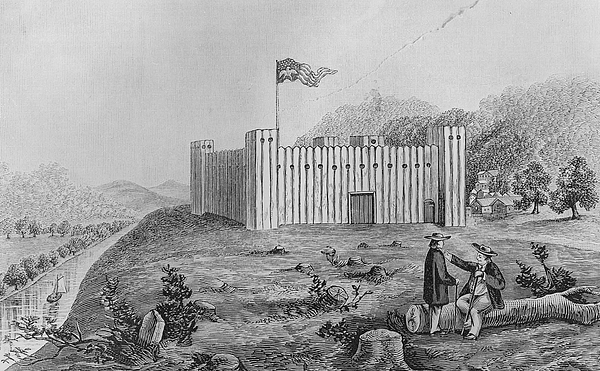
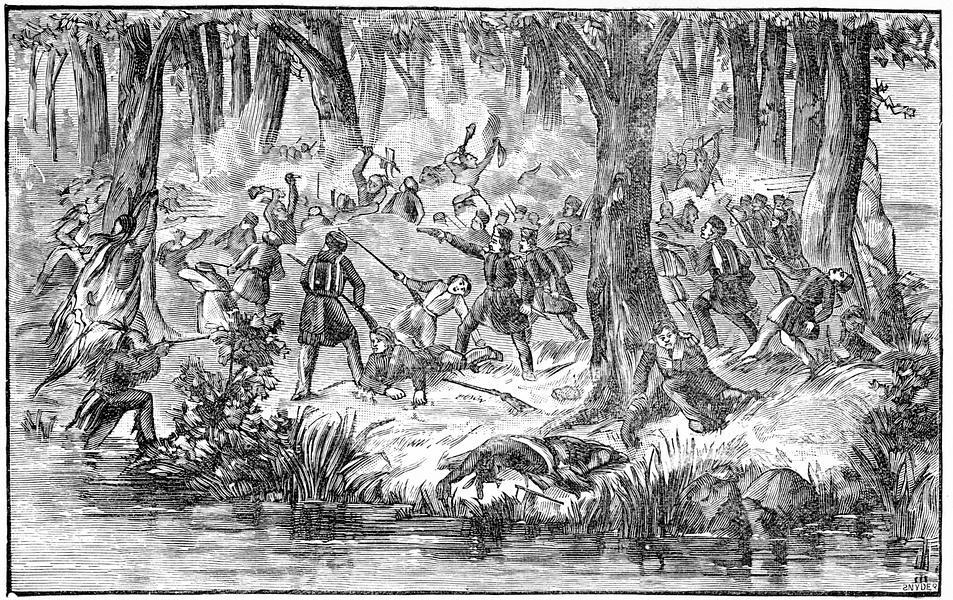
The first attack on Fort Henry occurred on September 1, 1777, during the American Revolution. Built in 1774 along the Ohio River at present-day Wheeling, the fort was designed to protect settlers on the Virginia frontier. By late summer of 1777, most of the militia originally stationed there had returned home, leaving only about 33 to 45 defenders under Captains Joseph Ogle and Samuel Mason.
On the morning of September 1, approximately 200 Native American warriors, primarily from the Wyandot and Mingo tribes, launched a surprise attack on Fort Henry. Four men who had ventured outside the fort's walls were ambushed, and soon the attackers laid siege to the fort. For three days and nights, attackers destroyed livestock, burned cabins and attempted to starve out the defenders. Nearly half of the militia were did not survive, with casualties estimated between 14 and 23 men.
| | Every year on Labor Day Weekend, Fort Henry Days takes place at Camp Russell, a campground at Oglebay Park in Wheeling. Fort Henry Days is a genuine Revolutionary War reenactment and market fair featuring regimental and Native American encampments, a battle reenactment, performances by authentic musicians, informative speakers and a diverse array of sutlers and demonstrators. | | |
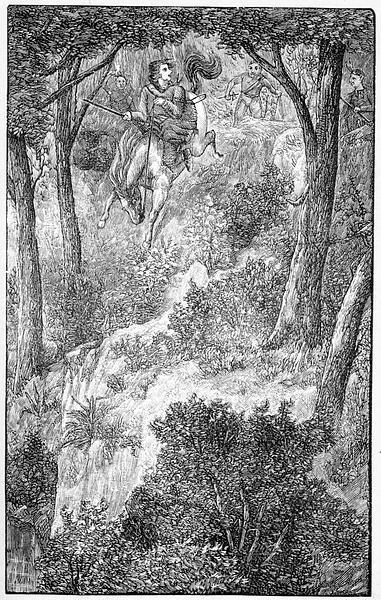
One of the most dramatic moments of the siege involved Major Samuel McColloch, who, while trying to reinforce the fort with mounted men, found himself surrounded. To escape, he rode his horse down a nearly sheer cliff at Wheeling Hill in what became known as “McColloch’s Leap,” managing to survive the perilous descent. Despite heavy losses, the fort held out, and the attackers eventually withdrew across the Ohio River. This first siege established Fort Henry as a focal point of frontier conflict during the Revolution. A monument of the historic leap was relocated and restored in 2023 and stands on the hillside along National Road in Wheeling.
Click here to learn more about
McColloch's Leap.
| | WEST VIRGINIA HISTORY THIS MONTH | | |
September 1 On September 1, 1777, about 200 Wyandot and Delaware Indians laid siege to Fort Henry in present Wheeling. During the siege, Elizabeth Zane supposedly made a daring run through gunfire to obtain gunpowder. After the four-day siege, these forces attacked Rice’s Fort at Bethany.
September 4 On September 4, 1784, George Washington visited Berkeley Springs in Morgan County. During the visit, he witnessed the steamboat invented by James Rumsey.
September 5 On September 5, 1716, On September 5, Virginia Governor Alexander Spotswood reached the crest of the Appalachian Mountains in present Pendleton County.
| | |
September 17 On September 17, 1671, Thomas Batts, Thomas Wood, and Robert Fallam explored along the Kanawha River.
September 21 On September 21, 1774, forces under Colonel Andrew Lewis reached the site of present-day Charleston on their march to the Battle of Point Pleasant, Mason County.
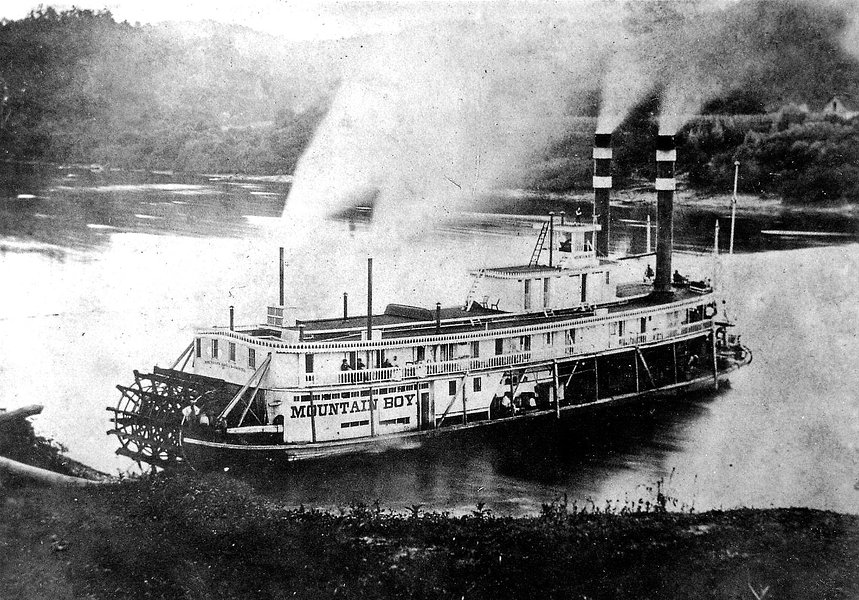
Historic photos courtesy of The West Virginia Encyclopedia Online.
| | | | |