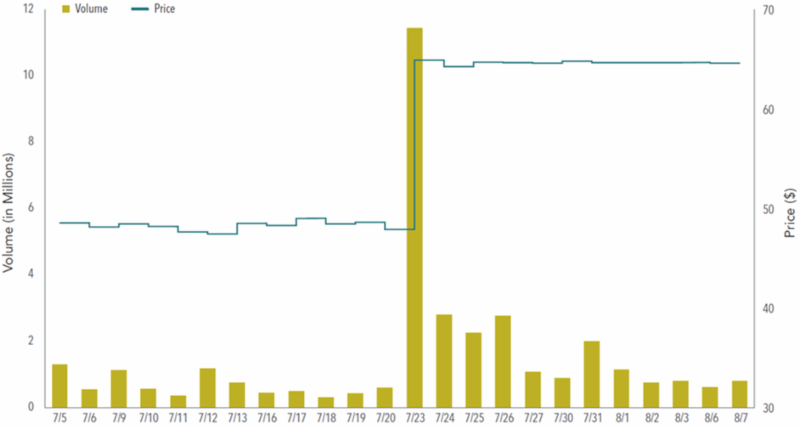
Given that security prices rise and fall based on a multiplicity of influences, how should investors interpret and act on these signals? We believe that trying to untangle all these influences and profit from perceived mispricing is not possible in a systematic and scalable manner.
An alternative approach is to start by accepting that prices are fair and reflect the collective expectations of market participants. While information frequently changes, this is quickly built into prices. Competition among buyers and sellers is such that it’s not possible to consistently outguess the market.
The second step is to see that fairly priced securities can have different expected returns. And we can use market prices and security characteristics to identify those securities that offer higher expected returns.
The third step is to build highly diversified portfolios around these broad drivers of return, while implementing efficiently and managing the cost of buying and selling securities.
The final step is to apply discipline and rebalance your portfolio to either stay within your chosen risk parameters or to adjust for changes in circumstances.
Ultimately, the market is like a giant information processing machine. All the influences mentioned above are constantly being assessed by millions of participants, and prices adjust based on those collective expectations.
The returns we expect from investing do not necessarily show up every day, every week, every month, or even every year. But the longer we stay invested, the more likely we are to capture them. So, rest assured that even when prices are falling, people are still buying. The market is doing its job, and we believe the rewards will be there if you remain disciplined.