|
Lessons Learned from NDEs Over 50 Years
- NDEs are common experiences that can happen to anyone.
Numerous studies have failed to find any variable that can predict who will have an NDE. They happen to men and women, to people of all ages, all religions, and all ethnic groups.
- NDEs are normal experiences that happen to people in exceptional circumstances.
Studies have failed to find any link between NDEs and any type of mental illness. This means experiencers do not need to be referred to a mental health professional. What they need is
- reassurance that they are "normal"
- validation that their experiences were real
- the opportunity to share their experiences
- be able to reach their own understanding of them.
- NDEs usually lead to a number of profound and long-lasting aftereffects.
Whether positive or negative effects are noticed, like enhanced enjoyment of life or difficulty fitting back into one's job or lifestyle, it is usually helpful to acknowledge and address changes and what they mean for the experiencer's life and relationships. Family, friends, and healthcare workers can be aware of aftereffects in case some help may be needed.
- NDEs reduce fear of death.
Rather than being a terrifying event, most experiencers report that having an NDE greatly diminished their fear of death and dying--and many say their fear was erased. Knowing that the process of dying is usually peaceful--if not blissful--may mean you don't need to be afraid of dying.
- NDEs lead experiencers to live more fully in the present moment, rather than dwell in the past or dream of the future.
The example of how experiencers, having almost died, try to live more in the present may encourage the rest of us to enjoy living life more fully and to live in the moment. And making the most of life, living life more fully in the present, allows us to appreciate not only the joy but also the pain of each experience.
- NDEs raise questions about the relationship between minds and brains.
In normal, everyday life, it often seems as if our brains and our minds are the same thing. But experiencers almost universally report that their thoughts and perceptions are clearer than ever in NDEs while their brains are severely impaired. They also sometimes report accurate perceptions of things going on around their bodies, but from a point of view outside their physical bodies. This suggests that we need a different model of how minds and brains interact. Greyson suggests that the physical brain may act like a cell phone, receiving thoughts and feeling from the nonphysical mind and that in extreme circumstances at least--minds can function quite well without brains to filter them.
- NDEs raise questions about the continuation of consciousness after death.
If it is true that minds can function in extreme circumstances without physical brains, then it may be possible that minds can continue to exist after the death of the brain. I don't know whether some kind of continued consciousness after death is the best explanation for NDEs in which experiencers see deceased loved ones no one knew had died. But I don't have any alternative explanation for the evidence. Unless we come up with another explanation, some form of continued consciousness after death seems to be the most plausible working model.
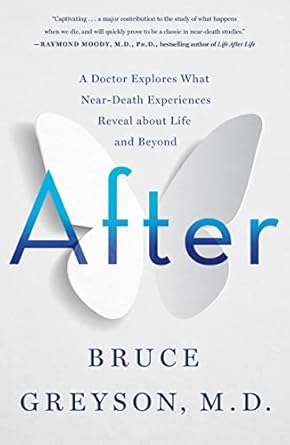
Bruce Greyson, After, pp. 216-221
|