|
In this issue:
- Seeing Red Through the Haze
- Upcoming Programs
- Pollinator Photo Contest!
- Tales From the Trails
- Green Ways
- Partner Event: Summer Solstice
| |
A Summer Like No Other...? | |
|
Seeing Red Through the Haze
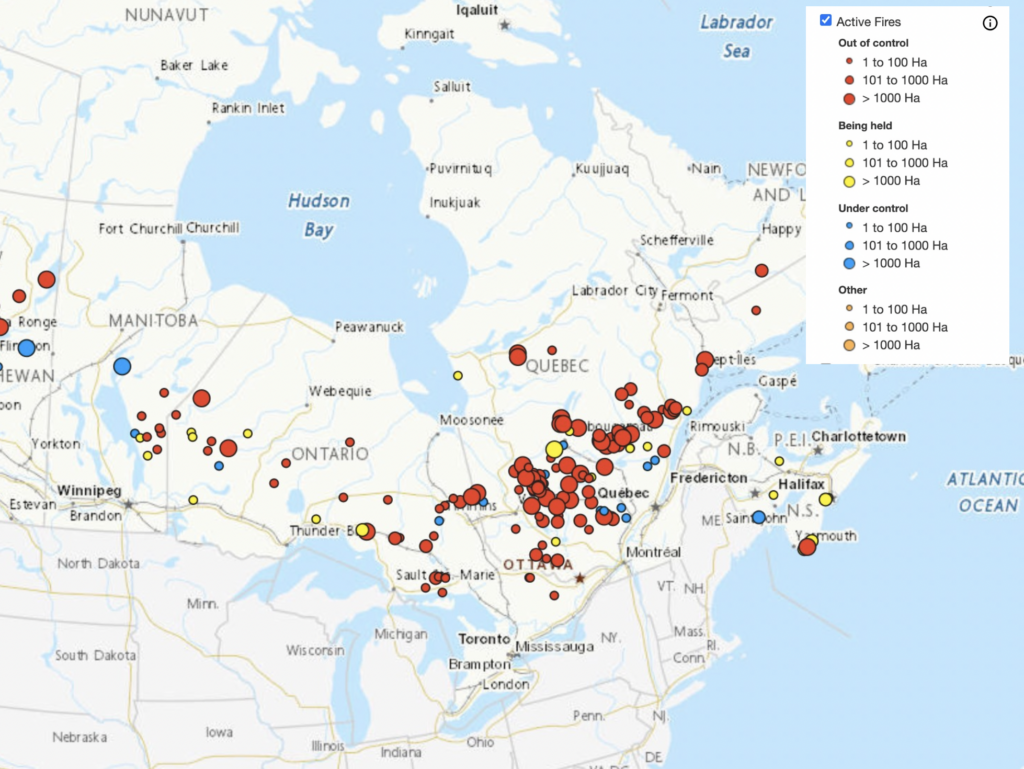
The lyrics, “Roll out those lazy, hazy, crazy days of summer” are taking on a whole new meaning right now. Fires "dot" the map above, representing the numerous wildfires burning in eastern Canada. Combined with last month’s western wildfires in Alberta and Saskatchewan, conditions across Canada have been unlike anything seen in recent history. The Government of Canada reports that, as of May 16, fires had scorched 478,000 hectares (1,800 square miles) in Alberta, British Columbia, and Saskatchewan, which is 10-times the average area burned for this time of year.
| |
|
In recent days, smoke from the fires has been drifting over the northeastern U.S. and settling across the Midwest. Alerts warn of elevated concentrations of air pollution across the regions, particularly for “sensitive groups,” including children, older adults and people with asthma and other respiratory conditions.
(Photo by WXYZ)
| |
|
|
On Wednesday, Detroit experienced some of the worst air quality among major cities across the world, according to IQAir's Air Quality Index. AirNow.gov measured Detroit's air quality index at 173, considered unhealthy for the general public.
Dry conditions are contributing to the fires’ spread. Some parts of Northern Lower Michigan and the U.P. have reached the “extreme” fire danger level.
| |
|
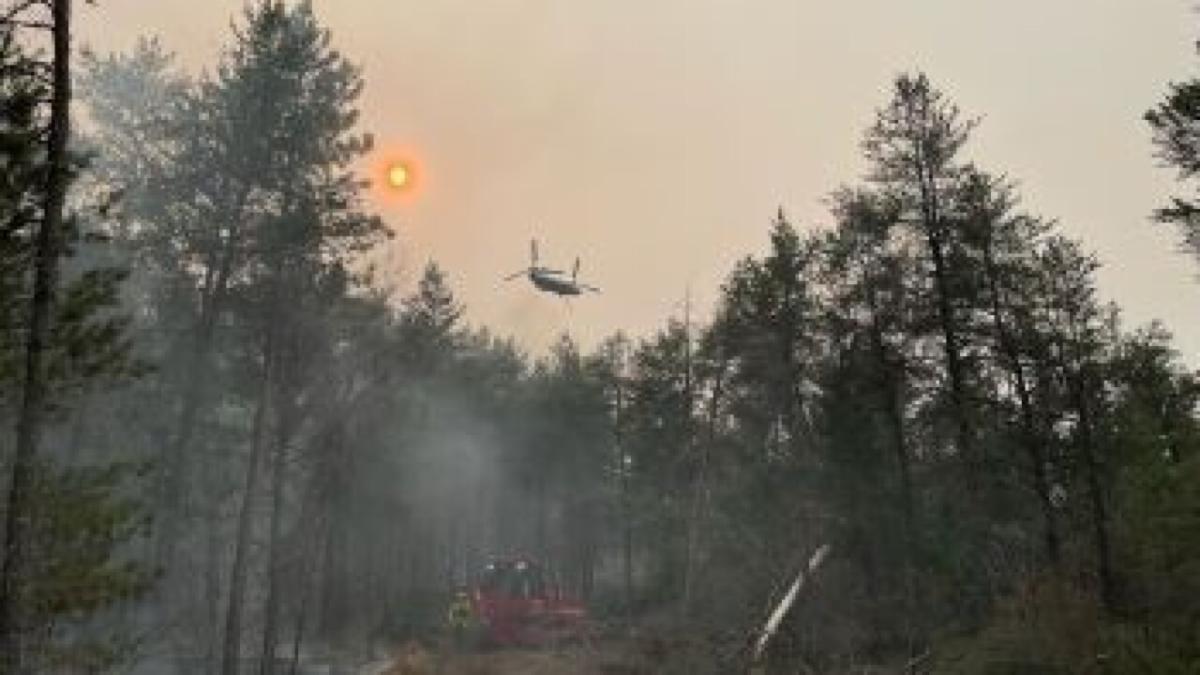
Fire crews continued putting out hot spots within the Wilderness Trail Fire burn area near Grayling Tuesday as local roads reopened.
(Photo by MI DNR)
| |
|
|
The Wilderness Trail Fire, estimated at 2,418 acres in size, is now 100% contained. The fire started about 1 p.m. Saturday near Staley Lake, escaping from a campfire on private property. Southeast Michigan received only 0.92 inches of rain in May, which normally records 3 to 4 inches, so conditions are dangerously dry.
While some fires may be sparked by thunderstorms, people cause nine out of 10 wildfires in Michigan, according to the department. As we look forward to summer activities, such as cookouts and gathering around the fire ring, let's keep some safety tips in mind:
- Anyone having a fire should keep a water source, shovels and rakes nearby.
- To put out a campfire, douse it with water, stir the coals and douse it again.
- Apply plenty of water around the fire ring.
- Fires should never be left unattended, and should be avoided in windy conditions.
- In addition, motorists should avoid parking vehicles over dry grass, as the vehicle's heat can spark a fire.
For more information, go to www.michigan.gov/dnr/education/safety-info/fire.
| |
Summer Young Naturalist Program
Monday - Thursday
9:30 am -12 noon
Ages 7-9: July 17-20
Ages 10-11: July 10-13
Get your child outdoors and learning about nature! Led by UM-Dearborn student interpreters, this science-oriented program provides direct, hands-on learning in a beautiful natural setting. Session topics will include pond life, birds, insects and spiders, and frogs and turtles. The program fee is $60. Register online.
| |
|
1st and 3rd Wednesday of every month through the end of August,
5 - 5:45 p.m. | Meet at the EIC
All students, faculty, staff, and community members are invited to join! These 45 minute strolls, hosted by Planet Blue Ambassadors, Counseling & Psychological Services Mental Health & Wellness Peer Educators, and the Environmental Interpretive Center, are meant to help you press pause on the chaos of life and reconnect with nature and your well-being.
| |
The Pollinator Photo Contest is Back! | |
|
The 2023 Pollinator Photo Contest has begun!
The EIC at the UM-Dearborn is once again sponsoring its annual Pollinator Photo Contest. The Center will accept photo entries from June 1 - September 30. Please visit our website to learn more about the contest details! It's all the buzzzzzz! (2021 winner Jonathon Maurice's "At Work.")
Speaking of Pollinators, Let's Party!
With EPRI’s Pollinator Power Party 2023 just around the corner — Monday, June 19, through Friday, June 23 — we are excited to announce the Party Program is now available! Check it out to learn all about this year’s featured guests, informative discussions, special activities, and much more!
Be sure to register today in order to join the week’s many live-streamed events, including a discussion on the current status of pollinators as well as a fascinating a look at if bees can be happy. There will also be the opportunity to engage with your local community and share your support for pollinators on social media using the hashtag #PowerInPollinators.
| |
|
Special Knowledge Shared
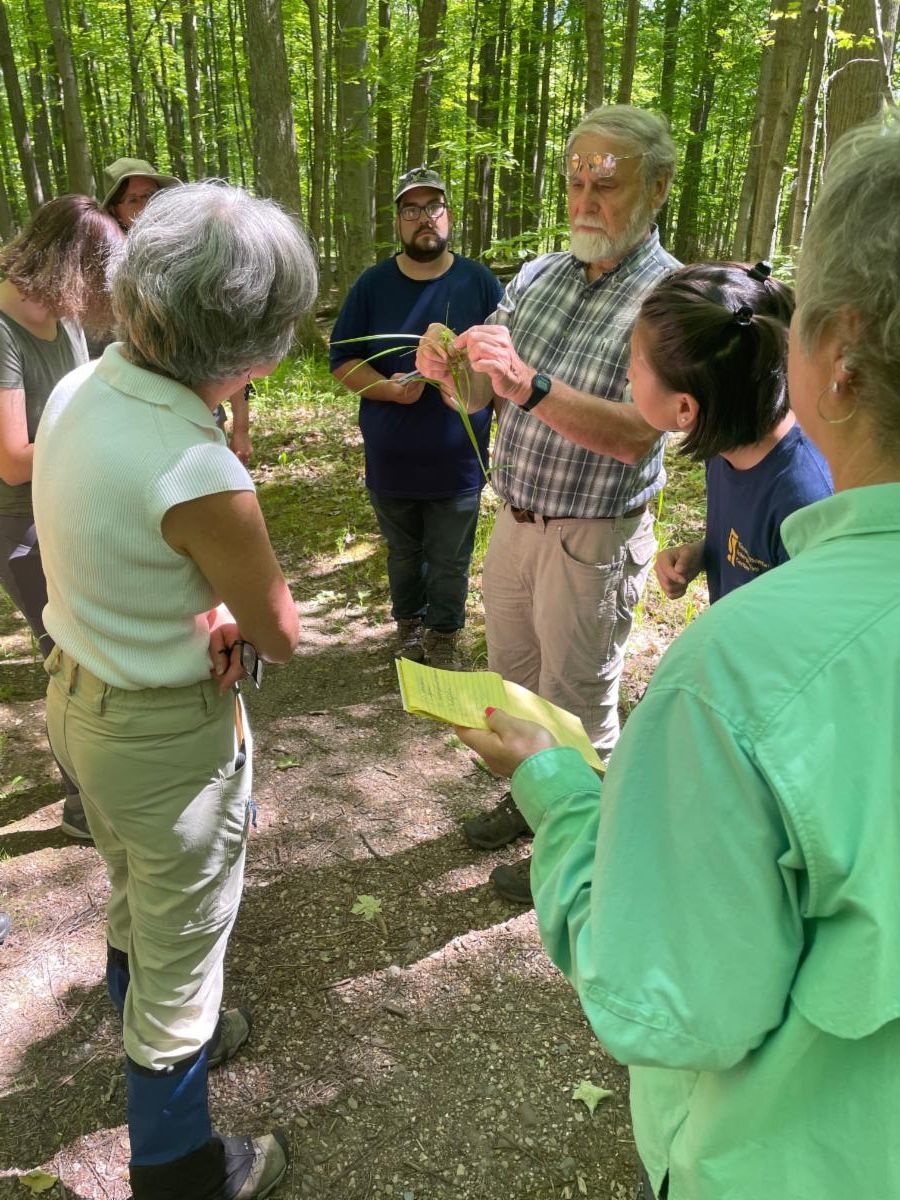
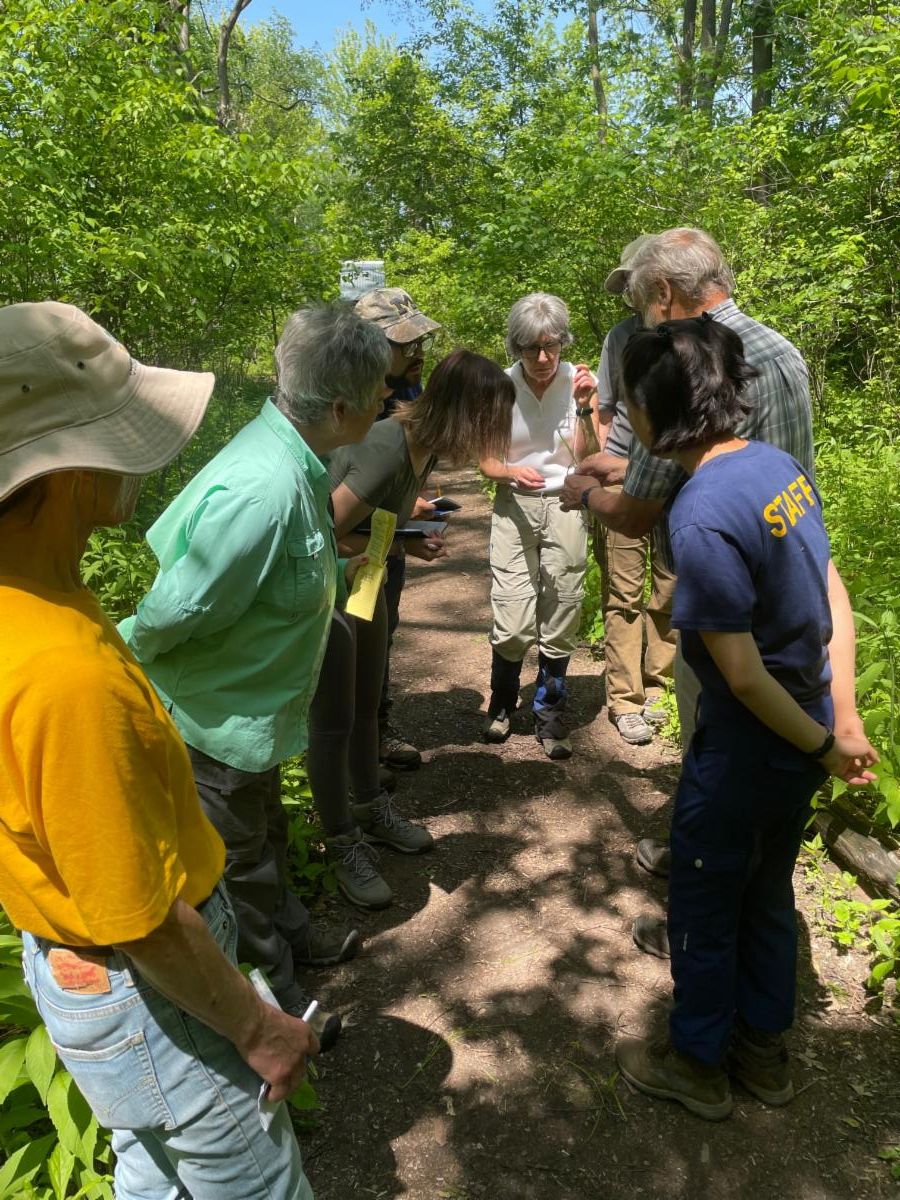
On May 30, we were delighted to join Anton (Tony) Reznicek, Curator Emeritus of Vascular Plants at UM Ann Arbor, for a walk in the ESA, during which he shared his wealth of knowledge about the various grasses and sedges we encountered. In addition to identifying various grass and sedge species, Tony conveyed a bounty of fascinating information about each. It was an absolutely delightful and memorable two hours of field investigation.
| |
|
|
As stewards of the UM-Dearborn Environmental Study Area (ESA), one of the questions our staff at the EIC is tasked with asking is “What lives in the ESA?” Documenting species of plants, animals, and fungi in the ESA is a vital tool in assessing and understanding its conservation benefits along with its overall ecosystem health.
It also helps us to gauge how well the ESA serves as an outdoor classroom and living laboratory for teaching, learning, and researching aspects of our local biological diversity. Identifying and cataloging species in the ESA has been taking place since the early 1970s. Although a great many species have been documented, grasses and sedge have largely remained unidentified. Expertise on the identification of these plant groups in our region is very scarce.
| |
|
We are grateful to EIC friend Ruth Hart, who arranged this connection for us. Thanks to Tony’s generosity in sharing his special area of expertise, we were able to add 12 sedge species, 4 grass species, and 1 rush species to our catalog of plant life in the ESA. Our understanding of the ESA as an important storehouse of local biological diversity is all the better for his visit.
Rick Simek
| |
|
Don't Forget to turn Out the Lights! | |
|
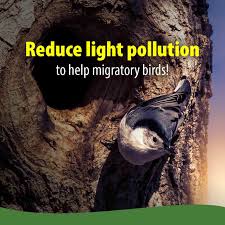
Light Pollution, a phenomenon caused by the overabundance of outdoor lighting in urban areas, has a number of negative effects on the environment. Excess light from buildings and houses distorts birds’ orientation during their migration, which can result in unnecessary fatalities. In addition, insects which provide food for a variety of species are attracted to the deadly bright lights, significantly decreasing their populations.
| |
Bug zappers are especially detrimental to insects, often killing beneficial insects, such as moths, while doing little to keep mosquitos at bay. Outdoor lighting can also disrupt the circadian rhythm in animals as well as humans, causing sleep issues alongside other symptoms. | |
|
To help reduce light pollution in and around your own home, you can remove outdoor bug zappers, decrease the amount and timing of lights in your yard, keep outdoor lights directed downwards, and make sure to contain your indoor lights at night by using curtains or blinds.
Valerie Osowski - EIC Parkhurst Fellow
| |
|
Photo from the Astronomical
Society of Las Cruces
| |
|
Celebrate the Summer Solstice in Style
Join the staff at Fair Lane: Home of Clara and Henry Ford, in honor of the summer solstice. This is a members only event. Please RSVP by June 14. Please contact Giles Simmer at info@henryfordestate.org or at (313) 668-3200 with any questions.
Event Details
- Event is for members only.
- 7:30-9:30 pm on Wednesday, June 21, 2023
- The Fair Lane gates will open at 7 pm for guests.
- Light refreshments will be available.
- A champagne toast will be offered at 9 pm.
| |
Venturing outdoors and encountering nature is good for your health. Our trails are accessible, so please visit our Environmental Study Area. Stay engaged in learning activities and check out our Remote Learning Activities & Resources page for ideas to create a “Neighborhood Nature Journal” and “Family Nature Walk” activities!
We also hope to see you in person at our upcoming programs!
| | |
Please remember...
The EIC Environmental Study Area is open daily from sunrise to sunset. We would like to remind nature-goers that fishing on site is prohibited and to leave bikes and dogs at home because they cause disruption and stress to the EIC wildlife.
| |
| | | |