|
2045 Saturday, September 9, 2023
We were up and underway again in the dark at 0545 this morning. We were doing a 50 mile run to Canada's famed and historic fishing port of Lunenburg, Nova Scotia. Most of the run was under power in dense fog, straight into a souwest breeze.
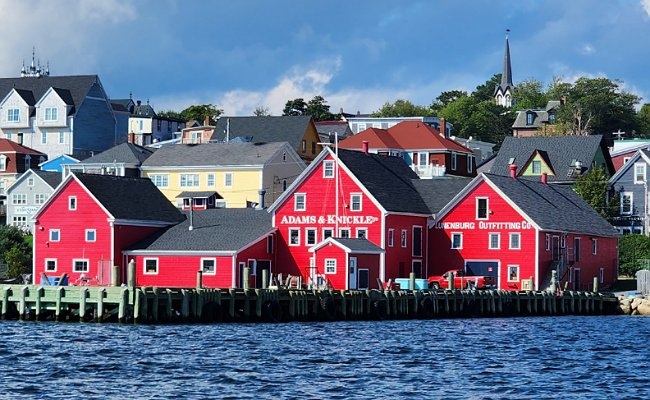
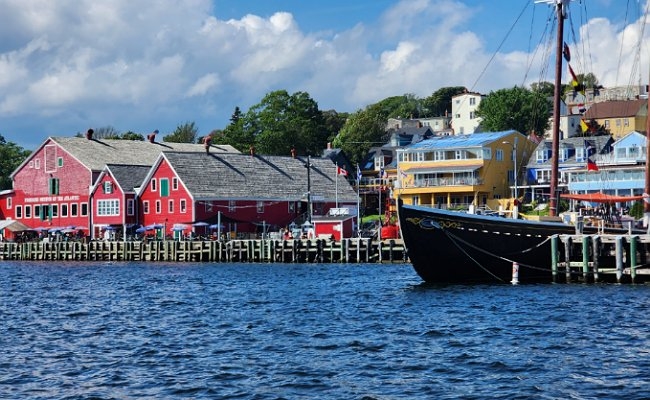
I have always been fond of Lunenburg, the sense of history, the story of powerful, black schooners sailing to the banks for cod, halibut and other fish. A bit of the beautiful old working waterfront of Lunenburg is in the photo above; The buildings and shoreline are a UNESCO World Heritage Site because of the global significance of this town's historic dory fishing schooners and the fish they caught to feed people far and wide.
There are a couple of old sayings about this town: "Lunenburg hung by a fish hook" and the harbor was a "forest of masts." In the heyday of the banks fishery, this place was filled with schooners and their wooden masts. The lifeblood of the economy and the people hung on the success of the fishery - how many cod took the hook.
It feels like fate that tonight I am in one seafaring town while tomorrow we will sail, perhaps in fog, across the Gulf of Maine, and three days later the first place we will see will likely be Gloucester, Massachusetts, a town with a very similar history with the sea and the fishery. That is my route, homeward bound, after a summer seeing people whose lives depended on fishing. There are lessons here, they apply to Newfoundland and Labrador, and to Lunenburg and Gloucester and their shared histories of schooners and dories plying the fishing banks.
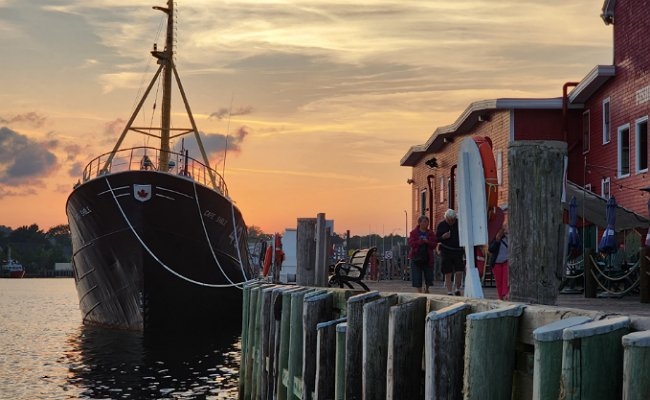
Tonight, Tazzarin is tied to the wharf at the Fisheries Museum of the Atlantic. Off our stern is the fishing trawler, Cape Sable, silhouetted against a stunning sunset. (photo below) She was built in 1962, a different era in the fisheries.
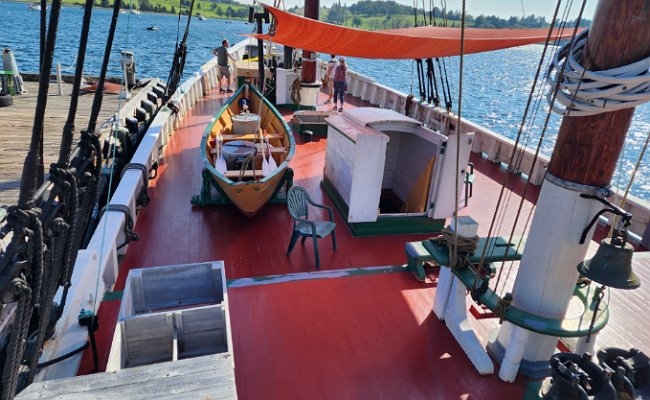
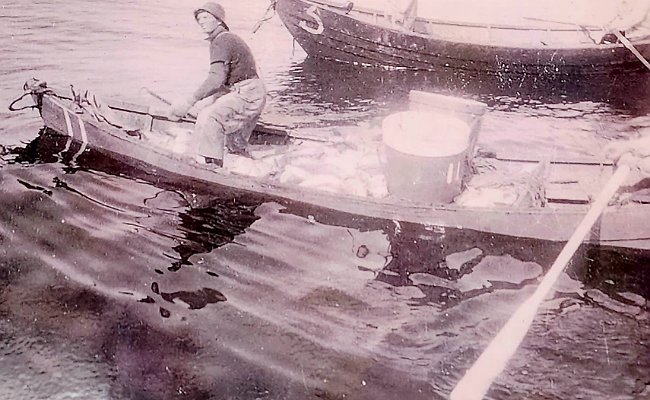
The next two photos are of the bow and the deck of the Lunenburg schooner Theresa E. Conner berthed here at the Museum. Below that is a remarkable photo of two fishing dories, one riding high heading out to fish, the other laden to the verge of sinking with a heap of fish. The schooners carried these small dories to the banks where fisherman set out to catch cod and return to the schooner. It looks like one little ripple would upset that dory! A town and its people hung on a fish hook - how many fish took the hook.
So, tomorrow we will sail from Canada's most famous fishing town and will next site land in three days at America's most famous fishing town, Gloucester, Massachusetts. Then we will turn and head into Manchester, Tazzarin's home port.
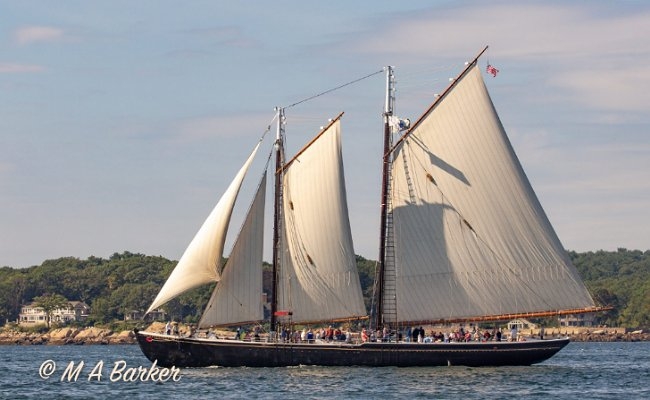
I have to mention that Gloucester has an historic dory fishing schooner as well, Adventure. She was built in 1926 and has been fully restored and sails actively in the summer months. I am proud to serve on the board of the organization that preserves and uses Adventure to help people understand our past and our relationship with the sea and the fisheries. You can learn more about Adventure at www.schooner-adventure.org. The last photo below is of Adventure.
After spending my summer sailing among the fishing banks where these vessels worked, and after considering the once sustainable fisheries of these schooners, it seems fitting to be sailing from Lunenburg to Gloucester, then home. It is a tale of two cities linked to the sea, the sea I am so very fond of, the sea I have been sharing with you.
Tomorrow the last leg home begins. Follow me homeward bound.
Bill
|