A Tribute to the History of Women in the Military
|
|
|
|
Women Veterans
Proudly Serving Since 1775
|
From the early days as nurses, water bearers, cooks, laundresses, and saboteurs to present day Army Rangers, women have proudly
served the United States on the battlefield from the American Revolution to Operation Enduring Freedom.
|
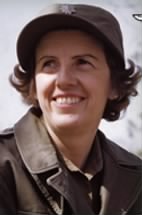
Colonel Ruby Bradley was one of the most decorated women in United States military history. She was a native of Spencer, West Virginia but lived in Falls Church, Virginia, for over 50 years. Born: December 19, 1907, Spencer, WV Died: May 28, 2002, Hazard, KY Nationality: American Place of burial: Arlington National Cemetery, Arlington, VA Awards: Florence Nightingale Medal, Legion of Merit (2), Bronze Star Medal (2), Commendation Medal (2).
|
|
She began her military career as a surgical nurse in the Army Nurse Corps in 1934. During World War II she was a prisoner of war for 37 months in a Japanese prison camp. Later in Korea, she was a frontline Army nurse when 100,000 Chinese soldiers overran American troops and closed in on her hospital tent. Colonel Bradley has been awarded 34 medals for bravery, including two Bronze Stars, two Legion of Merit medals, two Presidential Emblems, the World War II Victory Medal, and the United Nations Service Medal. She was also the recipient of the Florence Nightingale Medal, the Red Cross’ highest international honor. She retired from the military in 1963, but remained a nurse her entire working life.
|
|
Significant Dates in the History of Military Women
American Revolution (1775-1783)
Women served on the battlefield as nurses, water bearers, cooks, laundresses, and saboteurs. Women played critical roles in the American Revolution and subsequent War for Independence. Historian Cokie Roberts considers these women our Founding Mothers.
|
|
Mexican War (1846-1848)
Elizabeth Newcom enlisted in Company D of the Missouri Volunteer Infantry as Bill Newcom. She marched 600 miles from Missouri to winter camp at Pueblo, Colorado, before she was discovered to be a woman and discharged.
Civil War (1861-1865)
Women provided casualty care and nursing to Union and Confederate troops at field hospitals and on the Union Hospital Ship Red Rover. Women soldiers on both sides disguised themselves as men in order to serve. In 1866, Dr. Mary Walker received the Medal of Honor. She is the only woman, to date, to receive the nation’s highest military honor.
Spanish-American War (1898)
The U.S. Army appointed about 1,500 women nurses under civilian contract to serve in stateside hospitals, overseas, and on the hospital ship USS Relief. The work of these women in patient care and preventative medicine made an impression and advanced their future roles in military medical services.
1901-1910
Congress created the Army Nurse Corps. Nurses did not possess military rank, did not receive equal pay as men, and did not receive retirement or Veterans’ benefits. In 1908, Congress created the Navy Nurse Corps.
|
|
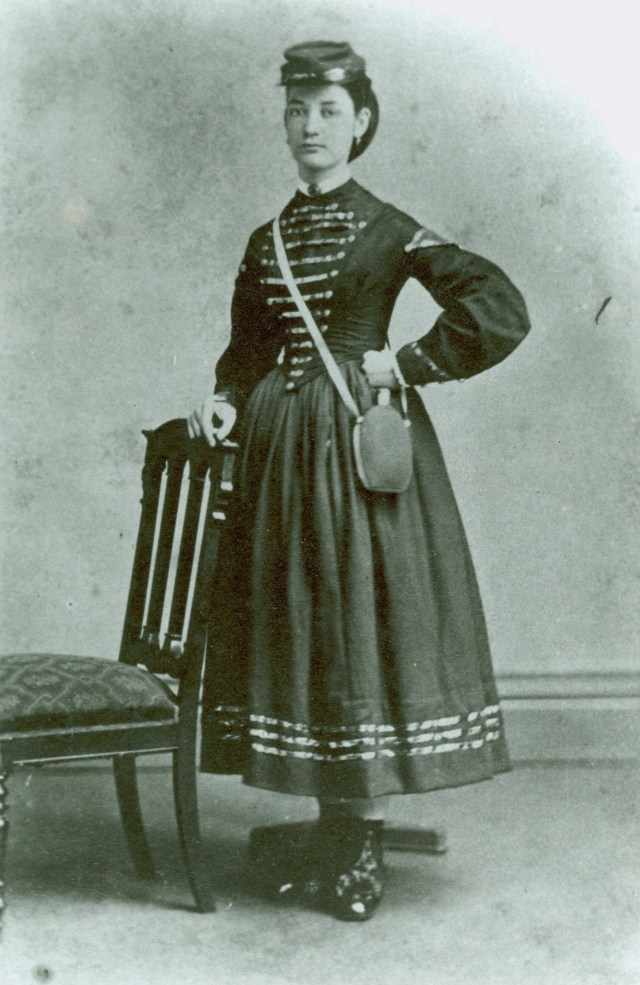
Photo of an unidentified woman of the Civil War period who is wearing a kepi and a canteen. (Civil War Photograph Coll.). (Photo Credit: USAMHI)
|
|
World War I (1914 to 1918)
The Department of the Navy employed enlisted women as Yeoman and Women Marines. These women filled clerical and other essential positions to free men to fight. Over 21,000 nurses served in the Army in military hospitals both in the United States and overseas. A limited number of women were hired by the Army as bilingual telephone operators and as stenographers.
1918
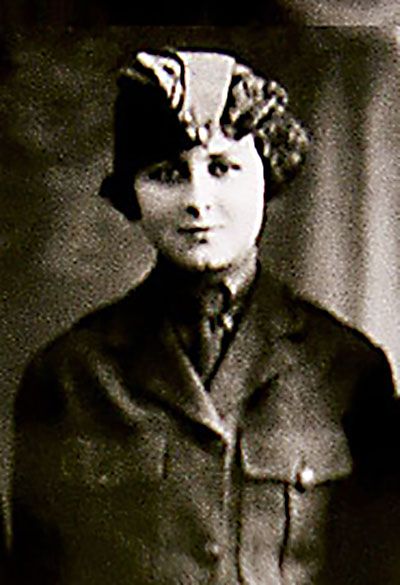
Opha May Johnson became the first known woman to enlist in the Marine Corps on 13 August 1918, when she joined the Marine Corps Reserve during World War I. Johnson, due to being first in line that day, was the first of over 300 women to enlist in the Marine Corps Reserve during World War I.
According to 1918 newspaper articles, as well as the published history of Women Marines in World War I, Johnson's first duties were as a clerk at Headquarters Marine Corps, managing the records of other female reservists who joined after she did. On 11 July 1919, the American Legion granted a charter to the first post of women's Marine Corps reservists. Known as Belleau Wood Post No. 1, its membership consisted of 90 women who had worked at Headquarters Marine Corps. Johnson was a charter member of this post.
|
|
Opha May Johnson @USMC The first female Marine.
|
|
1919 to 1925
Enlisted women, other than nurses, were demobilized following the end of World War I. Nurses were reduced to their pre-war strengths. In 1920, the Army Nurse Corps was awarded “relative rank” from second lieutenant through major. Women could wear the insignia of rank but were not given full rights and privileges, such as equal base pay as that of male officers. In 1925, the wording of the Naval Reserve Act of 1916, which authorized the Navy to enlist citizens, was changed to “male citizens” to ensure the Navy could not enlist women again without the express approval of Congress.
|
|
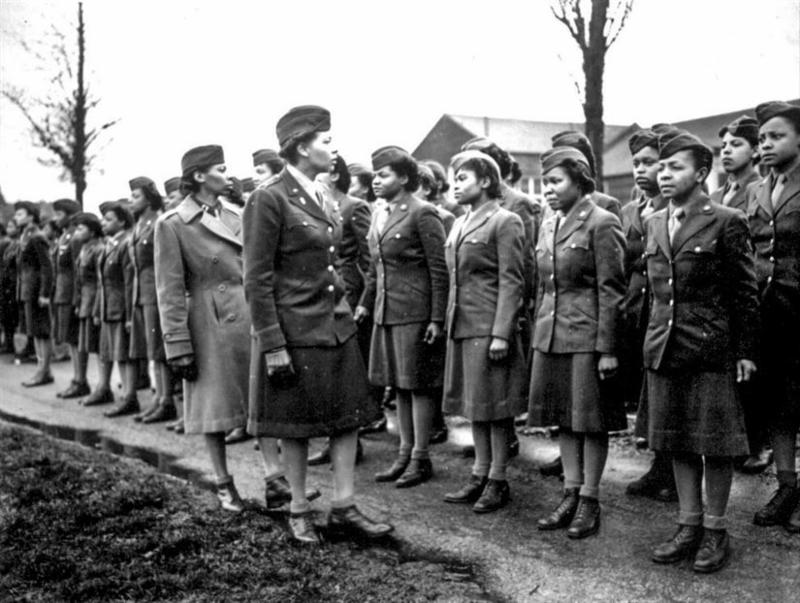
Women's Army Corps Maj. Charity Adams, 6888th Central Postal Directory Battalion commander, and Army Capt. Abbie Noel Campbell, 6888th CPD executive officer, inspect the first soldiers from the unit to arrive in England, Feb. 15, 1945. The only all-African-American Women's Army Corps unit sent to Europe during World War II, the 6888th was responsible for clearing years' worth of backlogged mail in both England and France. National Archives photo
|
|
World War II (1941 to 1945)
The bill to establish the Women’s Army Auxiliary Corps (WAAC) was introduced to Congress in 1941. By May 1942, WAAC was under way. WAAC was not part of the Army but was run by the Army. It quickly became clear that there were issues due to the inequities in pay and entitlements and the organizational problems associated with the ‘auxiliary’ status of WAAC. In June 1943, a bill was passed in Congress to establish the Women’s Army Corps (WAC) with full military status. Women members of WAAC were given the option to transfer to WAC or go home. In July 1942, the Navy Women’s Reserve was established, and these women were identified as WAVES (Women Accepted for Volunteer Emergency Service) and were an official part of the Navy. The Marine Corps Women’s Reserves was authorized under the same law.
|
|
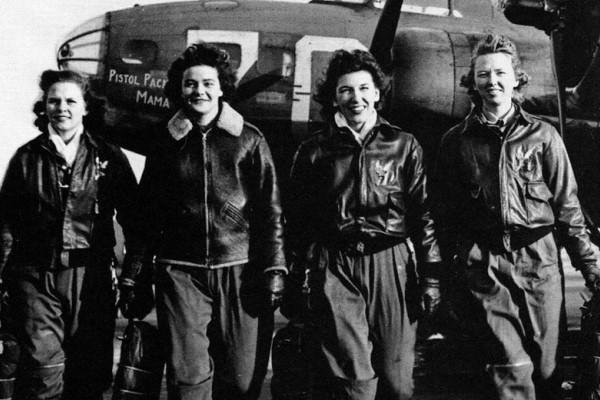
More than 1,000 Women Airforce Service Pilots (WASP) served during World War II, flying more than 60 million miles in every type of military aircraft. (US Air Force)
|
|
In September 1942, the Women’s Auxiliary Ferrying Squadron (WAFS) was established to deliver new aircraft from factories to embarkation ports and to ferry planes to and from stateside locations. In 1943, the WAFS and the Women’s Flying Training Detachment were combined to become the Women Airforce Service Pilots (WASP).
In November 1942, the Coast Guard Women’s Reserve was established using the acronym SPAR (Semper Paratus – Always Ready). The Navy Nurse Corps was awarded “relative rank” in 1942. During this period more than 400,000 American military women served at home and overseas doing any and all jobs that did not involve direct combat.
|
|
1945-1946
The “Reconversion Period” began and women were forced out of the workplace in both the civilian and military sectors. The percentage of women in male-dominated jobs decreased to pre-war levels. In 1947, the Army-Navy Nurses Act established a permanent nurses’ corps, authorized the Women’s Medical Specialist Corps in the Army, and provided identical pay, rank, and allowances as for other commissioned officers. 1948 - Women’s Armed Services Integration Act allowed women as permanent members of the Armed Forces but limited their occupational roles and opportunities. Women’s pay became equal to the pay of men, however criteria for the recruitment of women was stricter. Nine months after the Air Force gained independence from the Army, the Women’s Air Force (WAF) was created. Executive Order 9981 ended racial segregation in the armed services. In 1949 the Air Force Nurse Corps was established.
|
|
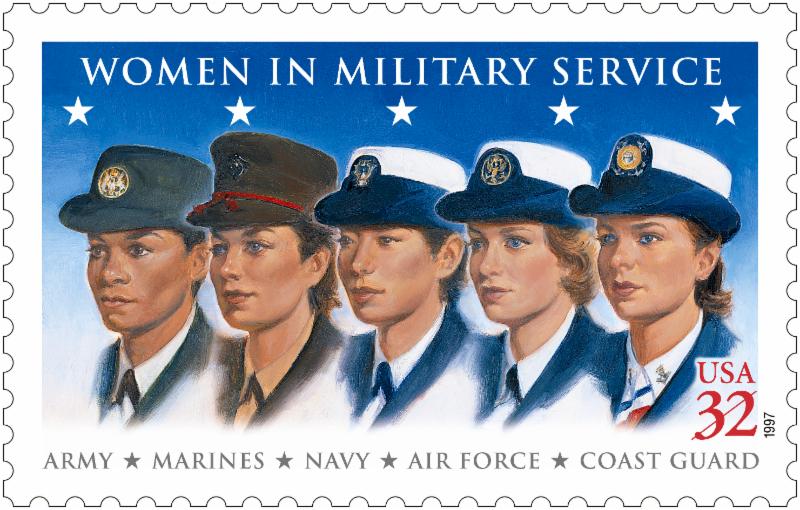
This image, commissioned in 1997, shows five different women to represent each of the five branches in which they were integrated; Army, Marines, Navy, Air Force, and Coast Guard (USPS Stamp of Approval)
|
|
Korean War (1950-1953)
During the Korean War, women nurses who joined the reserves after World War II were called to active duty again. Many of the women serving in the Korean War were nurses, and nurses were the only women allowed in combat zones. In 1951 the Defense Advisory Committee on Women in the Services (DACOWITS) was established to provide recommendations on matters related to recruitment, retention, treatment, employment, integration, and well-being of women in the military. Women had to be 21 years old to enlist without parental consent. Enlisted women were restricted to two percent of the total authorized enlisted forces. Officer women were limited to ten percent of the authorized number of enlisted women and they could not have a permanent commission above O5 nor could they supervise men. Women were still prohibited service on any naval vessel except hospital ships and naval transports. They could also not be assigned to any aircraft that would likely engage in combat missions. Women were still permitted to opt out of their contracts if they married but they were forced out if they became pregnant or married a man with children.
|
|
1960s
The women’s movement empowered women to seek greater equality in the workplace and in public life. In 1967, the Women’s Armed Services Integration Act lifted restrictions on the number and ranks of women in the military. The Act removed the two-percent ceiling and offered women the opportunity to compete for the highest ranks in the armed services. In 1968, the Air Force Reserve Officers Training Corps opened to women at four universities.
|
|
1970s
In 1972, the position of Assistant Chief of Naval Personnel for Women was disestablished in favor of integration of women into the main force. In addition, the Army and Navy Reserve Officer Training Corps were opened to women. Conscription ended in 1973 and the All-Volunteer Force began. At this time, women comprised about two percent of the military population. With the passage of the Equal Rights Amendment and the shortage of men willing to serve, more women began to join the military because of increased opportunities. Several court cases, including Frontiero v. Richardson, gave women many of the same rights for dependent benefits as men, career continuation without regard to motherhood status, and the opportunity to serve as aviators and to serve on noncombatant ships. In 1973, the Navy became the first service to select women for flight training. Two years later, the Air Force followed suit.
|
|
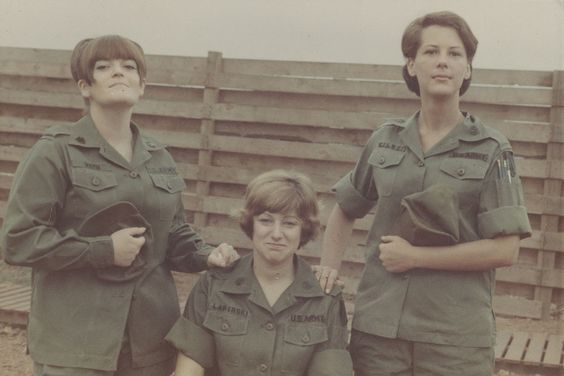
WACs Marilyn Roth, Vicki Lapinski and Lee Wilson (L to R) pose together in field uniforms in Long Binh, Vietnam, circa 1968. Photo Credit:
The Betty H. Carter Women Veterans Historical Project - University Archives - University Libraries-UNCG
|
|
1975
The WAF was disbanded. In 1976, President Gerald Ford signed a law allowing women entrance into the military academies. In 1977, military Veteran status was granted to the women in the WASP who served during World War II. In 1978, the WAC was disbanded. Section 6015 of U.S.C. Title 10 was amended to say women may not be assigned to duty on vessels or in aircraft engaged in combat missions. They were also not to be assigned to temporary duty on Navy vessels except for hospital ships, transports, and similar vessels not expected to be assigned combat missions. Also in 1978, the Coast Guard opened all assignments to women.
1980s
In 1980, the first women graduated from the service academies (first admitted in 1976). The Defense Officer Personnel Management Act called for the consolidation of officer promotion systems and uniform laws for managing the officer career structures in the different services. Gender-separated promotion lists were abolished, and women could command men for the first time in history. In 1988, the Department of Defense (DoD) announced its “Risk Rule” which identified a universal standard used in evaluating the positions and units open to women and resulted in the opening of roughly 30,000 new billets. Any units in support of ground combat operations continued to be closed to women. By the end of the decade, women were entering the military in even greater numbers and were being sent to sea and aircraft squadrons.
|
|
1988
CDR Debra Gernes was first woman selected for command at sea in the U.S. Navy. Twenty-four Combat Logistics Force (CLF) ships open to women in the U.S. Navy. Roberta L. Hazard was selected for promotion to rear admiral upper half May 18, 1988, the first woman to be board selected for that grade in the U.S. Navy. Petty Officer First Class Beth Lambert became the first female selected as Shore Sailor of the Year in the U.S. Navy. She was then meritoriously advanced to Chief Petty Officer.
1989
Two women commanded Army companies in a combat operation (Panama invasion). Over 800 Army women participated in the invasion of Panama, two of which received the Army's Air Medal with "V" device for participation in a combat mission (Panama invasion). Cadet Kristin Baker became the first woman to be selected Brigade Commander and First Captain of the West Point Corps of Cadets. Her male predecessors in that position have included Robert E. Lee, John J. Pershing and Douglas MacArthur.
|
|
The U.S. Military Academy has named its first woman brigade commander since the academy began accepting female cadets 13 years ago, Army officials said Monday. Kristin Baker, 21, of Yuma Proving Grounds, Ariz., will command the academy's entire brigade of 4,400 cadets. (credit: L.A. Times).
|
|
1990s
The 1991 Persian Gulf War saw the largest wartime deployment of women in the history of the Armed Forces as 41,000 women were sent to Kuwait. Women were not allowed to serve in ground combat jobs, on combat ships, or in aircraft participating in air combat. A 1992 amendment to the Defense Authorization Act repealed existing combat exclusion laws pertaining to women flying combat aircraft in the Navy, Air Force, and Marine Corps. In November 1993, the prohibition against women serving in combatant ships was repealed through the 1994 Defense Authorization Bill. The Navy successfully authorized the assignment of women to all ships except submarines and patrol craft. In 1994, Secretary of Defense Les Aspin repealed the DoD “Risk Rule.” This resulted in tens of thousands more billets opening to women in the Army and Marine Corps. Operation Desert Fox (enforcing the no-fly zone in Iraq), began in 1998 and women aviators flew combat missions for the first time in history.
|
|
2000 to 2004
The House Armed Services Committee added a provision to the National Defense Authority Act of 2001 prohibiting the assignment of women to submarines. The military campaign against Afghanistan began in 2001, followed by the campaign in Iraq in 2003. Since the start of operations in Afghanistan and Iraq, over 200,000 women have been deployed to these regions. The DACOWITS charter was modified to include the addition of family matters to the list of issues within the purview of the committee.
|
|
2005
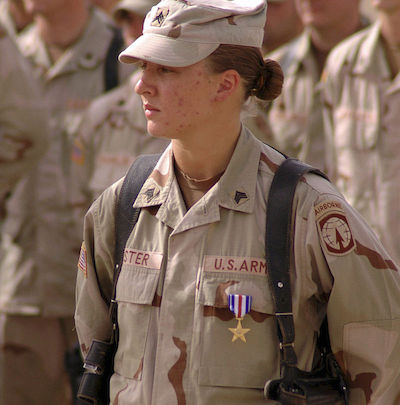
On March 20, 2005, Sgt. Leigh Ann Hester led a counterattack against insurgents who had ambushed her convoy while serving in Iraq. War II. Hester stopped her vehicle as the squad came under heavy machine gun and rocket-propelled grenade fire while on a routine patrol. Directing her gunner to fire, she left the vehicle to engage the insurgents on foot with her squad leader.
They crossed over a berm and into the trenches from where the insurgents were firing. Hester and her fellow soldier eliminated them one by one using grenades and assault rifles. Once the trench was cleared, Hester secured the ambush site.
At the end of the engagement, 27 insurgents were killed, six wounded, and one captured.
|
|
Sgt. Leigh Ann Hester became the first of two woman to earn a Silver Star since World War 2. Photo Credit Army SPC Jeremy Crisp.
|
|
2006-2011
In March 2006, Chief Warrant Officer 3 Lori Hill engaged a determined enemy while piloting her OH-58 Kiowa helicopter in Iraq and became the first woman to be awarded the Distinguished Flying Cross for heroism. Monica Lin Brown was assigned to the 82nd Airborne Division as a combat medic in Afghanistan’s southeastern Paktika province in late April 2007. She would become the first woman to earn the Silver Star in Afghanistan, and just the second since World War II, after Hester.
Army 1st LT Ashley White was attached to a Joint Special Operations Task Force in Afghanistan as part of the cultural support teams developed to better reach the populace. The subject of the New York Times best-seller, “Ashley’s War,” by Gayle Tzemach Lemmon, White was one of the first women to serve in a combat role in the U.S. armed forces. She was reportedly known to be “the heart of the team.” When the assault force she was attached to was ambushed on Oct. 22, 2011, White was killed in action. She posthumously received the Bronze Star Medal, the Purple Heart, the Meritorious Service Medal, the Afghanistan Campaign Medal, and the Combat Action Badge.
The Defense Authorization Act added a mandate that the Secretary of Defense must notify Congress of any change in the ground combat exclusion policy or any change in the billets open or closed to women. In 2009, the Navy began moving forward on plans to integrate women into submarine crews by 2011.
|
|
2013
Then-1st Lt. Jennifer M. Moreno, an Army nurse, was assigned to a U.S. Army Ranger unit when on the evening of Oct. 5, 2013, she was killed in action during a patrol that would take the lives of two additional Rangers, according to the San Diego Union Tribune.
She received conflicting orders to both help a soldier wounded and trapped at an Afghanistan bomb-making compound, and hold her position to avoid setting off another bomb in the mine-ridden area, reported Army Times in 2014.
Choosing to help her fallen comrades, Moreno moved forward, but detonated a mine that took her life. Capt. Amanda King, commander of Moreno’s cultural support team, later wrote in a eulogy: “None of us would have done what you did, running into hell to save your wounded brothers, knowing full well you probably wouldn’t make it back.”
|
|
Moreno was posthumously promoted to captain and awarded the Combat Action Badge, Bronze Star Medal, and the Purple Heart. Photo Credit: US Special Operations Command.
|
|
2015
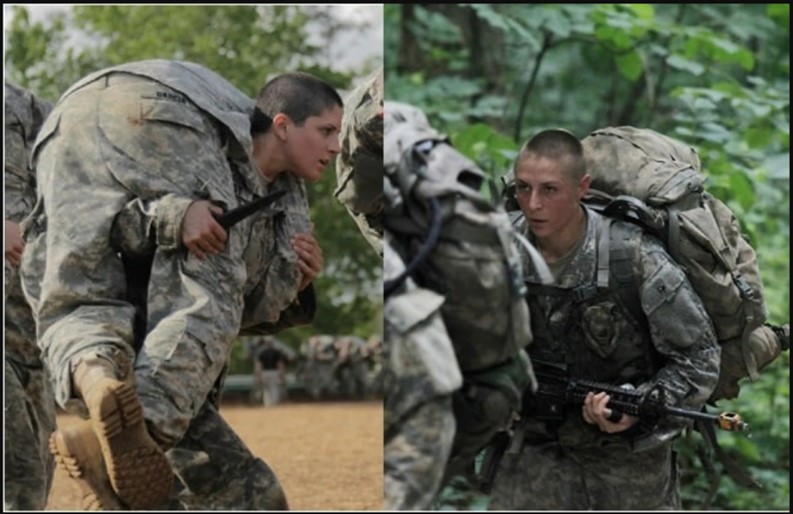
First Lt. Kristen Griest (left) and 1st Lt. Shaye Haver (right) became the first female soldiers ever to graduate from Ranger School on Friday, Aug. 21. 2015 (Photos by by Spec. Nikayla Shodeen and Pfc. Ebony Banks/ U.S. Army).
|
|
Department of Veterans Affairs, Women Veterans—A Proud Tradition of Service. Washington, DC: Advisory Committee on Women Veterans, September 2010. “Highlights in the History of Military Women.” Women in Military Service for America Memorial Foundation, Inc., Accessed August 12, 2018.
Holm, Jeanne. Women in the Military: An Unfinished Revolution, Revised Edition. Novato: Presidio Press, 1992. Iskra, Darlene M. Women in the United States Armed Forces: A Guide to the Issues. Santa Barbara: Praeger, 2010. Manning, Lory, Captain (USN, ret). “Women in the Military”, Sixth Edition. A Women in the Military Project Report of the Women’s Research & Education Institute, Washington D.C. 2008. “Women in the Military & Women Veterans.” Women’s Research and Education Institute. Accessed August 12, 2018. http://www.wrei.org/MilitaryWomen.htm "Kristin Baker is First Woman Brigade Commander at West Point ." Diana Koricke, correspondent. NBC Today Show. NBCUniversal Media. 9 Aug. 1989. NBC Learn. Web. 16 August 2018. https://taskandpurpose.com/6-women-who-fought-in-direct-combat-in-iraq-and-afghanistan/
|
|
A Leader in Marine Services
|
Founded in 1979, Global Diving & Salvage, Inc. is the largest diving contractor on the West Coast and a leading provider of marine construction, support services, and marine casualty responder worldwide.
Global is dedicated to providing clients with safe and effective solutions to complex problems – even under the most difficult conditions.
|
|
|
Our corporate headquarters are located in Seattle, WA, with additional offices in Alaska, California, and the Gulf Coast. Recognized internationally for safety, integrity, and expertise, Global provides a wide variety of underwater maintenance, repair, installation, and inspection services. In addition to complete project management, Global offers engineering support for complex projects that require technical underwater procedures and tooling.
Our extensive experience and resources enable us to adapt quickly and successfully complete the most complex, challenging assignments. In all endeavors, we maintain the highest level of safety.
|
On August 7, 2018, Global hit a milestone that in comparison, is up there with the rest of them. Our diver Ed Meyer on DB-3 made the 15,000th dive on the Olmsted Dam Project.
It started with the first dive back in 2009 (when we all looked a little younger). And 15,000 dives...To put this into perspective; if you were to go to work and do one-dive-a-day, Monday-Friday, it would take you almost 58 years to hit 15,000 dives. Fortunately, we have hundreds of divers that have worked on this job over the years and each and every one is appreciated! The dam is expected to officially open in September, 2018.
|
Photo Credit Global Diving & Salvage, Inc. Facebook Page
|
Global Diving & Salvage, Inc. greatly values the contributions our employees make to our company. We offer competitive wages and a comprehensive benefits package. The specific benefits package available to employees varies depending on position type.
Most full-time, regular, non-union employees working 30 or more hours per week are eligible for the following benefits after satisfying the eligibility waiting periods: Comprehensive Medical, Dental, Prescription and Vision coverage, Group Life Insurance, Short Term Disability Insurance, a 401(k) Retirement Savings Plan, Paid Sick and Vacation time, and an Employee Assistance Program.
|
"At Global our people come first. We take pride in our hard work and support our team members in all of their career endeavors."
|
Professional Pride
We value individual professional pride and passion for our craft, our industry, and our industry. Global employees love what they do, and strive to be the best they can be in their professional endeavors.
Safety
We place safety in the workplace at the highest regard. Our safety philosophy emphasizes working collaboratively with fellow employees and clients to ensure a safe working environment. Global has created the TEAM (Together Everyone Achieves More) program to encourage participation from employees and clients to ensure safety is maintained.
Honesty
We strive to set the standard in our community by hiring top-notch talent in our industry. Our employees embody the honesty, sincerity, and professionalism that helps us stand out to clients and partners.
|
|
All product and company names are trademarks™ or registered® trademarks of their respective holders. Use of them does not imply any affiliation with or endorsement by them.
|
|
Featured Veteran of the Month
|
|
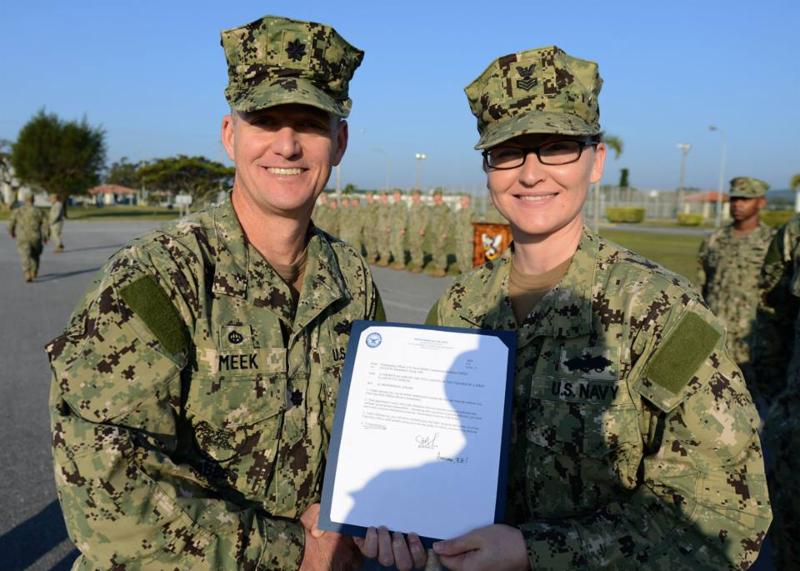
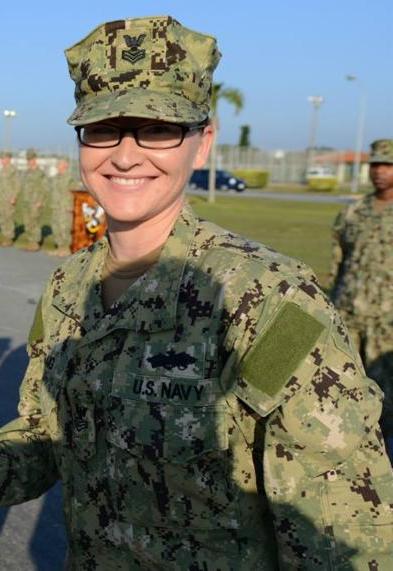
Navy Petty Officer First Class
Samantha Craig shares her story of being a part of the world’s most elite engineering fighting force.
The Naval Construction Forces (NCF) - also known as
Seabees consists of only 7,000 specially trained sailors with a history that dates back during the days immediately following the 1941 attack on Pearl Harbor when the military needed Construction Battalions (CB).
They also needed to be soldiers too and are trained to fight. The motto of the Seabees is "We Build - We Fight".
|
|
Samantha Craig—Promotion Ceremony to Petty Officer First Class [E-6]
Okinawa, Japan December, 2013
|
|
Life as a Navy Seabee
Samantha has served in the Navy for over a decade and is currently on a 3-year sabbatical also known as a mid-career leave. Her primary job as a Construction Electrician requires her team to produce the electric power needed to build and operate airfields, roads, barracks, hospitals on other needed buildings on a base or forward operating base in the Naval Construction Forces (NCF). She has served across the United States and on deployments in support of Operation Iraqi Freedom and Operation Enduring Freedom.
|
|
Applying Military Experience to Customer Service
|
During her years moving up the ranks and learning how to lead, Samantha adds, “All those years have led me to this juncture in my life at the Sheraton San Diego Hotel and Marina. We are trained to be a mentor to junior troops when we move up the ranks: i.e. how to read people just by their look and behavior, and how to maximize the key attributes each troop has that contributes to the overall mission success.”
|
|
|
|
Pride in a Job Well Done
“My working in the cafeteria is not just about serving safe, quality food to the associates or keeping the work space clean and tidy and presentable. I take it upon myself to make everyone that comes into the cafeteria for a snack or a meal smile because positivity is infectious. I do this because if an associate is having a hard day, the likelihood that they are going to give 100% in their work is low, and that can have a snowball effect on the hotel's mission of providing quality service to guests. Every associate is part of the team, and every one of them contributes to the success of Sheraton. I do my best to bring that out in every associate; the same way I did for my troops in the Navy.”
|
|
What's Next?
Samantha will return to the Navy in December, 2018 to continue the second half of her military career. She is proud of the opportunity the Sheraton San Diego Hotel and Marina has given her to be a part of a team and contribute the overall success of the hotel.
|
|
Photos and story courtesy of Samantha Craig of the Sheraton San Diego Hotel and Marina.
|
|
The Acushnet Company
An American company that makes more than golf equipment and clothing. Acushnet is best known for its Titleist golf balls.
|
|
|
The Titleist brand started with a vision – and an x-ray. The Titleist success story began one Sunday in 1930, when Phil Young, a dedicated amateur golfer and owner of a precision molded rubber company, missed a well-stroked putt in a match with his friend, who was head of the x-ray department at a local hospital.
Convinced that the ball itself was at fault, Young and his opponent went to the hospital, x-rayed the golf ball in question and found that its core was, in fact, off-center.
With his discovery, Phil Young persuaded Fred Bommer, a fellow MIT graduate, rubber specialist and avid golfer, to head up the Acushnet Golf Division. They set out to develop the highest quality and best performing golf ball in the world; one that would be uniform and consistent in quality, ball after ball.
It took Young and Bommer three painstaking years to perfect the first Titleist golf ball, but when it was ready in 1935, it could truthfully be introduced to club professionals and golfers as the best ball ever made. Applying a lesson well learned, Young implemented a process check that is still in practice today: every Titleist golf ball is x-rayed.
|
|
Benefits of Working With Us
Acushnet offers competitive benefit programs that provides employees with the opportunity to stay fit, ensure the wellness of their families, and create a positive working environment. Your particular benefits package will depend on your position, location, and years with the company. Here’s a look at what you might be eligible for:
|
|
- Acushnet Healthchoice Medical Plan
- Prescription Drug
- Dental Plan
- Life Insurance
- Flexible Spending Accounts
- 401K
- Salary Continuation
- Short Term Disability
- Long Term Disability
- Travel Accident Insurance
- Education Assistance
- Vacation Eligibility
- 11 Paid Holidays
- Employee Assistance Program (EAP)
- Healthwise Wellness Center
|
Employee Appreciation
Company Cookout
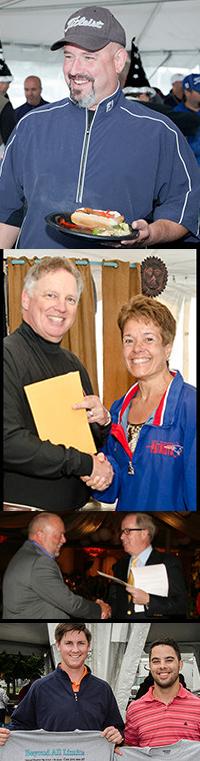
When the weather is just starting to get warm and production is running at its peak, Acushnet Company pauses to celebrate its associates with its annual Associate Appreciation Cookout. This long-standing tradition is a favorite among the associates. There’s great food, lots of fun, t-shirts, top notch entertainment, and raffle prizes.
Holiday Buffet
Holidays are always so much fun, but they are also very hectic! Our associates take part in many community projects, many through the United Way. So during this festive season, the Company takes time out to hold an annual buffet to wish each of its associates a happy, memorable and joyful holiday with their friends and family and a safe and prosperous New Year.
Ice Cream Day
A great way to cool off in the summer months is to have a big bowl of ice cream and Acushnet Company associates do just that! At the end of every summer, Lizzy’s Homemade Ice Cream of Waltham comes in and serves gallons of ice cream to our associates. It’s just another fun way for everyone to enjoy a break with their co-workers.
Pawsox Games
Picture a ball park frank in hand, a cold drink in the other, and a great seat surrounded by your co-workers. On a warm summer’s day, is there any better way to say thanks? Each year Associates enjoy a day at the park. Since 1999 the fun-filled Paw-Sox game has been enjoyed by many families, friends, and fellow co-workers.
Providence Bruins
Since 2002 Acushnet Company has partnered with the Providence Bruins to provide our associates and family members a night out. Each year families and friends gather at the Dunkin Donuts Center for an intense game of hockey.
|
|
|
25 Year Celebration
The Acushnet Company has a long history of recognizing its associates’ service. It is who we are — People, Process, Product. Acushnet Company’s long term associates, our bridge builders, dedication does not go unrecognized. The Company acknowledges associates with 25 or more years with a special evening of dinner, dancing, raffle prize drawings and a reflection of past years.
Shirt Day
We just love tradition here at Acushnet Company. Our associates are given a golf shirt and asked to wear on a specific day as a sign of solidarity, teamwork and community. The best dressed group in town!
“Thanks” Giving
As we reflect on our blessings during this time of year, the Company reaches out to its associates with a $25 Thanksgiving gift card to a local supermarket. Many of our associates in conjunction with the many community projects that go on during the holiday seasons, elect to donate their gift cards to a local United Way food pantry.
|
|
All product and company names are trademarks™ or registered® trademarks of their respective holders. Use of them does not imply any affiliation with or endorsement by them.
|
|
Taste the Pure Difference!®
Although innovation is the key to our success at Niagara, our family tradition of high quality, value priced bottled water will never change.
Niagara continues to grow and is the leading private label bottled water company in the United States.
|
|
|
Family Owned and Operated Since 1963
|
|
|
|
Andrew Peykoff Sr. started bottling high quality low cost Niagara® water in five-gallon glass containers for home and office delivery in 1963. The Niagara tradition of quality, integrity, hard work and great customer service made Niagara a household name in Southern California.
|
"My parents taught me that the keys to a happy life are strong family values, a strong work ethic and saving for your future. Whatever you do, stick to it. Get busy, do it yourself. Don’t wait. Problems are our friends on the road to success."
— Andrew Peykoff Sr. Founder & Chairman
|
|
In the early ‘90’s, Niagara expanded into offering single-serve private label bottled water for grocery, club store, convenience and wholesale customers with the same focus on offering an unmatched combination of quality, price and service.
Throughout the following decade, Niagara’s significant developments in vertical integration, innovative bottle design and high speed manufacturing positioned the company as the industry leading private label bottled water supplier in the Western United States.
Niagara’s family owned and operated status continued with Andy Peykoff II becoming President and CEO in 2002. Since then, Niagara has established itself as a National leader in high quality affordable bottled water with geographically diversified production facilities throughout the United States.
The dedication to operational improvements, a consistent recipe of hard work, integrity, attention to detail and the relentless quest for perfection has driven Niagara to become the largest family owned and operated bottled water company in the United States.
Much has changed since 1963; however the Niagara family tradition of high quality low cost bottled water has not.
|
|
"Our Corporate headquarters and one of our manufacturing facilitates achieved a waste diversion rate of 99.4% in 2017 earning Niagara the first TRUE* Zero Waste Certification at Gold Level for a bottled water company."
|
|
|
"Niagara Values Veterans"
|
|
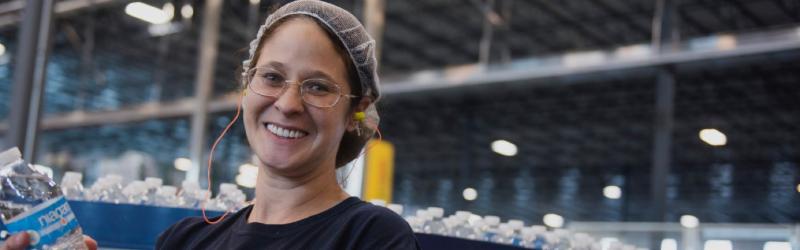
At Niagara, we’re looking for Team Members who want to be part of achieving our mission to provide our customers the highest quality most affordable bottled water.
At Niagara, we place a high value on the skills and experience military Veterans bring, including loyalty, integrity, dedication, leadership, time management, and the ability to make decisions and learn quickly.
|
|
Consider applying here, if you want to:
- Work in an entrepreneurial and dynamic environment with a chance to make an impact.
- Develop lasting relationships with great people.
- Have the opportunity to build a satisfying career.
|
|
Photo courtesy of Niagara.com
|
|
At Niagara, we attribute our explosive growth to our greatest competitive advantage — our Team Members.
|
|
We’re a fast-paced, innovative company fueled by our people and our culture. We reward success and learn from our failures. By joining the Niagara Family, you’ll work with cutting edge manufacturing technology and have the opportunity to lead like an owner, every day.
|
|
All product and company names are trademarks™ or registered® trademarks of their respective holders. Use of them does not imply any affiliation with or endorsement by them.
|
|
Hire G.I. Career Services
Connecting Employers and Veterans
|
|
What makes HIRE G.I. different is our unique relationship with the military community. Hiring events are held near military installations, giving Veterans a front-door approach to meeting civilian employers before, during, and after their transition out of the military. To register for a hiring event, sign up online with
HIRE GI
.
|
|
|
Ft Stewart Career Fair - Sept 13 2018 - 30+ Employers Hiring
Hire G.I. is excited to announce that we will be hosting it's Ft Stewart Career Fair on Sept 13, 2018. We love helping our veterans and spouses find employment and assist transiting service members with networking opportunities.
Read more
hiregi.com
|
|
|
|
|
|
Naval Base San Diego Career Fair Sept 20, 2018
Hire G.I. is excited to announce that we will be hosting it's Naval Base San Diego Career Fair on Sept 20 at the Anchors Catering & Conference Center. We love helping our veterans and spouses find employment and assist transiting service members.
Read more
hiregi.com
|
|
|
|
|
|
Career Transition Support Center
|
|
LinkedIn Premium Service Free for Veterans
In a partnership with the DoD, LinkedIn, the popular professional networking site recently announced that it will provide a year of LinkedIn Premium to every Active Military, Veteran, and spouse
Read more
hiregi.com
|
|
|
|
|
|
You’re Out – Where to Next?
If you're preparing to exit the military, you've probably already spent a lot of time considering how to best approach life as a civilian.
Read more
hiregi.com
|
|
|
|
|
|
Military Spouse Employment Search Tips
Like their spouse Service Members, military spouses have an equally challenging task of finding employment - both during time in service and after an exit from the military.
Read more
hiregi.com
|
|
|
|
|
|
The importance of a thank you note after an interview....
A thank you note can go a long way after an interview.
Read more
hiregi.com
|
|
|
|
|
|
Featured Career Opportunities
|
|
|
Drivers Wanted!
STI Transport Inc, an affiliate of Quality Carriers, the nation's largest and most stable bulk tanker trucking company for over 100 years is offering the best opportunities for our Drivers.
Read more
hiregi.com
|
|
|
|
|
|
Interviews 02-OCT-2018
Corrections and Custody Officer 1 (CO1) Multiple On-Call Positions Washington Corrections Center (WCC) SAVE THE DATE! Qualified candidates will be invited to interview on October 2nd, 2018.
Read more
hiregi.com
|
|
|
|
|
|
Nurses and P.A.'s
The Healthcare Specialist for the Department of Neurological Surgery is responsible for comprehensive acute inpatient care, including neurosurgical and internal medicine management.
Read more
hiregi.com
|
|
|
|
|
|
855 383 3332 | communications@hiregi.com | www.hiregi.com
|
|
|
|
|
|
|