|
CITES Closes!
The Convention on International Trade in Endangered Species of Flora and Fauna (CITES), the treaty between 184 nations to ensure that international trade in specimens of wild animals and plants does not threaten the survival of a species, is meeting right now in Panama City, Panama. Shark Research Institute scientists are at CITES, working to secure protection for additional species and prevent removal of protections we've won for 70 species of elasmobranchs at CITES throughout the past 20 years.
CITES closed after the Plenary, at which all the shark proposals were ratified!
| |
|
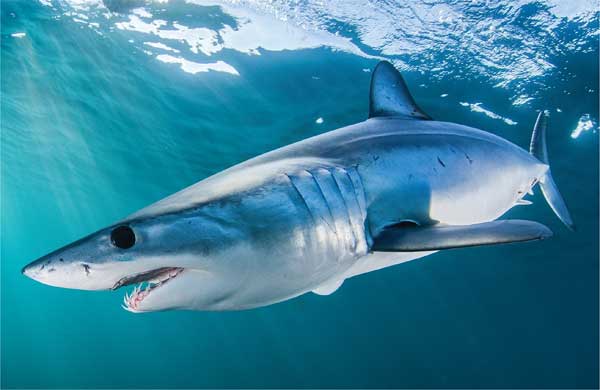
Shortfin Mako Shark
Denied US Federal Protection
The shortfin mako shark (Isurus oxyrinchus) was denied federal protection by NOAA Fisheries, claiming listing on the federal Endangered Species Act is “not warranted.” The shortfin mako is a highly migratory species of tropical and temperate ocean waters. The species faces a onslaught of threats, mainly overfishing as targeted catch and bycatch, because the species is highly valued for its meat and fins. As a long-lived, slow-reproducing species, the species cannot quickly rebound from the substantial population losses it has already suffered. Even if fishing ceased today, scientists estimate it would take 50 years for the population to recover.
Read NOAA's rationale
| |
|
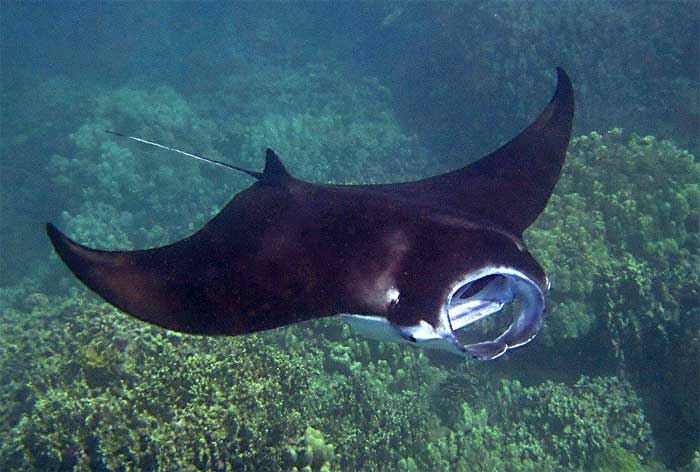
Status of Reef Manta Rays
For more than a decade reef manta ray (Mobula alfred) populations increased significantly in Raja Ampat archipelago in Indonesia, highlighting the importance of long-term conservation and management measures such as well-enforced Marine Protected Areas (MPAs) and fisheries regulations. It is estimated there are 16,000 to 18,000 reef manta rays including populations in the Maldives and Indonesia but the species is in decline in Mozambique where reef manta rays are caught in targeted fisheries,
The reef manta ray has a wingspan of up to five metres. Late maturation and low fecundity make the species especially vulnerable to population declines. the species begins to mature at nine to 13 years of age (male) and 13 to 17 years of age (female). A mature female gives birth to only one pup every two to six years, after 12 to 13 months of pregnancy.
Learn more
| |
|
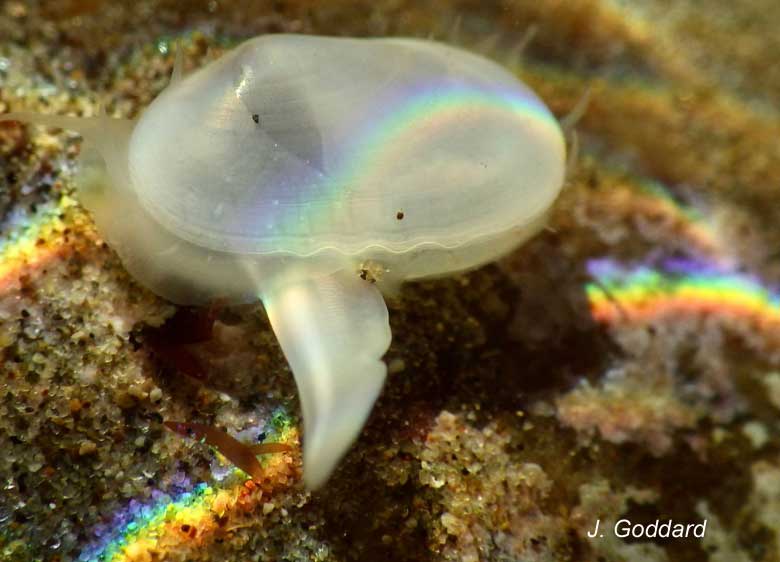
Back From the Dead
Previously only known from the Pleistocene of Los Angeles, the clam (Cymatioa cooki) had only been found as a fossil. Scientists presumed that the species had been extinct for more than 40,000 years. In 2018, while scouring tide pools for sea slugs off the coast of California in 2018, marine ecologist Jeff Goddard photographed unfamiliar clam: a white, translucent bivalve roughly 11 millimeters in length and showed the image to. Paul Valentich-Scott, curator of malacology at the Santa Barbara Museum of Natural History, In 2019 they finally captured a live specimen in 2019 and brought it back to the museum. The tiny clam is among a group of apparently back-from-the-dead creatures dubbed the Lazarus taxa.
| |
|
Using DNA to Hold Manufacturers Responsible for Plastic Pollution
Thousands of marine mammals, reptiles, fish and birds die every year, usually from starvation, after mistaking plastic waste for food. The United Nations has described plastic pollution as a global crisis, an environmental problem similar in scope and complexity as global challenges like climate change. So what if there was a way to trace plastic back to its manufacturer, and even to hold them responsible for its clean-up? Researchers from the Queensland University of Technology have published their multi-pronged approach in the journal Polymer Chemistry.
Read more
| |
|
Giving Tuesday
Giving Tuesday, November 29th, is a day of generosity around the world to encourage people to do good by supporting non-profits such as Shark Research Institute (SRI) that are working to make the world a better place.
Yourdonations support SRI's work at CITES as well as their conservation efforts at international, national and local forums, plus field research and education
programs.
To support SRI, please consider making a donation.
| |
Nudi : Part 2
Learn even more about nudibranchs! Join DIVE IN with Liz, Sylvia Earle, and Rebecca Johnson
DATE: November 29, 2022
TIME: 3pm Pacific Time
Rebecca Johnson is a co-director of the Center for Biodiversity and Community Science at the California Academy of Sciences. She is also a Research Associate in the Department of Invertebrate Zoology and Geology. For most of her academic career, she has focused on color pattern evolution and untangling the evolutionary history of nudibranchs. In her current work, she supports and grows a community of naturalists working together to discover nature and collect important species occurrence data. DIVE IN with Liz and Sylvia is a casual, free-flowing, and educational conversation and encourages ocean and nature enthusiasts of all ages to join. Sylvia, Liz, and Rebecca will take questions via Q & A text from the attendees. Get your questions ready!
| |
|
Notes .
Amazon.com is offering an opportunity to generate donations to the Shark Research Institute at no extra cost to you. Simply start your shopping at smile.amazon.com/ch/22-3110087, confirm "Shark Research Institute, Inc." as your charity of choice, and Amazon will make a donation to our organization.
Consider a tax-deductible year-end gift to the Shark Research Institute. Just mail a check to SRI at PO Box 40, Princeton, NJ 08542, USA, or go to the link on our website.
You may join or renew your membership in the Shark Research Institute, or make a donation of any size at https://www.sharks.org/donate
Note: All donations are tax-deductible from U.S. federal income taxes as
charitable donations and help fund our field research, advocacy and education programs.
| |
Please share this free weekly newsletter with your friends and family to help grow our audience. All they need to do to receive the newsletter is simply sign up on our website’s home page (https:www.sharks.org)
We all have a lot of work ahead to protect sharks and the ocean,
and combat climate change while there is still time.
| | | | | |