|
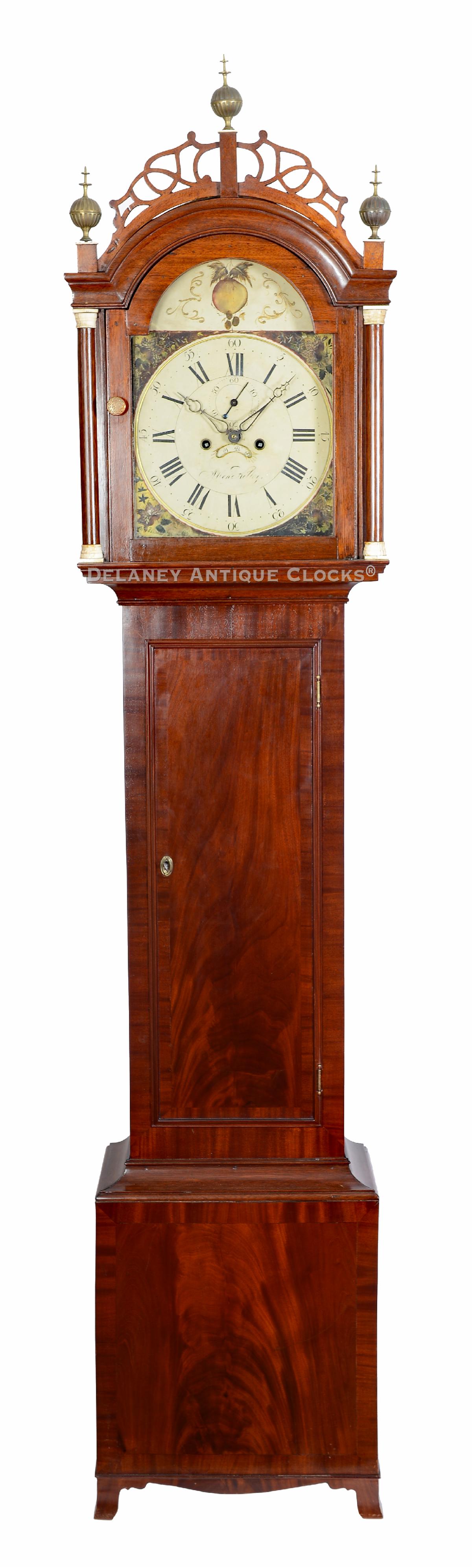
In the early decades of the 19th century, when New England's ports were among the busiest in the world and whale oil illuminated cities on both sides of the Atlantic, a clock like this would have stood as a visible measure of prosperity. Crafted circa 1822 by Allen Kelley, most likely in Nantucket, Massachusetts, it survives not only as a timekeeper but also as a richly detailed artifact of an era when maritime commerce, craftsmanship, and domestic refinement converged.
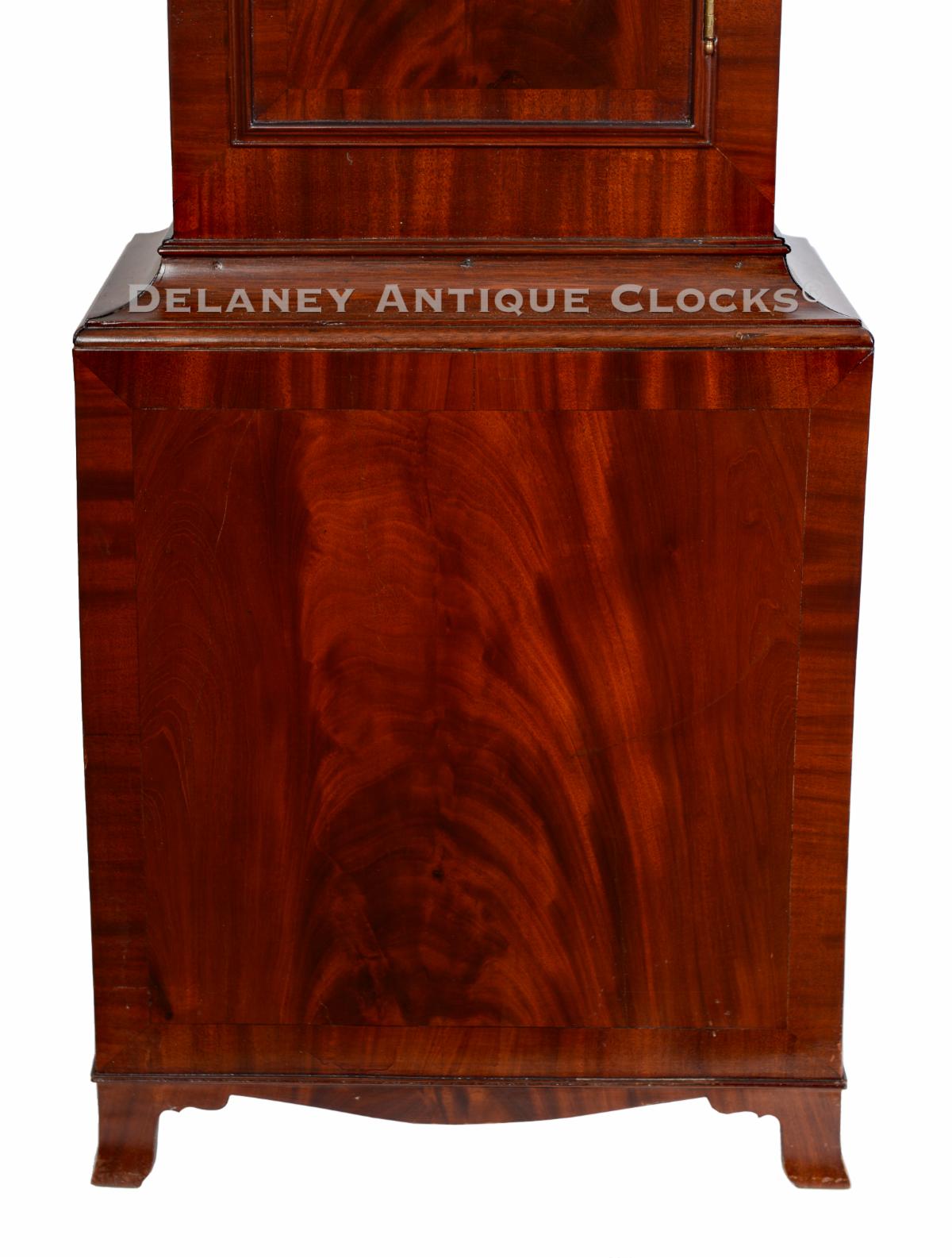
The case, fashioned from exceptional mahogany, immediately commands attention. Its surfaces are animated by vividly figured veneers whose swirling grain catches and reflects light across the warm brown finish. The wood possesses a depth and richness that reward close examination, revealing the cabinetmaker's deliberate selection of materials at every turn.
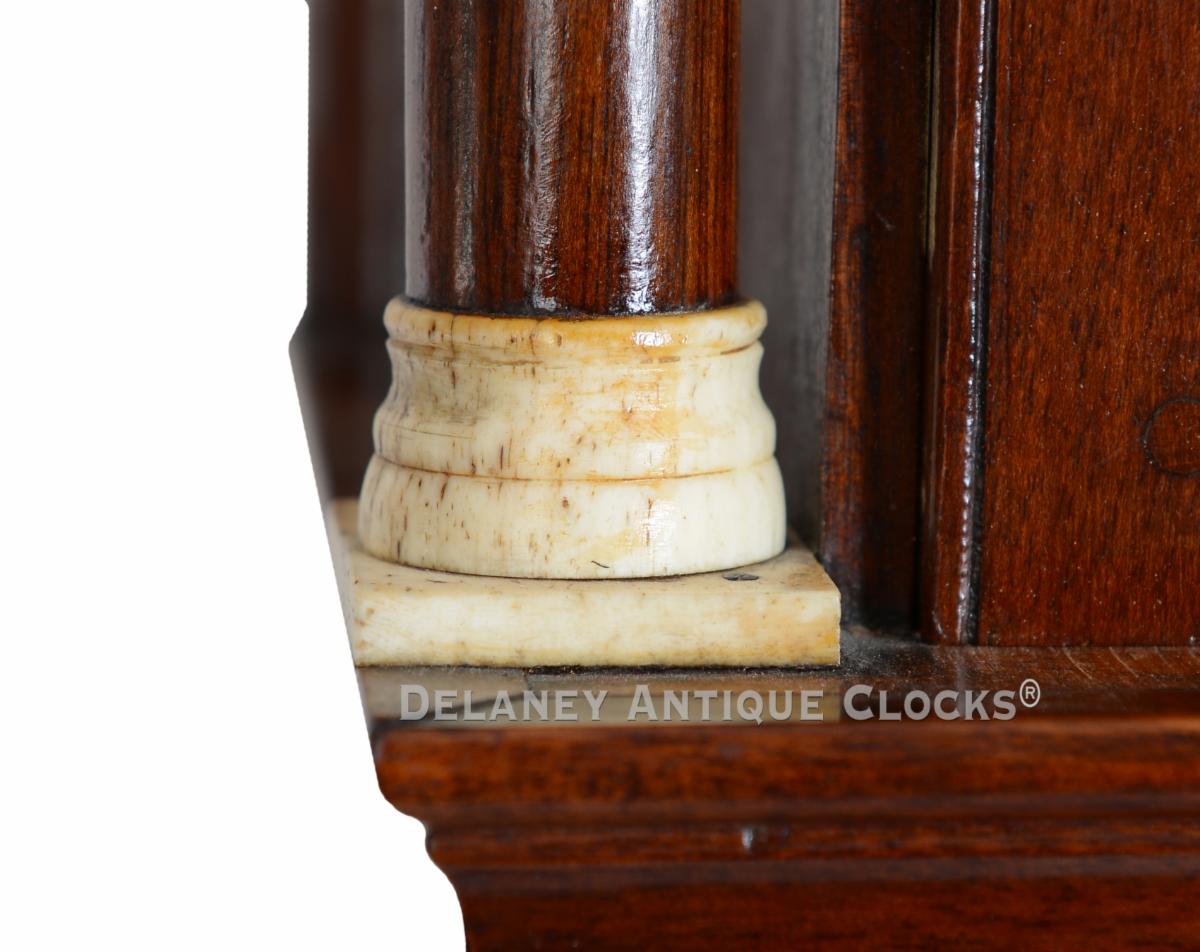
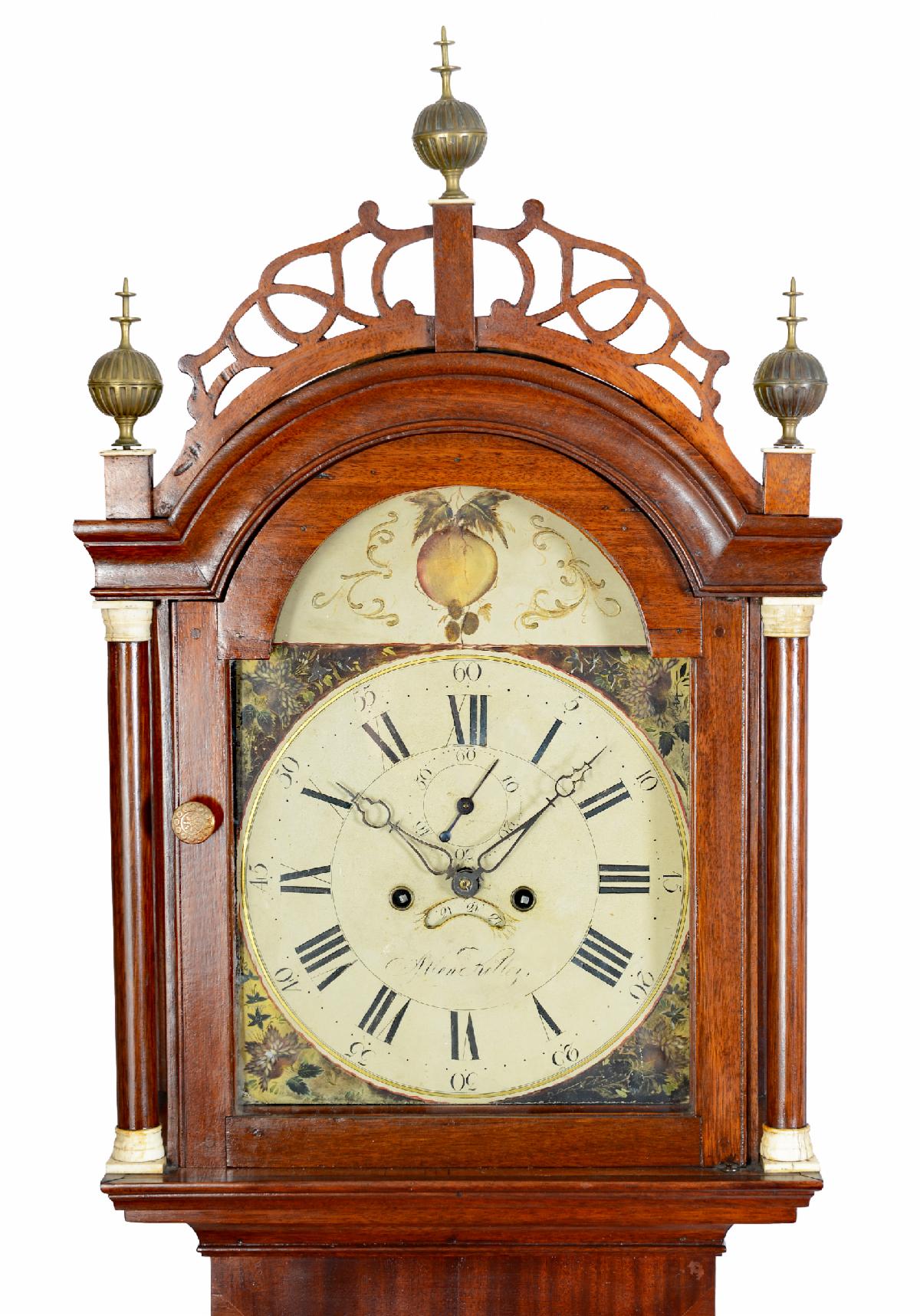
Most remarkable are the clock's whalebone accents. Applied to the hood capitals and finial plinths, these unusual decorative details connect the object directly to the economic engine that transformed much of coastal Massachusetts during the early nineteenth century. The fortunes generated by the whaling industry influenced everything from architecture and furniture to fashion and decorative arts. Here, whalebone serves as both ornament and historical document, linking the clock to the maritime world that shaped its creation.
The case rises from four elegantly flared French feet joined by a shaped apron. Delicate cross-banding frames the base panel, waist door, and waist section, while carefully selected crotch-mahogany veneers fill the central surfaces with dramatic figure and movement. The effect is both restrained and luxurious, a balance characteristic of the finest New England furniture of the period.
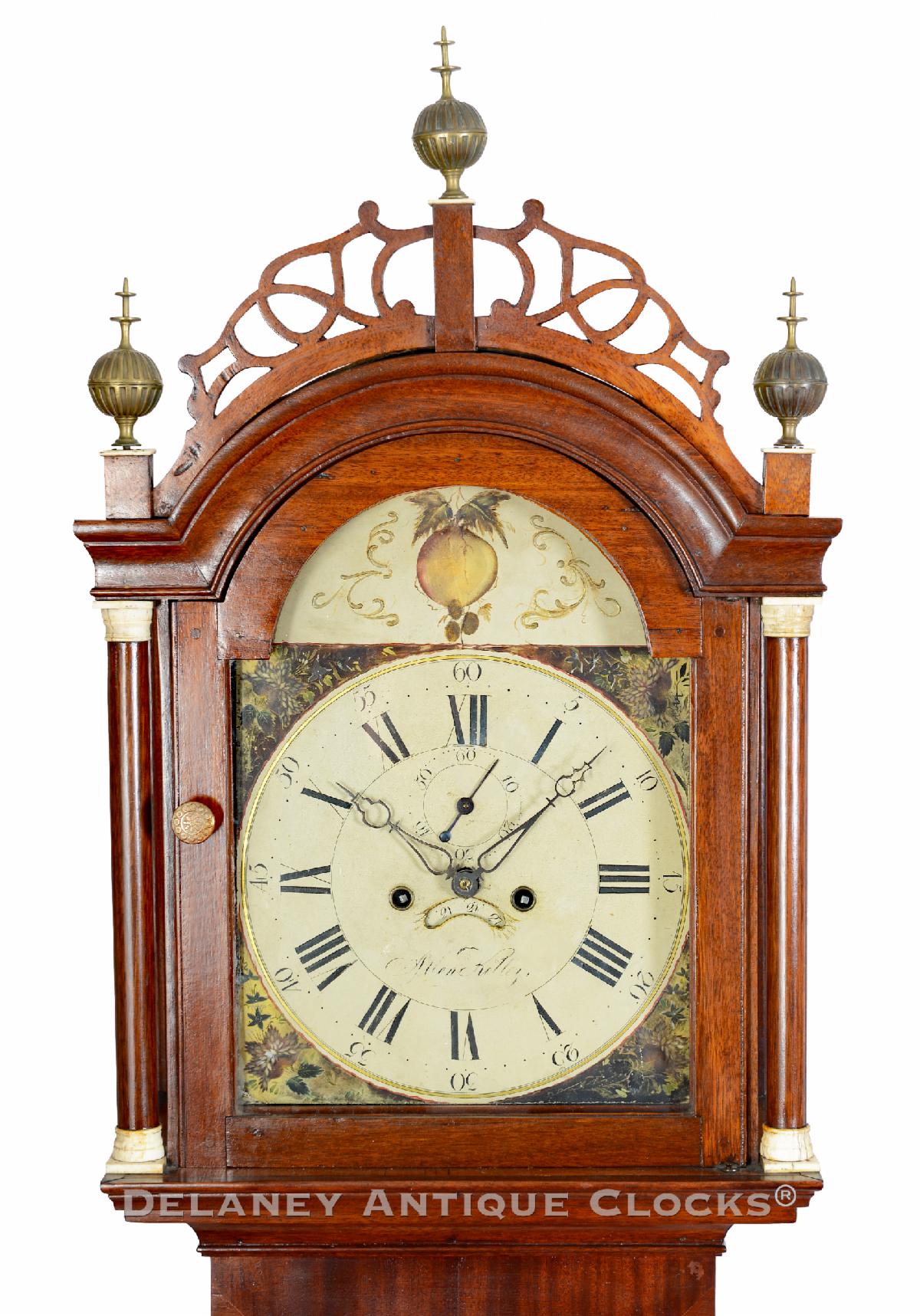
Above, an open fretwork bonnet introduces an architectural note. Three finial plinths, each capped with polished whalebone and crowned by brass finials, secure the pierced crest. Smoothly turned bonnet columns flank the door, their whalebone capitals and bases providing subtle visual punctuation against the richly figured mahogany.
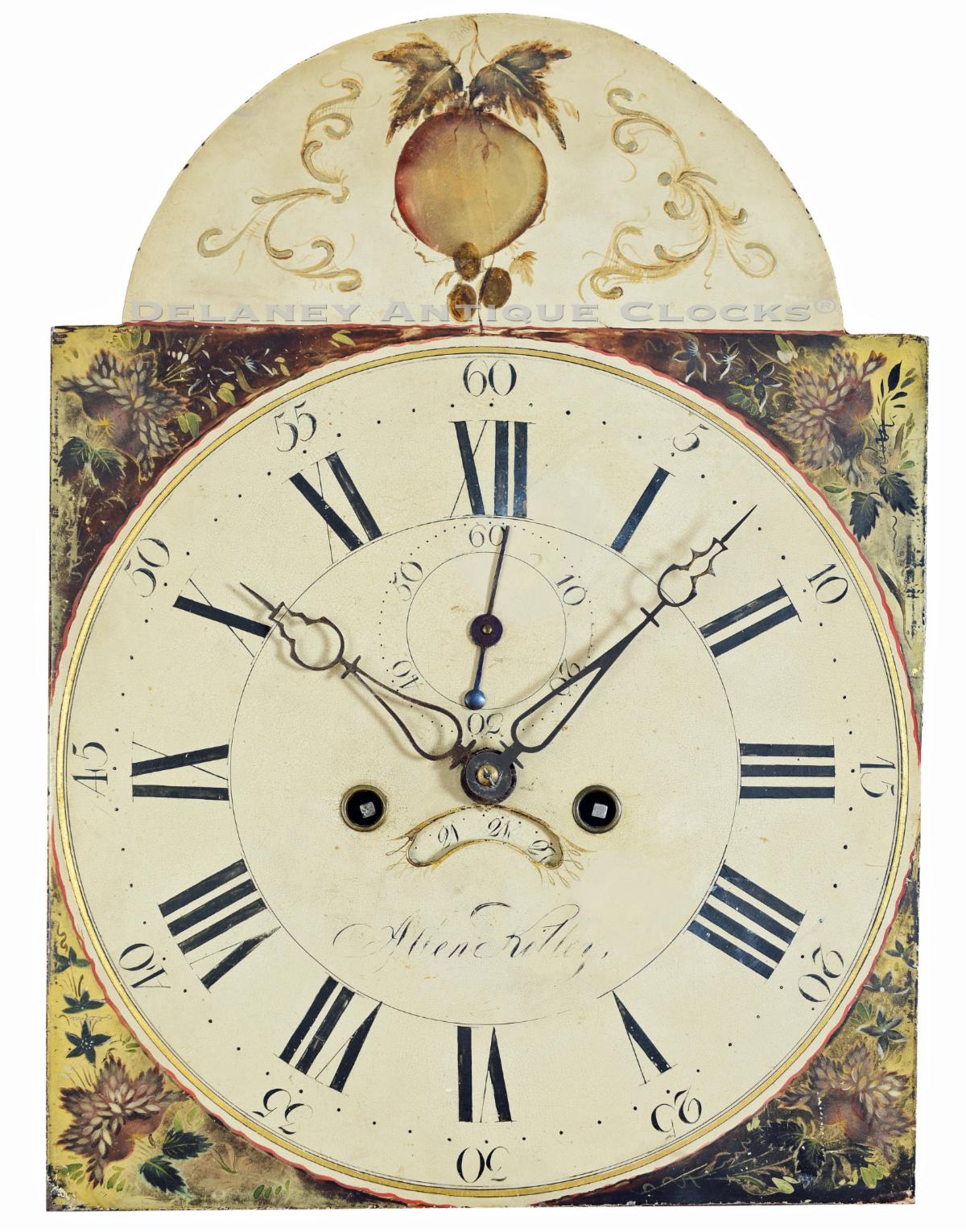
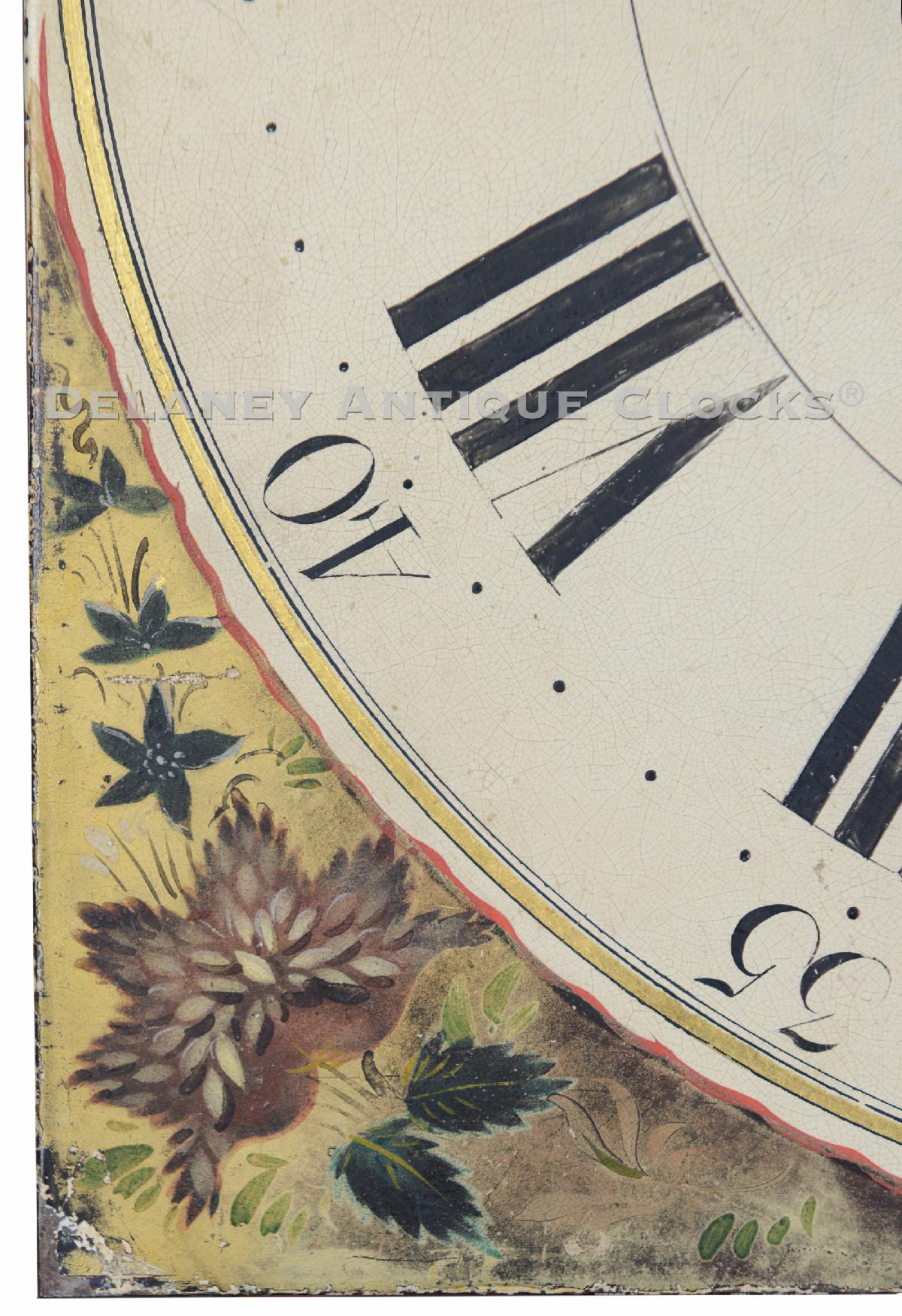
The painted iron dial is equally compelling. Produced by one of Boston's Curtis & Nolan workshops, it displays a level of artistry seldom seen today. The four corners are filled with exuberant floral compositions rendered in shades of green, red, brown, and gold, each outlined by a flowing red border. The decoration possesses an almost folk-art vitality while remaining remarkably sophisticated in execution.
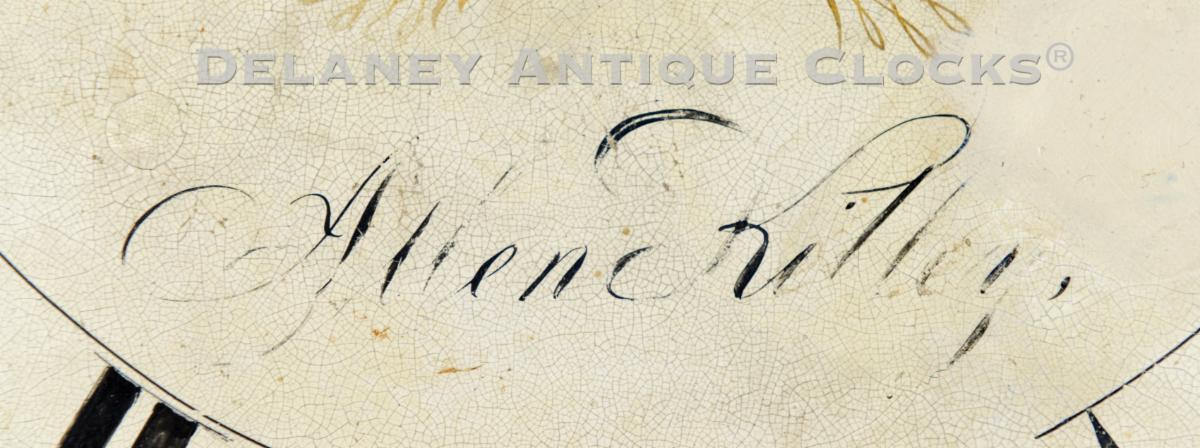
At the center, Roman numerals mark the hours while Arabic numerals denote the five-minute intervals. A subsidiary seconds dial and a month calendar add practical utility. Forged steel hands are particularly distinctive, matching a pattern seen on another Kelley clock illustrated in Harbor & Home. Above, a painted apple occupies the lunette, suspended between gilt swags that lend the dial an unmistakably Federal character. Beneath the calendar aperture, the signature "Allen Kelley" appears in elegant script, confidently identifying the maker.
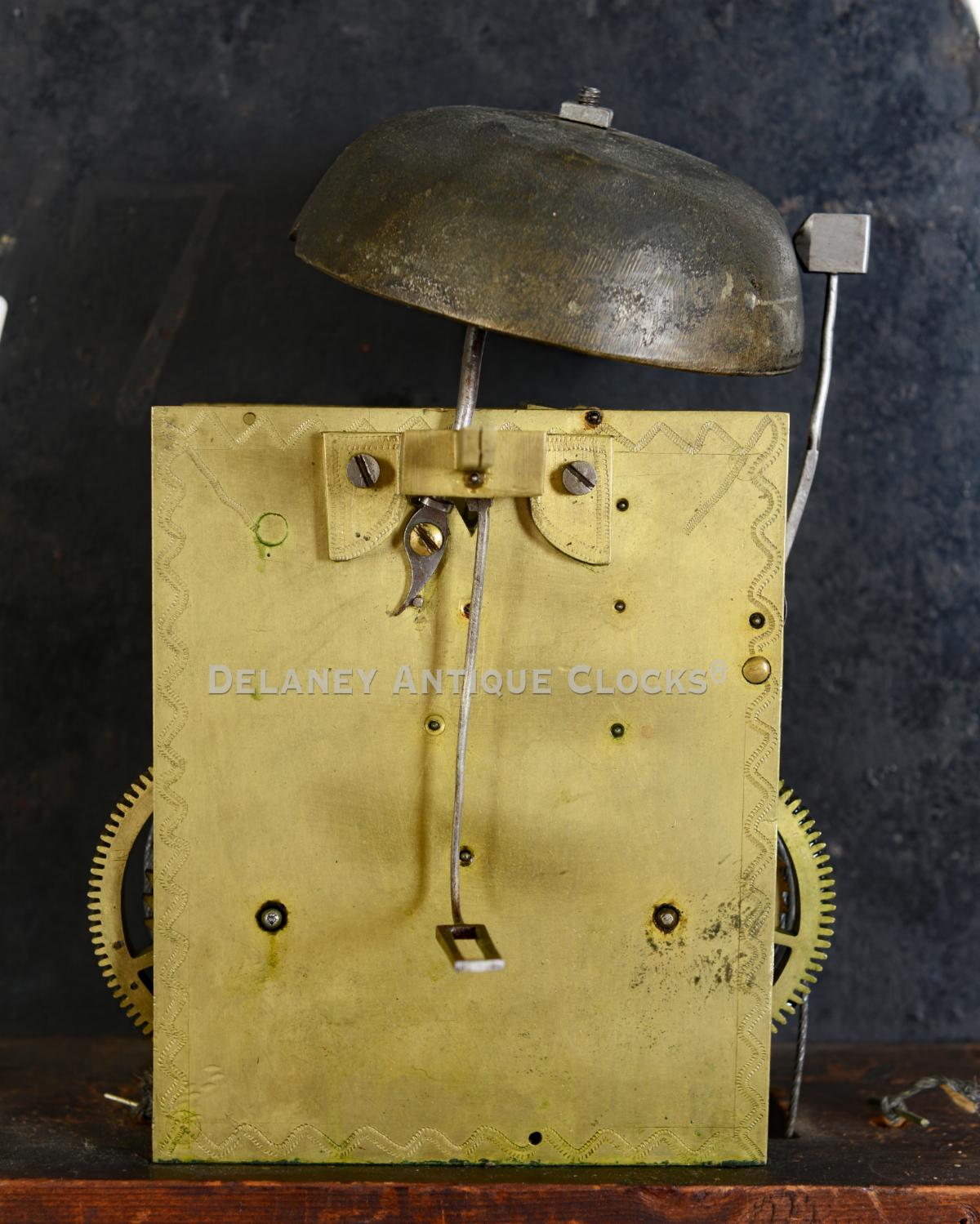
Behind the dial lies a substantial brass movement supported by four turned pillars. The rear plate is decoratively engraved, and hardened steel arbors, polished steel pinions, and brass gearing reveal the mechanism's quality. Powered by two weights, the eight-day movement employs a recoil escapement and a rack-and-snail striking system that sounds the hour on a cast-iron bell mounted above the works.
More than two centuries after its creation, this tall case clock remains a compelling testament to New England craftsmanship. Its finely figured mahogany, rare whalebone embellishments, beautifully painted Boston dial, and robust movement together tell a larger story, one of maritime wealth, regional identity, and the enduring ambition of American artisans in the nation's formative years.
Allen Kelley (1791–1876) was a Massachusetts clockmaker, watchmaker, silversmith, and jeweler whose career spanned more than six decades and several of the region’s leading maritime communities. Born in South Dennis, he apprenticed in 1806 under the Quaker clockmaker Joshua Wilder of Hingham and established himself in Sandwich by 1813.
Over the course of his career, Kelley worked in Provincetown, Nantucket, and New Bedford before returning to Sandwich in 1852. He is known for producing tall-case and Massachusetts shelf clocks, examples of which survive today. Kelley died in Sandwich on Oct. 13, 1876, and was buried in the Quaker Meeting House Cemetery in East Sandwich.
Height 7' 4.5" Width 18 1/4" Depth 9.5"
Inventory #EEE-8
|