|
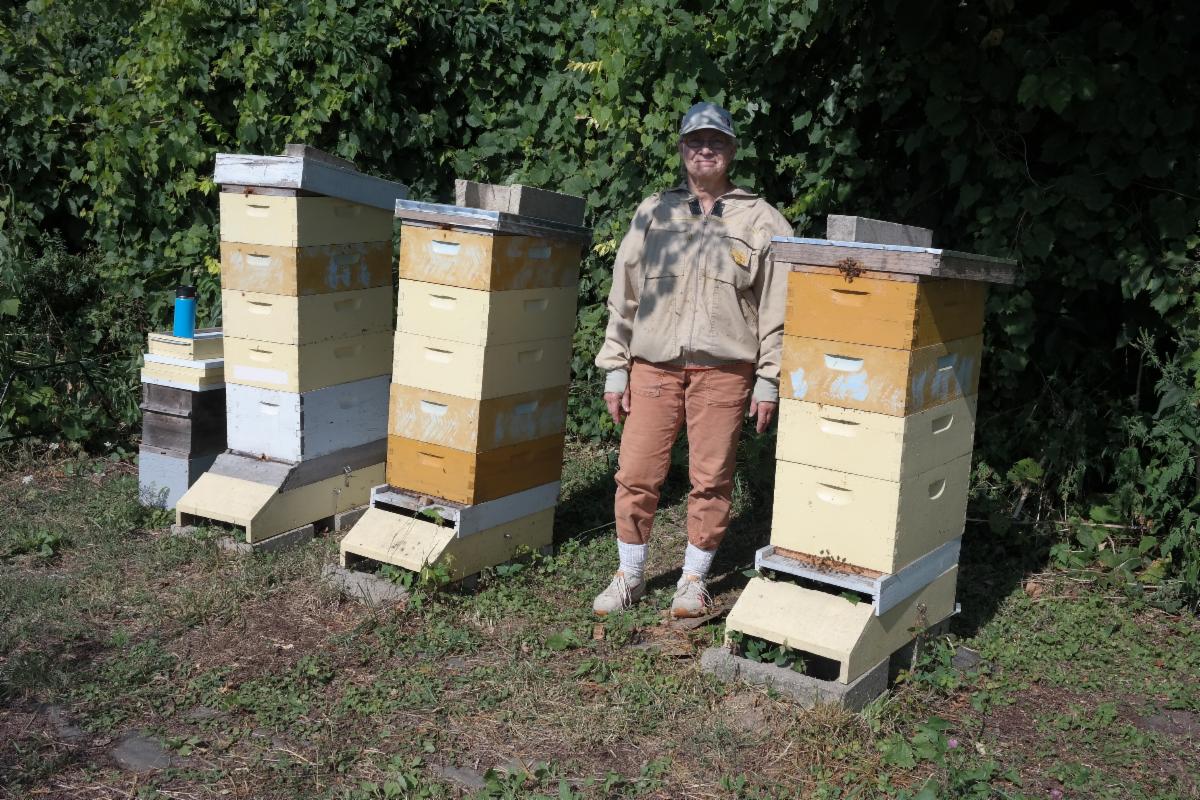
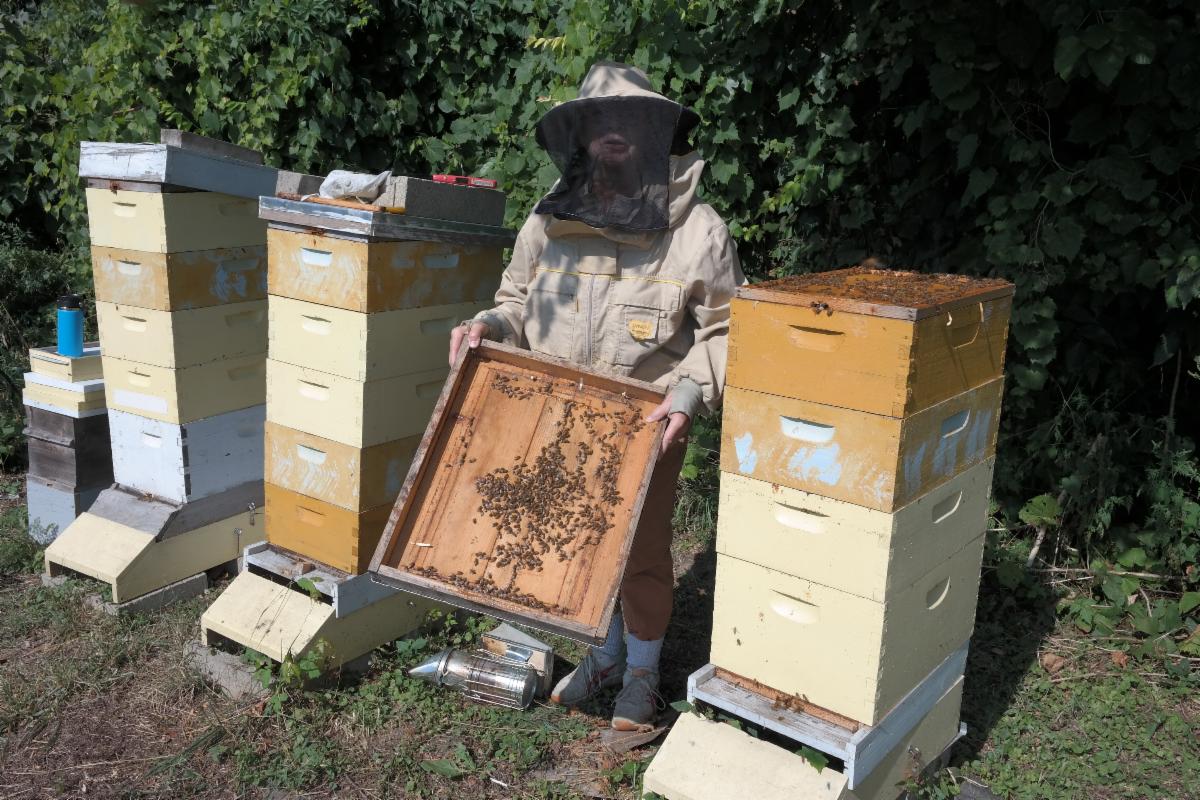
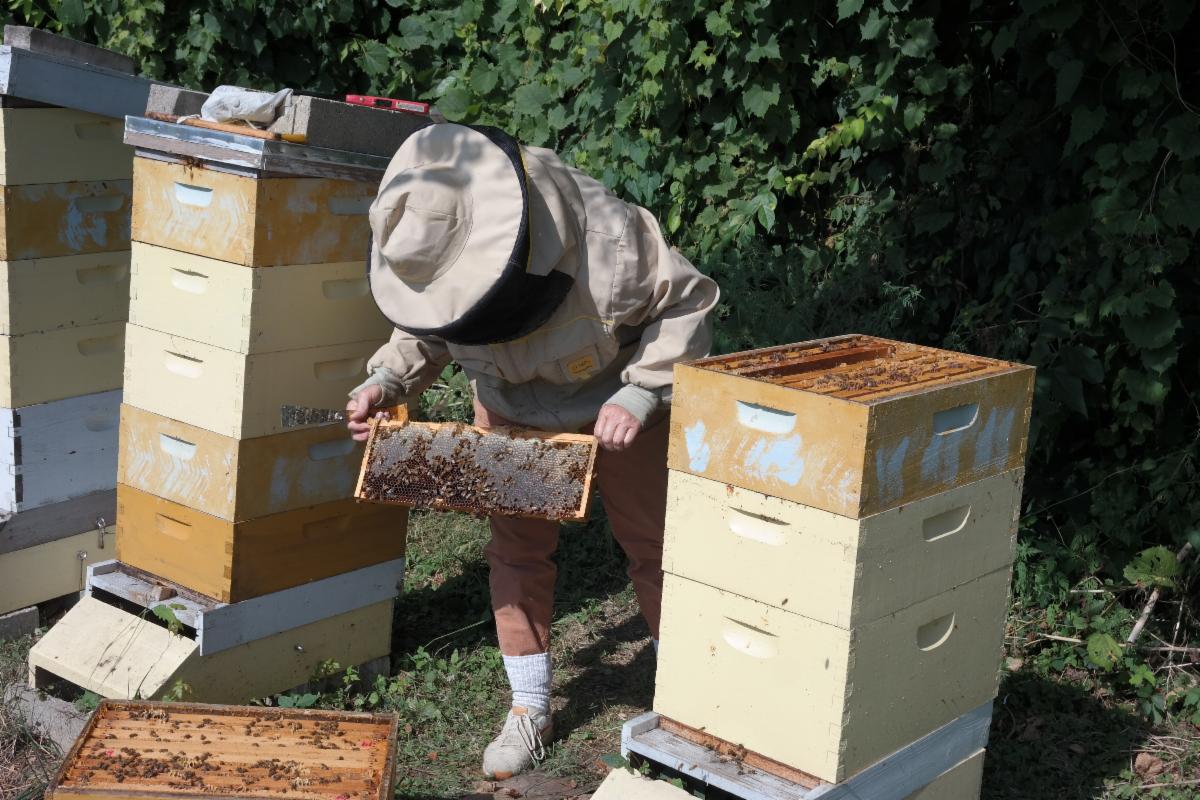
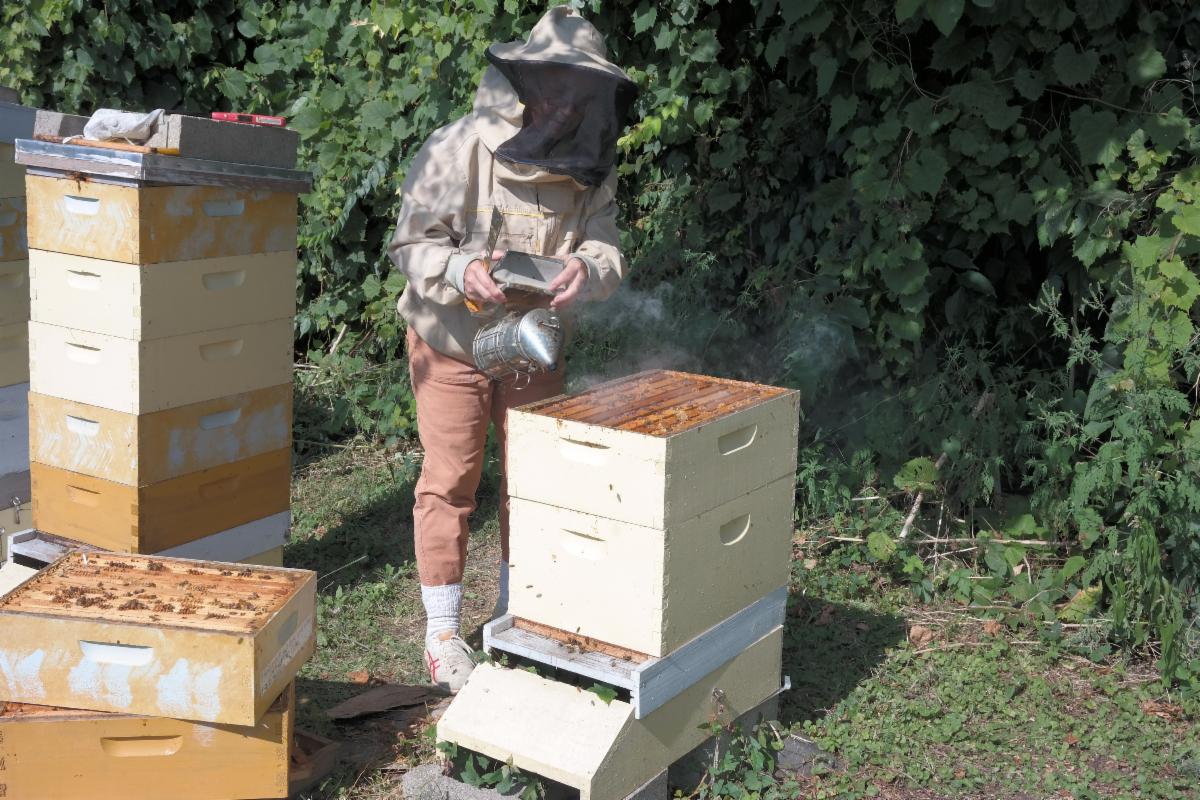
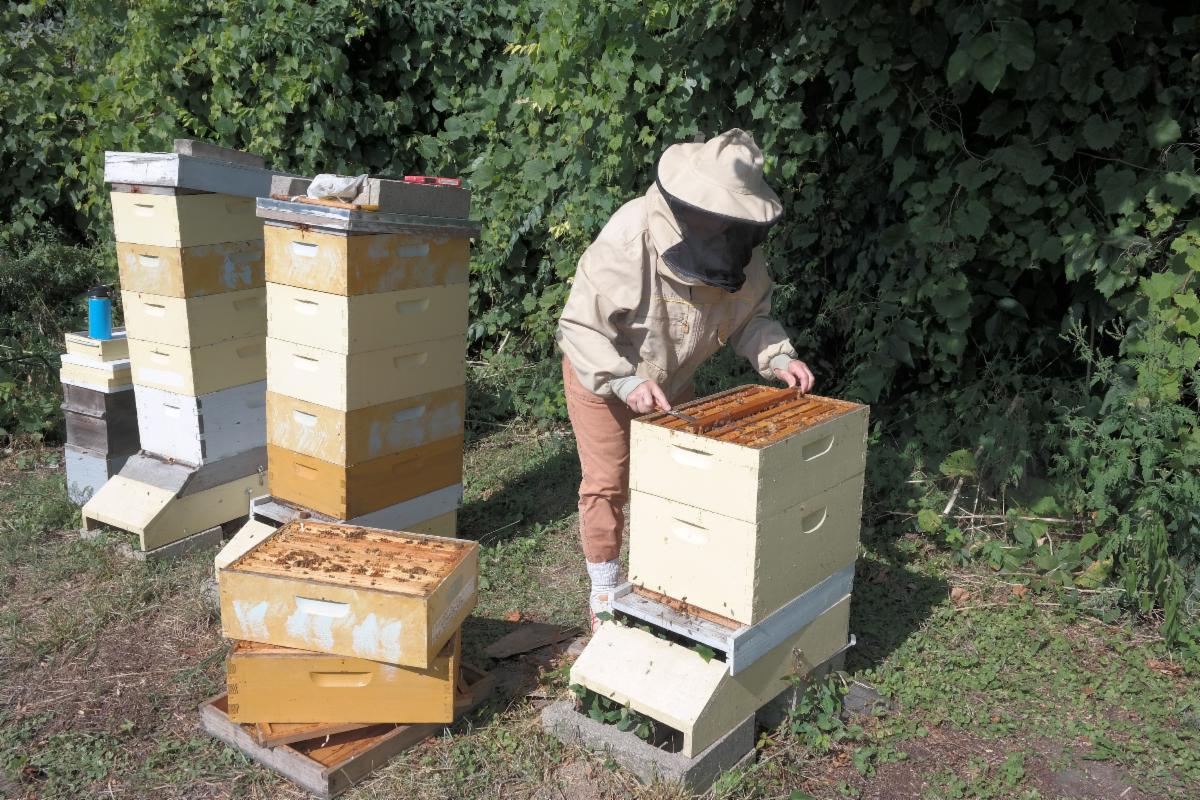
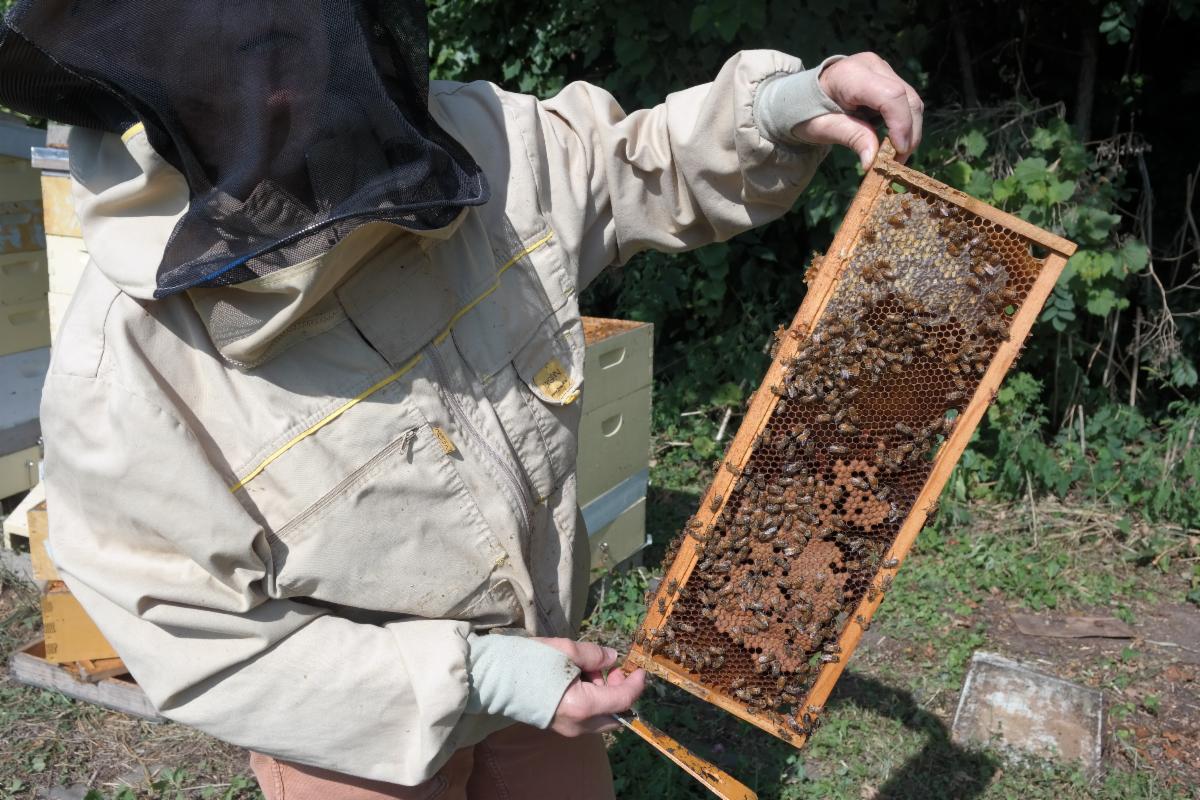
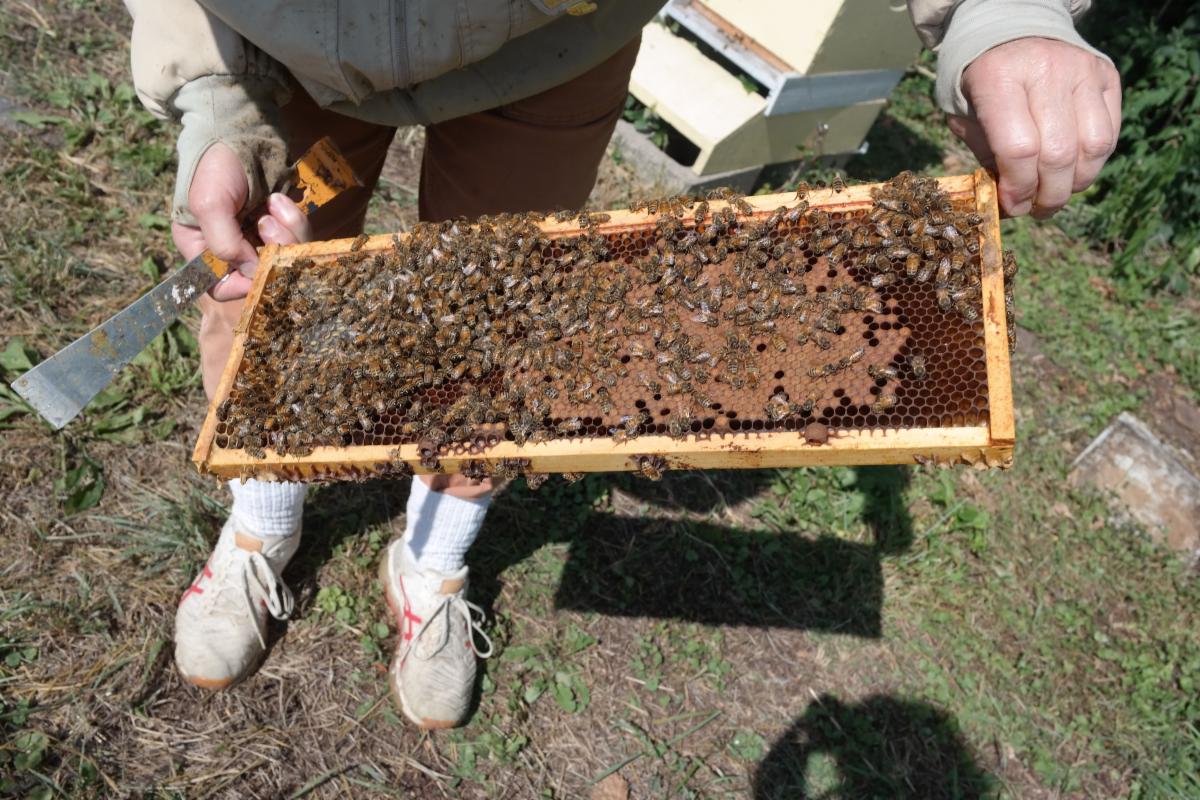
Jeanie Doe has been beekeeping at Woodland Cemetery and Arboretum since the spring of 2018. She brought three hives to the cemetery that were splits from hives from her own backyard. Now in 2022, the number of hives has grown to eight and Jeanie keeps busy tending to her bees.
Honeybees will fly in a radius of 2 to 3 miles from their hive looking for pollen and nectar. Woodland is a perfect place to have the hives as our 200+ acres of arboretum has more than 3,000 trees and woody plants encompassing over 165 species. Many of the trees are flowering throughout the year allowing the bees to begin collecting tree pollen as early as February when the bees begin to emerge from the hives during warm weather days. If the temperature gets near 50 degrees, you’ll begin to see the bees fly. They don’t like to be stuck inside any more than we do!
So what do the bees do during the winter months?
Bees will cluster around the queen and keep the temperature at 92 degrees for her all winter long. The colder the temperatures outside, the tighter the bees make the cluster to keep the temperature up. The bees rotate in the cluster from the inside to the outside so no one bee gets too cold but the queen is always in the middle and stays cozy warm. Unfortunately, if the queen dies, the hive will die.
How can you help?
Not everyone is inclined to be a beekeeper but having pollinator friendly flowers in your yard, garden box or flower pots is extremely important for bees and other pollinators’ survival. All flowers are pretty but native plants make up a grocery store for bees and other pollinators and also help to ensure our own food supply.
Some of the best varieties of trees, shrubs, flowers and herbs for you to plant to help maintain the bee populations are:
Trees: maple, crabapple, linden, serviceberry
Shrubs: ninebark, pussy willow, sumac, viburnum
Perennials: aster, hyssop, milkweed, purple coneflower
Annuals: cosmos, marigold, sunflower, zinnia
Herbs: basil, borage, catmint, lavender, oregano
Woodland plants over 1000 flowers each year. We maintain beds and gardens featuring flowers of both annual and perennial varieties so that there are blooms all spring and summer long.
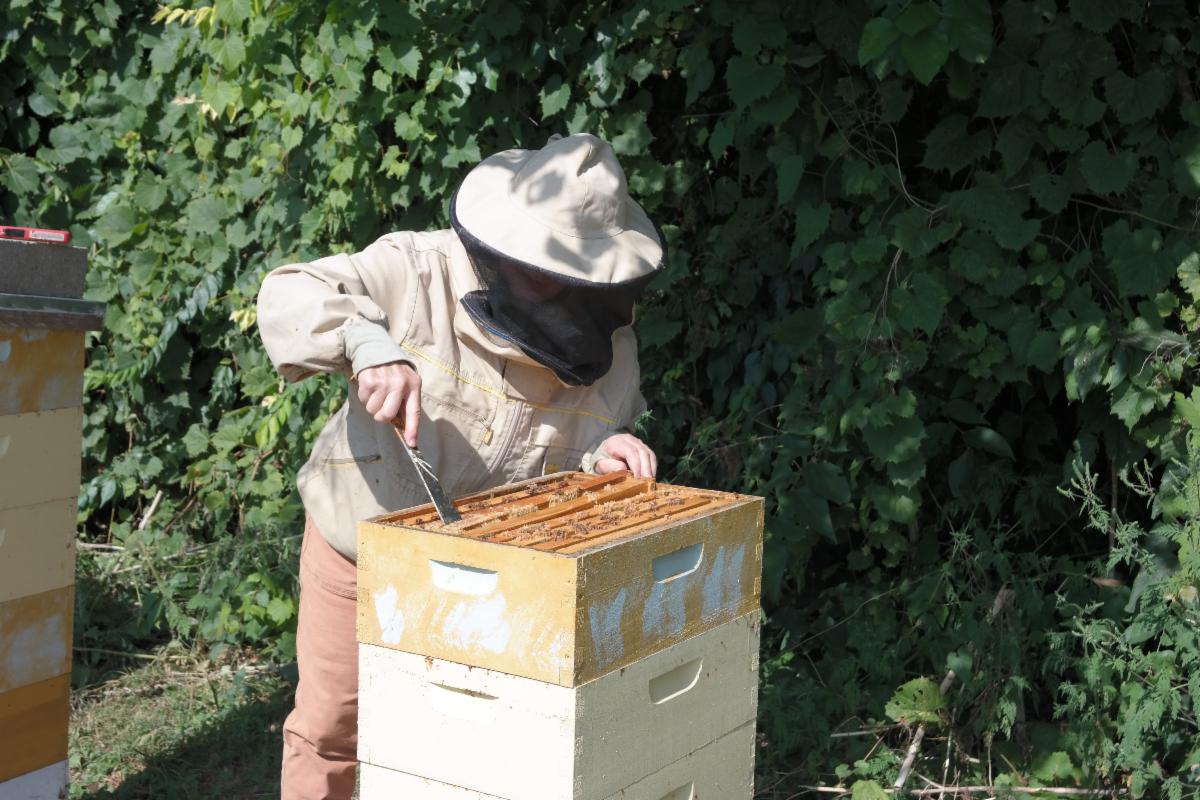
Of course we all know that the end result of all of this nectar drinking and pollinating is honey and that’s where the beekeeping comes in for Jeanie. Jeanie checks her hives and then gathers the liquid gold.
“I harvest honey once a year right around mid-August or just after Labor Day,” stated Jeanie. “Some beekeepers may do it twice, right after the main nectar flow in June or July and at the end of the summer.”
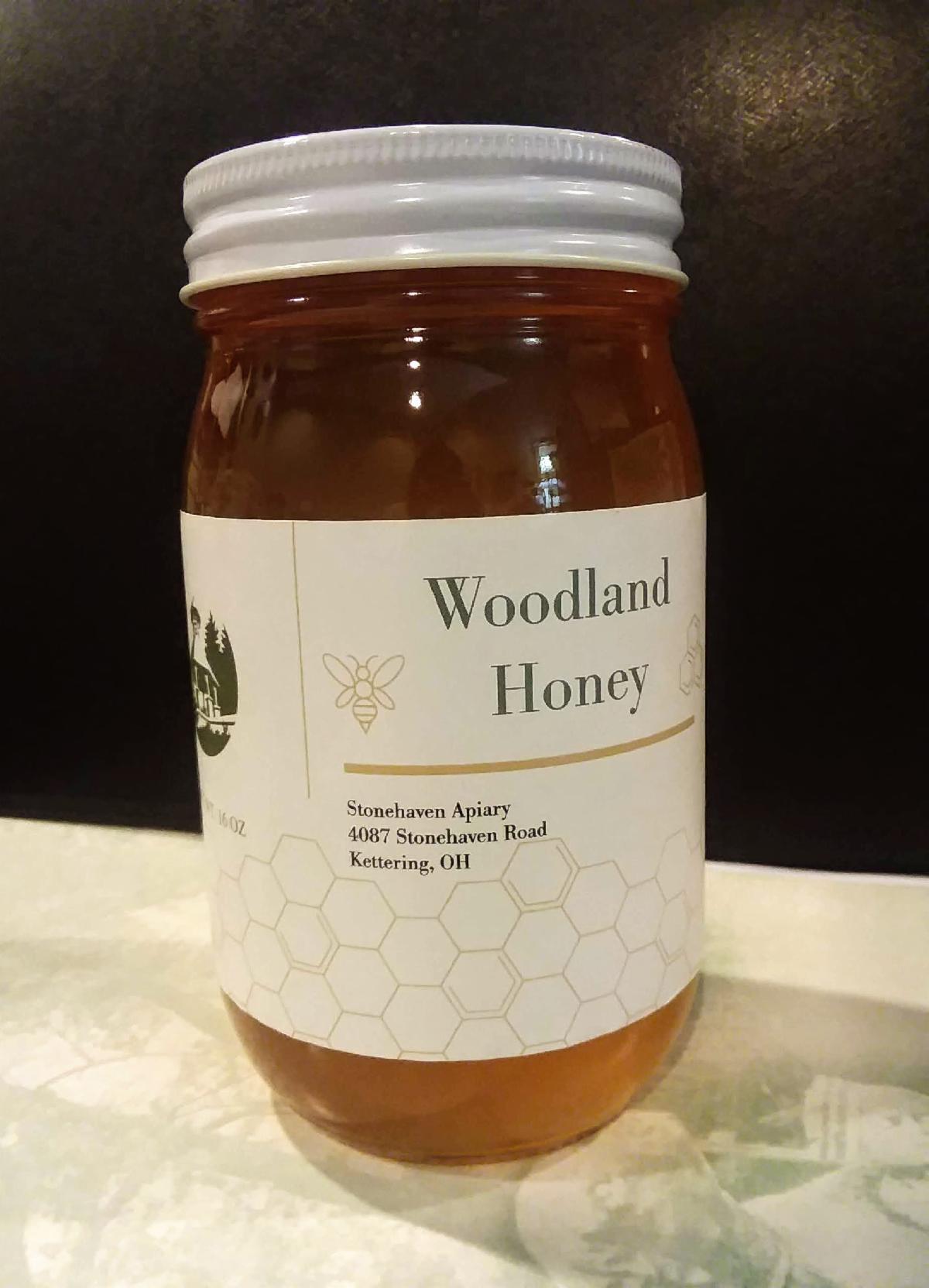
Jeanie harvests her honey and jars them. There are never any additives in the honey – it’s just pure honey. It is strained to remove any wax bits, bee parts or anything else and she states that a jar can last indefinitely. It is best to store honey out of the sunlight and keep it covered. Honey (which is mostly fructose and glucose) naturally crystallizes and how soon it does is dependent upon the temperature and also if it has more glucose than fructose in its makeup. Glucose crystallizes faster and the amount is determined by various nectars. The honey is still good if it’s crystallized.
Want some honey?
Jeanie isn’t getting rich harvesting and selling her honey. She does it because she knows the importance of bees in the world. Without bees, the world’s food supply will be in jeopardy. Woodland has jars of pure honey for sale in the main office. We hope you will come and get some and share this story with friends and family. We also hope it inspires you to plant one new tree, shrub or flowering plant that attracts bees and other pollinators.
|