Who’d have thought a minority game, or is it a pastime, or is it a sport, such as snooker...
... could become a global business.
We didn’t. We never understood the power and influence a tiny, unreliable box, of hardly discernible, flickering pictures in the corner of the sitting room, would command.
Technology improves and there’s colour, advertising and suddenly… boom!
Who would have thought, when Apple introduced their first, truly smart, smart-phone, it would turn high streets into ghost towns.
We sit on the sofa, using our smart phone, to buy stuff on-line and a new industry, worth £13bn, couriers, deliver it by lunchtime. The high street with deadweight costs, cannot compete.
Snooker, iPhones… the law of unintended consequences? No. More like how we think about things.
First-order thinking; we’ve invented the telly. Hooray!
Second-order thinking is the important next step. Ask; what happens next?
A gazillion pound, global snooker business… that’s what.
Second-order thinking is gifted to only a few.
Henry Kissinger and Warren Buffet. Tim Burners-Lee… and Steve Jobs who told us about ‘a thousand tunes in your pocket’ and later spoke of ‘convergence’.
Second-order thinking? It’s the ‘what’s next’ bit.
First-order thinking is simple. Blue sky and a white-board. Everyone ooh’s and aaah’s and says, brilliant.
To ‘do’ second-order thinking you need to deal with three questions;
First, ask… ‘…and then what?’
Second, think… ‘think-through-time’. What will this look like next week, next year, ten years time?
Third, what … what are the tangental consequences. How will people and their institutions respond?
Second-order thinking and the iPhone?
…and then what?
Connected to the internet. Not much happens.
Connected to Google and people will know things, learn thing.
Connected to your bank and people will buy things.
Second, what happens next year, five and ten years?
The technology will invite more players. Banking and Googling creating the possibility of Amazon. The impact on life and life styles is immeasurable. New supply-chains emerge.
Third, tangental consequences? If people can sit on their sofas and spend millions, they won’t visit the high street…
… which become rows of coffee shops, betting shops and charity shops. Rental incomes fall. We turn shops into homes.
What about health services?
First order thinking… innovation and technology polishes what we do. Makes it a bit faster, maybe safer and not always cheaper. That's about it.
Second order thinking…
… and then what?
Why go to the doctor when they can come to you, on your (getting even smarter) iPhone.
We all rat-run. Take the shortest route for convenience. Patients will take the shortest route to care.
They'll migrate to video-first consultation. The indications are, huge numbers prefer it.
This creates time and space for the dwindling numbers of non-tech-capable people to be looked after with higher levels of personalisation.
Technology will take the ‘place’ out of healthcare. Place becomes, anywhere. Place based care is expensive, creates barriers and becomes redundant.
Anywhere-care, is the new healthcare.
The demand for ‘anywhere’, will force the pace of ‘where is my health record’ and ‘who owns it’.
The answer; like your bank record… you own it!
You’ll grant health professionals remote access from wherever you are, to wherever they are, via your pin-number to the Health Cloud.
Like the high street… a dwindling need for a primary health-estate. Face to face services are subsumed into care centres, once called hosptials.
And, tangental consequences?
Access to health records will be a long-forgotten battle.
After that? Other players become part of the health sector. Principally banks. They know what we spend our money on.
Use your card to buy a packet of crips and a six-pack… the banks know where and when and how often. Gregg’s, off-licences, chip shops…
… the banks have it all. They’ll re-package your purchase history as lifestyle data.
Very quickly algorithms will emerge. Offering real-time lifestyle advice. Suggestions, cautions, nudges, warnings, genetic testing and a beep on yer iPhone when you linger over the doughnuts.
They could even deny payment for red-line purchases.
The type of lifestyle connection public health specialists can only dream of. It's already there.
In the short term, expect controversy.
In the medium term a lot of people might be happier, healthier. Free of the misery of illness, risk and hereditary conditions and enjoy a tax-break if they don’t get sick.
Medical schools will offer telemedicine qualifications.
In the long-run? Will people see the benefits? Just as now, we see the benefits of Amazon, keeping a list of everything we buy and suggests what else we might like?
>> I'm hearing - GPs fear funding cuts and sidelining of LMCs as ICS model beds in.
>> I'm hearing - Scotland has lost 3% of its full-time equivalent GP workforce since 2019.
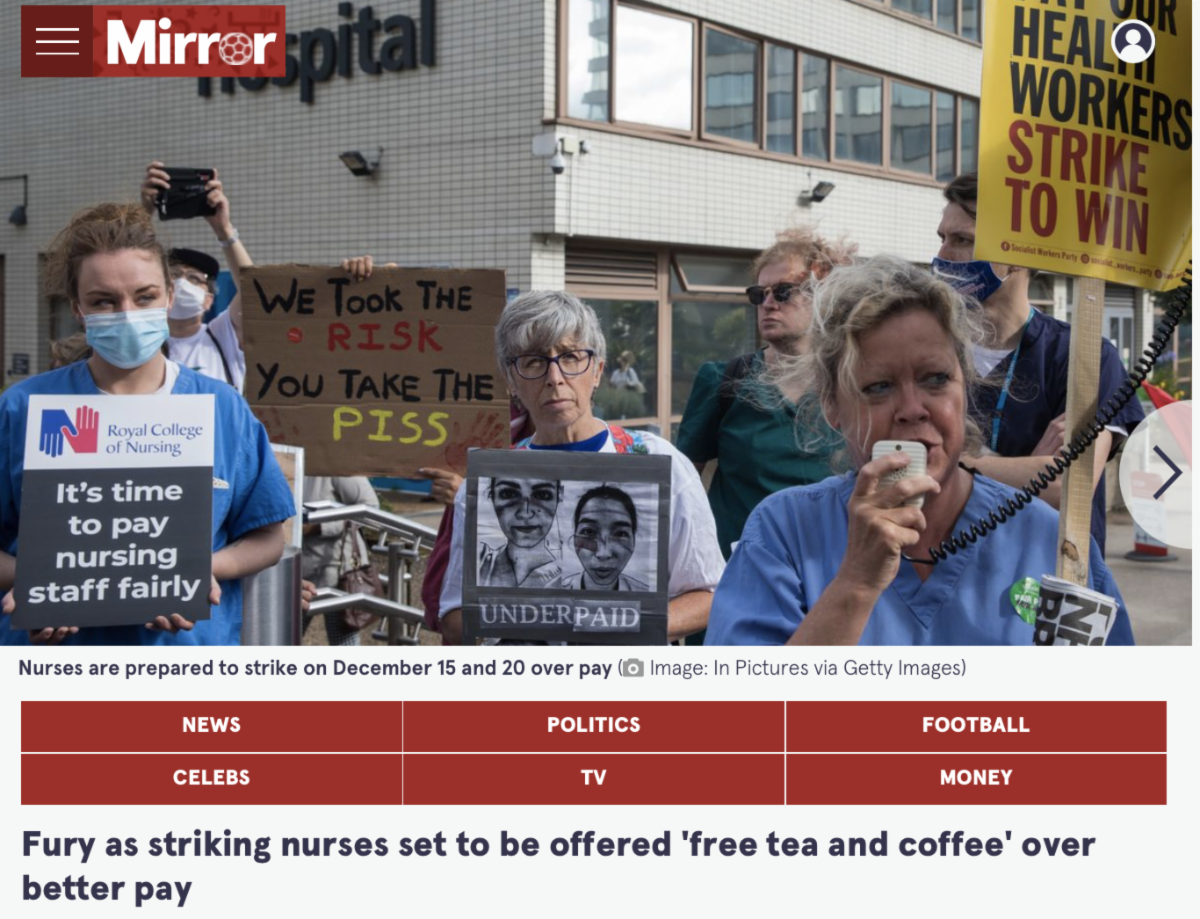
>> I'm hearing - yesterday afternoon, RCN members voted 93.01%, 'no confidence' in some members of the RCN council, following the findings of the Carr report. If they stand down, this will make the RCN Council, non-quorate.