High schoolers in Sylvania in northwest Ohio hosted an annual dance-off fundraiser to raise money for the Ohio Children’s Trust Fund, whose mission is to prevent child abuse and neglect. They raised over $13,000, adding to the grand total of $360,000 that the dance-off has generated for various philanthropy organizations since its inception. | | “Contrary to common narratives, many stay-at-home parents do not arrive at their decision from a position of privilege or preference, but rather through a series of trade-offs shaped by rising costs and household finances, inaccessible and unaffordable child care, and inflexible work options. They feel like they are walking a tightrope, and their choices may not fully align with their desires or needs.” | | |
Who:
Elise Anderson, Elliot Haspel, and Ivana Greco
| |  | | Ohio lawmakers continue to discuss legislative proposals intended to prevent fraud in the state’s publicly funded child care (PFCC) program. Questions like the one posed by this news headline — Is Ohio doing enough to protect against child care fraud? — invite a closer look at the data. | | |
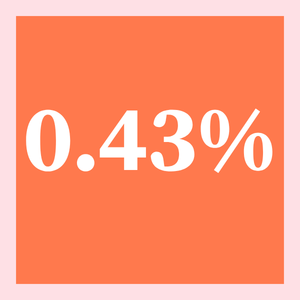
| Consider the overall number of Ohio child care providers participating in PFCC (5,600), as well as the number for whom the Ohio Department of Children and Youth (DCY) received an integrity referral in 2025 to further investigate payment accuracy (124). That is, 2.2% of PFCC providers last year were referred for follow-up. Among these, the majority were reconciled or cleared (e.g., were found not to have participated in fraud), resulting in corrective action to address overpayments (70) or no further action (30). A smaller group of providers (24) were denied further funding from the PFCC program, which represents less than half of one percent (0.43%) of Ohio’s total PFCC providers in 2025 found to be misusing funds. Examined another way, as the state collects overpayments from some providers — estimated at $2.5 million — this remains a very small fraction of the total spending on child care. Overpayment of $2.5 million among the $1.18 billion estimated for state spending translates to 0.21% of program spending — and keep in mind that of those referred for overpayments, a much smaller proportion were likely engaging in fraudulent behavior. | | Payment error and correction processes are inherent to any program, as is identifying and preventing misuse of public funds. But to design sound policy solutions requires both an understanding of what is occurring in practice and what is considered typical within large government programs. Among federal agencies, guidance established through the Payment Integrity Information Act of 2019 indicates that improper payments are significant if they exceed 1.5% of total payments and over $10 million. A deeper dive into this topic will show that thresholds for payment error vary by program both in practice and in what is considered a reasonable or targeted rate of error — with error rates among SNAP reaching nearly 11% last year and a noted target rate of 6%. Within Medicaid, the “Payment Error Rate Measurement” threshold is set at 3%, with actual improper payments averaging just over 5% (in 2024) for Medicaid and CHIP. | Now, reasonable people can disagree about what the acceptable rate of payment error for Ohio’s child care program should be, and they can disagree about solutions to prevent fraud. But here are three items we can hopefully all agree on: 1) a 100% accuracy rate for any (massive, complex) program is impossible to achieve, 2) Ohio’s current rates of overpayment, error, and identified fraud appear to fall far below many acceptable error thresholds established by experts, with deliberate fraud representing a small fraction of one percent, and 3) solutions to improve reporting measures for Ohio child care providers should be crafted to avoid unintended consequences. That is, new rules should not impose additional costs on providers or penalize the vast majority who offer a highly in-demand service, and workforce support, with precision and integrity. | | |
Maternal health
Columbus City Council approved an appropriation of $3.39 million to go toward CelebrateOne and the Enhanced Maternal Health Program. The investment will expand access to prenatal care, parental education, and supports and resources related to mental health, legal aid, and health care for almost 9,000 pregnant and/or parenting residents of Franklin County.
| | The Ohio Chamber of Commerce is hosting the 2026 Ohio Childcare Policy Summit on Tuesday, April 14. Note that this is an in-person event requiring a registration fee. | | Once signed by Gov. Abigail Spanberger, Virginia will be the first Southern state to establish a statewide paid family and medical leave program. Center for American Progress provides a summary of the program, set to begin in 2028. | Maine is the latest state to progress legislation to provide subsidized care for child care workers. Ohio has a bill in progress proposing a similar model. | | The Hechinger Report dives into the recent NAEYC report and survey of early childhood educators, which found that rising costs associated with early learning (food, supplies, facility maintenance, insurance, teacher wages) threaten to upend the industry and have resulted in even higher tuition costs for families. | | The 74 covers an analysis from the Northwest Education Association — a research group providing assessments that measure student learning growth — showing that first and second graders who were born during the pandemic are showing slower gains in reading skills in elementary school than children born prior to the pandemic. Researchers point out that it’s difficult to know precisely why this is happening. But they speculate that absenteeism in kindergarten may be a factor, as well as reports of increased challenges related to social and emotional skills among young children, which require redirection and lost learning time in the early grades. | | A new study from researchers at Tulane University and the Brown Center on Education Policy at the Brookings Institution examines the role administrative burdens can play in whether families are able to access services for their children, like WIC or early childhood education. “Administrative burden” may seem like a technical — even tedious — research topic, but the real-life challenges these burdens can pose for families make it an area of great importance to better understand. For this study, researchers designed a randomized control trial (RCT) to study the experiences of nearly 1,500 Louisiana families who were enrolling to access SNAP benefits. As the state was rolling out a new, streamlined application portal for SNAP, researchers suggested an opportunity to pilot a shared application not only for SNAP but also WIC and early childhood education (ECE) — programs that had experienced low uptake rates among eligible families. Families visiting the online portal to register for SNAP were randomly assigned to one of three study groups: 1) the control group, who saw the SNAP application as is, with no changes related to the research study, 2) the information-only group, who saw the SNAP application as well as information that if they were approved for SNAP they were also eligible for WIC or free ECE, and 3) the support group, who experienced the same materials as the information group as well as an invitation to submit further information related to WIC and ECE. The idea behind the support group intervention was that it could reduce the workload to apply for the programs and would connect applicants to agency staff for support. | Researchers discovered statistically significant effects from both the information (group 2) and and support (group 3) interventions on WIC application rates. Nearly 38% of the information group and 37% of the support group went on to initiate a WIC application, compared to 29% from the control group. Effects on actual WIC enrollment were lower but still observed, with the information and support groups enrollment at rates about four percentage points higher than the control group — suggesting that many applicants experienced barriers between the application phase and fully enrolling in WIC that were not fully addressed by either intervention. The study did not have enough statistical power to make claims regarding the interventions’ impact on ECE applications and enrollment. For that analysis, there was a smaller sample because free ECE was restricted to a few localities rather than accessible statewide (like WIC) and likely due to a mismatch in timing between the SNAP application and the ECE application period. Even so, the researchers complemented the RCT with qualitative interviews to better understand the challenges faced by families during the application and enrollment processes. Interviewees identified “human error” (e.g., a missed phone call with agency staff) as a common pain point, and many emphasized the importance of having a direct line of communication between applicants and program staff. Overall, the study findings highlight how the average processes and paperwork requirements embedded in public programs can derail applicants and prevent them from accessing needed services. For instance, within the SNAP application, one in four applicants were denied because of a missed interview — which could result from something as simple as missing a phone call or having an outdated number on file. Over one in ten (12%) were denied due to other administrative issues such as missing documents, with researchers noting similar issues across WIC and ECE processes. As the researchers share in a Brookings summary of the study, “Administrative burden creates needless complexity for time-strapped parents and caregivers. It can keep low-income parents from accessing valuable resources — and, in some cases, can be low-hanging fruit for policymakers to address. That’s because many of these burdens may be hard for policymakers to see, at least until they try to look through the eyes of the people they serve.” | |
This edition was written by Jamie O’Leary and Janelle Williamson.
| | | | |