Norbeck, Peters & Ford
|
|
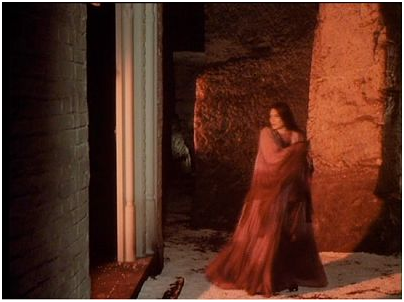
A masterpiece from BOULEZ
and Yves St Laurent:
BLUEBEARD'S CASTLE,
plus another KOUSSEVITZKY rarity . . .
Bongiovanni offers a live PARISINA . . .
Malibran remembers MARINO . . .
and our 50% SALE Continues
COLLECTOR ALERT ! ! !
Be watching for the announcement of Norbeck, Peters & Ford's forthcoming Annual 78rpm Auction, due to appear next week! This one features an entire section of which is dedicated to 7" discs, plus many wonderful instrumental and vocal rarities, many of which we're offering for the first time in our 45 years of operation.
- PIERRE BOULEZ Cond. Cleveland S.O., w. Tatiana Troyanos & Zoltán Kelemen: BLUEBEARD'S CASTLE (Bartók), Live Performance, 16 March, 1972, Severence Hall. (Canada) St Laurent Studio YSL T-385. Transfers by Yves St Laurent. (C1493)
"The Cleveland Orchestra has a long history of performing and promoting contemporary music. From its beginning, the Orchestra has hosted composers from Sergei Rachmaninoff to Maurice Ravel and Igor Stravinsky, and commissioned and/or premiered works from Shostakovich's opera LADY MACBETH OF MTSENSK to concert music for the theremin. One composer who has left an increasingly large mark on our legacy is Béla Bartók (1881-1945), the great Hungarian composer and ethnomusicologist.
The libretto to BLUEBEARD'S CASTLE was written in 1910 by Béla Balázs, a Hungarian poet and roommate of Zoltán Kodály (Kodály was a close artistic ally and friend of Bartók's). The highly symbolic story depicts Bluebeard and his new bride, Judith, arriving at his dark and dank castle. Judith spies seven locked doors and, desiring to let light and fresh air in, demands the keys to them. One by one, against the protestations of Bluebeard, she opens each door, revealing a series of tableaux all stained with blood. At the opening of the last door, she discovers his past three wives locked inside, whereupon she takes her place with them.
Bartók first wrote BLUEBEARD'S CASTLE in 1911, but reworked it over several years until it reached its final form in 1917. While as a whole the opera is recognizably in the dominant late-romantic style of the turn of the century (very much influenced by his older contemporary Richard Strauss), each door Judith opens unlocks a new musical landscape, from the harsh dissonances and menacing flurries of strings and xylophone depicting Bluebeard's torture chamber behind the first door, to the immense and climactic chords for the full orchestra depicting the endless expanse of his domain behind the fifth door.
[Yves St Laurent presents] an archival recording of a concert production conducted by Pierre Boulez with Tatiana Troyanos as Judith and Zoltán Kelemen as Bluebeard.
- Alex Lawler, THE CLEVELAND ORCHESTRA
"A Karajan favorite and a Bayreuth regular, the Hungarian baritone Zoltán Kelemen was at home on most stages in Northern Europe. His skill as a singing actor is patent from first to last - no character trait escapes his probing mind, no phrase is untouched by some imaginative vocal effect. Best of all, the voice has substantial size and the singing method is sound - in several welcome moments he even allows its timbral appeal to surface."
- Paul Jackson, START-UP AT THE NEW MET, p.196
"Zoltán Kelemen was a Hungarian bass-baritone who made his début as Kecal in Smetana's BARTERED BRIDE in 1959. He began studying music at the Franz Liszt Academy of Music before leaving Hungary in order to study in Rome. When he left Rome in 1959, he established himself in Germany, first in Augsburg and later in Cologne. In the late 1960s and early 1970s, Kelemen was a favorite singer of Herbert von Karajan, with whom he recorded FIDELIO in the role of Don Pizarro, DER RING DES NIBELUNGEN as Alberich, BORIS GODUNOV as Rangoni, DIE MEISTERSINGER VON NÜRNBERG as Fritz Kothner, THE MERRY WIDOW as Mirko Zeta, and others. Kelemen also recorded the role of Klingsor in PARSIFAL with Georg Solti (1971). At the Bayreuth Festival, Kelemen succeeded Gustav Neidlinger in the role of Alberich, in which he débuted in 1964 and with which he became identified. He notably sang it several times under the direction of Pierre Boulez."
- Eugene Chadbourne, allmusic.com
"Tatiana Troyanos, an American mezzo-soprano whose enormous repertory covered the full range of operatic history, from Monteverdi to Philip Glass, had a dark, flexible mezzo which was ideal for the wrenching emotionalism of such characters as Carmen, Kundry in Wagner's PARSIFAL, Eboli in Verdi's DON CARLO, Santuzza in Mascagni's CAVALLERIA RUSTICANA, and both Purcell's and Berlioz's Didos. And she was prized for the kind of vocal and dramatic agility, as well as the ability to learn difficult roles quickly, that made her a singer of choice for revivals of rarely performed Handel and Mozart works. She also performed in two RING cycles.
Miss Troyanos found few opportunities in New York, but she was a fighter: When the Met offered her small roles, she turned them down....Miss Troyanos made her Met début as Octavian in 1976, and became one of the house's most frequently heard mezzos. Among the many roles she sang there were the Countess Geschwitz in Berg's LULU, Sesto in Mozart's CLEMENZA DI TITO, Charlotte in WERTHER, Adalgisa in NORMA, and her regular showpieces, Carmen, Kundry, Santuzza and the Composer [in ARIADNE]....Bernard Holland wrote in THE TIMES: 'Ms. Troyanos's mezzo-soprano is intended less as a thing of beauty (which it often is) than as a conduit for the pain, exaltation and rushes of emotion that suffuse her musical personality'."
- Allan Kozinn,
THE NEW YORK TIMES, 23 Aug., 1993
"Tatiana Troyanos gives an impressive vocal portrait of Judith's gradual evolution from timidity to strength. That high C at the opening of the fifth door, held for an extra couple of bars, really captures in a single note the distance she has travelled since the beginning."
David Hurwitz, ClassicsToday.com
"Boulez brings out so comprehensively the individuality and variety of the orchestral depictions of what lies concealed behind each door: blood, tears, weaponry, jewels and landscapes are so vividly glowingly and often hauntingly portrayed in sound. The climactic Fifth Door is simply thrilling, accompanied by Troyanos' sustained top C. Her voice is ideal in that she combines a slight tremulousness, suggestive of both fear and sensuality, with a vibrant, burnished warmth of tone that makes Judith a living, breathing woman of immense will and passion. Boulez's somewhat slower speeds create a hypnotic, mesmerizing atmosphere."
- Ralph Moore, 7 May, 2016
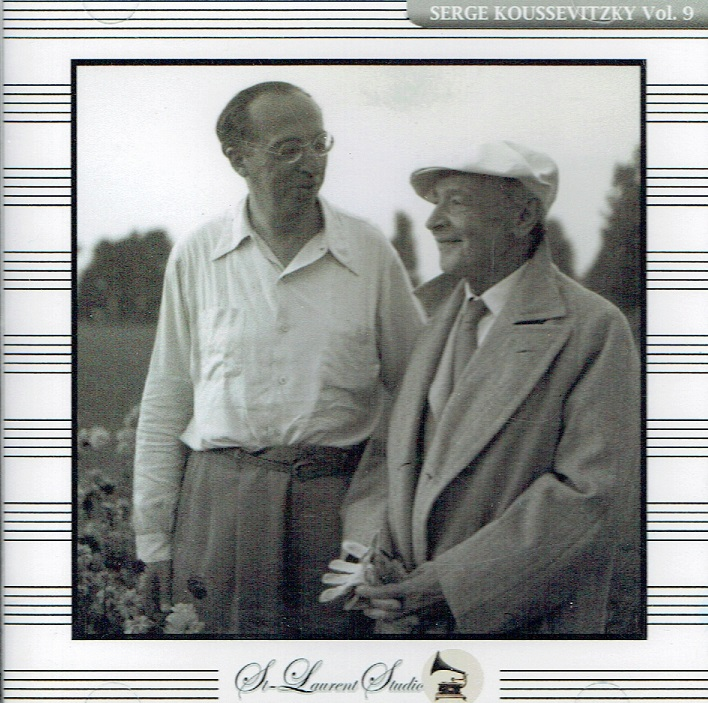
- SERGE KOUSSEVITZKY Cond. Boston S.O.: Symphony in d (Franck), Live Performance, 16 Feb., 1946. Hunter College, New York; w.Georges Mager (Trumpet) & Louis Speyer (English Horn): Quiet City (Copland), Live Performance, 10 March, 1945, Symphony Hall, Boston. (Canada) St Laurent Studio YSL 78-410. Transfers by Yves St Laurent. (C1492)
"QUIET CITY...recorded in March 1945...receives a finely paced and atmospheric reading, lucid and expressive, graced by a rich string wash of sound, its fervent lyricism revealing the Russian conductor's strong identification with the music. Louis Speyer is the named cor anglais player, and he is both more secure and more technically adroit on this occasion than trumpeter Georges Mager, whose fluty vibrato and bugle-like tone are certainly characterful, if not wholly persuasive."
- Jonathan Woolf
"Georges Mager, one of the great trumpeters of all time, was Principal of the Boston Symphony from 1919 (after playing viola in the BSO for a year, sharing a stand with Arthur Fiedler!) until his death in 1950. In the 30s and 40s there were 3 big names in American trumpeters: Harry Glantz in the NYPO and later in the NBC, Saul Caston in Philly, and Mager in Boston. Although many of the recordings featuring Mr. Mager are available on CD, many players have never heard his beautiful, singing sound and unique vibrato. Serge Koussevitzky, Music Director of the BSO form 1924 until 1949, and one of the 'old school' conductors who rarely gave praise to anyone, described Mager as 'covering the orchestra with gold'.
First recordings are always interesting because a 'performance tradition' had yet to be established. This is no exception and the BSO plays in top form. Very exciting!"
- John Urness
"During the 1910s, Mager played with the Paris Opera Orchestra, the Concerts Lamoureux, and the l'Orchestre de la Société des Concerts du Conservatoire. After World War I, Georges Mager was part of a U.S. good-will tour of the Garde Républicaine Band. With the Band, Mager was flügelhorn soloist (a sort of wide bore trumpet). Three musicians from the Garde Républicaine Band were hired into the Boston Symphony by Henri Rabaud for the 1918-1919 season: Louis Speyer English horn, Georges Laurent flute, and Georges Mager trumpet. However, since there was not a trumpet chair open, for this first season, Mager was hired as a violist (!). Interestingly, Mager shared a viola stand with with Arthur Fiedler in this 1918-1919 season. The next season, 1919-1920 under Pierre Monteux, Georges Mager was then moved to the third trumpet chair, sitting behind Gustav Heim and Joseph F. Mann. After the disastrous 1920 musician's strike, Gustav Heim left for the Detroit Symphony. Heim was, along with Concertmaster Freddy Fradkin, the only Principal musician to leave following the strike. The next season in 1920-1921, Georges Mager became Principal trumpet until the conclusion of the 1949-1950 season. This service was for a total of 50 seasons as Principal trumpet, and 52 seasons with the Orchestra.
Georges Mager was an important teacher, including at the New England Conservatory. Among his trumpet students were Adolph Herseth (later Principal trumpet of the Chicago Symphony), Roger Voisin (Mager's successor), and Bernard Adelstein (later Principal trumpet of the Cleveland Orchestra). Mager was one of the early advocates of the C trumpet for the orchestra, with its slightly more brilliant tone.
Speyer became an extra oboist for the Orchestre Colonne, which accompanied the Ballets Russes in France, and in that way participated in several premieres of works by Ravel and Stravinsky. In early 1913 he joined the newly formed Orchestre du Théâtre des Champs-Élysées, conducted by Pierre Monteux, which gave its first performance on 2 April 1913. Two months later, he played in this orchestra in one of the most famous concerts of all time: the program included LES SYLPHIDES, LE SPECTRE DE LA ROSE AND THE POLOVTSIAN DANCES, but is remembered for the raucous premiere of Stravinsky's RITE OF SPRING.
Speyer came to America in the summer of 1918 with a French military band [note above] for a three-week good-will tour, but stayed, as he had been invited to join the Boston Symphony Orchestra, for which he was hired by Henri Rabaud. During his exceptionally long career, he played under the conductors Pierre Monteux, Serge Koussevitzky, Charles Münch and Erich Leinsdorf."
- Musicians of the Boston Symphony Orchestra
"In 1924, Koussevitsky was chosen as music director of the Boston Symphony Orchestra. With the BSO, he continued his tradition of championing the new music he found around him, thus giving vital exposure to great American composers, such as Copland, Barber, Bernstein, Carter, Hanson, Harris, and a host of others over the years. During the 1931 season, he commissioned a series of commemorative works for the orchestra's fiftieth anniversary, yielding a treasury that included Stravinsky's SYMPHONY OF PSALMS and Ravel's Piano Concerto in G. Beginning in 1935, he annually brought the orchestra to the summer Berkshire Festival, organized by Henry Hadley in 1934, becoming its music director and making it part of the BSO's operation. Koussevitzky established the Berkshire Music Center (now Tanglewood Music Center) in conjunction with the festival in 1940, making it into one of the premier American educational institutions where young musicians could polish their craft and network."
- Joseph Stevenson, allmusic.com
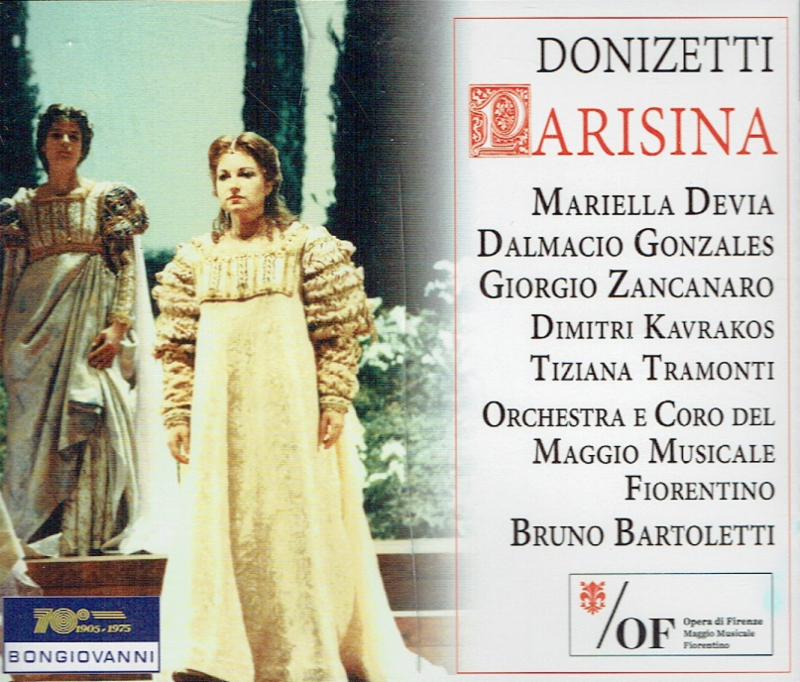
- PARISINA (Donizetti), w. Bruno Bartoletti Cond. Maggio Musicale Fiorentino Ensemble; Mariella Devia, Giorgio Zancanaro, Dalmacio Gonzales, Dimitri Kavrakos, Tiziana Tramonti, etc. (Italy) 2-Bongiovanni 2569/70, Live Performance, 20 May, 1990, Teatro della Pergola, Firenze, accompanied by elaborate 64pp Libretto-Brochure. (OP3200)
"Nowadays, it must be said that it's difficult to hear a rare opera like this performed by a cast of such high quality. This recording, coming from the archives of Maggio Musical Fiorentino, boasts a singing company of a rare artistic level. Mariella Devia, who sings the title role, is one of the best loved 'bel canto queens' much appreciated both from critics and public in all the bel canto roles she has sung in her long career. The extremely difficult role of Ugo, which puts together the grace and the elegance of the light genre with the qualities of the dramatic operas, was sung in this performance by Catalan tenor Dalmacio Gonzales, who reaches easily the top of the stave. Giorgio Zancanaro is stylistically at ease in the role of Azzo, which marks the birth of the modern baritone from the very beginning of the opera, requiring the most powerful sound obtainable from such a voice, here is put to the test in the most difficult tessitura."
- Ned Ludd
"Divadom, like the price of gold, thrives on scarcity. The most elaborate mystiques and fervent cults build up around singers one rarely hears live. Any artist sounds better in a mixture of memories and hopes than in life. In New York, the aura of absence has had ample time to condense around the Italian soprano Mariella Devia, 66, who on Thursday returned to the city as Elizabeth I in the Opera Orchestra of New York's concert performance of Donizetti's ROBERTO DEVEREUX at Carnegie Hall. A regular at the Metropolitan Opera in the 1980s, Ms. Devia last sang with that company in 1994. Since then she has had a few appearances with the Opera Orchestra of New York.
Her fans have caught her on YouTube and bided their time as she underwent a reputational transformation from respected to revered. She was greeted as a conquering heroine, with an ovation before she had sung a note, a louder one after her first aria and a tumultuous reception at the end, spurred by her final note, a clear high D. It is remarkable that Ms. Devia is still in possession of a high D at all, let alone one so penetrating. She has carefully husbanded her resources over the decades, and she can still deliver a classy, effective performance. Sure of pitch and elegant in its phrasing, her modest-size voice has taken on a melancholy wistfulness."
- Zachary Woolfe,
THE NEW YORK TIMES, 6 June, 2014
"Giorgio Zancanaro has had a solid European career despite a complete lack of formal training. He was a policeman when he began singing. His major roles are Rigoletto, Escamillo, Germont Pére, Enrico Ashton (LUCIA), the High Priest (SAMSON ET DALILA) and Renato in UN BALLO IN MASCHERA. He was particularly known for his Verdi roles, and for EMI recorded RIGOLETTO, ATTILA, LA FORZA DEL DESTINO, and LES VESPRES SICILIENNE."
- Joseph Stevenson, allmusic.com
- LUIS MARIANO (Mariano Eusebio González y García): Songs by Bucino, Luchesi, Bourtayre, Puech, Larue, Contet, Emer, Durand, van Parys, Provost & Freed; La belle de Cadix - Songs (Francis Lopez). [Mariano Eusebio González y García, also known as Luis Mariano, was a popular tenor of Spanish Basque origin who achieved celebrity in 1946 with 'La belle de Cadix', an operetta by Francis Lopez. A charming stylist, indeed!] (France) Malibran CDRG 505, excellent transfers, 1939-45. (V2502)
"Mariano Eusebio González y García moved from the Basque region to reside on the French side. Later he became Luis Mariano, 'prince of the operetta', thanks to his 'voice of gold, sun and love' which, together with the romantic ambiguity of his character, made him an idol never forgotten in this country."
- elpais.com, July 15, 1980
. . . REPEATED FROM THE RECENT PAST . . .
- LA DANSEUSE DE TANAGRA, Broadcast Performance, 1956, w. Cloëz Cond. Berthe Monmart, Nadine Sautereau, Solange Michel, Robert Massard, Jean Mollien, Michel Hamel & Lucien Lovano; LES HIRONDELLES - Excerpts, Broadcast Performance, 4 Nov., 1963, w.Jean Doussard Cond. Huguette Boulangeot, Claude Bergeret, Lucien Huberty, Aimé Doniat, Joseph Peyron & René Lenoty (both Henri Hirchmann); MARYSE BEAUJON, w.Bigot Cond.: La Danseuse de Tanagra - Je dansais, oui, jadis; Oui, près de toi - recorded 1930. (France) 2-Malibran 799. (OP3199)
"A popular writer and journalist, Champsaur was the inventor of the character of Lulu, who would be later taken up by Wedekind and Alban Berg. After HÉRODIADE, Massenet had composed several operas situated in classical antiquity....Hirchmann followed the long lasting fashion for antique eroticism. The [above] plot inspired in Hirchmann the sensuous, colorful kind of music one could expect from a good disciple of Massenet."
- Christophe Ghristi
"Henri Hirchmann [or Henri Hirschmann; originally Henri Herblay] was a French composer who studied under André Gedalge, and, for two years, under Massenet at the Paris Conservatoire. His chief works are: AHASUERUS, an oratorio (crowned by the French Institute at the Concours Rossini, and performed at the concerts of the Paris Conservatoire Nov., 1892); a suite for orchestra in four parts (presented at the Opéra Jan., 1896); L'AMOUR À LA BASTILLE, comic opera (crowned at the Concours Crescent; performed at the Opéra Comique 1898); LOVELACE, opera in four acts (Théâtre Lyrique, 1898); five ballets, etc."
- JewishEncyclopedia.com
- MAX LICHTEGG: A Voice for Generations, incl.Schubert, Schumann, Brahms, Mendelssohn, Mahler, Schoeck, von Puttlingen, Niedermeyer, ben Haim, Ettinger, Moniuszko, Tschaikowsky, Verdi, and many more., etc. (E.U.) 4-Andromeda 9127, incl.44pp. Booklet. (V2496)
"The fact that the name Max Lichtegg is today mainly known only to record collectors has nothing at all to do with the artistic importance of this singer. Lichtegg belongs to the large number of artists who enjoyed enormous recognition and success during WW II and into the 50s and 60s; this was due to their stage presence, recordings, radio broadcasts and television appearances. In his prime, Max Lichtegg was without doubt the most popular tenor in Switzerland.
After concerts in the USA and stage appearances in San Francisco and Los Angeles, Max Lichtegg returned in 1948 to Switzerland. In spite of very tempting offers from the Vienna State Opera he remained, for family reasons, faithful to the opera house in Zürich. He made guest appearances in Munich, Hamburg, Stuttgart, Amsterdam, Paris, London, Bilbao, Lucerne, Geneva, Monte Carlo, Strasbourg, Schwetzingen and many other cities. Until 1971 he also could frequently be heard as a guest star at the Opera in Zürich. The Art Song was of the greatest importance for Max Lichtegg who was one of the earliest tenors to champion the songs by Britten or von Einem.
The set ends with Beethoven's 'Der Kuss' taken from Lichtegg's final public appearance at age 78 in August 1988. Time has dealt kindly with Lichtegg's voice though towards the end of his career the rock-like steadiness lost something of its quality but there was never a wobble and he was still able to thrill Zürich audiences as the late live recordings clearly show.
Included in the 44pp. booklet are numerous photos, a detailed survey of his opera, operetta and concert repertoire and a complete discography."
- Rudi van den Bulck,
OPERANOSTALGIA, November, 2016
- ANITA CERQUETTI, w.Gavazzeni Cond.: Arias from Norma, Agnese di Hohenstaufen, Aïda, I Vespri Siciliani, Nabucco, Ernani, Forza, La Gioconda & Tosca - recorded 1957; w.Gui Cond.: Oberon - Ozean, du Ungeheuer! (in Italian) - Broadcast Performance, 18 Jan., 1956; w.Rossi Cond.: I Vespri Siciliani - Arrigo, ah parli a un core - Broadcast Performance, 16 Nov., 1955; Guglielmo Tell - Selva opaca - Broadcast Performance, 5 Sept., 1956; Arias from La Wally & Andrea Chénier - Broadcast Performance, 26 Jan., 1956 (all w.RAI Orch.). (France) Malibran AMR 121. (V2501)
"The brevity of Italian soprano Anita Cerquetti's career was a great loss for the world of opera. But what she accomplished in those few years (September 1951 - October 1960, retiring at barely age 30) is amazing. The mystery of her early retirement remains a mystery. Hers was a voice of dramatic intensity, fiery temperament, plenty of volume, seemingly inexhaustible vocal reserves, and a flexibility that let her excel in bel canto roles and made her an ideal Verdian soprano. In performance, Cerquetti never stinted, giving it her all. Very soon she was deemed the new Callas and 'inherited' rôles that Callas had abandoned. Only three commercial recordings of Cerquetti were published in her brief career, all of them by Decca, all in 1957: a complete LA GIOCONDA, a recital of arias, and excerpts from NORMA (to have been a complete recording with Mario Del Monaco). That recital disc is heard here, along with a duet (with Giulietta Simionato) and an aria ('Suicidio!') from the GIOCONDA. In addition the disc contains five extracts from performances broadcast by RAI: 'Bolero' (VESPRI SICILIANI), 'Mare, Superbo Mare' (OBERON), 'Ebben, ne Andro Lontano' (LA WALLY), 'La Mamma Morta' (ANDREA CHÉNIER), and 'Selva Opaca' (WILLIAM TELL). The eight arias from the recital disc cover her repertory: Aïda, Norma, Abigaille, Tosca (which she never sang on stage), Elvira (ERNANI), Leonora (FORZA), Elena (VESPRI), and AGNESE DI HOHENSTAUFEN. It's all here: the intensity, the excitement, the drama, and, alas, the sometimes hard, harsh edge in the top voice. But that is a small price to pay for great singing."
- Charles H. Parsons, AMERICAN RECORD GUIDE, July/Aug., 2012
- GUILLAUME TELL - Excerpts, w. Tony Poncet, Jean Borthayre & Irène Jaumillot. (France) Malibran AMR 125. (OP3201)
"Vezzani clearly had the better and more pure style and Luccioni the more sensuous sound and more metal, but it was Poncet (The Last of the French 'fort ténors') who kept those Meyerbeer operas in the repertoire at a time when so called serious critics and managers thought them old trash. Lucky for us in the eighties some singers realized what a gap of operatic history was disappearing (and what possibilities for success) and though not common, a lot of revivals have proven these operas to be a treasure trove. But none of the tenors after Poncet (surely not in France) were able to step into his vocal shoes as most of them were spintos at their best. Tony Poncet was indeed the last 'fort-ténor'."
- Jan Neckers
- ERICH LEINSDORF Cond. Boston Symphony Orch.: 'Vetrate di Chiesa' (Respighi); Romeo and Juliet - Excerpts (Prokofiev); w.GINA BACHAUER: Piano Concerto #2 in c (Rachmaninoff); w.BEVERLY SILLS: DAPHNE - Final Scene (Strauss). [A most rewarding program comprising two different BSO concerts, in the magnificence of the glorious Symphony Hall acoustic!] (Canada) 2-St Laurent Studio YSL T-412, Live Performances, 1964 & 1967, Symphony Hall, Boston. Transfers by Yves St Laurent. (C1491)
"Bachauer was a strong, powerful player with a formidable technique. She was often compared to Teresa Carreño (1853-1917), and a 1955 description of her shows the attitude of the time. 'Her technique shows a decidedly masculine approach, and unlike other famous woman pianists she is very much at home with works usually regarded as the prerogative of the 'stronger' sex'. Rachmaninov instilled into Bachauer his idea that music was 'sound and colour' and it is her range of both that makes her playing so distinctive. Extremely self-critical, Bachauer was always working, listening and improving her interpretations."
- Jonathan Summers, Naxos' A-Z of Pianists
"Beverly Sills was the acclaimed Brooklyn-born coloratura soprano who was more popular with the American public than any opera singer since Enrico Caruso. Sills won the greatest reviews of her career [as Cleopatra in Handel's GIULIO CESARE, 1966, New York City Opera]. Critics praised her adroit handling of the music's florid fioratura, her perfect trills, her exquisite pianissimo singing and her rich sound....Suddenly she was an opera super-star. In 1968 she had another enormous success in the title role of Massenet's MANON. When the production was revived the next year, the NEW YORKER critic Winthrop Sargent wrote: 'If I were recommending the wonders of New York City to a tourist, I should place Beverly Sills as Manon at the top of the list...".
- Anthony Tommasini,
THE NEW YORK TIMES, 4 July, 2007
- AARON COPLAND Cond. Cleveland Orchestra: Bach, Schubert, Roussel, Ravel & Copland; Interview with Aaron Copland & Morton Gould. (Canada) 2-St Laurent Studio YSL T-407, Live Performance, 1 Aug., 1970, Blossom Music Festival. Transfers by Yves St Laurent. (C1490)
"Copland...has never turned out bad work nor worked without an inspiration. His stance is that not only of a professional but also of an artist - responsible, prepared, giving of his best. And if that best is also the best we have, there is every reason to be thankful for its straightforward employment of high gifts. Also, of course, for what is the result of exactly that, 'this simple and great man in our midst'."
- Virgil Thomson, AMERICAN MUSIC SINCE 1910
- BENNO RABINOF, w.Alfred Wallenstein & Robert Stanley Cond.: Paganini, Lotto, Sarasate, Rimsky-Korsakov, Saint-Saëns, Wieniawski, Tschaikowsky, Rachmaninoff, Novácek, Achron & Bruch. (Canada) 2-Yves St Laurent YSL 78-411, Live Performances, 1943-44 [all from Rabinof's private acetates, not duplicated by the old out-of-print Pearl issue]. Transfers by Yves St Laurent. (S0704)
"In his playing, Benno Rabinof represented the continuation in America of Auer's most brilliant pupils from Russia, perhaps more so than any of the numerous other hopefuls who flocked to the Auer banner after his American arrival. Auer conducted the 19-year old Rabinof's 1927 Carnegie Hall début in the Tschaikowsky and Elgar Concerti....like so many others in the Heifetz shadow, Rabinof was unable to generate a top-level career despite encouraging reviews. In the early 1940s he played a 28-week cycle of nationwide radio broadcasts [above] with Alfred Wallenstein conducting. I recall being thoroughly impressed....he understood and employed the expressive devices in position changes of both Heifetz and Kreisler with good taste. Technically, he could handle any genre of music in the staple repertoire with ease. In the hierarchy of ear-titillating vioinists, Rabinof ranks among the elite. It was essentially instinctual, spontaneous, visceral playing."
- Henry Roth, VIOLIN VIRTUOSOS, p.246
- ZARA DOLUKHANOVA, w.Nina Svetlanova (Pf.): Songs by Glinka, Tschaikowsky, Komitas, Poulenc, etc.; Armenian Songs; Arias from Nozze and Tosca. [A rare recital which features Dolukhanova after her successful transition to Soprano, beautifully recorded from the front row of Philharmonic Hall in remarkably clear sound.] (Canada) Yves St Laurent YSL T-421, Live Performance, Philharmonic Hall, New York, 13 Nov., 1970. (V2497)
"...the smooth, vocal velvet of Dolukhanova's tones and supreme technical mastery encapsulated even greater versatility combined with a rare ability to empathize with her audience....Few recitalists in my lifetime possessed her ability to mesmerize listeners into feeling they were the sole recipients of her song. That gift made her one of the most beloved of all Soviet singers, so that in her regular 1940s broadcasts on Russian radio she was able to introduce and popularize numerous new works by young composers - many of whom wrote music especially for her."
- Vivian A. Liff,
AMERICAN RECORD GUIDE, July/Aug., 2005
...[Dolukhanova] gave recitals in the U.S. in 1959, 1962 and 1970. In the early 1960s she made a transition to soprano with Yevgeny Kanger, a pianist, whom she names as her most important teacher....Her concerts were eagerly anticipated musical events because she kept to her rule of never singing the same song twice in a city no matter how many times she appeared there. Her farewell concert was at the Great Hall of the Moscow Conservatory in the Spring of 1983."
- Richard D. Sylvester,
COMPLETE SONGS, p.303
"Zara Dolukhanova is often cited as the greatest Soviet mezzo-soprano of her time. Her powerful, flexible voice was usually categorized as a coloratura mezzo, but her vocal range also allowed her to sing convincingly as an alto. Dolukhanova was as much a star in the Soviet Union in the mid-20th century as Callas and Tebaldi were in the West.
Dolukhanova was extremely active throughout the 1960s, but shortly after a return tour to the U.S. in 1970, she retired from singing. She spent most of the remainder of her career as a teacher at the Gnessin Institute, counting among her students mezzo-soprano Olga Borodina. Dolukhanova died in Moscow on 5 December, 2007."
- Robert Cummings, allmusic.com
- MARIO GILION: Arias from Gli Ugonotti, Guglielmo Tell, Il Profeta, L'Africana, Norma, Il Trovatore, Otello, Don Carlos, Forza, Ballo, Germania, Cavalleria, Jone, Carmen, La Juive, Samson et Dalila, Tannhäuser & Die Walküre. [For the tenor enthusiast who has everything and everyone!] (France) Malibran AMR 119, from Fonotipia disks. (V2500)
"Gilion supposedly began his career as a baritone, then made his tenor début in 1901 at the Teatro Sociale in Monza as Vasco in L'AFRICAINE. That same year, Gilion appeared in Modena singing Raoul in LES HUGUENOTS and Arnold in WILLIAM TELL, his two most prominent roles. He also sang in Budapest, Warsaw, Venice, and Buenos Aires. Gilion appeared at the Paris Opéra in 1910 as Arnold, and the next year as Radames. He recorded exclusively for Fonotipia singing primarily in Italian. His sides sung in French are unquestionably his rarest records"
- Vincent Giroud, Marston Program Notes
- ANTONIETTA STELLA: Arias from Luisa Miller, Ernani, Il Trovatore & Forza; w.Franco Corelli & Mario del Monaco: Duets from Andrea Chénier & Tosca. (France) Malibran AMR 122, Live Performances, Palermo, Firenze, Napoli & Milano, 1955-65. (V2498)
"Seeming from time to time a serious contender for consideration with the great prima donnas of her time -- Callas, Tebaldi, and Milanov -- Antonietta Stella never quite pulled together all the elements of her lavish gift. An immensely attractive woman with large, deep-set eyes and a figure that would have found favor in Hollywood, she presented an appealing stage presence but was not always able to control her impulsive histrionic inclinations. Although her vocal endowment led her to an early début, her lovely spinto-weight soprano was not sufficiently technically secure and not supported consistently enough to endure.
By her mid-teens, Stella had determined she would become a professional singer and began her vocal training. After studies in her native Perugia, and later in Rome, she won first prize in the 1949 Bologna Concorso. In 1950, she made a pre-professional appearance on-stage at Spoleto's Sperimentale and followed that in 1951 with her official début at the Rome Opera singing Leonora in LA FORZA DEL DESTINO. A recording of SIMON BOCCANEGRA shortly thereafter revealed both a promising voice and some ungainly phrasing. Nonetheless, she was entrusted with the rôle of Lavinia in the world premiere of Guido Guerrini's ENEA, mounted by the Rome Opera in 1953. Italy welcomed the young soprano, despite her lack of experience. Engagements took her to many of the country's most prominent theaters, foremost among them La Scala, where she sang Desdemona in 1954 just a year after she had won good reviews in Florence for her performance in Verdi's AROLDO. Several of the lighter Wagner rôles also came her way with such parts as Elsa and Elisabeth and (less suitably) Sieglinde and Senta. The world beyond welcomed her as well: she was introduced as Aïda at Covent Garden in 1955 and at the Teatro Colón in 1956. Stella became a popular presence in several German houses and won appreciative reviews in Spain and Brazil. Stella made her Metropolitan Opera début essaying Aïda. Although she was in good voice, reviews held numerous caveats about her artistry and questions about her willingness to look past the approval of the gallery toward a deeper exploration of text and music. During four seasons, Stella sang more than 50 performances of eight different rôles, including Tosca, Butterfly (a memorable interpretation), Violetta, Elisabeth de Valois, Amelia in UN BALLO IN MASCHERA and the IL TROVATORE Leonora. Several ill-advised cancellations put an effective stop to Stella's American career. First, she exited a series of performances for Lirica Italiana in Japan. In 1957, she canceled her début with the San Francisco Opera. After the soprano presented the Metropolitan Opera with a doctor's certificate in 1960 asking for release (granted) for the company's spring tour and then showed up on the stage of La Scala during the period in question, Rudolf Bing filed breach of contract charges with the American Guild of Musical Artists. The action resulted in her suspension. Stella continued to appear in Europe, but decline was evident before she had reached the age of 40."
- Erik Eriksson, allmusic.com
- GEORI BOUÉ, w.Jean Pasquier, Quatuor Pascal, Louis Beydts, Roger Cortet, Albert Wolff & Gustave Cloëz: Songs by Debussy, Chausson, Hahn, Heitz-Boyer, Beydts & Schubert; Arias from Nozze, Mireille, Manon, Faust, Madama Butterfly, La Boheme & Otello; Duets w.ROGER BOURDIN by Terrasse & Hahn. [This glorious release offers Boué's major recordings for French Odéon, as well as the early '50s 'picture disk' rarities from Saturne & Le Lutrin, all meticulously transferred from original 78rpm mint copies. Her inimitable recording of Hahn's 'D'une prison' alone is worth the price of the entire set. One might weep after hearing Boué's demonstration of exquisite French musicality and style, by now an entirely lost art. This recital is a unique treasure!] (Canada) 2-Yves St Laurent YSL 78-422, recorded 1943-53, Odéon, Saturne & Le Lutrin. (V3000)
"Geori (Georgette) Boué made her Paris début at the Opéra-Comique in 1939, as Mimi in LA BOHÈME (singing in the 1,000th performance at the Salle Favart on 3 May 1951), and other rôles there included: Lakmé, Manon (singing in the 2,000th performance on 18 January 1952), and Ciboulette (first performance at the Opéra-Comique). Her début at the Palais Garnier took place in 1942, as Marguérite, and she went on to sing rôles such as Juliette, Thaïs, Salomé in HÉRODIADE, Louise, Gilda, Violetta, Desdemona, Tosca, Madama Butterfly, Tatiana, etc. Boué had a clear voice of considerable power, renowned for her impeccable diction, she was widely regarded as one of the greatest French sopranos of the 1940s. She was married to French baritone Roger Bourdin in May 1944, with whom she can be heard in two recordings, FAUST under Thomas Beecham, and THAÏS. She retired from the stage in 1970, then died 5 January, 2017, at age 98."
- David Salazar, operawire.com, 6 Jan., 2017
- K. K. HOFOPER WIEN 1904, featuring 59 Odeon recordings, recorded in September 1904 for the International Talking Machine Co. Most of them available on CD for the first time, incl. Wilhelm Hesch, Friedrich Weidemann, Hermine Kittel, Elise Elizza, Betty Schubert, Jenny Pohlner, Leo Slezak & Frantísek Pácal; Oskar Dachs (Pf.) & Marko Radossawljewitsch (Flute). (Germany) 2-Truesound Transfers 4003, recorded 1904, Vienna. Transfers by Christian Zwarg & Carl Max Goldstein. (V2499)
"This phenomenal issue of the 1904 recordings from K. K. Hofoper Wien is the third issue of Christian Zwarg's new series featuring double CDs in handsome Digipak albums (no more brittle plastic cases nor dull black-and-white covers!). As delighted as we all have been with previous Truesound offerings, this new format is sure to offer even greater satisfaction! ... the Belle Époque never sounded better ..."
- J. R. Peters
"...an absolute revelation! Here, the voices come through with tonal sheen, passion and with more personality than any other transfers have been able to bring out. Dynamics and agility are in better relief, as is a sensitivity I had always found lacking. These transfers are absolutely miraculous, and I hope for more Truesound transfers."
- Davyd Booth,
GREAT SINGERS REMEMBERED, WHYY - NPR
- THE 1902 LONDON 'REDS', featuring Pol Plançon, Emma Calvé, Maurice Renaud, Anton van Rooy, David Bispham, Antonio Scotti, Suzanne Adams, Jan Kubelik, etc. (Germany) 2-Truesound Transfers 4002, recorded 1902, London. Transfers by Christian Zwarg. (V2495)
"This phenomenal issue of the famous London 'Reds' is the second issue of Christian Zwarg's new series featuring double CDs in handsome Digipak albums (no more brittle plastic cases nor dull black-and-white covers!). As delighted as we all have been with previous Truesound offerings, this new format is sure to offer even greater satisfaction!"
- J. R. Peters
- MARGARETHE SIEMS: Songs by Alabieff, Eckert, Proch & Johann Strauss; Arias & Duets (w.Arányi, Zador & Förstel) from Guillaume Tell, Les Huguenots, Lakmé, Die Lustigen Weiber von Windsor, Norma, Martha, Il Trovatore, Rigoletto, La Traviata, Aïda, Lucia, Dinorah, Norma, La Fille du Régiment, Martha, Lakmé, Mignon & Nozze; w.Eva von der Osten & Minnie Nast: Der Rosenkavalier - Excerpts, the latter being CREATOR Recordings. (Germany) 2-Truesound Transfers 4002, recorded 1903-12, Dresden, Berlin & Prague. Transfers by Christian Zwarg. (V2494)
"Finest of all [in Les Huguenots] perhaps, is Margarethe Siems, the original Marschallin, whose version is easily the most elaborate but who sings with indolent grace and effortless bravura. When this is allied to a meticulous attention to dynamic markings, it has the expansiveness and grandeur of style that this music requires."
- Vivian A. Liff,
IL CORRIERE DELLA GRISI, 9 Sept., 2008
. . . numerous out-of-print CDs and LPs, [many sealed copies
of numerous out-of-print additions: Issues of Symposium's
Harold Wayne series, Romophone, The Record Collector,
VRCS, GOP & many Met Opera broadcasts,
plus Operas by
Handel, Mercadante, Marais, Cavalli, Rameau, Lully,
Monteverdi, Charpentier, Gluck, Vivaldi, Pergolesi, Rossini,
Meyerbeer, Weckerlin, Nicolai, Schreker, Marschner & Gurlitt]
have been added throughout our listings, in appropriate
categories . . . out-of-print books many biographies,
Record
Catalogue-
Discographies . . .
more are added each week . . .
our 50% Discount Sale continues,
with numerous additions . . .
----------------- ANNOUNCEMENT ------------------
with revised closing date of
Saturday, 21 May
!
At a total of 118 pages, this is the largest auction we've ever produced, filled with many rarities, plus MINT copies of 'Society' recordings (all pressed from original masters), now at closeout prices.
It will come as no surprise that Norbeck, Peters & Ford have been concentrating our efforts in locating and promoting thousands of historical-interest CDs during the past quarter century, often at the expense of the somewhat rarified collector of the original 78rpm issues. Now, the long wait is over as we have spent much of the past year organizing, researching and listing many 78s in our vast inventory, many of them with appropriate critical and biographical quotes. This auction features a large assortment of instrumental- , vocal and historically important records, the vast majority being in truly spectacular condition.
As our little urchin stares into the recording horn, you can now view our current AUCTION whose revised closing date is Saturday, 21 May
!
For the recently-offered Archipel, Myto, Gebhardt, Walhall, Melodiya, Vista Vera & Living Stage titles on sale, simply visit our
sale section of our website). This is the ideal opportunity at bargain prices to fill in gaps in one's collection.
. . . For the Melodiya, Vista Vera, Archipel, Myto,
Walhall, Gebhardt & Living Stage titles on sale,
Once again . . .
Welcome to our new bookshop & list of Original Cast LPs, www.norpete.com where you will see a vast array of excellent, used out-of-print books. You're sure to find many books of interest which may have long eluded you, so now is your opportunity to fill in missing gaps. Our online bookshop includes composer and performer autobiographies and biographies. Soon we will include musical criticism, theory and history, plus histories of symphony orchestras, opera houses and festivals. In addition, we shall offer quite
an array of vocal scores, many of which are most rare and unusual.
Take a look at our exciting array of Broadway & Off-Broadway Original Cast and London Original Cast LPs, all in superb condition.
We continue to offer FREE Shipping on all U.S. (including Puerto Rico), Mexican and Canadian orders over $49.00. If you would like to join our emailing list, please sign up at the top right.
We carry splendid CD offerings from Yves St Laurent, VRCS, The Record Collector, Marston, Palaeophonics, Immortal Performances (Canada), Malibran, Aquarius, Truesound Transfers, Walhall, Bongiovanni, Clama and many other labels.
As always, please contact us with any special requests.
Please remember that we can take your order over the telephone from 10:00am to 6:00pm (EST), thereby providing you with the most current status of your order. Should you order by email or shopping cart and do not receive a timely acknowledgement of your order, please telephone.
Thank you again for your loyal support, and happy browsing our new website and exciting offerings.
Sincerely,
1-802-524-7673 (Phone)
1-800-654-5302 (Phone)
1-888-819-4831 (Fax)
Sincerely,
Norbeck, Peters & Ford, LLC
Norbeck, Peters & Ford
|
|
|
|
|
C1493. PIERRE BOULEZ Cond. Cleveland S.O., w. Tatiana Troyanos & Zoltán Kelemen: BLUEBEARD'S CASTLE (Bartók), Live Performance, 16 March, 1972, Severence Hall. (Canada) St Laurent Studio YSL T-385. Transfers by Yves St Laurent.
|
|
C1492. SERGE KOUSSEVITZKY Cond. Boston S.O.: Symphony in d (Franck), Live Performance, 16 Feb., 1946. Hunter College, New York; w.Georges Mager (Trumpet) & Louis Speyer (English Horn): Quiet City (Copland), Live Performance, 10 March, 1945, Symphony Hall, Boston. (Canada) St Laurent Studio YSL 78-410. Transfers by Yves St Laurent.
|
|
OP3200. PARISINA (Donizetti), w. Bruno Bartoletti Cond. Maggio Musicale Fiorentino Ensemble; Mariella Devia, Giorgio Zancanaro, Dalmacio Gonzales, Dimitri Kavrakos, Tiziana Tramonti, etc. (Italy) 2-Bongiovanni 2569/70, Live Performance, 20 May, 1990, Teatro della Pergola, Firenze, accompanied by elaborate 64pp Libretto-Brochure. - 8007068256921
|
|
(Malibran CDRG 505)
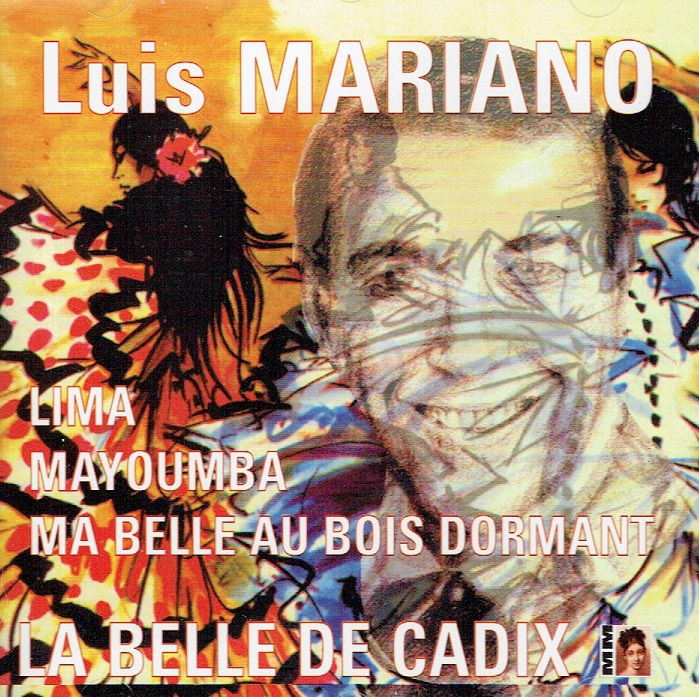
V2502. LUIS MARIANO (Mariano Eusebio González y García): Songs by Bucino, Luchesi, Bourtayre, Puech, Larue, Contet, Emer, Durand, van Parys, Provost & Freed; La belle de Cadix - Songs (Francis Lopez). [Mariano Eusebio González y García, also known as Luis Mariano, was a popular tenor of Spanish Basque origin who achieved celebrity in 1946 with 'La belle de Cadix', an operetta by Francis Lopez. A charming stylist, indeed!] (France) Malibran CDRG 505, excellent transfers, 1939-45.
|
|
| |
|
Other Offerings:
New Offerings |
|
|