Access Point Newsletter

February 2026

You are receiving this email because you subscribed to NCADEMI updates. Did someone forward this to you? Sign up for NCADEMI's newsletter!

News

Professional Learning Group for SEAs & LEAs Now Accepting Teams 

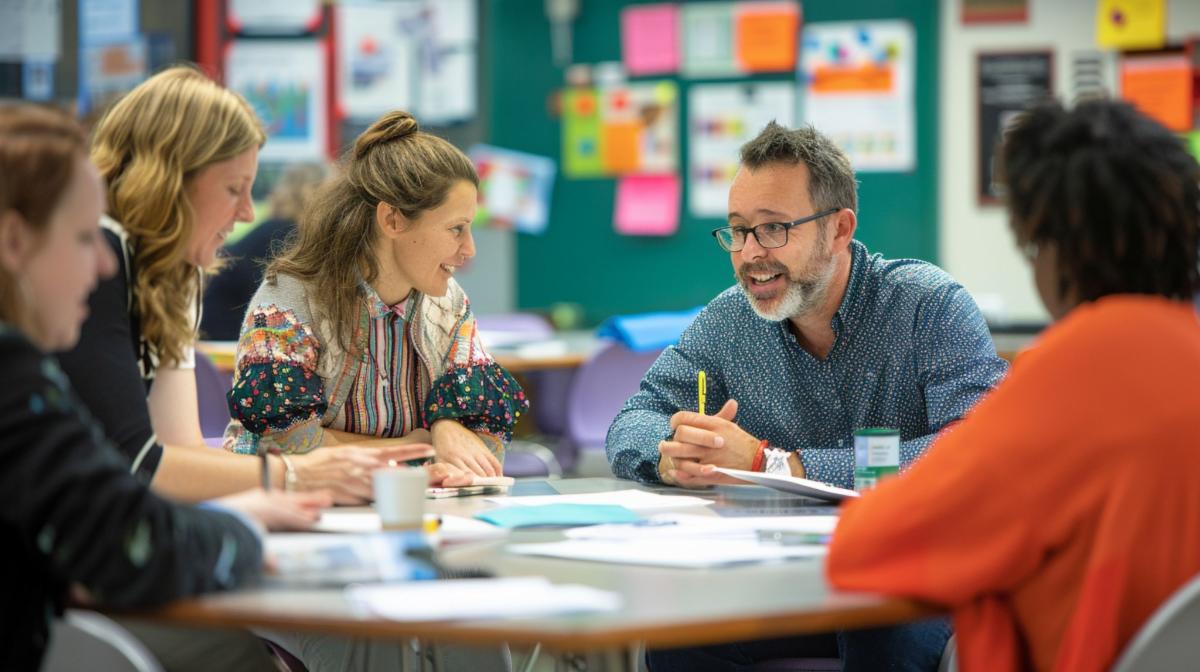
A group of teachers gathers around a table

Are you looking to strengthen systems for accessible digital educational materials in 2026, especially in response to the new Americans with Disabilities Act (ADA) Title II requirements? 


NCADEMI has launched a virtual Professional Learning Group (PLG) for state and local educational agency (SEA or LEA) teams to support implementation of the Quality Indicators for the Provision and Use of Accessible Materials in PreK–12 Systems. With rolling enrollment, it’s never too late for new teams to join the PLG. 


Participants receive one year of targeted technical assistance, followed by the option to join a Community of Practice. 


Prerequisites apply. 

New Community of Practice for Teacher Educators

In partnership with Teach Access, we’ve launched a new Community of Practice: Preparing Educators for Digital Accessibility. Faculty, administrators, and clinicians from educator preparation programs across the U.S. are invited to strengthen the inclusion of digital accessibility topics in both general and special education pathways. Let's better prepare the next generation of educators to provide and use accessible digital materials for teaching and learning! The CoP launches February 18 with rolling enrollment.

Families in Focus: AEM Tips for Parent Centers 

Family members are often the first to realize that a student with a disability is having difficulty using or learning from classroom materials. Accessible Educational Materials (AEM) Tips for Parent Centers are thirty-minute monthly information sessions highlighting resources and strategies for parents and caregivers of children who need AEM. The series launches March 17. 

New ECHO Community Focused on AEM & Early Intervention 


If you support young children with disabilities and their families, join NCADEMI and Project ECHO for the Early Accessible Educational Materials (AEM) ECHO, a welcoming learning community designed to build knowledge, share experiences, and strengthen early access to accessible materials. 


Grounded in Project ECHO’s “all teach, all learn” model, participants come together in a virtual space to exchange ideas, offer peer support, and explore practical strategies alongside colleagues from across the field. 


This community is especially valuable for Part C Lead Agencies, early intervention providers, and Parent Center staff who want to deepen their understanding of assistive technology (AT) and AEM and better prepare infants and toddlers with disabilities for successful transitions into early childhood education. 


Sessions begin February 24.

Resources

NCADEMI has expanded our popular Accessibility Basics to create a set of skill-based lessons focused on making digital instructional content accessible, ensuring students with disabilities can perceive, navigate, and engage with learning materials. This course is designed for self-paced individual use, and also for adoption by educational agencies or educator preparation programs. Enroll in the course today!


Missed us at the ATIA Conference? It was an important space for elevating the role of accessible digital educational materials and instruction. The NCADEMI team was there to emphasize that even when assistive technology is thoughtfully selected and implemented, access breaks down when digital materials are not accessible. In those instances, assistive technology can’t do its job, and students go without access to learning opportunities. If you missed our presentations, you can still catch our resources on the Access Point Blog! 


Events


Join NCADEMI and the NIMAC for a Joint Webinar on March 5. 

As special education leaders prepare to complete the annual IDEA Part B application for federal funds, the timing is right for a refresh of why it’s important to choose to coordinate with the National Instructional Materials Access Center (NIMAC). This webinar will help participants better understand the role of the NIMAC in providing timely, high-quality accessible formats and how your state or district can best leverage this free resource. 


Watch for us at These National Conferences in March! At the CSUN Assistive Technology Conference, Jena Fahlbush and Christopher Phillips will present two breakout sessions: “Advancing Inclusive Procurement with the EdTech Accessibility Directory,” on March 10, and “Closing Gaps & Improving Access to Digital Materials for Students,” on March 12. 


At the CEC 2026 Convention & Expo, Brenda Smith and Cynthia Curry will present a breakout session, “Accessible Digital Content that Works for Learners with Disabilities,” on March 11.  


From the Field

Pour Into Practice

Accessibility should be Perceivable, Operable, Understandable and Robust. Discover how a new digital accessibility resource from the OCALI AT&AEM Center can help you create digital content that's easier for everyone to use. 


Newly Launched AEM Module from OCALI 

OCALI recently launched an updated module, Navigating Accessible Educational Materials: Accessible Formats. To ensure students with disabilities have access to the materials of the curriculum, educators need to understand accessible educational materials (AEM) and the process of providing accessible formats. This module provides foundational information about AEM and procedural guidance for providing accessible formats as required by the Individuals with Disabilities Education Act (IDEA).   


Many Schools Are Not Ready to Meet Accessibility Deadlines 

A national survey finds only 14 percent of respondents report their districts have completed, or nearly completed, the ADA Title II Rule's requirements for websites, mobile apps and digital textbooks. The survey was conducted through a collaboration of Sogolytics and the National School Public Relations Association (NSPRA), gathering data from NSPRA members. "As this report highlights, achieving true digital accessibility in our schools requires collaboration, not just within communications teams but across departments and with the vendors that provide our digital communication tools," writes NSPRA Executive Director Barbara M. Hunter. 


New Report on Assistive Technology Challenges in Schools 

A new report from the Government Accountability Office (GAO) shows how schools make decisions about the provision and use of assistive technology (AT) for students with disabilities. In Students with Disabilities: Assistive Technology Challenges and Resources in Selected School Districts and Schools, the GAO discusses the knowledge and training gaps revealed through visits and interviews with staff from state and regional education agencies, eight school districts, and eight schools.  


ISKME Learning Series: Introduction to Accessibility for OER 

Throughout February and March, join the Institute for the Study of Knowledge Management in Education (ISKME) for an exploration of Accessibility for Open Educational Resources (OER) with 60-minute Zoom sessions designed to support the OER community with the processes, tools, supports, and best practices for creating and remixing openly licensed resources for accessibility.  


LinkedIn