In 2019 we began work on a book about the establishment of NCI-Designated Cancer Centers and their impact on cancer research and treatment since the signing of the National Cancer Act (NCA) of 1971 by President Richard Nixon. Our complementary credentials in the cancer community include spending portions of our careers, separately, at two institutions, which, along with a few others, claimed to be the first cancer center. So, naturally, when we undertook our book project (Centers of the Cancer Universe: A Half-Century of Progress Against Cancer, Rowman & Littlefield, 2021), we sought to answer the question: “Who was first?”
Now, following two years of research and interviews with more than 75 past and present cancer center directors and leaders in the cancer community, we learned that the answer is unclear and any cancer center seeking to claim this distinction should probably qualify its assertions.
Officially signaling the beginning of Nixon’s “war on cancer,” the NCA provided for the establishment of “15 National Research & Demonstration Centers," which initially were all defined as Comprehensive Cancer Centers. As the centers program grew, three types of NCI-designated centers emerged: Comprehensive Cancer Centers; Cancer Centers (called at one point Clinical Cancer Centers); and Basic Laboratory Cancer Centers.
We strongly believe that NCI-Designated Cancer Centers are an essential foundational element in the remarkable progress in basic, clinical, translational, and prevention research and cancer care, and we are pleased to tell this story in time for the NCA’s 50th anniversary on December 23, 2021.
Roswell Park or Fox Chase?
Co-author Trump’s interest in “Who was first?” was piqued when he was president and CEO at Roswell Park Cancer Institute (now Roswell Park Comprehensive Cancer Center). Co-author Rosenthal heard that Fox Chase Cancer Center was first when he served as the center’s public affairs director.
While at Roswell Park, Dr. Trump developed a friendship with Edwin A. Mirand, PhD, Roswell Park's longstanding vice president for educational affairs and historian. (Dr. Mirand was also very active in AACI, playing an important role beginning in the late 1960s). This friendship rekindled Dr. Trump’s interest in medical history and he talked with many colleagues regarding which was the first NCI-Designated Cancer Center. A satisfactory answer proved elusive during his years at Roswell Park (2002-2015), so the co-authors hoped that additional research might shed light on the question today.
Digging Into the Past
When we began this venture, we thought that research and interviews would answer some fundamental questions, such as the first cancer center in the United States, and what years certain cancer centers received their NCI designation or, in some cases, lost it?
However, what we found was that some institutions were unaware of, or uncertain about, significant parts of their histories, and that many NCI records were destroyed every seven years under a federal records management mandate. This left many NCI and center leaders unable to answer questions about events predating their tenures.
Regarding the specific chronology of NCI designation, Linda Weiss, PhD, former director of the NCI Office of Cancer Centers (OCC), said that definitive start dates for the first cancer centers have always been “a bit fuzzy,” and even the initial number of centers is not entirely clear. Information from different sources has varied, probably in part due to several centers having precursor grants of varying kinds (some clinical infrastructure, some research project based, etc.) prior to the official implementation of the program, she said.
Dr. Weiss added that while there was a lack of standardization in the numbering of grants, some evidence indicates that Fox Chase was the first center, under its previous name, The Institute for Cancer Research, and that eight others followed. (Dr. Weiss’ recounting was consistent with the views of Henry P. Ciolino, PhD, current director of the NCI OCC.)
Initial Institutions Identified
Toward the end of our project we uncovered a document that comes close to resolving the question of which cancer center was first, but is still regrettably imprecise.
In 1974 the NCI published its Operational Plan, FY1976-1980 that stated: “During 1973 and 1974, the NCI recognized that the following institutions were proceeding rapidly toward meeting (emphasis added) the criteria for becoming Comprehensive Centers: Fred Hutchinson Cancer Research Center affiliated with the University of Washington, Seattle; University of Southern California, Los Angeles; University of Alabama, Birmingham; University of Wisconsin, Madison; University of Miami, Florida; Duke University, Durham, North Carolina; The Johns Hopkins University, Baltimore, Maryland; Dana Cancer Center, Boston, Massachusetts; The Mayo Clinic, Rochester, Minnesota.”
“In addition, three institutions were judged to be comprehensive at the time of the National Cancer Act of 1971 (emphasis added): Roswell Park Memorial Institute, Buffalo, New York; Memorial Sloan Kettering Cancer Center, New York City; University of Texas MD Anderson Hospital and Tumor Institute, Houston, Texas.”
The plan further noted that by the end of 1974 the nine listed as "proceeding rapidly toward meeting the criteria for becoming Comprehensive Centers," plus six others (which are not named), were expected to be recognized by the NCI as Comprehensive Centers. "With the three that were Comprehensive Centers at the time of the Act, together with the 15 centers authorized by the Act, the planned 18 centers will have been designated.
"This information had been noted in a discussion of the estimated number of centers that would be necessary to execute the National Cancer Plan and the budgetary requirements for funding this number.”
Expert's Notes Add Insight, But No Clarity
Relevant to the early history of centers and the quest for designation, we were privileged to have access to “notes to file” made by John H. Yarbro, MD, PhD, who was the first head of oncology at what would become Fox Chase Cancer Center. Dr. Yarbro was among the experts who testified before Congress in favor of what would become the NCA (1970), and from 1972 to 1975 served as the founding associate director of the NCI for the cancer centers program, the position that would become OCC director.
We initially interviewed Dr. Yarbro and his wife, Connie H. Yarbro, MS, RN, FAAN—an accomplished cancer educator and co-founder of the Oncology Nursing Society—shortly before Dr. Yarbro passed away following a short illness in April 2020.
We continued our discussions with Connie Yarbro, who shared her husband’s notes. The notes were undated, but they read as though they were written to provide a paper trail for Dr. Yarbro's successor in 1975, providing a “lay of the land” for developing cancer centers.
The notes are rich in insight and frank assessments of the centers, both those that were doing well and those that were struggling, and they offered advice for resolving some of the identified problems.
The 1974 NCI report noted above dovetailed with Dr. Yarbro’s notes. With this information in hand, we can now declare... not even NCI can say with certainty which center was designated first.
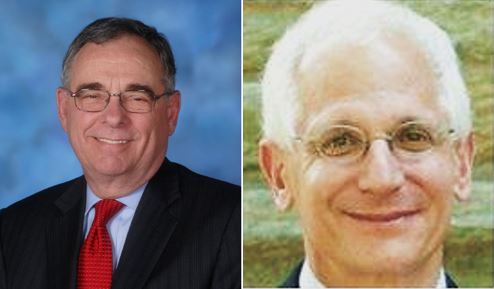
Donald L. “Skip” Trump, MD, has been an active clinician and investigator throughout his career in oncology. Before retiring as founding CEO of the Inova Schar Cancer Institute in Fairfax, Virginia, where he led development of a large community health system cancer program, Dr. Trump was president and CEO of the Roswell Park Cancer Institute, an NCI-Designated Cancer Center. In addition to his 13-year career at Roswell Park, Dr. Trump held leadership positions at NCI centers at the University of Pittsburgh, Duke University, and the University of Wisconsin.
Eric T. Rosenthal is an award-winning independent journalist who has covered issues, controversies, and trends in oncology for more than three decades for a number of news media outlets. He founded the NCI–Designated Cancer Centers Public Affairs Network in 1990; has co-chaired conferences on cancer or medicine and the media; and has served on several national cancer committees, including the NCI-Director’s Consumer Liaison Group.