|
Delays in clinical trial activation slow scientific progress, limit access to lifesaving therapies, and are costly for institutions and industry partners. It is becoming increasingly clear that such delays also hinder cancer centers’ ability to remain competitive in a global research landscape.
Recognizing the United States lags behind countries like China and Australia that offer accelerated clinical trial activations, National Cancer Institute (NCI) Director Anthony Letai, MD, PhD, has identified reducing clinical trial activation timelines as a top national cancer priority.
Significant investments have been made in infrastructure, staffing, and process improvements to speed clinical trial activation by both the NCI and cancer centers, yet data from AACI benchmarking surveys and ongoing conversations among cancer center leaders, industry partners, and regulatory agencies indicate persistent barriers and opportunities for improvement remain.
These barriers were a central topic of discussion at this year’s NCI Cancer Center Directors Retreat, American Society of Clinical Oncology Annual Meeting, and AACI meetings, resulting in a national call to action. In June, the U.S. Food and Drug Administration (FDA), National Institutes of Health, and Department of Health and Human Services simultaneously announced Operation Trialblazer, intended to support innovation and reform within those agencies to accelerate clinical research. Together, these developments bring significant opportunities to collectively streamline clinical trial activation processes and shorten timelines while maintaining global leadership in patient safety, scientific rigor, and high-quality data compliance.
Forming the Accelerating Clinical Trials Steering Committee
Recent AACI survey data and stakeholder discussions showed persistent bottlenecks and redundant processes across clinical trial activation, including protocol development, regulatory review, contracting, budget negotiations, legal requirements, protocol complexity, amendment processing, and unclear or inconsistent regulatory guidance. While opportunities to address these challenges have been identified, significantly decreasing time to activation will require commitment from key partners in academia, industry, manufacturing, government agencies, insurers, and professional societies; interagency alignment; effective private-public partnerships; and willingness to rapidly and iteratively innovate new approaches.
Leveraging longstanding expertise in clinical trial activation efficiencies, AACI established the Accelerating Clinical Trials (ACT) Steering Committee at the request of Dr. Letai to develop recommendations and implementation strategies to speed oncology clinical trial activation through harmonization, operational efficiency, and regulatory modernization. Central to this effort is a shift from institution-specific requirements to shared national standards that empower centers to accelerate processes in a coordinated, consistent manner.
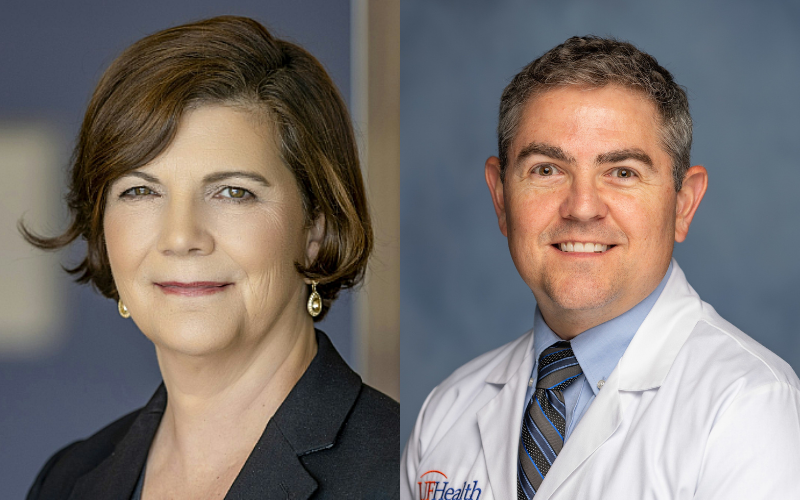
We co-chair the steering committee, which was commissioned by the AACI Board of Directors to drive implementation across the national network of academic and NCI-Designated Cancer Centers, focusing on early-phase and first-in-human clinical trials as a starting point.
The steering committee’s mandate is to:
- Identify and prioritize barriers across stakeholder groups based on impact
- Develop recommendations and implementation strategies
- Establish pilot opportunities leveraging existing infrastructure and networks
- Drive scalable and sustainable solutions
- Advance collaboration throughout the clinical trials ecosystem
- Set agreed upon activation timelines and goals
To tackle this work, the steering committee is supported by a stakeholder advisory panel and four working groups, each targeting a different aspect of clinical trial activation.
Key Stakeholders Supporting Progress
Led by Dr. Simeone and Tim Scott, JD, president and CEO of Biocom, members of this advisory panel include key stakeholders from across academia, industry, federal agencies, legal and contracting professionals, patient advocacy organizations, professional societies, and other research organizations. The goal is to ensure inclusivity in perspective and ideas, leverage networks and resources, and foster collaboration and alignment for this critical mandate. An assessment of necessary resources and funding sources will be evaluated to achieve this national initiative.
Four Focused Working Groups to Address Priority Areas
Protocol Development and Start-up Preparation
Co-led by Jennifer Litton, MD, MHCM, The University of Texas MD Anderson Cancer Center, and Suresh S. Ramalingam, MD, Winship Cancer Institute of Emory University, this working group will focus on improvements that can happen before trial activation, during protocol development. One example is eliminating duplication of work by enabling parallel FDA and NCI reviews for NCI-sponsored trials, reducing unnecessary red tape. Goals include shortening overall development timelines through improved protocol readiness and concurrent processes and enhancing engagement with external stakeholders.
Start-up Efficiencies
This group, co-led by Theresa L. Werner, MD, Huntsman Cancer Institute at the University of Utah and Amy M. Overby, Fred & Pamela Buffett Cancer Center, will tackle the administrative and financial hurdles that slow clinical trial activation. Areas of focus include implementing national standardization of coverage analysis; streamlining budgeting and contract negotiations through a simplified, single budget model and safe harbor provisions; and expanding centralized reviews or eliminating unnecessary ones. Improvements in these areas are also expected to strengthen coordination among industry partners, clinical research organizations, and sites, creating shared, streamlined processes that reduce administrative burden and review cycles while preserving quality and safety.
Regulatory Alignment
Co-led by Margie Kasner, MD, MSCE, Sidney Kimmel Comprehensive Cancer Center at Jefferson, and Tian Zhang, MD, MHS, FASCO, Simmons Comprehensive Cancer Center at UT Southwestern Medical Center, this group’s areas of focus will include aligning federal agencies’ guidance to eliminate vague, inconsistent, or site-specific regulatory interpretations; clarifying responsibilities for decentralized trials; standardizing reporting and compliance policies; and exploring efficiencies in investigational product distribution. This working group will also provide input to interagency collaborations aimed at improving regulatory clarity, coordination, and flexibility.
Operational Efficiencies
Alongside Patricia LoRusso, DO, PhD, Yale Cancer Center, Yale School of Medicine, Dr. George will help this working group address issues related to the systems and data infrastructure supporting clinical trials. Priorities include piloting a shared model for academic networks to function as multisite functional platforms for industry-sponsored studies; reducing duplication across institutions through the development of standardized processes; and increasing use of artificial intelligence and automation to simplify document generation and data harmonization. The group will prioritize scalable pilots to demonstrate resulting efficiency gains.
Future Progress
Each working group is tasked with pinpointing priorities and establishing next steps to accelerate progress in its focus area, with an emphasis on delivering tangible outputs on an accelerated two- to three-month timeline. This work will continue through October, with regular meetings of the steering committee and the key stakeholder advisory panel to monitor progress, prioritize recommendations, and adjust course as needed. The ACT Steering Committee will share its final recommendations and deliverables at the 2026 AACI/CCAF Annual Meeting, to be held October 25-27 in Chicago.
The formation of the ACT Steering Committee reflects the broad recognition of the importance of reducing clinical trial activation timelines across the cancer research community, while answering the challenge issued by Dr. Letai and supported by Operation Trialblazer.
Ultimately, the success of the initiative will be measured by reductions in activation timelines and expedited trial enrollment and completion. These outcomes will be driven by decreased time spent in contract and budget negotiations, increased adoption of harmonized review processes, reductions in duplicative processes, and increased stakeholder participation and alignment.
Together, these achievements will help solidify U.S. cancer institutions’ standing in the global oncology field, accelerate scientific discovery, expand patient access to trials, speed accrual, and shorten the path of drug development. The overarching goal is to improve therapeutic outcomes for patients seeking care at cancer centers across the U.S. We are eager to examine how we can adapt and reshape this evolving landscape.
|