Some email communications may be filtered to your Spam or Junk folder, even if you have subscribed to them. Please mark aaciupdate@aaci-cancer.ccsend.com as a Safe Sender to ensure that AACI emails are delivered to your inbox.
| | Collaboration and Communication Are Critical to Elevating Cancer Research | | By Christine Thomas, JD, and Meredith Rae Vehar, MPA | | |
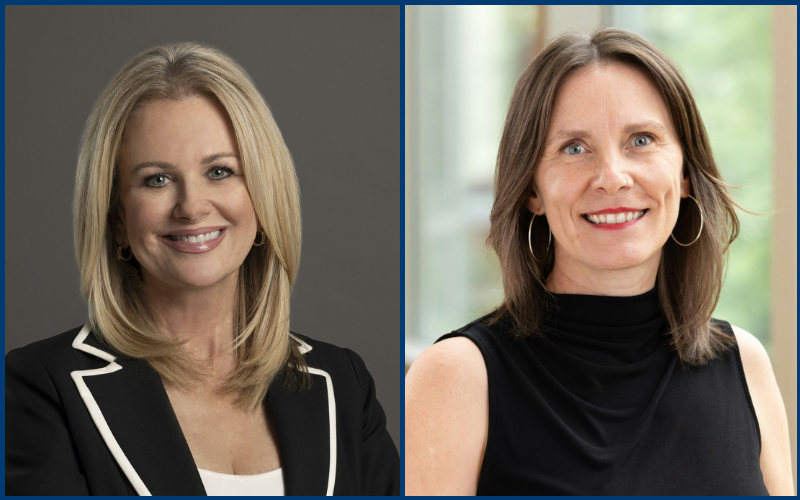
CMCA Chair Christine Thomas, JD, is senior director of public relations, communications, and strategic partnerships at The University of Kansas Cancer Center.
CMCA Vice Chair Meredith Rae Vehar, MPA, is director of communications at Huntsman Cancer Institute at the University of Utah.
| |  | |
Commentary Overview
- The Cancer Marketing & Communications Association serves cancer communications professionals through webinars, affinity groups, benchmarking, networking, career development, and an annual conference, co-hosted with the National Association of Cancer Center Development Offices.
- The 2026 conference, hosted in partnership with The Princess Margaret Cancer Foundation, brought more than 500 attendees to Toronto last month.
- Throughout the conference, there was broad recognition that the cancer community is strongest when it speaks with a unified voice.
| | |
The 2026 NACCDO-CMCA annual conference brought more than 500 attendees from 70 institutions across the United States and Canada to Toronto last month. Four days of learning, networking, and collaboration focused on the future of cancer philanthropy, marketing, communications, digital strategy, physician relations, and public affairs. Hosted April 27-30 in partnership with The Princess Margaret Cancer Foundation, the conference highlighted the power of interdisciplinary collaboration in advancing cancer centers’ missions during a time of rapid change in health care, research, technology, and public policy.
Empowering Cancer Center Communicators to Inform, Inspire, and Engage
The Cancer Marketing & Communications Association (CMCA) empowers professionals with the insights, tools, and networks needed to inform, inspire, and engage. CMCA serves seasoned and emerging specialists from National Cancer Institute (NCI)-Designated Cancer Centers and members of AACI through webinars, affinity groups, benchmarking, networking, career development, and the annual conference.
For nearly four decades, CMCA has partnered with the National Association of Cancer Center Development Offices (NACCDO) to host the premier conference dedicated specifically to cancer center advancement, communications, and marketing. What makes this conference unique is the intentional integration of these disciplines under one roof. In Toronto, attendees explored how we can intersect to build trust, strengthen donor engagement, elevate institutional reputation, and ultimately improve outcomes for patients and communities.
This year’s conference themes reflected both the opportunities and the challenges facing cancer centers today. Sessions focused on artificial intelligence (AI) and emerging digital tools, data-informed storytelling, physician and patient engagement, integrated philanthropy strategies, workforce resilience, and the evolving expectations of donors, patients, and health care consumers. Across sessions, one message resonated clearly: cancer centers must continue to communicate with authenticity, empathy, agility, and measurable impact.
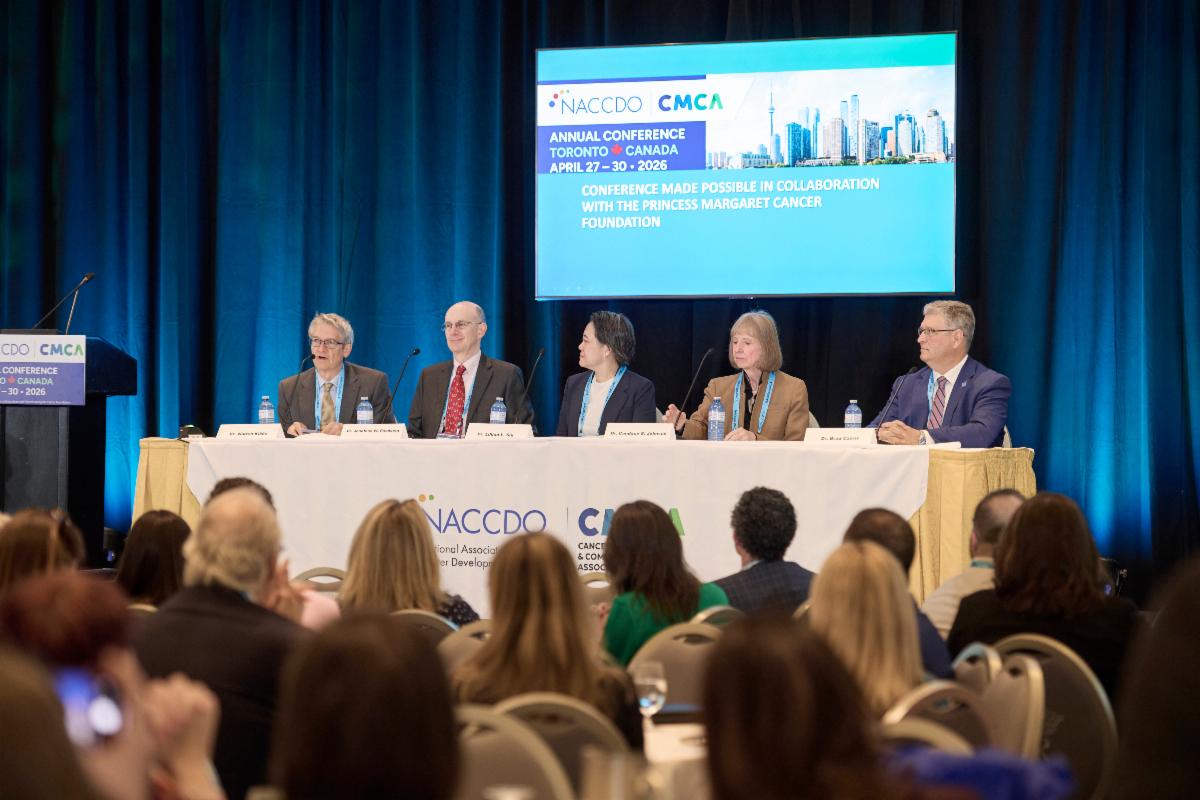
| | Photo by Bob Kalsey, Kalsey Photography | | The opening plenary, "Tenure and Tenacity: Leading at the Borderless Frontier of Cancer Innovation," set the tone. Following a year marked by turmoil and uncertainty surrounding federal cancer research funding, resilience, mission-driven leadership, and steadfast communications strategies are critical. The plenary challenged attendees to “lean in” during moments of uncertainty and reinforced that our work does not pause while the landscape shifts around us. | | |
The panel featured distinguished cancer center leaders Bradley Cairns, PhD, Huntsman Cancer Institute at the University of Utah; Jonathan Friedberg, MD, MMSc, Wilmot Cancer Institute, UR Medicine; Candace Johnson, PhD, Roswell Park Comprehensive Cancer Center; Lillian Siu, MD, FAACR, Princess Margaret Cancer Centre, University Health Network; and moderator Warren Kibbe, PhD, NCI. They discussed leading during disruption, sustaining momentum in research and clinical innovation, maintaining institutional trust, and balancing urgency with long-term scientific rigor. The conversation also explored the future of AI tools in cancer prevention and research, the importance of collaboration, and keeping patients at the center of every decision.
The Power of Storytelling: Making Complex Science Meaningful
Throughout the conference, attendees were repeatedly reminded that communications is more than a supporting function within cancer centers – it is essential to institutional strategy. In today’s environment, cancer centers must tell their stories effectively and consistently. Strategic storytelling connects cancer research discoveries to innovations that lead to better treatments, improved patient outcomes, and, ultimately, lives saved. It humanizes the impact of research and care through the voices of patients, physicians, scientists, and support staff.
Storytelling is equally critical in philanthropy and public policy. Donors want to understand how their investments accelerate progress. Policymakers need clear, compelling examples of how federally funded cancer research directly benefits patients and communities. Communicators have a growing responsibility to translate complex science into meaningful narratives that resonate with public audiences, legislators, advocates, and philanthropic partners.
One particularly timely session featuring AACI Executive Director Jennifer Pegher focused on communicating the value of cancer research. Cancer centers must continue working collaboratively to emphasize federally funded cancer research and the real-world impact it has on innovation, clinical trials, prevention, and survivorship. A related government relations session featuring John DeMuro, City of Hope Comprehensive Cancer Center, and Caroline Powers, Dana-Farber Cancer Institute, Harvard Medical School, further underscored how communications and public affairs professionals can partner with institutional leadership and advocacy teams to reinforce the national importance of sustained investment in cancer research.
Better Together: Speaking With a Unified Voice Strengthens Our Message
The conference highlighted the benefits of partnership among organizations such as AACI, CMCA, NACCDO, and the American Association for Cancer Research (AACR). Throughout the conference, there was broad recognition that the cancer community is strongest when it speaks with a unified voice. In fact, this is a central message of AACI's Better Together social media campaign and this year's National Cancer Research Month theme: United by Cancer Research. Collaborating on messaging, advocacy, and public education strengthens our collective ability to build trust, engage policymakers, inspire donors, and elevate the importance of continued investment in cancer research and patient-centered innovation.
Looking ahead, excitement is already building for the 2027 NACCDO-CMCA conference, scheduled for April 11-14 in Indianapolis and hosted by the Indiana University Melvin and Bren Simon Comprehensive Cancer Center. The Toronto conference reminded us that while the health care landscape continues to evolve, the mission remains constant: communicating hope, advancing discovery, supporting philanthropy, and strengthening the visibility and impact of cancer centers across North America.
For more information on how your cancer center can join CMCA, please visit cmcaconnect.org.
| | |
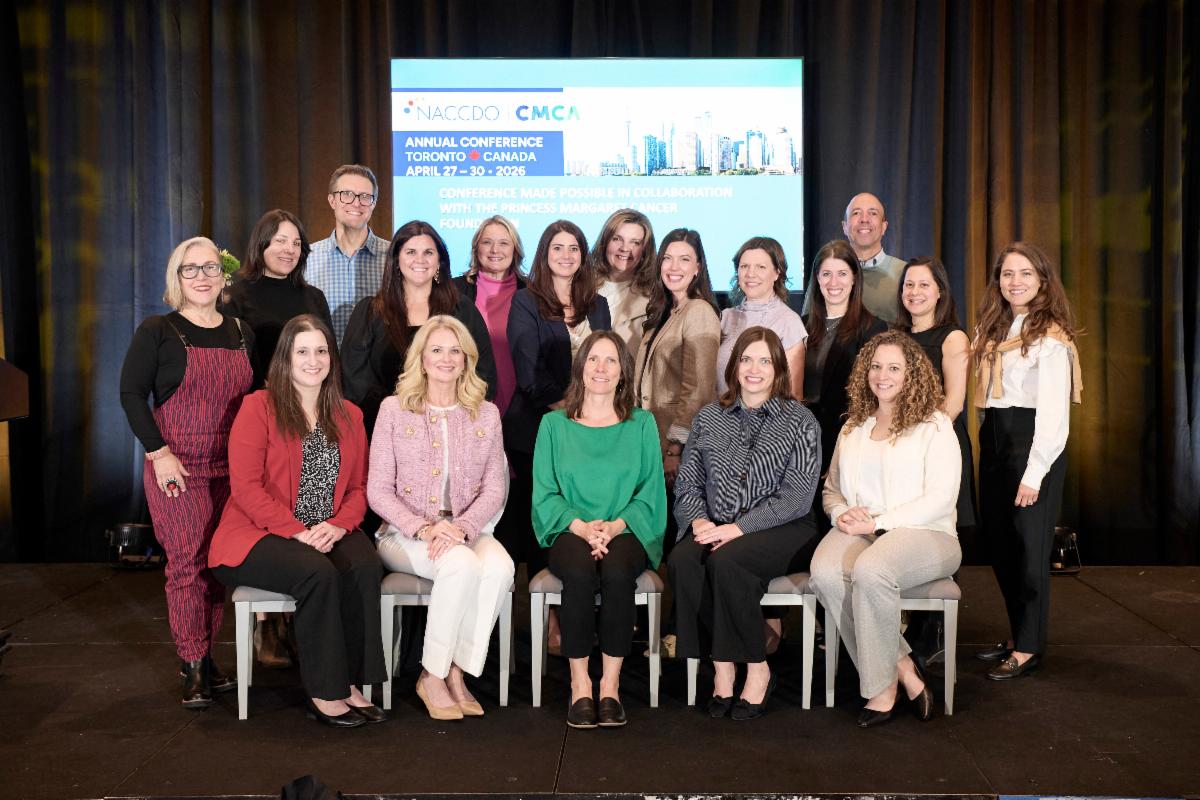
2026 Cancer Marketing & Communications Association (CMCA) Steering Committee
Photo by Bob Kalsey, Kalsey Photography |
|
Save the Date
2027 NACCDO-CMCA Conference
April 11-14, 2027
Indianapolis, IN
Hosted by Indiana University Melvin and Bren Simon
Comprehensive Cancer Center
| | |
Our Mission
The Association of American Cancer Institutes (AACI) represents over 100 premier academic and freestanding cancer centers in the United States and Canada. AACI is accelerating progress against cancer by enhancing the impact of academic cancer centers and promoting cancer health equity.
| | | |
About AACI Commentary
To promote the work of its members, AACI publishes Commentary, an editorial series focusing on major issues of common interest to North American cancer centers, authored by cancer center leaders and subject matter experts.
| | | Copyright 2026 | Association of American Cancer Institutes | | | | |