Having trouble viewing this email? View as Webpage

October 2026

Snapshot

  • The 2026-2027 Veterinary Medical College Application Service (VMCAS) cycle has closed with a record number of applications. Highlights include:
  • 85,261 applications.
  • 14,035 individual applicants.
  • 6.5% increase in applications and applicants compared to last year.
  • Arkansas State University College of Veterinary Medicine, the Harvey S. Peeler Jr. College of Veterinary Medicine at Clemson University, and Lincoln Memorial University-College of Veterinary Medicine at Orange Park joined VMCAS.


  • AAVMC is seeking an Editor-in-Chief for the Journal of Veterinary Medical Education (JVME), the leading peer-reviewed journal dedicated to veterinary medical education. This is a unique opportunity to shape the future of scholarship and innovation in veterinary and health professions education. Apply here.


  • The Competency-Based Veterinary Education (CBVE®) Activate Working Group has developed several Just-in-Time Videos that can be used to train clinical educators about CBVE, clinical assessment, providing feedback, Entrustable Professional Activities, and curriculum mapping. 


  • The U.S. Department of Agriculture’s National Institute of Food and Agriculture opened the fiscal year 2027 nomination cycle for the Veterinary Medicine Loan Repayment Program, accepting nominations for veterinarian shortage areas through November 2. The program offers eligible veterinarians up to $40,000 annually in educational loan repayment for a three-year commitment to serve in a designated shortage area. Learn more about the nomination process.

Advocacy and Policy

AAVMC Issues Comments on Proposed Accreditation Changes

In August 2026, the Department of Education posted its notice of proposed rulemaking related to its stated goals of Accreditation, Innovation and Modernization. This rule would make significant changes to the current process of accreditation for colleges of veterinary medicine, and other health profession education institutions.


AAVMC responded to the notice with a set of comments. As a part of the larger higher education community, AAVMC also signed onto comments created by the American Council on Education, of which we are a member.


AAVMC’s public comments focused on three main points:


  1. Clarifying that the anti-trust “negative factor” does not relate in any way to the voluntary uptake of the CBVE Framework and Model. This is important to allow future accrediting agencies to adopt the model without concern.
    
  2. Educators employed by the colleges should vote in the adoption of profession-wide standards, while recusing themselves from any action about their respective schools. The regulations as proposed would allow educators to input on the standards but then the adoption decision would solely fall to the agencies’ decision-making bodies. AAVMC argues that educators are best suited to evaluate compliance and adoption of new standards, while avoiding unnecessary expense and/or harm to student education. 
    
  3. A multi-year, phased-in approach would help avoid an accreditation gap. The current American Veterinary Medical Association (AVMA) Council on Education (COE) will need to continue its work accrediting schools, supporting graduate licensure and keeping new schools on track to complete development. Meanwhile, a restructured COE (“COE 2.0”) and potentially other accrediting agencies are under consideration. These entities will need to launch before the current COE retires to avoid a gap in which the current COE is no longer recognized and new agencies are not yet fully operational. An orderly, phased transition would ease anxiety across the profession and help ensure a stable pipeline of veterinary graduates. 
    
    One final consideration is that state licensing boards may need to revise their practice acts, which currently require graduates to come from an “AVMA”- or “AVMA COE”-accredited institution to qualify for licensure. Implementing such sweeping changes across the 49 affected jurisdictions will take time and careful consideration.


AAVMC’s work continues to consider future accrediting agencies and their role in the veterinary profession for the good of our colleges and students. Our work alongside other key organizations will continue and more updates will be shared in the coming months.

 For more news and updates from AAVMC Governmental Affairs, subscribe to our quarterly newsletter: Advocacy Insights.

Resource Spotlight

The AAVMC Wellbeing Committee is excited to announce the release of the Wellbeing Subcompetencies. Integrated within the CBVE 2.0 Competency Framework, these subcompetencies provide veterinary training programs with observable, evidence-informed behaviors that support wellbeing, patient safety, team functioning, and sustainable veterinary careers.

In Case You Missed It

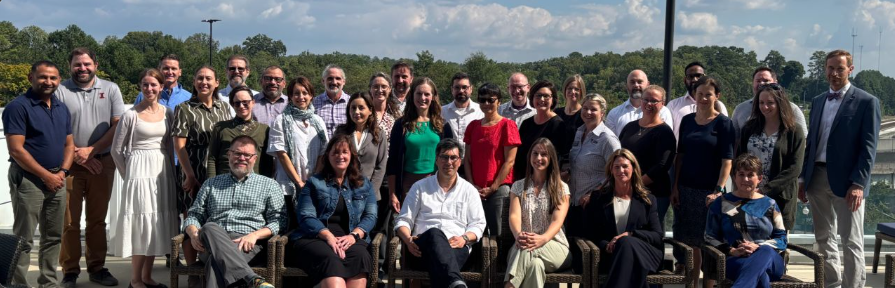
The latest cohort of AAVMC’s Leadership Academy gathered in Atlanta to begin a leadership development experience focused on collaboration and growth.


The program brings together emerging and established leaders in veterinary medical education for interactive learning, peer collaboration, mentorship and leadership skill-building.


Over the course of the program, participants will build the skills and perspective to lead through change and help shape the future of veterinary medical education.

Connect with AAVMC on Instagram, Facebook, X, and LinkedIn to stay up to date on the latest news, resources, and opportunities as they're shared.


On The Horizon

October 19‒22, 2026: PCVE Symposium


October 26, 2026: "From Mission to Matriculation: Practical Approaches to Admissions Alignment"


November 19, 2026: CBVE Collaborate Community of Practice Meeting


April 15‒17, 2027: AAVMC Catalyze 2027

  • Washington, D.C.
  • Registration details coming soon.

On Demand

The Council on International Veterinary Medical Education launched a new webinar series with "Building an Educator Training Program: A Framework for Faculty Growth and High-Quality Teaching," led by Bria Wright, EdD.


The inaugural webinar brought together educators from across the international community and is now available on demand via AAVMC Learn.

AAVMC Newsletters

  • Did someone forward you this email? Sign up to receive the Vet-Med Educator in your inbox here.
  • Sign up for the Advocacy Insights newsletter here. 
Facebook  Instagram  LinkedIn  X  YouTube