Wednesday, October 7, 2026

One Vision. One Mission. Community Banks.

Sponsored by: SHAZAM | First National Bankers Bank | BHG Financial | 

Sawyers & Jacobs | Celerit | DD&F Consulting Group | The Baker Group


No copyright infringement intended

Having trouble viewing? " View as Webpage"


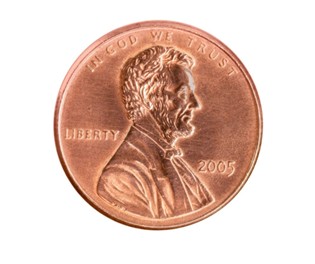
Senate passes bill to end penny production, allow rounding

The Senate passed legislation giving merchants and banks the ability to round transactions to the nearest five-cent increment.


Sponsored by Rep. Lisa McClain (R-Mich.), the Common Cents Act directs the Treasury secretary to stop minting the penny and require cash transactions to be rounded up or down to the nearest five cents. Pennies currently in circulation would remain legal tender.


The House passed the bill in July. It now heads to the White House, where the President is expected to sign it into law.


The Federal Reserve in March announced that certain coin distribution locations were fulfilling penny orders.


The Fed in January announced it would resume accepting penny deposits from banks to better support the circulation of pennies for commercial activity, given that penny production has ended.


ICBA has repeatedly called for coin circulation support in conversations with federal agencies. ICBA last year called on the Treasury Department to issue guidance, noting that inventory management is a significant issue for community banks.


Penny Resources:


> An Independent Banker article shares tips for addressing the end of penny production.


> The Treasury Department published non-binding guidance for businesses and consumers on handling various penny situations.


> An ICBA article spotlights how community bankers are responding to the federal government officially discontinuing production of new pennies.


> An ICBA blog post breaks down recent developments and ICBA’s efforts to gain clarity and address disruptions stemming from the end of penny production.


> The Federal Reserve Board released FAQs on anticipated changes to penny ordering and deposits following the Treasury Department decision to end penny production. 


Source: ICBA

Community banks urged to reinforce AI cybersecurity 


Federal Reserve Vice Chair for Supervision Michelle Bowman urged community banks to reinforce their cybersecurity foundations as AI makes cyberattacks more sophisticated and potentially more accessible to criminals. Bowman pointed to recent Financial Stability Board guidance on responsible AI adoption and invited community banks to provide feedback on how regulators can make expectations clearer for smaller institutions.


Speaking at the Community Bank Cyber Workshop, Bowman said cybersecurity requires proactive risk management by boards and management, as well as strategic investments in people, processes, and technology, which can be burdensome and challenging for community banks.

Source: Federal Reserve

Community bank optimism slips


Community banker outlook on future conditions remained positive despite dropping for the fourth consecutive quarter, according to the Conference of State Bank Supervisors’ latest index.


  • All but one of the seven Community Bank Sentiment Index components declined in the third quarter from the previous quarter.
  • The sharpest drops occurred in monetary policy, which fell 26 points to 70, and future business conditions, which dropped 16 points to 83.

Source: CSBS

US bank failures hit 9-year high 


The Sept. 25 collapse of an Irvine, California bank pushed 2026 US bank failures to a nine-year high, surpassing the total number of closures seen in 2023.


A total of six banks have collapsed in 2026 as of Sept. 27, higher than the five that collapsed in 2023 but fewer than the eight that collapsed in 2017. However, the total assets of failed banks in 2026, at $1.41 billion, are significantly lower than the $552.54 billion recorded in 2023, according to S&P Global Market Intelligence data.


The total assets of the six banks that failed in 2026 are also lower than the $5.98 billion in total assets held by the two banks that failed in 2024.

  Source: S&P Global

An Article from
Sawyers & Jacobs


The Risk Assessment Process - One Size Doesn't Fit All


"Many bankers, frustrated with the need to complete multiple risk assessments, try to combine them into a single enormous, “do everything” assessment. It may sound good in theory, but in practice it often becomes a spreadsheet that has 40 columns and more than 1,000 rows. Trying to incorporate threats related to information security, cybersecurity, business continuity, digital banking, remote deposit capture, and vendor management into one document results in something so overwhelming that it fails to communicate anything useful."


In this article by Jason Corder, Senior Vice President with ACB Associate Member Sawyers & Jacobs, discusses a common mistake of the "one size fits all", approach with regard to IT related risk assessments.


Click here to learn more.

Source: Sawyers & Jacobs

Deadline for commenting on Reg O proposal extended


The Federal Reserve extended until Nov. 4 the comment period for its proposal to modernize Regulation O standards on extending credit to bank executives, board members, and major shareholders.


The Fed and FDIC in July proposed rules that they said address a unique challenge for community banks, where board members and executives are often local business owners and civic leaders who need access to credit.


The proposals would:

  • Increase the dollar threshold of credit that banks may extend to an executive officer for purposes other than those specifically authorized by statute from $100,000 to $400,000.
  • Raise the dollar threshold for credit that banks may extend to an insider from $500,000 to $2 million, with any aggregate lending beyond this limit requiring approval by the board of directors.
  • Establish an indexing methodology to automatically adjust such thresholds every five years to reflect economic growth and inflation.
  • Simplify the method for determining the lending limit applicable to a given institution.


ICBA said it strongly supports a proposed rulemaking to update and index the dollar thresholds for certain extensions of credit to insiders of FDIC-supervised institutions. Reg O has not seen a comprehensive update since the 1970s and this proposal will better enable community banks to recruit and retain directors, particularly in rural areas.


Source: Federal Reserve; ICBA

Ag banks are well-positioned


The agricultural sector has continued to post strong aggregate income in the years following the pandemic despite stress in the row-crop segment, according to an FDIC update on farm bank performance.


The FDIC said:

  • Since 2023, sharply lower crop prices and persistently high production costs have challenged the segment, similar to conditions during the last row-crop downturn from 2014 to 2019.
  • In addition, higher interest rates have added cost pressures across the segment.
  • FDIC-insured farm banks have managed the row-crop sector downturn supported by strong capital and favorable earnings.
  • Agricultural credit quality has declined modestly, but high farmland values have provided important collateral strength and flexibility for loan restructurings.


Source: FDIC

Fannie and Freddie offer temporary appraisal exception


Fannie Mae and Freddie Mac announced a temporary policy exception for sellers that need more time to complete their Uniform Appraisal Dataset 3.6 implementation.


The GSEs said:

  • By obtaining a policy exception, sellers will be able to submit new UAD 2.6 appraisal reports to the Uniform Collateral Data Portal from Nov. 2 through May 19 and resubmissions of UAD 2.6 appraisal reports through June 27.
  • Starting on March 1, sellers that submit a UAD 2.6 appraisal report will see reduced functionality in Collateral Underwriter and Loan Collateral Advisor.
  • Sellers are encouraged to fully adopt UAD 3.6 as soon as possible, as this is a one-time policy exception that will not be extended.


The UAD 3.6 and Forms Redesign mandatory transition date is Nov. 2. Implementation tools can be found on the Federal Housing Finance Agency website.

Source: Federal Housing Finance Agency

Administration to use 'super intelligence' instead of 'artificial intelligence'


The Administration issued an executive order saying the executive branch will use the terms “super intelligence” and “SI” in place of “artificial intelligence” and “AI."


The order says terminology used by the federal government should reflect the transformative capabilities of these technologies and SI more appropriately captures the potential and rapidly advancing capabilities of the technologies. 


Source: S&P Global

Vendor * Spotlight

Click logo to hear more and here to

visit their website

The Baker Group is a
News
Watch 2026 Sponsor

SHAZAM is a NewsWatch 2026 Sponsor

BHG Financial is a
News
Watch 2026 Sponsor

Celerit is a NewsWatch 2026 Sponsor

DD&F is a NewsWatch 2026 Sponsor

FNBB is a NewsWatch 2026 Sponsor

Sawyers & Jacobs is a 
News
Watch 2026 Sponsor

 Current Issue of the "Arkansas Community Banker"