|
|
|
The SIS
ModernizationNewsletter
| |
|
It has been a busy summer! We hope you have all found time to recharge and rest in the last few months before we gear up for the remaining fall semester. Our team is absolutely buzzing with delight to bring you the latest updates regarding our Student Information System (SIS) Modernization project and all the related work being done for the project. Whether you’re a returning reader or joining us for the first time, please sit back and settle in to read our exciting line of content!
| |
|
We are excited to share what we have been working on with you! In previous communication from our leadership and our newsletters, we discussed our team is currently conducting a thorough discovery of our SIS processes during this slow-down period. So, what does this work entail? We would like to formally introduce you to the Fit-Gap Analysis, a vital body of work within the SIS Modernization Project. Modernizing our SIS goes beyond replacing our technology solutions; it's about transforming our student journey into a more holistic one. The Fit-Gap Analysis is going to assess the gaps between our current state and our desired future state in terms of providing services to our students. The result of this analysis will help us identify what needs to be done to bridge these gaps and achieve the desired objectives or outcomes. Therefore, with a focus on quality, performance, and student experience, our team will accomplish four main objectives within the Fit-Gap Analysis:
- Document all Student Affairs and Academic Affairs business processes
- Analyze how these business processes will be performed in Workday Student
- Redesign processes needing improvement
- Determine if Workday Student can support our college business needs and address gaps for requirements the system doesn’t meet
In the last few months, along with the Academic Affairs/Instructional Services team, our team has been collaborating with our subject matter experts (SMEs) to create a comprehensive business process inventory. This inventory contains all of our Student Affairs and Academic Affairs internal business processes. We are currently analyzing these identified business processes through the lens of our staff and students and deciding how they will operate in Workday Student. Our next step includes redesigning business processes that need streamlining before our new SIS transition. We hope you continue to tune in to our quarterly newsletter for the Fit-Gap Analysis project progression.
| |
Targeted Process Re-Engineering | |
|
While we will have a business process redesign on the horizon from our Fit-Gap Analysis, the Student Affairs (SA) SIS Core Team and Leads have also been working on targeted process re-engineering. Earlier this year, we shared that the SA SIS Core Team began collecting top pain points in Student Affairs areas that are challenging for students and/or inhibit staff’s ability to assist students. This targeted process re-engineering work is intended to address known problems to streamline operations and ensure our future SIS implementation does not exacerbate inefficient or ineffective processes while our Theory of Change teams pursue their transformational work.
After a thorough and thoughtful review of Student Affairs area pain points, the re-engineering team identified the following processes as top-ranking barriers to student completion and success at ACC:
-
New Student Experience Gap: Our new students experience a gap in service between the time they enroll to when they are assigned an Academic Guidance Specialist (AGS). We aim to bridge this gap by providing students support when they are assigned their ACCID number to minimize delays and ensure their questions are answered promptly.
-
Payment Plan Agreement: Currently, the Self-Service platform does not show students' financial aid awards according to their current enrollment status, nor does it reflect their remaining balance after financial aid is applied. This creates a barrier for students trying to access their accurate financial aid information and account balances. Our goal is to make it easier for students to view their financial aid eligibility, current enrollment status, and remaining balance directly within the Self-Service platform.
-
ACC Traditional (Credit) Application: Enhancing the user experience and simplifying the credit application process was identified as a priority. This continuous improvement process will yield a shorter, more intuitive application form where we only collect the necessary data and increase the rate of start-to-submitted applications.
-
Needs Assessment & Resource Connections: Students consistently reported being unaware of the resources available through ACC. ACC has comprehensive wrap-around and support services for students to address basic needs and academic needs. Therefore, the objective is to provide staff with a more consistent, accessible, and efficient assessment process that enables them to connect students with ACC resources proactively and efficiently.
-
Veterans Affairs (VA) Benefit Student Application Process: Students receiving VA benefits must submit all required documentation in paper form. Providing paper documents can lead to delays, and most contain Personally Identifiable Information (PII) and cannot be emailed. Our desired outcome to address these challenges is for all VA students to complete and submit all required documentation electronically.
So what has been accomplished so far?
This summer, the SA SIS Core Team surveyed students at all 11 campuses. Our goal is to hear from our students first-hand on what services our students utilize when visiting campus and learn more about their experience. The data collected will help us foster a greater sense of belonging and connection with our students, and contribute to our overall qualitative analysis of the New Student Experience Gap.
The re-engineering team for the ACC Credit Application pain point has been reviewing the current application and diving deep into the Salesforce backlog and other future development requests. This application and backlog review is being conducted using an empathetic design approach that will focus on providing the best experience for our applicants.
As of early summer, the Veterans Affairs Benefit Student Application process has been streamlined to allow students to complete and submit all required VA documents electronically. 🥳🎉
Our remaining processes – Payment Plan Arrangement and Needs Assessment & Resource Connections – are currently on backlog as our focus has been on accelerating the re-engineering work for the first three processes listed above. These two remaining processes will require additional cross-functional discussions and we are excited to develop next steps in the coming months with our colleagues across the college.
We will continue to provide updates regarding the re-engineering status of these selected processes, so please stay tuned for more updates in our next newsletter!
| |
|
Our final update within the SIS Modernization project is all about organizational change management (OCM), and the SIS Project team’s efforts within this domain of work. In conjunction with our Workday consultants and the Academic Affairs Core team, we previously identified four different OCM workstreams: Training, Communication Content Development, Readiness & Acceptance, and Testing Preparation. While most work within these workstreams are on pause until active configuration of Workday Student resumes, progress is being made within the Training OCM to ensure we remain connected with our various stakeholders across the College, and do our due diligence of researching and gathering data on how we can best introduce and train users to the new SIS.
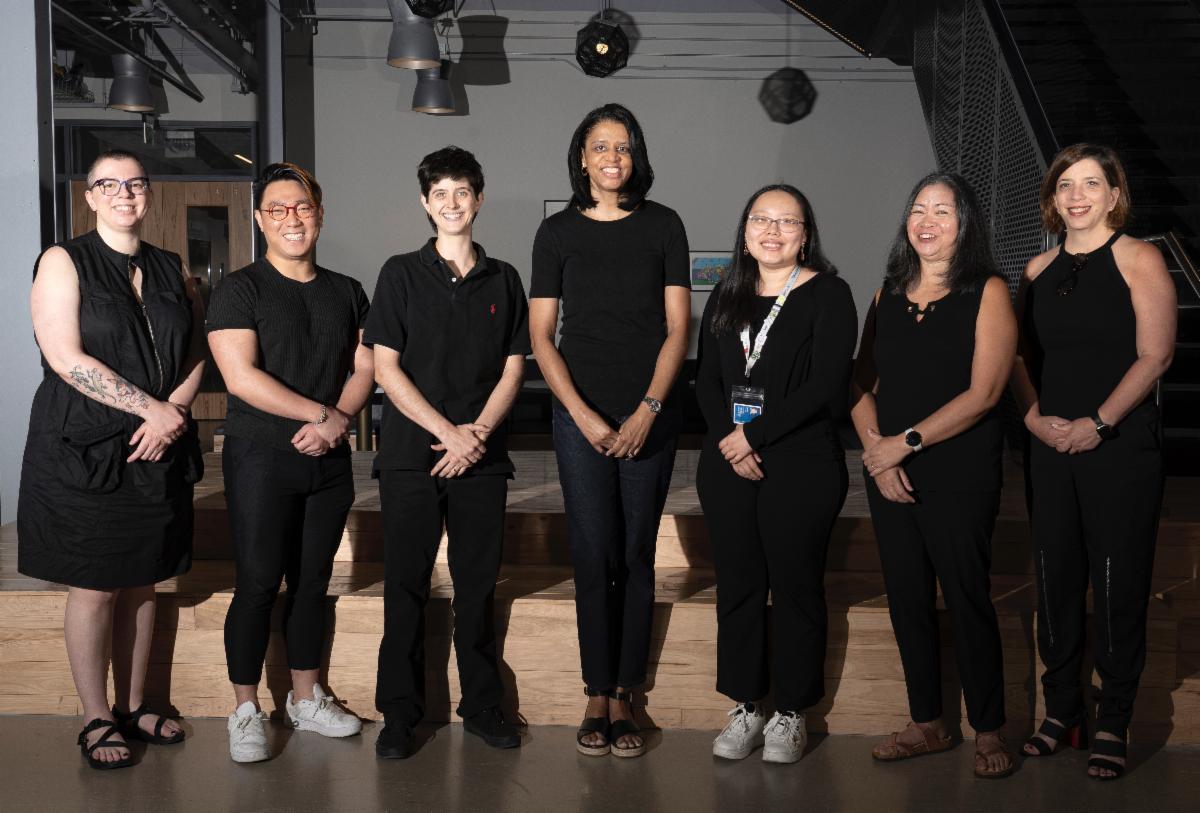
This user experience (UX) research began this summer, and is being carried out by members of both the Student Affairs and Academic Affairs core teams, Faculty with expertise in UX design work, and our very own ACC students. The goal of this research is twofold: (1) understand the needs of our ACC users (faculty, staff, students) sufficiently to guide the introduction and delivery of the new SIS, and (2) foster empathy and compassion towards our SIS user groups, which allows the project team to develop solutions that align closely with user needs and fully consider their perspectives. The research team’s vision can be broken down into the following:
-
Student goal: To enable students to easily learn how to use Workday Student, which will foster a sense of belonging and connection at ACC.
-
Faculty and staff goal: To inspire faculty and staff with the awareness and desire to learn Workday Student so they can support students with compassion and joy.
To achieve these goals comprehensively, the research team will be following a multi-method approach including one-on-one interviews, system navigation and usability testing, learning theories, and other human-centered design exercises with our faculty, staff, and students. Many of you have already participated in one or multiple rounds of these exercises with our research team, and we thank you for your joy and willingness to say yes to this research! Your participation in these exercises will help inform the SIS Project team when, what, and how to deliver training once active configuration of Workday Student resumes. Keep your eyes peeled for more updates on this research team’s work in our next quarterly newsletter. And you never know – you could see one of the UX team members out on campus conducting research near you!
|  | | |
|
(from left to right: Beka Vinogradov, Mac Kim, Katie Crain, Tasha Davis, Feifei Le, Gail Bayeta, Stacey Oliver. Not pictured: Jacklynn Torres)
| |
|
With all of our exciting SIS Modernization project updates above, we are also ecstatic to re-introduce our staple pieces from past newsletters, starting with the word of the month! We will dive right back into centering these pieces around Workday Student terminology and features.
Remember: you can always access past terms and our how-to videos in our previous newsletters.
| |
|
Academic Level (AL)
This Workday Student terminology refers to the level of an educational objective students can pursue at our institution, such as Undergraduate (Traditional), Continuing Education, and Adult Education.
| |
|
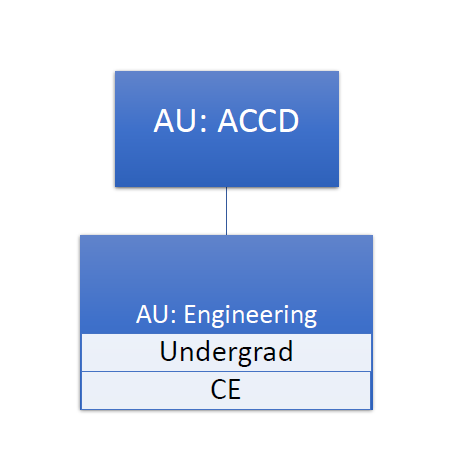
You may remember back when we first launched our Workday Glossary and introduced Academic Units (AU), which are units representing departments that make up ACC, as well as ACC itself. In Workday Student, we will have a “parent” AU that houses everything called Austin Community College District (ACCD), as well as other subordinate AUs that can represent departments such as Health Sciences, Business, etc.
Each AU will have an Academic Level (AL) or multiple ALs attached. Workday Student is often configured by the AU/AL combination (ex: AU = Engineering, AL = Undergrad, CE).
Part of our early configuration work with our consultants yielded our final ALs ACC will proceed with in Workday Student: Undergraduate (Traditional), Continuing Education, Adult Education, and Developmental. This fourth AL for Developmental exists so that all of our Developmental education courses have a home to live under. Unlike the first three ALs, Developmental is not student-facing.
| | |
|
If you’re interested in reading more Student Affairs centered terminology related to Workday Student, please refer to our website glossary.
| |
|
We know you’ve anticipated the return of our Workday Student how-to video. We are happy to share that this month we will be presenting a comprehensive video overview focusing on the student's academic profile within Workday Student.
| |
|
Thank you for taking the time to read our newsletter! The next time we’ll see you it will be the holiday season, so get ready for some festive, fun updates! Hot chocolate is optional, but recommended! 🍫🧸☕🤎
| | | | |