ACCRF Update - June 2025 | | A Legacy of Connection - ACCRF Patient Meetings | | |
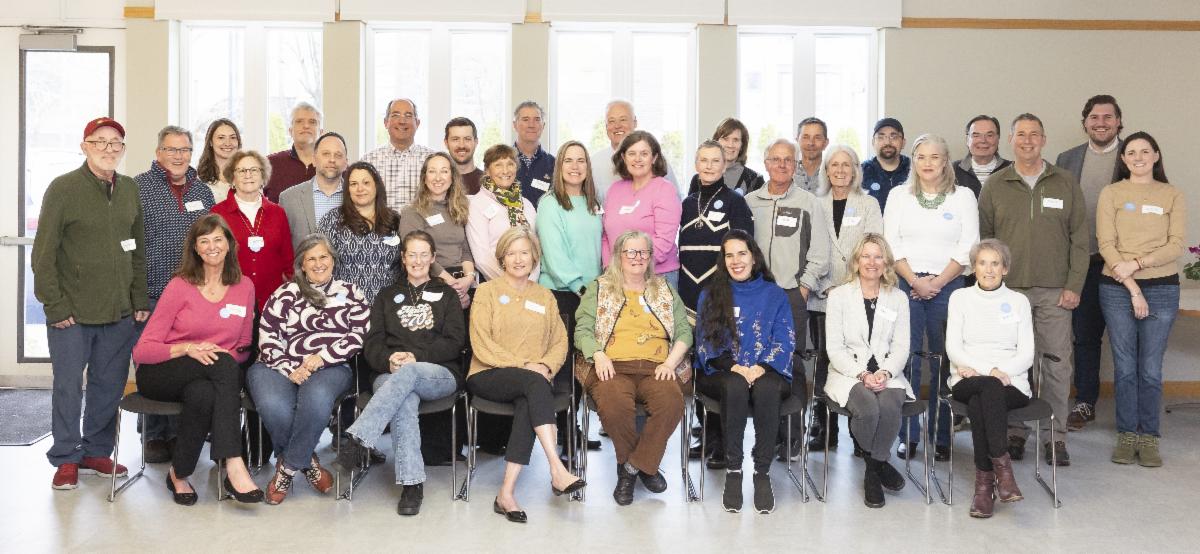
On April 12, 2025, we hosted our annual Patient Meeting in Needham, MA, USA, bringing individuals together from 3 continents to share their experiences, connect, and learn. A mix of old friends and first-time attendees, these courageous individuals once again reaffirmed the importance of the ACC community.
This year’s gathering continued a legacy of community and education that has spanned ACCRF’s history and remains at the very core of our mission. Patient Meetings create a space for patients and their caregivers to speak candidly about their journeys, connect with other ACC patients, learn more about ACCRF-funded research projects, and find hope in the work that the ACC research community is advancing every day toward new treatments.
| |
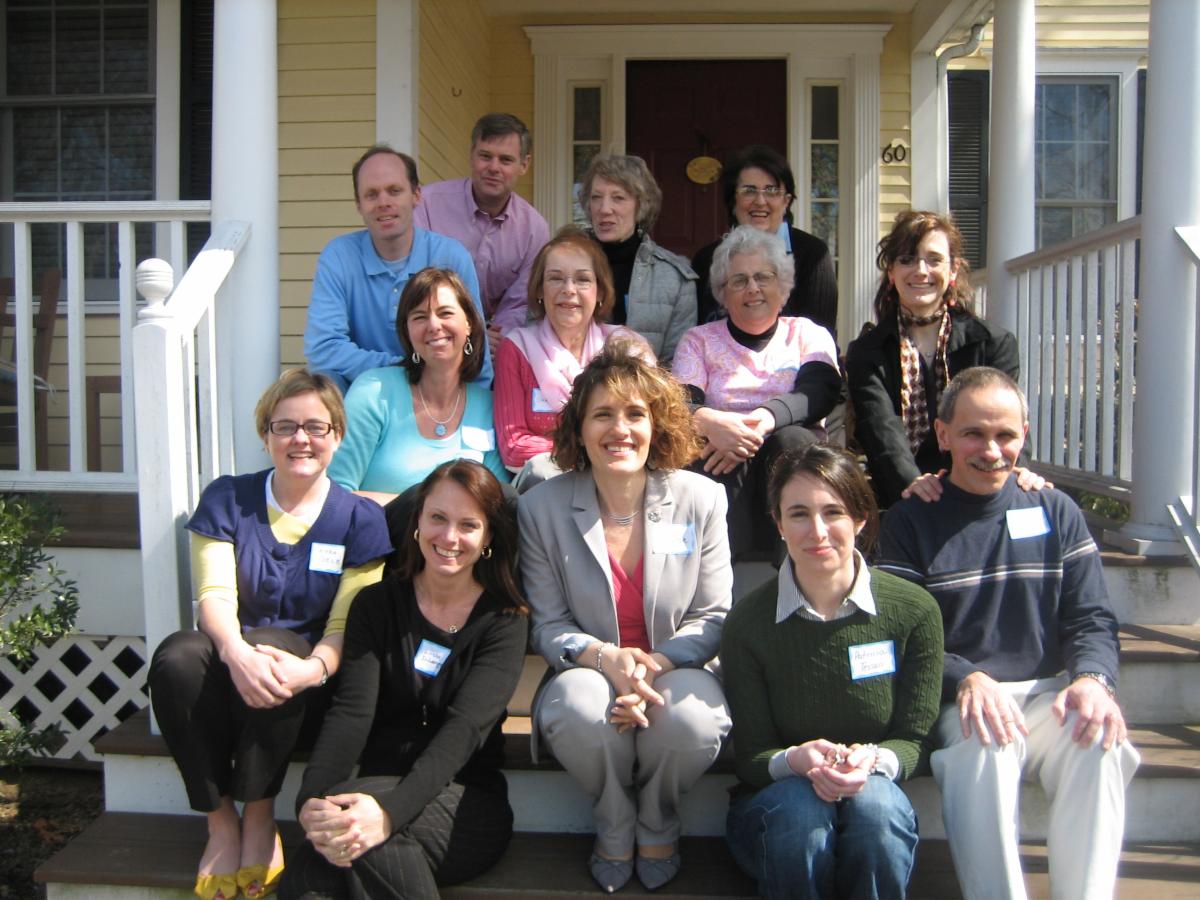
The first-ever ACCRF Patient Meeting was held on April 8, 2008, at the home of ACCRF co-founders Marnie and Jeff Kaufman. This small but mighty gathering of 14 (pictured right) laid the foundation for what would become one of the central pillars of the ACC patient community and kicked off one of ACCRF’s longest-running initiatives. In thinking about the impetus for the first Patient Meeting, Marnie Kaufman said, “especially back then, it was incredibly difficult to find other people who were going through the same thing I was with ACC. It was so important to us that we were not only supporting new research but also supporting patients and creating opportunities to feel less alone in our journeys.”
Since that first meeting in 2008, ACCRF has supported over 20 Patient Meetings across the country, from local patient-led gatherings to our annual event in Needham, Massachusetts, USA.
We are so grateful to the many patients, family members, friends, caretakers, researchers, and physicians who have made our Patient Meetings an indispensable part of ACCRF’s history and future. Those who have shared their time, their stories, and their hope give us all the courage to continue to work towards a better future and a cure.
We thank you all. You are ACCRF.
You can read the full feature on the history of our Patient Meetings here.
| | Patient Webinar 8: Liquid Biopsies in ACC | | |
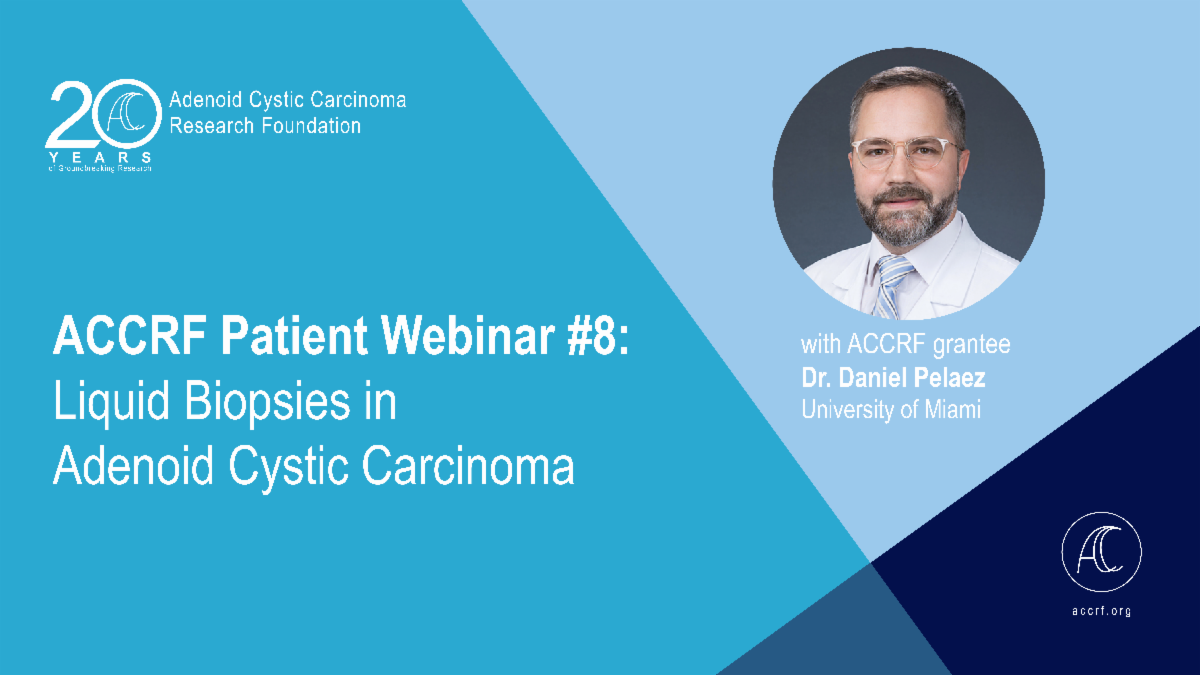
ACCRF's latest Patient Webinar, "Liquid Biopsies in ACC" is now available! Join ACCRF grantee Dr. Daniel Pelaez from the University of Miami for a presentation and discussion on liquid biopsies, a form of blood tests that can detect ACC tumor cells and are less invasive than traditional biopsies.
You can find the recording here along with previous webinars in our Patient Webinar Archive.
| | We are proud to support many oncologists in their ongoing work towards new treatments and a cure for ACC. The ACCRF research network continues to facilitate cutting-edge research and clinical trials that advance our understanding of the disease. Below are the latest updates in clinical trials, research publications from ACCRF grantees, and ACCRF-funded research grants. | | |
Clinical Trial Updates
ACCRF’s Open Studies webpage lists clinical trials that may be appropriate for ACC patients after consulting their physicians. Listed studies below reflect any changes made since the previous email update.
Studies that have recently opened or begun enrolling patients:
-
Enfortumab Vedotin: this Nectin-4 ADC study is recruiting ACC patients at Memorial Sloan Kettering Hospital in New York City, New York, USA.
| | |
Published Articles
Below are the latest in research publications from ACCRF grantees. You can find these and many others on our Published Articles webpage.
-
Sympathetic axonogenesis promotes adenoid cystic carcinoma progression: Perineural invasion is a common feature of ACC tumors, but it’s still unclear how interactions between tumors and nerves affect ACC tumor growth. ACCRF grantees Drs. Richard Wong, Richard Bakst, Luc Morris, Alan Ho, and Yotam Drier published a study showing that ACC tumors with more nerve-related activity had worse outcomes. They also found that blocking sympathetic nerves slowed tumor growth in ACC models with perineural invasion.
-
Reversible downregulation of HLA class I in adenoid cystic carcinoma: ACCRF grantees Drs. John Iafrate, Annie Li, Lori Wirth, William Faquin, and Julia Thierauf discovered that ACC tumors might avoid being noticed by the immune system by lowering the amount of a helpful protein called B2M. Because of this finding, one ACC patient was treated with two drugs that help activate the immune system (a STING agonist and Pembrolizumab), and their tumor shrank by 70%.
-
Lenvatinib in Relapsed/Metastatic Adenoid Cystic Carcinoma: Real-World Data From 17 Italian Centers: ACCRF grantees Drs. Laura Locati, Lisa Licitra, Ester Orlandi, and Paolo Bossi published real-world data on 46 ACC patients treated with the multi-tyrosine kinase inhibitor lenvatinib across 17 Italian sites. In line with previous phase 2 studies testing lenvatinib treatment in ACC patients, tumor shrinkage (>30%) was observed in 21.7% of patients, and 75.7% of patients experienced progression-free survival for more than 6 months. The most frequently reported severe side effects included hypertension (25.5%), stomatitis (mouth inflammation) (17.6%), and fatigue (15.7%).
-
Survival outcomes of pulmonary metastasis-directed local therapy in adenoid cystic carcinoma: ACCRF grantees Drs. Camilla Hoff and Renata Ferrarotto found that in ACC patients with only a few lung metastases, local treatment (surgery or radiation) did not significantly improve survival over a period of 6 months to 3 years compared to patients who were monitored without immediate treatment. However, the authors noted that local therapy may still benefit certain patients—particularly those without solid histology (a sign of more aggressive disease) or those with tumors causing symptoms or located near vital organs. To build on this research, ACCRF is now supporting a clinical trial to test whether targeted radiation for a small number of lung tumors can help patients live longer.
-
A pilot study of PSMA-targeted F-18-DCFPyL PET imaging of patients with adenoid cystic carcinoma: Despite its name, the prostate-specific membrane antigen (PSMA) cell surface protein is present in many cancers, including ACC. To better understand the usefulness of PSMA-directed imaging and therapy in ACC, ACCRF grantees Drs. Ana Kiess and Hyu Kang discovered that most ACC tumors had some amount of PSMA, and about 37% showed moderate to high levels. They also found that a newer imaging tracer using fluorine-18 could detect the spread of the disease in all three ACC patients they tested. Because ACC tumors don’t all have the same amount of PSMA, and overall levels are lower than in prostate cancer, doctors may need to check how much PSMA is present before deciding if these treatments will be helpful for a specific patient.
| | |
ACCRF’s efforts are supported by the generosity of our community members. From individual donors, to Facebook fundraisers and crowdfunding, we are grateful to all those who continue to help advance ACC research for patients around the world.
Below are some highlights from recent ACCRF fundraising events. If you would like your event to be featured in an upcoming newsletter, or want more information on hosting your own fundraiser, please contact us at info@accrf.org. Thank you for your support!
| | |
Move For Munira 2025
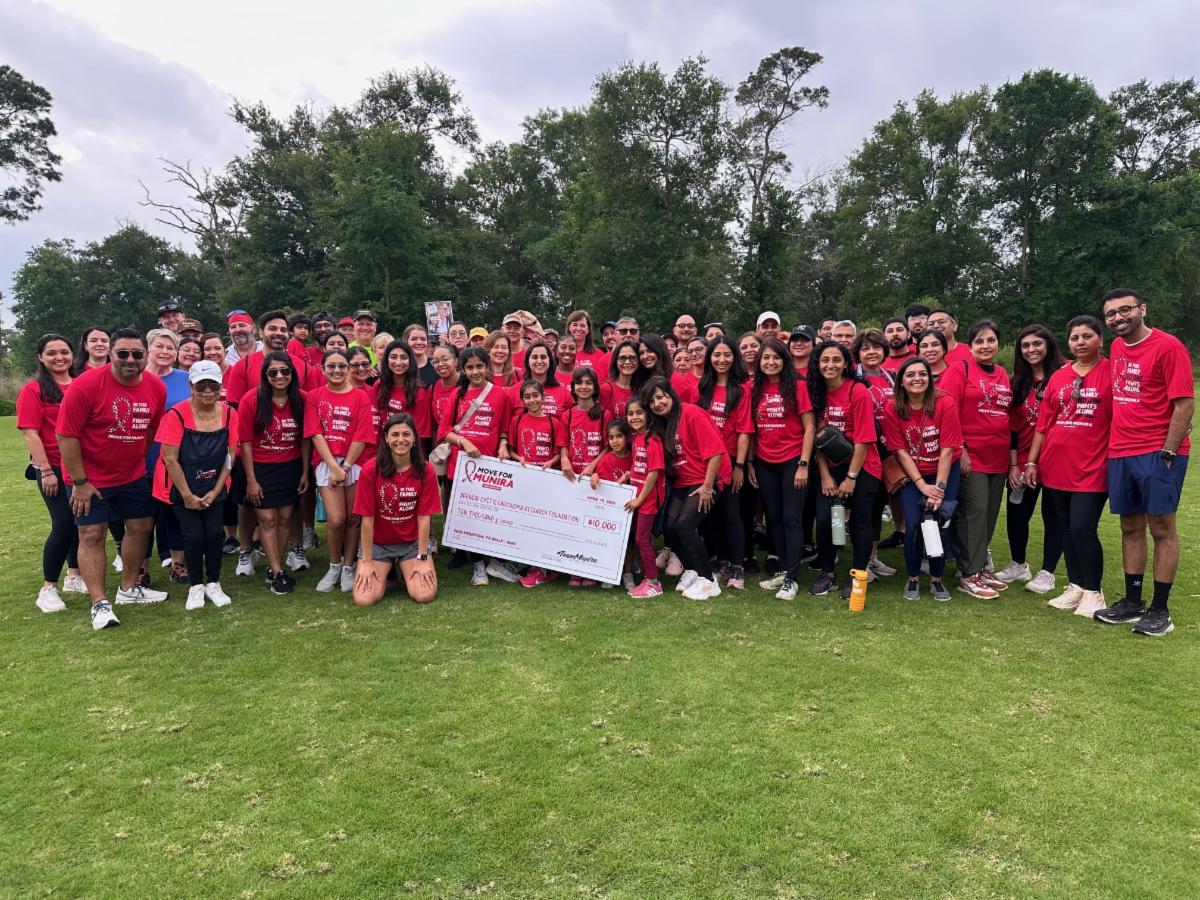
Congratulations to everyone who participated in the First Annual Move for Munira Walk & Run on April 19 in Houston, TX, USA. Held in memory of Munira Wirani, the event raised over $11,000 in support of ACCRF's research efforts!
ACCRF Co-Founder and Director Marnie Kaufman and ACCRF grantee Dr. Renata Ferrarotto of MD Anderson Cancer Center were both in attendance, along with many friends and family members for a wonderful day of community, movement, and hope. We are so grateful to the event organizers and all who attended. You can watch highlights from the event here.
| |
Kristen Windscheffel Memorial Run
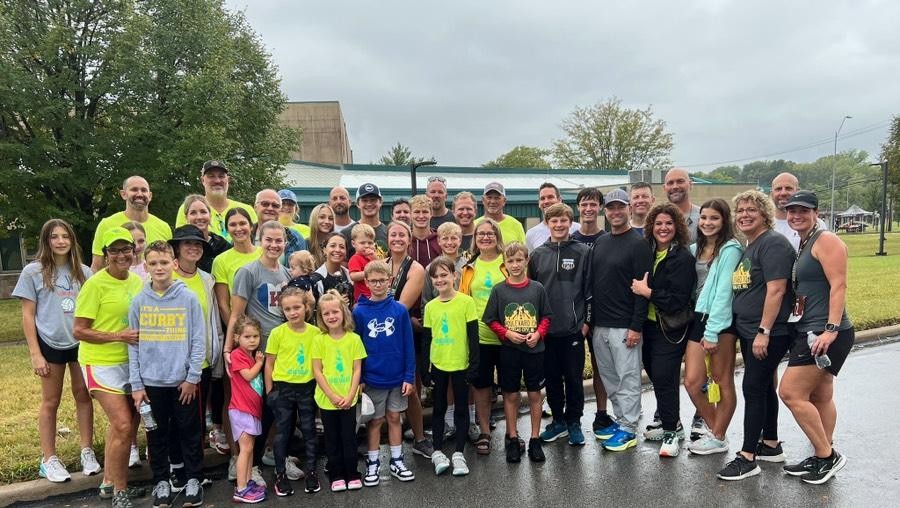
Thank you to all who took part in this year's Boulevard 10k in Kansas City, MO, USA to honor the memory of Kristen Windscheffel.
For the second year in a row, the community gathered together to pay tribute to Kristen and run to raise money for ACC research. We deeply appreciate everyone's participation and extend our sincere gratitude to Kristen's family for their work and support.
| | |
Gamers Against ACC
Charlie Andelman hosted their annual live gaming stream in memory of their dad, Bob Andelman. The 12 hour live stream in support of ACCRF raised over $1,000 for ACC research and continues Charlie's impressive tradition of this marathon fundraiser!
We extend our sincere thanks to Charlie for their continued support, and to everyone who joined and donated to this year's stream.
| ACCRF’s work is only possible through the generous support of community members like you. With increased uncertainty in the research funding landscape, our efforts to discover new, better treatments for ACC are more critical than ever. Please give today and help us continue to advance groundbreaking research that directly impacts the lives of patients. | | |
ACCRF is pleased to provide the ACC Physicians List, containing up-to-date information for over 850 physicians globally with experience treating ACC.
This fully searchable database allows patients to locate physicians by name, location, institution, or field of expertise to help inform their decisions in selecting doctors. Features include a link to each doctor’s institutional website (where available) and a link to the National Physicians Index (NPI) listing for each doctor based in the USA which provides current information on practice locations and status.
This list is constantly evolving, and we rely on patient input to ensure that our database is as comprehensive and current as possible.
Please email us at info@accrf.org if any of the following apply:
- You feel your doctor is knowledgeable about ACC and should be added to the list
- Your doctor on the list has retired
- Your doctor on the list has moved away from where s/he is listed
Your guidance will ease the path for future ACC patients. We are particularly interested in countries and regions with relatively few available physicians listed.
We encourage patients with advanced, metastatic, or complex cases of ACC to visit our Second Opinions Resource for more information on specialists.
| | | | |