DHCS Launches Free Behavioral Health Services Platforms | | |
|
|
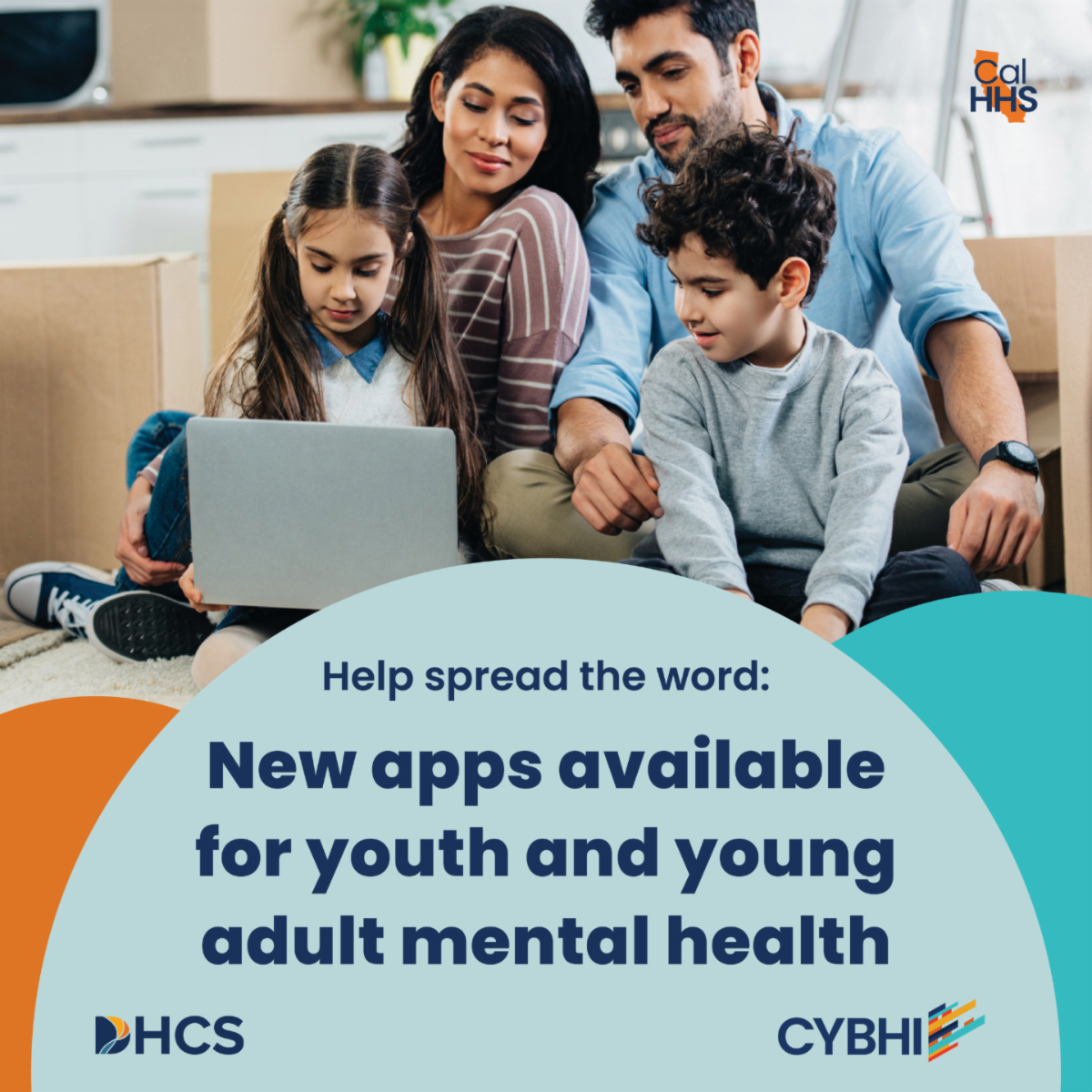
In January, the Department of Health Care Services (DHCS) launched the Behavioral Health Virtual Services Platform – two free behavioral health services applications for all families with children, teens, and young adults. The platform is a cornerstone of Governor Gavin Newsom’s Master Plan for Kids’ Mental Health and the Children and Youth Behavioral Health Initiative (CYBHI).
BrightLife Kids is designed for parents or caregivers and kids 0-12 years old, and Soluna is for teens and young adults ages 13-25.
Accessible regardless of insurance coverage or immigration status, the two web- and app-based platforms offer free one-on-one support with live coaches, a library of multimedia resources, wellness exercises, and peer communities moderated by trained behavioral health professionals. Learn more about BrightLife Kids and Soluna at CalHOPE.org.
| |
To help spread the word about these valuable resources, download the digital toolkit with social media posts and graphics, sample slides, videos, and talking points. | |
ACEs and Toxic Stress Campaign Launching Soon | |
|
The Office of the California Surgeon General’s (CA-OSG) Adverse Childhood Experiences (ACEs) and Toxic Stress Healing-Centered awareness campaign launches in May – during Mental Health Awareness Month. The campaign, part of California’s Children and Youth Behavioral Health Initiative, aims to increase public awareness of ACEs and toxic stress and connect individuals with healing strategies to prevent or lessen the potential negative health impacts.
Recent data from RAND highlights the broad prevalence of ACEs among both youth and caregivers in California, despite low awareness of what the term or acronym means. The campaign is a key component of CA-OSG’s efforts to raise awareness and reduce the impacts of ACEs and toxic stress. The campaign, which primarily targets youth and young adults ages 16-25, has been informed and advised by the ACEs Aware Youth and Young Adult Advisory Council, in addition to more than 200 youth and young adults, parents and caregivers, subject matter experts, and community-based organizations across the state. Youth-created content will be key to ensure the campaign is genuine, authentic, credible, and can further provide real-life, actionable ways to talk about and relate to ACEs and toxic stress, Stress Busters, help-seeking, and other strategies in day-to-day life.
In future ACEs Aware newsletters, we will provide updates on the campaign, as well as digital campaign resources you can leverage to help CA-OSG spread the word.
| |
Celeste Walley, Sacramento County, a member of the Youth and Young Adult Advisory Council, shared this photo about one of the ways she finds healing. | |
New Stage 3 Module Added to the ACE Screening Implementation How-To Guide Course | | |
|
|
Stage 3 of the ACE Screening Implementation How-To Guide is now live on the ACEs Aware How-To Guide online course.
The How-To Guide was developed to facilitate the adoption of Adverse Childhood Experience (ACE) screening and trauma-informed care into practice at the organizational level. The self-paced course now includes modules for three of the four implementation stages (the fourth stage will be launched later this year) that provide guidance on:
| |
-
Stage 1: What is needed clinically, operationally, administratively, and emotionally to begin screening.
-
Stage 2: Key decisions that must be made in selecting your clinic’s approach to implementing ACE screening and treating toxic stress.
-
Stage 3: Developing streamlined workflows and setting up data systems, monitoring progress, and implementing ongoing improvements using data from your electronic health record (EHR) system.
This activity is approved for AMA PRA Category 1 Credit™ and other continuing education credit.
| |
Join ACEs Aware at the Building Transformational School Health for California's Future Conference
| |
|
The ACEs Aware team will provide an in-person Becoming ACEs Aware in California training at the California School-Based Health Alliance’s statewide School Health Conference in Santa Clara on April 29-30. The training will offer continuing education credit and is free to conference attendees.
The conference is an opportunity for health practitioners, educators, and advocates to connect and learn how to best support students with increased access to health care at school.
| |
|
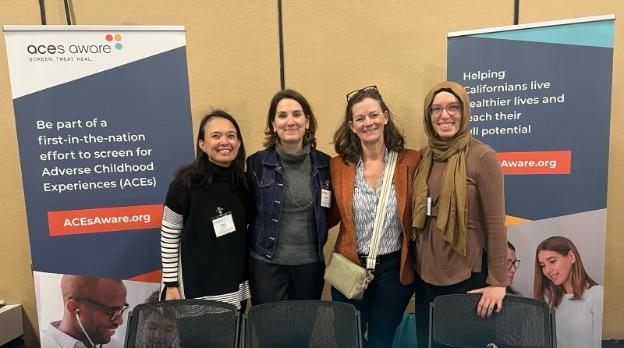
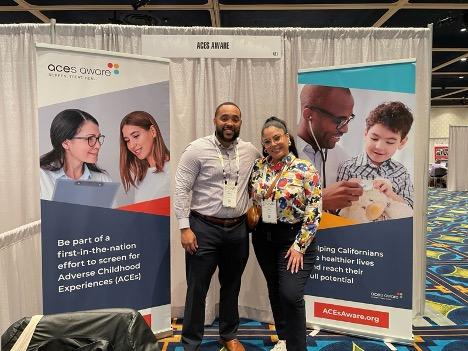
The ACEs Aware team was busy in March, traveling across California to promote ACE screening and trauma-informed care. From March 19 to 21, staff attended the California Association for Nurse Practitioners (CANP) 46th Educational Conference in Anaheim. From March 25 to 27, staff were in Oakland at the First 5 Summit. It was great to meet many of our community-based partners and California health care providers who are working to improve health outcomes for all. | |
News, Events, Resources, and Research | | |
|
|
Childhood Bullying Linked to Distrust, Mental Health Issues in Adolescence
February 2024 | Healio
Childhood bullying was linked to distrust as a teenager and mental health issues in late adolescence according to research conducted by Drs. Dimitris I. Tsomokos and George M. Slavich.
Read→
| | |
|
|
Upcoming ACEs Aware Webinars
April 11, 12:30 – 1:30 pm
Science and Innovation Speaker Series: Biological Burden of Adverse Childhood Experiences in Children
Rosemarie de la Rosa, PhD, MPH
Register →
April 25, 12 – 1 pm
Implementation with Intention: Findings from California ACEs Learning and Quality Improvement Collaborative (CALQIC) and Implications for an ACEs Aware California
Edward Machtinger, MD
Nicole Eberhart, PhD
Register →
May 9, 12:30 – 1:30 pm
Science and Innovation Speaker Series: Leveraging Neuroplasticity to Redirect Youth from Carceral Involvement
Diana Fishbein, PhD
Register →
May 16, 12 – 1 pm
Clinical Pilot Series: Connecting with Nature to Mitigate Toxic Stress
Candace Gragnani, MD, MPH
(Registration coming soon)
ACEs Aware Webinars on Demand
We provide continuing education credit for our live webinars as well as for the on-demand versions that are posted a few weeks after the live sessions. Visit the ACEs Aware Learning Center to access past webinar trainings.
| | |
|
|
Positive Parents, Thriving Kids
Child Mind Institute
This new video series from the Department of Health Care Services (DHCS) and the Child Mind Institute offers free videos and print resources with practical, evidence-based information and skills to address common parenting challenges. Available in English and Spanish.
Access →
Stress and Resilience: How Toxic Stress Affects Us, and What We Can Do About It
Center on the Developing Child
This video covers what toxic stress is, how it can affect you, and what you can do—both by yourself and in connection with your community—to deal with what you’re experiencing.
Access →
| | |
|
|
Pediatrician as Advocate and Protector: An Approach to Medical Neglect for Children with Medical Complexity
February 2024 | ScienceDirect
Children with medical complexity are at greater risk for medical neglect due to several factors, such as complex, often cumbersome, medical care plans.
Read→
Food Insecurity Is a Source of Toxic Stress
February 2024 | JAMA Network
Food insecurity has been associated with psychological, cognitive, and behavioral health consequences in children, contributing to lifelong socioeconomic and health inequities.
Read→
Adverse Childhood Experiences (ACEs) and Adult Mental Health Outcomes
March 2024 | JAMA Psychiatry
This study found that associations between ACEs and adult mental health outcomes remained after controlling for shared genetic and environmental factors, which was particularly evident after multiple ACEs or sexual abuse. These findings suggest that targeted interventions may be associated with reduced risks of future psychopathology.
Read→
| |
|
Take the Becoming ACEs Aware in California Training Today
Becoming ACEs Aware in California is a free, two-hour online training for clinics to become trauma informed and launch an ACE screening initiative. Completion of the training is required for eligible Medi-Cal providers to be reimbursed for conducting ACE screenings.
Ready to help improve health for all and promote health equity through screening for and responding to Adverse Childhood Experiences (ACEs) and toxic stress? Visit the ACEs Aware Learning Center to take the training today.
This activity is approved for AMA PRA Category 1 Credit™ and other continuing education credit.
| |
Follow ACEs Aware on Social Media | |
Don't forget to add questions@acesaware.org to your safe sender list. | | | | |