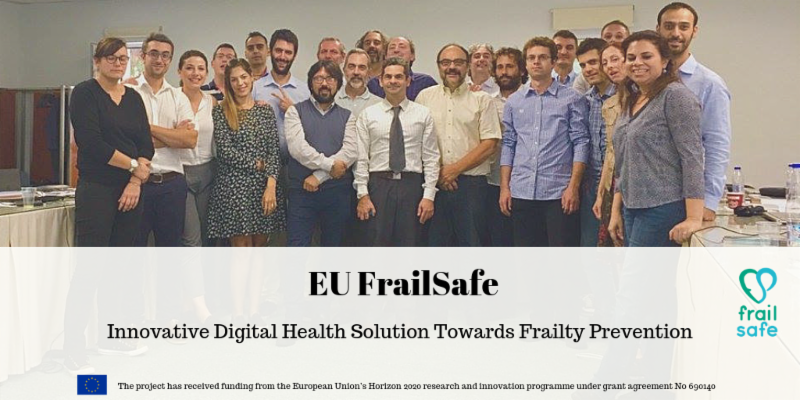
EU Frailsafe, digital health solution towards frailty prevention
Submitted by
Nhu Tram, AGE Platform Europe
|
Frailty is a medical condition which poses great challenges for healthcare professionals. Although, the term “frailty” is very commonly used among medical professionals, the definition of its clinical manifestations and symptoms have concentrated relative consensus only during the last 10 years.
Due to the fact that frailty affects various health domains in a slowly progressive course, it is very difficult to detect its symptoms early on. As a consequence, older adults and caregivers are not familiar with the condition and do not recognize the deterioration. Finally, healthcare professionals do not have robust and valid tools to ensure the early detection or methods to effectively manage the condition.
The EU-funded project,
FrailSafe
, developed a digital health solution that combines traditional clinical assessments with technological devices to approach frailty in a holistic approach.
It measures numerous and multi-faceted parameters, such as nutritional, cognitive, medical, physical and more, in real-time. The objectives of the solution are to support medical professionals in better assessing frailty but also to empower older people to remain independent and autonomous for as long as possible in their home environment.
Further information can be found on the
website
.
|
The benefits of using the FreeStyle Libre glucose monitoring system for Holocaust survivors: A pilot project by JFS Edmonton.
Submitted by Tatiana Kastner, Gerontological Social Worker, Jewish Family Services
|
There are approximately 160, 000 Holocaust survivors worldwide. Now-elderly, Nazi victims, whose average age is 85 years, often live with serious health conditions and have complex care needs. Some present with Post-traumatic stress disorder caused by genocide/war experience. Also, as the estimated number of people over 80 affected by Dementia is 1 in 6, it is common for the survivors to manifest cognitive limitations.
Hence, it can be extremely challenging to manage the care of survivors who have a combination of a physical, cognitive and mental health condition. This is particularly true for those who suffer from Diabetes and have to monitor their blood glucose levels a few times daily. The current government programs in Alberta (Canada) cover only glucose monitoring method that use test strips and lancets. This method requires finger pricks, which is an unpleasant experience, especially for those who have a history of trauma and live with Dementia.
Jewish Family Services – Edmonton’s Holocaust Survivors Support program provides social services to about 110 survivors. It is important for the staff to make sure the survivors age in comfort and dignity, preventing re-traumatization. Therefore, a few months ago a pilot project was launched to provide two of the survivors suffering from both Diabetes and Dementia with an alternative, atraumatic, method of monitoring their glucose level. Thanks to the funding from the Conference on Jewish Material Claims Against Germany, these two low-income clients have been supplied with needle-free glucose monitors and sensors from FreeStyle Libre. The JFS home support workers apply the sensors every two weeks and help the clients to read the results daily.
The use of this glucose monitoring system resulted in two major benefits: First, there is no more need for traumatic finger pricks, which were difficult to perform for clients with physical and cognitive limitations; Second, thanks to the data collected by the device, it was possible to more accurately analyze the sugar level patterns and to adjust the Insulin administration. Overall, this significantly improved the quality of life of two Holocaust survivors. Jewish Family Services –Edmonton is looking at the possibility of expanding this project.
|
|
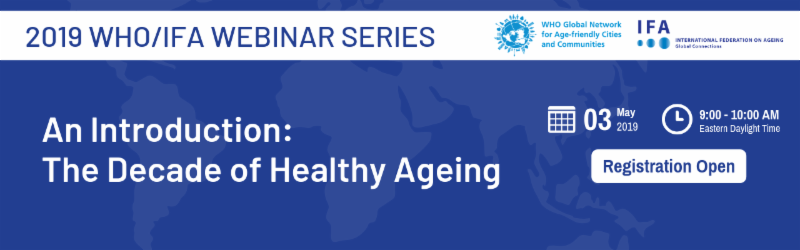
3 May 2019
9:00 - 10:00 AM EST
The IFA and the WHO are pleased to announce the tenth in a series of webinars connecting knowledge, new ideas and innovation around age-friendly environments (AFE). The webinar entitled:
'An Introduction: The Decade of Healthy Ageing'
will be presented by Dr. Mary Manandhar (Technical Officer, Department of Ageing and Life Course, WHO).
The webinar will focus on how the vision for the Decade of Healthy Ageing was created, the plans to develop it, and the ways various stakeholders can get involved.
|
Missed a webinar in the WHO/IFA webinar series? Browse previous webinars
.
|
IFA 2020 Conference- Rights Matter
|
Do you have travel plans for 2020? Engage and present at the IFA’s 15
th
Global Conference on Ageing in Niagara Falls, Canada on 1-3 November, 2020. One of the central themes under the title “Rights Matter” is a focus on age-friendly environments. If you would like to submit an abstract related to Age-Friendly Cities and Communities, Technology and Innovation or Urban Planning and Housing, please visit the website
here
.
|
|
Longitudinal validation of computerized technologies in the detection of mild cognitive impairment and Alzheimer’s disease
Submitted by Principal Investigators Dr. Andrew Frank and Dr. Frank Knoefel and
Research Coordinator Mrs. Iman Sabra
|
|
ICT initiatives in “Healthcare New Frontier” policy of Kanagawa Prefecture, Japan
Submitted by Hiroyuki Matsumoto (Mr.),Group Leader, Global Strategy Group, Healthcare New Frontier Promotion Headquarters
Office, Kanagawa Prefecture
Kanagawa Prefecture is promoting a grand policy package called “Healthcare New Frontier” in order to create a brighter future of the super-aged society, and promoting initiatives utilizing ICT as one of the pillars of this policy. The Prefecture is operating applications named “My ME-BYO Record” and “Electronic Maternal and Child Health Handbook” which people can use on their smartphone or PC to manage their lifetime health information.
“My ME-BYO Record” makes it possible to record and manage our medication and daily health information as the lifetime log, such information including body weights, blood pressure and the number of daily steps, as well as medical checkup results and vaccination history from infancy recorded in the “Electronic Maternal and Child Health Handbook”.
The smartphone app makes it easy and convenient to manage our daily health, as it can record the number of steps by itself and collect medication information automatically by scanning a QR cord provided at the pharmacy.
As the recorded health data is backed up to the Prefecture’s server, the users can restore their own important health information if hard copies of such information are lost in disasters.
Furthermore, Kanagawa is carrying out health promotion projects utilizing accumulated health data in cooperation with the private sector and academia.
|
|
Miles for Memories Safe Return Program
Submitted by Sherii Sherban, Leadership Team, Miles for Memories
Miles for Memories offers several programs to create greater peace of mind and support for the caregiver to help the person with dementia return home safely with less anxiety and worry.
|
The Help Home emergency services program is the first step.
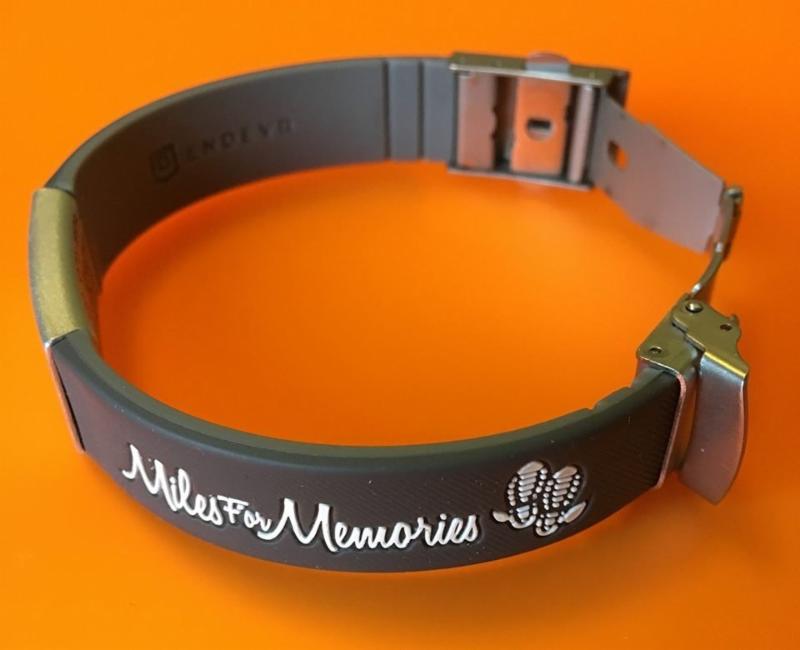
Next, the personal I.D. bracelet, or nugget, provides support for the person in the earlier stages of dementia to continue to be active. We suggest that the caregiver also wear a bracelet to alert authorities of a care receiver at home in case of injury.
The bracelet securely stores your complete medical profile online, which can be accessed by First Responders in five seconds or less. It is made with a 100% surgical grade silicone band to eliminate sensitivities and irritations. It has an aluminum slider and stainless steel clasp to keep it secure. It is fully waterproof to prevent the need to remove it.
Finally, our combined G.P.S. and personal I.D. bracelet is for the person in an advanced stage that is still mobile and apt to wander.
For more information visit the website
here
.
Contact Miles for Memories directly at (269) 979-1412 or via
email.
|
|
Serendipity: Age-friendly Features of Existing Technology
Submitted by
Moon Choi, PhD, Associate Professor ,Korea Advanced Institute of Science and Technology (KAIST) ,Graduate School of Science and Technology Policy
|
As baby boomers enter old age, expectations for growth of the silver market are high. Large investments have been made in the development of devices and systems such as smart home technologies and wearable devices to help older adults age in place and maintain their health. However, there is a gap between development and actual adoption of these new technologies due to the stigma associated with disability, high costs, and the steep learning curve for use.
Alternative products already on the market may be more widely used, easily adapted, and helpful for active and healthy aging than those “senior products” targeted to older adults.
Age-friendly innovation happens when we find age-friendly features of existing technology, which I call innovation “serendipity.”
For example, Uber has changed the way people move; now it offers a feature for users to request a ride for a family member, enabling caregivers to arrange transport for their aging parents.
Another example is the Amazon Echo Show that features a screen for easy video chat, a promising tool for distance caregiving. Professionals working with older adults, family caregivers, and older people themselves can participate in age-friendly innovation by discovering this type of serendipity in available popular technology.
|
|
U3A Online is the world-first virtual University of the Third Age delivering online learning via the Internet. All that is needed to study online is some basic computing skills. No qualifications are required, and there are no tests or exams. This is simply about learning for pleasure.
U3AOnline offers over 60 courses which are open to all older people anywhere in the world. They are especially suited to seniors who are isolated geographically, or through physical or social circumstances.
Although it was established in Australia , membership is worldwide. U3A Online is entirely run by volunteers and is not for profit.
Courses include: Australian History, Kings and Queens of England, Religions of the World, Antarctica, Saving the Soil, Genealogy Online, Shakespeare’s Histories, Creative Writing, Autobiography and Journalling, Train Your Brain, The History of Mystery, Western Philosophy, and many more.
Members also receive GEMS, a monthly online newsletter with links to interesting and relevant websites.
For a $A30 yearly fee, members can access as many courses as they choose. International payments can be safely made through our PayPal facility.
For a list of courses and more information please visit the website
here.
|
|
Lonely No More
Submitted by Skyler Gopie, Lonely No More Research Project Coordinator, Gateway Centre of Excellence in Rural Health
|
‘
Lonely No More’ is a peer support program developed by the Gateway Centre of Excellence in Rural Health in Goderich, Ontario. The pilot project utilizes innovative approaches to combat social isolation across rural Perth, Huron, Grey and Bruce counties. Trained volunteers facilitate teleconference calls that senior participants join, building ‘Elder Circles’ of peer support. Volunteers encourage participants to initiate and lead conversations with each other, with participants brainstorming creative topics for discussion each week. This teleconference format of Lonely No More was chosen to eliminate as many barriers to participation as possible (i.e. lack of transportation, mobility issues) which are often already linked to the isolation we are trying to improve. This unique model expands the reach of a single volunteer’s time and effort, whereby seniors seeking this service actively give back to one another simply by participating. Lonely No More volunteers also support participants in accessing other appropriate services through system navigation assistance; by initiating one-on-one engagement calls to explore and confront factors causing the individual’s isolation and by encouraging healthy behaviours to help prevent caregiver burnout. For more information, see the news featur
e
here
or visit the program’s website
here.
|
|
|
|
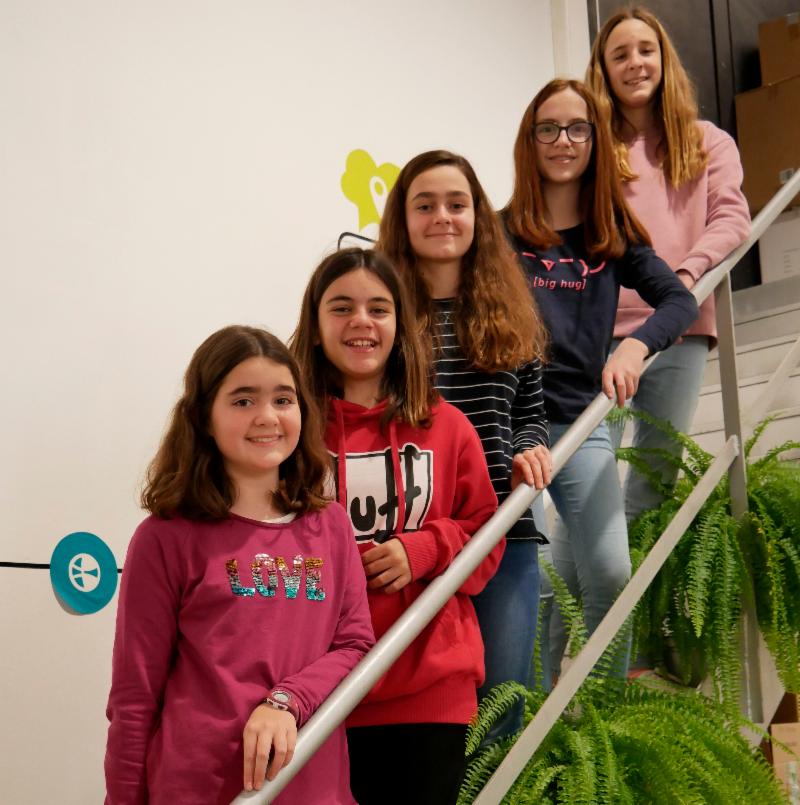
We are 5Girls , a team from Castellón, Spain that, as the name suggests, is formed by five girls between 11 and 14 years old. We are participating in a worldwide contest called the 'Technovation Challenge' whose objective is that each team develops an app with a social purpose, and in this way they can get the necessary skills to become tech entrepreneurs. In our case, we are developing an app named Tiempo en Común (Time in Common in English). The main objective of this app is to fight elder people’s loneliness.
With this app, we want to bring the technology closer to them, and because of this, we’ll make an understandable layout. At the same time, young people will have the opportunity to spend more time with the elderly people. One of our app’s functionalities, is that the groups already mentioned can gather to make activities together. To achieve all this, we’ve counted on the Castellon’s local government's help.
In summary, Tiempo en Común’s objective is that the users suggest activities that they want to do with somebody of a different age. Just like ours, there are many other groups with many good ideas.
You can learn more about the challenge organized by the non-profit organization 'Iridescent'
here.
|
|
Connecting Seniors Through Conference Calls
Submitted by Heather Drouin, Community & Partnerships Coordinator, Edmonton Southside Primary Care Network
Loneliness and social isolation have gained increasing attention as social determinants of health with impacts comparable to other risk factors as we age. The concept of a Seniors’ Centre Without Walls (SCWW) began in 1989’s New York and has since spread, with programs of similar ideology and methods operating all across North America, collaborating often to share learnings and assist newer programs.
|
|
Follow the IFA on social media
|
|
|
|
|
|
|