|
AFWA Invasive Species Committee
Invasive Species
Newsletter
Resources for Fish & Wildlife Managers
July/August/September (Q3) 2026
| | |
WELCOME!
This quarterly update highlights key science, policy developments, and news from July through September, 2026 to support fish and wildlife managers addressing invasive species challenges. As always, please email me with questions or items for the next issue.
Melanie Steinkamp msteinkamp@fishwildlife.org
| | |
📚 New Publications — July - September 2026
Peer-reviewed articles and reports of note. Open Access and subscription-required items are indicated where known.
| |
Invasive species emerge as a driver of human displacement
Reaser, J.K. & Witt, A. Frontiers (2026), reported July 29, 2026.
A new paper argues that biological invasions erode the natural resources communities depend on for food, water, and livelihoods, functioning as an overlooked driver of forced human displacement. Case examples cited include prickly pear cactus (Opuntia stricta) displacing pastoralist communities in Kenya, invasive little fire ants prompting farm abandonment across Pacific islands including the Galápagos and French Polynesia, and water hyacinth disrupting fishing livelihoods across much of Africa. The authors argue biological invasions are rarely integrated into migration or sustainability science and call for their inclusion in international displacement and land-degradation indicators and policy.
Source: Phys.org / Frontiers
Reservoir cascades as directional invasion corridors
Miranda, L.E., Angulo-Valencia, M.A., & Aldridge, C.A. Biological Invasions, Article 217 (open access, September 22, 2026).
A follow-on to the carp-competition index highlighted in the Q2 issue, this study used time-to-event models to evaluate how silver carp spread through the Tennessee and Cumberland River reservoir cascades. The key finding for managers: arrival timing at a given reservoir was best explained by its position within the cascade (distance from the invasion source) rather than by cumulative propagule exposure from downstream populations or annual water locked through — meaning reservoir position, not just proximity to source populations, can help managers anticipate where carp will show up next in cascaded river systems.
Source: Biological Invasions
Invasive marine species set to take advantage of rising seas
Nature Ecology & Evolution (2026). DOI: 10.1038/s41559-026-03181-4. Reported September 28, 2026.
Modeling newly flooded coastlines under sea-level rise scenarios, researchers found that more than two-thirds of these areas worldwide could become suitable habitat for 122 non-native marine species — including Chinese mitten crabs, Pacific oysters, and Asian tiger shrimp — by mid-to-late century. Coastal regions flagged as heightened-risk include the eastern United States and the Gulf of Mexico, alongside the North Sea coastline, southeastern China, and northern Australia. The study adds sea-level rise to the list of climate-driven pathways (alongside shifting ranges) that can expand invasion risk.
Source: Phys.org / Nature Ecology & Evolution (subscription)
Elm zigzag sawfly confirmed on a second host tree species
Research from North Carolina State University, first reported February 2026 and revisited in a September 2026 expert guide.
NC State researchers documented that elm zigzag sawfly (Aproceros leucopoda) — long thought to feed exclusively on elm — can also survive on Japanese zelkova, a popular ornamental street and yard tree. Monitoring in Ohio found the sawfly fed on zelkova mainly early in the season, before nearby elms had fully leafed out, then shifted back to elm once it was available. The finding suggests the pest's potential host range, and therefore its urban forestry impact, may be broader than previously assumed.
Source: NC State — September expert guide
Biological Invasions — active "Management Innovations and Insights" collection
The journal's July, August, and September issues continued to add open-access papers spanning topics from marine invasion vectors to terrestrial plant and insect invaders, as part of the journal's ongoing Management Innovations and Insights in Invasion Science collection.
Here are a few of the most recent articles from the Journal: Source: Springer — Biological Invasions (subscription and open access)
Alvarez, V., Fisher, S.R., Pauly, G.B. et al. Disentangling complex biological introduction histories: the ongoing invasion of the brown anole (Anolis sagrei). Biol Invasions 28, 221 (28 September 2026). https://doi.org/10.1007/s10530-026-03933-0 (subscription)
St. John, L., Ohsowski, B.M., Monks, A.M. et al. Secondary invasion by the floating aquatic plant Hydrocharis morsus-ranae increases macroinvertebrate biomass and diversity in a Great Lakes coastal wetland. Biol Invasions 28, 220 (1 September 2026). https://doi.org/10.1007/s10530-026-03939-8 (subscription)
Theissen, K., Johnson-Leung, J. & Nagler, J.J. Modeling the hypothetical spread of dreissenid mussels within Idaho using watercraft traffic data. Biol Invasions 28, 202 (1 September 2026). https://doi.org/10.1007/s10530-026-03915-2 (open access)
Meerdink, S., Hiatt, D., Cooley, H. et al. NASA’s hyperspectral EMIT mission improves invasive plant detection in Everglades National Park. Biol Invasions 28, 188 (11 August 22026). https://doi.org/10.1007/s10530-026-03905-4 (open access)
Recent USGS-authored publications
- Is "weediness" and "invasiveness" or weeds a function of the plant microbiome? USGS (2026)
-
Understanding co-invading species' ecological strategies and interactions with causal inference and simple dynamic models: Bighead (Hypophthalmichthys nobilis) and Silver carp (H. molitrix) in the Illinois River, USA USGS (2026)
-
A site prioritization tool for invasive species management: Integrating diverse spatial data to improve decision making US Geological USGS (2026)
- Future aquatic invaders of the Northeast U.S.: How climate change, human vectors, and natural history could bring southern and western species north USGS (2026)
- Controlling invasive carp ichthyhyoplankton dispersion using a streamwise-oriented bubble screen: A proof-of-concept validation in a laboratory flume USGS (2026)
- Plasticity in the reproductive biology of Yellowstone cutthroat trout Oncorhynchus virginalis bouvieri in Yellowstone Lake following lake trout Salvelinus namaycush invasion USGS (2026)
-
Evaluating the use of extant species response to invasive predator control as an indicator of functional eradication to support species reintroductions. Nafus, M. Gl, Goetz, S. M., Rose, J. P., Fies, T., & Gray, L. N. (2026. Conservation Science and Practice, 8(8), e70357. https://conbio.onlinelibrary.wiley.com/doi/10.1111/csp2.70357 (open access)
Full citations and links available at usgs.gov/programs/biological-threats-and-invasive-species-research-program/science/invasive-species or by contacting Paul Heimowitz (pheimowitz@usgs.gov).
| |
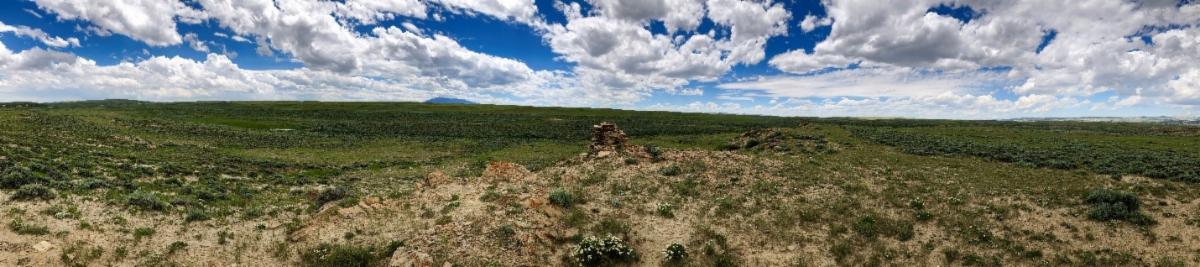
| Landscape view of encroaching invasive annual grasses. Photo by Janet Prevéy (USGS) | | |
Aquatic Invasive Species Control and Prevention Act (H.R. 8876) — pending in committee
H.R. 8876 (Reps. Walberg and Elfreth) has not advanced past its July 22 legislative hearing before the House Natural Resources Subcommittee on Water, Wildlife, and Fisheries; no markup has been scheduled in either the Natural Resources or Transportation and Infrastructure committees as of late September. The bill would update the Nonindigenous Aquatic Nuisance Prevention and Control Act of 1990, expand the Aquatic Nuisance Species Task Force and its six regional panels, and authorize roughly $49.5 million annually for FY2026–2031, including $10 million/year for the Task Force program and $20 million/year for state ANS management plan grants.
Source: Congress.gov — H.R. 8876
National Wildlife Refuge System Invasive Species Strike Team Act (H.R. 4219) — awaiting full House vote
H.R. 4219 (Rep. Ed Case, with Rep. James Moylan) passed the House Natural Resources Committee unanimously on July 22/23, ahead of the chamber's summer recess, and remains on the House calendar awaiting floor action as of September 28. The bill would formally authorize USFWS's existing invasive species strike team program under an ecosystem-wide framework, require at least one strike team per FWS region, and authorize $10 million annually through FY2033. Sponsors have emphasized its relevance to Hawai'i and Guam, where isolated native species face outsized invasive-species risk.
Source: Congress.gov — H.R. 4219 | Big Island Now
Golden Mussel Eradication and Control Act of 2026 — introduced, no committee action yet
California Senators Adam Schiff and Alex Padilla introduced federal legislation (S. 4603), with a companion bill from Rep. Josh Harder (H.R. 3717), to establish a $15 million-per-year, four-year grant program to help contain golden mussels and fund research into new control methods, along with support for tracking the infestation and coordinating the response. No committee markup has been scheduled as of this issue.
Source: congress.gov/bill/119th-congress/senate-bill/4603 | congress.gov/bill/119th-congress/house-bill/3717
California Bill Signed to Speed Up Golden Mussel Control
Gov. Gavin Newsom signed the Golden Mussel Response Act, a California law to help water agencies respond more quickly to invasive golden mussels. AB 2032 streamlines permitting and provides water agencies with tools to respond to the spread of the mussels. It was passed as an urgency measure, so the law took effect immediately upon signing.
September 29, 2026
Source: ABC10 News
State Boating Act (S. 3985) — no committee action reported
The House companion (introduced by Reps. Blake Moore and Jen Kiggans) and Senate bill (S.3985, Crapo/Welch) remain pending, with bipartisan support, but no committee action has been reported in either chamber since introduction earlier this year. The bill would clarify states' authority to collect boating-related fees — including aquatic invasive species prevention fees — alongside federal vessel registration.
Source: Congress.gov
Interjurisdictional Invasive Species Rapid Response Team Program
FWS reopens comment on Interjurisdictional Invasive Species Rapid Response Team (IInSRRT) forms. Comments are due Nov 30, 2026. FWS has republished its January notice with added detail and reopened comment on two new forms for state, local, and Tribal governments: an application for IInSRRT deployment assistance and a response monitoring report. IInSRRT is a DOI program that deploys teams to help with rapid response to nationally significant new invasions when the lead agency lacks capacity. Comments already submitted don't need to be resubmitted. Comment at regulations.gov, Docket No. FWS-HQ-NWRS-2025-1397.
Source: Federal Register — 91 FR 61860
DOI invasive species strategic plan: next iteration in development
As previewed in Q2, DOI's next five-year (2026–2030) invasive species strategic plan continues to move through development, with the Department expected to gather further input from state, Tribal, and territorial partners before posting a draft in the Federal Register for public comment this fall. Contact Hilary Smith, DOI Senior Advisor for Invasive Species (hilary_smith@ios.doi.gov), for the latest timeline.
Backgrounder: the Lacey Act's injurious wildlife authority
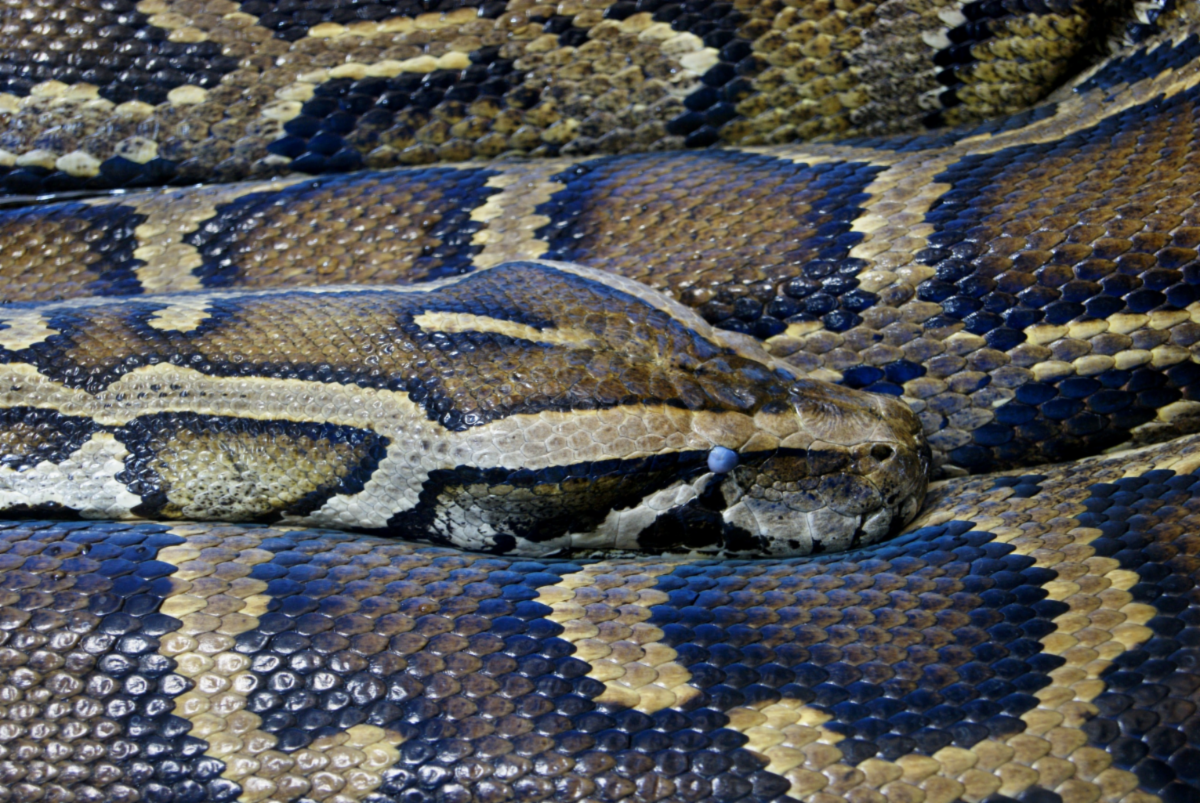
With multiple bills this Congress addressing aquatic and terrestrial invasive species policy, it's a good time to revisit the tool that several of them build on. The Lacey Act's injurious wildlife provision (18 U.S.C. § 42), dating to 1900, is the nation's oldest invasive species law. It authorizes the Secretary of the Interior to list species as "injurious," thereby barring their import into the U.S. and, since a 1960 amendment, their interstate shipment, when they threaten human health, agriculture, horticulture, forestry, or wildlife. Roughly 800 species are currently listed, including mitten crabs, several large constrictor snakes (the Burmese python was listed in 2012), and more than 200 salamander genera listed beginning in 2016 to guard against the Bsal chytrid fungus. Listing has long been criticized as slow — species are sometimes not proposed for listing until years after they are already established in the U.S. — a concern behind past (though not enacted) proposals to give USFWS an emergency listing authority, such as the Lacey Act Amendments of 2021.
| |
Golden mussel reaches Port of West Sacramento — northernmost detection to date
California Department of Fish and Wildlife confirmed golden mussel (Limnoperna fortunei) near the Jefferson Boulevard overpass and at Boathouse Road/Stone Boulevard in West Sacramento in late June — the species' northernmost detection since it first arrived at the Port of Stockton in October 2024. The invasion front continues moving north (through the State Water Project) and south (reaching Sweetwater Reservoir in San Diego County by April 2026). California's enacted budget includes funding to fight the spread, and the Department of Water Resources has laid out a statewide response plan. State officials describe the golden mussel as likely "here to stay" in the Delta, with no known way to eliminate it from a large water body once established — so containment, not eradication, remains the priority, following the same strategy that has confined quagga mussels to Southern California and zebra mussels to San Benito County.
Source: Water Education Foundation | CDFW Invasive Mussel News
Brandon Road invasive carp barrier: construction resumes after six-week federal halt
Construction on the roughly $1.15–1.5 billion Brandon Road Interbasin Project resumed the week of September 15, 2026, after the U.S. Army Corps of Engineers lifted a stop-work order it had issued July 24 for administrative review. The pause — the second such stoppage in less than a year — drew bipartisan pushback from the Congressional Great Lakes Task Force, Great Lakes governors, anglers, boaters, and conservation groups. It ended September 2–3 after Michigan Governor Gretchen Whitmer spoke directly with President Trump and asked him to direct the Corps to lift the order, citing the discovery of juvenile silver carp far upriver (see next item). Illinois and Michigan, the project's non-federal cost-share partners, had already secured the required $114 million match, unlocking $274 million in previously appropriated federal funds; contracts for site preparation and leading-edge deterrent features are now proceeding.
Source: WTTW Chicago
Juvenile silver carp found closer to Lake Michigan than ever recorded
In mid-August, Illinois DNR sampling crews removed several hundred juvenile silver carp (4–6 inches long) from the Marseilles Pool of the Illinois River — about 80 miles from Lake Michigan — the farthest upriver young-of-year carp have been documented since intensive monitoring began in 2010. Because silver carp eggs and larvae drift for miles on river current before reaching this size, the discovery indicates a spawning event occurred somewhere in the upper Illinois River watershed or a connecting tributary, though officials stress that a single detection of juveniles alone does not meet the standard definition of an "established" population (multiple life stages across repeated sampling). IDNR and partners are expanding electrofishing and tributary monitoring, examining fish microchemistry to trace the spawning origin, and stepping up surveillance in the Dresden Island Pool, about 50 miles from the lake — the current leading edge of the adult population. This finding was cited directly in Governor Whitmer's push to resume Brandon Road construction.
Source: WTTW Chicago | OutdoorHub
2026 Florida Python Challenge: 280 pythons removed by 907 competitors
FWC and partners announced results of the 2026 Florida Python Challenge on August 5. Over the 10-day event, 907 participants from 30 states plus Canada and Vietnam collectively removed 280 invasive Burmese pythons from South Florida, with Everglades National Park returning as an official competition site. Tom Rahill won the $10,000 Ultimate Grand Prize, removing 96 pythons, all from Everglades National Park. Rahm Levinson removed the competition's longest python, 16 feet 5 inches, from Everglades National Park. FWC noted that more than 1,600 pythons have now been removed through Python Challenge events since the competition began, and that FWC/South Florida Water Management District contractors have removed more than 19,000 pythons since 2017.
Source: FWC / South Florida Water Management District
| |
USGS Invasive Species Program Update
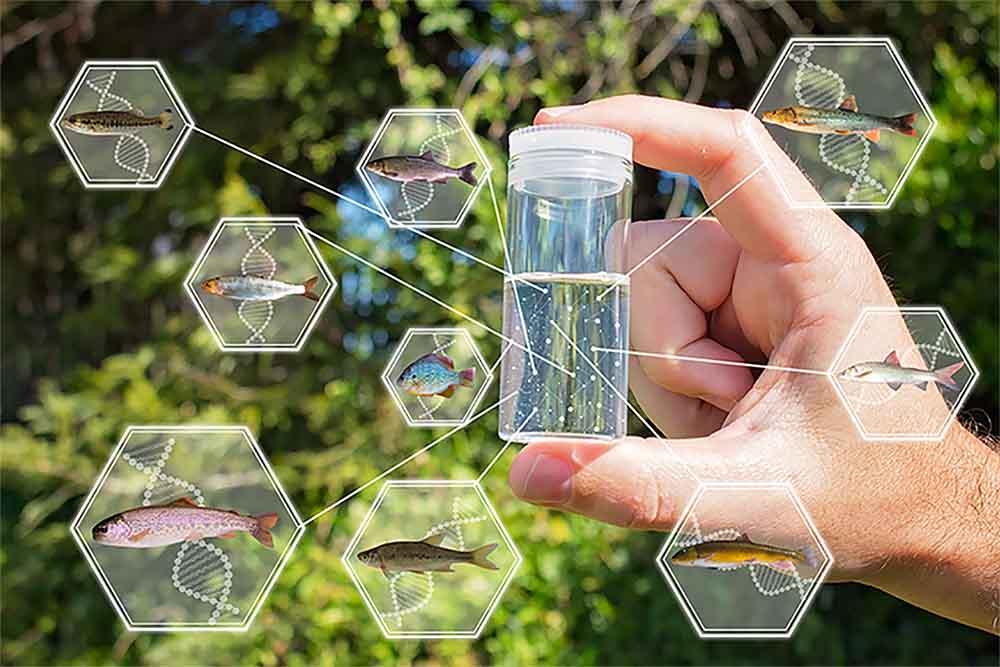
USGS continues co-chairing the National Early Detection Rapid Response (EDRR) Framework, standardizing eDNA detection methods through a Molecular Lab Network (all three network labs have passed initial proficiency testing) and expanding the Siren EDRR portal with a new Rapid Response Plan Template and Experts Database.
Point-of-use molecular detection tools are in development for New World screwworm (with USDA), New Zealand mud snail, brown treesnake, stinknet, and golden mussel, and the READI-Net autonomous eDNA sampler network has deployed units at 20 federal, state, and tribal sites.
Species-specific work includes a golden mussel research workshop planned for early 2027; new acoustic-deterrent and net-based tools against invasive carp, plus new genetic tests for grass carp eggs; blue catfish decision-support tools now in use by state partners; a rapid-response team deployed to Rota (near Guam) after a July brown treesnake detection; and INHABIT's expansion to cover habitat-suitability modeling for 250+ terrestrial invasive plant species.
Source: USGS Biological Threats & Invasive Species Research Program or email Paul Heimowitz (pheimowitz@usgs.gov)
USDA APHIS — Feral Swine Eradication and Control Pilot Program
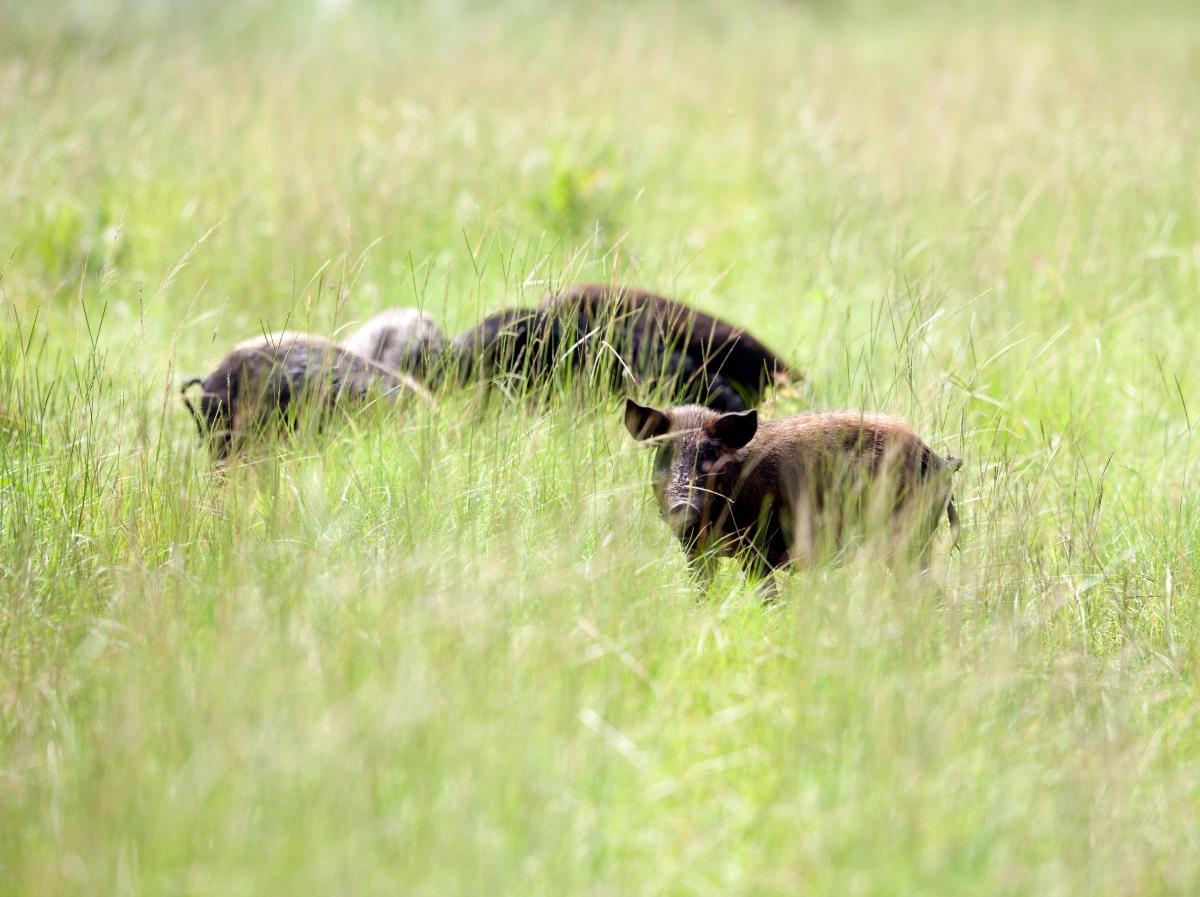
NRCS and APHIS extended the application deadline for the $35 million Feral Swine Eradication and Control Pilot Program to September 25, 2026. The program funds partners working with NRCS (land restoration) and APHIS (removal) across 14 states: Alabama, Arkansas, California, Florida, Georgia, Hawaii, Louisiana, Mississippi, Missouri, North Carolina, Oklahoma, South Carolina, Tennessee, and Texas
Source: USDA NRCS
Invasive Carp Regional Coordinating Committee
2026 Midyear update on targeted mass removal of invasive carp from the Illinois River September 17, 2026
In the first half of 2026, efforts to stop invasive carp from spreading from the Illinois River to the Great Lakes removed nearly 4 million pounds of these fish.
Source: Invasive Carp Regional Coordinating Committee
Partners Prioritize more than $72 million in projects to protect the Great Lakes from invasive carp
July 2, 2026
Great Lakes conservation partners announced that more than $72 million will be dedicated to 45 priority projects in 2026 to protect the Great Lakes from the threat posed by invasive carp. These projects are coordinated by the 26-member Invasive Carp Regional Coordinating Committee, a partnership that leverages resources and expertise in ongoing efforts against the spread of four invasive carp species in North America: silver, bighead, grass and black.
Source: Invasive Carp Regional Coordinating Committee
Image: https://www.aphis.usda.gov/animals/animal-health/livestock-and-poultry-disease/stop-screwworm
| | |
AFWA FERAL SWINE WORKING GROUP
- At its September 15 meeting in Lancaster, PA, the Feral Swine Working Group heard from USDA-APHIS Wildlife Services on recent funding and eradication/control progress across numerous states
- The SEAFWA Wild Hog Working Group finalized its regional position statement on wild hog control and eradication, headed to a vote at SEAFWA's October conference; it also informed a National Wild Pig Task Force (NWPTF) paper arguing that recreational hunting alone is an ineffective tool for eliminating wild pig populations, aimed at informing future policy decisions (first draft expected early 2027).
- The NWPTF relaunched its website (nwptf.org) as a public hub for wild pig management resources and a growing 50-year archive of research literature. The Working Group is also developing two hunter- and policy-facing pamphlets — one on feral swine's impacts to native game species aimed at discouraging relocation, and one for policymakers on the risks of feral swine on the landscape — with a draft expected for Invasive Species Committee review soon.
- Martin Coker of the Mississippi Department of Wildlife, Fisheries and Parks was unanimously approved by the Invasive Species Committee as new vice-chair of the AFWA Feral Swine Working Group.
- Quarterly virtual meetings among AFWA, SEAFWA, MAFWA, USDA-APHIS-WS, and NGO partners continue, with the next set for November; the next in-person NWPTF meeting is planned for March 29–April 2 in West Lafayette, IN.
Visit our Website
Image: Feral Hogs in a field, Big Lake https://www.fws.gov/media/feral-hogs-field
| |
🎥 Webinars, Events, and Conferences
Recordings may be available through the hosting organization's website or YouTube channel. Check the links below for availability.
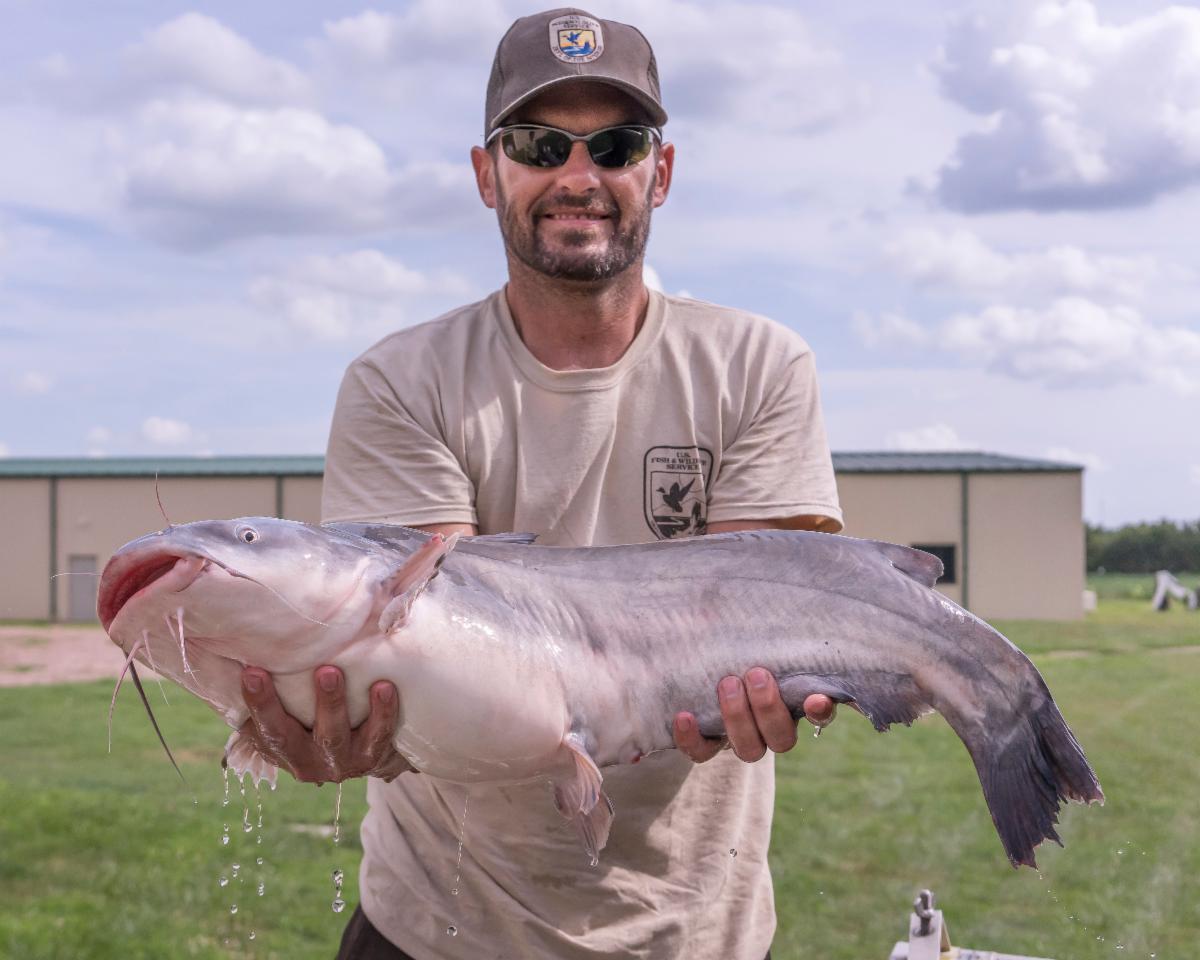
| Image: A Blue catfish, now invasive in Chesapeake Bay, Sam Stukel/USFWS, Public Domain | | |
OCTOBER 2026
Webinar: "Developing a Recipe for Success: Can Public Harvest Control Invasive Species?"
NAISMA, October 14, 2026, 1:00–2:00 pm CDT naisma.org/events
Upper Midwest Invasive Species Conference (UMISC 2026) — 10th Anniversary
6-8 October 2026
La Crosse Convention Center, La Crosse, Wisconsin | In-Person & Virtual
https://www.umisc.net/program--schedule.html
Natural Areas Conference (NAC26)
5 - 8 October 2026
Asheville, North Carolina
https://www.naturalareas.org/2026_natural_areas_conference.php
NAISMA Annual Conference
19 - 200 October
Arlington, Virginia
conference.naisma.org
California Invasive Plant Council (Cal-IPC) Symposium, online, October 20–22, 2026
https://www.cal-ipc.org/resources/symposium/
| | | 🎓 Training & Professional Development | |
North American Invasive Species Management Association Academy (formerly InvasivesU) — Online Learning Platform
Ongoing
NAISMA has rebranded its InvasivesU platform as NAISMA Academy, offering a growing library of self-paced online courses, workshops, and certificate programs developed by leading invasive species experts. Current offerings include:
- Foundations of Invasive Species Management - Certificate course providing a well-rounded basis in invasive species prevention and management
- Terrestrial Invasive Plant Management - Certificate course with in-depth coverage of noxious weed prevention and management
- Forest Pest and Pathogen Short Course
- New - February 2026 - Self-paced introduction to forest invasive species, pathways of spread, early detection, and management using real-world case studies
- Biological Control Short Course - Science, application, and regulation of classical weed biocontrol
- NAISMA Mapping Standards Short Course - Implementing NAISMA's invasive species mapping data standards
- Certified Weed Free Products Inspector Certification - For professionals certifying forage, gravel, mulch, or compost to WFP international standards
NAISMA Academy: academy.naisma.org
Monthly NAISMA Webinars — Free webinars featuring emerging invasive species issues, management case studies, communication strategies, and new tools for practitioners. Upcoming topics include invasive shrubs, aquatic invasive species, urban forest pest preparedness, and invasive fish management
Naisma Events: https://naisma.org/events/
| | grass-carp-credit-ryan-hagerty-usfws | | 🗂️ Key Journals & Ongoing Resources | |
-
NeoBiota (Open Access) — Recent articles on silver carp, Burmese pythons, invasive bees, and alien plant management: neobiota.pensoft.net
-
Biological Invasions (Springer) — Active "Management Innovations and Insights in Invasion Science" collection with new articles (ongoing) link.springer.com/journal/10530
-
Management of Biological Invasions — Part of the INVASIVESNET open-access journal group: invasivesnet.org
-
ScienceDaily Invasive Species Feed — Daily aggregation of new invasive species research and news: sciencedaily.com
-
USGS Biological Threats & Invasive Species Research Program: usgs.gov
| | |
Invasive Species Committee — Quarterly Newsletter
Q3 2023 | July - September
This newsletter is distributed to fish and wildlife managers working on invasive species challenges and decision-making. To submit items for the next edition or update your subscription, contact Melanie Steinkamp
| | | | |