|
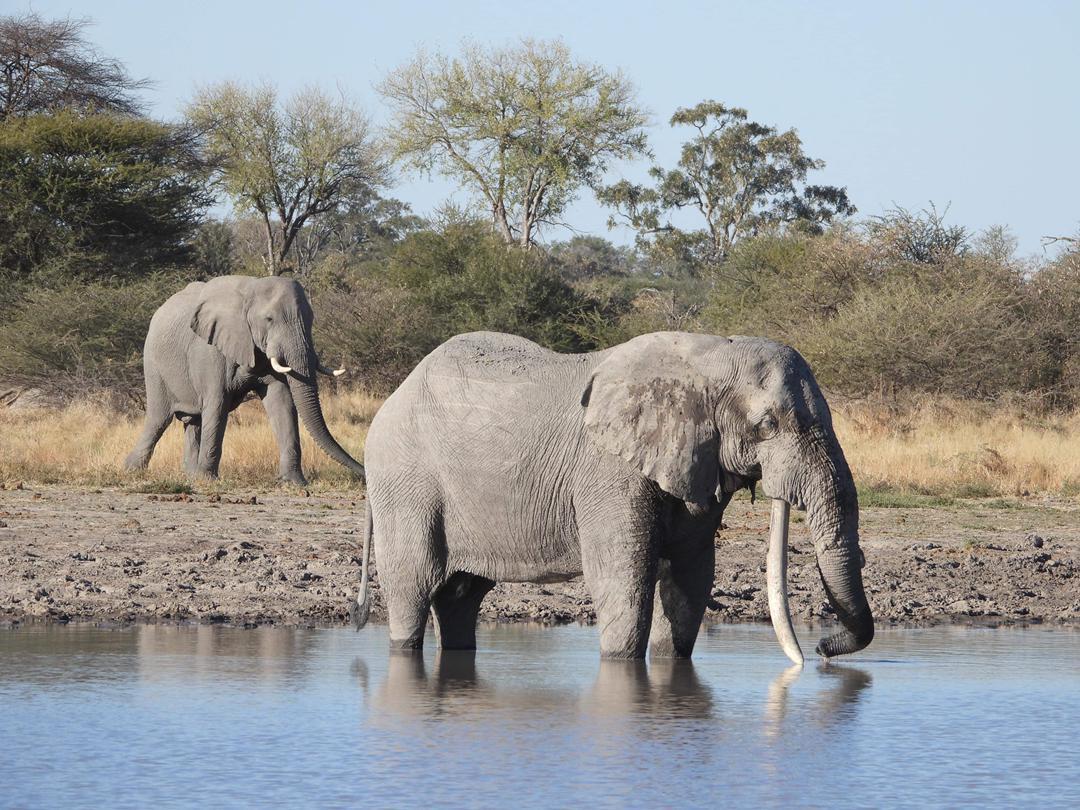
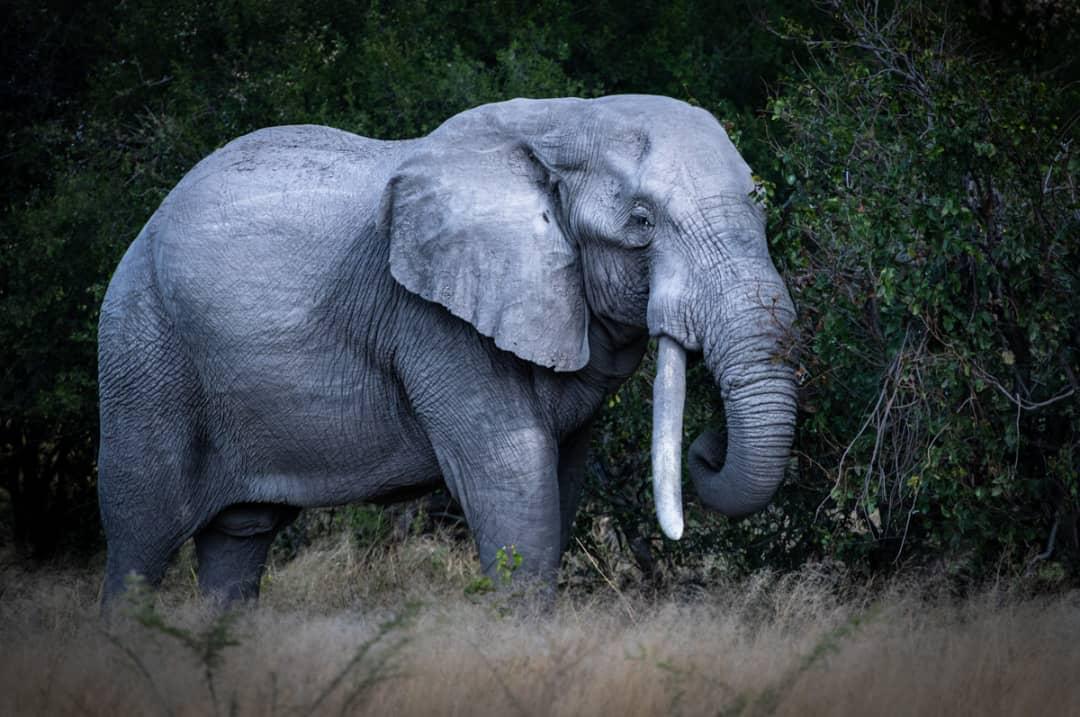
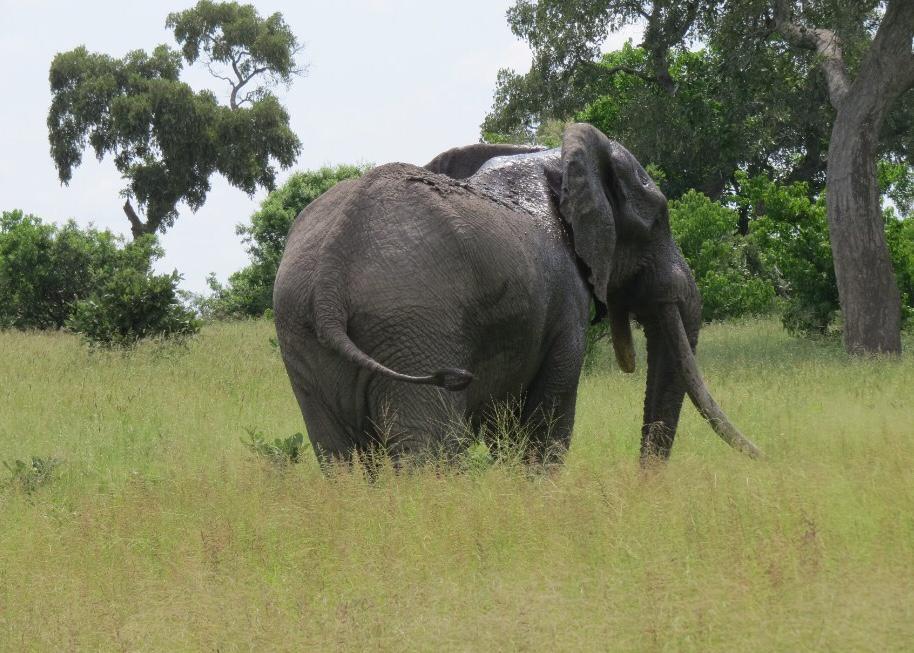
With Botswana also suffering from increased poaching in recent years, big-tusked elephants in that country will soon be extremely rare, as they already are in Tanzania, whose population has been hammered by the dual impact of trophy hunting and poaching.
Note: There are no numbers posted to reflect the legally hunted elephant and those illegally poached.
Tanzanian trophy hunters have resorted to picking off big bulls that roam from Kenya, which does not permit trophy hunting.
This sentence does not explain how elephants (from one side of a border -in this case Kenya) clearly decide on roaming and move to another – in this instance, Tanzania. Elephants do roam, and they are intelligent for a reason. They go where there is food and a better chance of survival. Fortunately for the curious, and those willing to seek facts on the subject of Africa’s wildlife, there is the internet. Simply google: “Tanzania versus Kenya’s wildlife record on conservation” and press enter.
I quote:
Tanzania and Kenya possess two of the most celebrated wildlife conservation records globally, yet they employ fundamentally different strategies. While Kenya focuses strictly on non-consumptive preservation (e.g., photo safaris and a 1977 hunting ban), Tanzania successfully integrates sustainable hunting with extensive national parks, resulting in more robust wildlife populations overall
Key Differences in Conservation Strategies
Tanzania: Tanzania utilizes a dual-model combining preservation within massive protected areas (like the Serengeti, which is roughly 10 times the size of the Maasai Mara) and strictly regulated, international trophy hunting in designated game reserves. Because local communities in hunting block areas profit from this model, poaching pressure has decreased. The country now boasts some of the highest megafauna numbers in Africa, including ~17,200 lions and ~328,000 buffalo.
Kenya: Kenya relies entirely on eco-tourism and wildlife preservation. While highly successful for centralized wildlife viewing in places like the Maasai Mara, the country has struggled to maintain connectivity across private rangelands. Several long-term studies have pointed to significant drops in wildlife populations in specific areas outside of fenced or highly monitored parks, though recovery initiatives and private sanctuaries have helped stabilize certain ecosystems.
The conservation impact of trophy hunting of these giants is no different to that of poaching.
Poachers want the ivory for the market; trophy hunters want it for the wall; both go after the bulls with the biggest tusks. These are the very animals whose experience, genetics and social authority hold herds together. When they are gone, something irreplaceable goes with them.
Botswana has set a record trophy hunting quota of 430 elephants for 2026, the highest anywhere in the world.
This is putting legal hunters and the government that authorises and permits legal hunting into the same category as illegal killing for money of poachers.
Elephants exist in only a few countries in Africa, not across the world . Botswana has:
1) The largest population of elephant, at 130 000 plus.
2) The greatest elephant conservation record.
3) The legal authority of the government, appointed by the people who benefit from an elephant management model.
There are fewer than 90 tuskers left in Africa. Bearing in mind that trophy hunters target big ivory, it does not take a mathematical genius to see the problem here.
And yet Botswana’s politicians and the ‘sustainable use’ lobby ignore this stark reality and distract from criticism by conflating the tusker population with the overall elephant population, making unverified claims about the supposed benefits of trophy hunting and claiming that killing the last remaining big-tusked elephants will reduce human-elephant conflict.
This is said by the owner of a travel agency making his money selling safaris in the countries he speaks so badly of.
What will it take for common sense to prevail? Time will tell.
Simon Espley - CEO
Perhaps in time, common sense will prevail.
I challenge Africa Geographic to rebut one, or all three, of these points:
1) Allow an unedited debate to be published on their platform.
2) Don’t sell safaris to the countries that seem to know nothing about the role legal hunting and sustainable wildlife management plays in the tourism sector – Uganda, Tanzania, Zimbabwe, Zambia, South Africa, Botswana.
3) Just sell safaris to Kenya.
Below are three comments from the elephant conservation group.
Dear Richard,
Perhaps the key difference is that:
a) responsible conservation agencies try to set quotas that ensure that a relatively small number of large tuskers are taken,
b) that these large tuskers are taken late in life and leave their genes in the population, and
c) some professional hunting associations are encouraging their members to moving away from large tuskers and large horns to an accepted trophy measurement system that focuses on age rather than size.
This last, in my view, is to be encouraged, mainly for genetic reasons, but also for their tourism value (but see note below). All these measures are indicators of active and evolving ideas, management and regulations, based on monitoring and science (and some philosophical analyses and shifts). They all lead to reinvestment into the wildlife and conservation agenda.
Poaching, by contrast, is none of these things. It is simply theft of high-value items.
As such, there is a profound difference between poaching (no management or reinvestment mechanisms) and managed trophy hunting. We don’t always get the management 100% right, but we have the systems in place and the adaptive management philosophy that allows us to fine-tune and improve.
An equivalence would be to compare a legitimate shopper purchasing high-value goods from a shop, resulting in the shop restocking, paying staff, paying taxes and adding new products and outlets to their business, to a shoplifter stealing high-value goods and undermining all the management, reinvestment, taxes and growth.
Note: Regarding the tourism value implied in Norman’s comment, in reality, there is rarely trophy hunting in national parks where the tourists go – it is mainly on private and communal land and state land set aside for wildlife and hunting where trophy hunting happens. So, the average tourist is not impacted. However, it is in the hunter’s best interest to maintain a viable long-term population of large tuskers (and other trophy-quality animals). In my view, currently one of the main disincentives is that hunting concessions are way too short. We are happy to recognize that tourism concessions need to be 40+ years because of the financial investment to be recouped, but we are happy to make hunting concessions just a few years. The investment in managing for trophy hunting long-term requires a far longer period of time than it does for tourism, because we are managing for reproduction, growth and survival of some long-lived species.
I would like to see:
a) 40+ year trophy hunting concessions (with strong closure clauses for mismanagement and bad behavior),
b) wildlife management obligations for the trophy hunting outfitter with clear performance indicators (which would include population dynamics profiles),
c) proper auditing by government or their independent agent,
d) the ability of the concession holder to sell on the concession to an approved trophy hunting outfitter if they want to leave the business before the concession expires – with the same management conditions,
e) appropriate benefit share arrangements, employment and training with/for local communities where appropriate and relevant, and
f) encouragement to diversify within the wildlife economy and its value chains on the concession area, with benefit share to communities from all components of the wildlife economy value chains. These sorts of incentives have not, to my knowledge, ever been pushed out to this level. They would, I believe, change the current trophy hunting environment from one of regulated extraction to one of incentivised investment.
Kind regards, Dr Chris Brown – Namibian Chamber of Environment
*******
Thank you, Chris, for your practical and insightful views that I almost completely agree with.
My concern is that years ago I was talking to Michelle Hofmeyr, now of ELEPHANTS ALIVE, about the trophy hunting in the Timbavati. Where, as I understood it, their conservation efforts depended on these revenues for their day-to-day activities. There had been a request that instead of hunting (and my numbers are NOT correct – so just an example) 10x35-40-year-old males, the quota be 5x45-55-year-old males. As I understand it, from ~35 years old to ~55 years old, elephant tusks put on considerable weight. So, fewer older bulls would yield MUCH more income than a higher number of younger individuals.
Now this is where it gets interesting. Her research, from years of intensive and extensive monitoring, showed that the BIG, OLD males carried more “memory” and were more desirable as mates by the old matriarchs. What this suggested is that when it comes down to the final crunch, even the matriarchs “bow-down” before the BIG and OLD males (so are elephant populations, when it comes to the final crunch, really matriarchal or not!?).
She, therefore, was very much against taking fewer older bulls, and if trophy hunting was to continue, then would rather take more of the younger bulls with, albeit lighter tusks. I am not sure where all this research is published, but if Michelle is right, and I have no reason to doubt her, then leave the really BIG and OLD bulls alone. Trophy hunters may do this, but poachers would not be selective on that basis.
This is certainly a contested space, and the research should assist with making the right decisions. Your Namibia example is a good one to consider, but just think about the really old guys!
Eugene Moll
*****
Great insights and suggestions, Dr. Brown. Interesting viewpoints, with Namibia as a prime hunting destination. I feel ethics and the management of hunting is what does the most damage. The hunting of big tuskers is a very contentious issue to say the least, but Eugene has hit the nail on the head– science has shown the value and importance of the large tuskers in an elephant society as a whole and we can’t ignore this. They breed, assert their dominance and mating preferences, and pass on knowledge until they die. Not to mention their value as an iconic animal that people will travel from all over the world to see, and that there are probably fewer than 50 great tuskers left in all of Africa on top of it.
Michelle (Michelle Henly not Hofmeyer 😊) developed a hunting selection protocol based on these studies and science that Eugene mentions. Although younger bulls were preferred for take-off, there were also certain criteria in the selection of these younger bulls (ie: age, tusk size (length and thickness), body size etc) that needed to be considered. Makes the world of sense because we don’t want to shoot a 35-year-old bull that has the potential to become the next great tusker in 20 years.
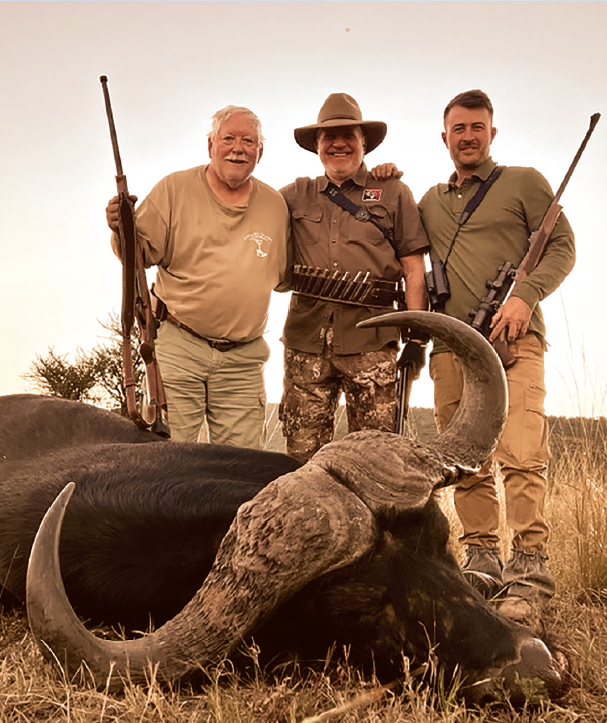
Science and best knowledge need to be considered. I often see hunting pictures of buffalo taken with 40” spread but they are not even hard boss bulls yet, or kudu of 65” are shot. Surely that’s not sustainable. A drop in trophy quality is already a concern in many concessions throughout Africa. Dr. Brown's point on the important of age rather than horn size makes the world of sense.
Regards, JJ van Altena
*****
I hope all these points of view have piqued your interest and provide food for thought in the coming month. Have a wonderful July.
Regards
Richard Lendrum
|