7 Symptoms of Heart Attack

Source: UNH Daily

Tightness in chest? Dizziness? Arm pain? Learn about symptoms of heart attack-and understand when a 911 call may be warranted.
 
By Jay Roland * Nov 16, 2016

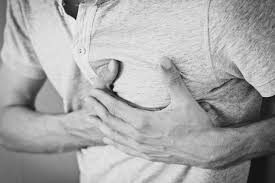
You've no doubt seen movies or television shows in which a character clutches his or her chest for a moment and then collapses because of a heart attack. Or maybe you've actually seen someone experience such an event-or suffered a heart attack yourself. If so, it's possible that your symptoms included tightness in the chest. But you may have been one of the many victims who experienced other symptoms of heart attack.

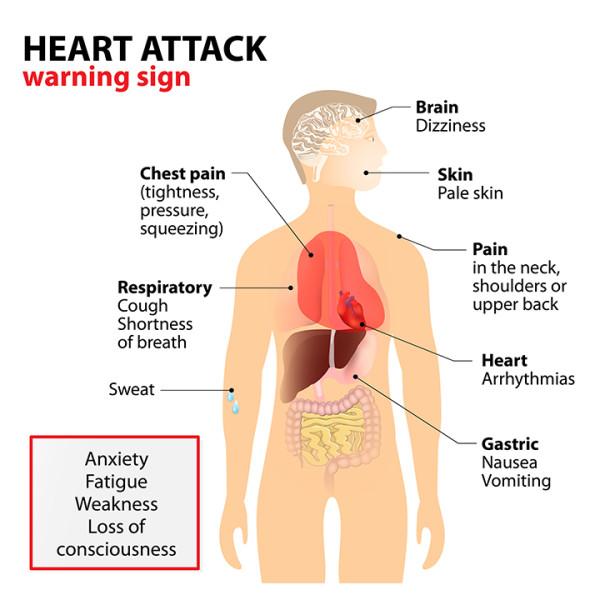
Signs of heart attack vary from person to person. The symptoms you had during one heart attack may not be the same ones you experience if you're unfortunate enough to have a second. Typical symptoms also differ somewhat between men and women. Men, for instance, are more likely to feel a sudden tightness in the chest, while signs of a heart attack in women may be more likely to include pain in the upper back and dizziness.

Heart Attack Signs

Man or woman, it's important to recognize these signs of heart attack, especially if you or a loved one is at risk:
  • Pressure or pain in the back, neck, or jaw.
  • Shortness of breath.
  • Nausea, sometimes to the point of vomiting.
  • Discomfort in the upper abdomen.
  • Heartburn or indigestion.
  • Headache.
  • Arm pain, often in the left arm, but could be in either or both arms.

Another atypical symptom of a heart attack is a vague feeling that you're not quite right. You feel ill, but without specific pains or other complaints. This can make it difficult to know how to react, but if this feeling persists, trust your instinct. If you sense that something is wrong, see a doctor.

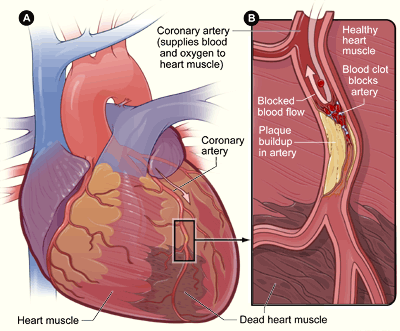
Even if the signs of a heart attack you're experiencing are mild or hard to define, the heart attack itself may be quite serious. Your heart can experience just as much injury from a heart attack with no chest pain as one with that "elephant sitting on your chest" feeling.


If you're at high risk for a heart attack, it's vital that you take your risks seriously and respond quickly when symptoms appear. The sooner you respond to signs of a heart attack, the more likely it is that you can receive treatment that will minimize damage to the heart muscle and give you a greater chance of having a healthy recovery.
Among the risk factors for heart attack are:
  • Advancing age
  • High cholesterol
  • Smoking 
  • Obesity
  • Diabetes 
  • Inactive lifestyle
  • Family history of heart disease 
  • Previous heart attack or stroke
  • Autoimmune disease, such as rheumatoid arthritis
  • Stress 

If you experience one or more of those risk factors, then you should memorize the symptoms of heart attack and make sure those who live and work with you know them, too. If a heart attack occurs, you may be able to explain your symptoms and call 911, but you may not. A family member or someone else close to you may be the one who has to call the paramedics.

In general, it's best to call 911 rather than be driven to the hospital. And under no circumstances should you try to drive yourself to the hospital if you suspect you're having a heart attack.

Please take advantage of this opportunity to learn more about these vital topics of health and wellness.     
 
Call 562-505-5600 or e-mail
info @accesshealthcare.solutions
to sign up today.

Enrollment is quick and easy, involving the completion of a simple form. 

Removing the Barriers of Health Care

Published by Access Healthcare Solutions

Access Healthcare Solutions
Copyright ©2016. All Rights Reserved.


For more information on wellness guidance Visit these publications below:
 
 
Berkeley Wellness:
 
CBS Health:
 
Cleveland Clinic:
 
CNN Health:
 
Diabetes Daily:
 
Diabetes News:
 
Diabetic Connect:
 
Harvard Health:
 
Health Canal:
 
HealthDay:
 
Huffington Post Health: www.huffingtonpost.com/healthy-living
 
Johns Hopkins Medicine:
 
Mayo Clinic:
 
MD Anderson News:
 
Medical News Today: www.medicalnewstoday.com
 
Memorial Sloan Kettering Cancer Center:
https://www.mskcc.org/morescience#
 
NBC News Health:
 
New York Times Health:
 
News Medical:
 
Reuters Health:
 
Sanofi Diabetes:
 
Time Magazine Health:
 
UCLA Health:
 
US News & World Report Health: http://health.usnews.com
 
WebMD:
 
Yahoo! Health: