Welcome back! Since our last newsletter, we've released four research publications, published a new blog, and continued tracking the latest policy developments impacting Black communities. We're excited to share what's new. | | |
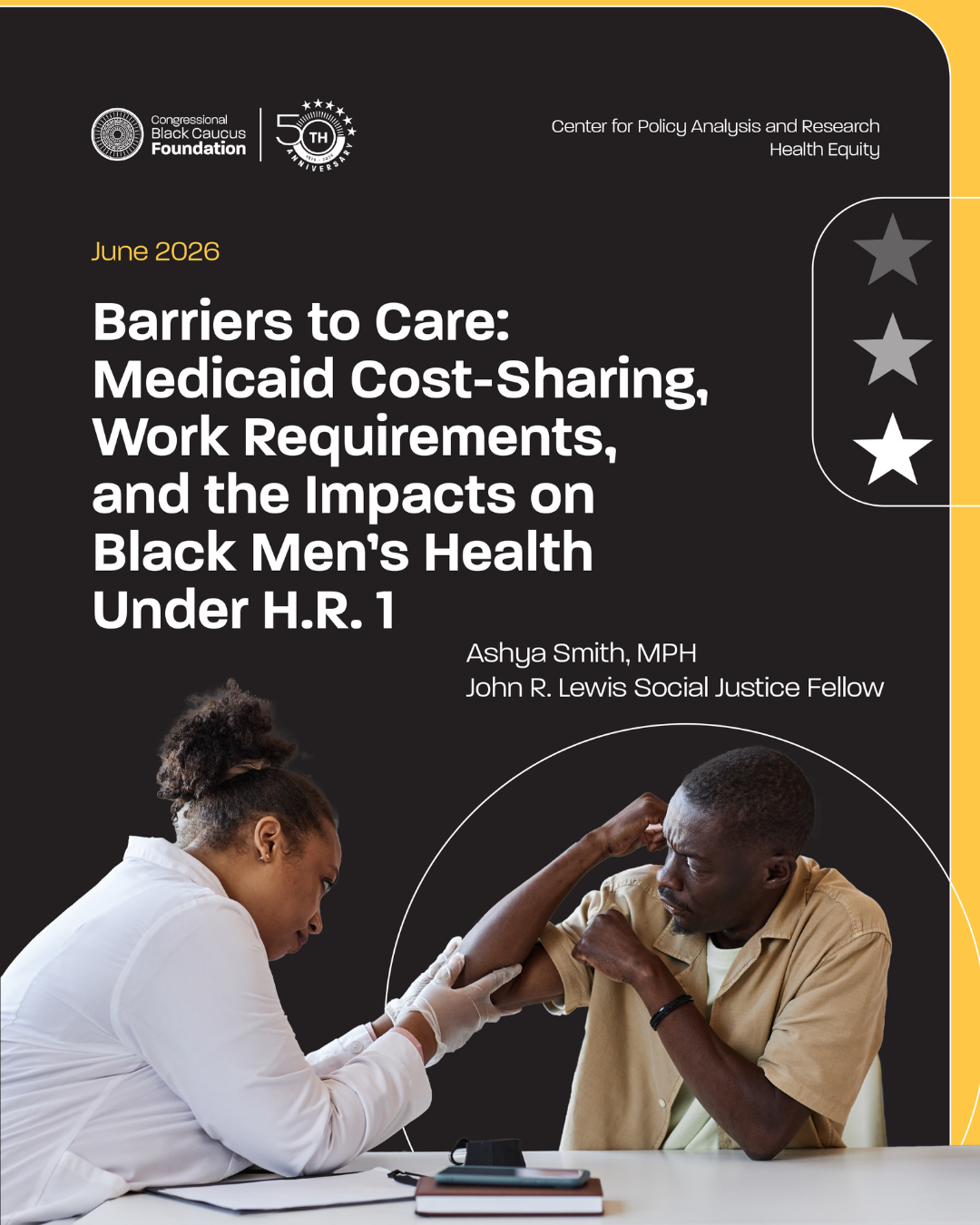
Barriers to Care: Medicaid Cost-Sharing, Work Requirements, and the Impacts on Black Men’s Health Under H.R. 1
Millions of people could lose or see reduced access to Medicaid coverage as new federal changes under H.R. 1 are implemented—but Black men, who already face some of the most severe health disparities in the United States, may be among the most impacted. New cost-sharing fees and work requirements risk creating added financial and administrative barriers to care, putting essential physical and mental health services further out of reach. This fact sheet shows how these policy changes could worsen existing inequities and shape health outcomes in communities across the country.
| | |
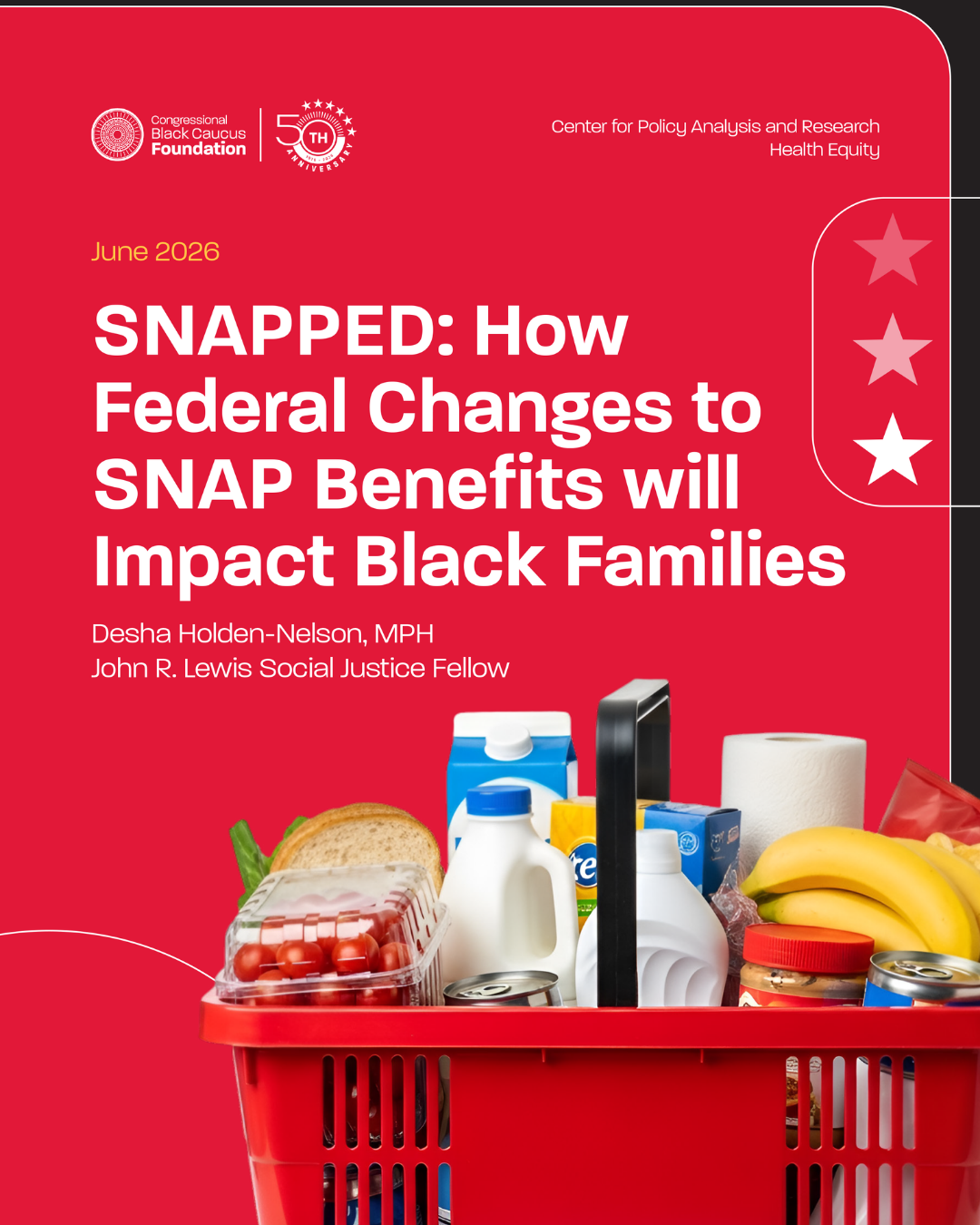
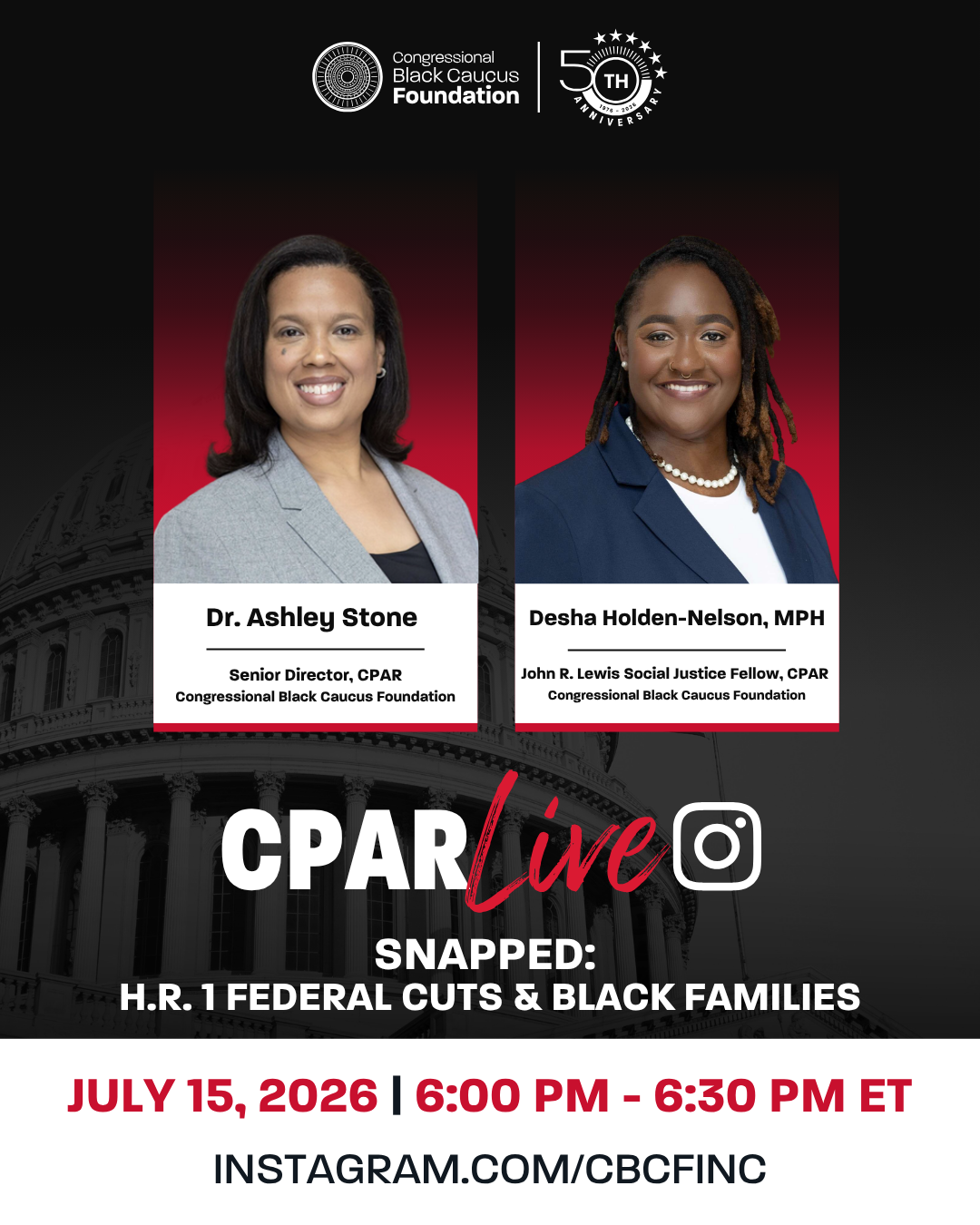
SNAPPED: How Federal Changes to SNAP Benefits will Impact Black Families
Millions of families could lose critical food assistance as new federal SNAP changes take effect—but Black families, who already face disproportionately high rates of food insecurity, may be among the hardest hit. This brief explores how these cuts could affect household budgets, children's health, local economies, and access to opportunity in communities across the country.
| | |
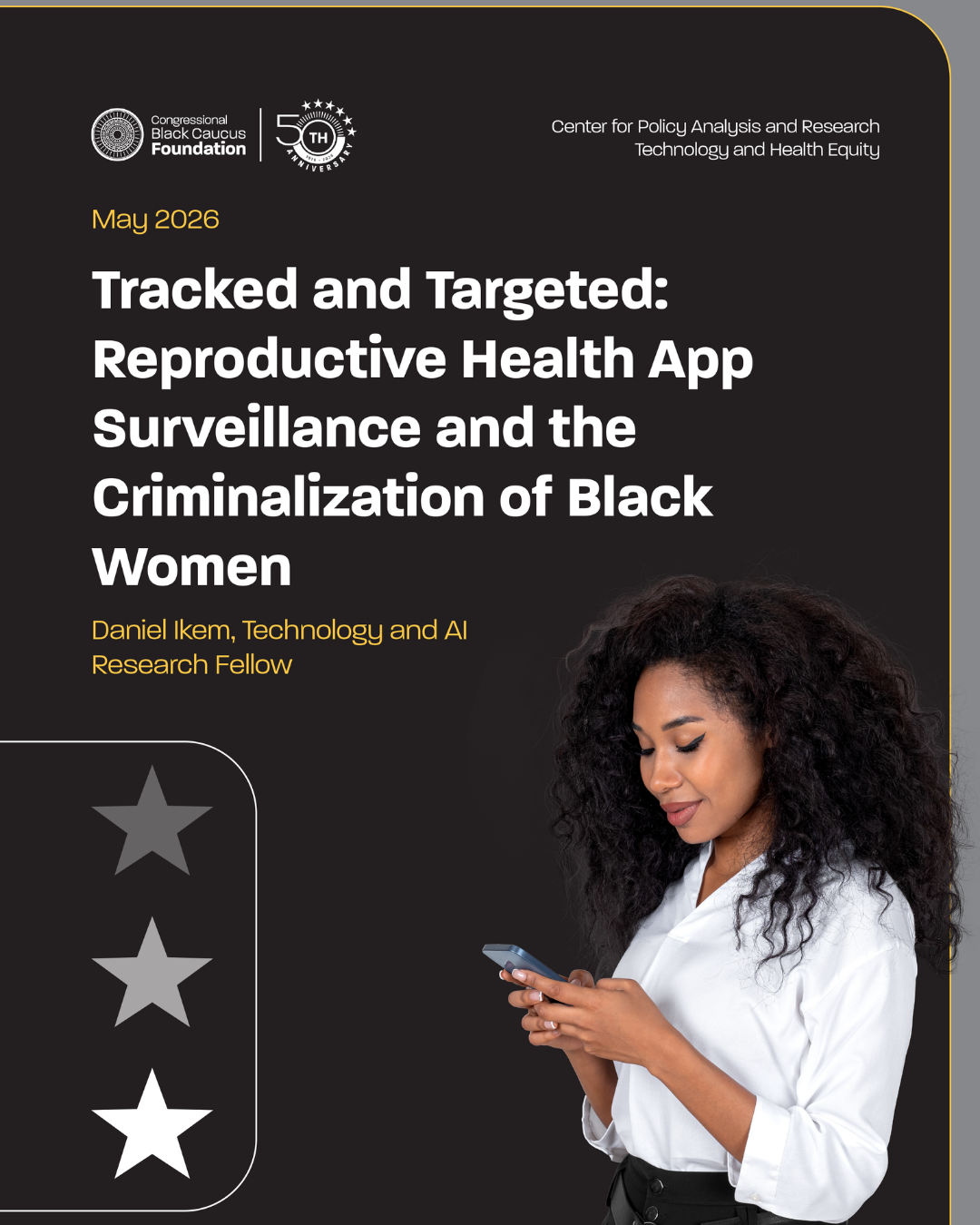
Tracked & Targeted: Reproductive Health App Surveillance & Criminalization of Black Women
This brief examines how fertility and period-tracking apps collect sensitive personal data that may be vulnerable to misuse, particularly for Black women in a post-Dobbs landscape. It calls for stronger privacy protections, greater transparency, and safeguards against surveillance and criminalization, while highlighting promising state policies and recommendations for federal and state action.
| | |
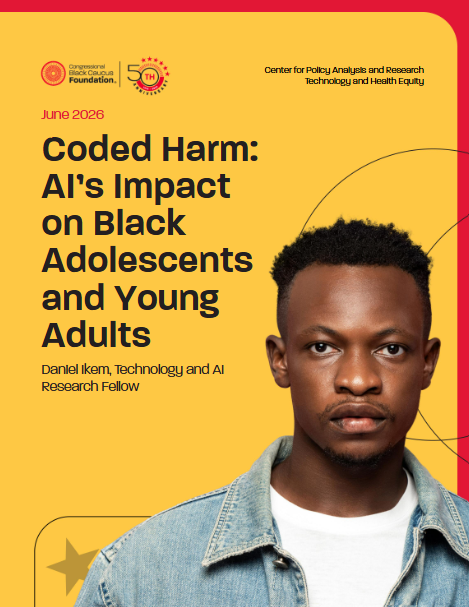
Coded Harm: AI's Impact on Black Adolescents and Young Adults
As artificial intelligence increasingly shapes social media experiences, Black adolescents and young adults face unique risks that extend beyond screen time. This brief examines how algorithms can amplify racial bias, mental health misinformation, and harmful content, while also exploring policy solutions to ensure technology serves as a tool for support rather than a source of harm.
| | |
CPAR Research Program
Our research is powered by your voice. In 2025, CPAR published three original reports based on survey and focus group insights from our community.
Want to be part of what we build next? Complete the short demographic survey below (about 4 minutes) to participate in our 2026 research.
| | |
New on the CBCF Blog
Black Femicide and the Urgent Need for Policy Action
Black women continue to face disproportionate rates of gender-based violence, yet the policies designed to protect them remain inadequate. In our latest blog, Ashya Smith, MPH, and Desha Holden-Nelson, MPH, John R. Lewis Social Justice Fellows, alongside Ashley Stone, Ph.D., Senior Director of CPAR, explore the intersections of structural racism, sexism, and public policy while calling for stronger federal and state protections to improve prevention, accountability, and support for Black women and girls.
Read the full blog to explore the policy landscape and recommendations for meaningful change.
| | Research in the Moment: Current Event Highlights | |
Maryland Becomes the 30th State to Pass Legislation
Restricting AI Deepfakes in Elections
On May 12, 2026, Maryland Governor Wes Moore signed SB 141, making Maryland the 30th state with a law restricting AI-generated deepfakes in elections. The measure, effective June 1, prohibits the knowing or reckless use of synthetic media to spread materially false election information and gives the State Administrator of Elections a defined role in responding to credible reports and publicly correcting the record. SB 141 was one of 22 election bills Maryland enacted this session, including SB 255, the new Maryland Voting Rights Act.
The enactments land at the inflection point of a national fight over who governs AI in elections. On December 11, 2025, the Trump administration issued an executive order directing the Justice Department to create an AI Litigation Task Force to challenge state AI laws. The Senate had earlier rejected a 10-year federal moratorium on state AI regulation by a 99-1 vote, but the executive branch is now pursuing through litigation what Congress declined to enact.
The civil rights stakes are concrete. State deepfake laws are now doing the protective work that federal law has declined to do, and the harms they address fall hardest on Black voters, HBCU students, and Black immigrant communities, whose exposure to AI-driven suppression content and racially targeted disinformation was documented across the 2024 cycle. If the federal preemption push succeeds in nullifying state laws like Maryland's without putting a meaningful federal floor in their place, voters of color will be left without protections.
| |
New Bill Seeks to Reduce Unnecessary CPS Investigations
On May 12, 2026, Congressman Blake Moore (R-UT) introduced the Promoting Childhood Independence and Resilience Act, alongside Congressional Black Caucus Member Representative Jennifer McClellan (D-VA) and Representative Virginia Foxx (R-NC). The bill is intended to improve youth mental health by encouraging in-person social engagement; reducing concerns for Child Protective Services (CPS) investigations triggered by reports of unsupervised children; and encouraging parents to allow their children to take part in reasonable independent activities without supervision. The bill amends the 1974 Child Abuse Prevention and Treatment Act to clarify that caregivers allowing children to participate in reasonable independent activities does not constitute neglect. The act also provides grants to states to train child welfare staff and the public to assess safety and risks based on the amended definition of neglect.
Black families have the most to gain from legislation that reduces CPS investigations and parental punishments for unsupervised youth. Black and low-income families have traditionally required children to make unsupervised household contributions—including babysitting siblings, commuting to school, preparing meals, and running errands—due to economic and systemic disparities. Black families have been punished with criminal charges and separation for allowing children to participate in the very activities this bill promotes. For decades Black families have been overrepresented in child welfare investigations. Currently, Black children make up 14% of the national population and 24% of child abuse and neglect reports. Black parents also receive more punitive punishments for child abuse and neglect charges compared to white parents. However, additional systemic factors must be addressed for Black families to equitably lay claim to the benefits proposed in the legislation. Disparities in pay, lack of investments in underserved communities, racial profiling, and white supremist violence must all be addressed to ensure safety for Black youth in their own neighborhoods.
| |
BUILD America 250 Act Advances
On May 22, the House Transportation and Infrastructure Committee approved the BUILD America 250 Act, a five-year transportation reauthorization bill that would fund highways, transit, bridges, and other infrastructure programs. The proposal includes several provisions secured by Congressional Black Caucus Member Representative Marilyn Strickland (D-WA), including stronger transportation demand management policies, support for transit-oriented development, and increased annual bridge repair funding.
As it stands, the bill would preserve the Safe Streets for All program and create new funding for bridge repairs, but it would reduce transit and passenger rail funding, eliminate the Neighborhood Access and Equity Program, and scale back several competitive grant programs that support equitable transportation investments. As the legislation moves through Congress, advocates will continue pushing for stronger investments in transit, connectivity, and underserved communities.
| |
U.S. Senate Finance Committee Introduces Bill
to Cap Medicare Out-of-Pocket Spending
On June 25, 2026, a coalition of senators, including CBC Members Lisa Blunt Rochester (D-DE) and Cory Booker (D-NJ), introduced the Medicare Cost Cap Act. The bill would establish a $5,000 annual cap on out-of-pocket costs for Traditional Medicare (Parts A and B) beneficiaries, lower Medigap premiums, and strengthen consumer protections across Medicare plans. It would also reduce premiums and cost-sharing for seniors living on fixed incomes by eliminating asset tests, increasing and aligning income thresholds, and allowing automatic enrollment through a "no wrong door" approach. Research shows that more than half of beneficiaries are expected to exceed the $5,000 cap at least once over the next decade. By 2028, the bill is expected to benefit 3.2 million Medicare beneficiaries.
This bill would be especially significant for Black Americans on Medicare. Black beneficiaries are more likely than white beneficiaries to experience cost-related barriers to care in both Traditional Medicare and Medicare Advantage plans and are significantly less likely to have Medigap coverage to help pay out-of-pocket expenses. As a result, many face health care costs they cannot afford, with one in five Black beneficiaries reporting no savings or debt. Under the bill, Medicare would cover all additional costs once a beneficiary reaches the $5,000 cap, relieving financial pressure and saving enrollees an average of $1,200 per year.
| | Upcoming Research Discussions | | |
CPAR Live on Instagram!
Join us for upcoming editions of #CPARLive featuring our Research Fellows as they discuss their latest research on critical issues affecting Black communities.
On July 15, 2026, John R. Lewis Social Justice Fellow Desha Holden-Nelson will discuss her latest work, SNAPPED: How Federal Changes to SNAP Benefits Will Impact Black Families, exploring how the One Big Beautiful Bill challenges state budgets and increases food insecurity for households across the United States.
Then, on July 29, 2026, Transportation Equity Fellow Anthony Nicome will present Disconnected from Care: Rethinking Transportation and Health Equity in Baltimore, examining how transportation barriers limit access to care and deepen health inequities in Baltimore's Black communities.
Follow us on Instagram @cbcfinc to join the conversation.
| | | | |