Annual Earth Week Edition 2026 – Part 2


Greetings!

Here is Earth Week, Part 2.


In Part 1 we shared reporting on planetary boundaries – and how humanity has already exceeded 7 of the 9 boundaries. Our global food system is at the center of the crisis. Read it here.


In this issue, we turn to the accelerating influences of artificial intelligence – and the expanding energy, infrastructure and environmental systems that sustain it. 


The new documentary The AI Doc: Or How I Became an Apocaloptimist captures the dual nature of this technology. AI holds great promise – for advancing science and potentially improving lives – yet it also carries profound risks. What is being done to address this?


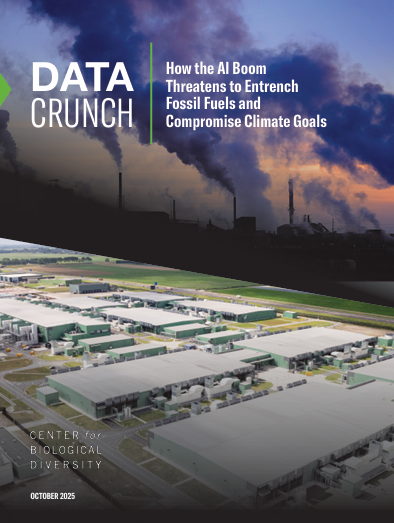
We’re also looking at AI’s growing footprint. Behind the digital world lies an ever-expanding network of data centers – facilities that consume unchecked amounts of electricity, water, and land. Their rapid growth often strains local resources, and jeopardizes climate targets. The report, Data Crunch: How the AI Boom Threatens to Entrench Fossil Fuels and Compromise Climate Goals, identifies the need for stronger guardrails with best practice guidelines.


In a thought-provoking Substack article, The Other Side of "Progress": The human and environmental costs of the AI build-out, author Christy Amada chronicles the rapid growth of data centers (5,400 and counting in the U.S.) and how communities are being caught off guard – by adverse impacts from these centers, and the secrecy surrounding them.


On a bright note, we're featuring two recent solar state/local empowerments: In Australia, solar/battery systems have been enabled at the household level in 100,000 households; and Virginia is set to approve residential “balcony solar” systems for condos and apartments.


* * * * *


While preparing the Earth Week issues, we learned of amazing advances in Earth System Science to precisely measure the state of the planet; and policies and actions we need to implement at once. We became more aware of the benefits and inherent dangers of AI development and the need for protective guardrails to control it. In all these areas, there are perils more critical and imminent than we realized... and the need for large-scale transformation now.


Organizations like Leaders in Energy are working in their own way to foster dialogue, share solutions, and help empower individuals to become leaders for the change – for a healthy, green and just world.


The AI Doc: Or How I Became an Apocaloptimist


A new documentary, The AI Doc: Or How I Became an Apocaloptimist, calls for a "Human Movement” in how we approach artificial intelligence – urging thoughtful engagement, ethical guardrails, and collective responsibility. The film can be livestreamed from Amazon and also seen in some theaters. 


Tristan Harris, a former Google design ethicist, is among the featured experts. He is now Co-Founder and President of the Center for Humane Technology (CHT), a non-profit organization aimed at aligning technology with humanity’s best interests. They advise that without intentional guidance, AI’s technological advancement can accelerate beyond our control.


As the documentary illuminates, AI is a double-edged sword. For example, AI’s benefits can be great in helping to advance science; but it could also lead to great numbers of people becoming unemployed. For military purposes, AI is an extraordinary strategist. However, it also likes nuclear war, a lot. A Kings College study revealed that leading AI models used nuclear weapons in 95% of 21 simulated war game scenarios. Here’s an article from Axios. AI has also demonstrated strong self-preservation instincts.


CHT is championing a "Human Movement." This Movement is not anti-technology, but rather pro-humanity, aiming to shift the current incentive structures of technology to support well-being, democracy, and a shared, healthy information environment. In April 2026, CHT released the The AI Roadmap: How We Ensure AI Serves Humanity. It outlines 7 Principles on how the technology should be built, deployed and governed. These principles act as a "pro-human" framework aimed at creating safer, more responsible technology.


So why is Tristan Harris an “apocaloptimist?” He defines being an "apocaloptimist" as adopting a dual perspective that simultaneously recognizes the potential for profound AI advancement and/or... civilizational disaster. Harris calls for collective clarity to steer AI technology away from an "anti-human future" and cautions that "the AI we are building under the current incentives is very dangerous." See his compelling interview here with NBC News.


Tristan Harris was also featured in the 2020 Netflix docudrama The Social Dilemma (2020) which raised awareness on how social media platforms and algorithms manipulate users’ behavior, maximize addiction for advertising profit, threaten mental health, democracy, and social cohesion.


Here are some examples of the Human Movement in action:

  • The US Senate voted 99 to1 to allow states to continue developing their own AI regulations, by voting to remove a 10-year moratorium on state level AI regulation in the Big Beautiful Bill
  • California and New Mexico court cases found Meta and YouTube liable for addicting children; this is spurring investigation and potential litigation in other countries.
  • By 2026, over half of U.S. schools will ban or restrict the use of cellphones in classrooms.
  • Social media use by anyone under 16 has been banned in Australia – with penalties going to the media platforms.
  • Seven other countries have also banned social media for kids under 14-16, or are working to do so.  
 

Data Centers, AI Boom, and Energy/Climate Concerns


There is mounting concern about the explosion of growth in data centers around the US and world and how it may lead to a backpedaling on climate emission goals. Data centers require computer power from tens of thousands of servers, to even even millions of servers in top-tier data centers. These complexes need massive amounts of electricity to operate.


Virginia is “distinguished” with having the most centers – at 665-plus. Northern Virginia is the largest hub, Texas follows with 519, California has 321. Tech companies are racing to build more and more.


COMMUNITIES AND IMPACTS 
While data centers are proposed as potential drivers of economic benefits for localities, concerns are also growing as they increasingly occupy vast amounts of land, gobble up electricity/power, and “drink up” billions of gallons of water. 


Citizens are beginning to question the presence of data centers:
including farmers and consumers who are footing much higher power costs; the risk of personal and environmental harms, many yet unknown; plus harm to wildlife/nature habitats from these data center “neighbors.” And how about that buzzing sound if you live near one? Data Centers are often approved before members of the community can even have a voice in the matter.


Large data centers can consume 1 to 5 million gallons of water daily, comparable to the usage of a town with 10,000 to 50,000 residents – straining local resources in drought-prone areas and are often placed in locales with existing water crises.The Lincoln Institute of Land Policy, a private global nonprofit founded in 1946, has produced a comprehensive overview of data center impacts – their economics, effects on populations, water and land use.


Some communities are beginning to push back. Projects have been paused or reconsidered in some places. In Prince William County, Virginia, plans were recently abandoned for one of the country’s largest and most controversial data center projects. Voters in Maine passed a yearlong freeze on AI data centers. However, it was vetoed by the governor who said it would "hurt economic growth."


GROWING ENERGY DEMAND
Data centers used about 4.6% of total U.S. electricity in 2024
– a share that could nearly triple by 2028. Some analysts project overall U.S. electricity demand could rise by up to 20% in the next decade, driven in large part by data centers. AI already accounts for an estimated 10-20% of data center energy use and is expected to drive 50-70% of computing demand by 2030, even as traditional and cloud workloads continue to make up the majority of current usage. (Sources: Congressional Research Service report, AP News article, and Bain & Company and McKinsey)


The primary source of power for these complexes comes from the electrical grid with various backup power supplies, often powered by diesel generators. Some data centers are also turning to renewable energy sources to power their operations. However, In late 2025, about 56% of total data center energy came from fossil fuels, with renewables accounting for roughly 22-24%. (Pew Research Center) There is concern that a backlog of proposed renewable energy projects awaiting permission to connect to power grids may affect tech companies’ already failing climate commitments by prolonging the reliance on fossil fuels. (AP news article). 


Why do data centers lead to higher energy costs for everyone? Surging demand increases electricity rates. Electricity markets operate on a supply-and-demand basis. When large data centers--which can use as much electricity as 100,000 households--rapidly increase, it outpaces the speed at which new power supplies can be built. When demand is high, utilities must buy more expensive energy to keep the grid stable, driving up the supply charge on your bill.


CLIMATE IMPACTS
The increasing energy and environmental impact of these centers, and their impact on climate goals, is warned about in the report,
Data Crunch: How the AI Boom Threatens to Entrench Fossil Fuels and Compromise Climate Goals: “The U.S. disproportionately holds the planet’s highest concentration of data centers and is the greatest contributor of AI climate pollution. Without significant changes, U.S. data center expansion is completely incompatible with the 2035 U.S. climate goal." The report’s co-author, Jean Su, Energy Justice director at the Center for Biological Diversity, is featured in this interview by Democracy Now.


WHAT ABOUT RESPONSIBLE DEVELOPMENT?

The Data Crunch report contains a series of policy recommendations for establishing domestic and global guardrails on the development of AI data centers. These include the responsible siting of data centers and the use of on-site renewable energy, storage, and micro-grids. These recommendations may help communities as they determine the best methods for moving forward on AI data center development.


WHAT ABOUT ME?
Beyond this, we also need to look at the impact of our personal consumption!

We’ve become conspicuous consumers with the Cloud! Our daily use of our PCs to store data, to incessantly query AI with myriad searches, etc., adds significantly to data center’s consumption of water and energy. Ironically – an AI search will turn up lots of information on this topic, while simultaneously consuming a big drink of water at the data center.

Here is one such resource on how we can make a difference.


The Other Side of "Progress": The human and environmental costs of the AI build-out


The Hidden Costs of America's AI Data Center Boom

Part 1: Community, Cost, and a Case for Slowing Down


As U.S. tech companies pledge over $600 billion for AI data center construction in 2026, communities across the country are pushing back. In the first of a three-part series, brand and PR consultant Christy Amada examines the tension between economic promise and community impact — from Maine's short-lived construction moratorium to secretive developer deals that keep residents in the dark — in her Substack article, The Narrative Effect. With at least 12 states now pursuing moratorium legislation, opposition is growing and notably bipartisan. Upcoming Parts 2 and 3 will dig into the on-the-ground costs for communities, water resources, and wildlife.


Australia Scales Distributed Energy, is Virginia Next?


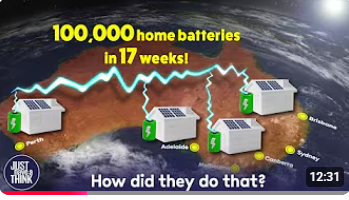
Australia Scales Distributed Energy. A successful program in Australia, the Small-Scale Renewable Energy Scheme, which ran from July-October 2025, scaled up the installation of 100,000 solar and home battery systems in just 17 weeks - demonstrating how rapidly clean energy can deploy when aligned with smart policy and demand. This story was featured on YouTube by Dave Borlace, host of the green-ideas show called, “Just Have a Think. (December 14, 2025) 

Australia's federal subsidy, called the Cheaper Home Batteries Program, provided a discount of around thirty percent off an eligible small-scale solar battery system. The capacity of the batteries is just under 2,000 megawatts - and when exported to the grid is enough to cover the average daily electricity consumption of almost 400,000 households. 


Borlace says: “ …when governments provide the right incentives, when technology becomes affordable, and when ordinary folks are given the chance to participate directly in the clean-energy transition, remarkable things can happen very quickly indeed. The trick now is to take those lessons and adapt them intelligently to our own local circumstances.” 


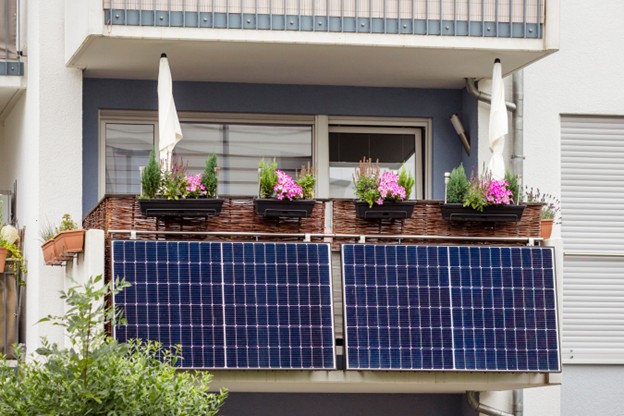
In the US, Virginia is working to advance balcony solar to expand access at the household level. Lawmakers in the state have approved legislation that would allow residents to install small plug-in solar devices without needing approval from their local electric utility or charging fees related to their installation or use. 


HB395 / SB250 will make Virginia the 2nd state (the first was Maine) to allow “balcony solar” – plug-and-play, portable solar panels to offset customers’ electricity consumption, up to 1200 watts per household. This is a big win for making solar more accessible for all. The measure has passed both houses of the Virginia General Assembly and is now headed to the desk of Gov. Abigail Spanberger, who is widely expected to sign the bill into law. (Learn more here.)


We are dedicated to building a network of intergenerational changemakers to accelerate clean energy and sustainability solutions. Our focus includes green economy and jobs, green practices, products, and services, including the circular economy. We also facilitate global collaboration to help connect people working on projects and innovations in these areas. We invite you to join our network to engage with others working for a greener world!


Executive Director: Janine Finnell

Creative Director/Editor: Carol Lampman McCaffrey


Subscribe to our Newsletter

Join our 4,100+ member LinkedIn Group


Get involved as a Volunteer or Ambassador

The LE Ambassador Program is focused on building an effective global action network that aligns and connects at district local and regional levels a diverse set of participants that have a shared but direct stake in the sustainable development of their community.

We are looking for these desired attributes in new ambassadors

  • Willing to make a 2-year commitment towards the ambassadors program.
  • Available for allocating 3-5 hours a month to communication & meetings.
  • Orchestrator of an in-region team (city or country).
  • Experience in a field of clean energy and/or sustainability (academic, working experience, etc.)
    is highly encouraged.
  • Demonstrates deep and vested connections to their community/locality.
  • Effective leader & communicator.

Share your information with us here if interested.


Leaders in Energy is a 501(c)(3) nonprofit organization. Your support enables us to conduct our mission and programs. If you find our materials and programs useful, please consider making a tax-deductible contribution.


LinkedIn  X  Facebook