Royal Australian Artillery
Historical Company
ENewsletter Edition No 64 August 2022
|
|
Dear Gunners (Readers) -
Welcome to Airburst No 64 August 2022
The Board met on 13 August and had a long and fruitful meeting. Some of the deliberations and actions are shown below.
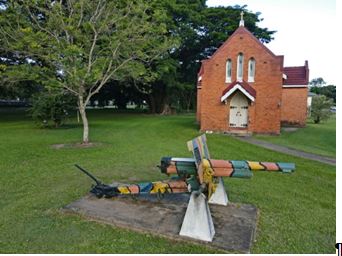
All Souls Church Memorial
Queensland has reason to be proud of its many tributes to its fallen soldiers, and in most cities, towns, and hamlets are to be found lasting edifices in honor of them, but the little chapel at Victoria, Ingham, is a particularly fitting and appealing recognition of the bravery, devotion, and sacrifice of our soldiers. It is erected in honour, and in sweet recognition of the boys who enlisted from Victoria Estate, Ingham, and went forth on that great adventure. It is a lasting monument to the boys who never came, back, who lie in the lonely valleys of Gallipoli or the tragically packed grave yards of France and Flanders, and that they live on in the hearts of their native hamlet, this beautiful little church bears devoted testimony, and so long as its cross stands facing the light, so will the memory of those sons of theirs live bravely on. (Extract from Monument Australia website)
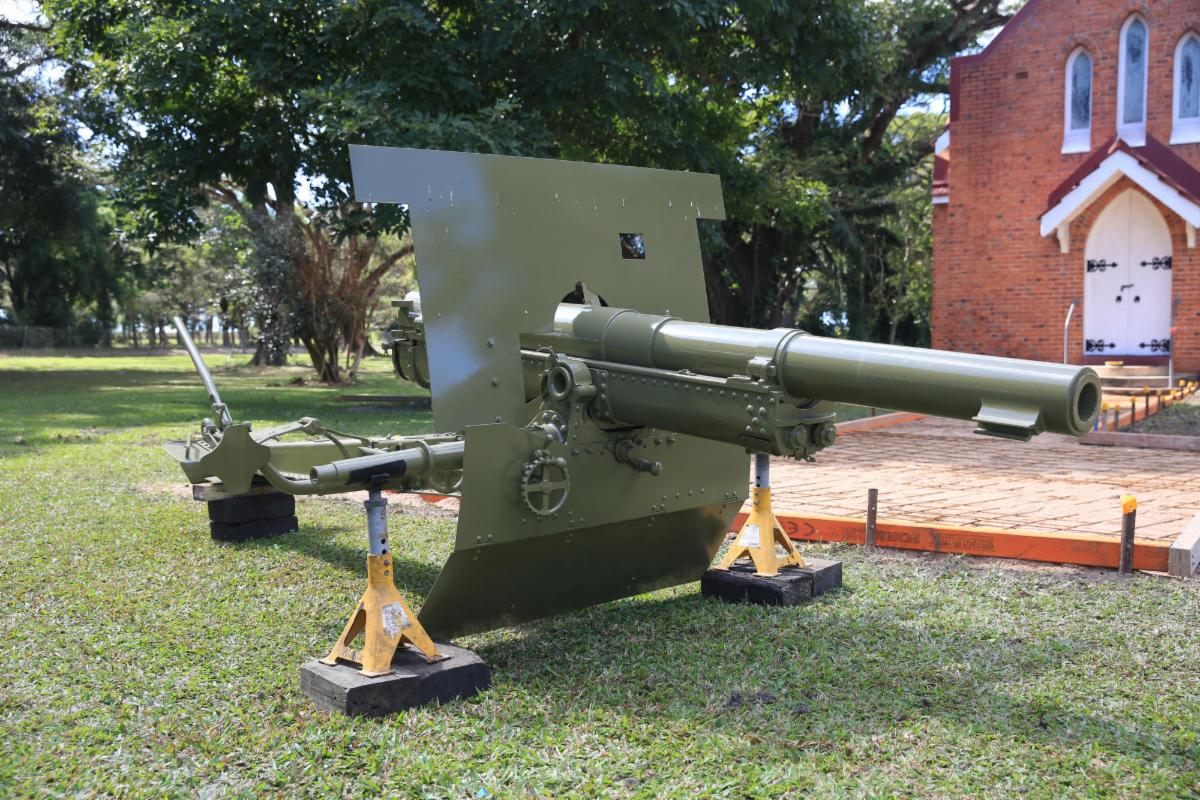
In February 2022 a letter of support was sent supporting a proposal to restore the All Souls Anglican Memorial Church Schneider 75mm gun. Although the proposal sort a major DVA major grant they were unsuccessful but they did obtain a $10,000 grant. The funds will be used to construct a memorial path embedded with eleven brass plaques to honour the local young men who fell during WW1. The gun mount foundation will also be repaired.
Additional grant funding is being sort to enable the site to be improved and to ensure the gun is weather protected. The organisers have received support to repaint and stabilise the gun from Wilmar Sugar Australia but have requested the use of our letter of support for further grant applications. We have responded in the affirmative.
Kevin Browning provided all the work for the supporting letter and is to be congratulated on a good outcome. The photos below show the Memorial Church and gun before the recent development and the work done on the memorial to date.
|
|
Nigel F Evans, a gunner who served in the RA and RAA, created and maintained a website titled British Artillery in World War 2. It covered the artillery organisation, tactics, gunnery methods and regiments of the both the RA and artilleries of the Commonwealth. Sadly Nigel has passed away and his colleagues in the UK and Australia were concerned that his life's work would disappear unless his site could be saved. A zip file of the content of the website was provided to ensure that his work is not lost. Although his site deals with the RA many of the procedures and organisations were adopted by the RAA. There is also a complete list of RAA units that served in WW2 so it was considered appropriate to keep the archived web site linked to the RAAHC site.
Graham Hampton unzipped the zip file and rebuilt the site. The link below takes you to the site as it exists ,
Work is underway to add Nigel’s site to the RAAHC Menu. Meanwhile it can be viewed by CLICKING HERE.
Speaking of websites a new menu software has been purchased to redevelop the entire RAAHC website. Maxi Menu Magic has the ability to make menus more adaptive. Paul Camilleri, our Webmaster, will progressively change the look and feel of the website over the coming months. The first work has been done so take a look but be aware it is a work in progress.
Ubique
Ian Ahearn
Chair RAAHC
|
|
Save and Share Your History
The RAAHC is happy to save all your previous Artillery journals and newsletters in our Collection Management System at the Cutler Research Centre
Click and see what periodicals we already have as part of our collection. Some are already available as pdf copies such as Cannonball, the RAA Liaison Letter, the RAAA WA and others. The CRC collection is also accessible through the Nati onal Library of Australia –click on the yellow highlight to access.
If you want to maintain a permanent record of your unit, State or regional artillery history, please send us your past periodicals in electronic format to the Manager CRC or post a DVD or thumb drive to the RAAHC at PO Box 171 Cremorne NSW 2090.
|
|
Consecration and Presentation of the Queen's Banner of the Royal Regiment of Australian Artillery.
Date and time Sat., 05/11/2022, 9:00 am AEDT
Location Victoria Barracks, 10 Oxford Street, Paddington, NSW 2021
About this event
The Royal Regiment of Australian Artillery welcomes veterans, their families, and members of the public to attend the Consecration and Presentation of the Queen's Banner (1871-2021) held at Victoria Barracks, Sydney.
The Guard will mount at 10:00AM, with the Barracks gates opening at 9:00AM. Limited seating will be available for guests. The Victoria Barracks Museum will be open after the Parade, so guests may view the Old King’s Banner and Queen’s Banner (1871-1971) which will be on display.
There is no parking available on the Barracks. Please direct Taxis and Ubers to ‘drop you off’ along Greens Road and NOT along Moore Park Road.
Guests will need a form of Photo ID and their Eventbrite ticket to enter the Barracks. Access will be available via the gate at the corner of Greens Road and Moore Park Road. Further directions will be provided from this point. Register using the button below.
|
|
8th Division, 2nd AIF Artillery
The 8th Division was raised from regular army units and new, all-volunteer infantry brigades, from July 1940 onwards. As war with Japan loomed in 1941, the division was divided into four separate forces, which were deployed in different parts of the Asia-Pacific region. When the Japanese Army invaded Malaya in December 1941 the 8th Division was part of the British force defending the country. All of the 8th Division elements were destroyed as fighting forces by the end of February 1942. Most members of the division became prisoners of war, and a large number died in captivity. The Divisional Artillery consisted of 2/10th Field Regiment, 2/15th Field Regiment and the 4th Anti-Tank Regiment with only three batteries instead of the normal four.
|
|
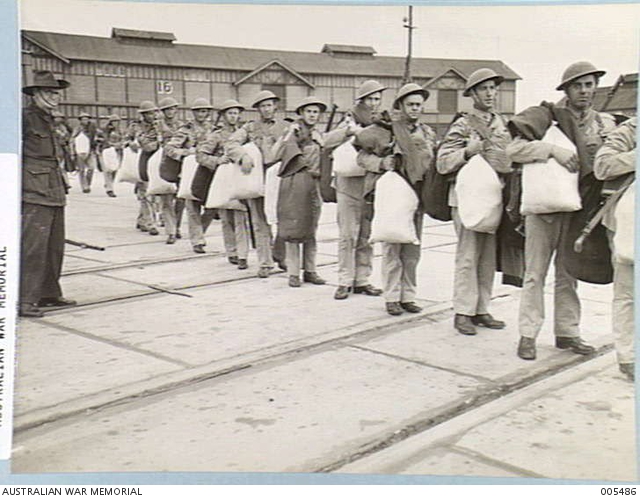
Victorian Members of 4th Anti-Tank Regiment leaving Sydney bound for Malaya |
|
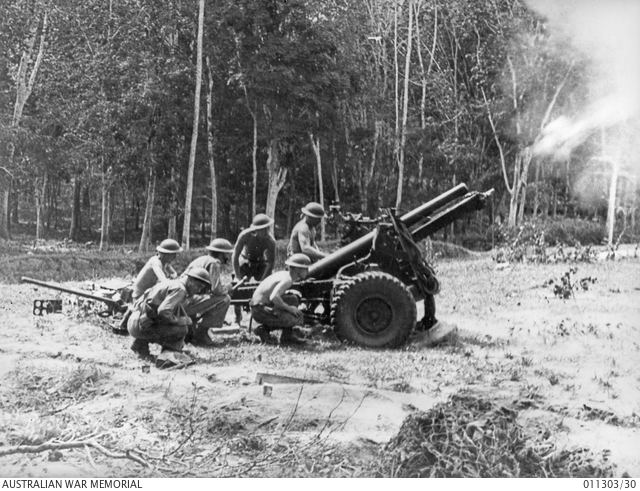
8th Division artillerymen firing a 25 pounder gun from beside a rubber plantation.
|
|
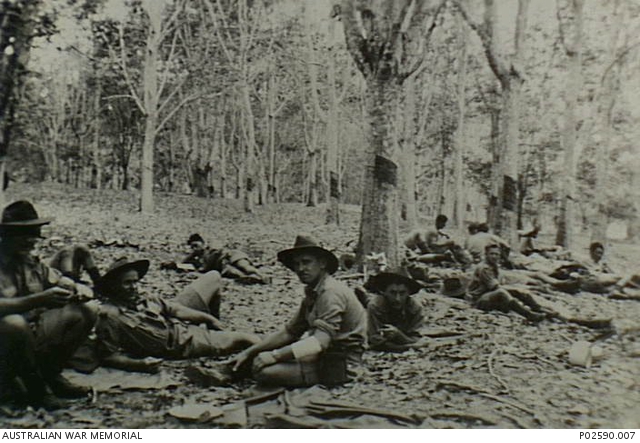
Malaya. c.1941. Members of the 2/15th Field Regiment stop for lunch in a rubber plantation. |
|
The 2/10th Field Regiment was formed at Redbank, Queensland under the command of Lieutenant Colonel G.H. Kirkwood, It arrived in Malaya in February 1941, equipped with 18-pounders and 4.3-inch howitzers. The 2/15th Regiment was formed in November 1940 in Sydney, New South Wales under command of Lieutenant Colonel John O'Neil, and deployed to Malaya in equipped with 3 inch mortars. Both field regiments were issued with 25-pounders by January 1942. The 4th Anti Tank Regiment was formed in November 1940 at Puckapunyal, Victoria, under command of Lieutenant Colonel Cranston McEachern and deployed to Malaya in early 1942. The Regiment was equipped with twelve 2-pounders and 24 75mm guns.
The 2/10th Field Regiment took part the actions against the Japanese in Malaya, and on 21 January they provided support for Australian troops fighting around the Mersing–Endau Road. For the rest of the month, the Regiment participated in further actions as the British and Commonwealth troops were forced back along the Malay Peninsula towards Johore. On 27 January, the Regiment took part in a fighting withdrawal from the east coast and during the withdrawal the 2/10th was heavily engaged, firing 900 rounds in the first hour alone. The withdrawal finished in Singapore 0n 31 January 1942.
The 2/15th Field Regiment was involved in actions throughout January and had a heavy workload. It took part in heavy fighting at Gemas, Muar and around Ayer Hitam and the Namazie Estate. The Regiment fired thousands of rounds as the British Forces withdrew south towards Johore and then across the Causeway to Singapore island, a distance of 240 km.
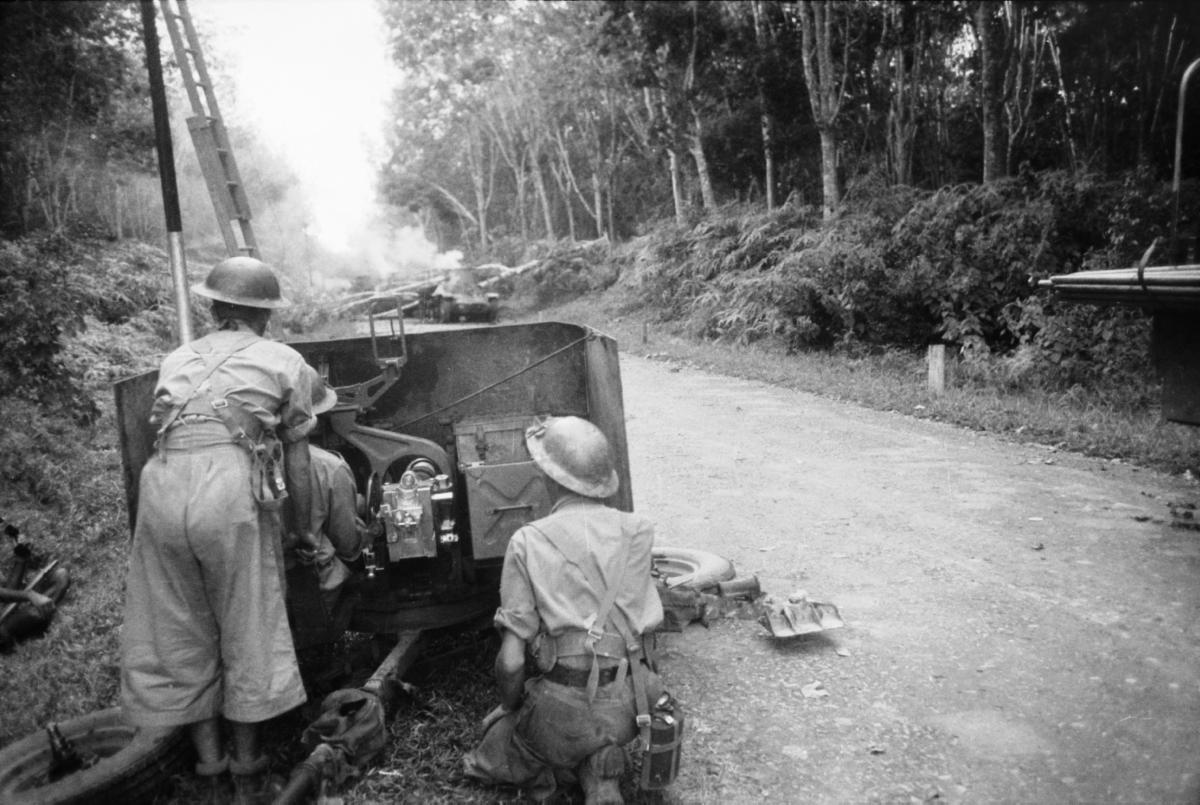
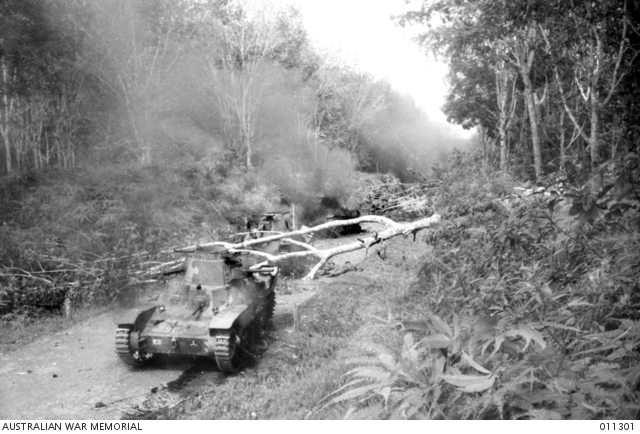
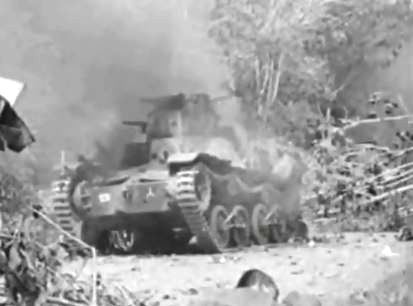
The 4th Ant-Tank Regiment provided a battery to support the 2/30th Battalion AIF when a successful ambush of the Japanese occurred at Gemas on 14 January 1942. While this clash was taking place a Japanese thrust was developing towards Muar. The Battle of Muar was the last major battle of the Malayan Campaign during World War II, from 14 – 22 January 1942 around the Muar River. Five Japanese light tanks approached the 2/29th Battalion’s position frontally at 6:45 am on 18 January, unaware that an anti-tank gun awaited them at each end of a cutting through which the Muar Road ran.
Solid armour-piercing shells were first used against the tanks, but it was found that these went straight through them and out the far side. The tanks continued to advance, firing with all guns as they came. The leading tank was level with the foremost anti-tank gun when the gun sergeant (Sergeant Thornton) gave a notable exhibition of courage and coolness. Turning his back on the other tanks, he fired high-explosive shells into the first three as they went down the road. When the other tanks entered the battalion perimeter they also came under fire from the rear gun. All the tanks were disabled. Three more tanks approached the position and they were also destroyed.
Postscript: Sergeant Clarrie Thornton was present for the dedication of the Sergeant Clarrie Thornton multi-purpose centre at the new School of Artillery, Bridges Barracks in 1998.
|
|
 |
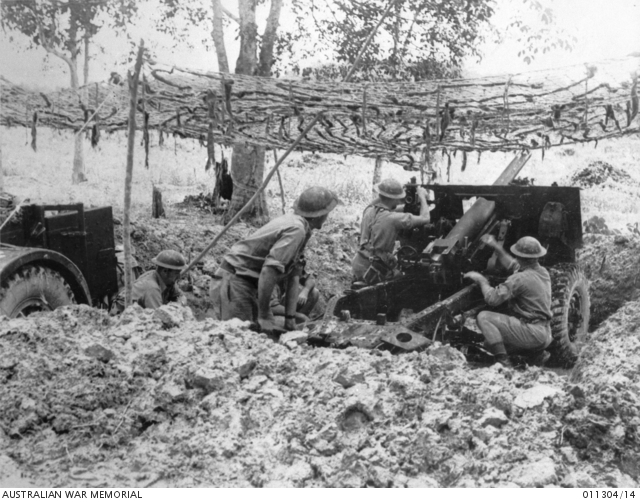
4th Anti-Tank Regiment 2-pounder gun in action at Muar |
|
|
|
Destroyed Japanese tanks at Muar |
|
|
|
|
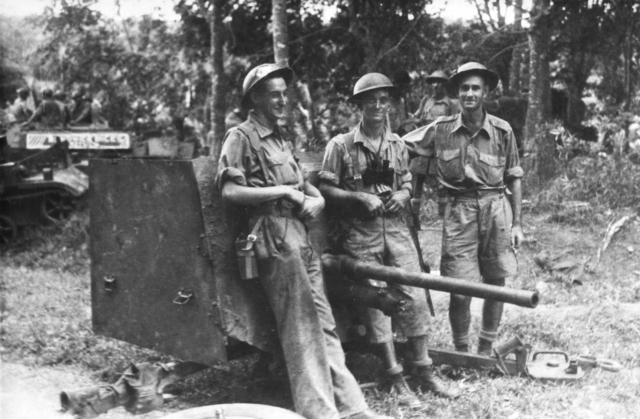
Sergeant Charles Patterson and Gunners Edward Leonard Coutts and Ken Daniels beside their anti-tank gun |
|
|
|
One of the Japanese tanks destroyed at Muar |
|
|
|
By 31 January, the last British Commonwealth forces had left Malaya, to concentrate in Singapore. By 15 February, the Japanese had broken through the last line of defence of Singapore and the British Forces surrendered. In the aftermath, almost 15,000 Australians became prisoners of war at Singapore, an absolute majority of all Australian prisoners of the Japanese in World War II. Due to Japanese mistreatment and neglect, many died in the prisoner of war camps, and around 2,400 Australian prisoners died in the Sandakan Death Marches.
The 8th Division Artillery suffered greatly during the campaign and subsequent captivity. More than 726 gunners died in the battles and POW camps. Most deaths occurred during captivity.
|
|
|
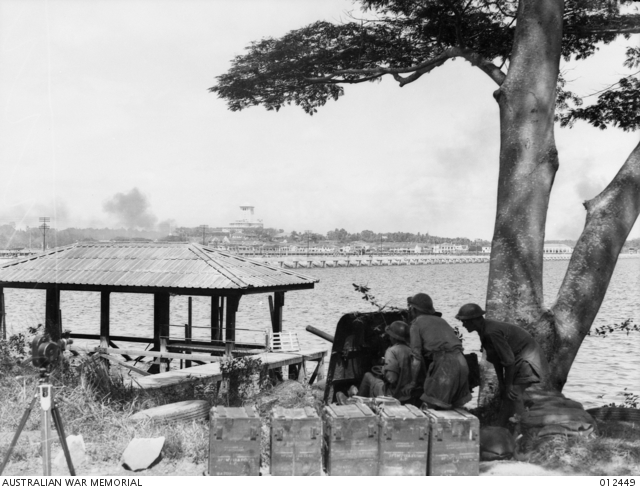
A 2-pounder anti-tank gun of 4th Anti-Tank Regiment covering the Causeway from Johore into Singapore. |
|
|
|
A 25 pounder Anti-Tank Gun detachment of the 8th Australian Division, AIF waiting to engage Japanese troops in Johore. |
|
|
|
|
Volunteers needed !
We are still looking for Gunners , or members of the public, to join the RAAHC . Volunteers are used in all aspects of our work. You can help by contributing to historical research on artillery no matter where you live or if you live in Sydney you can assist in the Cutler Research Centre and/or Australia's Memorial Walk . You can become a director of the RAAHC or offer any skills you may have in specific areas. No knowledge of artillery is required .
TO MAKE INITIAL CONTACT
|
|
|
|
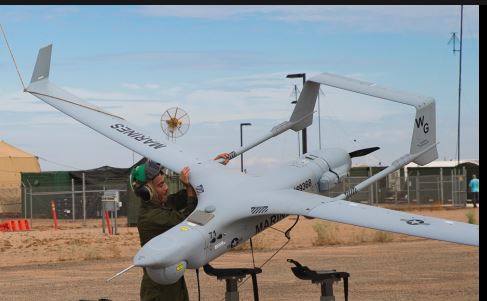
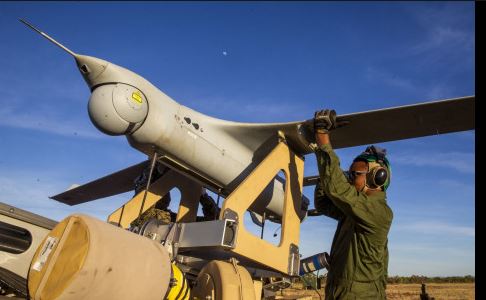
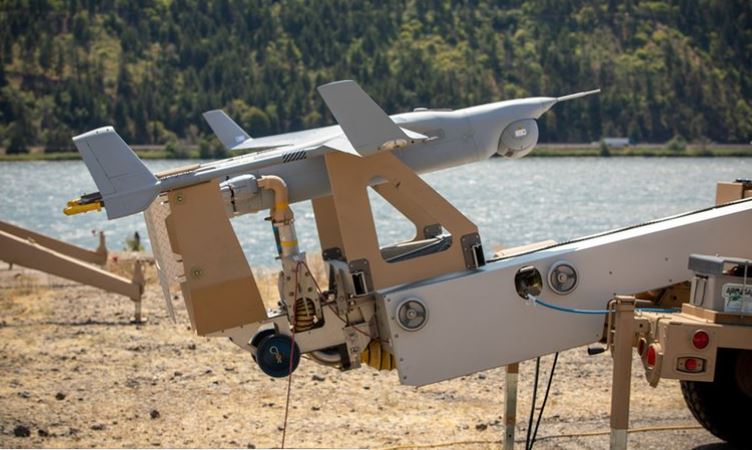
Land 129 Phase 3 Tactical Uncrewed Aerial Vehicles (UAV)
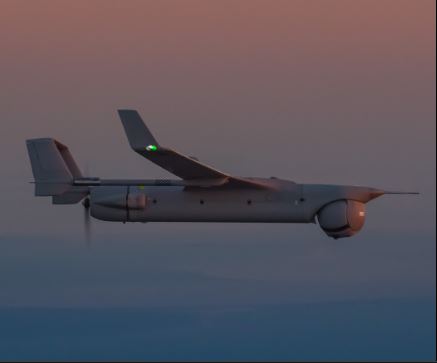
Insitu Pacific is a wholly-owned Boeing subsidiary based in Brisbane has been chosen to supply the Australian Army with a 24 units of Unmanned Aerial Systems (UAS) as part of a $650 million investment in local capability.
The contract includes delivery and initial support of the Integrator UAS and associated Ground Systems and Prime Systems Integrator services, with the majority of manufacture and all assembly to be completed in Australia. The UAS will be equipped with world-leading Australian developed camera sensor technology featuring next generation intelligence, surveillance and reconnaissance (ISR) capabilities.
The Integrator UAV will provide the Australian Army will enhanced capabilities in Intelligence, Surveillance and Reconnaissance (ISR) gathering, and target acquisition for weapon systems across the Australian Defence Force (ADF).
The photos below show the Integrator UAV
|
|
Above: The Queens Battery was constructed as a first line of defence but never saw any action. ( E.R. Pretyman Collection, Tasmanian Heritage and Archive Office)
B
|
|
Are you a member of the Royal Australian Artillery Historical Company? If not then visit our website, view membership details and benefits and join us today! |
Become a part of history by purchasing your Australia's Memorial Walk paver today. For more information view website. |
Publicise Your Upcoming Event |
Are you a member of an Artillery Association? Does your association have an upcoming event? Want to publicise it to a wider audience for free? Contact the Editor for further details.
|
|
Did You Know?
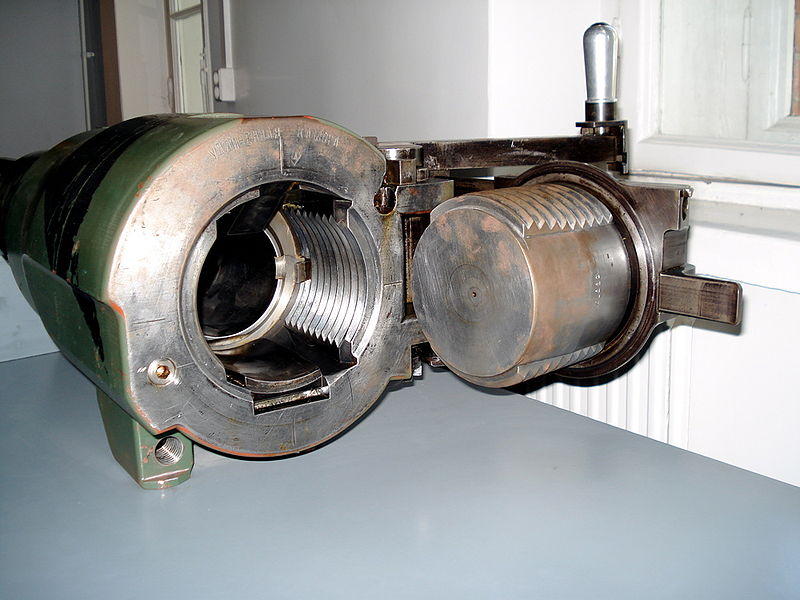
Interrupted breeches
Through the 1870s guns, particularly coastal-defence and naval guns, became longer so as to extract the utmost power from large charges of gunpowder. This made muzzle loading more difficult and gave a greater incentive to the development of an efficient breech-loading system. Various mechanisms were tried, but the one that supplanted all others was the interrupted screw, devised in France. In this system the rear end of the bore was screw-threaded, and a similarly screwed plug was used to close the gun. In order to avoid having to turn the plug several times before closure was complete, the plug had segments of its thread removed, while the gun breech had matching segments cut away. In this way the screwed segments of the plug could be slipped past smooth segments of the breech, and the plug slid to its full depth. Then the plug could be revolved part of a turn, sufficient for the remaining threads to engage with those in the breech.
|
COMMEMORATING 150 YEARS
1871 - 2021
The RAAHC and the Australian Artillery Association continue to support the initiative by publishing history items on Facebook and the web site. Click on the yellow text to access updated information
-
Gunner Perspectives – candid interviews of everyday Gunners from all corners of today’s Gunner community.
This initiative was created by the Regiment with a team lead by Lieutenant Colonel Nick Floyd. The RAAHC & AAA produced the video series and are is proud to participate in the rest of the initiative.
|
|
Gunners Around the Nation & The World |
|
View the latest Newsletters from various Artillery associations around the nation:
RAA Association Victoria Newsletter - Cascabel
Locating Surveillance and Target Acquisition Association - Newsletter
Royal Australian Artillery Association (NSW) -Website
Australian Artillery Association - Website
‘A’ Field Battery Association Incorporated-Newsletter
|
|
PO Box 171
Cremorne Junction
NSW 2090 Australia
|
|
|
|
|
|
|