Royal Australian Artillery Historical Company
ENewsletter Edition No 79 February 2024
|
|
Dear Gunners (Readers) -
Welcome to Airburst No 79 February 2024
2024 has already begun to tempus fugit!
I hope you all enjoyed the Xmas and New Year breaks. The Board met on the 10 February with a limited agenda reflecting the low level of activity since the November AGM.
Essential History of Australian Artillery Project - Update
The project is being managed by John Cox. The RAAHC has taken full ownership of the book. The Company is funding publication and is dealing with with Big Sky Publishing.
•Manuscript has been returned from Copy editor for review by authors. Review by authors completed by 08 Feb and response back to Big Sky Publishing.
• Images: all submitted. No issues to report.
• Maps: all maps submitted to Big Sky Publishing.
It is expected that the publication will meet the intention to be available by August 2024.
The cancellation of the Combined Arms Heritage and Learning Centre has created some issues for the RAAHC. The first of these is the future location of the ANZAC Centennial Gun (ACG). Currently the MOU with the Temora Aviation Museum is scheduled for renewal in January 2025. The RAAHC will seek an extension to the MOU for another five years thus allowing the ACG to be available for public viewing until the dust settles on the future development of the Heritage Centre.
Corporate Plan
There is a need to review the corporate plan to guide the actions of the RAAHC over the period 2025-2030. A draft for discussion will be prepared for the May Board Meeting. Any input from Members would be welcome. Email the CHAIR. A reminder that all yellow text is a link to an email or a website.
Major General (Retd) Craig Furini has been appointed Representative Colonel Commandant (RCC) and replaces Brigadier (Retd) Don Roach. We extend our thanks to Don and wish Craig all the best.
Graham Hampton, Secretary of the Australian Artillery Association and a life member of the RAAHC, has been gravely ill after contracting covid and then an infection. He is recovering in Sunshine Coast Hospital and his family are relieved and greatly appreciative of all the efforts of the medical staff. He is on the mend but progress will be slow.
UBIQUE
Ian Ahearn
Chair RAAHC
|
|
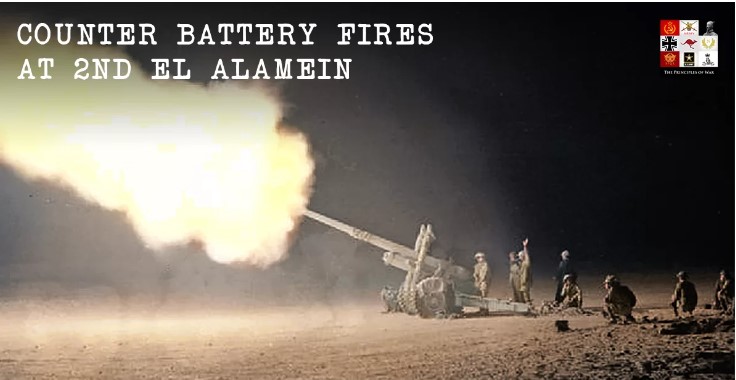
RAAHC Board Member, James Eling has continued to add to his podcast. This episode looks at the Counter Battery battle at 2nd Alamein and is part of the Battles of Alamein series. It is part of the RAAHC commemorations for 150 years of Australian Artillery and a part of our 10 decisive battles for Australian Artillery series. These are the show notes – for the full details, listen to the podcast on your favourite podcast player.
Operation Lightfoot
Montgomery's plan was for a main attack to the north of the line and a secondary attack to the south, involving XXX Corps (Lieutenant-General Oliver Leese) and XIII Corps (Lieutenant-General Brian Horrocks), while X Corps (Lieutenant-General Herbert Lumsden) was to exploit the success. With Operation Lightfoot, Montgomery intended to cut two corridors through the Axis minefields in the north. One corridor was to run south-west through the 2nd New Zealand Division sector towards the centre of Miteirya Ridge, while the second was to run west, passing 2 mi (3.2 km) north of the west end of the Miteirya Ridge across the 9th Australian and 51st (Highland) Division sectors. Tanks would then pass through and defeat the German armour. Diversions at Ruweisat Ridge in the centre and also the south of the line would keep the rest of the Axis forces from moving northwards. Montgomery expected a 12-day battle in three stages: the break-in, the dogfight and the final breaking of the enemy. A counter battery plan was developed to support the operation.
It is far, far better to give than to receive – the key principle in the counter battery battle.
Survey Troops supporting the battle
How did they do it and what role did the 4th Survey (Durham) Regiment play, along with the Desert Air Force and Engineers in constructing a process to find and neutralise Axis Artillery? The Regiment established 2 sections for flash spotting and 2 sections for sound ranging. The Survey troops supported the calibration of the guns, determining the muzzle velocity for each of the guns in the 8th Army. Calibration shoots were conducted every 3 days, such was the wear that some of the guns were experiencing during the heavy firing.
The Survey Troops also maintained the meteorological data, updating it every 2 hours, providing corrections of the moment for the batteries.
The Counter Battery Office (CBO)
The CBO was responsible for maintaining the HBL – the Hostile Battery List.
The 9th and 51st Divisions sent out infantry patrols to draw artillery fire. The sound ranging and flash spotting sections were forewarned, enabling them to update the Hostile Battery List and improve it’s accuracy.
Such measures assisted in planning the CB that denied Axis Artillery the ability to interfere with the commencement of Operation Lightfoot.
Before Op Lightfoot commenced,a silent counter battery policy was instigated for the last 2 weeks before the offensive. This meant that no HBs were to be fired on. This decreased the need for the Axis artillery to move positions. The artillery commanders wanted all enemy batteries to remain in place right up until their neutralisation at the start of H-Hour.
The Desert Air Force also worked to assised in the locating of the batteries. It flew photo reconnaissance mission and the Aerial Photographic Interpretation Section kept track of each of the batteries.
Once the infantry crossed the Line of Depature, the static battle finished and a battle of manoeuvre commenced. This made it more difficult to track the Hostile Batteries.
|
|
HARS 40mm Bofors -Request for Help
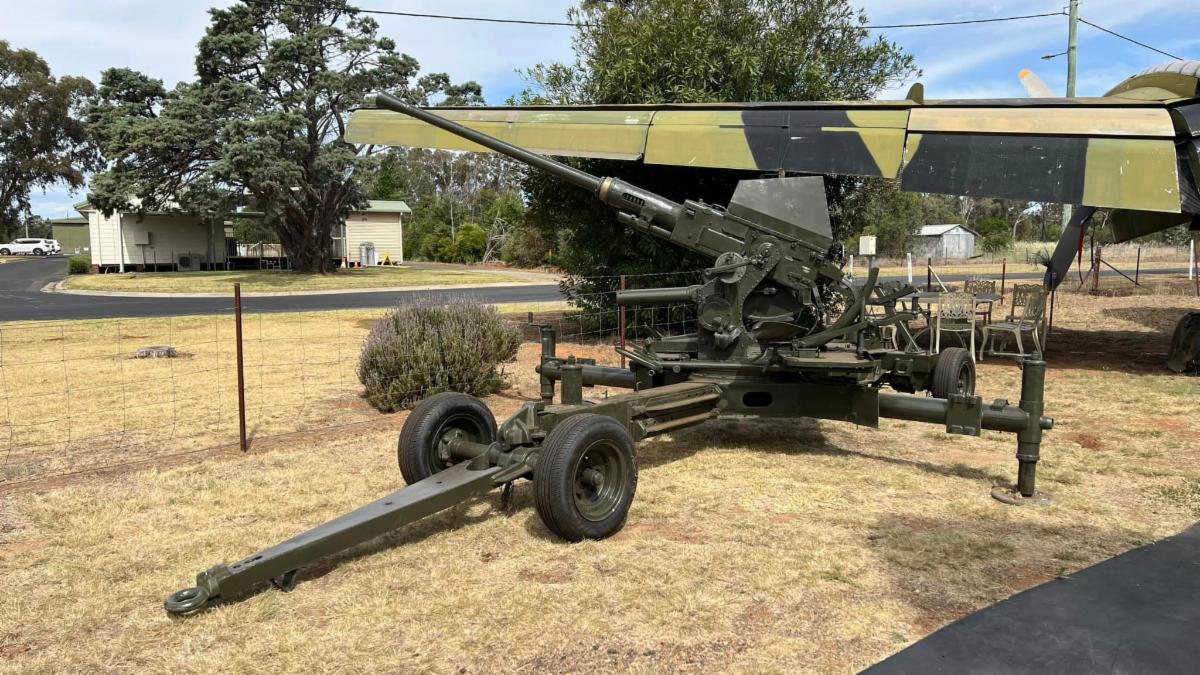
The Historical Aircraft Restoration Society, often referred to by its acronym, HARS, is an Australian based aircraft restoration group. The group has two museums, at Shellharbour Airport in New South Wales, Australia, and Parkes, New South Wales, HARS has a 40mm Bofors on long term loan from the RAAHC and are seeking artillery volunteers to assist in its restoration.
John E Boland is the HARS Bofors Project Manager and is located at Albion Park in NSW. John can be contacted on Mobile: 0438295577 or Email: johneboland@optusnet.com.au. He has provided the information below and if you can offer help please contact him on his mobile or email.
HARS is seeking artillery volunteers to assist in the servicing, cleaning and painting of the 1941 L-60\40mmA.A.Bofors which is loaned to HARS, Albion Park by the RAAHC.
1. The gun has now been under cover for some time and gets regular servicing, cleaning and exhibiting every Saturday that I attend the Albion Park Museum. But, to properly and respectfully honour this gun, it needs a more intensive maintenance program than I can single handedly perform. To be blunt....I need assistance, other pairs of hands
2. The presentations that I give are quite well received. However, I remain “At Post” for the whole Saturday and are, therefore, unable to attend to the needs of the other guns in our care.
3. I am actively recruiting amongst our team of volunteers who exhibit amazement at the detailed history of the Gun from inception to finished working Gun.
4. Guides give me time, (usually 5 minutes) to entertain their groups who they guide around our 72 odd exhibition aircraft.
5. I would like to reach out to the greater population of Royal Australian Artillery currently serving and retired who might be interested in “serving” a day or two at HARS Albion Park at regular intervals. I have learning resources in hand to bring a candidate up to speed (well up to 1932 anyway)
|
|
’
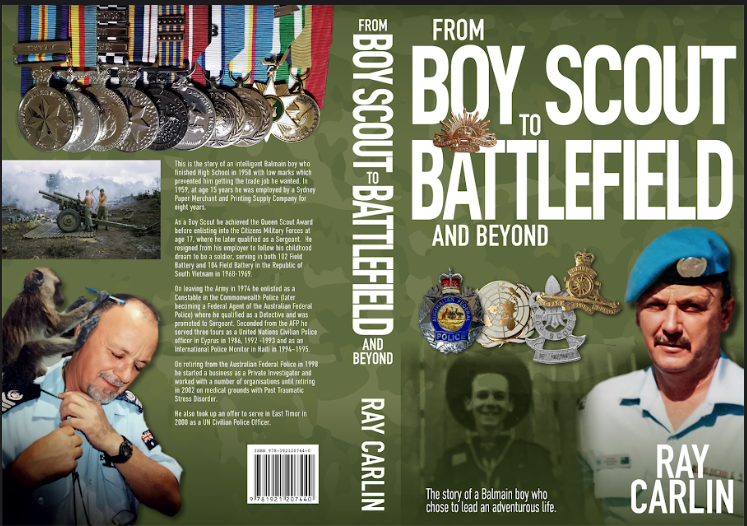
This is the story of a Balmain boy who almost failed High School resulting in him failing to
attain an apprenticeship due to low marks.
It is a story of resilience, perseverance, leadership, loyalty and mateship and a willingness to step out of his comfort zone.
As a youth he attained the Queen Scout Award in the Boy Scouts, whilst working for a Sydney printer’s supplier and enlisted into the CMF (Army Reserve at age 17 years) in 1960 where he qualified as a Sergeant. 1n 1968 he enlisted into the Australian Regular Army to serve in Vietnam and again qualified for Sergeant’s rank before taking his discharge in 1974'to enlist in the Commonwealth Police Force (later becoming a Federal Agent of the Australian Federal Police) where he was designated a Detective at Sergeants rank. Whilst in the AFP he served in Major Crime, the Drug Branch, and Close Protection as well on a number of task forces and service as a UN Civilian Police officer in Cyprus in 1986 and again in 1992-1993. In 1994 -1995 he served as an International Police Monitor with the U.S. led Multinational Force in Haiti. In 1998 he retired from the AFP, obtained a Private Investigators licence and started his own business doing insurance and bank card investigations. In 2000 he accepted a 7 month contract with the AFP to serve as a UN Civilian Police officer in East Timor.
It is a story of a life time of service to the Australian community and is a good example of what a young Australian can achieve even when he or she misses out on their preferred career. The book has 379 pages and over 100 photographs
most in colour. It will retail for $45 plus $10 postage within in Australia.
Anyone wishing to order the book can do so by contacting the author, Ray CARLIN, on
They can pay for it by electronic transfer to:
St George Bank Erina Fair Branch
Account Name: Ray CARLIN
BSB: 112879
Account Number: 205578480
Please put your surname in the Description AREA and make sure you send a email with name and postal address..
|
|
2/2nd Anti-Tank Regiment
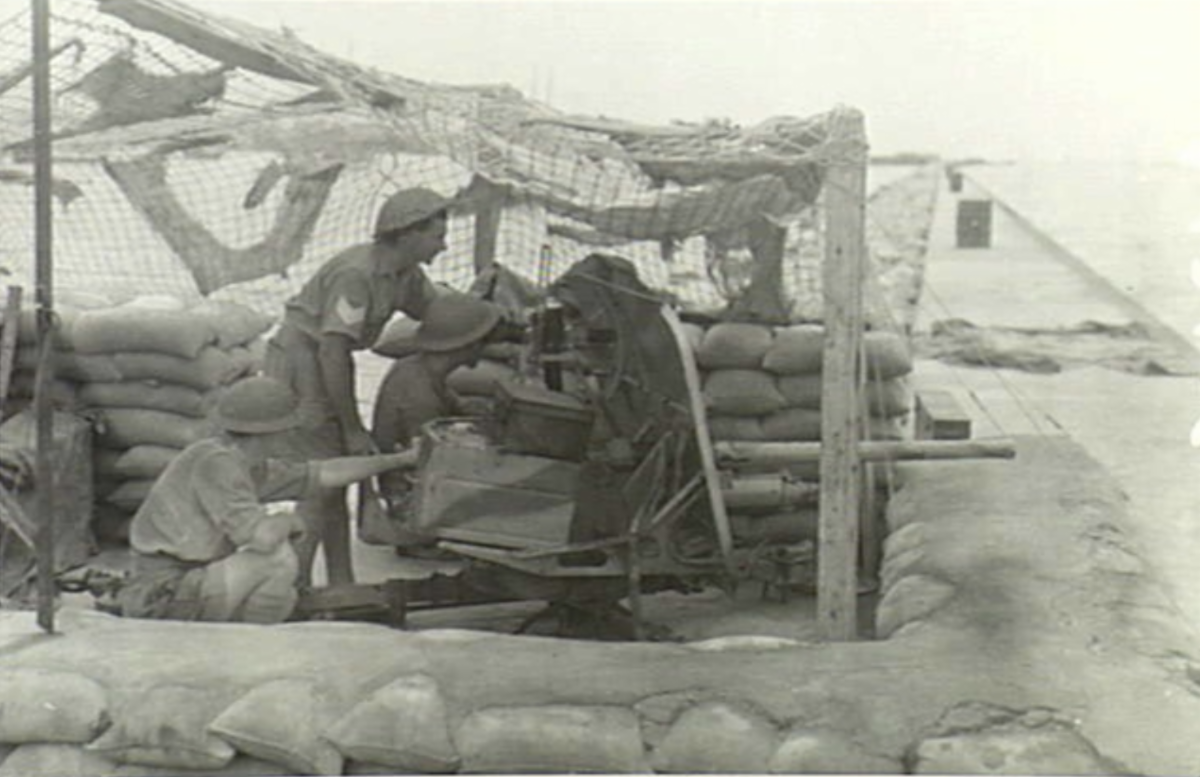
The 2/2nd Anti-Tank Regiment was formed near Redbank, Brisbane in Queensland in May 1940, as part of the Second Australian Imperial Force. It consisted of four batteries: 5th, 6th, 7th, 8th Anti-Tank Batteries. The regiment would see service in the North African campaign, Northern Palestine, Egypt, Syria and then later Darwin and Borneo.
The regiment became a part of the artillery force of the 7th Infantry Division, and left Australia for the Middle East in October 1940. On arrival in November 1940, the regiment was located, in Palestine, remaining there until March 1941 when they were sent to Egypt. After receiving the remaining 2 pounder anti-tank guns, equipment, the regiment was assigned to the 7th Infantry Division.
The Regiment saw its first action in May 1941 when the 5th Anti-Tank Battery served in the Halfaya battles during May 1941 when Allied troops attempted to recapture the pass and relieve Tobruk.
In June -July 1941, during the invasion of Syria, the 6th Anti-Tank Battery of the Regiment lost one portee gun when” a heavily armoured enemy tank just crawled up to it, with our two pounders bouncing of its sides and literally extinguished our Australian gun and detachment at point.”-blank range.” (The Gunners by David Horner Page 277).
On the 14-15 June 1941 the French mounted a fierce attack and the 8th Anti-Tanks Battery helped repeal the attack by destroying four enemy tanks. All four guns of the Battery were lost. During the fighting in the Syrian Campaign the 2/2 Anti-Tank Regiment lost seven killed and 31 wounded.
The Regiment was withdrawn from the Middle East in March 1942 when it returned to Australia following Japan's entry into the war. During 1942 the Regiment served in various locations in Australia until finally being located in Queensland. The Regiment was reorganised by the disbandment of the 7th Anti-Tank Battery leaving it with three batteries. The remaining Batteries, 5th, 6th and 8th) were assigned to brigades in the 7th Infantry division and accompanied their brigades to New Guinea. The 8th Battery deployed with the 25th Brigade in September 1942.
On 26 November 1942, Brisbane was shaken by riots, protesting and violence over disputes between American and Australian servicemen, in what became dubbed the Battle of Brisbane. The 2/2nd's involvement came about through the actions and death of one of its members, Gunner Edward Webster, who was the only person killed during the riots. A US Military Policeman (MP) fatally shot Webster with a shotgun which was fired three times, wounding many other Australian servicemen. The US MP was court-martialled by the US military for manslaughter, but he was later acquitted as his actions were deemed have been self-defence.
The Regiment deployed to Port Moresby arriving in December 1942 landing at Oro Bay. Here, the regiment concentrated the 5th and 6th Batteries, and assumed command of several smaller detachments including US units. The regiment was renamed the 2/2nd Tank Attack Regiment in March 1943 and the following month it moved to Milne Bay, to occupy beach defences. While there, they came under the command of the 5th Infantry Division.
The regiment returned to Australia in October 1943, and was concentrated under the First Australian Army at Helidon, Queensland, and received reinforcements from several Militia tank attack regiments that were disbanded at this time. In June 1944, the regiment moved to Batchelor, in the Northern Territory, to replace 103rd Anti-Tank Regiment under Northern Territory Force. The 2/2nd then left in September 1944 for Atherton, Queensland, there it trained with the 7th Division. The unit then deployed to Morotai Island in June 1945, preparation for commitment to Borneo. It landed with 7th Division at Balikpapan on 1 July 1945, where it saw out the rest of the war, being utilised as ad hoc infantry and in the field artillery role using 4.2 Inch Mortars.
The 2/2nd Regiment was disbanded in Queensland in 1946 along with the rest of the 7th Division. Military decorations awarded to members of the Regiment included two Distinguished Service Orders, two Military Crosses, two Military Medals and five mentions in despatches.
In its seven-year life the Regiment was equipped with a range of weapons including the 2 Pounder Anti-Tank Gun, the 6 Pounder Anti-Tank gun, the 75mm Pack Howitzer and the 4.2 inch Mortar. A testimony to its professional artillery capability.
|
|
 |
Elements of the 2/2nd on occupational duties in Tripoli 1941. |
|
|
|
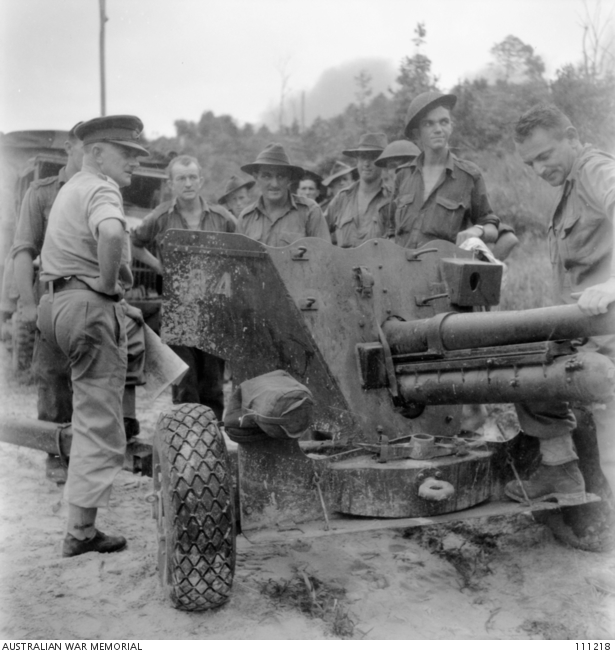
BALIKPAPAN, BORNEO, 4 JULY 1945. MAJOR GENERAL E J MILFORD, GENERAL OFFICER COMMANDING 7 DIVISION (1) SPEAKING TO A GUN CREW OF 2/2 TANK ATTACK REGIMENT |
|
|
|
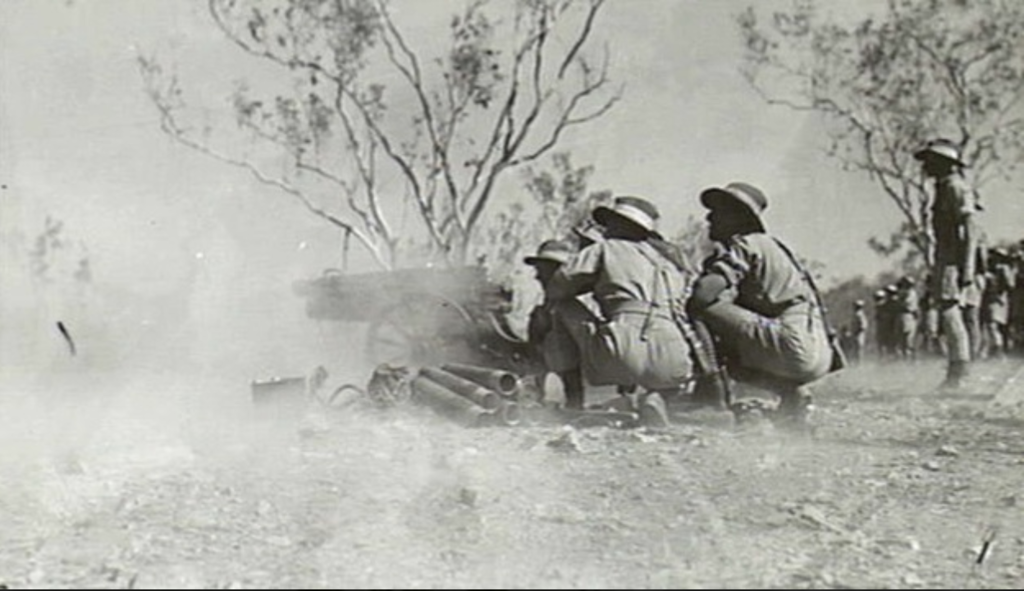
75mm Pack Howitzer demonstration by the 2/2nd. |
|
|
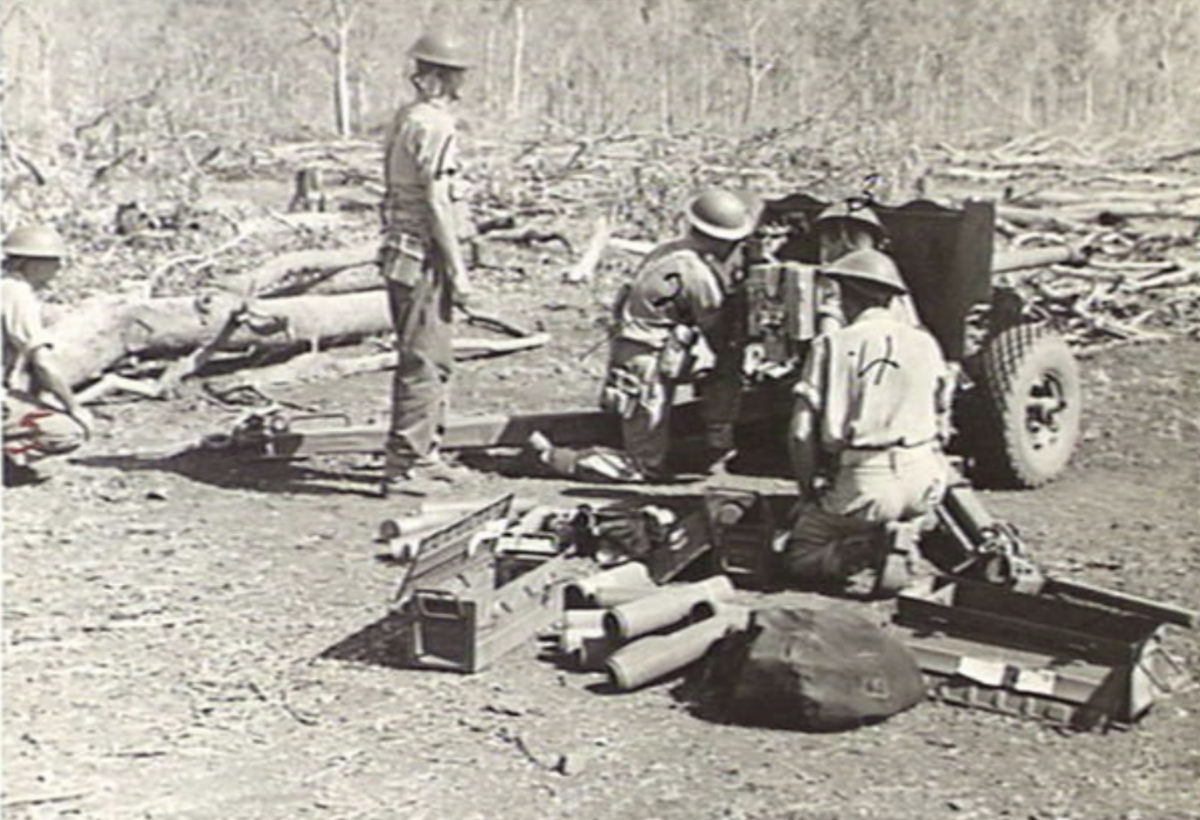
Tank Rock, Queensland, 27 November 1944. A 2/2nd Tank Attack Regiment gun crew load 6-pounder gun during practice at the artillery range. |
|
|
|
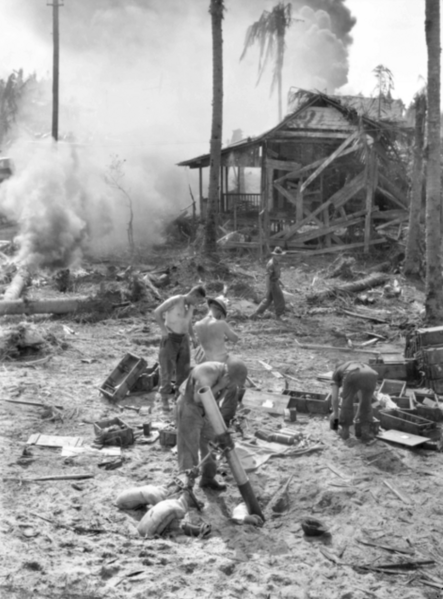
2/2nd Anti Tank Shelling Japanese positions in Balikpapan, Borneo with their 4.2 Mortar. |
|
|
|
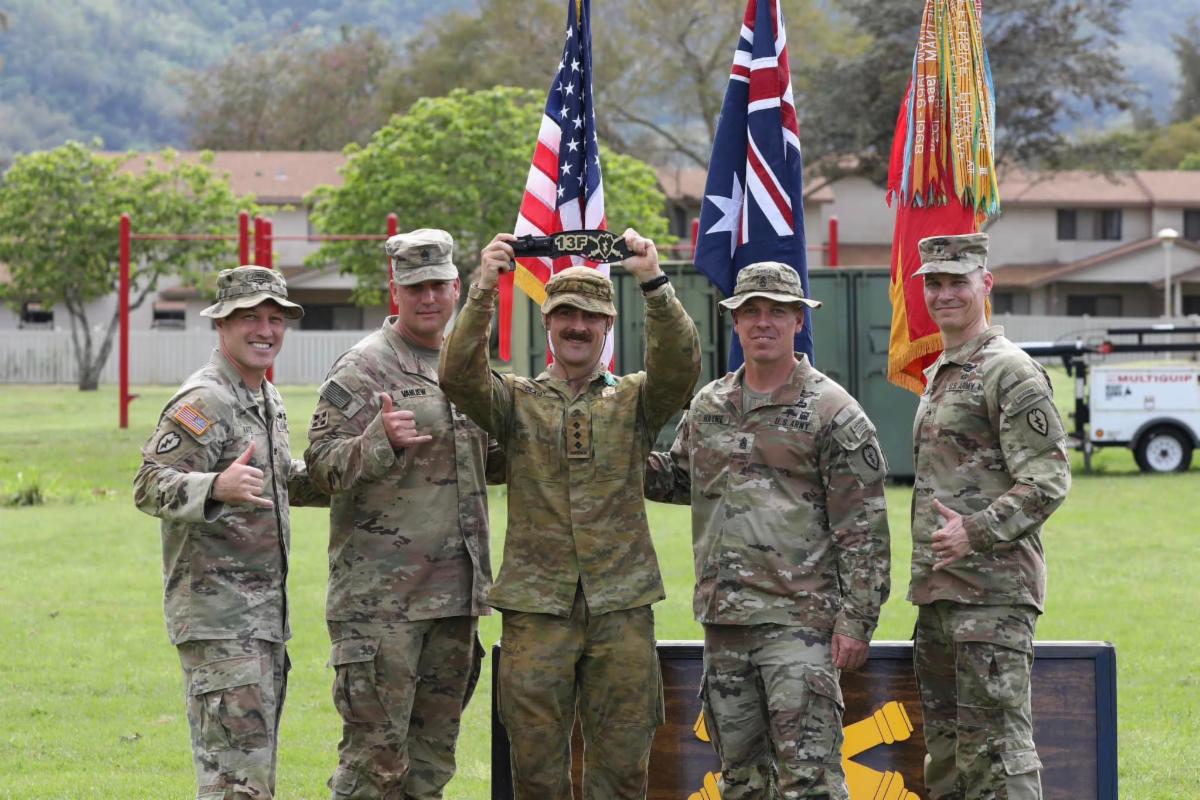
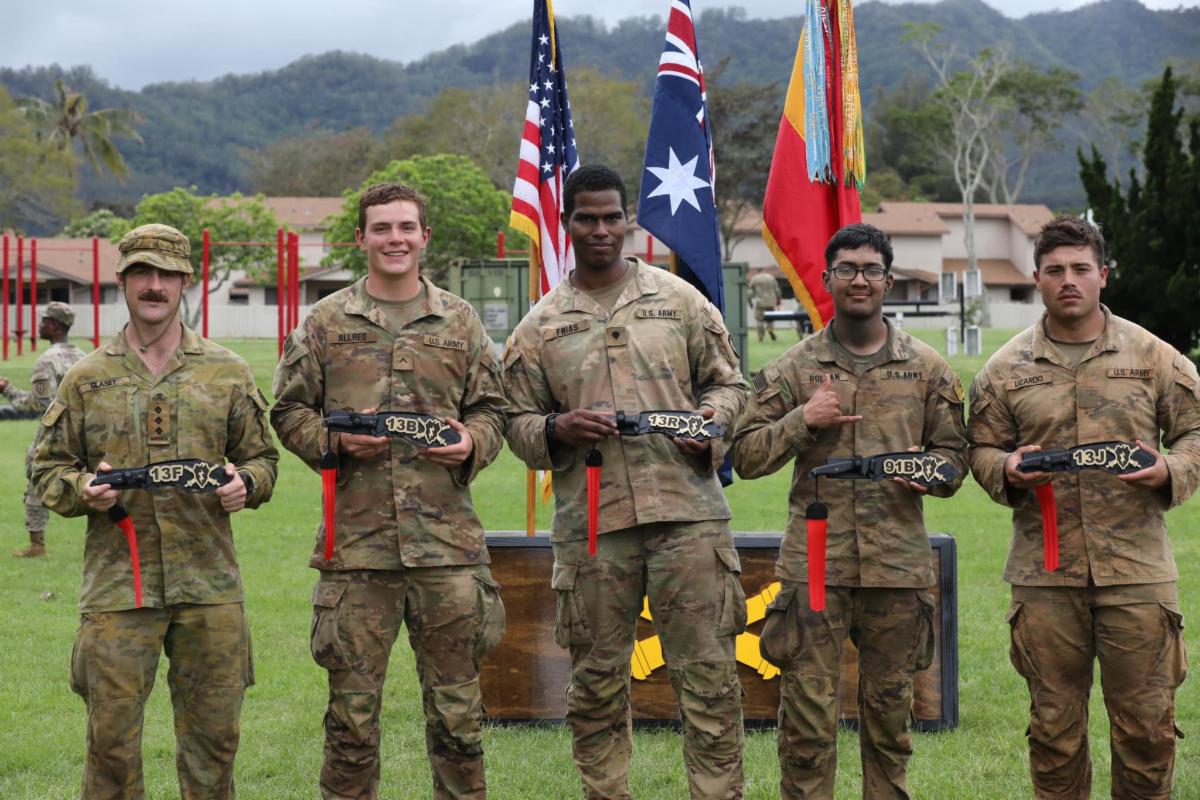
BEST BY TEST 25th Infantry Division Artillery Brigade
109 Battery, RAA, 4th Regiment RAA in a US competition wins best FO party.
During today’s (10 February 2024) #BestByTest24 Award Ceremony, we recognized the TOP Soldier in each Military Occupational Specialty Code (MOS) that participated in this years competition Congratulations to all of you! Well deserved!
- Best Fire Support Team (FIST) is 109th Battery AUS
- Best Fire Direction Center is 2-11 Field Artillery
- Best Maintenance Team is 2-11 Field Artillery
- Best M777 Team is 3-7 Field Artillery
- Best Q53 (RADAR) Team is 2-11 Field Artillery
- & Best M119 Team is 3-7 Field Artillery
: 1LT Aylin Hernandez
Visit the link below to access all of the #BestBy Test photos!
|
|
Are you a member of the Royal Australian Artillery Historical Company? If not then visit our website, view membership details and benefits and join us today! |
Become a part of history by purchasing your Australia's Memorial Walk paver today. For more information view website. |
Publicise Your Upcoming Event |
Are you a member of an Artillery association? Does your association have an upcoming event? Want to publicise it to a wider audience for free? Contact the Editor for further details.
|
|
CARTOON CORNER-a laugh is as good as a holiday e
|
Did you Know?
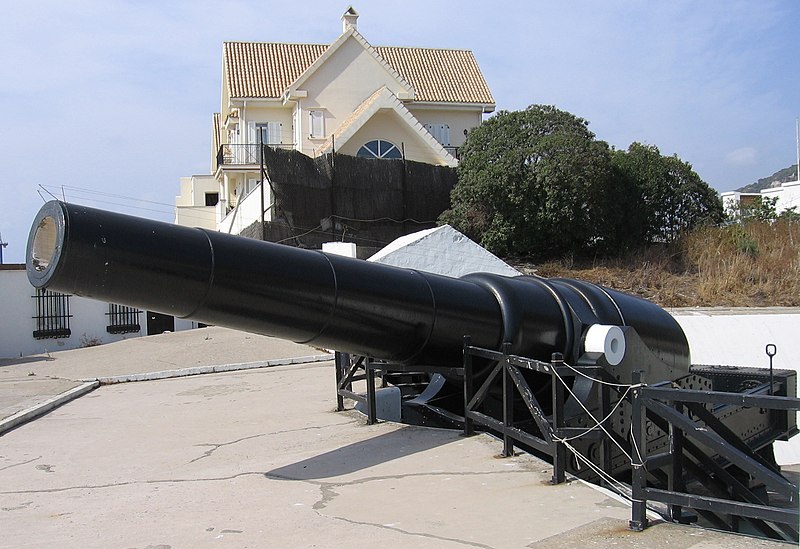
The 100 ton gun
|
|
Gunners Around the Nation & The World |
|
View the websites/ Newsletters from various Artillery associations around the nation and overseas:
RAA Association Victoria Newsletter - Cascabel
Locating Surveillance and Target Acquisition Association - Website
Royal Australian Artillery Association (NSW) -Website
Australian Artillery Association - Website
|
|
PO Box 171
Cremorne Junction
NSW 2090 Australia
|
|
|
|
|
|
|