June 20, 2024

ALI Perspective

June 12 was World Day against Child Labor. Globally, about 160 million children, or one in 10 children between the ages of 5 and 17 are involved in child labor, many of which have been sold or trafficked by their families. Since 2019, child labor has also been on the rise in the U.S., in part because of a trend of state legislatures' loosening restrictions on child labor laws in the tight labor market. In 2023, the Labor Department found 5,800 children employed in violation of child labor laws, an 88% increase since 2019. Of special concern, many of the new state regulations on child labor make children eligible to work in dangerous adult jobs like construction and meat packing, and during hours that compromise their schooling.


All children should have the opportunity to be safe, go to school, and prepare for a productive future. As a global leader, the U.S. should work to eliminate child labor in its borders and support global efforts to ensure that the current generation of child laborers are the last. 


Coming Up

Register Here

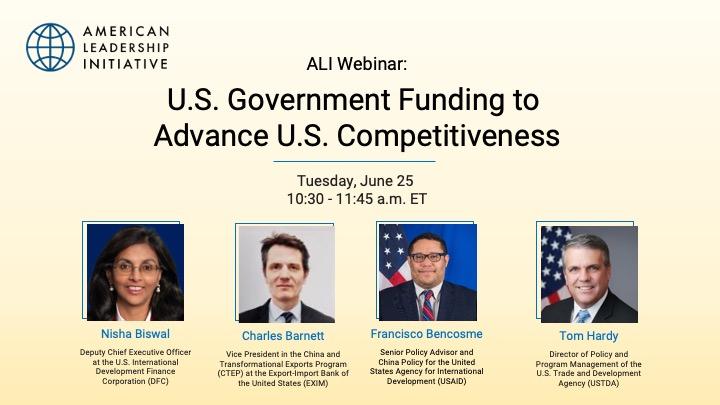
Webinar on Advancing U.S. Competitiveness: Join us on Tuesday, June 25 at 10:30 a.m. ET for a webinar with the U.S. International Development Finance Corporation (DFC), U.S. Eximbank, U.S. Agency for International Development (AID), and U.S. Trade and Development Agency (TDA) to discuss their strategies to support U.S. global competitiveness.


ICYMI


June: ALI hosted a robust conversation about Advancing U.S. Quantum Competitiveness, with Dr. Gretchen Campbell, Director of Quantum Policy in the White House, and other thought leaders from the public and private sectors. Participants discussed the importance of the government’s role in partnering with the private sector to enhance U.S. competitiveness and to prepare a quantum-ready workforce.


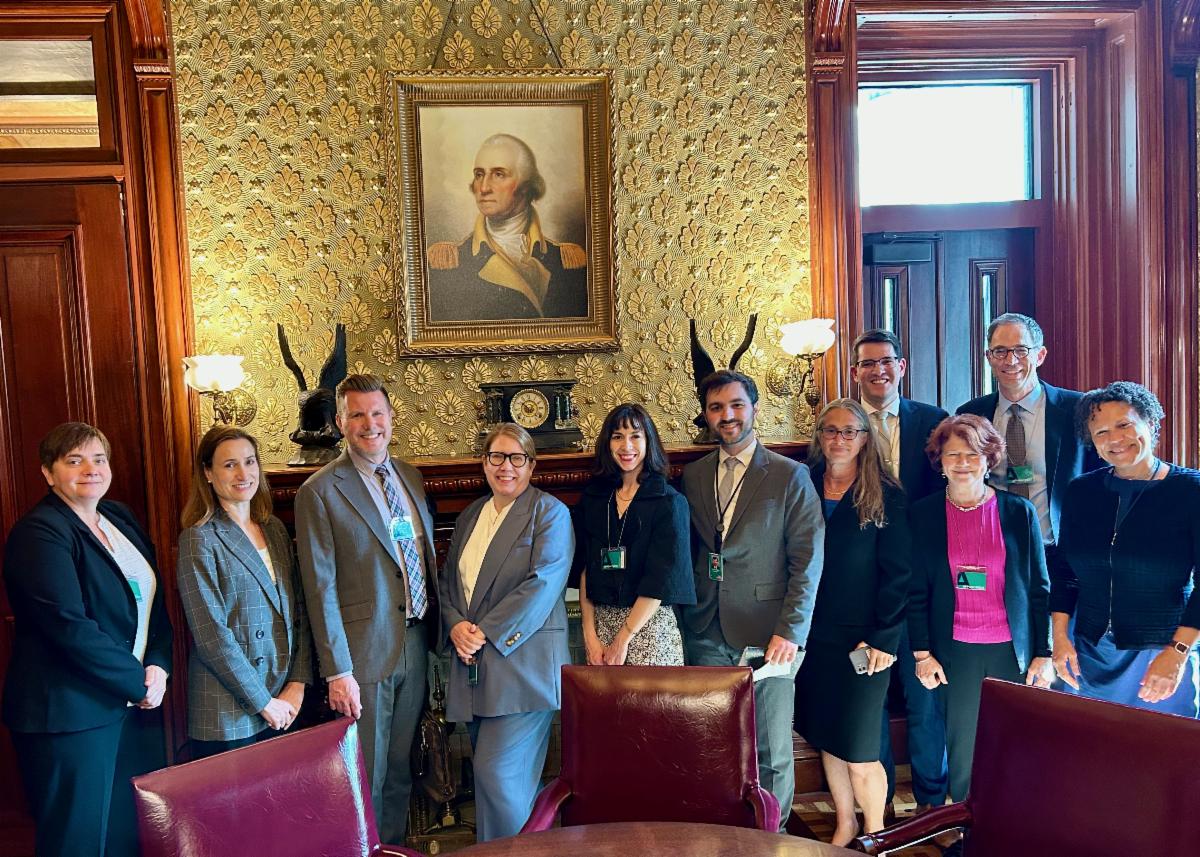
June: ALI took a group of thought leaders from civil society and business to the White House for a discussion on global governance of artificial intelligence (AI).


ALI recently released its latest white paper: U.S. Leadership on AI Global Governance.


May: ALI hosted a robust conversation on Building a Critical Minerals Supply Chain with Representatives Haley Stevens and Paul Tonko, and other thought leaders from the Administration, civil society, think tanks and businesses.


What We're Reading

CAP: Designing A New Paradigm in Global Trade


"The Global Arrangement on Sustainable Steel and Aluminum (GASSA)—a proposed agreement to increase trade in steel and aluminum produced in a way that emits lower greenhouse gas emissions—may be the most ambitious trade initiative pursued by the Biden administration and offers a template to move beyond the traditional neoliberal approach to free trade. Much has been written on why GASSA would be a game-changer for U.S. trade policy, including by the authors of this report. To date, however, there has been little exploration of how GASSA, or an expanded GASSA-like arrangement that includes more trading partners, would work—until now."

White House: Remarks by CEA Chair Jared Bernstein at the 2024 China – US Symposium

"All of these insights and revelations underscore the rationale for an industrial strategy that seeks to build domestic capacity and diversify global supply chains for critical clean energy technologies. That, in turn, requires us to protect our investments in this space against a glut of underpriced exports in these strategic sectors. Again, we must strive to exist in the realm of both/and. We must value and support trade flows that push out our domestic supply curve while blocking flows inflated by non-market competition..."


PPI: U.S. Quantum Technology Leadership Hinges on Federal Policy in the 118th Congress


"...understanding the different quantum computing technologies is important because Congress is in the process of reauthorizing and expanding the National Quantum Initiative (NQI) Act which expired on September 30, 2023....Up to now, the federal government has mostly focused on supporting longer-term basic research in quantum technology, which is important for long-term competitiveness. But the government also has an important role to play in supporting near-term quantum technologies.... the NQI and related legislation must support the development of a skilled workforce that can support the growing U.S. quantum industry, and the end users of the technology both in the private and public sectors."

 
Providing a new vision for American global leadership
Follow us!
Linkedin  Twitter