|
Our ANA newsletter will be moving from a weekly to a monthly publication coming this February. We at ANA will prioritize the information, resources and funding opportunities we share so that each month you receive the most beneficial content related to the priorities of the Administration for Native Americans and its partners.
| |
|
ANA MMIP podcast, features Sheldon Spotted-Elk
ANA is excited to announce the release of Part 2 of the "What is Violence" segment. It's the newest podcast in its series “Keeping Us Whole: Preventing Missing and Murdered Indigenous People.”
In addition to the theme "Preventing Violence," this series will cover three other themes, “Protecting our Children, “Protecting our LGBTQ2S Relatives,” and “Surviving, Serving, Speaking.”
Listen to Part 2 of Episode 1 in this 10-part podcast series by clicking on the link here.
You can also listen to the podcast on your mobile devices by using Spotify, your Amazon Echo and Amazon Music!
To listen or view information about the podcast series, visit the ANA website.
| |
|
HHS Extends Deadline for Tribal Consultation Policy Comments
The deadline to submit written comments on the HHS Tribal Consultation Policy draft has been extended to January 27, 2023.
As a reminder, the updated draft addresses comments and recommendations received during the first round of consultation in spring 2021, as well as the input of the Secretary's Tribal Advisory Committee (STAC) Tribal Consultation Policy Workgroup. Comments on the updated draft are due by January 27, 2023 and may be submitted to consultation@hhs.gov.
A copy of the Dear Tribal Leader Letter outlining the major recommendations and changes in the updated draft is attached. Also attached are a clean and redline version of the updated draft to facilitate the commenting process. HHS is consulting Tribal leaders on its updated draft HHS Tribal Consultation Policy. The updated draft addresses comments and recommendations received during the first round of consultation in spring 2021, as well as the input of the Secretary's Tribal Advisory Committee (STAC) Tribal Consultation Policy Workgroup. Comments on the updated draft are due by January 6, 2023 and may be submitted to consultation@hhs.gov. A copy of the Dear Tribal Leader Letter outlining the major recommendations and changes in the updated draft is attached. Also attached are a clean and redline version of the updated draft to facilitate the commenting process.
| |
Webinar: 4C for Cherokee Children Cultural Connection
As tribal child welfare professionals, you know the trauma that children experience in the foster care system. No best practice can alleviate the impact of being removed from the homes they know and caregivers they love. The Cherokee Nation has implemented an innovative program to help Cherokee children in foster care process the trauma, grief and loss due to this separation.
Join the Center for Tribes on February 9, 2023. 2:00 PM Eastern Time, to learn about this exciting initiative 4C for Cherokee Children Cultural Connection that provides alternative methods for children to process trauma, expands their cultural knowledge and connects their spirits for improved mental and physical health.
Feb 9, 2023, 2:00 PM in EST
Register here.
| |
Save the Date: Tribal Listening Session
Wednesday, February 1, 2023 | 3:00 - 4:30 PM ET
On February 1, 2023, the Census Bureau will hold a listening session for tribal leaders to learn about the Proof of Concept for the 2020 Census Detailed Demographic and Housing Characteristics File A (Detailed DHC-A) for public review and feedback. The listening session will be followed by a tribal consultation on February 23, 2023. The 30-day public feedback period on the Proof of Concept will conclude on March 2.
This Proof of Concept will be based on 2010 Census data. The Proof of Concept will not include accompanying summary files or a full run of the 2010 Census data. Rather, we are asking users to evaluate data fitness-for-use based on the proposed thresholds and margins of error using metrics and example data.
The Detailed DHC-A will provide population counts and sex and age statistics for detailed racial and ethnic groups and American Indian and Alaska Native tribes and villages. Improvements in the design of the 2020 Census race and ethnicity questions, as well as improved processing and coding, enabled us to collect more detailed race and ethnicity data in 2020 than ever before. The final Detailed DHC-A based on 2020 Census data is slated for release in August.
| |
|
ANA Hosts Pre-Application Trainings in Regions
Pre-Application (Pre-App) Training is now open for several ANA regions.
Upcoming Pre-App trainings will help you work closely with your community to frame your community-based project plan as a viable and competitive ANA grant application. Drafting an ANA grant is not difficult when you take a project built around the community’s wants and needs and use it as the basis of your proposal; and we’ll show you exactly how to do that! Topics for both in-person and virtual trainings will be dependent on time constraints, but both will include:
- How to understand the Notice of Funding Opportunity (NOFO)
- How to align a community-based project design with the scoring criteria used in panel review
- How to prepare for the next steps in the submission process.
This training is focused on application development and will not cover how to design a community-based project plan.
Pacific Region
ANA O’ahu Pre-Application Training | ANA Pacific Region TTA Center
January 17, 2023 – Wednesday, January 18, 2023
Western Region
Training – ANA Western Region
Jan 18-19, 2023
Feb 1-2, 2023
January 17-20, 2023
Week 1: 1/24 and 1/26
Week 2: 1/31 and 2/2
Eastern Region
2023 Pre-Application Training – Eastern Region (anaeastern.org)
January 17, 2023 – January 19, 2023
January 24, 2023 – January 26, 2023
January 31, 2023 – February 2, 2023
February 7, 2023 – February 9, 2023
Alaska Region
Pre-Application Training - Alaska Region
January 24 - 26
January 31- February 2
February 7- 9
| |
|
ACF Seeks TAC Nominations
The Administration for Children and Families (ACF) is seeking nominations for vacancies on the ACF Tribal Advisory Committee (TAC). The ACF TAC’s purpose is to strengthen the government-to-government relationship and provide advice on opportunities for ensuring that ACF programs benefit American Indians and Alaska Natives.
ACF oversees a diverse array of grant programs and contracts to expand, enhance, and/or improve the quality, availability, and range of services for children, youth, and their families.
As such, it is important to achieve a balance of representation on the ACF TAC of tribal leaders with experience or interest in economic development, independence and self-sufficiency, Native American languages, Indian child welfare, domestic violence, human trafficking, child support enforcement, Head Start, childcare, Temporary Assistance for Needy Families, and other ACF program areas of interest to tribal nations, for this Committee.
Please submit nominations to Hope MacDonald Lone Tree, Acting Commissioner, Administration for Native Americans, no later than January 13, 2023, to tribalaffairs@acf.hhs.gov.
Read the full letter here DTLL Seeks ACF TAC Nominations.
| |
|
U.S. Department of the Treasury Extends Deadline for SSBCI
The U.S. Department of the Treasury is extending the deadline for Tribal governments to submit their complete SSBCI Technical Assistance (TA) Grant Program applications to March 31, 2023, at 11:59 p.m. Eastern Time (ET).
Tribal governments that submitted a timely and complete SSBCI Capital Program application or were part of a timely and complete Tribal joint Capital Program application are eligible to submit or be part of a Tribal joint application for the TA Grant Program. A list of Capital Program applications Treasury has received corresponding to Tribal governments can be found on Treasury’s website.
Treasury seeks to support all Tribal governments that are interested in participating in SSBCI. Treasury will provide information and technical assistance on TA Grant Program applications to Tribal governments that submit questions to SSBCI_Information@treasury.gov.
| |
|
ANA Releases NOFOs for FY23
ANA is happy to share that the Fiscal Year 2023 Notice of Funding Opportunities (NOFOs) are now published and live!
The following funding opportunities are now available:
Applications for all five NOFOs are due March 31, 2023, 11:59 EST. Please refer to the funding opportunities on https://www.grants.gov/ for all official updates.
*Potential applicants must click on the FY23 PDF under the “related documents” tab when seeking out a funding opportunity on https://www.grants.gov/
| |
|
SAMHSA Releases Resources Regarding Behavioral Health Practices Affected by Climate Change
Developed by SAMHSA DTAC, this issue of The Dialogue focuses on the adaptations that need to be made to disaster behavioral health practices to address vulnerabilities and challenges exacerbated by climate change. The issue features three articles with insights and recommendations from experts in disaster behavioral health regarding ways to address the evolving needs of the community.
The Dialogue, Volume 17, Issue 3 (samhsa.gov)
| |
Strategic Planning in Tribal Child Welfare Programs
The activities that make up the strategic planning process can vary but the purpose is to define a pathway forward for your tribal child welfare program. The identified strategies allow for the creation of an action plan to provide the most effective services to children and families in a meaningful way.
Given this, the strategic planning process most often includes the development or refinement of your program’s mission and vision statements, assessing needs, gaps, and strengths, and clarifying goals, objectives, and desired outcomes. Whether your program has a staff of two, or even fifteen or more, a strategic plan will help ensure your team is working together to achieve the same results for the community.
The Tribal Youth Resource Center describes the importance of this process best: “Planning ahead for current and future generations has always been a priority for Tribal Nations, Villages and Indigenous peoples.
Your children are precious gifts to be nurtured and their futures involve the critical responsibility of planning and carrying out those plans with deliberation, cultural sensitivity and honor. Strategic planning supports the journey towards achieving your community goals for the future.”
StrategicPlanninginTribalChildWelfare.pdf (tribalinformationexchange.org)
| |
NCRN Community Tool Webpage
The National COVID-19 Resiliency Network (NCRN) Community Tools webpage can serve as a valuable resource to help you prepare for a safe and renewing holiday season.
Support Finder
Having basic needs met is essential in the fight against COVID-19. That’s why we recently updated our interactive map to include social services that promote overall well-being. Along with COVID-19 testing locations, vaccination sites, and health centers, the map now includes:
The holidays are almost here! As the weather turns colder and families travel to gather with loved ones, the National COVID-19 Resiliency Network (NCRN) Community Tools webpage can serve as a valuable resource to help you prepare for a safe and renewing holiday season.
Support Finder
Having basic needs met is essential in the fight against COVID-19. That’s why we recently updated our interactive map to include social services that promote overall well-being. Along with COVID-19 testing locations, vaccination sites, and health centers, the map now includes:
· Low-cost essentials, including baby supplies, home goods, clothing, toys, gifts, and medical supplies
· Food security programs, such as food pantries, community gardens, and meal delivery services
· Educational resources for children and adults, including tutoring, English as a Second Language (ESL) classes, preschools, and youth programs
· Transportation assistance, such as discounted or free bus passes, gas vouchers, and transportation services for health appointments
Community Health Snapshot
Are you traveling and unsure what the COVID-19 risk is like away from home? This new feature combines data on vaccination rates, COVID-19 cases, hospitalizations, and deaths to determine COVID-19 risk in specific ZIP codes. The tool also shows hospitalization data per county for seasonal illnesses such as influenza.
Educational Resources
NCRN and our network of partners provide educational resources to promote healthy communities. Here are a few that may be useful over the holidays
We hope these tools and resources help you and your community have a healthy and joyful holiday season. In the spirit of the season, thank you to our partners and communities for your continued collaboration and support!
| |
|
USDA Native Youth Resource Guide 2022
U.S. Department of Agriculture (USDA) Secretary Tom Vilsack and Marc H. Morial, President of the National Urban League, announce a Memorandum of Understanding (MOU) to reaffirm and strengthen the relationship between USDA and the historic civil rights organization. USDA and National Urban League share a common mission to enhance equity across the country, ensure access to adequate nutrition and improve quality of life for underserved populations.
Through this strategic partnership, USDA and National Urban League will work collaboratively to promote nutrition and food security, increase access to healthy foods, and ensure equitable service delivery of USDA programs in underserved communities across the country. Moreover, this union will encourage urban agriculture as a means of increasing food production and access, making a living, and improving the environment, thereby building stronger communities.
“This signing reinforces USDA’s commitment to improving health outcomes and quality of life in the communities that we serve,” said Secretary Vilsack. “To help those who have been historically underserved, it is paramount that we work together with a shared commitment to improve access to our programs, equip people with the resources they need, and advance equity goals.”
Read more here.
| |
Improving Health and Well-Being in American Indian and Alaska Native Communities through Compliance
OIG offers the online training series Improving Health and Well-Being in American Indian and Alaska Native Communities Through Compliance. This series includes web-based trainings, job aids, and videos for grantees and health care providers who serve AI/AN communities to learn more about compliance; fraud, waste, and abuse; and health care quality.
These trainings are free and provide information and tools that you, at the option of your organization and based on its needs, can apply to help ensure your organization provides quality services to your community and complies with applicable statutes, regulations, and program requirements. Users will be able to download a certification of completion for each training completed.
| |
USDA and EDA Launch Resource Guide to Boost Economic Development in Rural Communities
The U.S. Economic Development Administration (EDA) and the U.S. Department of Agriculture (USDA) Rural Development released a joint resource guide to help community organizations access USDA and EDA resources to build strategies to boost economic development in rural America.
This joint planning resource guide for rural America will better equip our communities with an easy to access and easy to use tools to maximize the work of providing greater and inclusive economic prosperity across our country.
| |
Planning a Reentry Program: Reentry Resources
Reentry is the transition from incarceration – life in prison, jail, or juvenile justice facilities – to life in the community. Each year roughly 600,000 individuals return to our neighborhoods after serving time in federal or state prisons and 11.4 million people cycle through local jails.
Nearly everyone who goes to jail and approximately 95 percent of persons in state or federal prison will eventually return home. Although returning to the community may be inevitable, successful reentry and reintegration are not.
Recidivism studies reveal that two out of every three people released from state prison are rearrested for a new offense and about half return to prison within three years. When reentry fails, the social and economic costs are significant – higher crime, more victims, increased family distress, and greater strain on state and municipal budgets.
| |
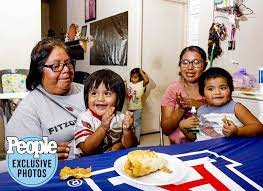
'Why My Family?': After Her 2 Kids Were Killed, Native American Mom Shares Grief, and Joy, of Raising Grandkid
At 58 years old, Odelia Jose's life has been riddled with pain.
Instead of enjoying her retirement years on the Gila River Indian Reservation in Sacaton, Ariz., she grapples with the heartache that's plagued her since the shooting deaths of two of her children, who were killed four years apart.
The killings had a traumatic effect on Jose's only surviving daughter, now 25, who coped with the loss of her siblings with drugs.
Jose herself saves her tears for the shower.
"That's my time for crying because nobody can see me," Jose says.
In 2014, after a battle with drug use, Jose's older daughter, Gwendolyn James, 26, was straightening up her life, her mom says. But Gwen's life was cut short when she was shot to death after giving a friend a ride to a house on the reservation. "She was in the wrong place at the wrong time," Jose says.
Read more here.
| |
|
VA proposes rule that would waive copays for eligible Native American and Alaska Native Veterans
WASHINGTON — Today, the Department of Veterans Affairs proposed a rule that would waive copayments incurred on or after Jan. 5, 2022, for eligible American Indian and Alaska Native Veterans. Upon publication of the notice, there will be a 30-day period for the public to provide comments on this rulemaking. VA will review the comments and develop the final rule.
If finalized as proposed, eligible American Indian and Alaska Native Veterans who have submitted appropriate documentation to the VA would no longer be required to pay copays for health care services.
The intent of this policy is to encourage Veterans to seek regular primary care treatment, which can yield better health outcomes. Copayments for more than three visits to community-based urgent care in any calendar year would still be required, as for all Veterans. Follow-up care provided by a VA-authorized primary care provider would be exempt from copays.
In addition, VA is proposing to make this copayment exemption retroactive to Jan. 5, 2022. If finalized as proposed, eligible American Indian and Alaska Native Veterans would be reimbursed for any copayments paid on or after Jan. 5, 2022, upon submission of their official documentation to the Veteran Health Administration.
“American Indian and Alaska Native Veterans have played a vital role in the defense of the United States as members of the Armed Forces for more than 200 years,” said VA Secretary Denis McDonough. “This rule makes health care more accessible and allows us to better deliver to these Veterans the care and health benefits that they have earned through their courageous service.”
This regulation implements a requirement in the Johnny Isakson and David P. Roe, M.D. Veterans Health Care and Benefits Improvement Act of 2020 Public Law 116-315 , signed Jan. 5, 2021.
Learn about VA benefits and programs for American Indian and Alaska Native Veterans and information about VA’s recognition of Tribal Organizations for purposes of claim representation.
| |
Nominations for the 2023 Native American 40 Under 40 Awards NOW OPEN – NCAIED
Nominations will be accepted until February 10; awardees will be honored at RES 2023.
MESA, AZ – Nominations are now open for the 2023 Native American 40 Under 40 awards. Nominated by members of their communities, this prestigious award is bestowed upon Native Americans under the age of 40 who have demonstrated leadership, initiative, and dedication while making significant contributions in their professions and communities. Past award winners span diverse fields, from government to entertainment. Awardees are selected by the Board of The National Center for American Indian Enterprise Development.
The deadline to submit a nomination is February 10, 2023. Nominations can be submitted here.
“Whether in tribal leadership, business, medicine, the law, arts and entertainment, or academia, Native American 40 Under 40 awardees represent the best of Indian Country – and its future,” said Chris James, President and CEO of The National Center. “Recognizing deserving young leaders is just one way The National Center empowers for generations. I look forward to welcoming the 2023 Class of 40 Under 40 awardees at the upcoming Reservation Economic Summit.”
| |
|
OTIP, ACF Announces Funding Opportunity
The Office on Trafficking in Persons (OTIP) within the Administration for Children and Families (ACF) is announcing funds for the Victims of Human Trafficking in Native Communities (VHT-NC) Demonstration Program. The VHT-NC Demonstration Program’s goal is to directly fund organizations that will build, expand, and sustain organizational and community capacity to deliver services to Native American (i.e., American Indians, Alaska Natives, Native Hawaiians, and/or Pacific Islanders) adults and minors who have experienced a severe form of human trafficking as defined by the Trafficking Victims Protection Act (TVPA) of 2000, as amended, through the provision of direct services, assistance, and referrals.
Under the VHT-NC Demonstration Program the following activities are required: 1) provision of comprehensive, culturally and linguistically responsive, case management to Native Americans who have experienced sex and labor trafficking; 2) increase identification of Native Americans who have experienced sex and labor trafficking through outreach; and 3) public awareness activities for the local community and organizations that may encounter individuals who have experienced sex and labor trafficking.
Due June 30, 2023
Click here for information.
REMINDER: RCORP Overdose Response| Health Resources and Services Administration
Grants to support immediate responses to the overdose crisis in rural areas through improving access to, capacity for, and sustainability of prevention, treatment, and recovery services for substance use disorder.
Application Deadline: Jan 19, 2023
Overdose Response TA Webinar | Attached are the slides. See slide #12 for allowable activities.
Distance Learning and Telemedicine Program Grants | U.S. Department of Agriculture, USDA Rural Development, USDA Rural Utilities Service
Grants to improve telemedicine and distance learning services in rural areas through the use of telemedicine, computer networks, and related advanced technologies. Application Deadline: Jan 30, 2023 \RUS-DLT Grant Workshop
Tribal Management Grant (TMG) Program | Indian Health Service
Grants to assist federally-recognized tribes and tribal organizations in assuming all or part of existing Indian Health Service programs, services, functions, and activities. Funds may also be used to obtain technical assistance for program planning and evaluation, including development of management systems for contract management; and for planning, designing, monitoring, and evaluating federal programs serving tribes.
Application Deadline: Mar 6, 2023
Rural Health Care Program - Healthcare Connect Fund | Federal Communications Commission, Universal Service Administrative Company
Provides assistance to healthcare providers for eligible expenses related to broadband connectivity at a flat discounted rate of 65%. Participants can apply as a member of a consortium or a stand-alone entity.
Application Deadline: Apr 1, 2023
Rural Health Care Telecommunications (Telecom) Program | Federal Communications Commission, Universal Service Administrative Company
Assistance to healthcare providers for eligible expenses related to telecommunications and voice services for the use of telemedicine and telehealth.
Application Deadline: Apr 1, 2023
AmeriCorps Seniors Native Nations and Indigenous Elders Senior Demonstration Program | AmeriCorp
Funding for projects that engage adults ages 55 and older in volunteerism in underserved indigenous and native communities. Program priorities include public health, climate, the environment, education, and economic opportunity.
Application Deadline: Apr 5, 2023
| |
|
National Tribal Broadband Grant Program Open
The Indian Affairs Office of Indian Economic Development is accepting applications from eligible federally recognized Tribes for the 2022 National Tribal Broadband Grant Program approving up to $2.7M in grant awards! With grant funding, Tribes will be able to explore the possibility of developing or extending broadband services in their communities through feasibility studies of those broadband development opportunities.
For more information, please see the grants.gov link below.
https://www.grants.gov/web/grants/search-grants.html?keywords=broadband
| |
|
Project AWARE (Advancing Wellness and Resiliency in Education) NOFO
The purpose of Project AWARE is to develop a sustainable infrastructure for school-based mental health programs and services. Grant recipients are expected to build collaborative partnerships with the State Education Agency (SEA), Local Education Agency (LEA), Tribal Education Agency (TEA), the State Mental Health Agency (SMHA), community-based providers of behavioral health care services, school personnel, community organizations, families, and school-aged youth.
Grant recipients will leverage their partnerships to implement mental health related promotion, awareness, prevention, intervention, and resilience activities to ensure that students have access and are connected to appropriate and effective behavioral health services.
SAMHSA expects that this program will promote the healthy social and emotional development of school-aged youth and prevent youth violence in school settings.
For more information click here.
| |
|
IA-TTGP-2022-OIED Tribal Tourism Grant Program (TTGP) Department of the Interior Bureau of Indian Affairs
The Office of the Assistant Secretary – Indian Affairs, through OIED, is soliciting proposals from federally recognized Tribes listed as Indian Entities Recognized by and Eligible to Receive Services from the United States Bureau of Indian Affairs at 87 FR 4636 (January 28, 2022) and Tribal Organizations eligible for TTGP grants. Indian Tribes are referred to using the term “Tribe” throughout this notice. Tribal Organization is defined by 25 U.S.C. 5304(l). The grant funding is to retain consultants to perform feasibility studies on Tribal tourism opportunities or develop a tourism business plan. The feasibility studies will help facilitate informed decision-making regarding Tribes’ economic futures and may concern the viability of a tourism project. The feasibility study or business plan will empower Tribes to make informed decisions on potential tourism project(s), a Tribal tourism business, or Tribal tourism businesses recovering from the economic impacts of the COVID-19 pandemic. The OIED supports Tribes and Tribal organizations capacity building to plan, develop and manage tourism and related infrastructure in support of economic development and the NATIVE Act (Pub. L. 114-221). The OIED administers this program through its DED.
The funding periods and amounts referenced in this solicitation are subject to the availability of non-recurring appropriation funds of the BIA budget at the time of award, as well as the Department of the Interior (DOI) and Indian Affairs priorities at the time of the award. Neither DOI nor Indian Affairs will be held responsible for proposal or application preparation costs. Publication of this solicitation does not obligate DOI or Indian Affairs to award any specific grant or to obligate all or any part of available funds. Future funding is subject to the availability of Congressional appropriations and cannot be guaranteed. DOI or Indian Affairs may cancel or withdraw this solicitation at any time.
View funding page here.
|
United Department of Justice Office of Justice Programs Awards
If you are looking for all current funding opportunities, those released in previous years or that closed during the current fiscal year, go to the Current Funding Opportunities page.
| |
U.S. Forest Service and American Indian Alaska Native Tourism Association to offer grant opportunities
(AIANTA) will jointly implement the Native American Tourism and Improving Visitor Experience (NATIVE) Act through technical assistance, grant opportunities, and tribal tourism collaboration at the destination/community level.
To support this work, the U.S. Forest Service and AIANTA are issuing Request for Proposals. FY 2022 proposals are to be submitted directly from Tribes for projects on or adjacent to U.S. Forest Service managed lands.
To view each state's opportunities, visit this link.
| |
Check out ANA's ARP Grant Recipient
Highlight Podcasts
In September 2021, the Administration for Native Americans awarded approximately $20 million in grant funding to 210 recipients of the Native Language Preservation and Maintenance Emergency grant though the American Rescue Plan Act of 2021 (ARP). This ARP funding supports federally and state recognized Tribes and Alaska Native, Native Hawaiian and Pacific Islander community organizations as they seek to ensure the survival and continuing vitality of Native American languages.
| |
Visit the ANA website for other ARP featured grant recipients. | |
|
For those who want to submit a name to be added to the Administration for Native Americans’ MMNA Shawl, please email:
anacommissioner@acf.hhs.gov
| |
Stay up to date with ANA and learn about available funding and webinar opportunities and don't forget to check your junk/spam mail when receiving the first newsletter.
| |
Administration for Native Americans - ANA
An Office of the Administration for Children & Families
U.S. Department of Health & Human Services
330 C Street, S.W.
Washington, D.C. 20201
| |
| | | |