|
- AOK Celebrates 25 Years, and Looks Forward to the Next 25 Years
- Christmas Bird Counts Always Bring Something Unexpected
- What Good is a Beaver?
- Registration for the Kansas Lek Treks Prairie-Chicken Festival Now Open!
- New Prairie-Chicken Merchandise
- Upcoming AOK Events
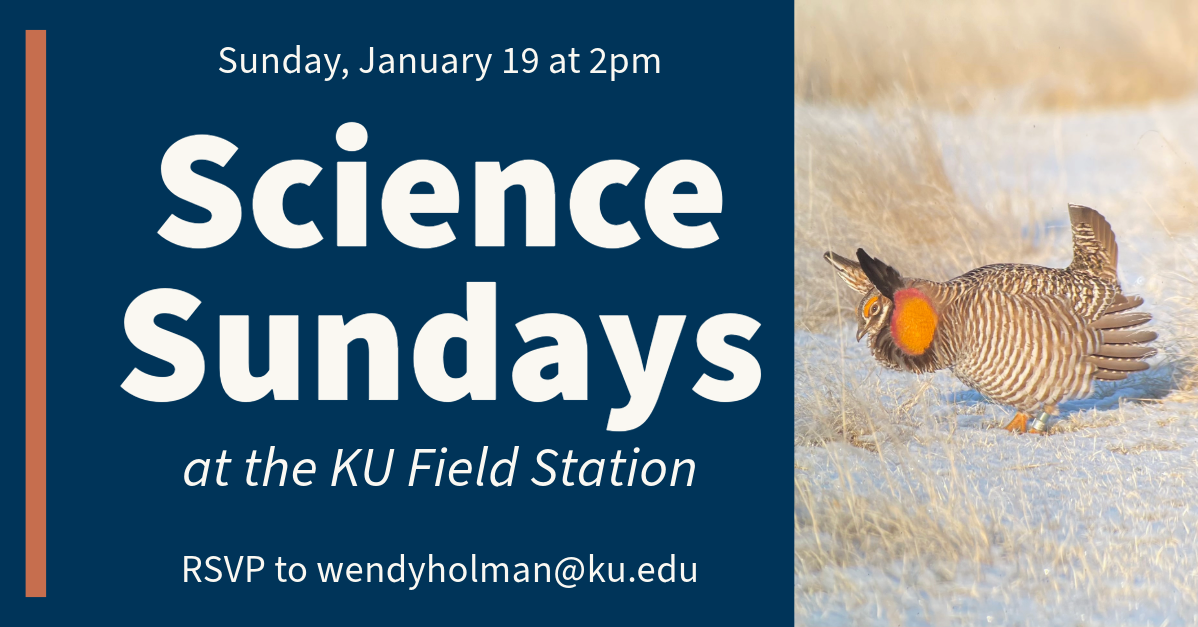
- Science Sundays Hosts AOK's Jackie Augustine for Prairie-Chicken Talk
- Philanthropy Corner: End the Year with a Gift to AOK
-
Chapter Spotlight: Wichita Audubon Society
-
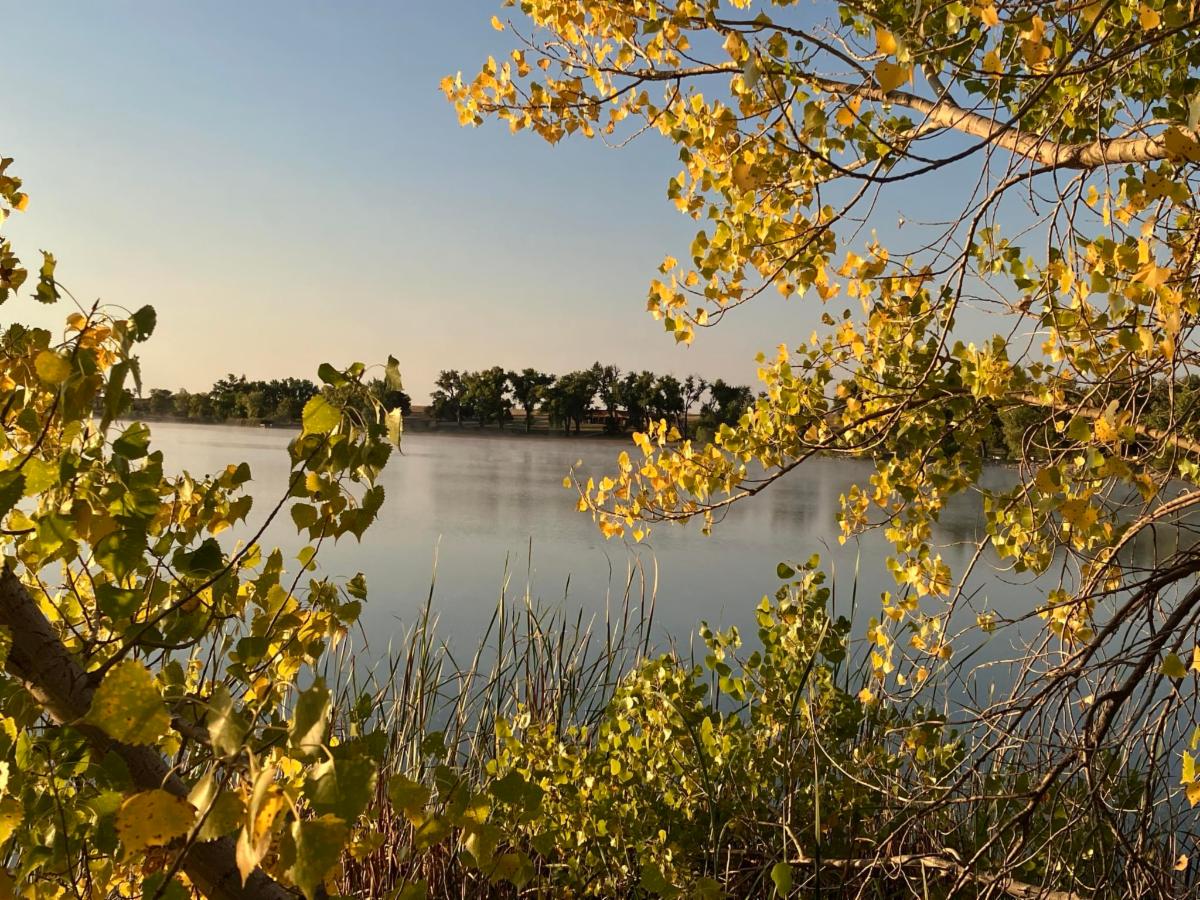
AOK Nature Spot Recommendations: Meade State Park
| |
AOK Celebrates 25 Years
and Looks Forward to the Next 25 Years
We are coming to the end of our celebration of Audubon of Kansas' 25th anniversary. Over the past 12 months, we have reflected on how our three-fold mission of advocacy, conservation and education has evolved and expanded over the years.
With all this reflection on the past, it only seems right to contemplate the next 25 years. Although there will always be threats to wildlife and wild lands, I envision a renewed commitment to environmental protection and ever-growing support for our mission.
AOK will continue to acquire new lands to set aside for people to interact with wildlife All Over Kansas. AOK will expand environmental education opportunities to new communities All Over Kansas. AOK will testify to county and state legislative bodies and use litigation on behalf of wildlife All Over Kansas.
To do these things, AOK itself will expand by growing its staff and flock of supporters. Although I hate to put specifics into print lest our dreams don't come true, I am so hopeful for the future—both for what AOK will become and what we will accomplish—together—All Over Kansas. Thanks for being a part of our growing community.
Text by AOK Executive Director Jackie Augustine. Photo: AOK logos (1999-2001 and 2001-present).
| |
What Good is a Beaver?
Beavers are often disliked because they damage trees, and their dams can cause flooding. However, there is much more to appreciate about beavers than to dislike.
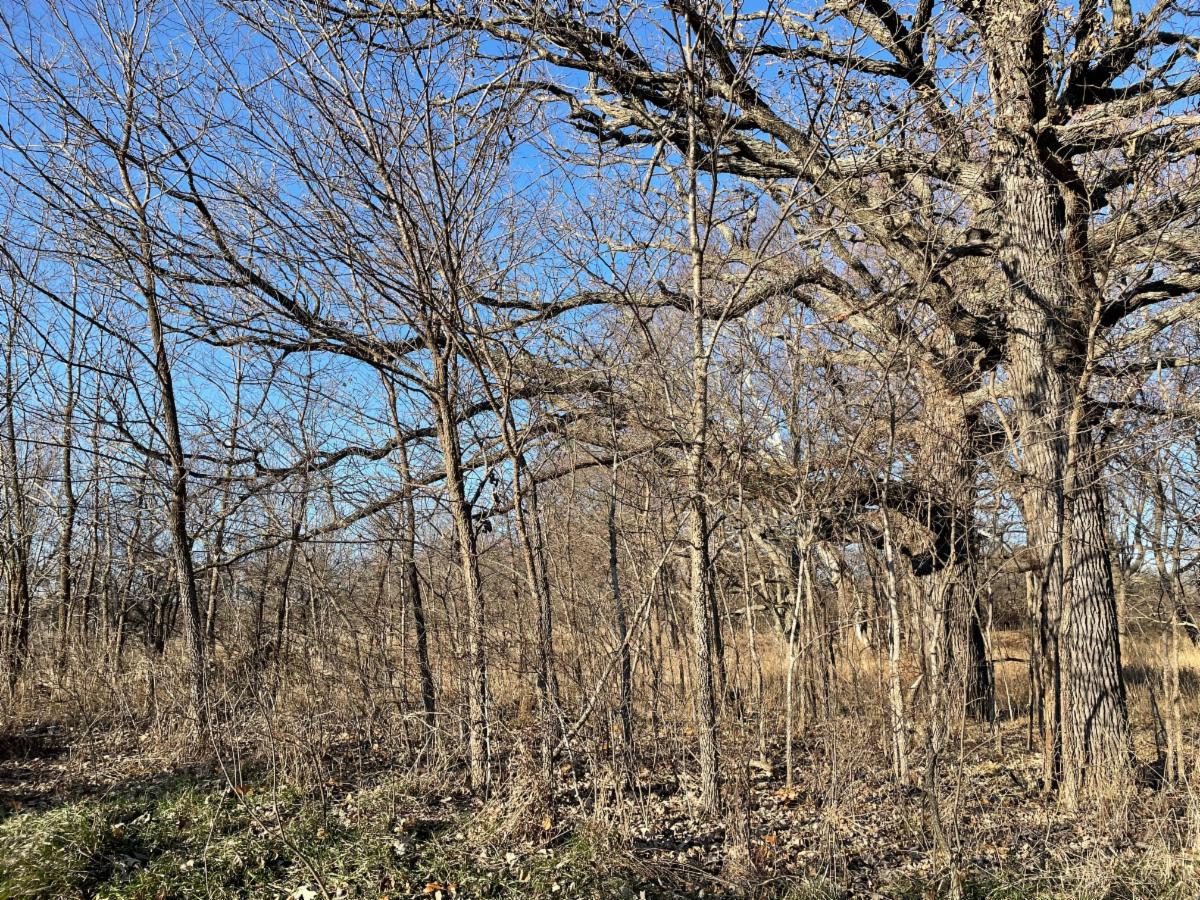
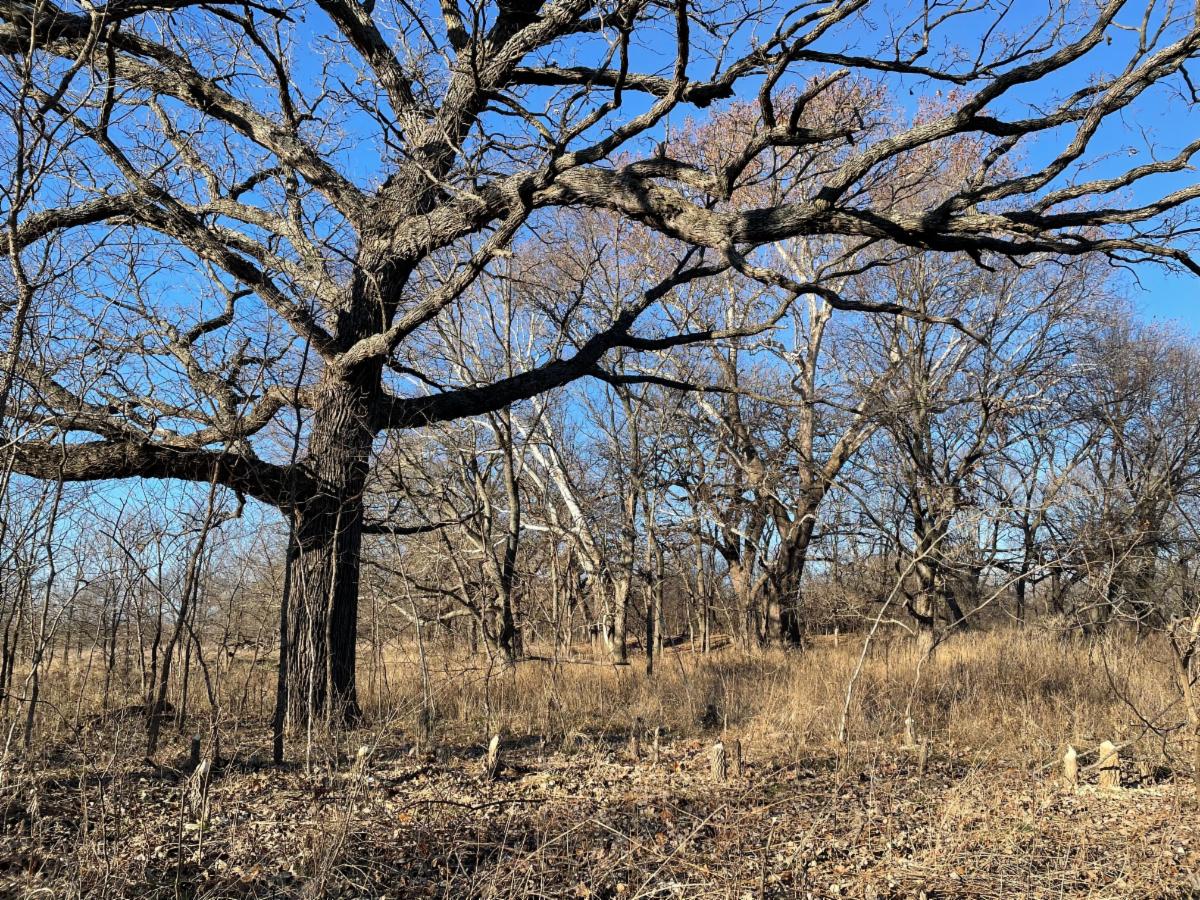
Beavers are called "ecosystem engineers" because the "damage" they cause is actually beneficial for the environment. At AOK's Achterberg Wildlife-Friendly Demonstration Farm, there is a wonderful riparian woods with many bur oak trees that are about 100 years old, but few younger oaks. The younger oaks are being choked out by fast-growing hackberries. We were considering removing the hackberries when a beaver moved in but, to my amazement, the beaver seemed to selectively target hackberries, leaving other tree species intact. Beavers eat the bark of trees for food, and they use trunks and branches to construct dams and lodges. By removing hackberries, beavers are opening up the woods for other plant species to grow and creating pathways for deer and, historically, elk to move through the forest. Their dams also create pools that benefit amphibians, fish, and insects. Areas with beavers have greater biodiversity than those without them.
Beyond increasing biodiversity, beavers have drastic impacts on water and streams. First, they improve water quality. Their dams and pools reduce soil erosion and retain sediment, which absorb and filter pollutants such as heavy metals, pesticides, and fertilizers. This improves the quality of water downstream used by humans and other species. Second, the dams store water and release it during drought. Beaver dams store water in the pool they create, but they also cause the surrounding land to absorb and retain water. In times of drought, this water is slowly released back into the stream. Finally, in times of flood, beaver dams help minimize flood risk by slowing the flow of water, which can delay and reduce flood peaks further downstream.
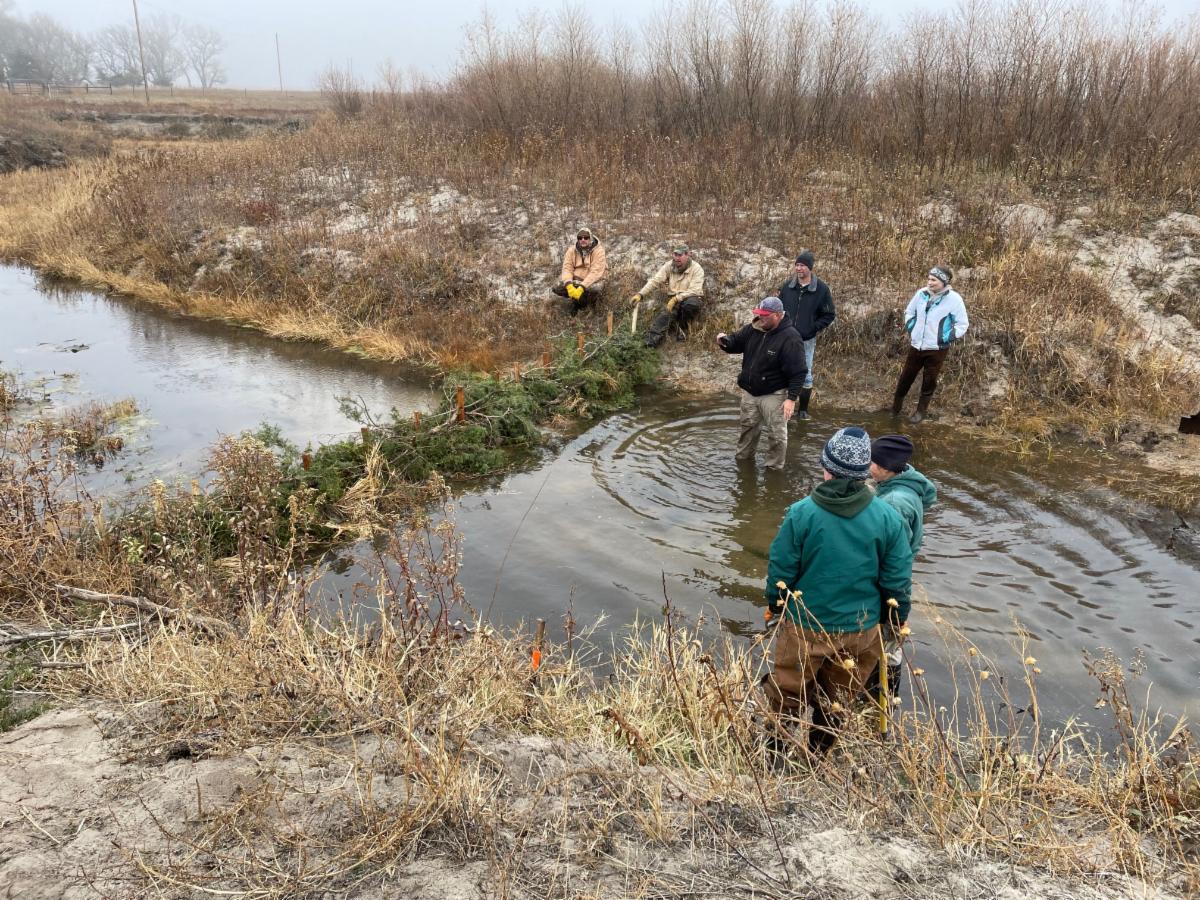
Land managers are currently experimenting with "beaver dam analogs"—small dams constructed by humans to mimic beaver dams. The banks of many streams are eroding, creating steep edges and sending sediment downstream. These steep banks can separate a creek from its floodplain. Instead of streams overflowing into the floodplain during heavy rains, the creek erodes further, becoming even deeper. Beaver dam analogs are designed to slow water flow and increase sedimentation (soil deposited in the stream). It is hoped this will decrease erosion and eventually reconnect streams with their floodplains.
Photos: Above—The same large oak is in both photos with numerous hackberries untouched by beaver to the left and with extensive clearing by beavers to the right. Below—construction of a 'beaver dam analog' in Nebraska. Notice how the water on the right (upstream) is higher than on the left of the beave dam analog.
| |
Registration for the
Kansas Lek Treks Prairie-Chicken Festival
is Now Open!
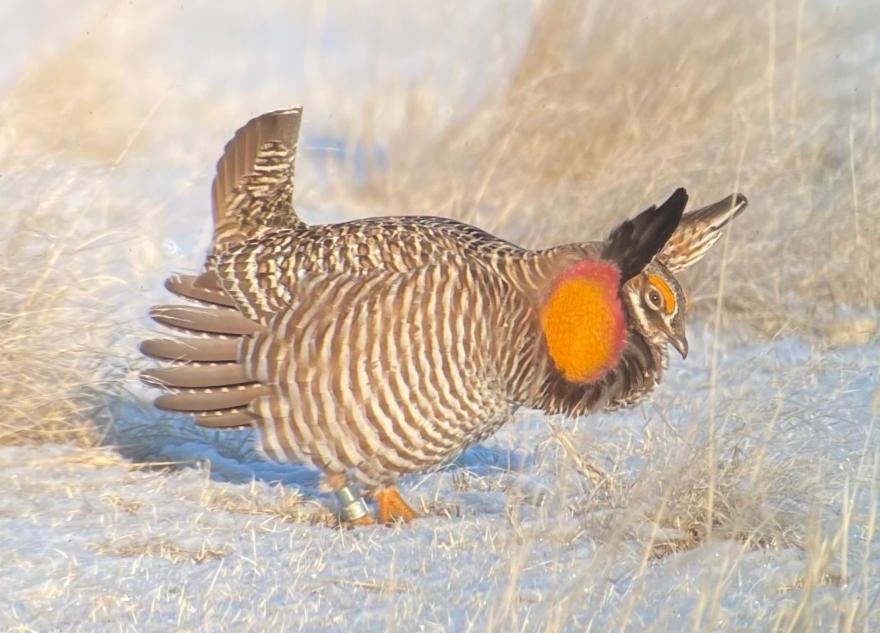
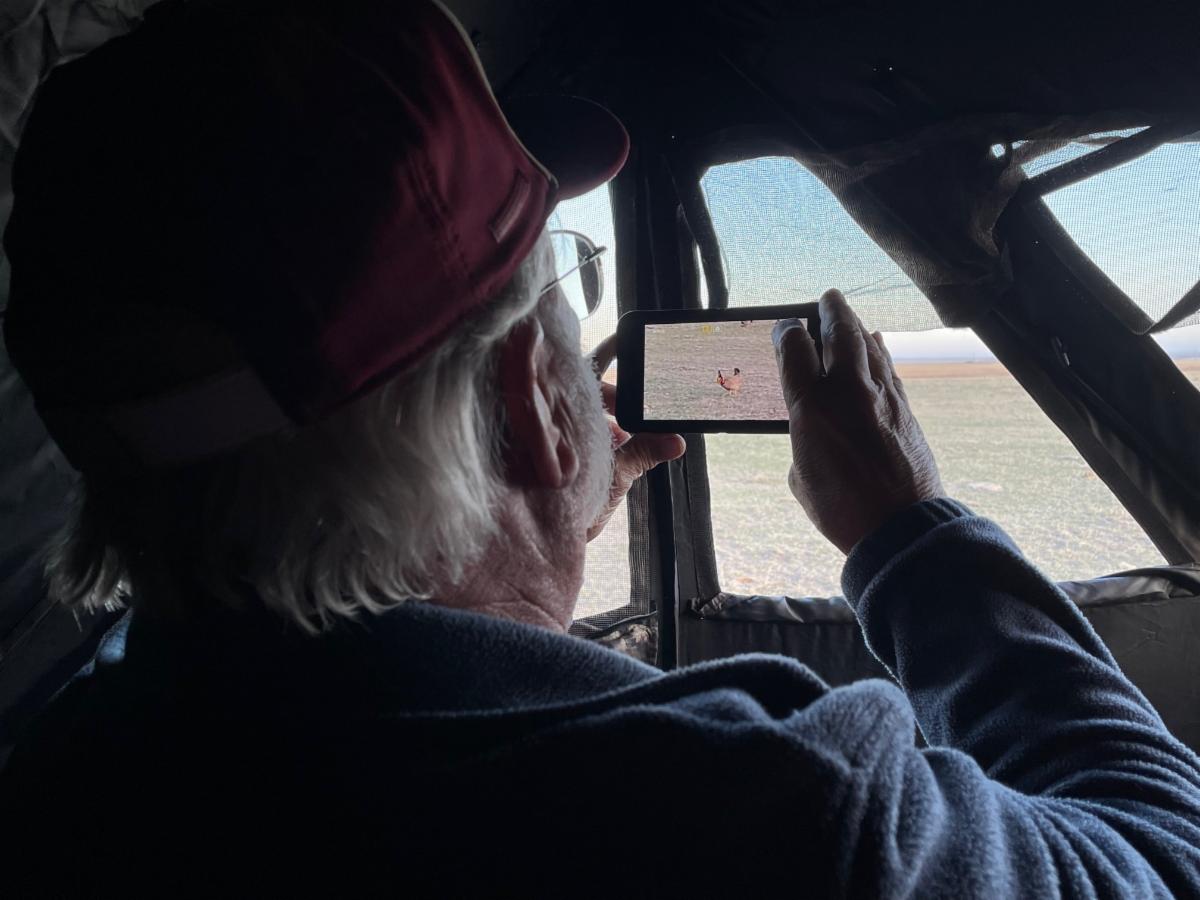
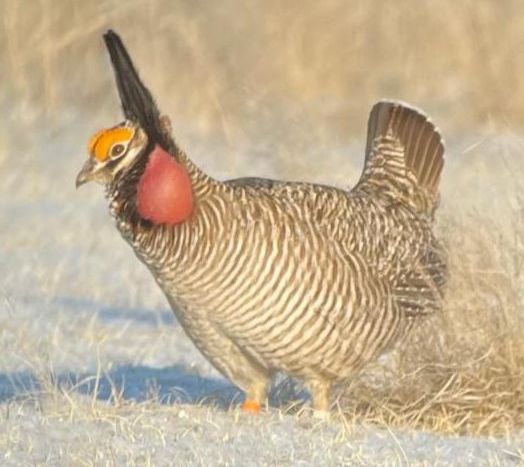
Audubon of Kansas will hold its fourth annual Kansas Lek Treks Prairie-Chicken Festival from April 10-13, 2025, in Hays, KS. The festival offers opportunities to see both Greater and Lesser Prairie-Chickens, guided trips to Cheyenne Bottoms and Quivira, prairie-chicken management and geology tours, behind-the-scenes tours of the Sternberg Museum of Natural History, and social events.
Slots fill quickly! Register today!
Note: We will have options for individuals with mobility challenges to participate. The registration form includes a section where you can let us know how we can make your experience as enjoyable as possible.
| |
Can't Attend the Festival, but Want to Show your Love of Prairie-Chickens?
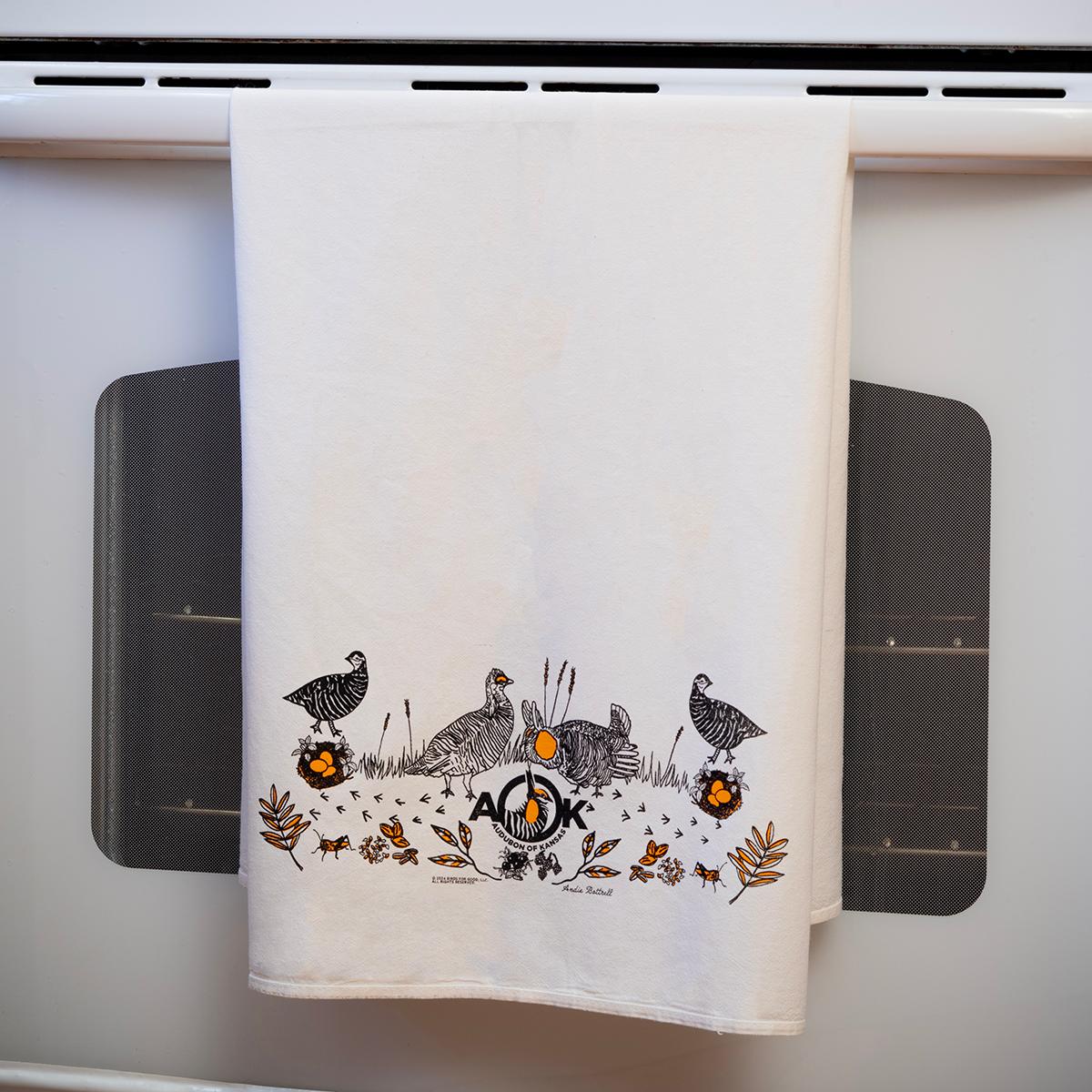
AOK is teaming up with Birds for Good to offer high-quality merchandise that also supports birds. Currently, we have tea towels and bandanas for sale, with more items planned.
| |
|
|
Philanthropy Corner: End the Year with a Gift to AOK
As we close out 2024, I find myself holding space for the people and places that have shaped my journey, reminding me of the profound impact of giving. This spirit of generosity inspires me to invite you to share that joy with AOK as we continue our mission.
Here’s how you can help:
- Donate online using the link below
- Honor a loved one with a tribute gift
- Invite others to support AOK’s mission
Every gift makes a difference, bringing hope and protection to the places and wildlife we cherish. Wishing you a joyful holiday season and heartfelt thanks for your support!
—Kathryn
| |
Chapter Spotlight:
Wichita Audubon Provides Bird Walks and Talks
Wichita Audubon Society is one of the most active Audubon chapters in the state. Its members include expert bird watchers and photographers who are eager to share their knowledge.
Most chapters sponsor one or two Christmas Bird Counts, but Wichita Audubon organizes eight! On the second Saturday of each month, they host bird walks at the Great Plains Nature Center. Additional field trips target specific birds (such as Short-eared Owls or American Woodcock) or visit productive areas (like Loess Bluffs).
On the third Tuesday of each month, they host speakers on a variety of topics. Here is a sample of their upcoming programs:
January 21, 2025
Botswana: An African Adventure, presented by Bob Gress
February 18, 2025
Cats and Windows: Two of the Greatest Threats to Our Declining Bird Populations, presented by Scott Loss – Professor of Biology at Oklahoma State University
March 18, 2025
Chasing America’s Raptors, presented by Scott Harris—Birder, Photographer, and Author
All programs are held at 7 PM at the Great Plains Nature Center, 6232 E 29th St N, Wichita, KS, United States.
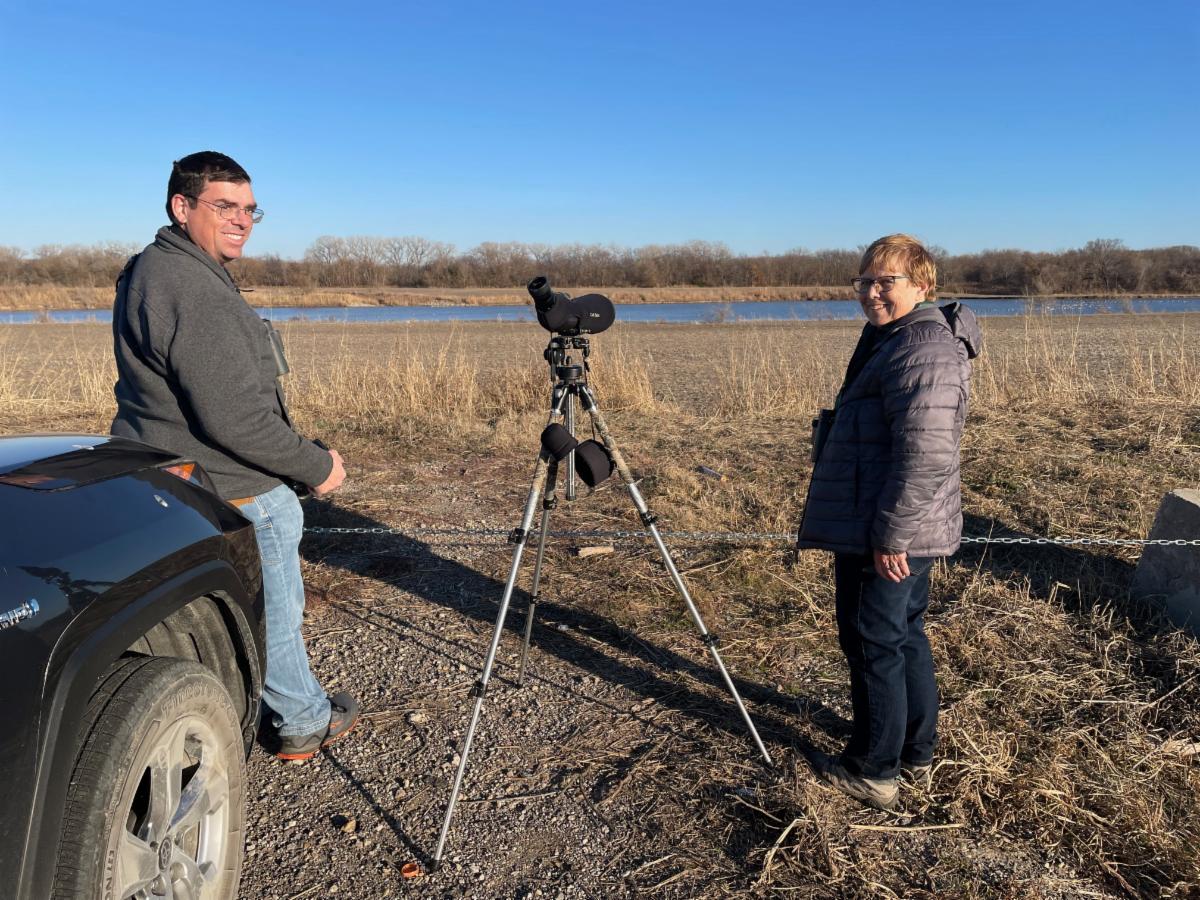
Photo of Wichita Audubon members during the Wichita Christmas Bird Count by Jackie Augustine.
| |
|
Contact Us
Jackie Augustine—Executive Director
General Questions, Programs, Future Protected Areas
jackie@audubonofkansas.org
Kathryn Chambers—Director of Philanthropy
Gift Planning, Membership, Endowments, Events Management
kathryn@audubonofkansas.org
Amy Meyer—Protected Areas Manager
Questions about AOK protected areas and habitat management
amy@audubonofkansas.org
| | |
|  |
|
Audubon of Kansas
PO Box 1106
Manhattan, KS 66505-1106
785-537-4385
| | |
| | | |