|
- AOK Celebrates 25 years of chapter support
- AOK is looking for new Board Members like you!
- USFWS requests input for Regal Fritillary and Black Rail
-
Help us celebrate 25 years! Send us your AOK photos to publish in our 25th Anniversary Edition of Prairie Wings
- What good is a butterfly?
- AOK Events
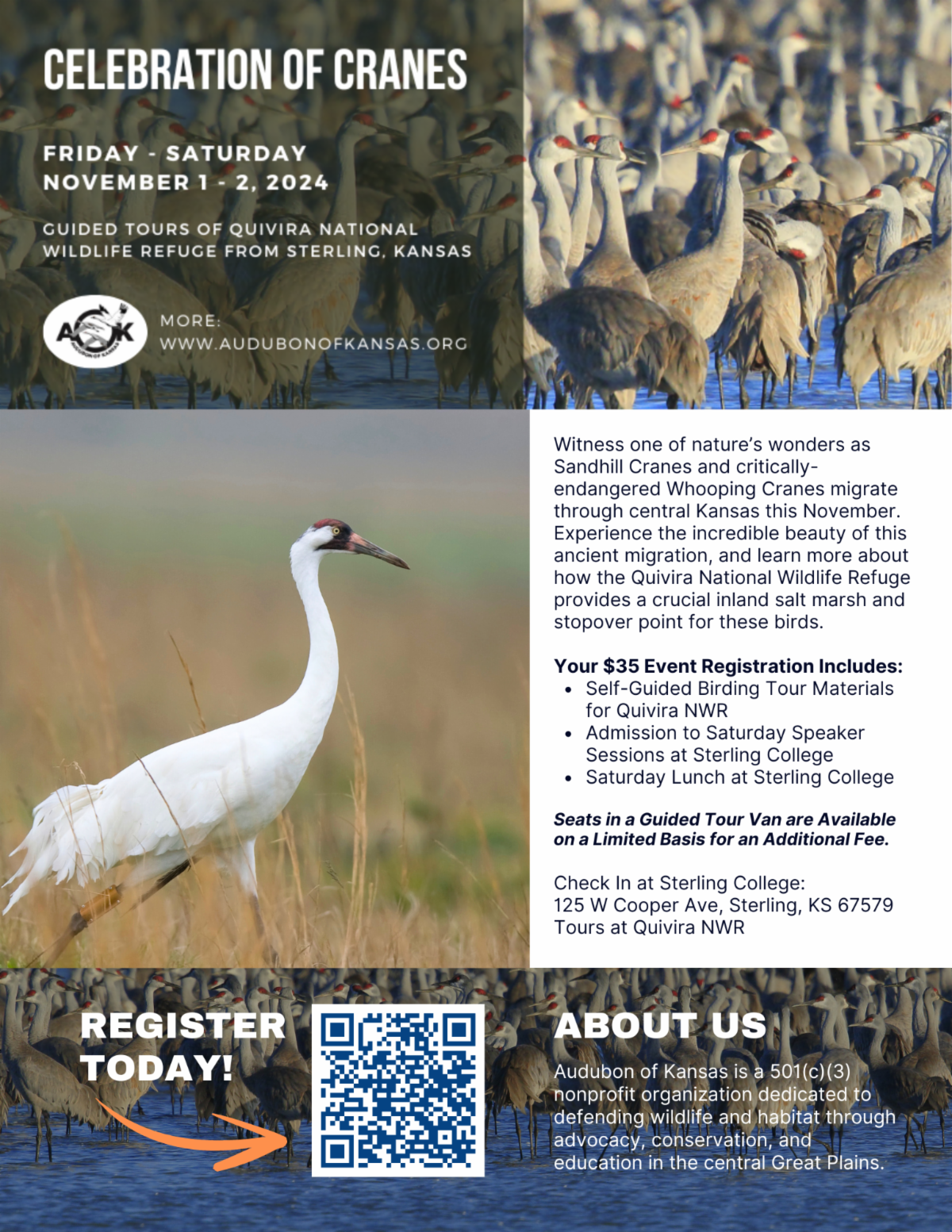
- Register now for Celebration of Cranes!
- October 6: Open House at Hutton Niobrara Ranch Wildlife Sanctuary near Bassett, Nebraska
-
Nov 1-2: AOK's Celebration of Cranes, Sterling, KS
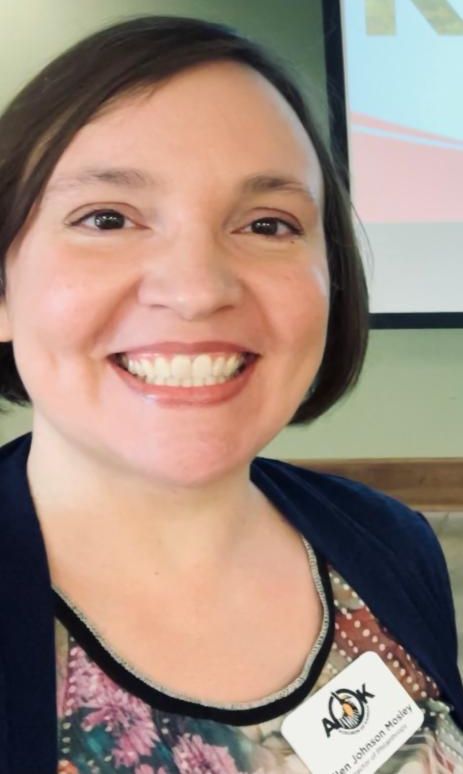
- Philanthropy Corner: Recruiting a new Director of Philanthropy and Event Manager!
- Chapter Spotlight: Southeast Kansas Audubon provides programs in Parsons
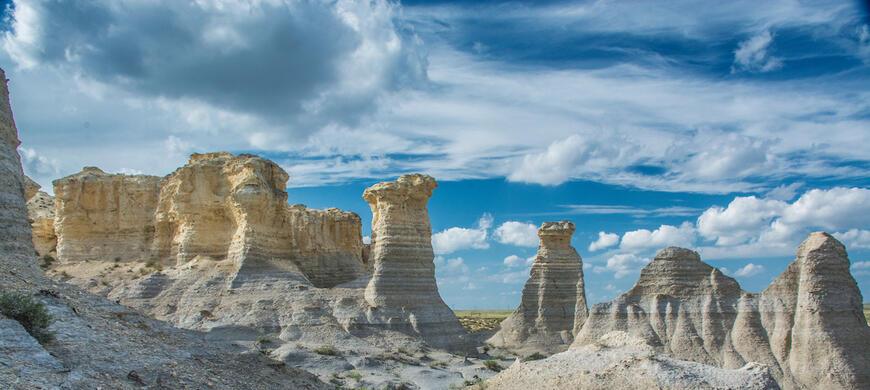
- AOK Nature Spot Recommendations: Little Jerusalem State Park showcases chalk badlands
| |
AOK Celebrates 25 years of chapter support
Twenty five years ago, the Kansas Audubon Council became Audubon of Kansas (AOK). The February newsletter has an article that highlights the wonderful work by Jan Garton, Sil Pembleton, and the Kansas Audubon Council to save Cheyenne Bottoms and make it a wetland of international importance. After that monumental victory, the Kansas Audubon Council was looking ahead to all the pressing environmental issues affecting Kansas and the Great Plains, and thought the region would benefit from having a full time staff person to lead those efforts. The Council changed its name to Audubon of Kansas and hired Ron Klataske as its first Executive Director.
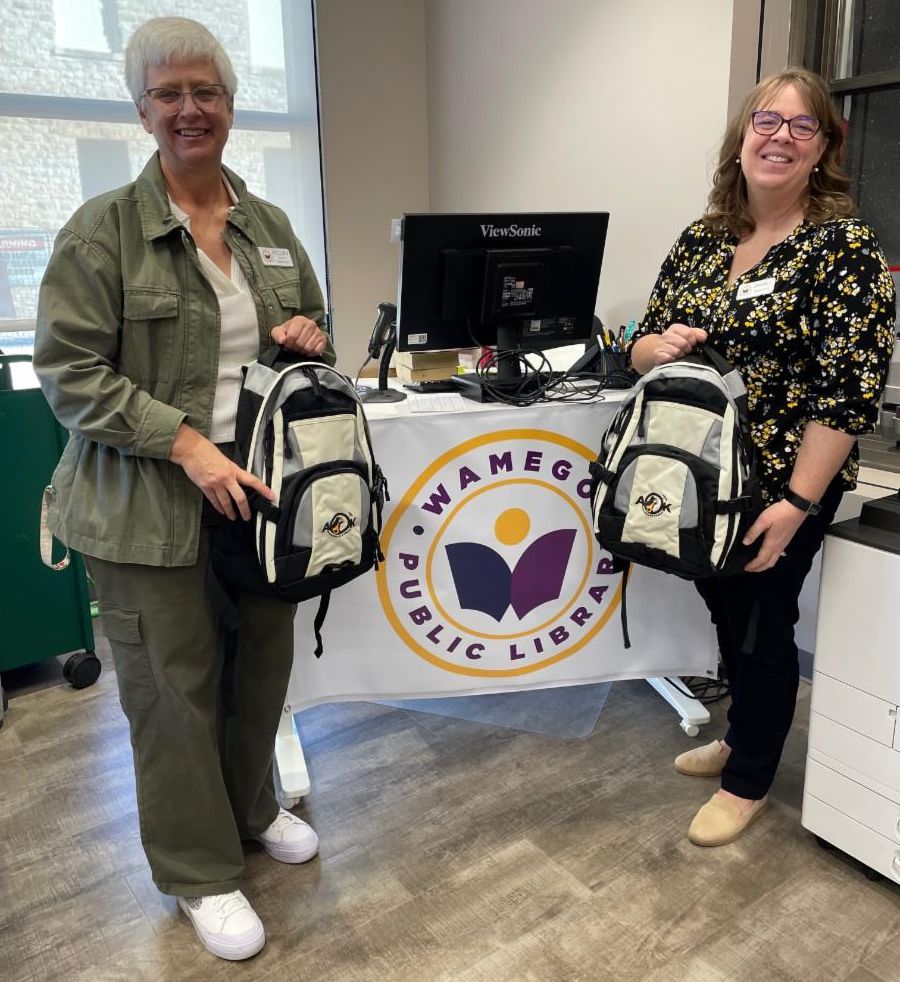
Although AOK is a separate nonprofit from both the chapters in the state and the national organization, AOK still works closely with chapters. The arrangement is not formal - there are no official reporting, financial, or procedural requirements between chapters and AOK. However, we have similar missions, just differences in scale. AOK supports chapters through hosting virtual meetings monthly, and an in person meeting once a year. At these meetings, chapters share successes and challenges, learn about environmental issues, and discuss how to run their chapters efficiently. Chapters support AOK in various ways including making AOK aware of local environmental issues, submitting comments on statewide environmental issues, helping execute environmental education programs in their local area (such as the Nature Adventurepack Program), and providing financial support to AOK.
It is a pleasure to work with chapters to make a difference for wildlife and wild places throughout the state.
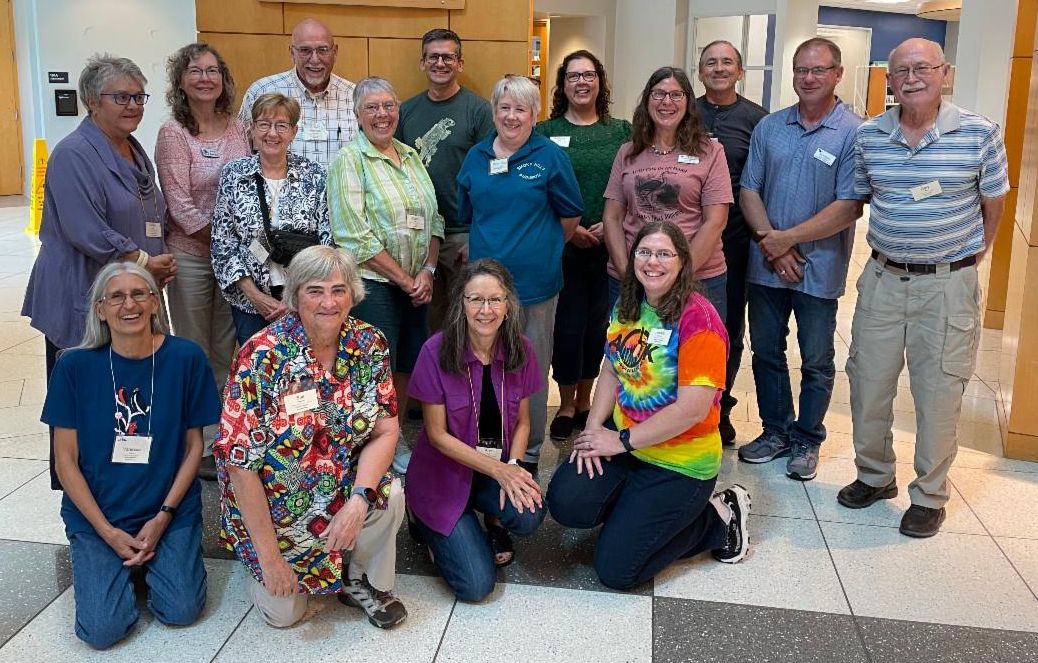
Essay by Jackie Augustine. Photo from the recent in person 'Kansas Chapter Meetup' in Topeka.
| |
USFWS requests input for Regal Fritillary and Black Rail
The U.S. Fish and Wildlife Service is requesting feedback on two species found in Kansas: the Regal Fritillary and Black Rail. Jeff Jeffrey of Flint Hills EcoVentures, LLC posted a wonderful synopsis of the Regal Fritillary listing on a Kansas birding listserv. He granted permission to post this updated version here.
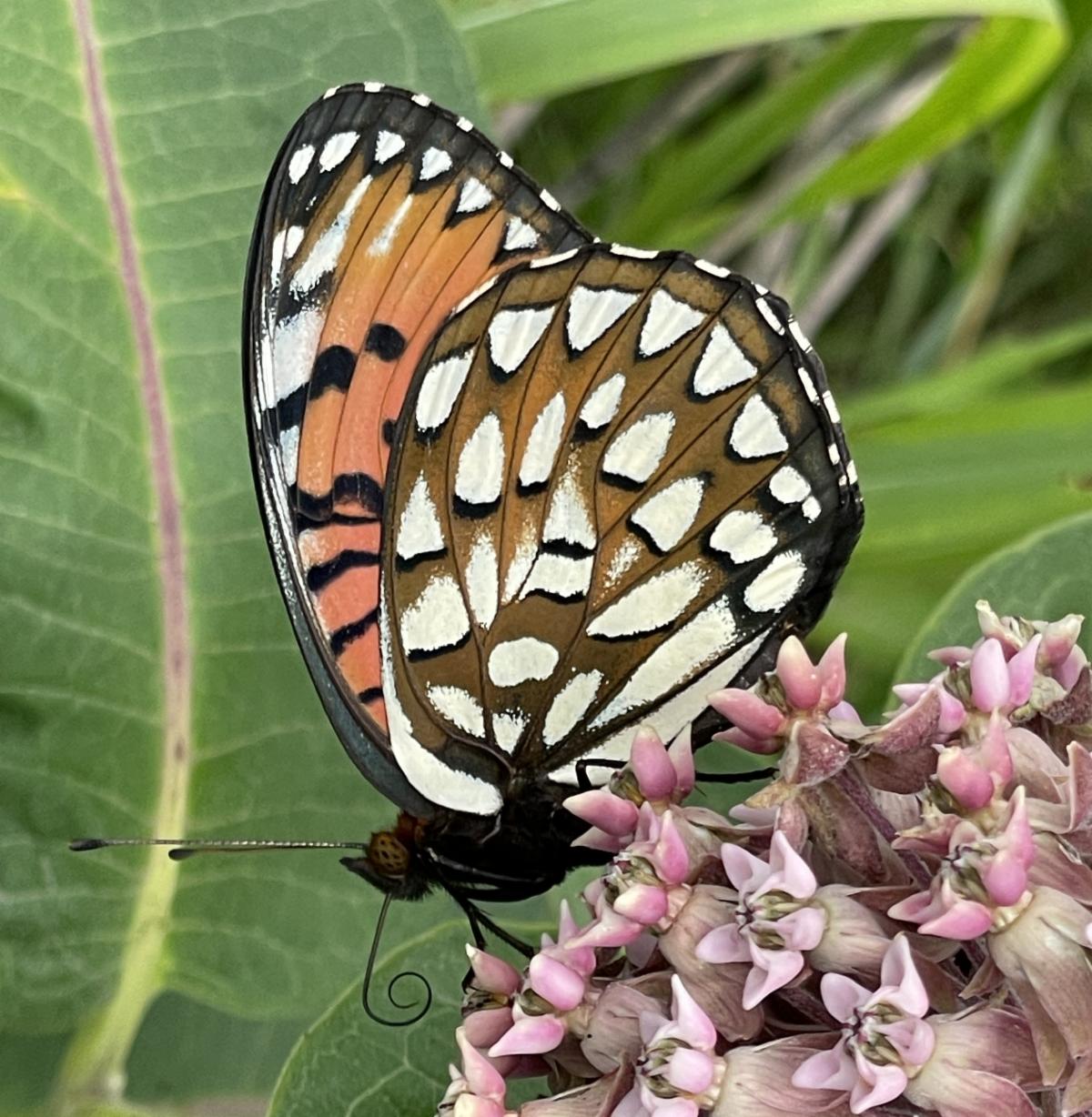
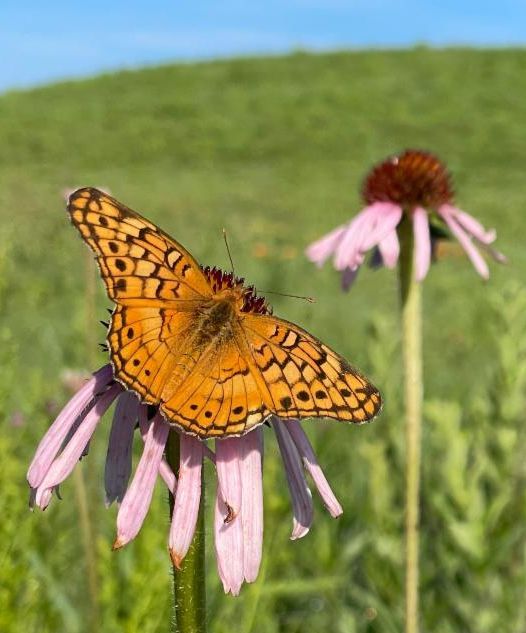
Photo: Regal Fritillary in a roadside ditch in the Flint Hills by JK Augustine.
Regal Fritillary by Jeff Jeffrey
Federal Register Press Release on August 6 th for U.S. Fish and Wildlife Service (USFWS) proposed rule to list western subspecies of Regal Fritillary butterfly as Threatened under the Endangered Species Act (the eastern subspecies proposed to be listed as Endangered).
Threatened is classified by USFWS for Regal Fritillary as “...likely to be in danger of
extinction in the foreseeable future due to these primary threats: habitat loss, grassland
conversion resulting from agricultural and urban development, pesticide use, invasive plants,
climate change, drought, local climate events, and collection to mention some.”
All significant factors that also affect grassland bird species, one of our most imperiled bird
groups in the USA.
The Regal Fritillary butterfly is a grassland obligate species, typically associated with – and
indicator of – pristine prairie such as well-managed tallgrass ecosystems. Host plants of
their caterpillars are restricted to species of prairie violets, rather than having several types of
plants that could serve as host to larvae. Unlike many butterflies, Regal Fritillaries also have
only one generation per year; with adult males emerging first in June and dying soon after
mating, occurring within a short period of time. Females emerge later in June and after
breeding may live through early fall.
Important to note that the USFWS proposal implements a rule that exempts ranchers from
needing a USFWS incidental take permit for most routine activities associated with livestock
operations; because USFWS recognizes vital role of grazing in maintaining grassland
ecosystems.
Comments on the proposal may be submitted during the 60-day public comment period,
August 6 through October 7, 2024, online at https://www.regulations.gov/document/FWS-R6-
ES-2023-0182-0001
| |
|
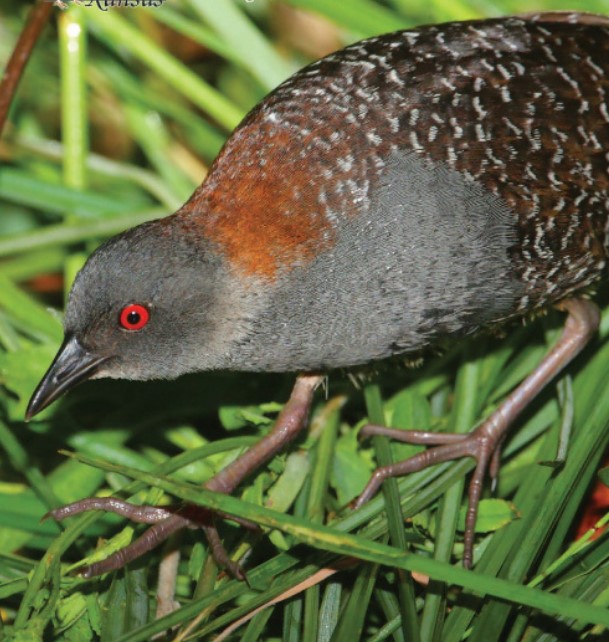
Black Rail, request from the Service
In 2010, the U.S. Fish and Wildlife Service (Service) was petitioned by the Center for Biological Diversity to list the eastern black rail as a threatened or endangered species under the Endangered Species Act, as amended (16 U.S.C. 1531 et seq.)(Act). In 2011, the Service made a 90-day finding on the species indicating that listing may be warranted and initiated a status review (76 FR 59836).
On October 8, 2020, the Service listed the eastern black rail as a threatened species under the Act. Subsequently in 2023, a complaint was filed challenging the Service’s decision to list the eastern black rail as threatened instead of endangered. The Service requested the court remand this decision so that we may reconsider it and provide additional explanation. The court granted this request and, as a result, the Service will reconsider its decision as to whether the eastern black rail warrants listing as a threatened or endangered species under the Act. In accordance with a court ordered deadline and the Service’s National Listing Work Plan, the Service must make this decision for the eastern black rail by July 15, 2026. Until then, protections provided by the threatened status and 4(d) rule will remain in place.
To inform this decision, the Service will be updating the existing Species Status Assessment (SSA) and be using the best available data and information to evaluate the subspecies’ needs, as well as its past and current resiliency, redundancy, and representation, and future conditions. The SSA framework is an analytical approach that characterizes a species’ ability to sustain populations over time based on the best scientific understanding of current and future abundance and distribution, taking into consideration any threats, stressors, or conservation efforts that could influence or affect the species’ status. An SSA is grounded in conservation biology principles and is a transparent and explicit analysis based solely on the best available science. We complete the SSA before any policies are applied or decisions are made, which provides greater flexibility for us to engage with our partners and solicit peer review. The SSA generates clear, logical analyses that not only supports our decisions under the Act, but provides foundational, biological information to help guide species conservation. The SSA will be the biological underpinning of the Service’s forthcoming decision on whether the eastern black rail may warrant additional protection under the Act.
The black rail is a small, secretive marsh bird that inhabits salt, brackish, and freshwater marshes, and wet grasslands. The eastern subspecies of the black rail breeds along the U.S. Atlantic and Gulf coasts, in the U.S. interior east of the Rocky Mountains, and in Mexico, Central America, and the Caribbean. The subspecies is partially migratory as the wintering range is generally considered to be the southern portion of the breeding range. Comprehensive breeding season surveys have been completed primarily in U.S. coastal states, but no known comprehensive regional surveys have been completed on the wintering grounds. Therefore, the subspecies’ range likely spans five Service regions (2, 3, 4, 5, and 6) consisting of 38 States and territories (including vagrant records).
The Service will be analyzing the best scientific and commercial data available for the eastern black rail to make its decision as to whether the species warrants listing under the Act. To ensure the Service has the most current and best available information, we are asking you for specific information on the eastern black rail, including:
- Subspecies’ distribution, ecology, and life history;
- Positive and negative survey data;
- Stressors to the subspecies or its habitat; and,
- Planned or anticipated conservation and management actions or protections implemented that may have benefited (or harmed) the species.
Information from within any portion of the subspecies’ range is being requested. Unpublished reports, habitat-related publications, or data that have not been included in the peer reviewed literature will be useful. If spatial and/or tabular data are available, that will be particularly helpful (including any metadata), however, we will accept information in any format that you can provide.
Although the Service will accept new information throughout the SSA process, we would appreciate your response by September 5, 2024, if possible, to ensure we have adequate time to consider the information during our status review. Information should be submitted to Ms. Julia Plasynski and/or Ms. Kate Yates in the Service’s South Carolina Ecological Services Field Office (see contact information below). All data and information submitted to us, including names and addresses, will become part of the decisional record for this package and may be made public.
Resources:
National Listing Work Plan:
https://www.fws.gov/endangered/what-we-do/listing-workplan.html
Listing Processes:
https://www.fws.gov/endangered/what-we-do/listing-overview.html
Black Rail Information:
https://www.allaboutbirds.org/guide/Black_Rail/id
https://www.fws.gov/species/eastern-black-rail-laterallus-jamaicensis-jamaicensis
If you would like additional information or have any questions about the Eastern Black Rail Species Status Assessment, please contact Ms. Julia Plasynski (854) 202-2327 or Ms. Kate Yates (843) 991-2173; via email at blackrail@fws.gov; or by writing to the following address:
U.S. Fish and Wildlife Service
South Carolina Ecological Services Field Office
176 Croghan Spur Road, Suite 200
Charleston, SC 29407
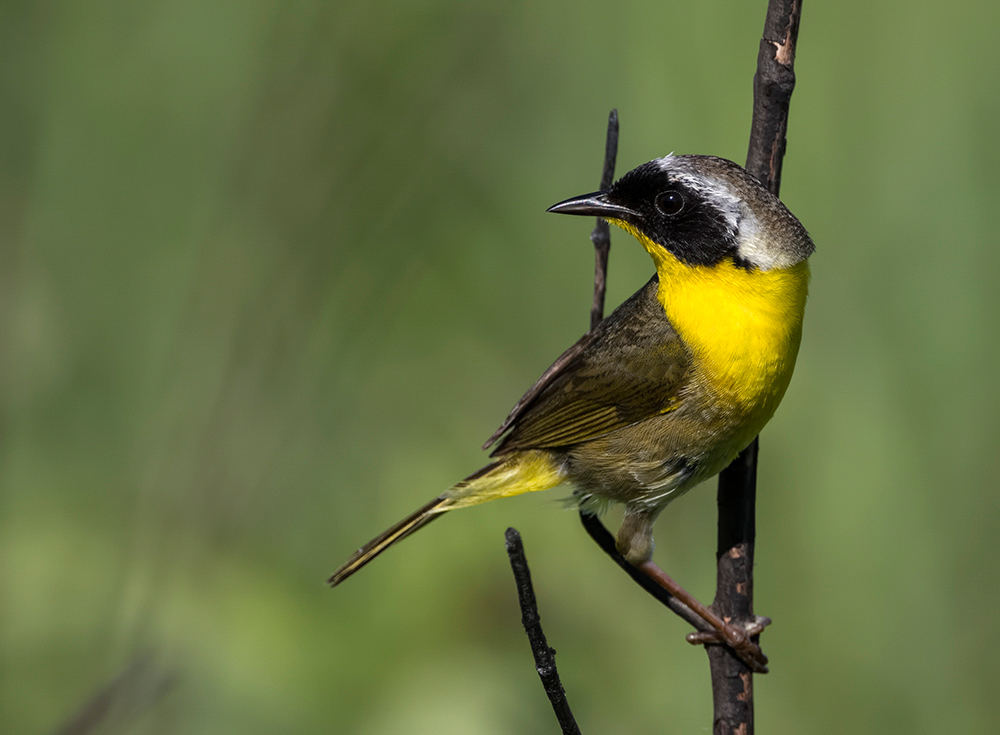
Photo: Black Rail by Bob Gress.
| |
What good is a butterfly?
I don't encounter many people who hate butterflies. What is there to hate? They are beautiful and mysterious. Their complex life cycles and metamorphosis from caterpillar to butterfly seems miraculous. Their dependence on a particular plant species to raise their caterpillars is particularly alien.
Caterpillars of moths and butterflies (as well as the larval forms of many other insect species) are essential for all land birds. We tend to think of birds as having specific diets, such that hawks eat mice, cardinals and sparrows eat seeds, hummingbirds drink nectar, and catbirds and orioles eat fruit. Do you know what all these birds have in common? Approximately 94% of land birds feed insects to their young. 94%!!! Hummingbirds have been seen picking insects out of spiderwebs to feed their nestlings. Watch any bird feeding nestlings, and you will see many of them feeding caterpillars to their young. Because of the strength of the chain among native plants, butterflies and other insects using them as host plants to raise their larvae, and those larvae being essential for growing birds, many people are now planting native plants in their yard and communities to provide food for nestling birds.
With all these reasons to admire butterflies, you might wonder why anyone would oppose the protection of butterflies. When the monarch butterfly was petitioned for listing under the Endangered Species Act in 2020, many individuals and groups opposed the listing. Their argument does not focus on the scientific evidence – there is sufficient evidence that monarchs are declining at an alarming rate. Their arguments focus on what would be necessary to reverse the decline, such as restricting herbicide and pesticide use in rangelands and roadsides. They see it as a form of government overreach. In December 2020, the US Fish and Wildlife Service ruled that “listing the monarch butterfly as an endangered or threatened species is warranted but precluded by higher priority actions.” This means that they are taking a dangerous ‘wait and see’ approach given the limited resources to enact Endangered Species protections.
I fear the current petition for listing the Regal Fritillary under the Endangered Species Act is going to face similar pushback as we experienced during the monach comment period. We need as many people as possible to state that it is necessary to restrict broadcast spraying entire fields with herbicides and pesticides and that ‘drift’ to neighboring areas should be eliminated to the extent possible. We need to ensure adult butterflies live long enough to reproduce as well as have their host plant available in abundance. We acknowledge that spot spraying should be allowed to combat invasive species and noxious weeds, and that broadcast spraying should be allowed only in certain instances (such as a field completely overrun with Old World Bluestem, an invasive species that chokes out native plants).
Jackie Augustine provided the text and the photo of a variegated fritillary at Mount Mitchell Heritage Prairie Park.
| |
|
Recruiting a new
Director of Philanthropy and Event Manager!
Everyone at AOK thanks Ellen for helping AOK grow and prosper. Ellen joined us in December 2023 and hit the ground running. She assumed the duties of the Director of Philanthropy and showed us how we can better connect to our donors' interests. She also helped us refine our policies and procedures. Most of all, she is inspiring us to think big about how we can take the next steps for conserving wildlife in Kansas. Ellen will be joining another, larger nonprofit in Wichita where she will be overseeing two other philanthropy staff.
We are currently conducting interviews to fill the big hole Ellen will be leaving, and will be introducing our next Director of Philanthropy and Event Manager in our next newsletter.
| |
Chapter Spotlight:
Southeast Kansas Audubon provides programs in Parsons
The next program for the Southeast Kansas Audubon Society is 3 September at 7:00 p.m. at the Parsons Arboretum (S 21st St & Briggs Ave., Parsons, KS; 37.328939, -95.266189). The program will feature third-grader Hudson Lies and his butterfly collection that sparked his interest in entomology.
October 1 will be the next program.
If you want to receive future newsletters, contact Newsletter Editor, Ed Miller.
| |
|
Contact Us
Jackie Augustine - Executive Director - General Questions, Programs, Sanctuaries Management - jackie@audubonofkansas.org
Ellen Johnson Mosley - Director of Philanthropy - Gift Planning, Membership, Endowments, Events Management - giving@audubonofkansas.org
Amy Meyer - Sanctuaries Manager - Questions about AOK sanctuaries and habitat management - amy@audubonofkansas.org
| | |
|  |
|
Audubon of Kansas
PO Box 1106
Manhattan, KS 66505-1106
785-537-4385
| | |
| | | |