|
- AOK Celebrates 25 years of environmental education
- AOK is looking for Volunteers like you!
- What does the Farm Bill have to do with conservation?
- What good is poison ivy?
- AOK Events
-
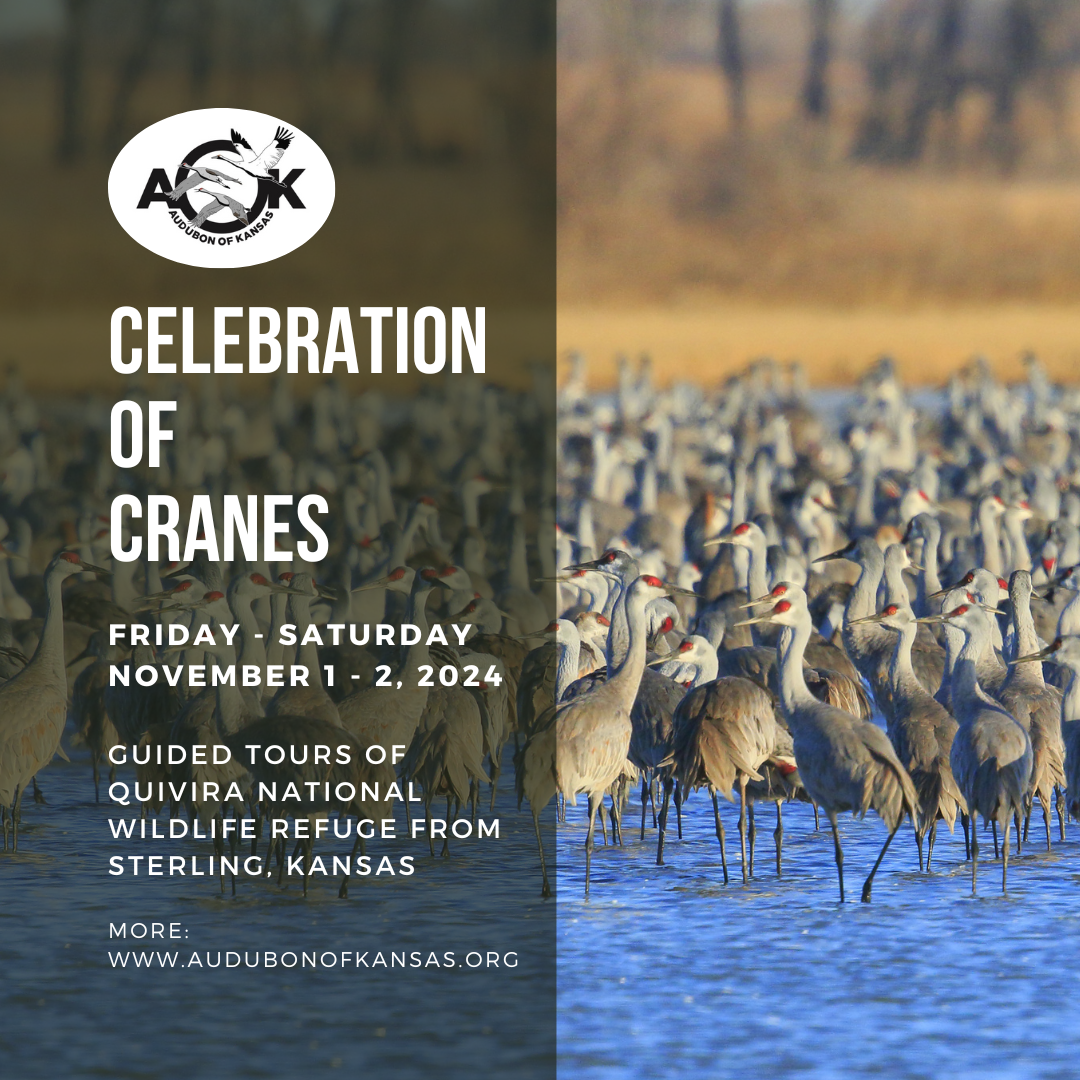
August 1: Registration opens for Celebration of Cranes
- August 8: "Home on the Range: Breeding biology of prairie-chickens" in Lincoln, Nebraska
- August 16: Achterberg Wildlife-Friendly Demonstration Farm events
- Volunteer 1-4pm
- Trail Hike 5pm
- August 24: Big Kansas Road Trip Events at Alcove Spring, near Blue Rapids, KS
- October 6: Open House at Hutton Niobrara Ranch Wildlife Sanctuary near Bassett, Nebraska
-
Nov 1-2: AOK's Celebration of Cranes, Sterling, KS
- Philanthropy Corner: See your support go to work!
- Chapter Spotlight: Lawrence Bird Alliance makes their presentations available to all Kansans
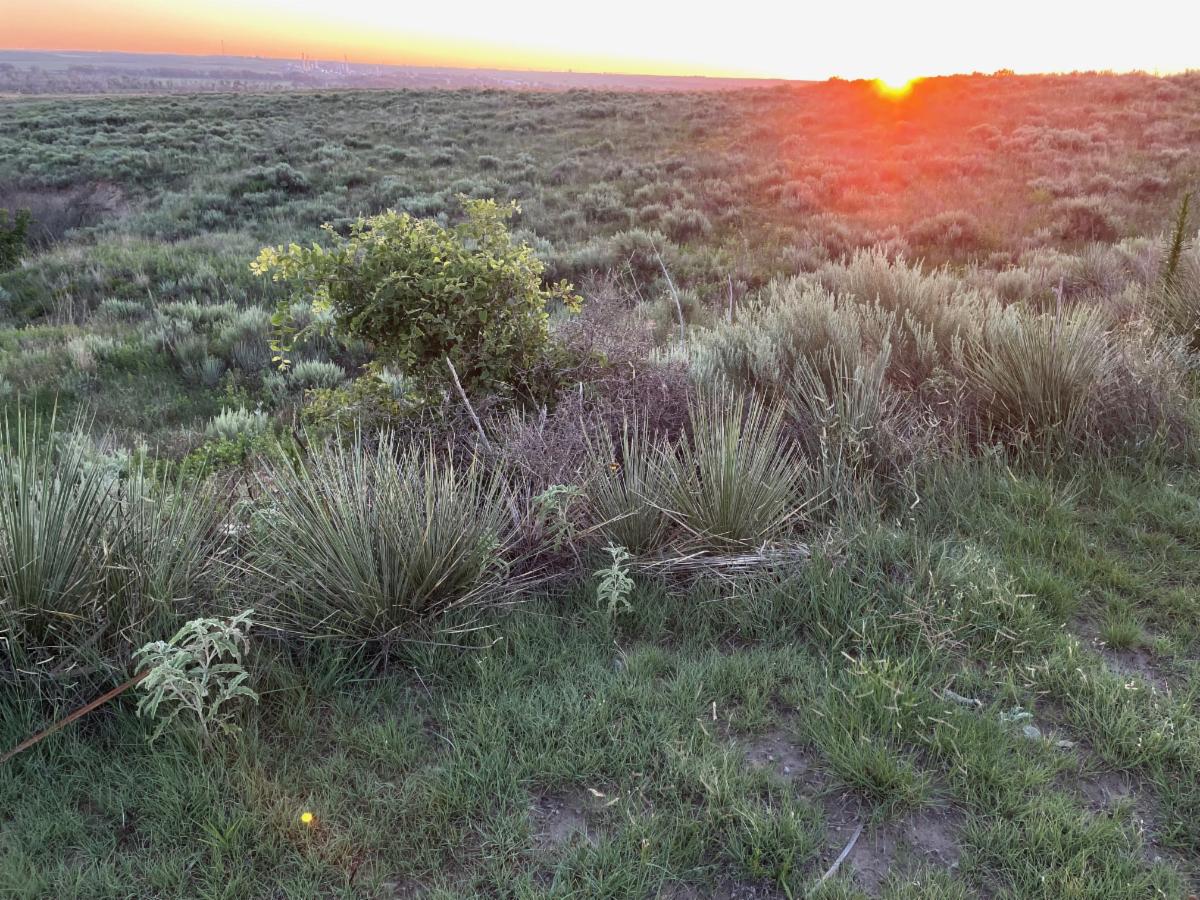
- AOK Nature Spot Recommendations: Arkalon Park has some of the best sand sage prairie in the state (north of Liberal, KS)
| |
AOK Celebrates 25 years of environmental education
Environmental Education was and still is a core part of Audubon of Kansas' mission. The first Prairie Wings gives an update on the work of the Education Committee. Their immediate goal was to spread already existing environmental education materials, such as National Audubon's Audubon Adventures or the Kansas Department of Wildlife and Park’s educational newsletter TRACKS, more widely. They also stated that they were writing a grant proposal that would establish a statewide AOK education program and hire a half-time education coordinator. Subsequent newsletters follow the development and distribution of the “Kansas Birding and Prairie Flora Trail” or "Prairie Passage" materials. Prairie Wings also promoted the "Wings N' Wetlands" Festival at Cheyenne Bottoms and Quivira National Wildlife Refuge.
Today, AOK's Celebration of Cranes and Kansas Lek Treks Prairie-Chicken Festival are the only two birding festivals in the state. We continue to give programs to people throughout the state (and adjacent states) on numerous conservation topics including Native Plants for Birds, 3 Billion Birds Gone and What To Do About It, Beginning Birdwatching, Birding By Ear, Home On The Range: The Breeding Biology of Prairie-Chickens, Migration, Wetland Conservation, and many more. This year to date, over 750 people have attended a presentation! Finally, our Nature Adventurepack program continues to expand. A Spirit Aerosystems grant will bring backpacks with binoculars and field guides to the Wichita Public Library and adjacent libraries.
These educational efforts are so important because people will not preserve what they don't understand and appreciate. Sometimes the impact of these efforts is not immediate or apparent.
One of my personal summer projects has been entering all my bird sightings into eBird. I have diligently recorded checklists of birds for 20 years. By entering the data, I not only hope to contribute to community science, but I am curious as to what my life list total is (the number of species I have observed anywhere in the world). My early journals record not only lists of birds, but also key experiences and observations. I was surprised to see Ron Klataske and Audubon of Kansas in my journal under the title "Wind Energy Forum 10/15/2002". My notes for Ron's talk include, "[power] lines over prairie cheaper, but endangers grasslands" and "60% of Kansas is cultivated" and "Why sacrifice prairies?"
I would like to think that the talk given by Ron and others during the Wind Energy Forum instilled in me the first spark of the love of Kansas landscapes and the threats facing them. That spark was kindled by my 20 years of working prairie-chickens, and primed me to be open to the possibility of being the Executive Director of AOK when the opportunity arose. Now, I am honored to be able to pass on my knowledge and appreciation of Kansas wildlife and habitats through AOK's education initiatives.
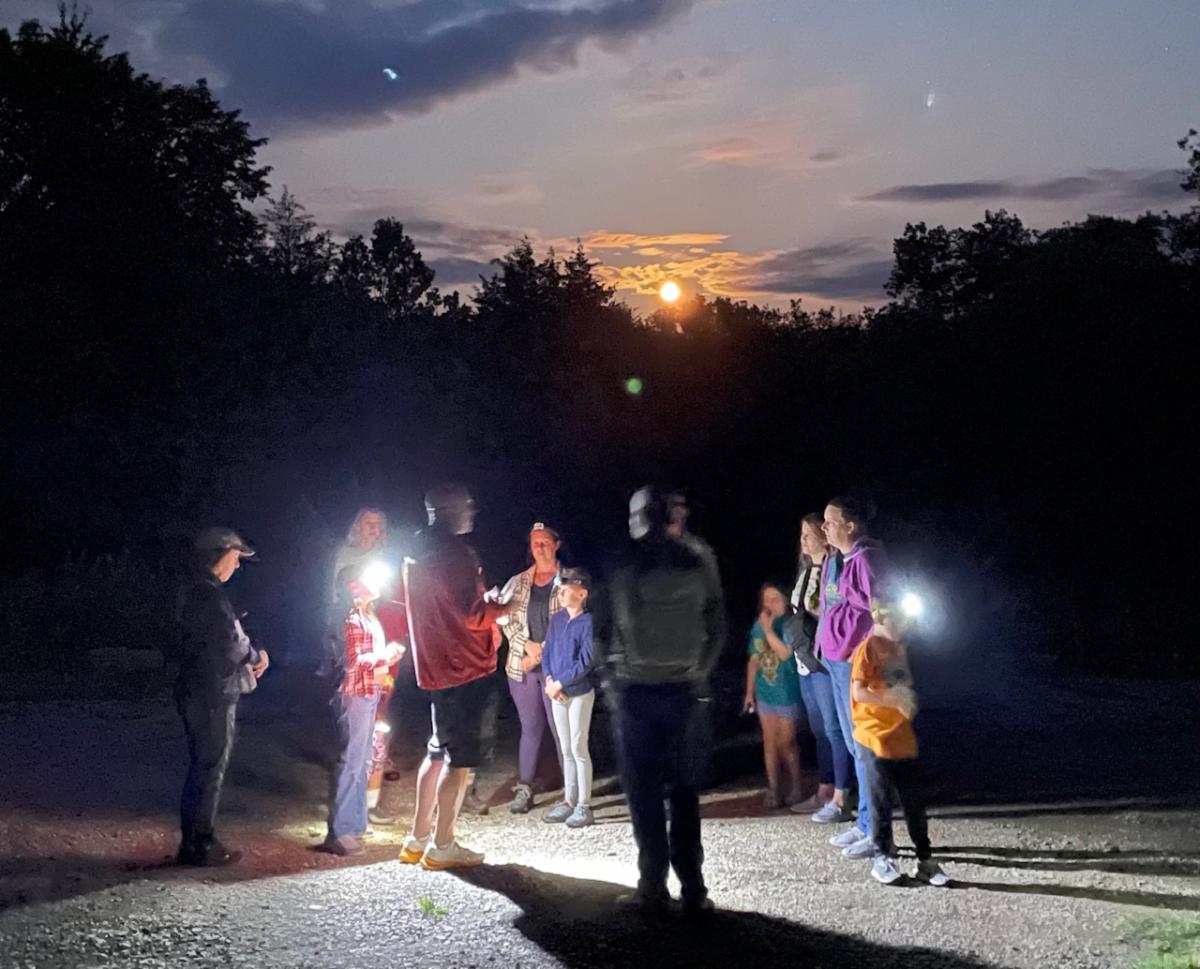
Essay by Jackie Augustine. Photo from the recent 'Spider Walk' at Mount Mitchell Heritage Prairie Park.
| |
What does the Farm Bill have to do with conservation?
The Farm Bill supports voluntary conservation practices on private land, but it also bolsters an industry focused on bushels per acre and not soil health or water conservation. The following is reprinted from the Kansas Rural Center. AOK is a sponsor of their legislative updates.
Federal Farm Bills define and dictate Kansas’ agriculture. Unfortunately, the 2024 Farm Bill is floundering.
Congress is dysfunctional and unable to find a commonsense consensus. Americans are now living with the 2018 Farm Bill, which expired on September 30, 2023, but was extended for a year to September 30, 2024. The U.S. Senate Agriculture committee has not reached a bipartisan consensus to move the bill to the Senate floor. The U.S. House Agriculture Committee held a rushed full committee meeting to vote out a Farm Bill but with an understanding that there would not be a House floor debate or vote given that certain conservative House members would vote down this hastily reached compromise. Corporate-funded, commodity group-fronted special interests want no fundamental changes to the heavily taxpayer-subsidized commodity and crop insurance payments in the existing Farm Bill. Political campaign contributions play a heavy role in shutting down a compromise. Depending on the election outcomes in November, it seems most likely that during the lame duck session after the election and before the end of the year, another one-year extension will be made with few substantive changes for now. Federal Farm Bill farm payments to Kansas average $1 billion to $1.25 billion a year, with the bulk (75+%) going for commodity payments and crop insurance to grow corn, soybeans, wheat and sorghum while 20% goes for conservation payments. 88% of these farm payments go to just 20% of the 55,734 farms in Kansas. Since these are federal dollars, the Kansas Legislature has no time to debate its impact on Kansas agriculture and the future of family farming. These commodity/crop insurance payments drive the overirrigation of 2.3 million crop acres (out of 22 million harvested crop acres), but this reality is ignored by water planners (even though 83% of water use in Kansas is crop irrigation).
Certain key federal farm conservation programs (such as the Conservation Stewardship Program – CSP – and the Environmental Quality Incentive Program – EQIP) are underfunded and can serve only 30% of Kansas’ farmers requests. The average age of the Kansas farmer is almost 60 and only 10% of Kansas farmers are under age 35. Kansas has a total of 45 million farm acres with 24 million tenant-farmed and 21 million owner-farmed. In 2022, 2,374 Kansas farms (4.3% of all Kansas farms) accounted for 75% of the $23.9 billion in total Kansas farm sales. In the next 30 years, will Kansas have only 5,000 farms with a sizeable percentage funded by speculative investors? Doubtful that this year Kansas will have a meaningful policy debate on the Farm Bill and the future of Kansas’ agriculture by Congressional or state lawmakers. Federal Farm Bill spending is split 80% for nutrition programs (primarily SNAP – food stamps) and 20% for farm programs. In 1973, Senators Bob Dole and George McGovern put food stamps in the Farm Bill to interest and involve urban lawmakers. In terms of all food assistance programs in Kansas, SNAP accounts for 60+% of the total while private, food bank efforts come in at under 10%. Nationally, USDA reports that 82% of eligible SNAP clients are enrolled. In Kansas, we are at a 68% enrollment putting our state 48th of the 50 states. Today there are 188,710 persons on SNAP of which 85,117 are children. In 2013, there were 316,424 persons on SNAP of which 141,761 were children. Feeding America reports that 1 in 5 Kansas children are ‘food insecure’ with challenges to be fed the entire month. This ties closely to the affordable housing issue in Kansas where 40% of the 400,000 renters in Kansas pay well over 35% of their household income on rent and utilities. Many of these renters are single women with children. These are the critical, systemic policy issues that should be discussed by the Child Welfare System Oversight Committee this year as well as the Special Committee on Available and Affordable Housing along with Congressional candidates.
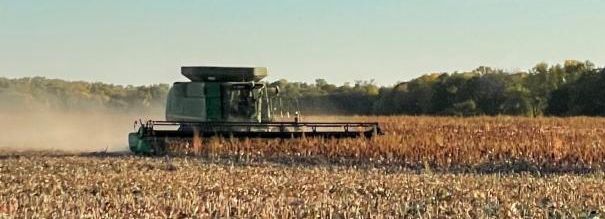
Photo: The tenant farmer harvesting milo at Achterberg Wildlife-Friendly Demonstration Farm, an AOK property. Photo by JK Augustine.
| |
What good is poison ivy?
There is one obvious reason to hate poison ivy – the itchy, oozing rash that appears to spread all over your skin, taking 2-3 weeks to heal. Many people think you can get the rash from the fluid that oozes from the affected skin, but that is not the case. You can only get the rash from the plant or its oils. It appears to spread over your skin because the most sensitive areas with the greatest exposure react first, with thick-skin areas with light exposure reacting later. It can take as short as a few hours to develop a rash or as long as a few days! However, you can re-expose yourself by handling gardening equipment, shoes, or clothing that has been exposed to the ivy and has not been washed. I once got poison ivy on the inside of my arms and under my chin from hugging a dog that had run through a patch.
I thought I was immune to poison ivy. I learned about the ‘leaves of 3’ at an early age and tried to avoid it. But I was a kid – I’m sure I ran through it countless times with no reaction. It wasn’t until graduate school at Kansas State that I had my first painful experience. For my doctoral research, I had tagged prairie-chickens with equipment that allowed me to track their movements via telemetry. When the transmitter fell off or the bird died, it emitted a different signal so I would know to go locate the transmitter. Well, a transmitter indicated that the bird had stopped moving, so I walked it up. The signal was coming from the center of a bed of poison ivy. I walked in and timidly started moving the plants with my handheld antenna. Unsatisfied at my progress, I started using my hands and digging in the dirt. I never did find that transmitter – I assume a pack rat or some mesopredator (skunk, snake, coyote, badger, raccoon) carried it into a burrow underground. After I gave up the search I washed off in a nearby cattle tank, but we all know water only spreads oil around. I had the worst outbreak of poison ivy – I had to go to the hospital to get medication to make life bearable again. Now, I am super sensitive to poison ivy, often getting rashes on any skin exposed when I weed-eat AOK’s trails.
You think with an experience like that, that I would despise poison ivy. Well, I don’t. It is human nature to evaluate a plant or animal by its utility for people. Contrary to this, I believe everything has a place, and that not everything can be measured by how it affects people. Poison ivy only causes painful rashes on humans and other primates. Other mammals might get slight irritation.
Urushiol is the chemical that causes the itchy reaction in humans and other primates. Scientists speculate that urushiol production evolved, not to deter people from walking through it, but as an antimicrobial defense agent to prevent bacterial infection.
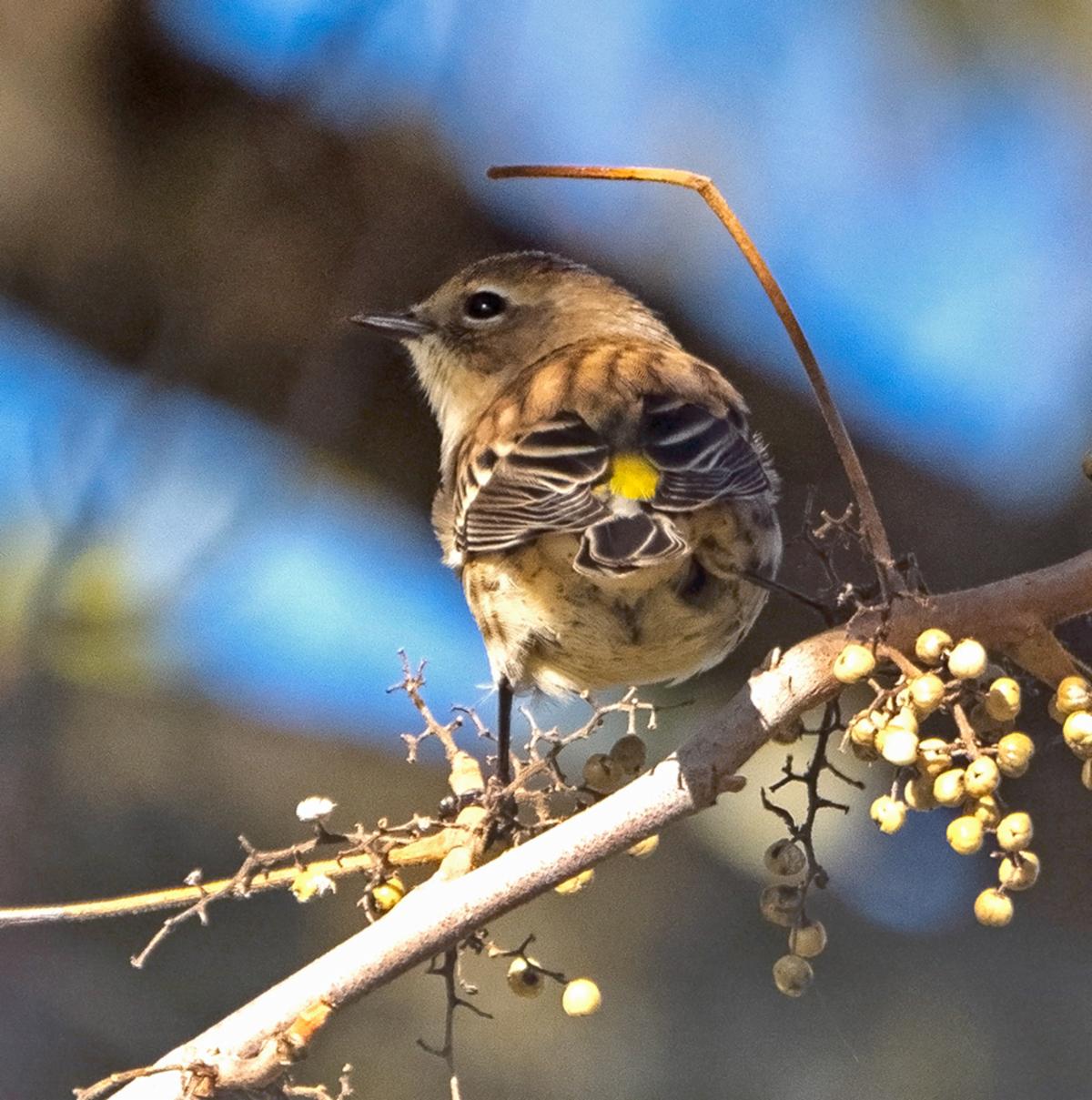
But back to my original question – What good is poison ivy? Poison ivy provides many benefits to wildlife, mostly by providing a delicious meal for many animals. Deer, raccoons, and rabbits eat the leaves. Their berries are a nutritious food source in the fall, ripening as migration gets in full swing. I’ve seen numerous yellow-rumped warblers, cedar waxwings, bluebirds, and robins eating poison ivy berries.
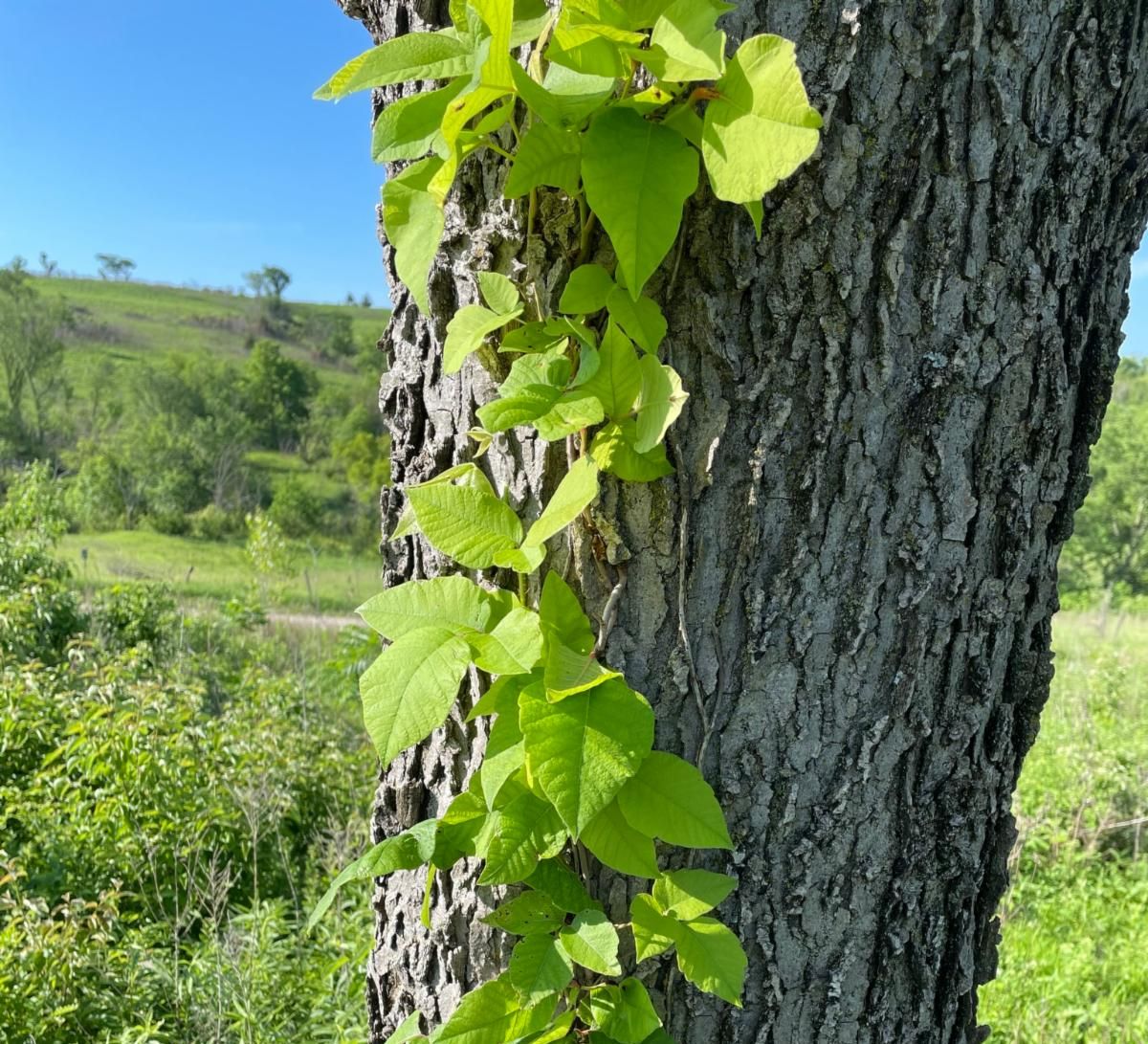
The plant itself is rather interesting, too. There are a lot of differences among individual plants ranging from the size of the leaves, to whether the leaf edge has teeth or is smooth, and to its propensity to climb. Some individual plants climb huge trees to reach sunlight, others are happy to creep across the ground. Their vines look hairy, and I wonder if the elaborate hairs somehow help the vine to cling to tree bark better than other vines.
I respect poison ivy. I understand well what poison ivy can do to me, but I also appreciate what it does for birds and other wildlife.
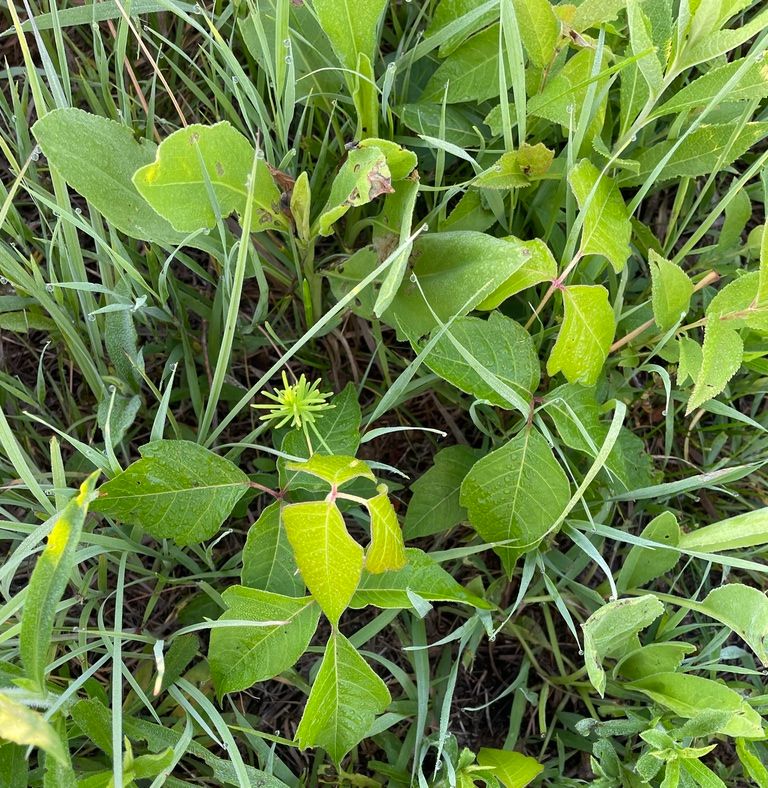
Jackie Augustine provided the text and the photo of poison ivy climbing a tree (left) and one the ground (right) at Mount Mitchell Heritage Prairie Park.
Middle photo of Yellow-rumped Warbler eating poison ivy berries by David Rintoul.
| |
 | |
See Your Support Go to Work!
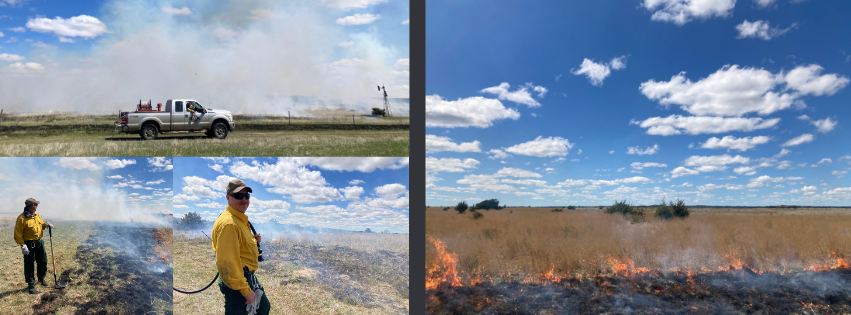
The entire team at AOK extends a HUGE thank you to all who contributed to our Prairie Fire Summer campaign last August. Not only did our AOK donors step up to purchase a slide-in spray unit consisting of a water tank, pump, and hose ($5,000); handheld fire equipment ($3,800); and personal protective equipment ($4,000), one also gave us a backpack sprayer!
The photos shared here demonstrate how your support was turned into action at the Hutton Niobrara Ranch Wildlife Sanctuary in Nebraska. In May, over 400 acres were burned to remove woody plants and provide vital nutrients to reinvigorate the prairie. Greater Prairie-Chickens will not use an area if there are 3 trees per acre, and these prescribed fires are critical for maintaining health prairies for prairie-chickens, Upland Sandpipers, and curlews. We are already making plans for our next prescribed fire.
Your support of wildlife and habitat makes a tangible difference 365 days a year. We put your support to work!
| |
Chapter Spotlight:
Lawrence Bird Alliance makes their presentations available to all Kansans
Providing informational presentations to members is central to the mission of all Audubon chapters in Kansas. The Lawrence Bird Alliance (formerly Jayhawk Audubon Society), not only provides presentations to members, but anyone can join the meeting virtually. You can also attend in person at the Carnegie Building at 9th and Vermont in downtown Lawrence. So, no matter where you are, you can be informed about environmental issues or learn interesting things about Kansas wildlife.
The next presentation offered by Lawrence Bird Alliance is August 26 at 7pm. Kim Criner Ritchie, Douglas County Sustainability Director, and Kathy Richardson, City of Lawrence Sustainability Director, will discuss their work on the Climate Action Plan and other joint projects.
Lawrence Bird Alliance is also offering three bird walks in August:
Aug. 7 (Wed.) | Clinton Lake, East Bloomington | 7:30 am
Meet at the parking lot east of the Wakarusa Museum, not the swim beach. We will take an easy walk around the parking lot and edge of the lake primarily for swallows. Also a good chance for Scissortail Flycatchers and a host of other flycatchers and kingbirds in the area. Along the beach we should find several species of gulls, and early shorebirds returning from breeding in Canada. Forster’s, Black and Caspian terns are often here. Buntings, grosbeaks, orioles, even warblers and tanagers are possible as fall migration is underway.
Aug. 13 (Tues.) | Sunrise Project | 8:00 pm | “Chimney Swift Send-off!”
Meet in the parking lot of the Sunrise Project. Bring your own lawn chair. We will start at 8:00 pm. We will start with info about the Sunrise Project and then some facts about Chimney Swifts. The birds should start circling the chimney about 8:20 or so and then descend into the chimney around late dusk. Much depends on weather and timing of their migration. 100+ swifts are likely to roost in the chimney overnight.
Aug. 17 (Sat.) Clinton Lake, East Bloomington | 7:30 am
Meet at the parking lot east of the Wakarusa Museum, not the swim beach. We will start at 7:30 am to beat the heat. We will take an easy walk around the parking lot and edge of the lake primarily for swallows. Also a good chance for Scissortail Flycatchers and a host of other flycatchers and kingbirds in the area. We will then walk to the beach where we should find several species of gulls and early shorebirds returning from breeding in Canada. Forster’s, Black and Caspian terns are often here. Buntings, grosbeaks, orioles, even warblers and tanagers are possible as fall migration is underway.
| | | |  | |
|
Contact Us
Jackie Augustine - Executive Director - General Questions, Programs, Sanctuaries Management jackie@audubonofkansas.org
Ellen Johnson Mosley - Director of Philanthropy - Gift Planning, Membership, Endowments, Events Management - ellen@audubonofkansas.org
Amy Kucera - Sanctuary Manager - Questions about AOK sanctuaries and habitat management amy@audubonofkansas.org
| | |
| |
|
Audubon of Kansas
PO Box 1106
Manhattan, KS 66505
785-537-4385
| | |
| | | |