What You'll Find in this Newsletter | |
Advocacy: AOK’s Approach to Advocacy
Conservation: Rethinking Prescribed Fire: When is the Right Time to Burn?
Education: What good is a burying beetle?
Upcoming Events
Featured Event
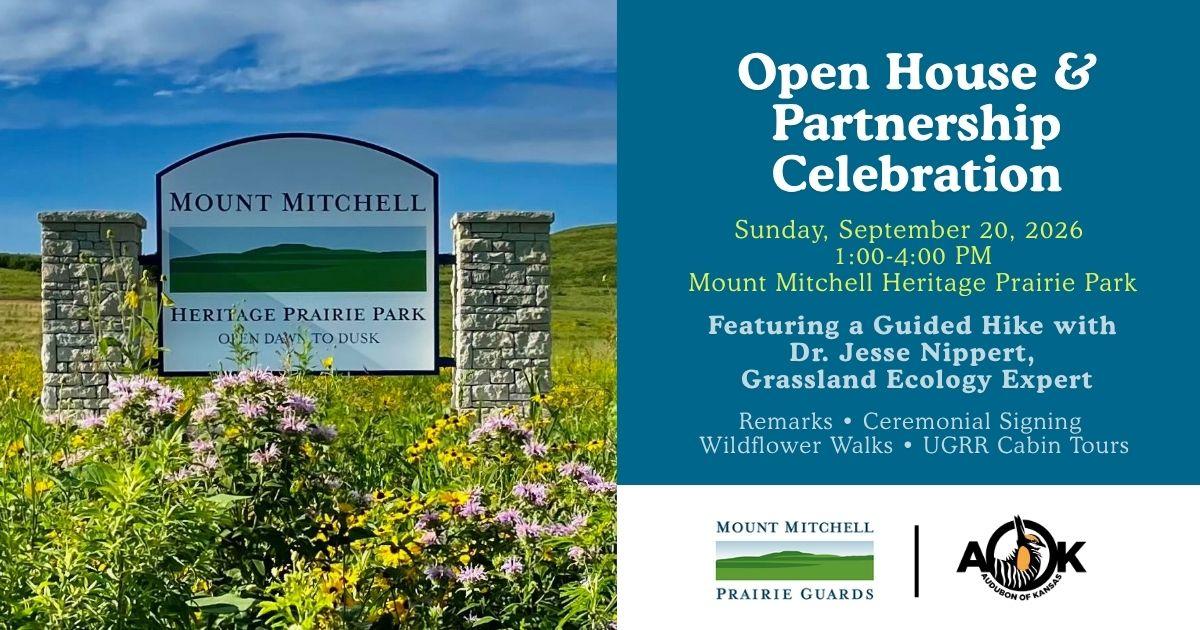
Sunday, September 20: Mount Mitchell Heritage Prairie Park Open House & Partnership Celebration
Philanthropy Corner: Contribute to the AOK Advocacy Fund
Chapter Spotlight: Northern Flint Hills Audubon Society
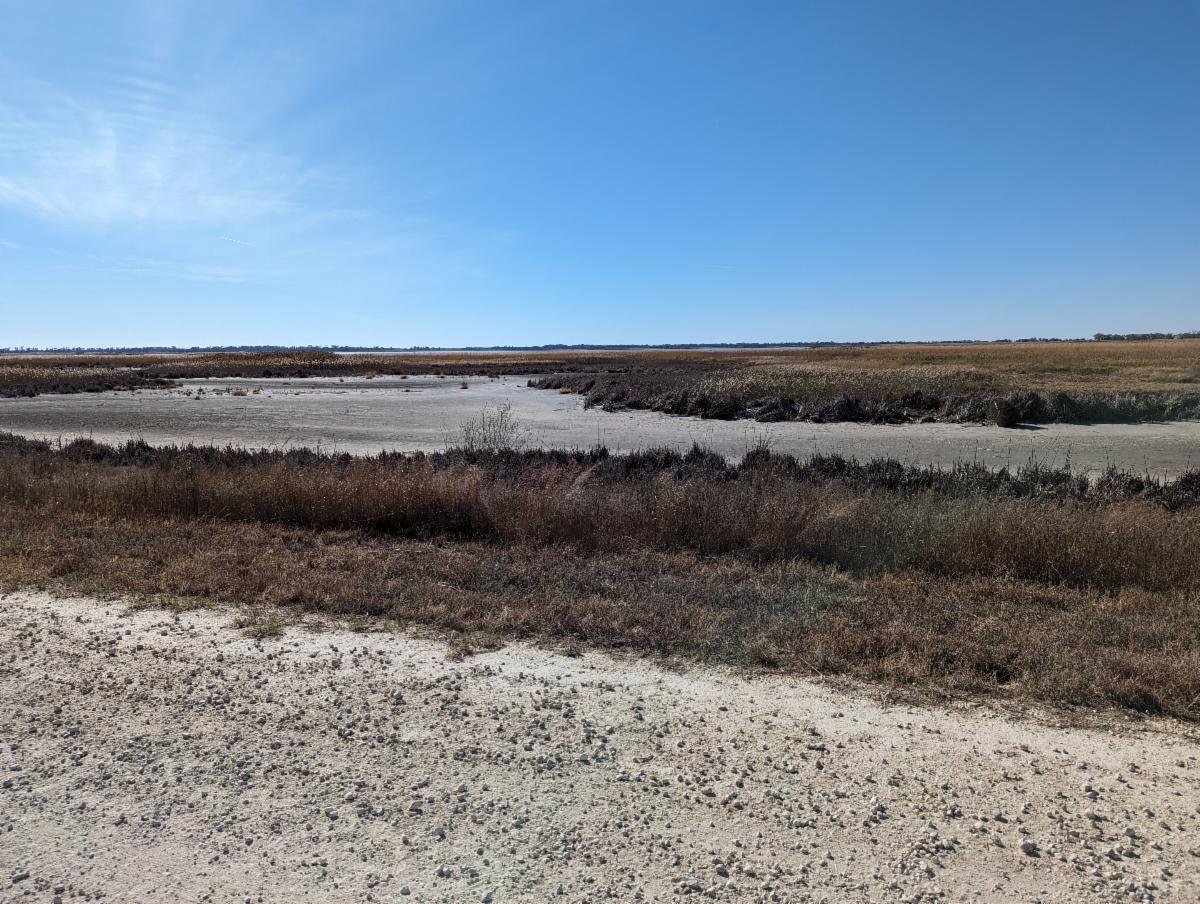
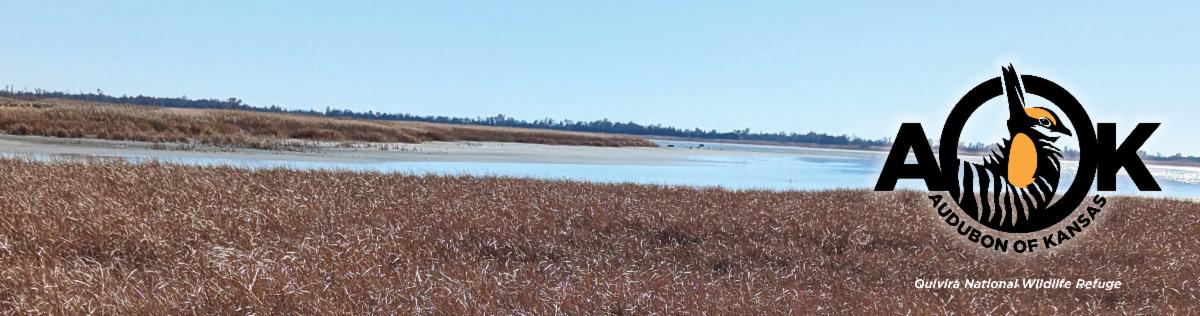
| | A dry landscape at Quivira National Wildlife Refuge | |
AOK’s Approach to Advocacy
In this age of increasingly polarized discourse, AOK takes another path. Instead of fear-mongering worst-case scenarios, AOK focuses on supporting our stance with evidence and providing a path forward.
For example, when an industrial solar energy facility was proposed near Cheyenne Bottoms, we did not just say, “No solar.” We said, “Not in this particular location, but there might be acceptable locations elsewhere in the county.” We supported this view with concrete third-party evidence. We believe that is why we were successful in creating a 2-mile no-build buffer around this wetland of international importance.
Sometimes, this common-sense approach is not enough. In that case, AOK will use litigation to give wildlife a voice. For decades, Quivira National Wildlife Refuge has attempted to secure the water it needs by establishing voluntary agreements with irrigators, but have seen few results. AOK filed lawsuits in 2021 and 2023 against the U.S. Fish and Wildlife Service (USFWS), and the Kansas’ Department of Agriculture claiming that these federal and state entities tasked with protecting and fulfilling Quivira’s senior water right were failing to do so. This resulted in another round of voluntary conservation discussions. With little progress to show from three years of conversation, the time to litigate is fast approaching.
Our summer campaign discussed below is an urgent request to secure funding for both common sense advocacy and potential litigation. Please consider contributing to the fullest extent that you are able.
Help AOK give wildlife a voice.
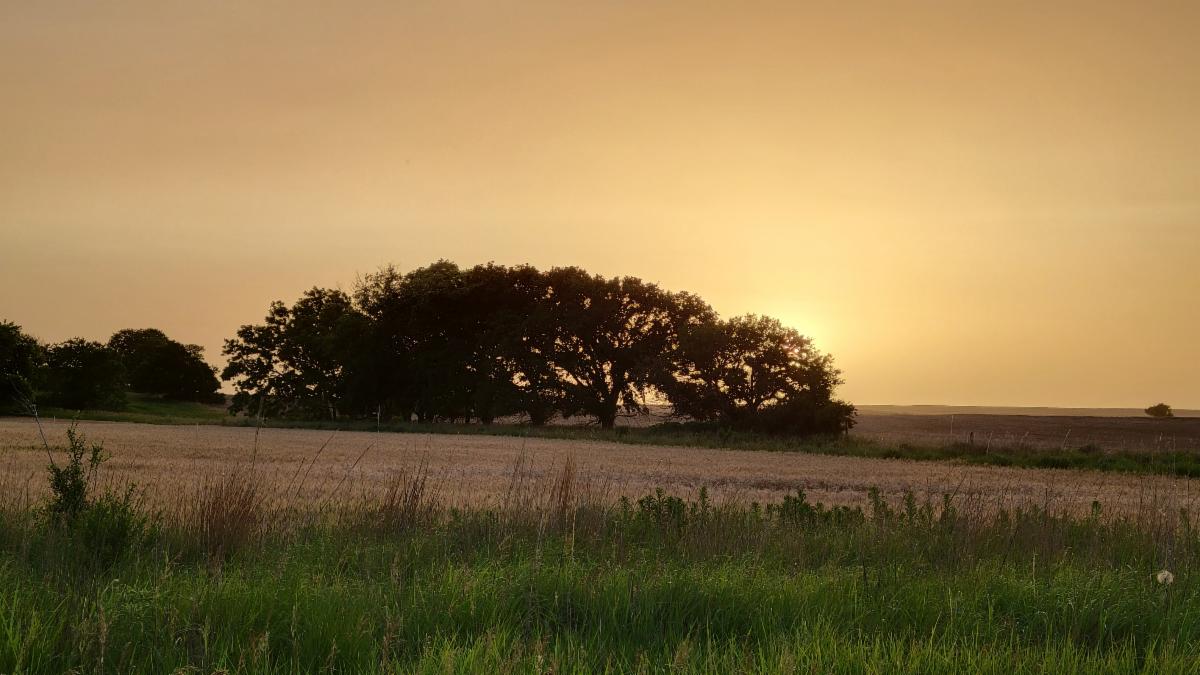
| | Connie Acterberg Wildlife-Friendly Demonstration Farm | | Rethinking Prescribed Fire:
When is the Right Time to Burn? | | |
Early spring has long been considered fire season in Kansas. The time of year when landowners, with the help of their neighbors, ignite pastures across the Flint Hills - starting anew, rejuvenating the land, and heralding in a new season of growth. The importance and benefits of fire on the health and function of grassland ecosystems is generally well understood, and is now emphasized as we are able to look back on the impacts of over a century of fire suppression.
So why spring? Historically, fires occurred naturally throughout the year, while evidence suggests that indigenous people primarily conducted burns in the fall. In a modern context, we largely utilize prescribed fire as a tool to support industry, improving grazing conditions for livestock, keeping our pastures free from woody encroachment, and increasing hay production and quality. While beneficial any time of year, we are encouraged not to get stuck in our ways, especially as landowners with a variety of objectives. Realizing the beauty, diversity, and resiliency of the prairie was rooted in the sporadic disturbances of fire, grazing, and weather conditions. If we routinely apply the same pressures at the same time of year, we are limiting the potential of our grasslands, and of prescribed fire as a tool in managing them.
The message is not that burning at one time of year is better or worse than any other, but rather they all carry their own advantages and drawbacks. Closely evaluate the needs of your land, and your objectives as a landowner. Targeting difficult, invasive species such as smooth brome or sericea lespedeza during flowering and early seed production can be an effective means of control, but may result in a postponed turnout time for cattle and reduced cover for wildlife. Burning late in the summer hits drought-stressed trees harder, and favors the growth of forbs the following year, but may also create a hotbed for cool-season grasses. AOK does not shy away from springtime fires, but will also encourage others to reevaluate their goals before striking a match on April 1st.
AOK has one growing-season burn planned for September at the Connie Acterberg Wildlife-Friendly Demonstration Farm.
| | What good is a burying beetle? | | |
Story and photos by Dr. Jackie Augustine, AOK Executive Director
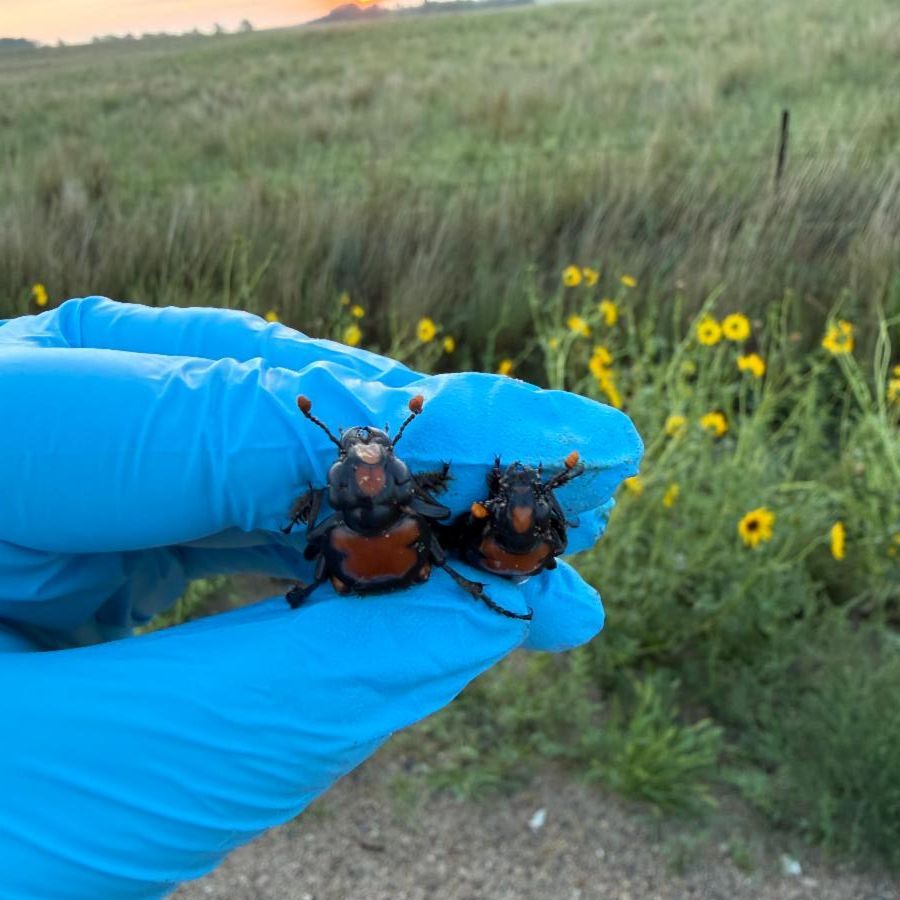
Burying beetles disgust many people. I envision myself as an intrepid soul, but even I questioned whether I could stomach watching them eat their desired food during a week-long survey. They swarm days-old rotting carcasses, fight for them, and bury them before scavengers or other beetles destroy them.
American Burying Beetles are currently listed as a threatened species. What would we lose if they were to go extinct? Other carrion beetles and vertebrate scavengers would eat rotting flesh, but the burying beetle’s act of burying the carcass returns nutrients to the soil in an efficient manner. Additionally, if the animal died of a contagious disease, the act of burying makes the carcass inaccessible for disease transmission. Finally, they compete with flies. In areas where burying beetles are common, livestock are less susceptible to fly-transmitted diseases.
I appreciate American Burying Beetles because even though they seem so unlike us, we share similar family structures. Adjacent to their buried food, they make a nursery to lay their eggs. Both male and female meticulously care for their young, feeding begging larvae with little bits of regurgitated food. Less than 1% of all insects participate in biparental care (male and female caring for young), so this behavior is something we uniquely share with burying beetles.
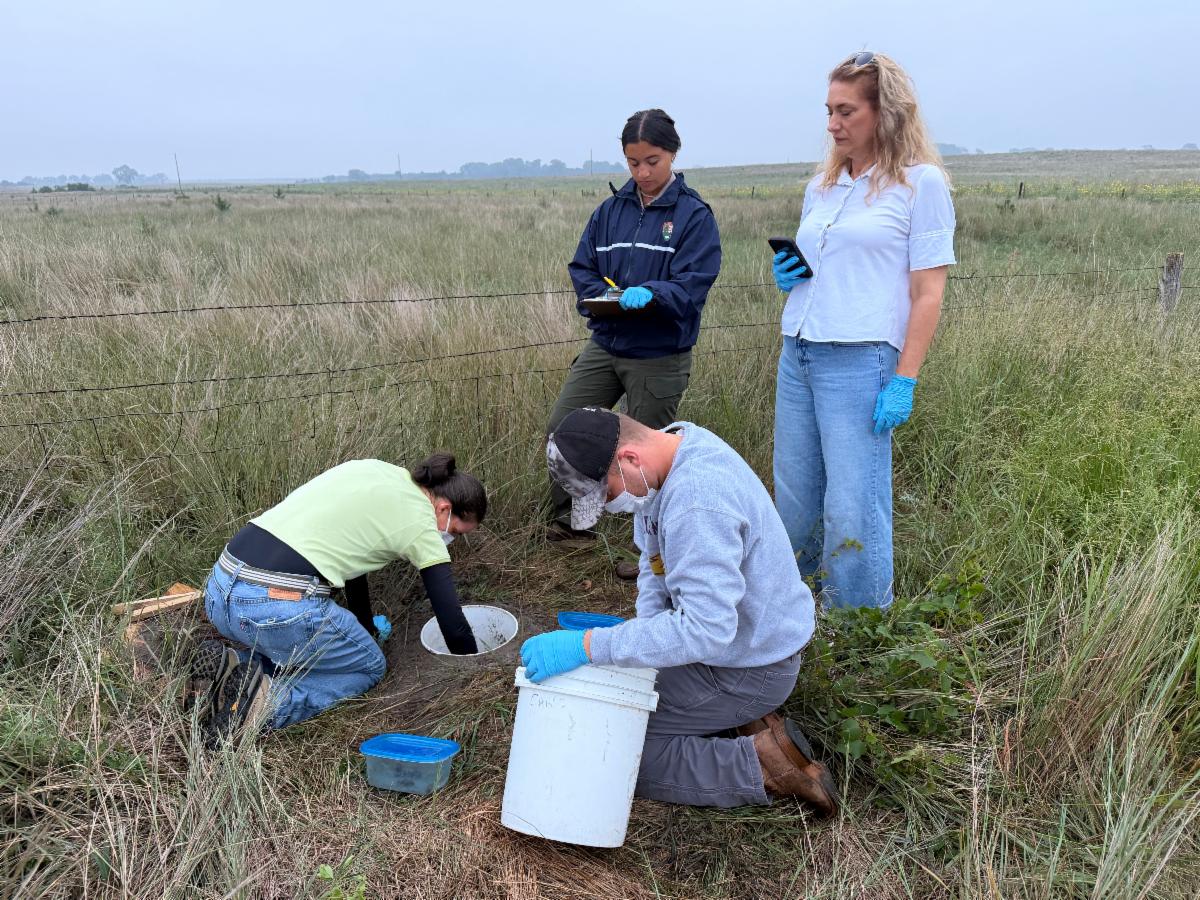
| | American Burying Beetle survey at the Hutton Niobrara Ranch Wildlife Sanctuary | |
Sept 19 | Topeka Zoo Wildlife & Nature Festival
Topeka Zoo & Conservation Center
635 SW Gage Blvd
Topeka, KS 66606
9:00 AM-3:00 PM
AOK will be onsite for this day built around the animals, plants, and people working to protect them. Meet conservation partners and see how small actions add up to big change.
Learn More
|
|
Sept 20 | Mount Mitchell Heritage Prairie Park Open House & Partnership Celebration
Mount Mitchell Heritage Prairie Park
Main Entrance
29000 Mount Mitchell Road
Wamego, KS 66547
1:00-4:00 PM
Join the Mount Mitchell Prairie Guards and AOK for an afternoon celebrating a unique partnership to preserve the Mount Mitchell Heritage Prairie Park as a public park with multifaceted historical significance and diverse tallgrass prairie.
The afternoon will begin with brief remarks from both organizations and a ceremonial signing marking the partnership. The featured program is a guided hike with Dr. Jesse Nippert, University Distinguished Professor of Biology at Kansas State University and a grassland ecology expert. During the hike, Dr. Nippert will explore the impacts of woody encroachment in grassland ecosystems, and discuss both conventional and novel approaches to addressing the issue.
Following the hike, docents will lead wildflower walks, and visitors can tour the historic 1856 cabin, an original Underground Railroad station.
Light refreshments, including a build-your-own trail mix bar, will be available. Parking attendants will be onsite near the entrance to assist visitors.
| |
Sept 25 & 26 | Cheers to Birds: AOK Membership Drive
Sandhills Brewing
5612 Johnson Drive
Mission, KS 66202
12:00-6:00 PM
Come raise a glass for the birds! Join AOK at Sandhills Brewing in Mission for two days of good beer, good company, and support for Kansas wildlife.
Stop by anytime between noon and 6 PM Friday or Saturday to enjoy a brew and learn more about how AOK works to protect wildlife and habitat across Kansas. For this event only, new members can join AOK at a reduced member rate of $25, a 15% savings. Current AOK members can also get in on the fun! Refer a friend and help grow the community of people standing up for Kansas wildlife.
Everyone who joins onsite, as well as current members whose referrals join, will receive a beer voucher and be entered into a special raffle featuring AOK and Sandhills Brewing merchandise, plus two complimentary registrations to the 2026 Kansas Crane Festival.
Become a member today or refer a friend!
| | |
Oct 2-3 | Big Kansas Road Trip
Concordia, KS
Oct 4 | Lincoln County Founders Day
Lincoln, KS
Oct 4 | Hutton Open House
Bassett, NE
Oct 15 | Public Talk: Celebrating Cranes
Salina, KS | 7:30 PM
| | Contribute to the AOK Advocacy Fund | | |
Giving wildlife a voice is about more than speaking up. It requires proper preparation, field expertise, and the nimbleness needed to respond when these crucial decisions are being made.
That’s where your support makes all the difference.
Your gift to the Audubon of Kansas Advocacy Fund helps us:
- Engage legal, scientific, and technical experts
- Gather the evidence needed to respond to complex conservation issues
- Build an informed grassroots network
- Respond quickly when important conservation decisions are being made
In all parts of Kansas, wetlands, prairies, water resources, and wildlife face growing pressures. We believe we are approaching a critical juncture in some of our most important advocacy work, and now is the time to make sure we're prepared.
Your support helps us do more than react. It helps us prepare, participate, and act.
Together, we can ensure that wildlife has a voice when these challenges arise.
| | |
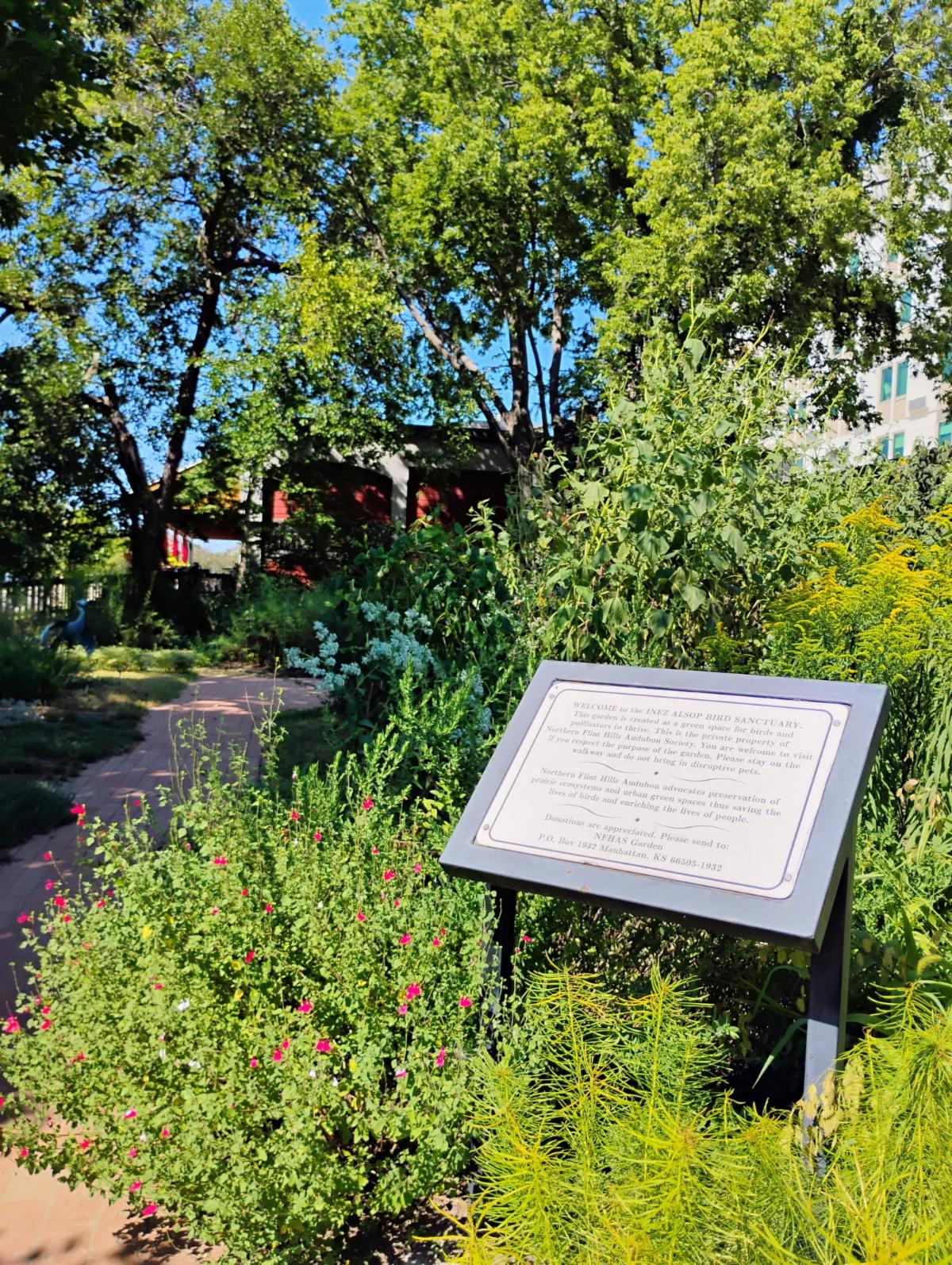
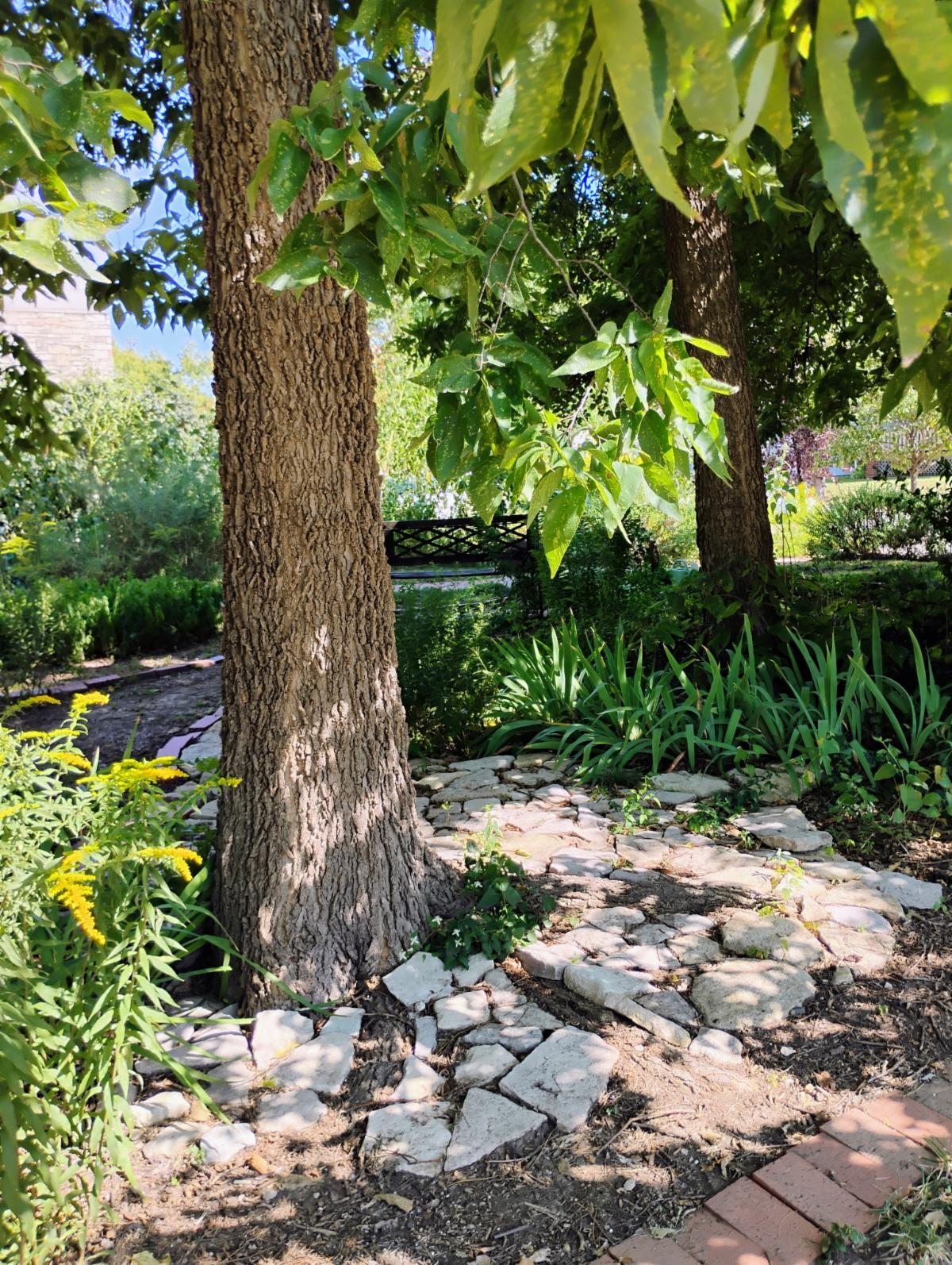
This past year has seen increased work by the Northern Flint Hills Audubon Chapter at the Alsop Bird Sanctuary, a small plot of land near Kansas State University. It is truly becoming a special green oasis in an urban area. More and more locals are visiting, and some even volunteer to help weed.
The chapter’s most recent program featured Dr. Ellen Welti. Her presentation on grassland insect communities was one of the chapter’s most well-attended programs. A field trip to Cheyenne Bottoms and Quivira was also held in May—two great places to visit.
Monthly birding has changed from Saturday morning to Sunday afternoon. This change has increased attendance, with more families participating.
The chapter’s partnership with the Kansas State Student Bird Club has provided help with the sanctuaries, as well as added a new member to the board. This year, the new president is serving on the board, and the added energy a young person brings is wonderful. The chapter also has a new treasurer, Steve Kramer.
| | Photos of the Alsop Bird Sanctuary | | | | |