Adirondack Park Invasive Plant Program August 2025 Newsletter

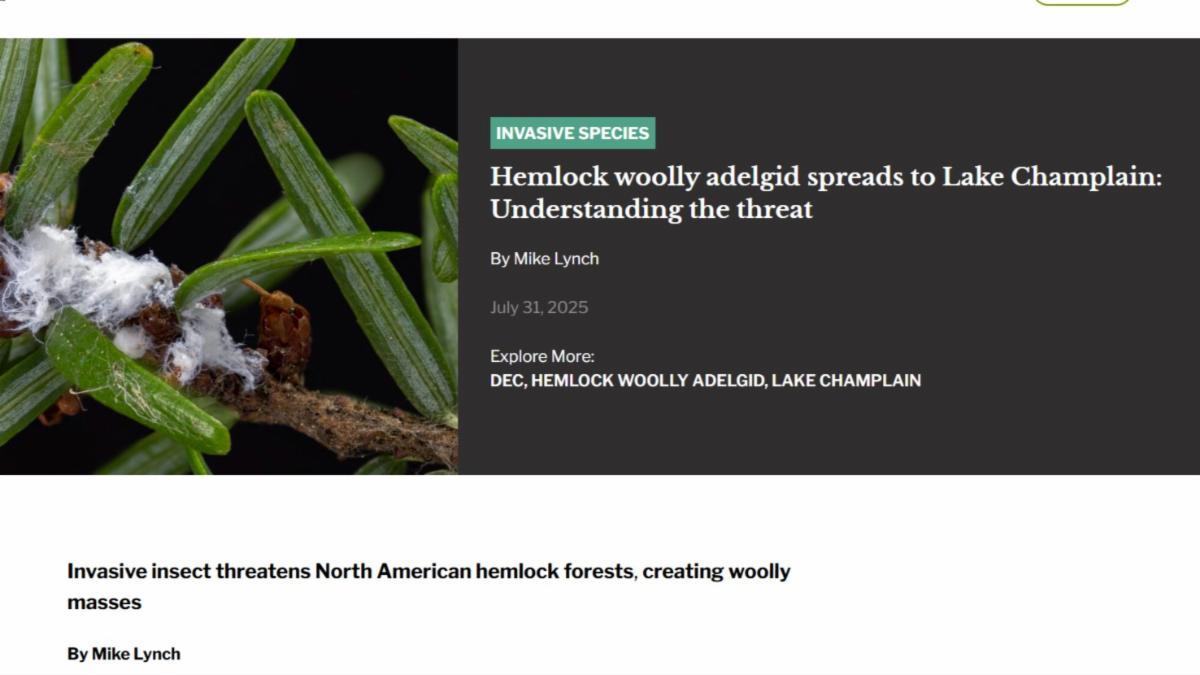
Invasive forest pests are on the move in the Adirondacks, which is an unfortunate reality of the work APIPP and our partners do. This summer we have learned that hemlock woolly adelgid (HWA) was confirmed on the western shore of Lake Champlain in the Port Douglas area, on private property that is about 50 miles north of the next closest HWA infestation. Emerald ash borer (EAB), another invasive forest pest, is now believed to be present in every Adirondack county, and beech leaf disease (BLD) is also expanding its range.


These new infestations matter because the effects of invasive species can be devastating to Adirondack forests. An HWA infestation can kill a healthy tree within 10 years—after hatching in spring, the small invasive insect feeds on hemlock twigs, causing significant damage to the tree over time. Similarly, EAB poses a deadly threat to ash trees and BLD kills beech trees. Hemlock, ash, and beech are all common in the Adirondacks and play important roles in forest ecosystems. But here’s the good news: A bunch of organizations are involved with efforts to learn more about these forest pests and to explore management options for mitigating the threats they pose. It’s a huge effort and the clock is ticking, so we need your help!


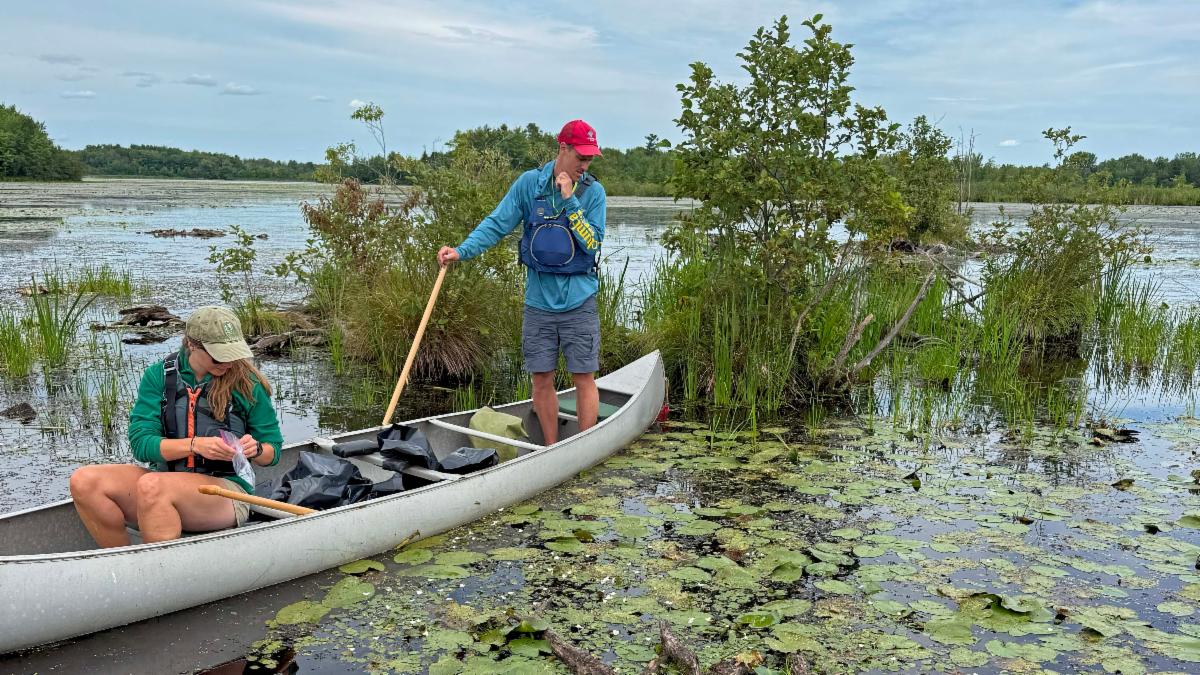
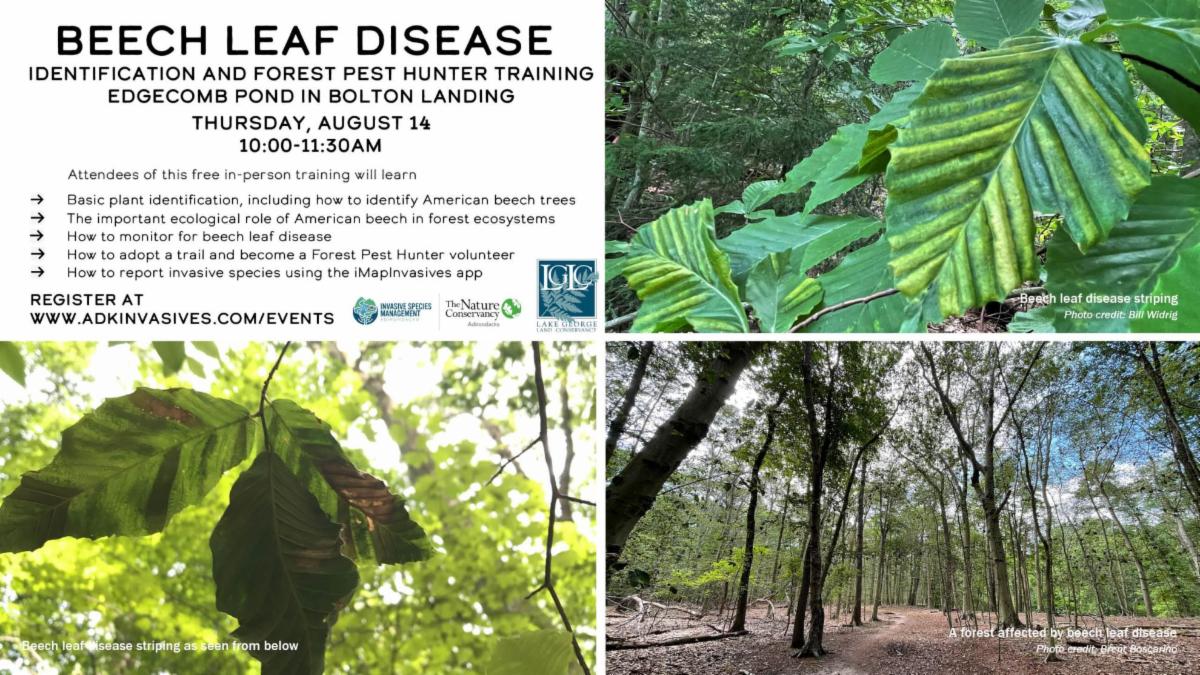
Community scientists can play their part by joining one of APIPP’s volunteer programs, Forest Pest Hunters and Lake Protectors. Those interested in monitoring for forest pests can watch a recorded training or attend the free, in-person Forest Pest Hunters training in Bolton Landing from 10:00am-noon on Thursday, August 14. If you prefer to spend time on the water, you can watch a recorded training or attend the free in-person Lake Protectors training at Darrin Fresh Water Institute in Bolton Landing from 5:00-7:00pm on Friday, August 8. Volunteers in these programs can adopt a trail or lake to monitor for invasive species, an effort that provides invaluable data for better understanding how to manage invasive species.

Species of Concern: Rusty Crayfish

Orconectes rusticus 

Rusty crayfish are an invasive species of freshwater crustacean that are native to the southern United States. They are aggressive and resilient to extreme conditions. Native crayfish habitat includes using features like rocks, logs, and debris for cover; rusty crayfish often successfully outcompete native species for habitat, putting them at greater risk of predation. Rusty crayfish are also opportunistic feeders that eat both plants and animals, and their voracious appetites allow them to consume large amounts of vegetation, causing dramatic shifts in local food webs.  

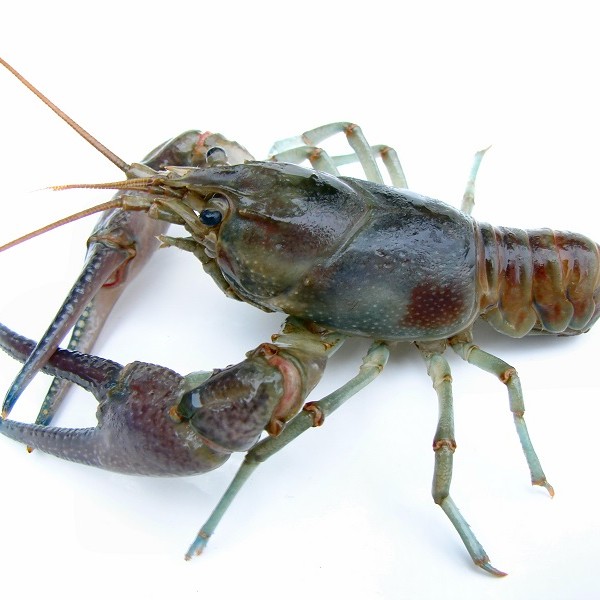
Rusty crayfish can be identified by their robust claws, and by the dark rusty spots on each side of their carapace (shell). The spots are situated as though the crayfish was picked up by someone with red paint on their forefinger and thumb. 

There are several historic reports of rusty crayfish in the southern Adirondacks and a recent confirmed population in Augur Lake. Please keep a look out this summer and report sightings using the iMapInvasives app. 

Key Identification Features

  • Adults are 3-5 inches long 
  • A dark, rust-colored spot on each side of the body 
  • Black bands at tips of pincers

APIPP in the Field

APIPP Welcomes Seasonal Staff


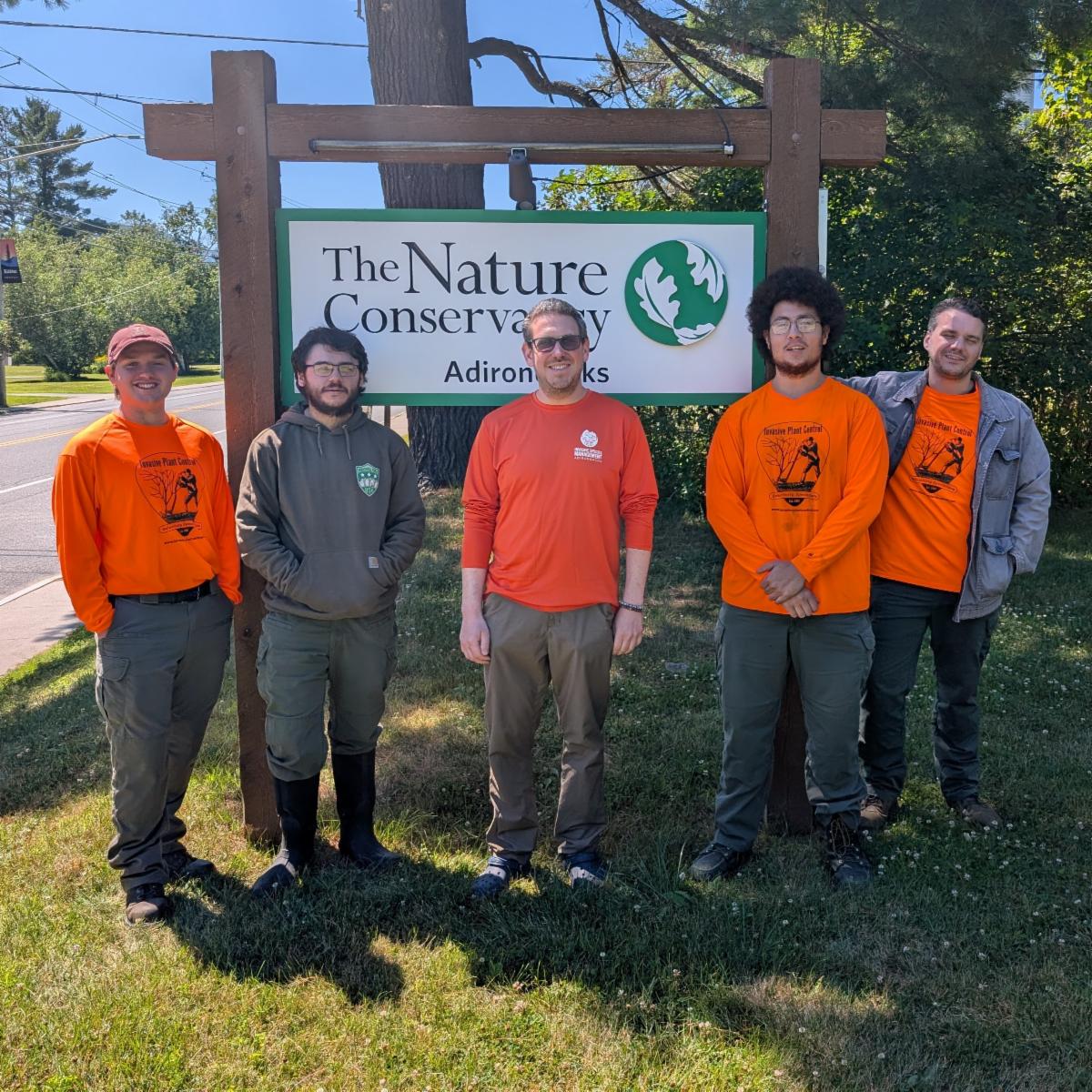
Over the last three months, APIPP has welcomed a steady stream of seasonal staff who have been busy helping us manage and monitor for invasive species in the Adirondacks. Our three seasonals are Becca, our Adirondack Terrestrial invasive Species Steward; Rhoda, our Adirondack Terrestrial invasive Species Assistant; and Elly, our Adirondack Aquatic Invasive Species Assistant. This will be Becca's fourth year with APIPP, and we are excited to have her back! We also welcomed four people from Invasive Plant Control (IPC), pictured above with APIPP Terrestrial Invasive Species Manager Ari, to serve as our Early Detection and Rapid Response Crew. Last year, IPC staff conducted management at over 300 sites and visited over 1,100 sites.

People in the Field

Lake Clear Association Garlic Mustard Pull 


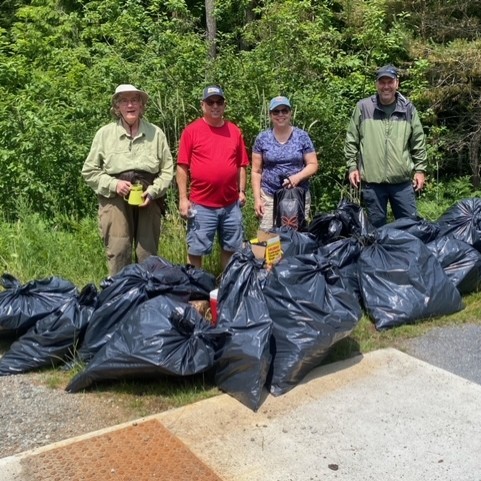
There are more than 6.6 million acres in the Adirondack PRISM, so partnerships are key to managing invasive species here. Recently, a local resident saw a new population of invasive garlic mustard along the Adirondack Rail Trail and contacted APIPP and DEC to discuss the next best steps. Volunteers with the Lake Clear Association sprang into action, hand pulling the invasive plant and filling 55 black contractor bags along several miles of trail. It took 20 volunteers 60 hours to complete this effort and make a difference in their local community. APIPP and the DEC greatly appreciate all of the help from the Lake Clear Association and volunteers! Pictured: Volunteers pose with bags full of invasive garlic mustard.

Ask APIPP

Q: How can I help report invasive species while hiking in the Adirondacks? 

A: The APIPP team wishes everyone safe, quality time outside this summer. Following the Play, Clean, Go steps, using boot brush and wader stations, and practicing Don’t Move Firewood are essential for preventing the spread of invasive species. Reporting any invasive species you encounter is also helpful, and the best way to do that is through iMapInvasives.  


There is an easy guide for how to get set up with an iMapInvasives account and cellphone app. The app allows users to photograph suspect species in the field, and it also records the GPS coordinates, making the reporting process really easy. If an observation is confirmed to be an invasive species it becomes part of the iMapInvasives database, which is important for understanding where different species occur and planning the best response. 


Of course, learning how to identify invasive species is also important, and a convenient way to do that is to order a free copy of APIPP’s Field Guide to Terrestrial Invasive Species of the Adirondacks. Forest understories and open areas are likely places to find species like bush honeysuckle, barberry, and bittersweet vine. If you are along a stream or lakeshore, you might find species like Japanese knotweed, purple loosestrife, and common reed grass.  


APIPP staff and other invasive species professionals also need help documenting forest pests, so please keep an eye out for hemlock woolly adelgid and emerald ash borer. APIPP also hosts the volunteer Forest Pest Hunters program, with the beech leaf disease (BLD) survey season starting this Friday, August 8! If you're interested in volunteering, please check out our detailed guide to surveying for BLD and the adopt-a-trail map.  


Do you have a question for APIPP? Email adirondackinvasives@gmail.com

ICYMI Hemlock woolly adelgid spreads to Lake Champlain: Understanding the threat


Upcoming Events

August 8

Lake Protectors In-Person Training at Darrin Fresh Water Institute

August 14

Forest Pest Hunters Beech Leaf Disease Walk to Edgecomb Pond

September 14-16

2025 New York State Invasive Species Expo

.

Facebook  Instagram  YouTube