Adirondack Park Invasive Plant Program March 2026 Newsletter

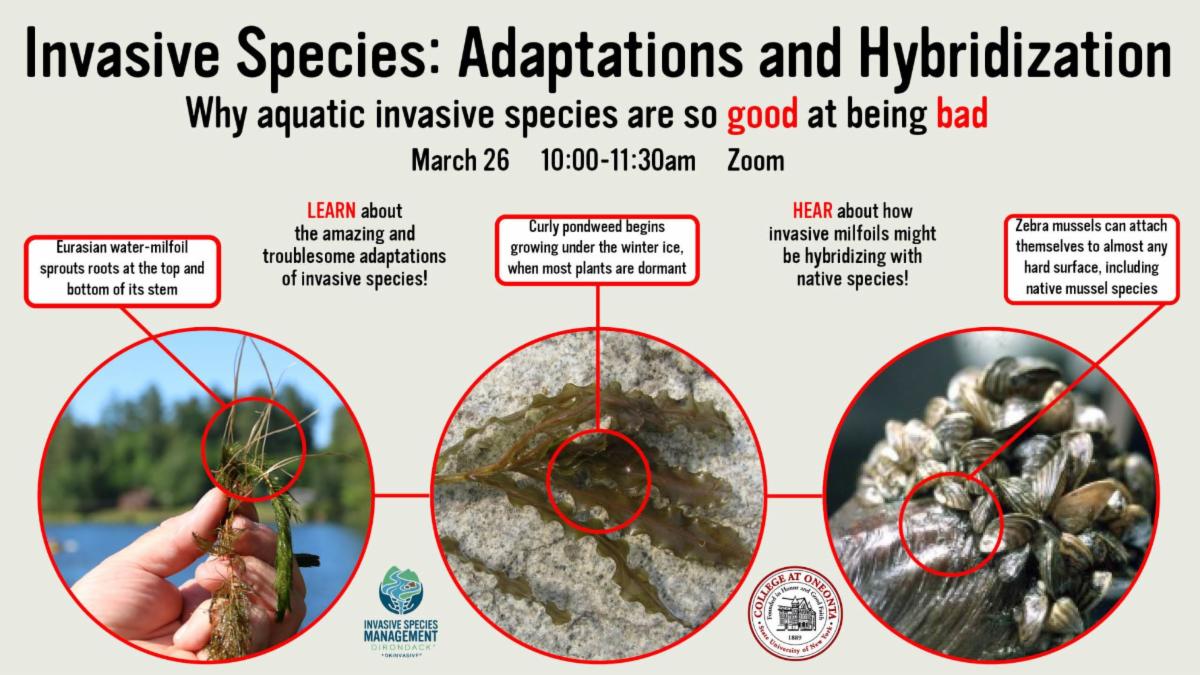
Did you know that invasive species have a lot of interesting and troublesome characteristics that make them really difficult to get rid of? Those traits, called adaptations, give invasive plants and animals a huge advantage over native species and also explain why they are so difficult to manage or eradicate. APIPP’s Aquatic Invasive Species Manager, Anna Hardiman, will dive into some of those adaptations at 10:00am on Thursday, March 26 during APIPP's free Invasive Species: Adaptations and Hybridization webinar. Anna will be joined by SUNY Oneonta Assistant Biology Professor Dr. Alex Sotola, who will cover ongoing research into whether invasive milfoils are hybridizing with native milfoils in the Adirondacks. The exciting research project is a collaboration between SUNY Oneonta and APIPP and is funded by the Lake Champlain Basin Program


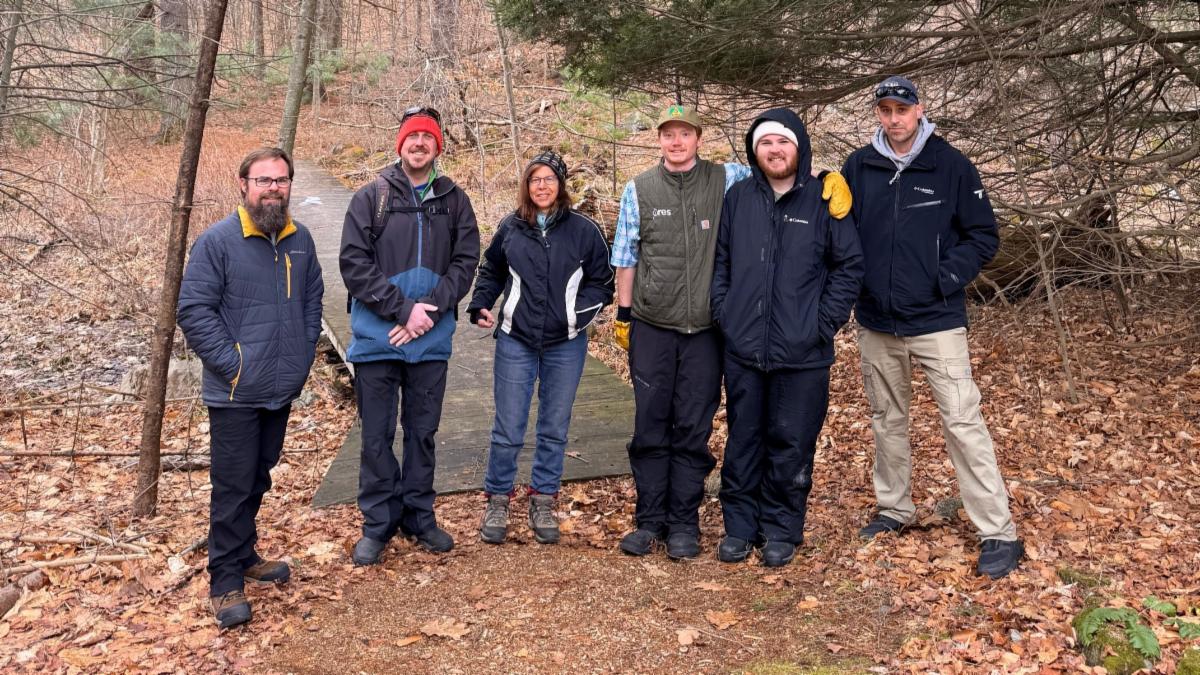
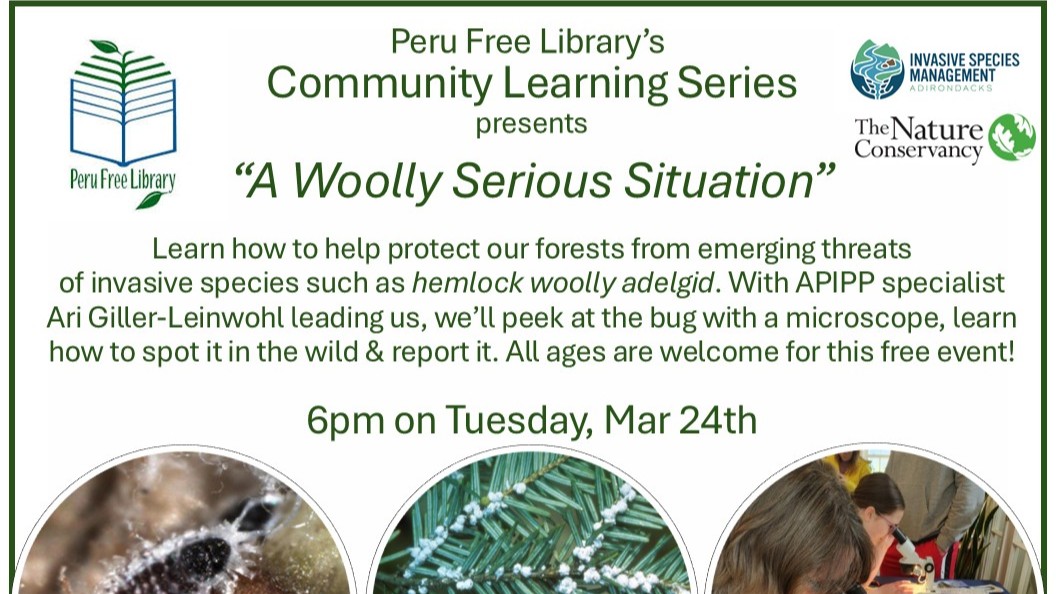
Thursday’s webinar is a good preview of how people who love our lakes can get involved in APIPP’s volunteer Lake Protectors program, but there are ways people can get involved this winter, too. Last Friday, APIPP Terrestrial Invasive Species Manager Ari Giller-Leinwohl joined Leah Smisloff of the Lake George Land Conservancy to lead a hemlock woolly adelgid guided walk (pictured above) at Up Yonda Farm Environmental Education Center for an afternoon of learning and hands-on training. The training is part of an ongoing effort to get volunteers looking for and reporting hemlock woolly adelgid through our volunteer Forest Pest Hunters training. The HWA survey season runs through early April, so now’s the time to adopt a trail to monitor! If you need to learn more about HWA, you can watch one of our webinars.

A reminder: if you’re an APIPP partner please don’t forget to fill out our Adirondack PRISM Partner Dashboard survey. It only takes a few minutes to tell us all about what you’ve been up to!

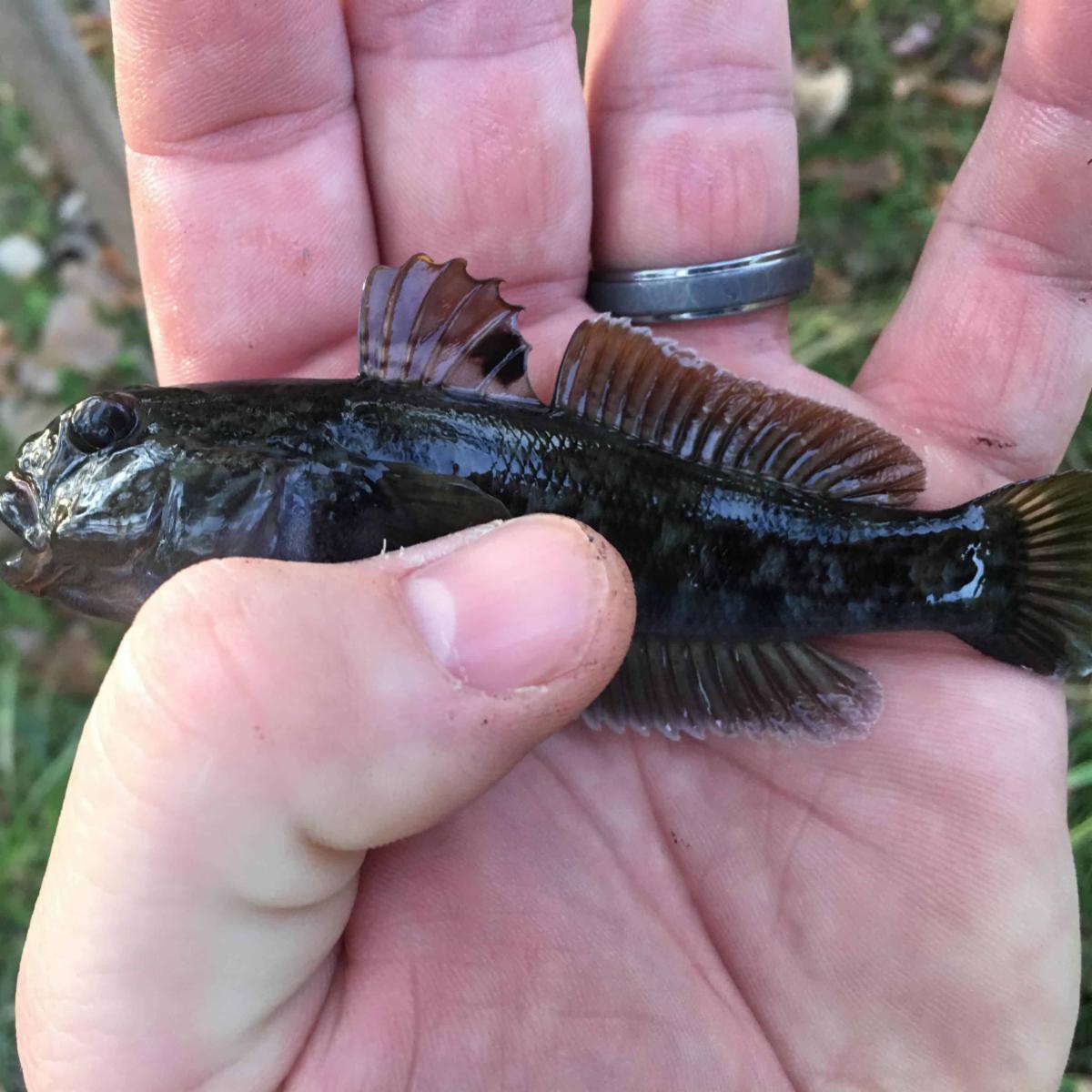
Species of Concern: Baitfish

Aquatic invasive species are primarily spread three ways: boats, bait buckets, and aquarium release. During the winter months in the Adirondacks, the potential for invasive species spread through improper bait use and disposal is a large concern during the ice fishing season. Before purchasing bait and heading out on the ice, remember to ensure that you are complying to New York State Baitfish Regulations set by the New York State Department of Environmental Conservation.


To keep aquatic ecosystems healthy and productive, remember that it is never appropriate to release live bait – even worms – from your bait bucket into waterways or on land! If you are able to pass along unused bait to another recreationist, be sure that they are also aware of the guidelines and plan to dispose of any unused bait or fish carcasses directly in the trash. Do your part in following bait regulations and guidelines to protect the places and the sport you love!

APIPP in the Field

Partner Roundtables


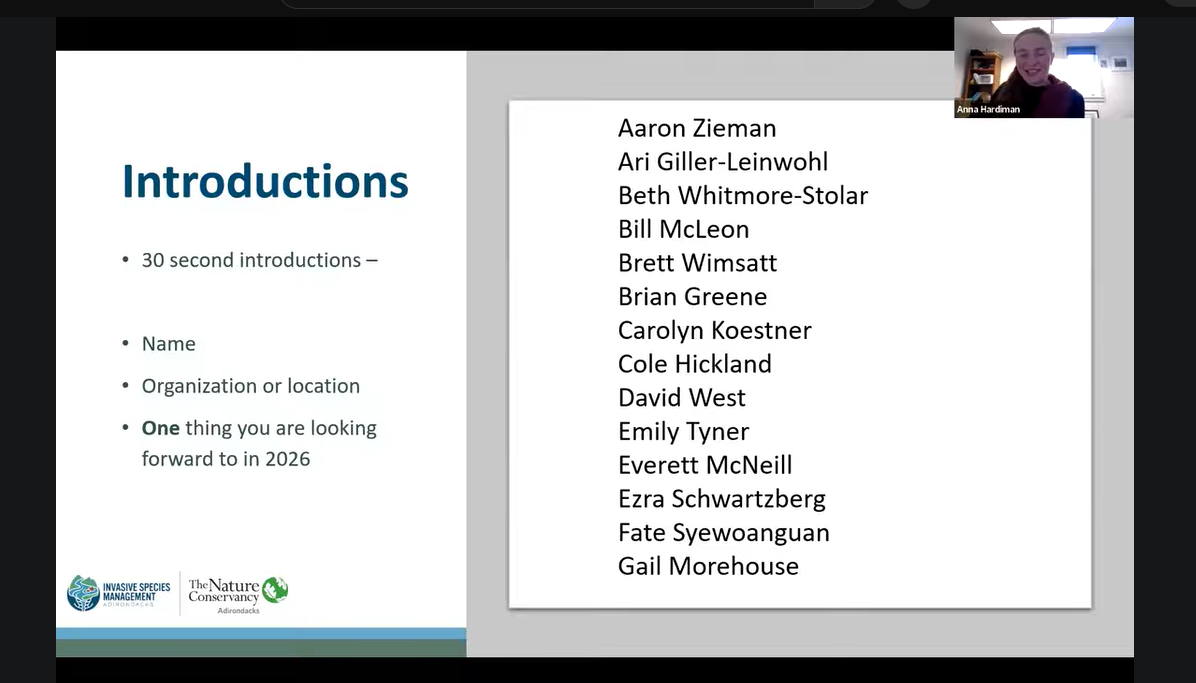
Every winter, APIPP staff lead two partner roundtables, one for aquatic topics and the other for terrestrial topics. Unlike APIPP’s Year-End Partner Meeting, which devotes a lot of time to updates from APIPP staff, the mid-winter roundtables are all about hearing from our partners. More than 35 people from different partner organizations participated in each meeting to share some of the major initiatives they’ll be undertaking in 2026. We appreciate everyone who was able to attend, and we are excited to collaborate and support these efforts as they unfold! Check out the ICYMI section below to find links to the recordings of the partner roundtables.

Partner in the Field

Lake Champlain Basin Program


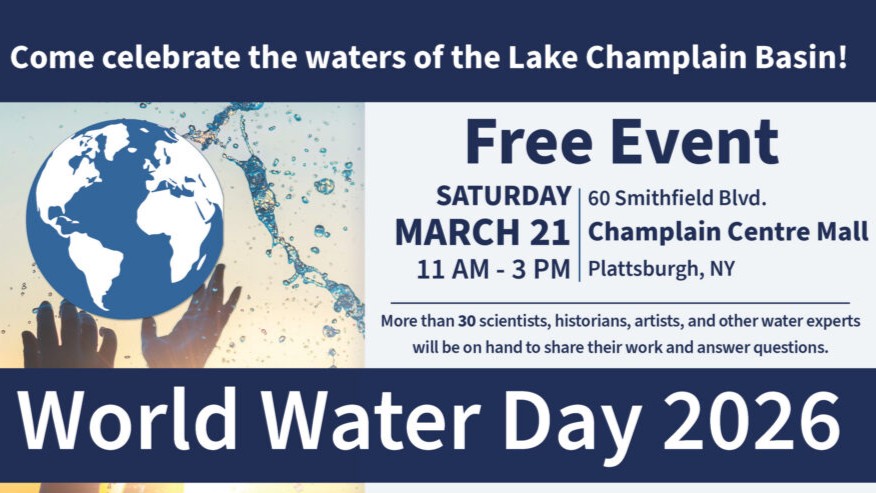
The Patrick Leahy Lake Champlain Basin Program (LCBP) works across the entire watershed that spans portions of New York, Vermont, and Quebec. A big chunk of the Adirondack PRISM comprises the watershed, from the remote lakes of the St. Regis Canoe Area to Lake George, and the entire western shoreline of Lake Champlain. We are lucky to have such an engaged partner working to protect the water quality, wildlife, and recreation of such a large and important watershed. You can join APIPP, LCBP, and other partners on March 21 at the World Water Day event in Plattsburgh to see some of the great work going on and learn more about ways that you can get involved. 


Ask APIPP

Q: Why is it important to plant native plants in my gardening and landscaping?

A: Gardening in the Adirondacks is more than a hobby — it’s an act of hope and a way of caring for the place we call home. Every plant we choose shapes the landscape around us, and selecting native species is one of the most powerful ways to protect the region’s forests, waterways, and wildlife. Native plants are uniquely adapted to the tough Adirondack climate. They thrive in local soils, withstand our dramatic seasons, and support the insects and birds that keep ecosystems healthy. When you plant native species like red osier dogwood, eastern red columbine, or New England aster, you’re helping to sustain the natural food webs that have evolved here for thousands of years. 


In contrast, non-native ornamentals — sometimes even those sold in garden centers — can escape cultivation and spread aggressively. Once established, invasive species like Japanese knotweed or purple loosestrife crowd out native plants, reduce habitat and food sources for wildlife, and are incredibly difficult to remove. Preventing their introduction is far easier than trying to control them later. 


By choosing native species for your garden beds, hedges, and landscaping projects, you’re making a meaningful contribution to the health of the Adirondacks. It’s a small decision with a big ripple effect: cleaner waterways, more resilient forests, and vibrant habitat right outside your door. This spring, consider adding a few native plants to your yard. Look for native plants at garden centers and nurseries and also check out local native plant sales like this one from ADK Action in Lake Placid. Your garden will flourish — and so will the Adirondacks!  

Do you have a question for APIPP? Email adirondackinvasives@gmail.com

ICYMI 

Adirondack PRISM 
Mid-Winter Roundtable Meetings

Upcoming Events

March 21

World Water Day 2026


March 24

Community Learning Series: A Woolly Serious Situation

March 26

Adaptations and Hybridization Webinar

Facebook  Instagram  YouTube