Adirondack Park Invasive Plant Program February 2026 Newsletter

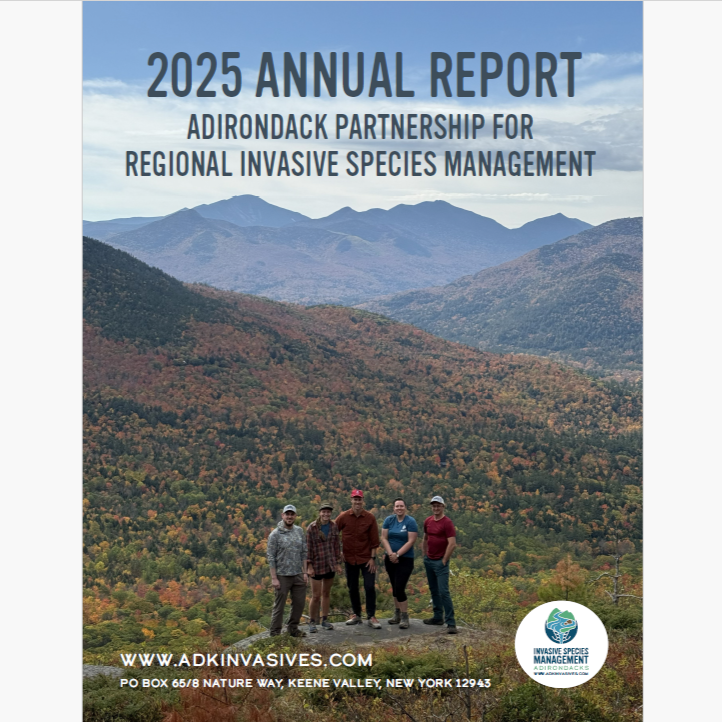
We at APIPP are proud to announce the release of the Adirondack PRISM 2025 Annual Report. The report provides a thorough overview of the work done by APIPP staff over the course of the year, and it’s also a testament to the hard work of our volunteers and partners. Without their knowledge, skills, and dedication, the annual report would be a lot thinner! As we reviewed the data we were impressed, as always, by the story the numbers told. Altogether, APIPP had 269 volunteers logging an impressive 790 hours monitoring for terrestrial and aquatic invasive species. Those volunteers reported more than 2,100 observations to iMapInvasives, and 73 trails and 33 waterbodies were surveyed. APIPP also added 10 new partner organizations and APIPP staff participated in 40 partner events. All of this adds up to an increase in knowledge, both for the public and for the scientific community studying invasive species, and that work continues right now with the hemlock woolly adelgid survey season, which continues through March. Volunteers can watch or attend a Forest Pest Hunters training, then they can adopt a trail and look for HWA, reporting anything they find (or don’t find) to iMapInvasives. It’s an easy way to enjoy nature while giving back, but don’t just take it from us—check out the video testimonial below from Matthew Sieber-ford, a Forest Pest Hunter. Also be sure to check out the APIPP in the Field section below, which gives a nice overview of the annual report’s data summary.


Next week marks the beginning of National Invasive Species Awareness Week, a much appreciated and important recognition of how widespread invasive species have become. This form of broader education helps remind people that invasive species are most often moved from place to place by people so, if you plan on traveling, be sure not to bring any hitchhikers with you. Always brush off your gear before and after entering the woods, use firewood that is sourced close to where you intend to burn it, and once the ice recedes be sure to practice proper Clean, Drain, Dry techniques. As we often like to remind people, it is much easier to prevent invasive species from spreading than it is to deal with them once they’ve arrived!

Species of Concern: Hemlock Woolly Adelgid

Adelges tsugae

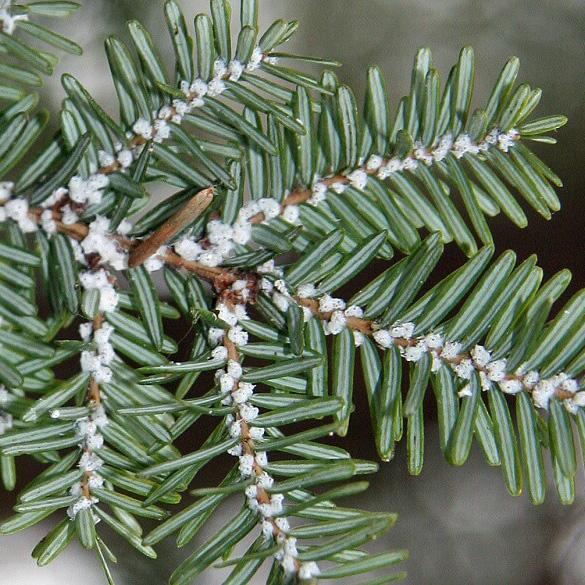
Hemlock woolly adelgid (HWA) is a small, aphid-like insect native to Japan, introduced to Virginia in the 1950s. It has since expanded along the Appalachian Mountain range, with known populations now present northward along the Lake George and Lake Champlain shorelines in New York. Multiple life cycles per season via asexual reproduction make HWA able to increase populations quickly. Warming winter temperatures and movement via people and birds are among the factors enabling HWA to spread. More details here. 


HWA feeds on hemlock twigs near the base of the needles, which damages new growth and can cause decline and mortality over years of infestation. This is a threat to hemlock forests in the Adirondacks, which are considered to be a foundation species providing habitat for wildlife habitat, shade and temperature moderation of cold-water streams, and soil stabilization on steep slopes. 


Understanding the current distribution of HWA requires region-wide surveys by professionals and community members alike. You can join in these efforts with the Forest Pest Hunters program. and the winter HWA survey season is now underway! We have resources like the 2026 HWA Biocontrol update and Forest Pest Hunters webinar, HWA Survey Protocol, and iMapInvasives setup guide to help. 

Key Identification Features

  • White woolly growths attached to the twigs on the underside of the tree branches
  • Trees may turn pale green or gray
  • In spring, trees lack new shoots/growth

APIPP in the Field

Annual Report Data Summary


All year long APIPP staff, partners, and volunteers are out collecting data on invasive species, from high in the mountains to underneath the water. Does that data sit idle? No! APIPP staff work hard to turn that data into easily digestible information to inform how we are doing and to gain better insights on dealing with invasive species. Our annual report is a great way to see that summary of data and check key performance metrics. Of particular note are the appendices, which are packed full of data points, graphs, and metrics. Some of the highlights include hemlock woolly adelgid being the most reported species in iMapInvasives, new reports of aquatic invasive species in four waterbodies, 90% of Tier 2 terrestrial invasive species sites are under active management, and 269 volunteers collected data for APIPP. The biggest highlight is 52 organizations partnering with APIPP in 2025! We are asking all organizations to report their invasive species activities to APIPP and you can do that here on this online form. 


Volunteer in the Field

Matthew Sieber-Ford
Forest Pest Hunters Volunteer


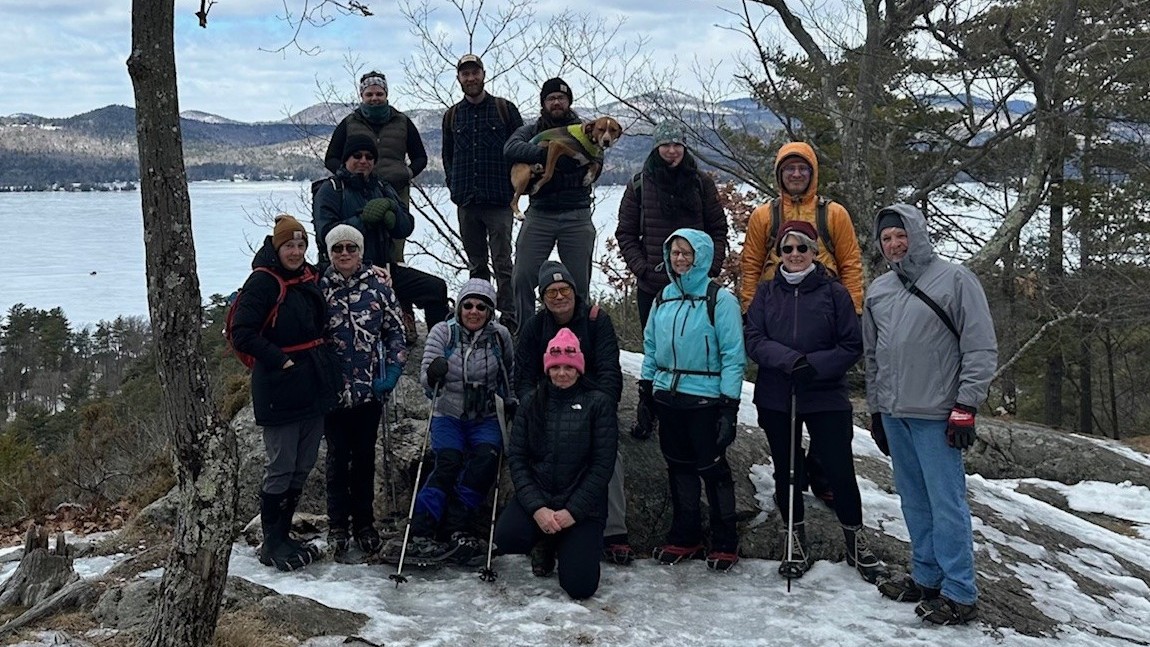
Every year, APIPP works with partners and volunteers to help us monitor for and report invasive species across the expansive Adirondack PRISM, which encompasses the 6-million-acre Adirondack Park and the area that spans the park’s northern boundary and the Canadian border. The following video testimonial features Forest Pest Hunter volunteer Matthew Sieber-Ford, who shares what his experience monitoring for invasive species has been like. Anyone who feels inspired by Matthew’s testimonial should consider adopting a trail this winter to monitor for hemlock wooly adelgid. Click here for more information on our Forest Pest Hunters program.

Matthew Sieber-Ford, Forest Pest Hunters Volunteer

Ask APIPP

Q: How do I know which invasive species are present in a lake?

A: You can find a great interactive map on APIPP’s website that shows the distribution of both terrestrial and aquatic invasive species across the Adirondack PRISM. The Adirondack Aquatic Invasive Species Distribution Map is a helpful tool for seeing the big-picture status of invasive species across the region. You can also use this tool to get a closer look at individual lakes and areas by filtering the map to show lakes by name, invasion status, and/or county invaded by particular AIS. If you are looking at a certain lake, it is valuable to know the invasion status of the surrounding waterbodies as well. This can help individuals and communities provide specific examples of the importance of following Clean, Drain, Dry protocol and help prevent the spread of aquatic invasive species to waterbodies that are near known invasive species populations.  


To help keep invasive species distribution data up to date, be sure to record invasive species observations using the iMapinvasives mobile app and consider becoming a Lake Protector volunteer and helping the region-wide effort to monitor for aquatic invasive species across the APIPP region each summer. 


Do you have a question for APIPP? Email adirondackinvasives@gmail.com

ICYMI 

Hope for Hemlocks: Biocontrols, Volunteers, and Tips for Landowners

Upcoming Events

March 6

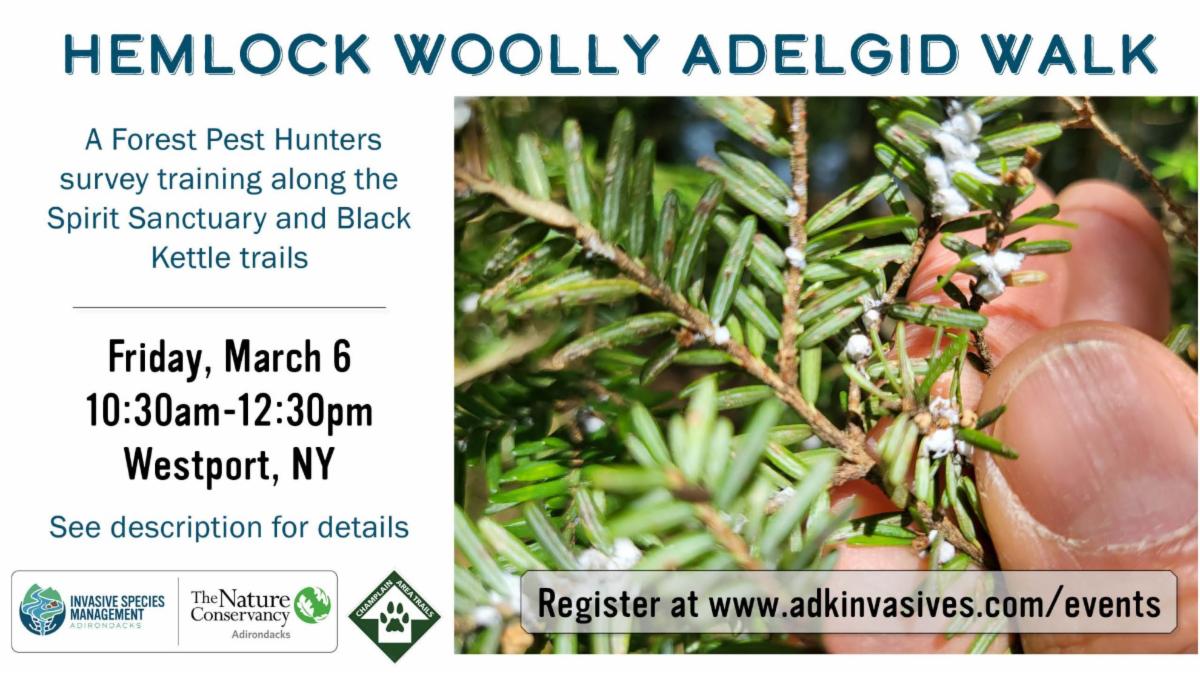
Hemlock Woolly Adelgid Walk


March 24

Community Learning Series
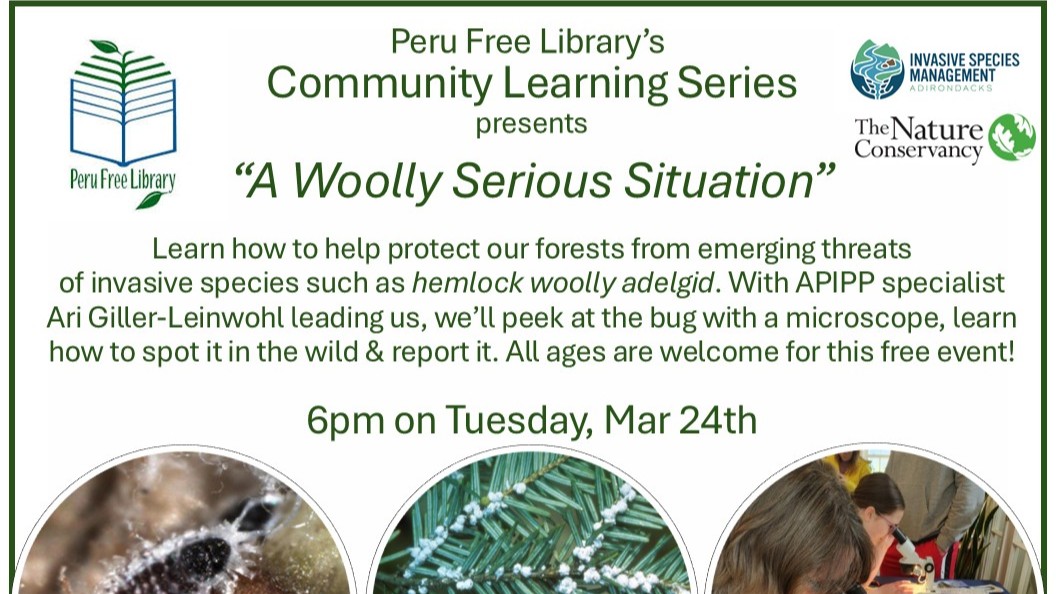
A Woolly Serious Situation

Facebook  Instagram  YouTube