|
|
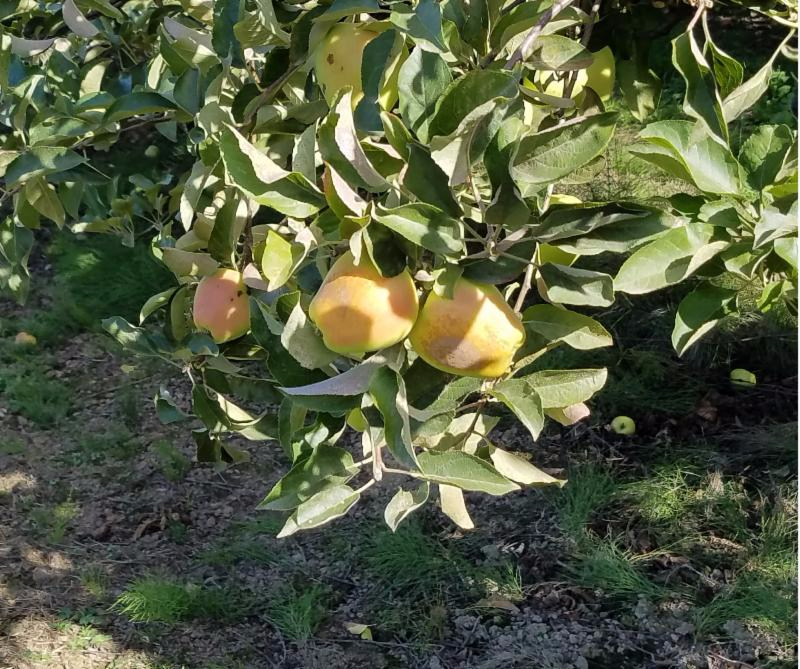
Sauvie Island Apples - rkm photo
|
Our last entry focused on tomatoes or love apples, and it had been our intention to follow that with a quote about real apples, the kind that give us apple pie, cider, and a nice crunch when you bite into them. And then yesterday, with an op-ed in The Wall Street Journal, the president of the U.S. Apple Association,
Jim Bair, gave us today's quote.
To say the least, Mr. Bair profoundly disagrees with President Trump's assessment of NAFTA - you know, "worst trade deal ever made." As Mr. Bair put it, "Our growers know it is the best apple trade deal to date." Here are some of the numbers he provided:
$4 billion - the value of U.S. apple sales "at the farm gate," i.e., wholesale;
$15 billion in related downstream activity.
We know you are going to read the article, but this paragraph deserves to be quoted here in full:
"Since the agreement took effect, the U.S. apple industry has quadrupled and doubled its exports to Mexico and Canada respectively. These top export markets bring $450 million in additional value to our growers and packers annually. In total, the U.S. apple industry exports a third of the 240 million bushels of apples it harvests each year."
The Perishable Goods Provision. Mr. Blair kept his argument to the big picture. He talked about NAFTA as a whole and the consequences to his industry if the agreement were to go away, either through a U.S. withdrawal from NAFTA or through some other breakdown.
In our last entry, however, the one on tomatoes, we focused on a specific U.S. negotiating objective, namely this one on trade remedies and perishable goods:
"Seek a separate domestic industry provision for perishable and seasonal products in AD/CVD [antidumping and countervailing duty] proceedings."
In doing so, we took note of the fact that Florida's two senators, Senator
Bill Nelson, a Democrat, and Senator
Marco Rubio, a Republican, had written to
Ambassador Lighthizer in support of just such a provision.
But what is good for Florida tomatoes is not so good for Northwest apples. On September 20, 2017, a sizeable subset of the Pacific Northwest delegation wrote to Ambassador Lighthizer urging him NOT to pursue a new provision for perishable and seasonal goods. They wrote:
"Given that there are serious, unresolved stakeholder concerns about the negative impact of such a provision on U.S. exports and jobs, we ask that you not move forward with this proposal."
Much of the punch of their argument is contained in these sentences:
"[G]rowers, packers and shippers in the Pacific Northwest produce more than three quarters of the fresh apples and cherries, and approximately 84 percent of the fresh pears, grown in the United States. Mexico and Canada are the top export markets for apples and pears, with about 15 percent of the apple crop and 20 percent of the pear crop, worth approximately $442 million, shipped to our southern and northern neighbors each year."
And this one:
"We expect that Canadian and Mexican industries, including the tree fruit industry, may take advantage of such a provision - [that is, the provision on seasonal and perishable goods that is now a tabled U.S. negotiating objective] - to restrict exports of U.S. products."
There were 13 signatories to that letter, including -
From Oregon: Senator
Jeffrey Merkley (D), Senator
Ron Wyden (D), Rep.
Kurt Schrader (D), and Rep.
Greg Walden (R); and
From Washington: Senator Maria Cantwell (D), Senator Patty Murray (D), Rep. Denny Heck (R), Rep. Jaime Herrera Beutler (R), Rep. Suzan DelBene (D), Rep. Rick Larsen (D), Rep. Dan Newhouse (R), Rep. David Reichert (R), and Rep. Cathy McMorris Rodgers (R).